
Global Image Recognition Market Outlook 2030
Region:Global
Author(s):Shivani Mehra
Product Code:KROD11378
Region:Global
Author(s):Shivani Mehra
Product Code:KROD11378
December 2024
85
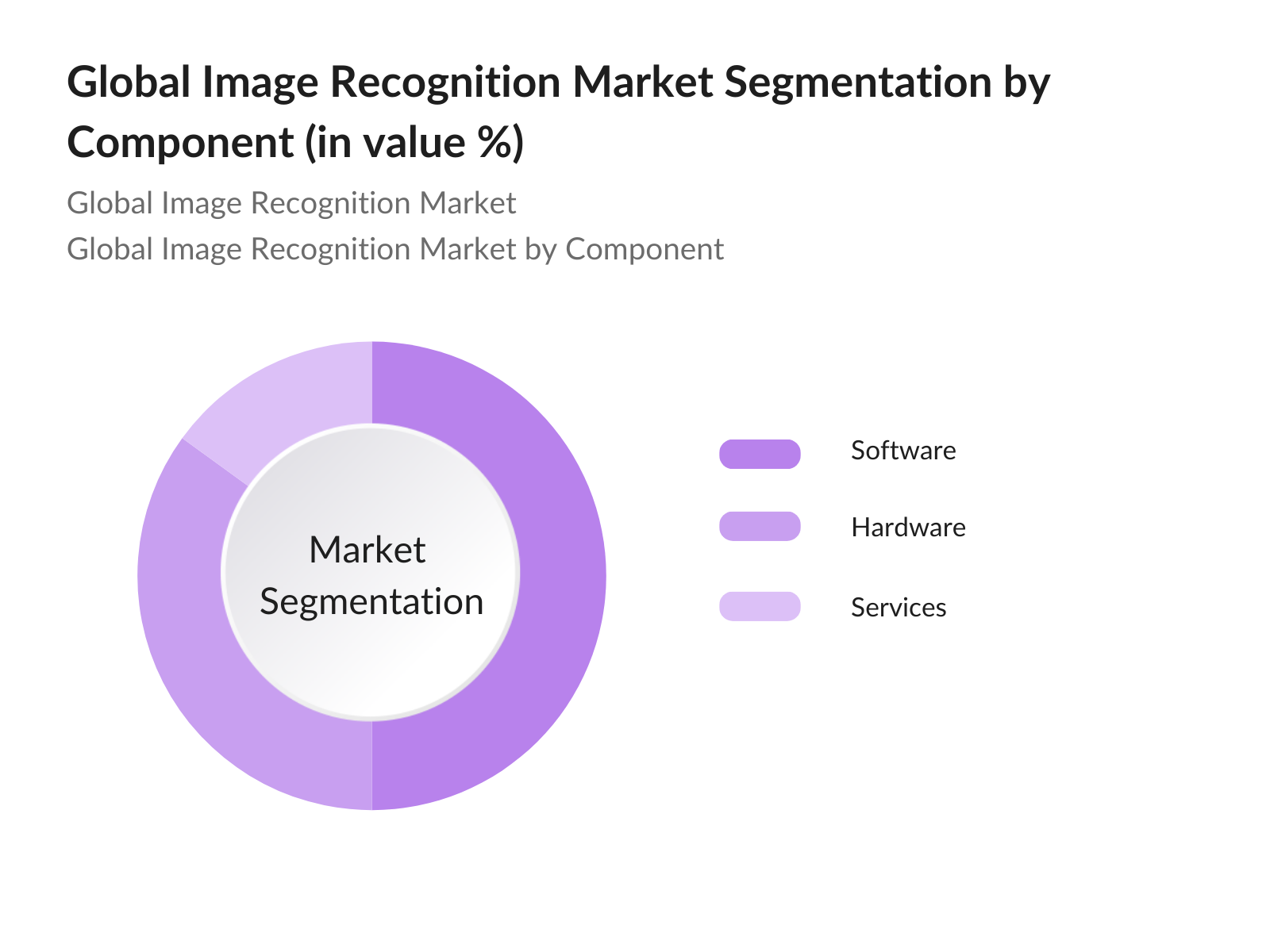
By Component: The market is segmented into hardware, software, and services. Software components hold the highest market share due to the advanced image processing and analytics tools integrated into various applications. Companies prioritize software enhancements to enable real-time processing and accuracy improvements, driving demand in sectors like security, media, and e-commerce.
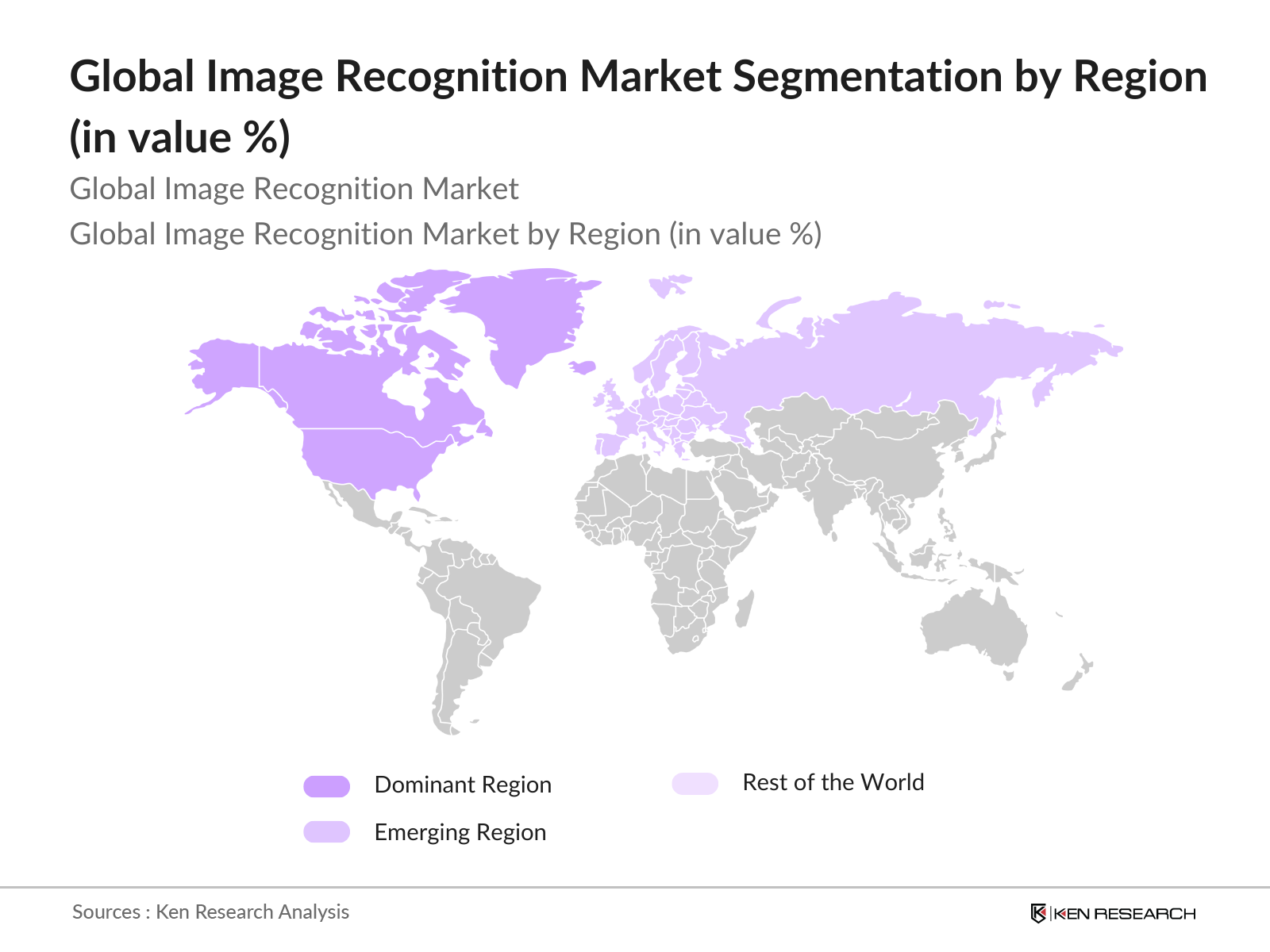
By Region: The market is segmented into North America, Europe, Asia Pacific, Middle East & Africa, and Latin America. North America holds the highest share owing to its strong R&D focus and early adoption of AI. Asia Pacific is growing rapidly due to rising digital transformation efforts in retail and industrial applications.
The image recognition market is marked by the presence of both global tech giants and specialized firms. Key players focus on strategic alliances, acquisitions, and technology enhancements to sustain a competitive edge.
|
Company |
Establishment Year |
Headquarters |
AI Capabilities |
Innovation Rate |
R&D Investment |
Customer Base |
Revenue (USD Billion) |
Key Partnerships |
|
Alphabet Inc. |
1998 |
U.S. |
Advanced |
- |
- |
- |
- |
- |
|
Amazon.com Inc. |
1994 |
U.S. |
AI-enhanced |
- |
- |
- |
- |
- |
|
Intel Corp. |
1968 |
U.S. |
Real-time Processing |
- |
- |
- |
- |
- |
|
Microsoft Corp. |
1975 |
U.S. |
Cloud AI |
- |
- |
- |
- |
- |
|
NVIDIA Corp. |
1993 |
U.S. |
Graphics Processing |
- |
- |
- |
- |
- |
Over the next few years, the global image recognition market is expected to expand due to accelerated digital transformation, especially in retail, healthcare, and security applications. Enhanced processing power and sophisticated algorithms are anticipated to drive increased demand, further bolstered by rising data needs in real-time applications. Additionally, cloud integration is predicted to enable cost-efficient and scalable solutions, promoting greater market penetration across various industries.
|
By Component |
Hardware Software Services |
|
By Application |
Security Augmented Reality Marketing |
|
By Deployment Mode |
Cloud-based On-premises |
|
By Technique |
Object Recognition Facial Recognition |
|
By Region |
North-East Midwest West Coast Southern States |
1.1. Definition and Scope
1.2. Market Valuation and Historical Analysis
1.3. Key Market Developments and Milestones
2.1. Historical Market Size
2.2. Year-On-Year Growth Analysis
2.3. Major Trends Impacting Market Growth
3.1. Growth Drivers
3.1.1. Technological Advancements
3.1.2. Data Expansion
3.1.3. Expansion of Cloud and Edge Computing
3.2. Market Challenges
3.2.1. High Infrastructure and Maintenance Costs
3.2.2. Data Privacy and Regulatory Compliance
3.2.3. Lack of User Engagement and Adoption
3.3. Market Opportunities
3.3.1. Real-Time Data Recognition and Analytics
3.3.2. AI-Driven Automation and Predictive Analytics
3.4. Future Trends
3.4.1. Integration of AI in Image Recognition
3.4.2. Growth in Real-Time Applications
4.1. By Component (In Value %)
4.1.1. Hardware
4.1.2. Software
4.1.3. Services
4.2. By Application (In Value %)
4.2.1. Security
4.2.2. Augmented Reality
4.2.3. Marketing
4.3. By Deployment Mode (In Value %)
4.3.1. Cloud-based
4.3.2. On-premises
4.4. By Technique (In Value %)
4.4.1. Object Recognition
4.4.2. Facial Recognition
4.5. By Region (In Value %)
4.5.1. North-East
4.5.2. Midwest
4.5.3. West Coast
4.5.4. Southern States
5.1. Detailed Profiles of Major Companies
5.1.1. Alphabet Inc.
5.1.2. Amazon.com Inc.
5.1.3. Intel Corp.
5.1.4. Microsoft Corp.
5.1.5. NVIDIA Corp.
5.1.6. IBM Corp.
5.1.7. Samsung Electronics
5.1.8. Honeywell International
5.1.9. Advanced Micro Devices Inc.
5.1.10. NEC Corp.
5.1.11. Partium
5.1.12. Imagga Technologies Ltd.
5.1.13. Hitachi Ltd.
5.1.14. Qualcomm Inc.
5.1.15. Wikitude GmbH
5.2. Cross Comparison Parameters (AI Capabilities, Innovation Rate, R&D Investment)
5.3. Market Share Analysis
5.4. Strategic Initiatives
5.5. Mergers and Acquisitions
6.1. Compliance Standards and Data Protection Regulations
6.2. Industry-Specific Regulatory Requirements
7.1. Future Market Size Projections (In USD Billion)
7.2. Key Factors Driving Future Market Growth
8.1. By Component (In Value %)
8.2. By Application (In Value %)
8.3. By Deployment Mode (In Value %)
8.4. By Technique (In Value %)
8.5. By Region (In Value %)
9.1. TAM/SAM/SOM Analysis
9.2. Market Entry Strategies
9.3. Key Marketing Initiatives
9.4. White Space Opportunity Analysis
We identified primary stakeholders and outlined critical market variables by leveraging industry-focused desk research. This phase included data gathering from trusted sources, such as technology publications and regulatory bodies.
Historical data was analyzed to determine market penetration and revenue generation trends. Detailed analysis ensured that the ecosystem map was comprehensive, capturing all revenue sources accurately.
Hypotheses were tested through consultations with industry experts, using insights from a range of corporate roles and sectors. Interviews were conducted with data analysis specialists, ensuring that the gathered data accurately reflected industry trends.
In the final phase, insights from diverse sources were synthesized to produce validated market data. Inputs from experts in technology firms ensured that projections were robust and well-aligned with market realities.
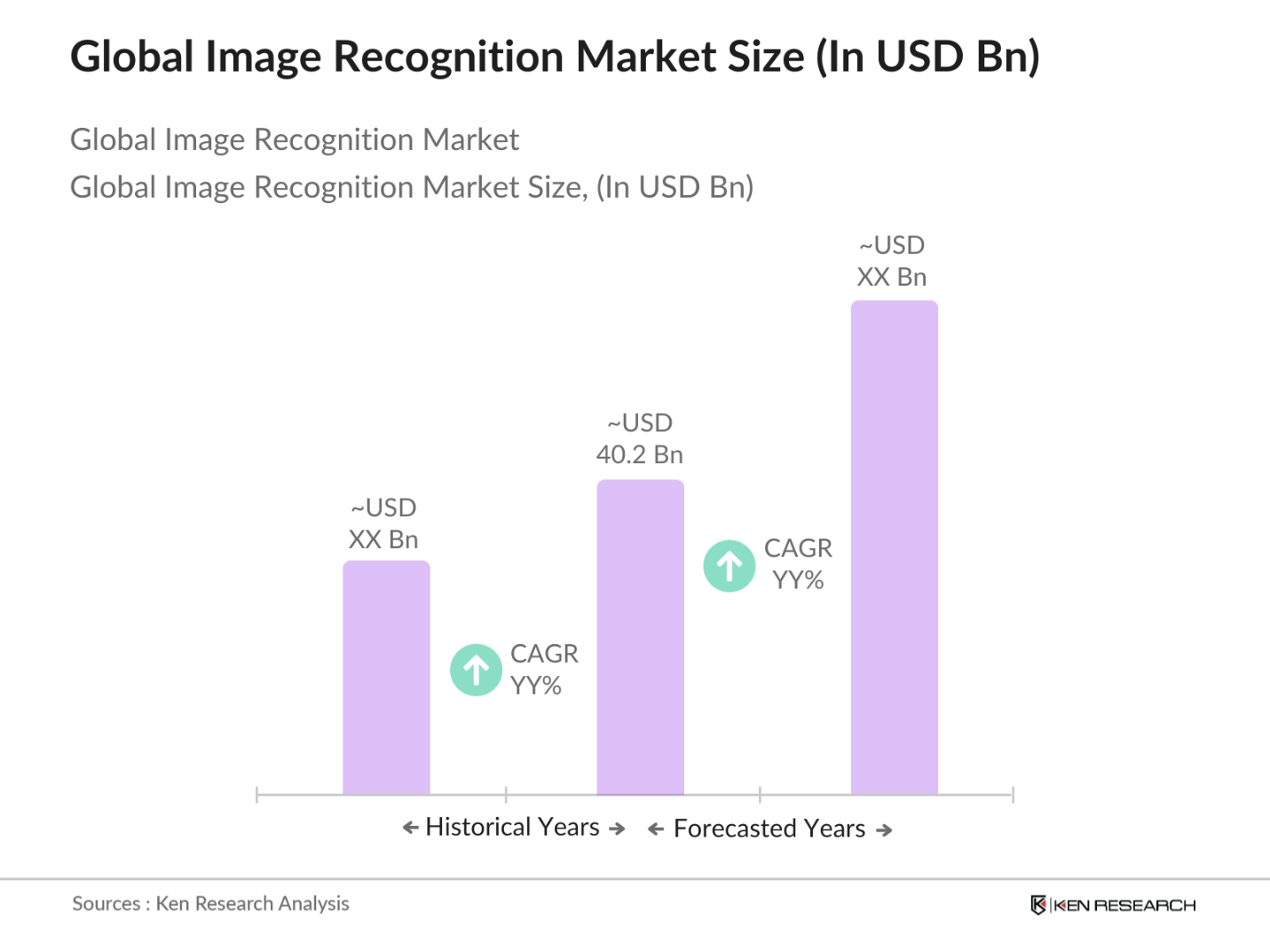
The global image recognition market is valued at approximately USD 40.2 billion, driven by applications across multiple industries, such as retail, healthcare, and automotive sectors.
Primary drivers include advancements in AI and machine learning, rising demand for data-driven decision-making, and increased use of mobile devices in various sectors.
Key challenges involve data privacy concerns, high initial costs of deployment, and the need for continuous advancements to meet evolving technology demands.
Major companies include Alphabet Inc., Amazon.com Inc., Intel Corp., Mic

What makes us stand out is that our consultants follows Robust, Refine and Result (RRR) methodology. i.e. Robust for clear definitions, approaches and sanity checking, Refine for differentiating respondents facts and opinions and Result for presenting data with story

We have set a benchmark in the industry by offering our clients with syndicated and customized market research reports featuring coverage of entire market as well as meticulous research and analyst insights.

While we don't replace traditional research, we flip the method upside down. Our dual approach of Top Bottom & Bottom Top ensures quality deliverable by not just verifying company fundamentals but also looking at the sector and macroeconomic factors.

With one step in the future, our research team constantly tries to show you the bigger picture. We help with some of the tough questions you may encounter along the way: How is the industry positioned? Best marketing channel? KPI's of competitors? By aligning every element, we help maximize success.

Our report gives you instant access to the answers and sources that other companies might choose to hide. We elaborate each steps of research methodology we have used and showcase you the sample size to earn your trust.

If you need any support, we are here! We pride ourselves on universe strength, data quality, and quick, friendly, and professional service.