
Global Insulin Delivery Market Outlook to 2030
Region:Global
Author(s):Vijay Kumar
Product Code:KROD2599
Region:Global
Author(s):Vijay Kumar
Product Code:KROD2599
December 2024
99

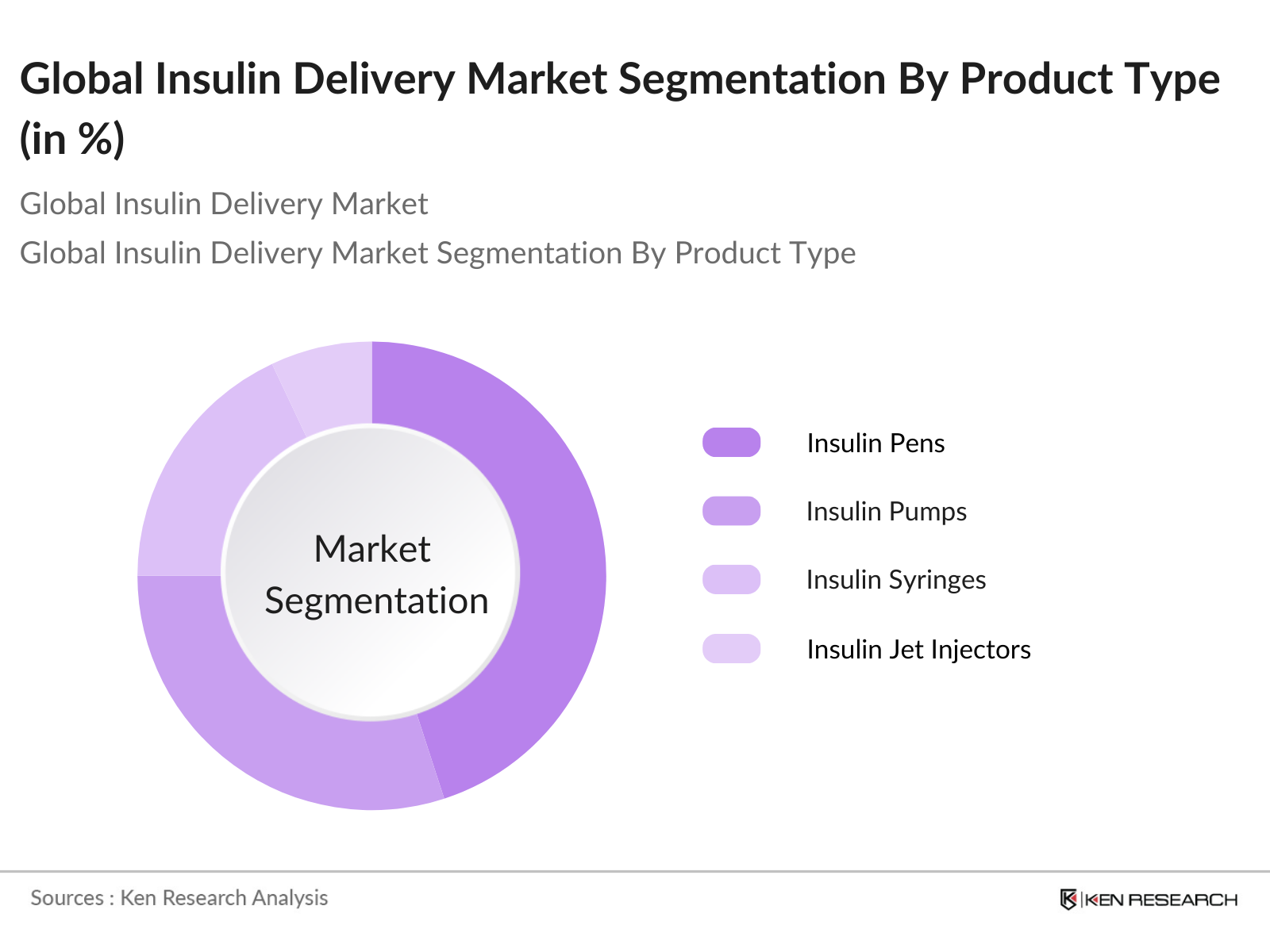
By Product Type: The market is segmented by product type into insulin pens, insulin pumps, insulin syringes, and insulin jet injectors. Among these, insulin pens hold the dominant market share due to their user-friendly design, precise dosage delivery, and rising consumer preference for convenient and painless administration methods.
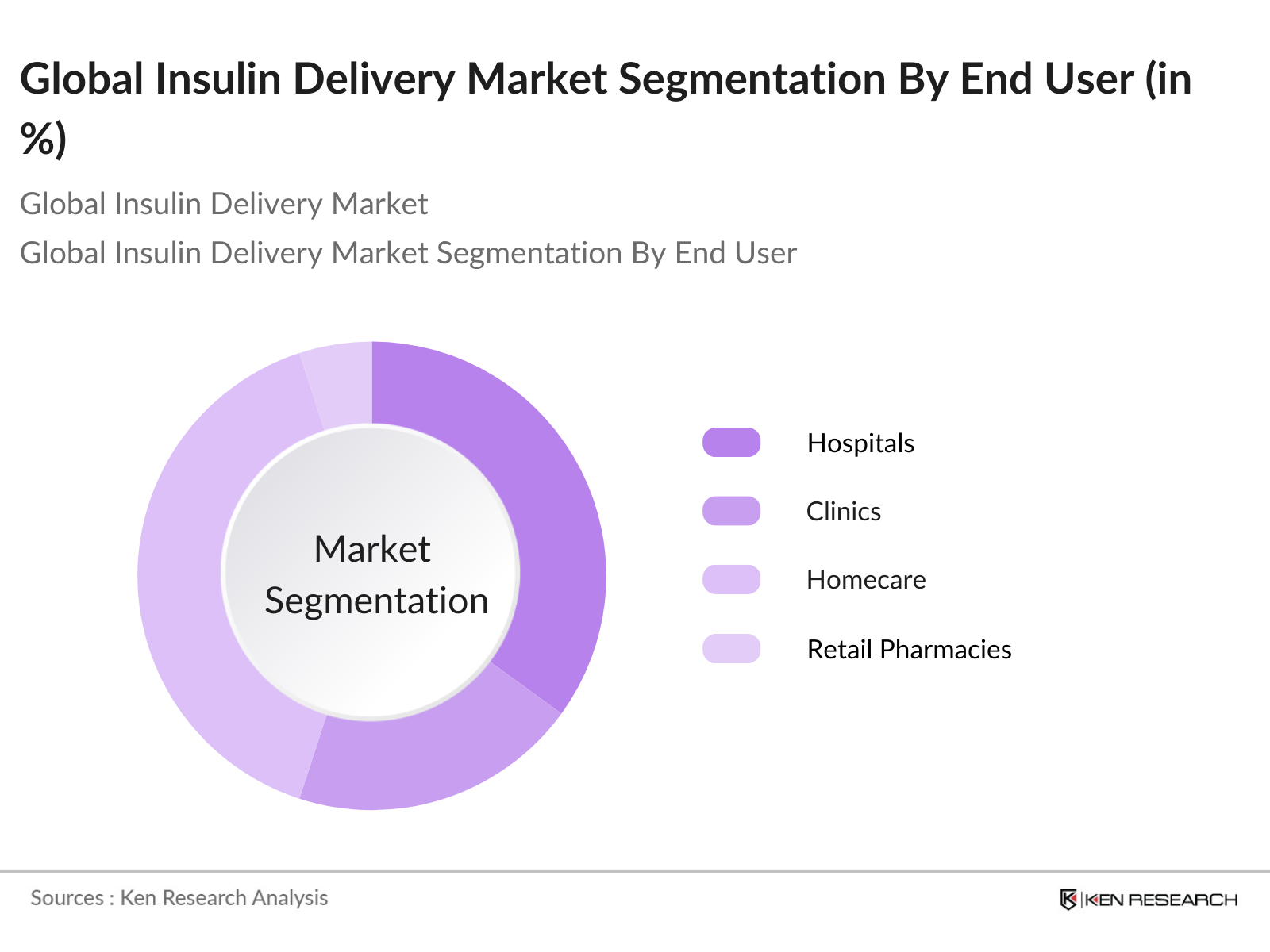
By End User: The market is also segmented by end users into hospitals, clinics, homecare, and retail pharmacies. Homecare dominates the market under this segmentation due to the increasing preference for self-administration of insulin, cost-effectiveness, and the availability of portable and easy-to-use devices.
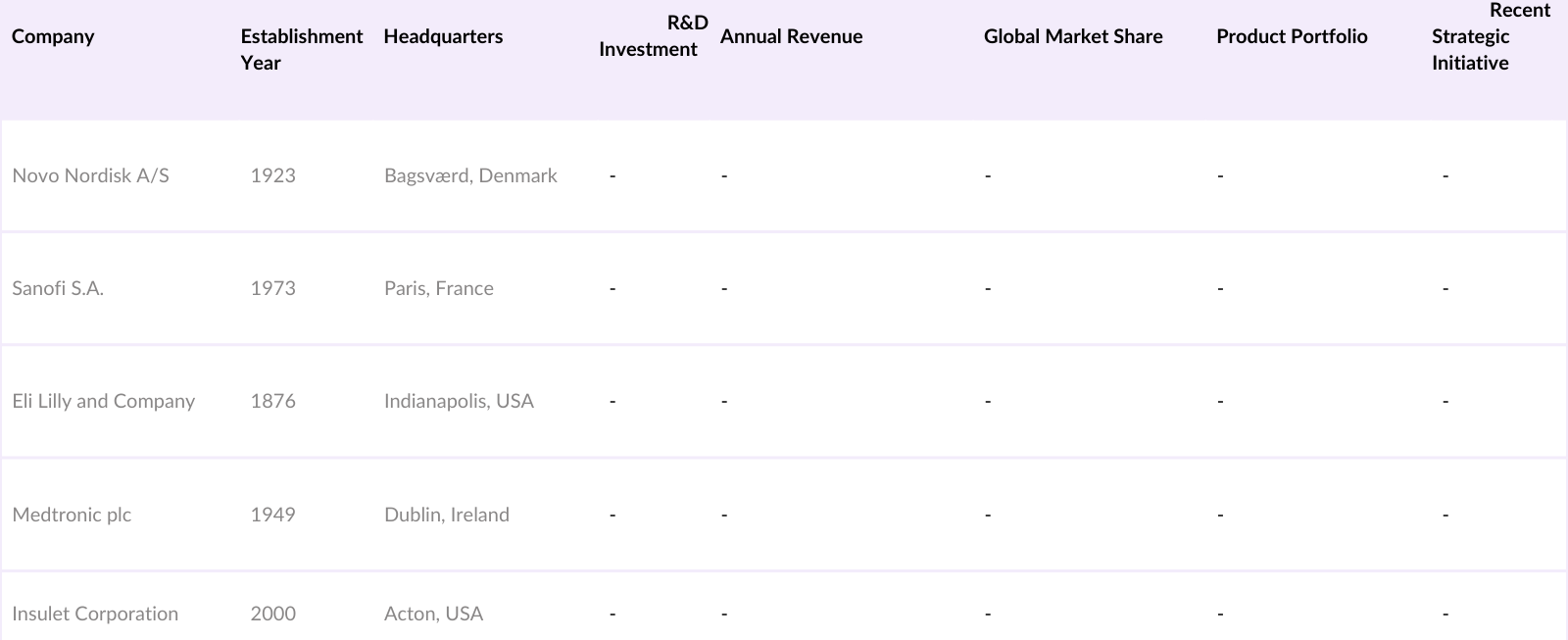
The Global Insulin Delivery market is characterized by intense competition among key players, each striving to improve device functionality, enhance patient compliance, and expand their global footprint. This consolidation highlights the significant influence of major companies that continually invest in R&D and form strategic partnerships to maintain their market position.
Over the next five years, the Global Insulin Delivery market is expected to witness significant growth driven by ongoing advancements in insulin delivery technologies, a growing diabetes population, and the increasing availability of wearable and automated devices. The market is set to experience rapid expansion in emerging economies, where rising awareness about diabetes management and government initiatives aimed at improving healthcare access are opening new opportunities. Additionally, the focus on personalized medicine and AI-driven smart insulin delivery systems is expected to revolutionize diabetes care.
|
Segment |
Sub-Segments |
|
By Product Type |
Insulin Pens |
|
By End User |
Hospitals |
|
By Distribution Channel |
Hospital Pharmacies |
|
By Insulin Type |
Rapid-Acting Insulin |
|
By Region |
North America |
1.1. Definition and Scope
1.2. Market Taxonomy
1.3. Market Growth Rate
1.4. Market Segmentation Overview
2.1. Historical Market Size
2.2. Year-On-Year Growth Analysis
2.3. Key Market Developments and Milestones
3.1. Growth Drivers
3.1.1. Increasing Prevalence of Diabetes (Prevalence Rate of Type 1 and Type 2 Diabetes)
3.1.2. Rising Geriatric Population (Aging Population Growth Rate)
3.1.3. Technological Advancements (Painless Insulin Delivery, Smart Insulin Pens)
3.1.4. Favorable Reimbursement Policies (Government Healthcare Subsidies)
3.2. Market Challenges
3.2.1. High Cost of Insulin and Delivery Devices (Cost Barrier Analysis)
3.2.2. Lack of Access in Low-Income Countries (Healthcare Accessibility Index)
3.2.3. Regulatory Hurdles for Product Approval (FDA and EMA Regulations)
3.3. Opportunities
3.3.1. Development of Artificial Pancreas Systems (Emerging Technologies)
3.3.2. Expansion into Emerging Markets (Market Penetration Strategies in APAC and LATAM)
3.3.3. Growing Adoption of Wearable Insulin Delivery Devices (Growth Rate of Wearable Technology)
3.4. Trends
3.4.1. Increasing Use of Smart Insulin Pens (IoT-Enabled Devices)
3.4.2. Shift Toward Closed-Loop Systems (Automated Insulin Delivery Systems)
3.4.3. Focus on Patient-Centric Solutions (Personalized Medicine in Diabetes Care)
3.5. Government Regulation
3.5.1. FDA Guidelines for Insulin Delivery Devices
3.5.2. CE Mark Regulations in Europe
3.5.3. Health Insurance Policies Across Regions
3.6. SWOT Analysis
3.7. Stakeholder Ecosystem (Pharmaceutical Companies, Medical Device Manufacturers, Hospitals, and Clinics)
3.8. Porters Five Forces
3.9. Competitive Ecosystem
4.1. By Product Type (In Value %)
4.1.1. Insulin Pens
4.1.2. Insulin Pumps
4.1.3. Insulin Syringes
4.1.4. Insulin Jet Injectors
4.2. By End User (In Value %)
4.2.1. Hospitals
4.2.2. Clinics
4.2.3. Homecare
4.2.4. Retail Pharmacies
4.3. By Distribution Channel (In Value %)
4.3.1. Hospital Pharmacies
4.3.2. Retail Pharmacies
4.3.3. Online Pharmacies
4.4. By Insulin Type (In Value %)
4.4.1. Rapid-Acting Insulin
4.4.2. Short-Acting Insulin
4.4.3. Intermediate-Acting Insulin
4.4.4. Long-Acting Insulin
4.5. By Region (In Value %)
4.5.1. North America
4.5.2. Europe
4.5.3. Asia Pacific
4.5.4. Latin America
4.5.5. Middle East & Africa
5.1. Detailed Profiles of Major Companies
5.1.1. Novo Nordisk A/S
5.1.2. Sanofi S.A.
5.1.3. Eli Lilly and Company
5.1.4. Medtronic plc
5.1.5. Insulet Corporation
5.1.6. Ypsomed AG
5.1.7. Tandem Diabetes Care, Inc.
5.1.8. Becton, Dickinson and Company
5.1.9. Animas Corporation (Johnson & Johnson)
5.1.10. Roche Diabetes Care
5.1.11. Biocon Ltd.
5.1.12. Wockhardt Limited
5.1.13. MannKind Corporation
5.1.14. Beta Bionics
5.1.15. Senseonics Holdings, Inc.
5.2. Cross Comparison Parameters (Revenue, Headquarters, Product Portfolio, Insulin Delivery Product Innovation, Global Market Share, R&D Investment, Key Partnerships, Manufacturing Facilities)
5.3. Market Share Analysis
5.4. Strategic Initiatives
5.5. Mergers and Acquisitions
5.6. Investment Analysis
5.7. Venture Capital Funding
5.8. Government Grants
5.9. Private Equity Investments
6.1. FDA Approval Processes
6.2. Compliance Requirements in Key Regions (US, Europe, APAC)
6.3. CE Mark Certification for Insulin Devices
7.1. Future Market Size Projections
7.2. Key Factors Driving Future Market Growth
8.1. By Product Type (In Value %)
8.2. By End User (In Value %)
8.3. By Distribution Channel (In Value %)
8.4. By Insulin Type (In Value %)
8.5. By Region (In Value %)
9.1. TAM/SAM/SOM Analysis
9.2. Customer Cohort Analysis
9.3. Marketing Initiatives
9.4. White Space Opportunity Analysis
Disclaimer Contact UsThe first phase focuses on creating a detailed ecosystem map of stakeholders within the Global Insulin Delivery market. Comprehensive desk research is conducted using both secondary and proprietary databases to gather essential industry information. Key variables, including product type, market drivers, and regional analysis, are identified to understand market dynamics.
This step involves compiling historical data on insulin delivery devices, analyzing sales volumes, and evaluating revenue streams. A comparative analysis of device adoption rates across various regions is conducted, providing insight into market penetration. Additionally, service quality metrics are evaluated to ensure the accuracy of revenue estimates.
Hypotheses about market trends and growth patterns are validated through expert consultations with industry leaders. These insights are collected through structured interviews and online surveys, offering a deeper understanding of market operations and potential growth areas.
In the final phase, direct engagement with insulin delivery device manufacturers is conducted to validate statistical models and market forecasts. This bottom-up approach ensures that the report provides a comprehensive and accurate analysis of the global insulin delivery market.
The Global Insulin Delivery market, valued at USD 30 billion, is driven by the increasing global prevalence of diabetes and advancements in insulin delivery technologies, such as smart insulin pens and wearable pumps.
The challenges include the high cost of insulin and insulin delivery devices, limited access in low-income countries, and stringent regulatory requirements for product approval and safety compliance.
Key players in the Global Insulin Delivery market include Novo Nordisk A/S, Sanofi S.A., Eli Lilly and Company, Medtronic plc, and Insulet Corporation. These companies dominate due to their large-scale production capabilities, R&D investments, and strategic partnerships.
The Global Insulin Delivery market is primarily driven by the rising global prevalence of diabetes, technological advancements in insulin delivery systems, and increasing healthcare expenditure across developed and emerging markets.

What makes us stand out is that our consultants follows Robust, Refine and Result (RRR) methodology. i.e. Robust for clear definitions, approaches and sanity checking, Refine for differentiating respondents facts and opinions and Result for presenting data with story

We have set a benchmark in the industry by offering our clients with syndicated and customized market research reports featuring coverage of entire market as well as meticulous research and analyst insights.

While we don't replace traditional research, we flip the method upside down. Our dual approach of Top Bottom & Bottom Top ensures quality deliverable by not just verifying company fundamentals but also looking at the sector and macroeconomic factors.

With one step in the future, our research team constantly tries to show you the bigger picture. We help with some of the tough questions you may encounter along the way: How is the industry positioned? Best marketing channel? KPI's of competitors? By aligning every element, we help maximize success.

Our report gives you instant access to the answers and sources that other companies might choose to hide. We elaborate each steps of research methodology we have used and showcase you the sample size to earn your trust.

If you need any support, we are here! We pride ourselves on universe strength, data quality, and quick, friendly, and professional service.