
Global Intracranial Pressure Monitoring Market Outlook to 2030
Region:Global
Author(s):Naman Rohilla
Product Code:KROD8201
December 2024
87
About the Report
Global Intracranial Pressure Monitoring Market Overview
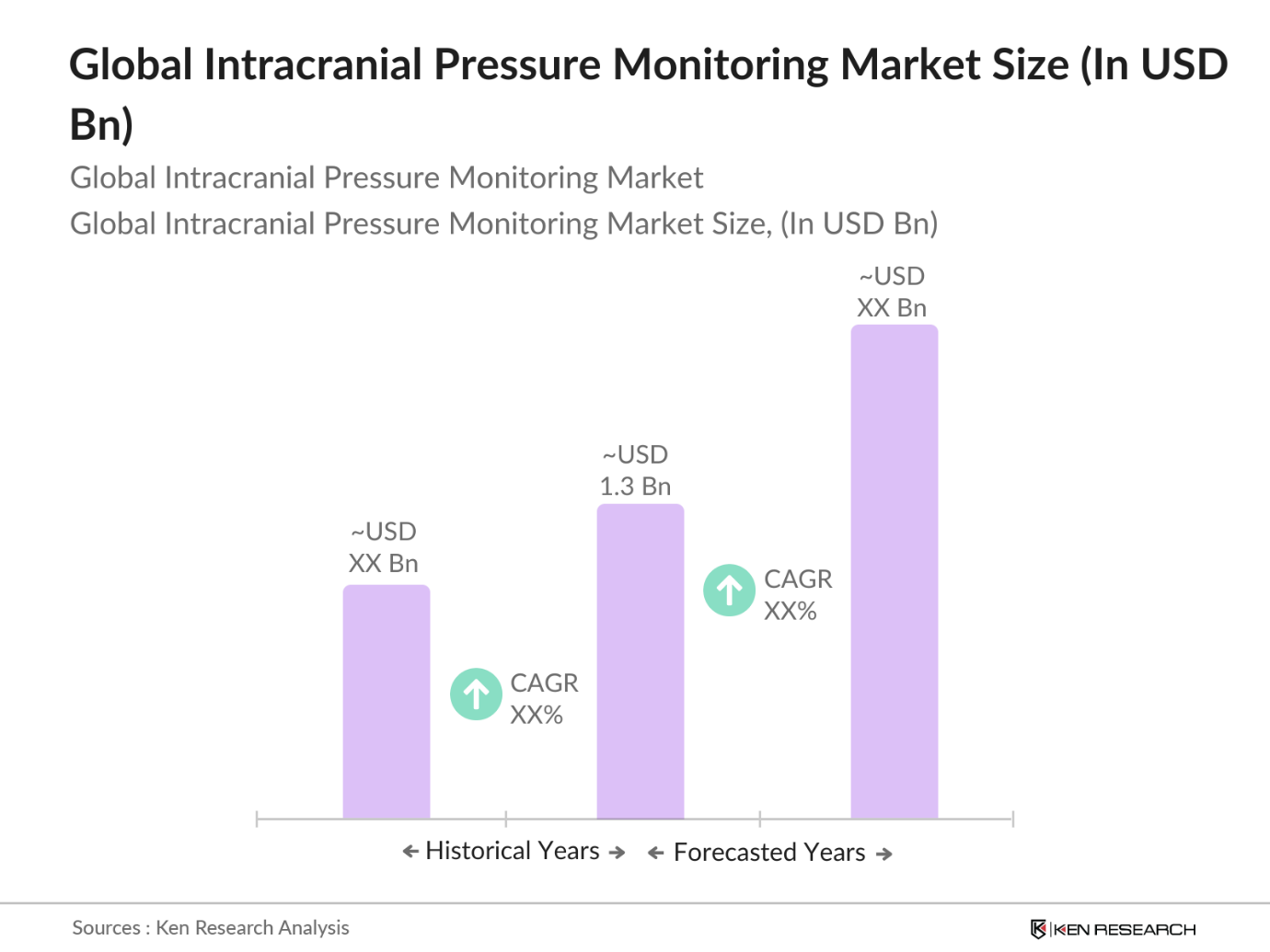
- The global intracranial pressure (ICP) monitoring market is valued at USD 1.3 billion, driven primarily by the increasing prevalence of neurological conditions such as traumatic brain injuries (TBI), strokes, and hydrocephalus. These conditions necessitate continuous monitoring in critical care environments, propelling demand for ICP devices. In addition, technological advancements, such as the development of non-invasive ICP monitoring techniques, have contributed to the market's expansion, providing a cost-effective and safer alternative for patients.
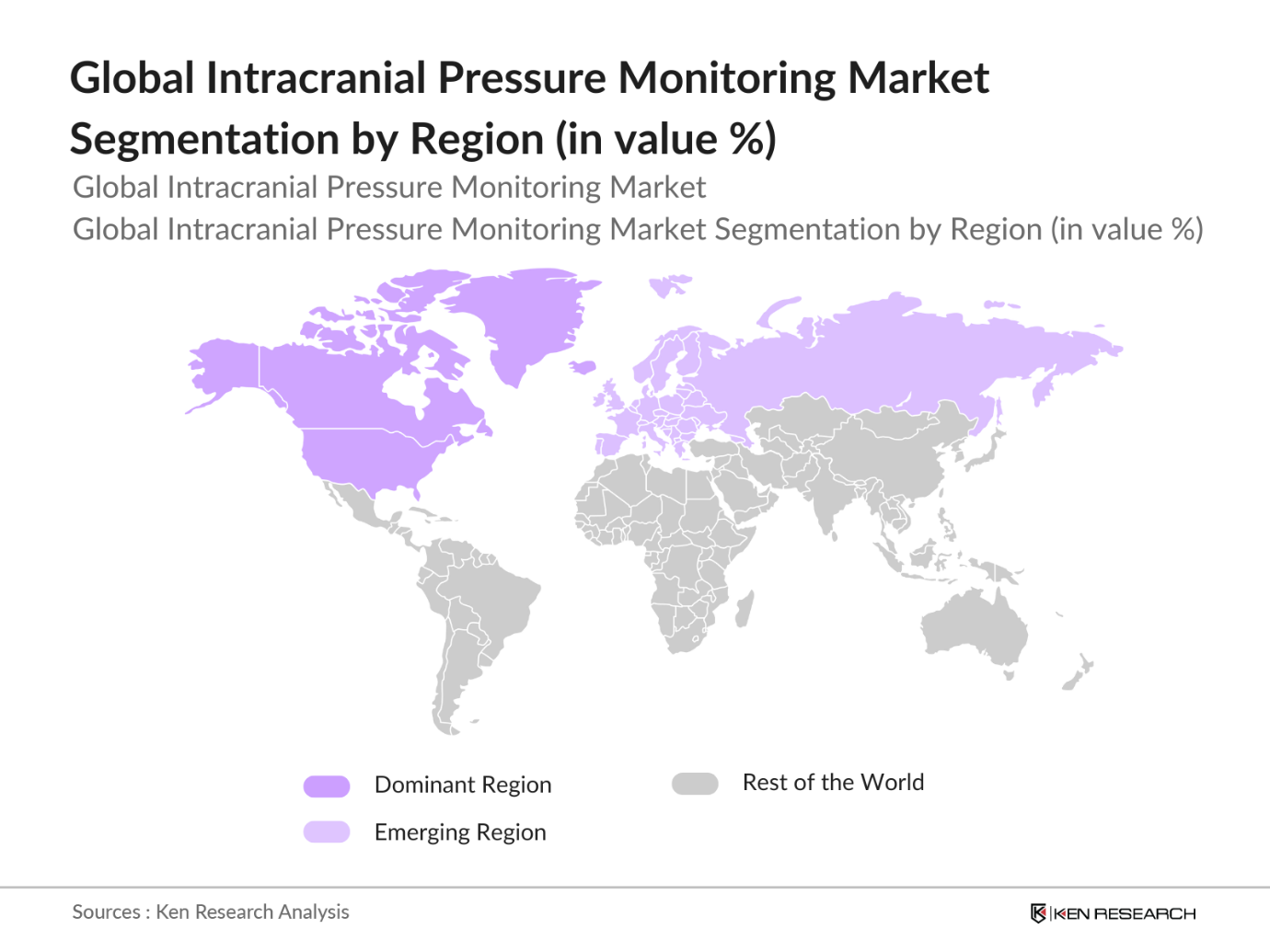
- Countries such as the United States, Germany, and Japan dominate the ICP monitoring market due to their advanced healthcare infrastructure, high incidence of neurological disorders, and significant investments in research and development. These regions also benefit from government initiatives supporting neurocritical care and robust reimbursement policies for medical devices, which encourage the adoption of advanced ICP monitoring technologies.
- In 2024, the U.S. Food and Drug Administration (FDA) continued to regulate and approve ICP monitoring devices to ensure safety and efficacy. More than 50 new ICP devices were approved in the past three years, ensuring that hospitals and healthcare providers have access to the latest technology. The FDAs stringent regulatory framework requires that all devices meet specific standards, including biocompatibility, accuracy, and reliability, which are crucial for neurocritical care applications.
Global Intracranial Pressure Monitoring Market Segmentation
- By Application: The market is further segmented by application into traumatic brain injury (TBI), intracerebral hemorrhage, stroke, hydrocephalus, and others (including cerebral edema and CNS infections). Traumatic brain injury (TBI) is the dominant sub-segment due to the high number of cases requiring continuous ICP monitoring. TBI patients need immediate and accurate ICP measurement to prevent further brain damage, and this has driven a strong demand for reliable ICP devices in emergency settings.
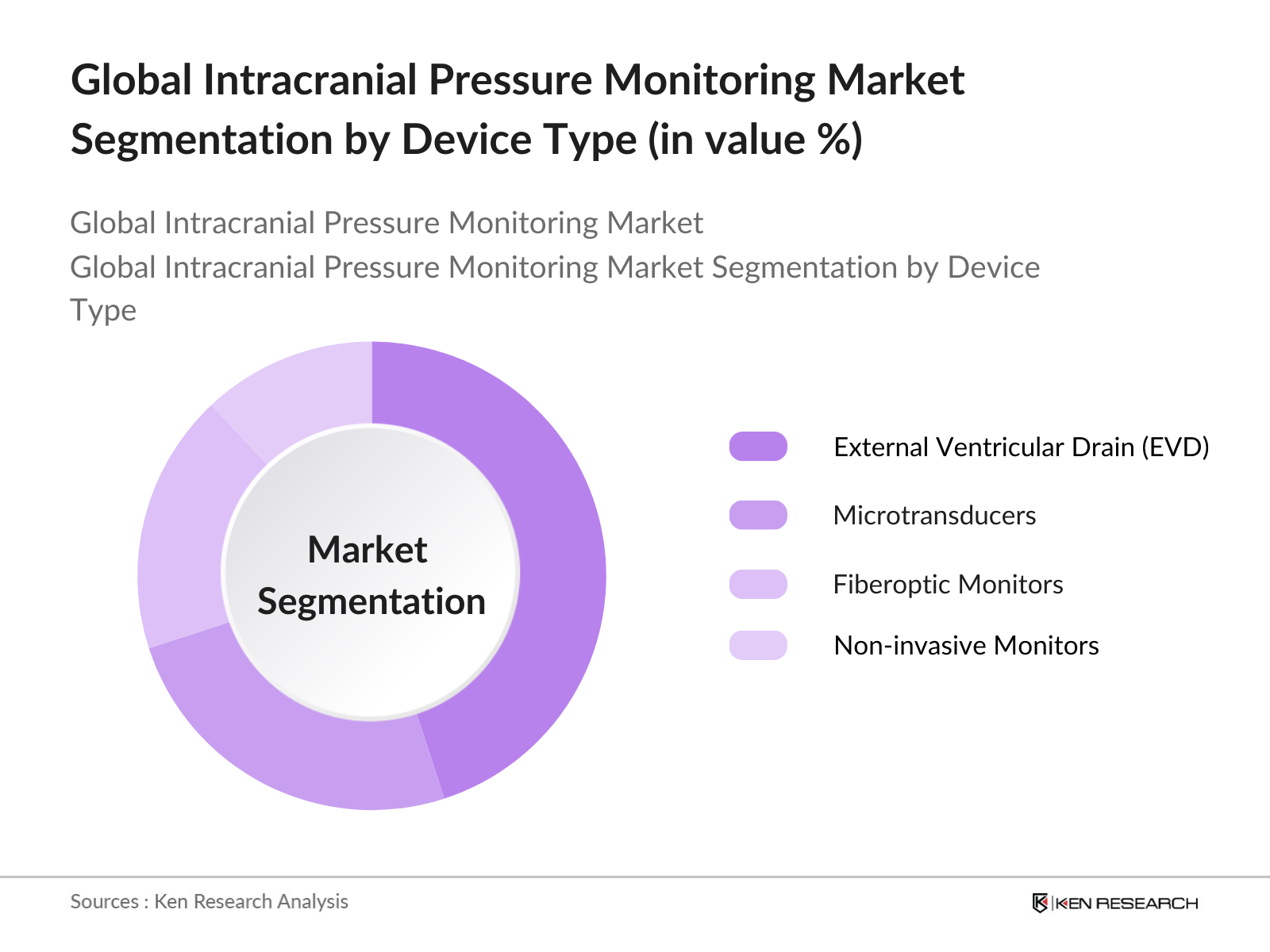
- By Device Type: The global intracranial pressure monitoring market is segmented by device type into external ventricular drains (EVD), microtransducers, fiberoptic monitors, and non-invasive monitors. Recently, external ventricular drains (EVD) have dominated the market under this segmentation. This is primarily due to their widespread use in critical care settings for managing severe brain injuries and hydrocephalus. EVDs are reliable and offer real-time monitoring of cerebrospinal fluid pressure, making them the gold standard in ICP monitoring, especially in trauma centers and intensive care units (ICUs).
- By Region: The global ICP monitoring market is also segmented by region into North America, Europe, Asia Pacific, Middle East & Africa, and Latin America. North America has the dominant market share due to its well-established healthcare system, high awareness about neurological disorders, and the presence of key market players. Additionally, the growing aging population and government support for neurocritical care programs have further propelled market growth in this region.
Global Intracranial Pressure Monitoring Market Competitive Landscape
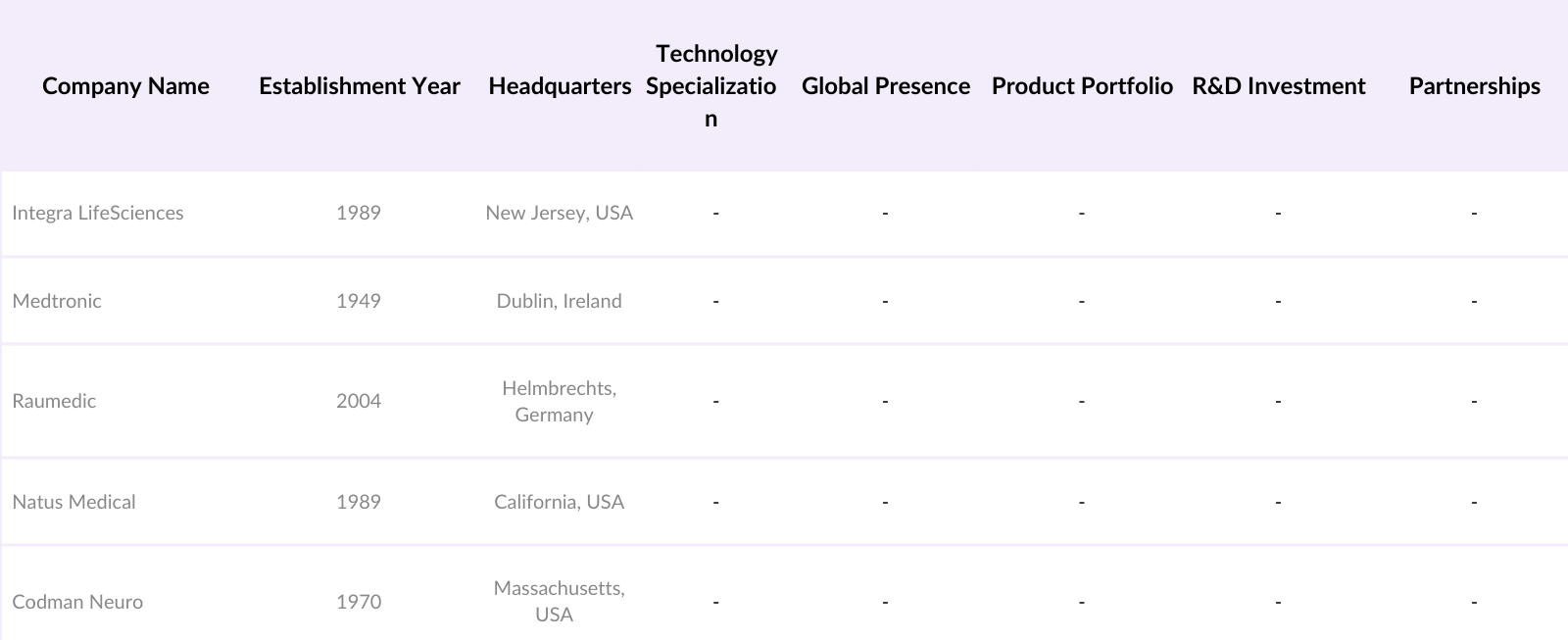
The global intracranial pressure monitoring market is highly competitive, with major companies investing in R&D, mergers, and acquisitions to maintain market leadership. The key players are continuously innovating to offer advanced ICP monitoring solutions, such as non-invasive devices and wearable technology. The competitive landscape is dominated by a mix of global medical device manufacturers and specialized companies offering neurocritical care solutions.
Global Intracranial Pressure Monitoring Market Analysis
Global Intracranial Pressure Monitoring Market Growth Drivers
- Rising Incidence of Traumatic Brain Injuries: The incidence of traumatic brain injuries (TBI) continues to rise globally, with more than 69 million people suffering from TBIs annually. In the United States alone, there are over 1.5 million TBI-related hospital visits every year. Globally, road traffic accidents, falls, and sports injuries are the leading causes of TBI. ICP monitoring is essential for managing severe TBI patients, where elevated intracranial pressure can lead to secondary brain damage. This increasing burden of TBI is driving the demand for advanced intracranial pressure monitoring devices in healthcare settings across both developed and emerging markets.
- Increased Adoption of ICP Monitoring in Critical Care: The integration of ICP monitoring in critical care units has expanded significantly in recent years due to its importance in managing conditions such as severe traumatic brain injuries, subarachnoid hemorrhages, and stroke-related complications. There are currently more than 1,000 neuro-critical care units (NCCUs) worldwide, with the U.S. and Europe having the highest number. Hospitals are increasingly adopting ICP monitoring due to improved clinical outcomes in neurocritical patients. This increased utilization in critical care is a key driver of market growth as hospitals aim to enhance patient survival rates and reduce neurological damage.
- Aging Population and Increased Neurological Disorders: The aging population is driving an increase in neurological disorders like stroke, Alzheimers disease, and Parkinsons disease, leading to greater demand for ICP monitoring. In 2024, over 55 million people worldwide were living with dementia, and an estimated 15 million people suffer from strokes annually. The elderly population, particularly those aged over 65, is projected to constitute more than 16% of the global population, leading to a higher incidence of neurological disorders. ICP monitoring is essential for managing these conditions in critical care settings, further driving demand for monitoring devices.
Global Intracranial Pressure Monitoring Market Challenges
- High Cost of Monitoring Devices: ICP monitoring devices are often expensive, making them less accessible, especially in low-income countries. A standard ICP monitor can cost upwards of $10,000, and the price for advanced devices can be significantly higher. This cost barrier limits the adoption of ICP monitoring in emerging markets, where healthcare budgets are constrained. Even in developed markets, the high cost of these devices is a challenge for smaller healthcare facilities and rural hospitals, where budgets for critical care technologies are limited.
- Invasive Nature of Some Monitoring Techniques: Many ICP monitoring techniques, such as ventriculostomy, involve invasive procedures that carry risks such as infections, hemorrhages, and other complications. It is estimated that approximately 10-15% of invasive ICP monitoring procedures result in complications. This risk limits the widespread adoption of these techniques, especially in regions where less invasive alternatives are not readily available. The invasiveness of some ICP monitoring techniques also contributes to patient hesitation and lower adoption rates in non-critical care settings.
Global Intracranial Pressure Monitoring Market Future Outlook
Over the next five years, the global intracranial pressure monitoring market is expected to witness steady growth, driven by increasing investments in healthcare infrastructure, advancements in neurocritical care technologies, and the rising global incidence of traumatic brain injuries and strokes. Furthermore, the demand for non-invasive ICP monitoring devices is expected to surge as healthcare providers seek safer, less invasive diagnostic options. Government support and policies encouraging the adoption of cutting-edge medical devices will also play a significant role in propelling the market forward.
Global Intracranial Pressure Monitoring Market Opportunities
- Adoption of Non-Invasive Monitoring Techniques: Non-invasive ICP monitoring techniques are gaining traction, as they eliminate the risks associated with invasive procedures. Recent advancements in ultrasound-based and MRI-based ICP monitoring methods have improved the accuracy of non-invasive devices, with over 200 hospitals globally adopting these techniques in 2024. The growing demand for safer, non-invasive options is particularly strong in regions with limited access to neurocritical care infrastructure. Non-invasive monitoring presents an opportunity to expand ICP monitoring adoption in both high- and low-resource settings.
- Emerging Markets in Asia-Pacific and MEA: The Asia-Pacific and Middle East & Africa regions present significant opportunities for the growth of the ICP monitoring market. Countries like India and Saudi Arabia have seen increased investment in healthcare infrastructure, with government healthcare spending in India reaching $180 billion in 2024. Similarly, the UAE is focusing on expanding its neurocritical care services as part of broader healthcare reforms. The rising incidence of neurological conditions and traumatic injuries, coupled with improving healthcare access, makes these regions attractive for ICP monitoring device manufacturers.
Scope of the Report
|
By Device Type |
External Ventricular Drain (EVD) Microtransducers Fiberoptic Monitors Non-invasive Monitors |
|
By Technology |
Invasive Monitoring Non-invasive Monitoring |
|
By Application |
Traumatic Brain Injury (TBI) Intracerebral Hemorrhage Stroke Hydrocephalus Others (Cerebral Edema, CNS Infections) |
|
By End-User |
Hospitals Trauma Centers Ambulatory Surgical Centers (ASCs) Home Care Settings |
|
By Region |
North America Europe Asia Pacific Middle East & Africa Latin America |
Products
Key Target Audience
Neurological Device Manufacturers
Hospitals and Trauma Centers
Critical Care Units (ICUs)
Government and Regulatory Bodies (FDA, CE)
Investor and Venture Capitalist Firms
Research and Development (R&D) Departments
Banks and Financial Institutions
Neurosurgery and Neurocritical Care Specialists
Healthcare Procurement and Distribution Companies
Companies
Players Mentioned in the Report
Integra LifeSciences
Medtronic
Raumedic
Natus Medical
Codman Neuro
Spiegelberg
Sophysa
Boston Neurosciences
Nihon Kohden Corporation
HyperBranch Medical Technology
Table of Contents
1. Global Intracranial Pressure Monitoring Market Overview
1.1. Definition and Scope
1.2. Market Taxonomy
1.3. Market Growth Rate (Invasiveness level, neurological applications, critical care expansion)
1.4. Market Segmentation Overview
2. Global Intracranial Pressure Monitoring Market Size (In USD Bn)
2.1. Historical Market Size
2.2. Key Market Developments and Milestones
2.3. Growth Trends in Neurosurgery and Neurology (Device Utilization in Hospitals and ICUs)
3. Global Intracranial Pressure Monitoring Market Analysis
3.1. Growth Drivers
3.1.1. Rising Incidence of Traumatic Brain Injuries (TBI)
3.1.2. Increased Adoption of ICP Monitoring in Critical Care
3.1.3. Technological Advancements in ICP Devices
3.1.4. Aging Population and Increased Neurological Disorders
3.2. Market Challenges
3.2.1. High Cost of Monitoring Devices
3.2.2. Invasive Nature of Some Monitoring Techniques
3.2.3. Lack of Skilled Professionals in Emerging Markets
3.3. Opportunities
3.3.1. Adoption of Non-Invasive Monitoring Techniques
3.3.2. Emerging Markets in Asia-Pacific and MEA
3.3.3. Government Healthcare Spending and Initiatives
3.4. Trends
3.4.1. Miniaturization and Portability of ICP Devices
3.4.2. Integration with Telemedicine and Remote Monitoring
3.4.3. Wearable ICP Monitors
3.5. Government Regulations
3.5.1. FDA Approvals and Guidelines
3.5.2. CE Marking for ICP Devices
3.5.3. National Healthcare Policies Supporting Neurocritical Care
3.6. SWOT Analysis
3.7. Stakeholder Ecosystem
3.8. Porters Five Forces
3.9. Competition Ecosystem
4. Global Intracranial Pressure Monitoring Market Segmentation
4.1. By Device Type (In Value %)
4.1.1. External Ventricular Drain (EVD)
4.1.2. Microtransducers
4.1.3. Fiberoptic Monitors
4.1.4. Non-invasive Monitors
4.2. By Technology (In Value %)
4.2.1. Invasive Monitoring
4.2.2. Non-invasive Monitoring
4.3. By Application (In Value %)
4.3.1. Traumatic Brain Injury (TBI)
4.3.2. Intracerebral Hemorrhage
4.3.3. Stroke
4.3.4. Hydrocephalus
4.3.5. Others (Cerebral Edema, CNS Infections)
4.4. By End-User (In Value %)
4.4.1. Hospitals
4.4.2. Trauma Centers
4.4.3. Ambulatory Surgical Centers (ASCs)
4.4.4. Home Care Settings
4.5. By Region (In Value %)
4.5.1. North America
4.5.2. Europe
4.5.3. Asia Pacific
4.5.4. Middle East & Africa
4.5.5. Latin America
5. Global Intracranial Pressure Monitoring Market Competitive Analysis
5.1. Detailed Profiles of Major Companies
5.1.1. Integra LifeSciences
5.1.2. Medtronic
5.1.3. Raumedic
5.1.4. Natus Medical
5.1.5. Codman Neuro
5.1.6. Spiegelberg
5.1.7. Sophysa
5.1.8. Boston Neurosciences
5.1.9. Nihon Kohden Corporation
5.1.10. HyperBranch Medical Technology
5.1.11. Orsan Medical Technologies
5.1.12. Integra NeuroSciences
5.1.13. Vittamed
5.1.14. Edwards Lifesciences
5.1.15. Chongqing Sunshine Medical Instruments
5.2. Cross Comparison Parameters (Revenue, Technology Specialization, Market Reach, Device Portfolio, Hospital Partnerships, Regulatory Approvals, Manufacturing Capacity, R&D Investments)
5.3. Market Share Analysis
5.4. Strategic Initiatives
5.5. Mergers and Acquisitions
5.6. Investment Analysis
5.7. Venture Capital Funding
5.8. Government Grants
5.9. Private Equity Investments
6. Global Intracranial Pressure Monitoring Market Regulatory Framework
6.1. Medical Device Classification and Approvals
6.2. Compliance Requirements for Manufacturers
6.3. Certification and Quality Assurance
7. Global Intracranial Pressure Monitoring Market Future Size (In USD Bn)
7.1. Key Factors Driving Future Growth
7.2. Future Market Segmentation
8. Global Intracranial Pressure Monitoring Market Future Segmentation
8.1. By Device Type (In Value %)
8.2. By Technology (In Value %)
8.3. By Application (In Value %)
8.4. By End-User (In Value %)
8.5. By Region (In Value %)
9. Global Intracranial Pressure Monitoring Market Analysts Recommendations
9.1. TAM/SAM/SOM Analysis
9.2. Customer Cohort Analysis
9.3. Marketing Strategies
9.4. White Space Opportunity Analysis
Disclaimer Contact UsResearch Methodology
Step 1: Identification of Key Variables
The research process begins with identifying the critical variables that influence the global intracranial pressure monitoring market. This involves comprehensive desk research to map key stakeholders, analyze technological advancements, and assess current market penetration.
Step 2: Market Analysis and Construction
This phase involves gathering historical market data, including market share, product penetration, and healthcare facility statistics, to construct an accurate market landscape. This analysis also focuses on ICP device sales, usage in critical care settings, and advancements in non-invasive technology.
Step 3: Hypothesis Validation and Expert Consultation
To validate market data, we conducted consultations with industry experts from leading ICP device manufacturers. Their insights provided a deeper understanding of market trends, challenges, and growth drivers.
Step 4: Research Synthesis and Final Output
The final step involves synthesizing all research data into actionable insights. This includes direct feedback from healthcare providers and ICP device manufacturers to validate the accuracy of our market projections and ensure a comprehensive view of the global intracranial pressure monitoring market.
Frequently Asked Questions
01. How big is the global intracranial pressure monitoring market?
The global intracranial pressure monitoring market is valued at USD 1.3 billion, driven by increasing demand for advanced neurocritical care solutions.
02. What are the challenges in the global intracranial pressure monitoring market?
Challenges include the high cost of monitoring devices, the invasive nature of traditional methods, and a lack of skilled professionals in emerging markets.
03. Who are the major players in the global intracranial pressure monitoring market?
Key players include Integra LifeSciences, Medtronic, Raumedic, Natus Medical, and Codman Neuro. These companies dominate due to their strong product portfolios, advanced technologies, and global reach.
04. What are the growth drivers of the global intracranial pressure monitoring market?
The market is propelled by increasing cases of traumatic brain injuries, strokes, and neurological conditions. Additionally, technological advancements in non-invasive monitoring and growing healthcare infrastructure contribute to market growth.
Why Buy From Us?

What makes us stand out is that our consultants follows Robust, Refine and Result (RRR) methodology. i.e. Robust for clear definitions, approaches and sanity checking, Refine for differentiating respondents facts and opinions and Result for presenting data with story

We have set a benchmark in the industry by offering our clients with syndicated and customized market research reports featuring coverage of entire market as well as meticulous research and analyst insights.

While we don't replace traditional research, we flip the method upside down. Our dual approach of Top Bottom & Bottom Top ensures quality deliverable by not just verifying company fundamentals but also looking at the sector and macroeconomic factors.

With one step in the future, our research team constantly tries to show you the bigger picture. We help with some of the tough questions you may encounter along the way: How is the industry positioned? Best marketing channel? KPI's of competitors? By aligning every element, we help maximize success.

Our report gives you instant access to the answers and sources that other companies might choose to hide. We elaborate each steps of research methodology we have used and showcase you the sample size to earn your trust.

If you need any support, we are here! We pride ourselves on universe strength, data quality, and quick, friendly, and professional service.