
Global Jellyfish Tanks Market Outlook to 2030
Region:Global
Author(s):Sanjna Verma
Product Code:KROD6306
November 2024
85
About the Report
Global Jellyfish Tanks Market Overview
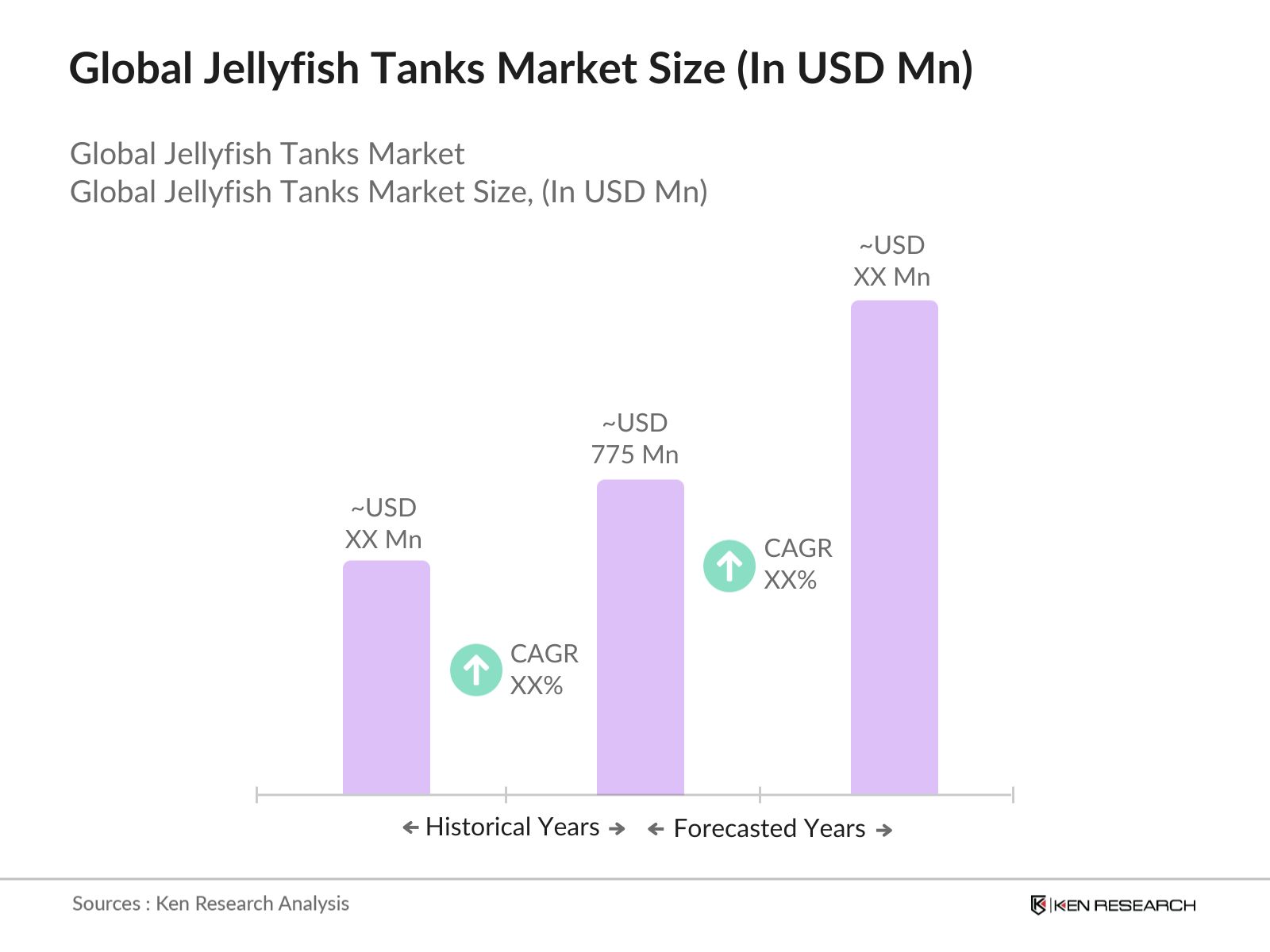
- The global jellyfish tanks market, valued at USD 775 million, is driven by the growing demand for unique home and office aquariums. The market is expanding due to the rising popularity of jellyfish as exotic pets among hobbyists and homeowners looking to enhance aesthetic appeal through innovative home decor. The proliferation of commercial establishments, such as luxury hotels and high-end restaurants, incorporating jellyfish tanks as a key design feature, also contributes to the market's growth.
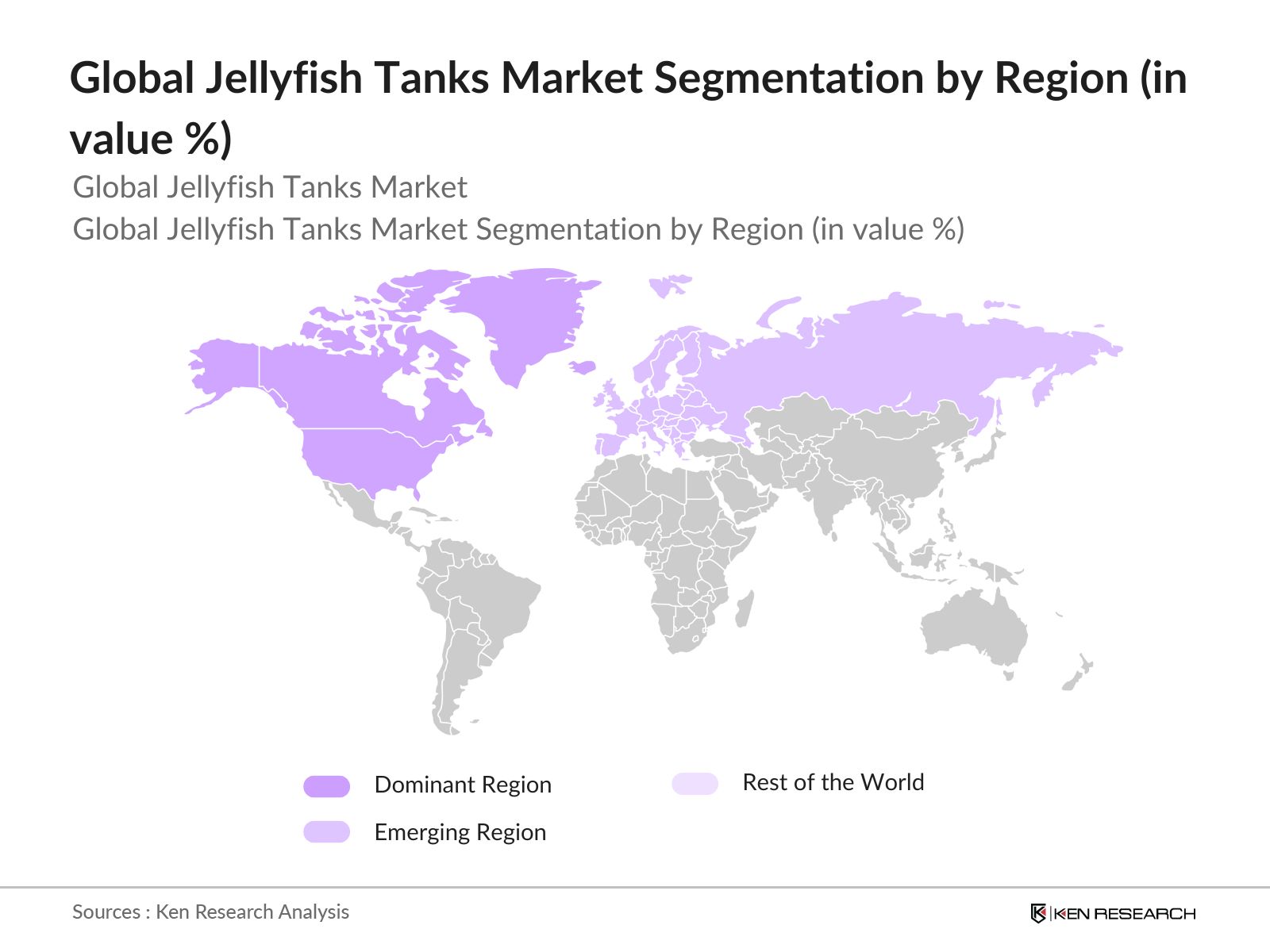
- Countries in North America, such as the United States, along with certain regions in Europe, dominate the market due to their well-established pet industries and disposable income levels that facilitate the purchase and maintenance of high-cost aquariums. The dominance of these regions is a result of their cultural affinity for aquariums and substantial investment in luxurious living spaces, where jellyfish tanks serve as both design elements and status symbols.
- Government regulations surrounding the ownership and trade of exotic marine species, including jellyfish, are becoming stricter. In 2023, the European Union revised its animal welfare policies to include more stringent guidelines on the treatment and trade of marine species, emphasizing ethical practices. This regulatory framework ensures that jellyfish are sourced ethically and that tanks meet environmental and welfare standards.
Global Jellyfish Tanks Market Segmentation
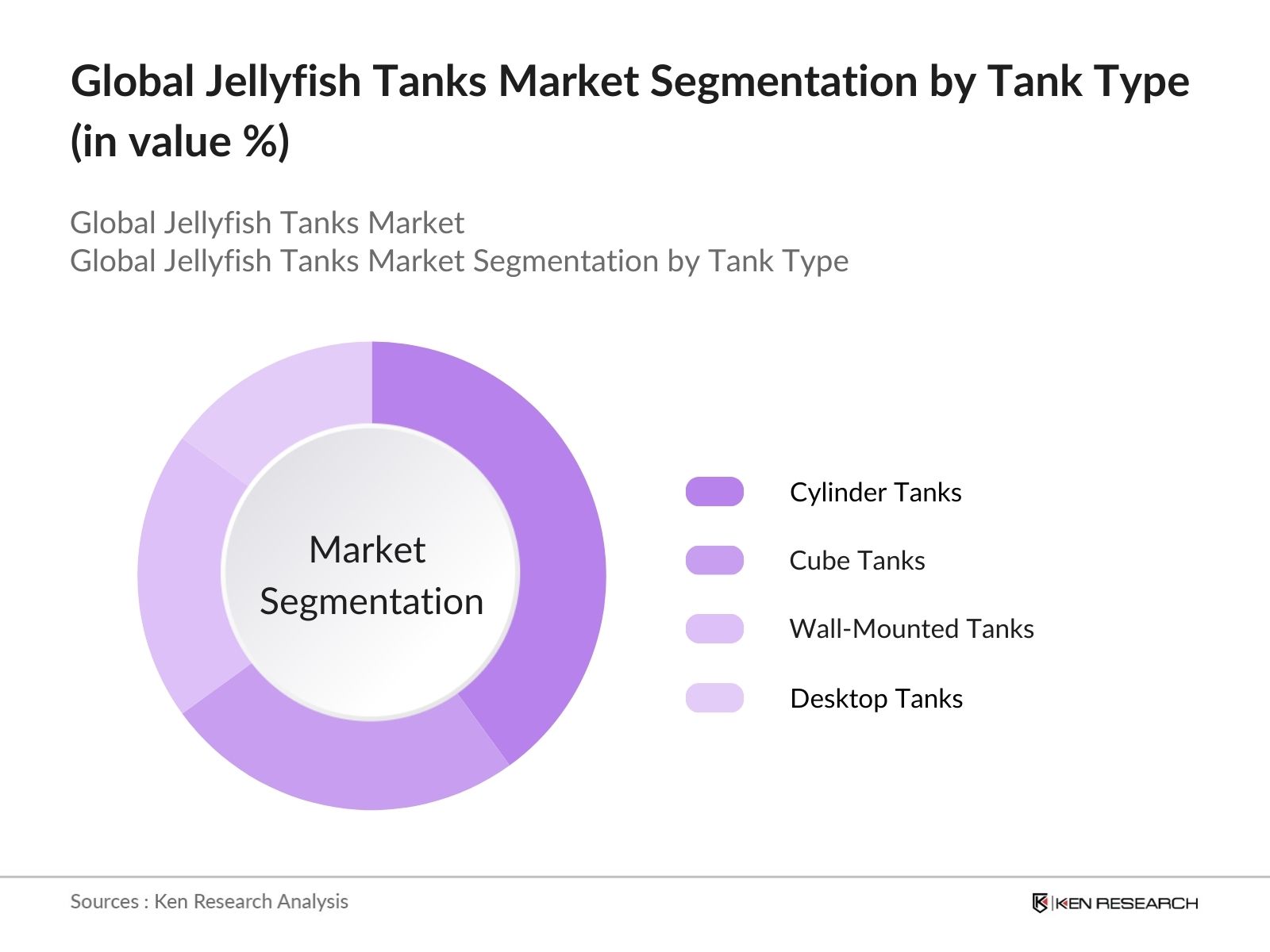
By Tank Type: The jellyfish tanks market is segmented by tank type into cylinder tanks, cube tanks, wall-mounted tanks, and desktop tanks. Cylinder tanks dominate the market due to their 360-degree viewing capabilities, providing an optimal visual experience for jellyfish observation. These tanks are favored for public spaces, such as aquariums and luxury hotels, where aesthetic appeal is crucial. The seamless and elegant design of cylinder tanks makes them ideal for commercial settings, enhancing their dominance in the market.
By Region: The global jellyfish tanks market is segmented by region into North America, Europe, Asia Pacific, Middle East & Africa, and Latin America. North America holds the largest market share, driven by the strong pet care industry and consumer preference for high-end, unique aquarium setups. Europe follows closely, with increasing adoption of jellyfish tanks in luxury residential projects and commercial establishments, particularly in countries like the UK and Germany. The Asia Pacific region is seeing rapid growth due to the rising interest in marine aquariums in Japan and China.
By Material: The market is segmented by material into acrylic, glass, and fiberglass. Acrylic tanks hold the largest market share as they offer greater flexibility in design and shape compared to glass tanks, allowing for the construction of more intricate and aesthetically pleasing tanks. Acrylics lightweight nature and durability also make it the preferred choice for custom-designed tanks. These features have contributed to the growing use of acrylic tanks in both residential and commercial spaces.
Global Jellyfish Tanks Market Competitive Landscape
The jellyfish tanks market is relatively consolidated, with a few key players dominating the space. Major companies in the market are focusing on innovation in tank design, eco-friendly materials, and smart technologies to gain a competitive edge. The competitive landscape is shaped by companies that emphasize the integration of automation, aesthetics, and functionality in their tank designs. Key players are also expanding into new geographic markets to capitalize on the growing demand for exotic aquariums.
|
Company |
Established |
Headquarters |
Tank Type Focus |
Innovations |
Eco-Friendly Materials |
Global Reach |
Customization Options |
Smart Aquarium Tech |
Customer Support |
|
Jellyfish Art |
2008 |
USA |
- |
- |
- |
- |
- |
- |
- |
|
Cubic Aquarium Systems |
2011 |
UK |
- |
- |
- |
- |
- |
- |
- |
|
Reef Aquaria Design |
2005 |
USA |
- |
- |
- |
- |
- |
- |
- |
|
Midwest Custom Aquariums |
2001 |
USA |
- |
- |
- |
- |
- |
- |
- |
|
Jellyfish Warehouse |
2010 |
USA |
- |
- |
- |
- |
- |
- |
- |
Global Jellyfish Market Analysis
Growth Drivers
- Popularity of Unique and Exotic Pets: The increasing preference for unique and exotic pets like jellyfish has surged globally, especially among luxury homeowners and aquarists. In 2024, the demand for exotic pets is supported by the steady growth in disposable incomes and urbanization. According to the World Bank, the global urban population in 2023 reached over 4.4 billion, a key factor influencing pet ownership trends. In countries like the U.S. and parts of Europe, jellyfish tanks are becoming a popular decorative feature. This rise has been amplified by social media trends, driving interest in specialized setups for aesthetic appeal.
- Rise in Home Decor and Aquascaping: The trend of integrating aquariums into home decor, particularly for luxury residences, has driven the demand for jellyfish tanks. The global home decor market has expanded as disposable incomes rise, with World Bank data indicating a global GDP per capita of over $12,000 in 2023. Homeowners are increasingly investing in aesthetic aquascaping to align with interior designs. This is particularly evident in the Asia-Pacific and North American regions, where aquascaping is a growing hobby, supported by an increasing interest in unique biophilic designs in homes and commercial spaces.
- Growing Trend of Biophilic Design: Biophilic design, which integrates natural elements into built environments, has gained significant momentum in recent years. The rising focus on mental well-being and connection with nature in urban settings has made aquatic elements, like jellyfish tanks, a popular addition. TheWorld Cities Report 2022states that urban areas are home to about55%of the global population, projected to rise to68%by 2050, encouraging interior designers to adopt biophilic elements to promote sustainability and well-being.
Challenges
- High Installation and Maintenance Costs: The cost of setting up and maintaining jellyfish tanks is high due to the need for specialized equipment, including filtration and circulation systems. This poses a barrier for potential consumers. The cost of luxury jellyfish tanks can range from $1,500 to $10,000, depending on customization and size. Moreover, regular maintenance requires a professional skill set, further increasing long-term expenses.
- Limited Awareness and Expertise in Jellyfish Keeping: Jellyfish are delicate creatures, requiring specific conditions to survive in captivity, including consistent water quality and flow. The lack of awareness about the complexities of jellyfish keeping, along with limited expertise among aquarium hobbyists, restricts the market growth. This knowledge gap is a significant hurdle for mass-market adoption, especially in regions with limited access to marine specialists.
Global Jellyfish Market Future Outlook
The global jellyfish tanks market is expected to grow significantly, driven by advancements in tank technology and increasing consumer interest in unique, exotic aquariums. As luxury homes and commercial spaces continue to incorporate aesthetically pleasing jellyfish tanks, the market will benefit from expanding demand in both developed and developing economies. Additionally, growing environmental consciousness will push manufacturers to explore eco-friendly and sustainable tank materials.
Market Opportunities
- Technological Advancements in Tank Circulation and Filtration: Recent innovations in aquarium technology have made jellyfish tanks more accessible by improving filtration and water circulation systems. Smart tanks equipped with automatic filtration and temperature controls are becoming more popular among hobbyists. In 2024, government-backed research into marine technology has resulted in the development of eco-friendly filtration systems that consume less energy and improve water quality.
- Rising Interest from Luxury Hotels and Spas: Luxury hotels and spas have increasingly adopted jellyfish tanks as part of their decor to create calming, nature-inspired environments. Jellyfish tanks, in particular, are highlighted as a popular choice among luxury designs. These installations not only serve aesthetic purposes but also create a calming ambiance that can enhance the overall guest experience. This trend aligns with the biophilic design movement, contributing to the expansion of the jellyfish tank market in commercial spaces.
Scope of the Report
|
Segment |
Sub-Segment |
|
Tank Type |
Cylinder Tanks Cube Tanks Wall-Mounted Tanks Desktop Tanks |
|
Material |
Acrylic Glass Fiberglass |
|
Distribution Channel |
Online Stores Offline Retailers Specialized Aquarium Shops |
|
Application |
Residential Commercial (Hotels, Restaurants, Spas) Public Aquariums |
|
Region |
North America Europe Asia Pacific Middle East & Africa Latin America |
Products
Key Target Audience
Jellyfish Aquarium Manufacturers
Commercial Aquarium Designers
Luxury Hotels and Restaurants
Interior Designers (specializing in luxury decor)
Investors and Venture Capitalist Firms
Government and Regulatory Bodies (U.S. Fish and Wildlife Service, CITES)
Eco-Friendly Tank Material Providers
Companies
Players Mentioned in the Report
Jellyfish Art
Cubic Aquarium Systems
Reef Aquaria Design
Midwest Custom Aquariums
Jellyfish Warehouse
Octopus Aquariums
Tunze Aquarientechnik GmbH
Waterbox Aquariums
Red Sea Aquariums
Aqueon
Elos Aquariums
Deep Sea Aquatics
Innovative Marine
Aquarium Architecture
Jellyfish.co
Table of Contents
1. Global Jellyfish Tanks Market Overview
1.1 Definition and Scope
1.2 Market Taxonomy
1.3 Market Growth Rate
1.4 Market Segmentation Overview
2. Global Jellyfish Tanks Market Size (In USD Bn)
2.1 Historical Market Size
2.2 Year-On-Year Growth Analysis
2.3 Key Market Developments and Milestones
3. Global Jellyfish Tanks Market Analysis
3.1 Growth Drivers
3.1.1 Popularity of Unique and Exotic Pets
3.1.2 Rise in Home Decor and Aquascaping
3.1.3 Growing Trend of Biophilic Design
3.1.4 Increasing Interest in Eco-Friendly Living
3.2 Market Challenges
3.2.1 High Installation and Maintenance Costs
3.2.2 Limited Awareness and Expertise in Jellyfish Keeping
3.2.3 Regulatory and Ethical Considerations for Exotic Species
3.3 Opportunities
3.3.1 Technological Advancements in Tank Circulation and Filtration
3.3.2 Rising Interest from Luxury Hotels and Spas
3.3.3 Development of Automated and Smart Aquarium Systems
3.4 Trends (Integration of lighting and filtration systems, use of nano tanks, online sales and customizable tank offerings)
3.4.1 Increasing Demand for Customizable Tanks
3.4.2 Growth in Online Marketplaces for Aquatic Products
3.4.3 Focus on Sustainable Materials in Tank Construction
3.5 Government Regulations (Import/export laws for exotic species, animal welfare standards, marine conservation policies)
3.5.1 Regulatory Framework for Exotic Marine Species
3.5.2 Import and Export Licensing for Jellyfish
3.5.3 Environmental Impact and Conservation Laws
3.6 SWOT Analysis
3.7 Stake Ecosystem (Manufacturers, suppliers, consumers, regulatory bodies)
3.8 Porters Five Forces
3.9 Competitive Ecosystem
4. Global Jellyfish Tanks Market Segmentation
4.1 By Tank Type (In Value %)
4.1.1 Cylinder Tanks
4.1.2 Cube Tanks
4.1.3 Wall-Mounted Tanks
4.1.4 Desktop Tanks
4.2 By Material (In Value %)
4.2.1 Acrylic
4.2.2 Glass
4.2.3 Fiberglass
4.3 By Distribution Channel (In Value %)
4.3.1 Online Stores
4.3.2 Offline Retailers
4.3.3 Specialized Aquarium Shops
4.4 By Application (In Value %)
4.4.1 Residential
4.4.2 Commercial (Hotels, Restaurants, Spas)
4.4.3 Public Aquariums
4.5 By Region (In Value %)
4.5.1 North America
4.5.2 Europe
4.5.3 Asia Pacific
4.5.4 Middle East & Africa
4.5.5 Latin America
5. Global Jellyfish Tanks Market Competitive Analysis
5.1 Detailed Profiles of Major Companies
5.1.1 Jellyfish Art
5.1.2 Cubic Aquarium Systems
5.1.3 Reef Aquaria Design
5.1.4 Aquarium Architecture
5.1.5 Midwest Custom Aquariums
5.1.6 Jellyfish Warehouse
5.1.7 Octopus Aquariums
5.1.8 Jellyfish.co
5.1.9 Tunze Aquarientechnik GmbH
5.1.10 Waterbox Aquariums
5.1.11 Red Sea Aquariums
5.1.12 Aqueon
5.1.13 Elos Aquariums
5.1.14 Deep Sea Aquatics
5.1.15 Innovative Marine
5.2 Cross Comparison Parameters (Tank Size, Tank Material, Filtration Type, Automation Features, Price Range, Warranty Coverage, Production Capacity, Global Reach)
5.3 Market Share Analysis
5.4 Strategic Initiatives
5.5 Mergers and Acquisitions
5.6 Investment Analysis
5.7 Venture Capital Funding
5.8 Government Grants
5.9 Private Equity Investments
6. Global Jellyfish Tanks Market Regulatory Framework
6.1 Import/Export Regulations for Exotic Species
6.2 Environmental Standards and Sustainability
6.3 Certification and Compliance Requirements
7. Global Jellyfish Tanks Future Market Size (In USD Bn)
7.1 Future Market Size Projections
7.2 Key Factors Driving Future Market Growth
8. Global Jellyfish Tanks Future Market Segmentation
8.1 By Tank Type (In Value %)
8.2 By Material (In Value %)
8.3 By Distribution Channel (In Value %)
8.4 By Application (In Value %)
8.5 By Region (In Value %)
9. Global Jellyfish Tanks Market Analysts Recommendations
9.1 TAM/SAM/SOM Analysis
9.2 Customer Cohort Analysis
9.3 Marketing Initiatives
9.4 White Space Opportunity Analysis
Research Methodology
Step 1: Identification of Key Variables
The initial phase involves constructing an ecosystem map encompassing all major stakeholders within the global jellyfish tanks market. This step is underpinned by extensive desk research, utilizing secondary and proprietary databases to gather comprehensive industry-level information. The primary objective is to identify and define the critical variables that influence market dynamics.
Step 2: Market Analysis and Construction
In this phase, we compile and analyze historical data on the global jellyfish tanks market. This includes assessing market penetration, tank type preferences, and resultant revenue generation. Furthermore, an evaluation of customer feedback and satisfaction statistics will be conducted to ensure the reliability and accuracy of revenue estimates.
Step 3: Hypothesis Validation and Expert Consultation
Market hypotheses will be developed and subsequently validated through computer-assisted telephone interviews (CATIs) with industry experts representing a diverse array of companies. These consultations will provide valuable operational and financial insights directly from industry practitioners, refining and corroborating the market data.
Step 4: Research Synthesis and Final Output
The final phase involves direct engagement with multiple aquarium manufacturers and retailers to acquire detailed insights into product segments, sales performance, consumer preferences, and other pertinent factors. This interaction will verify and complement the statistics derived from the bottom-up approach, ensuring a comprehensive, accurate, and validated analysis of the global jellyfish tanks market.
Frequently Asked Questions
01 How big is the global jellyfish tanks market?
The global jellyfish tanks market is valued at USD 775 million, driven by the increasing demand for exotic aquarium setups and the integration of these tanks into luxury living spaces.
02 What are the challenges in the global jellyfish tanks market?
Challenges in Global Jellyfish Market include high installation and maintenance costs, limited consumer knowledge regarding jellyfish care, and the ethical concerns surrounding the keeping of exotic marine species.
03 Who are the major players in the global jellyfish tanks market?
Key players of Global Jellyfish Market include Jellyfish Art, Cubic Aquarium Systems, Reef Aquaria Design, Midwest Custom Aquariums, and Jellyfish Warehouse, who dominate due to their innovation in tank design and emphasis on customization.
04 What are the growth drivers of the global jellyfish tanks market?
The Global Jellyfish market is driven by factors such as the growing trend of exotic pets, the demand for visually appealing aquarium setups in commercial establishments, and advancements in aquarium technology.
Why Buy From Us?

What makes us stand out is that our consultants follows Robust, Refine and Result (RRR) methodology. i.e. Robust for clear definitions, approaches and sanity checking, Refine for differentiating respondents facts and opinions and Result for presenting data with story

We have set a benchmark in the industry by offering our clients with syndicated and customized market research reports featuring coverage of entire market as well as meticulous research and analyst insights.

While we don't replace traditional research, we flip the method upside down. Our dual approach of Top Bottom & Bottom Top ensures quality deliverable by not just verifying company fundamentals but also looking at the sector and macroeconomic factors.

With one step in the future, our research team constantly tries to show you the bigger picture. We help with some of the tough questions you may encounter along the way: How is the industry positioned? Best marketing channel? KPI's of competitors? By aligning every element, we help maximize success.

Our report gives you instant access to the answers and sources that other companies might choose to hide. We elaborate each steps of research methodology we have used and showcase you the sample size to earn your trust.

If you need any support, we are here! We pride ourselves on universe strength, data quality, and quick, friendly, and professional service.