Ken Research Logo

Global Juice Concentrates Market Outlook to 2030

Region:Global

Author(s):Vijay Kumar

Product Code:KROD1830

Published On

December 2024

Total pages

96

About the Report

Global Juice Concentrates Market Overview

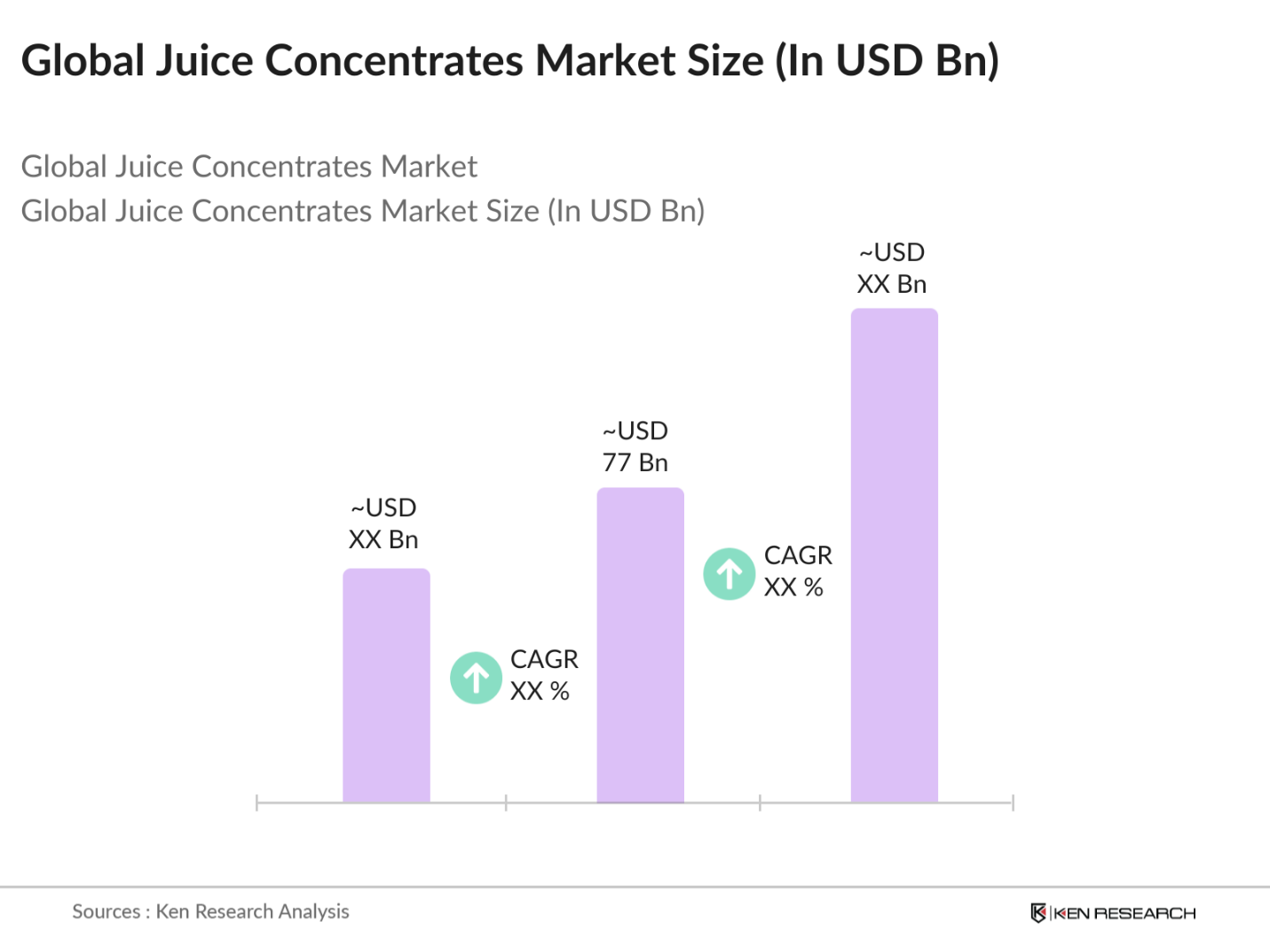
  • The global juice concentrates market reached a valuation of USD 77 billion in 2023, driven by the increasing demand for natural and minimally processed food products. The market's growth is propelled by the rising health awareness among consumers, which has led to a preference for natural sweeteners over artificial ones. The expansion of the beverage and food processing industries, where juice concentrates are used extensively, is further enhancing market demand across various regions.
  • Major players in the market include Dhler Group, Archer Daniels Midland Company (ADM), Ingredion Incorporated, SunOpta, and Kerry Group. These companies have solidified their market positions through significant investments in research and development, strategic acquisitions, and a focus on expanding their global distribution networks. Their ability to innovate and introduce high-quality juice concentrates has enabled them to maintain a competitive edge in the market.
  • In 2023, Dhler Group expanded its product portfolio by launching a new range of organic juice concentrates designed for the health and wellness industry. This new product line, featuring enhanced nutritional profiles and sustainable packaging, has gained significant traction in Europe and North America. Additionally, Ingredion Incorporated introduced a new line of clean-label juice concentrates targeting the beverage and confectionery sectors, highlighting the increasing demand for natural and clean-label ingredients.
  • North America dominates the market, primarily due to the high demand for natural and organic food ingredients and the presence of key players. The region's focus on health and wellness, coupled with strong consumer purchasing power, contributes to its leadership position. Government initiatives like the U.S. FDAs updated nutritional guidelines promoting reduced sugar intake are also driving the adoption of juice concentrates as natural sweeteners across various food and beverage applications.

Global Juice Concentrates Market Size

Global Juice Concentrates Market Segmentation

The Global Juice Concentrates Market can be segmented based on Product Type, Application, and Region.

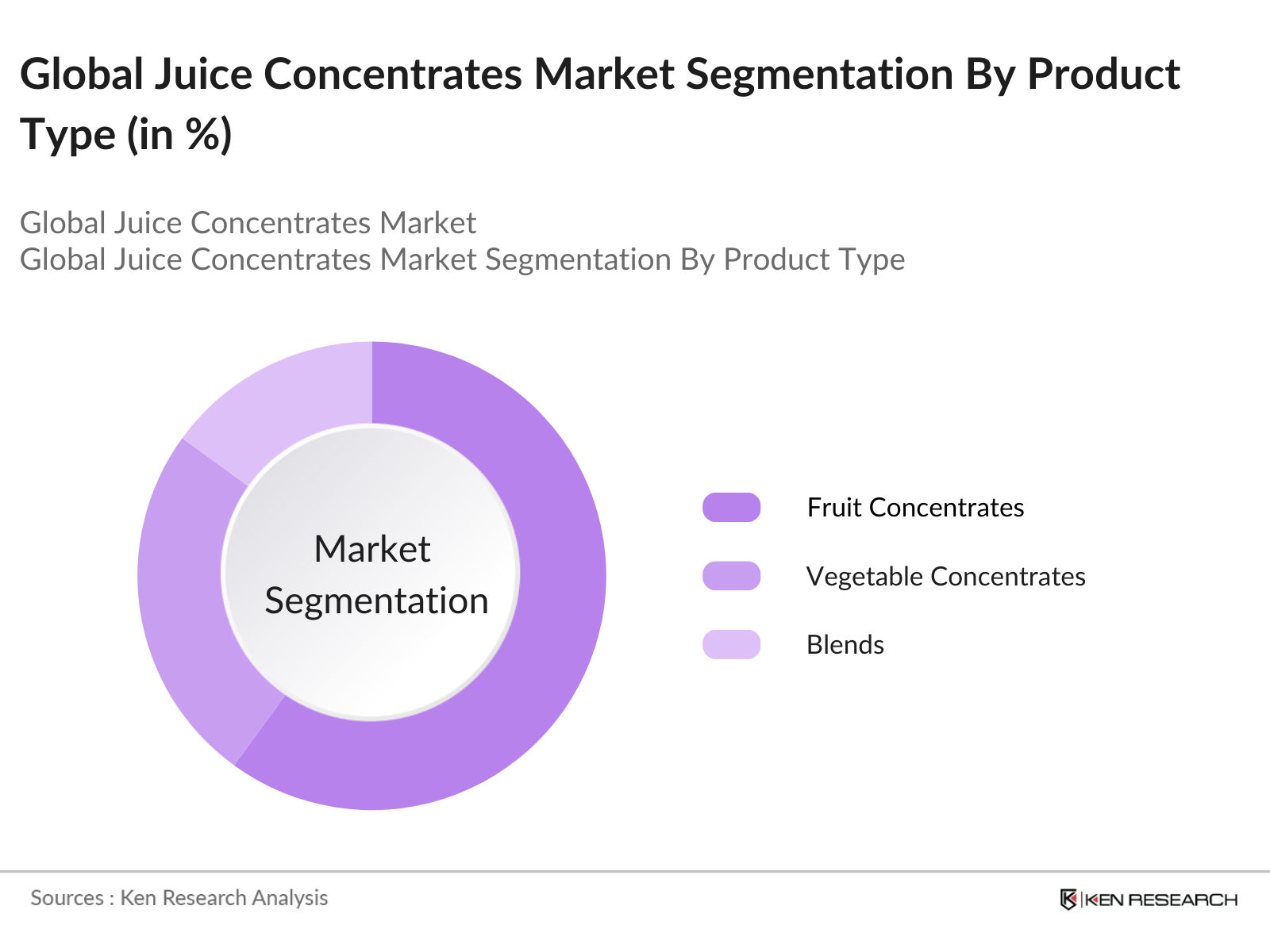
By Product Type: The market is segmented by product type into fruit concentrates, vegetable concentrates, and blends. In 2023, fruit concentrates held the dominant market share due to their widespread use in the beverage industry where natural flavor and sweetness are essential. The increasing demand for natural and organic beverages, coupled with the preference for reduced sugar content, has reinforced the dominance of this segment.
Global Juice Concentrates Market Segmentation By Product Type

By Application: The market is further segmented by application into beverages, dairy and frozen desserts, bakery and confectionery, and others. The beverages segment accounted for the largest market share in 2023, driven by the high consumption of juice concentrates in the production of juices, smoothies, and flavored beverages. The growing focus on health and wellness among consumers is expected to continue driving demand for beverages made with natural ingredients like juice concentrates.

Global Juice Concentrates Market Segmentation By Application

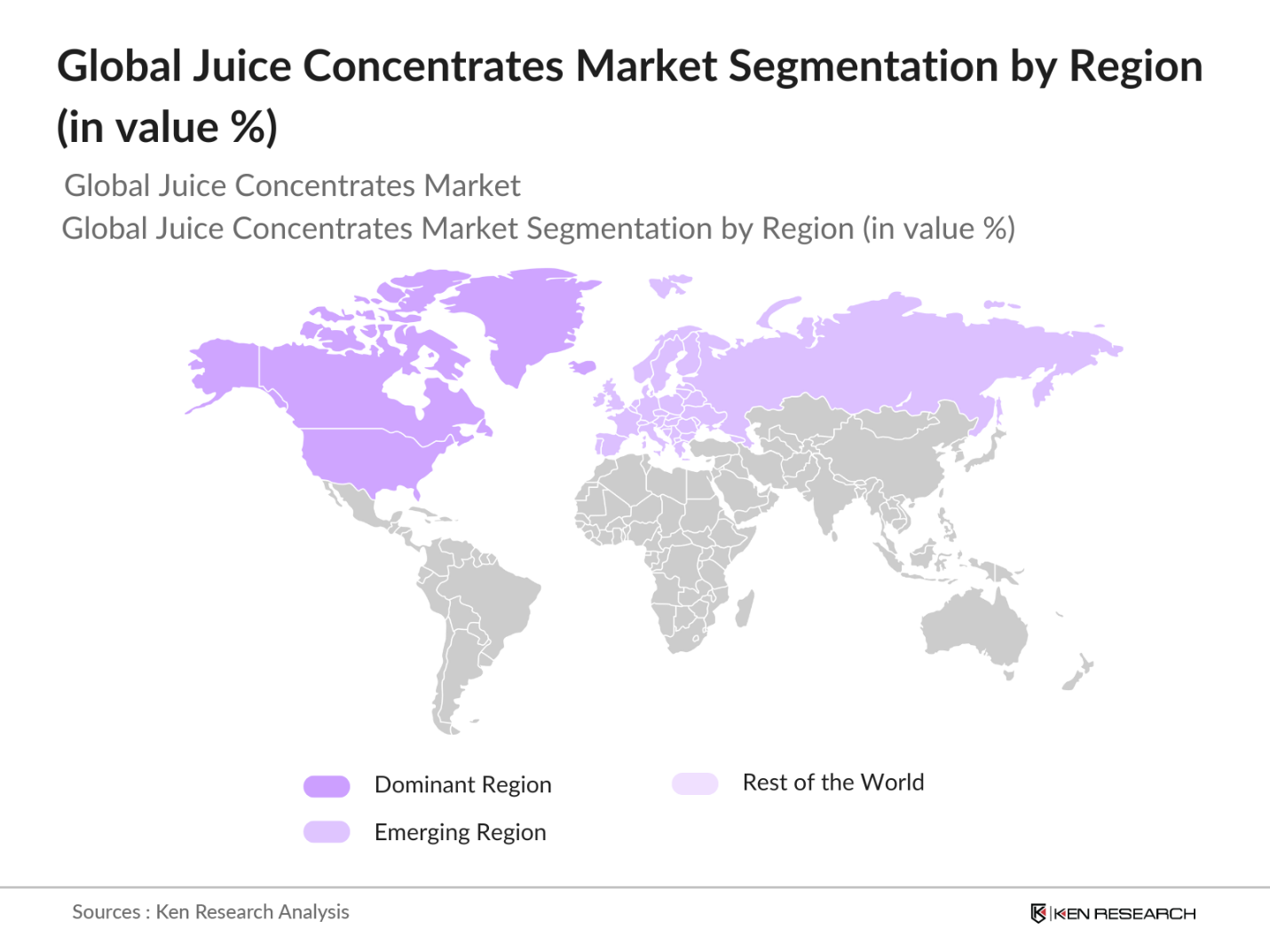
By Region: The market is segmented into North America, Europe, Asia-Pacific, Latin America, and MEA. North America dominated the market in 2023, driven by the high concentration of key players, strong consumer demand for natural products, and supportive regulatory frameworks. The demand for juice concentrates in North America is particularly strong in the beverage and food processing industries, where natural and clean-label ingredients are highly valued.
Global Juice Concentrates Market Segmentation By Region

Global Juice Concentrates Market Competitive Landscape

Company Name

Headquarters

Establishment Year

Dhler Group

Germany

1838

Archer Daniels Midland Co.

USA

1902

Ingredion Incorporated

USA

1906

SunOpta

Canada

1973

Kerry Group

Ireland

1972

  • Archer Daniels Midland (ADM): ADM is a leading player in the global juice concentrates market, which was valued at around USD 71.05 billion in 2021. The market is expected to grow at a CAGR of 4.9% until 2030, driven by the rising consumer demand for healthy and convenient food choices. This growth reflects a strong trend toward natural and nutritious products.
  • Ingredion Incorporated: In January 2024, Ingredion partnered with FoodTech start-up Better Juice, Ltd. to develop innovative sugar reduction solutions for juice-based beverages. Ingredion Ventures, the company's investment arm, led Better Juice's Series A funding round, aiming to accelerate the adoption of its cutting-edge sugar reduction technology in the U.S. juice market. This collaboration focuses on enhancing healthier beverage options.

Global Juice Concentrates Market Analysis

Market Growth Drivers

  • Rising Health Consciousness Among Consumers: The increasing awareness of the health benefits of consuming natural and minimally processed foods is driving demand for juice concentrates. As consumers shift towards healthier diets, the demand for natural sweeteners and flavors, such as juice concentrates, has surged, particularly in the beverage industry.
  • Expansion of the Beverage Industry: The global beverage industrys growth, particularly in emerging markets, is a significant driver for the juice concentrates market. The rising consumption of juices, smoothies, and functional beverages, which use juice concentrates as a key ingredient, is expected to fuel market growth in the coming years.
  • Technological Advancements in Juice Extraction and Processing: Advances in extraction and processing technologies are enabling the production of higher-quality juice concentrates with better flavor retention and nutritional value. These innovations are helping manufacturers meet consumer demand for premium and natural products, thereby driving market growth.

Global Juice Concentrates Market Challenges

  • High Costs of Raw Materials and Production: The juice concentrates market faces challenges due to the fluctuating costs of raw fruits and vegetables, which can impact production costs and profit margins. These fluctuations are often caused by factors such as climate change, supply chain disruptions, and agricultural policy changes.
  • Regulatory and Compliance Issues: Stringent regulations regarding food safety, labeling, and organic certifications can pose challenges for juice concentrate manufacturers. Navigating these regulations requires significant investment in compliance and quality assurance, which can be a barrier to entry for smaller players.

Global Juice Concentrates Market Government Initiatives

  • European Union's Farm to Fork Strategy (2023): This initiative aims to promote sustainable food systems and reduce the consumption of added sugars. The strategy encourages the use of natural sweeteners like juice concentrates in food and beverage products, thereby supporting market growth in Europe.
  • Chinas National Nutrition Plan (2021-2030): Under this plan, the Chinese government promotes the consumption of natural fruit juices over sugary beverages, encouraging the use of juice concentrates. This initiative aims to improve the dietary habits of the population and supports the growth of the juice concentrates market in China.

Global Juice Concentrates Market Future Market Outlook

The Global Juice Concentrates Market is poised for significant growth, driven by increasing consumer demand for natural and healthy products, technological advancements, and expanding markets in emerging regions.

Future Market Trends

  • Growth in Organic Juice Concentrates: The demand for organic juice concentrates has surged significantly in recent years, driven by consumer preferences for natural and clean-label products. In 2024, the organic juice concentrates market accounted for USD 5 billion, up from USD 3.5 billion in 2022, according to the Organic Trade Association. This growth is attributed to the increasing awareness of the health benefits associated with organic products and the rising availability of organic fruit and vegetable concentrates in retail and foodservice channels.
  • Innovation in Flavors and Blends: There has been a notable trend towards innovation in flavors and blends within the juice concentrates market. Manufacturers are experimenting with unique fruit and vegetable combinations to meet the diverse taste preferences of consumers. In 2024, the introduction of exotic fruit blends such as acai, dragon fruit, and elderberry led to a 12% increase in market demand for specialty juice concentrates, as reported by the International Flavor and Fragrance Association.

Scope of the Report

By Product

Fruit Concentrates

Vegetable Concentrates

Blends

By Source

Citrus Fruits

Berries

Tropical Fruits

Other Fruits

Vegetables

By Region

North America

Europe

APAC

Latin America

MEA

By Application

Beverages

Dairy and Frozen Desserts

Bakery and Confectionery

Others

Products

Key Target Audience Organizations and Entities Who Can Benefit by Subscribing This Report:

  • Beverage Manufacturers

  • Food Processing Companies

  • Dairy Product Manufacturers

  • Confectionery Manufacturers

  • Health and Wellness Brands

  • Organic and Natural Food Retailers

  • Government and Regulatory Bodies (e.g., FDA, EFSA)

  • Investment and Venture Capitalist Firms

Time Period Captured in the Report

  • Historical Period: 2018-2023

  • Base Year: 2023

  • Forecast Period: 2023-2028

Companies

Players Mentioned in the Report

  • Dhler Group

  • Archer Daniels Midland Co.

  • Ingredion Incorporated

  • SunOpta

  • Kerry Group

  • Sudzucker AG

  • SVZ International B.V.

  • China Haisheng Juice Holdings Co. Ltd.

  • AGRANA Beteiligungs-AG

  • Diana Food

Table of Contents

1. Global Juice Concentrates Market Overview

1.1. Definition and Scope

1.2. Market Taxonomy

1.3. Market Growth Rate

1.4. Market Segmentation Overview

2. Global Juice Concentrates Market Size (in USD Billion), 2018-2023

2.1. Historical Market Size

2.2. Year-on-Year Growth Analysis

2.3. Key Market Developments and Milestones

3. Global Juice Concentrates Market Analysis

3.1. Growth Drivers

3.1.1. Rising Health Consciousness and Demand for Natural Ingredients

3.1.2. Expansion of the Beverage Industry

3.1.3. Technological Advancements in Juice Extraction and Processing

3.2. Restraints

3.2.1. High Costs of Raw Materials and Production

3.2.2. Regulatory and Compliance Issues

3.2.3. Competition from Fresh Juices and Alternatives

3.3. Opportunities

3.3.1. Increasing Demand for Organic and Clean-Label Products

3.3.2. Expansion into Emerging Markets

3.3.3. Innovations in Flavor Profiles and Blends

3.4. Trends

3.4.1. Growth in Organic Juice Concentrates

3.4.2. Innovation in Flavors and Blends

3.4.3. Sustainability and Eco-Friendly Packaging

3.5. Government Regulations

3.5.1. European Union's Farm to Fork Strategy

3.5.2. U.S. FDA Nutritional Guidelines

3.5.3. Chinas National Nutrition Plan

3.6. SWOT Analysis

3.7. Stakeholder Ecosystem

3.8. Competition Ecosystem

4. Global Juice Concentrates Market Segmentation, 2023

4.1. By Product Type (in Value %)

4.1.1. Fruit Concentrates

4.1.2. Vegetable Concentrates

4.1.3. Blends

4.2. By Application (in Value %)

4.2.1. Beverages

4.2.2. Dairy and Frozen Desserts

4.2.3. Bakery and Confectionery

4.2.4. Others

4.3. By Source (in Value %)

4.3.1. Citrus Fruits

4.3.2. Berries

4.3.3. Tropical Fruits

4.3.4. Other Fruits

4.3.5. Vegetables

4.4. By Region (in Value %)

4.4.1. North America

4.4.2. Europe

4.4.3. Asia-Pacific

4.4.4. Latin America

4.4.5. MEA

5. Global Juice Concentrates Market Cross Comparison

5.1. Detailed Profiles of Major Companies

5.1.1. Dhler Group

5.1.2. Archer Daniels Midland Co. (ADM)

5.1.3. Ingredion Incorporated

5.1.4. SunOpta

5.1.5. Kerry Group

5.2. Cross Comparison Parameters (No. of Employees, Headquarters, Inception Year, Revenue)

6. Global Juice Concentrates Market Competitive Landscape

6.1. Market Share Analysis

6.2. Strategic Initiatives

6.3. Mergers and Acquisitions

6.4. Investment Analysis

6.4.1. Venture Capital Funding

6.4.2. Government Grants

6.4.3. Private Equity Investments

7. Global Juice Concentrates Market Regulatory Framework

7.1. Food Safety and Labeling Standards

7.2. Compliance Requirements

7.3. Certification Processes

8. Global Juice Concentrates Market Future Size (in USD Billion), 2023-2028

8.1. Future Market Size Projections

8.2. Key Factors Driving Future Market Growth

9. Global Juice Concentrates Market Future Segmentation, 2028

9.1. By Product Type (in Value %)

9.2. By Application (in Value %)

9.3. By Source (in Value %)

9.4. By Region (in Value %)

10. Global Juice Concentrates Market Analysts Recommendations

10.1. TAM/SAM/SOM Analysis

10.2. Customer Cohort Analysis

10.3. Marketing Initiatives

10.4. White Space Opportunity Analysis

Disclaimer

Contact Us

Research Methodology

Step 1: Identifying Key Variables

Creating an ecosystem for all major entities within the market and referencing a combination of secondary and proprietary databases to conduct desk research. This step involves gathering industry-level information, identifying market trends, and understanding the competitive landscape to ensure a comprehensive analysis.

Step 2: Market Building

Collating statistics on the Global Juice Concentrates Market over the years, analyzing market penetration across various segments, and evaluating the performance of key market players. This includes reviewing production capacities, market shares, and sales data to accurately compute the revenue generated within the global juice concentrates market. Quality checks are conducted to ensure the accuracy and reliability of the data points shared.

Step 3: Validating and Finalizing

Developing market hypotheses and conducting Computer Assisted Telephone Interviews (CATIs) with industry experts and stakeholders from leading companies in the juice concentrates market. These interviews are crucial for validating the collected data, refining market forecasts, and obtaining operational and financial insights directly from industry representatives.

Step 4: Research Output

Engaging with multiple key players in the juice concentrates industry to understand the dynamics of product segments, customer needs, sales patterns, and market challenges. This step involves using a bottom-up approach to validate the data, ensuring that the final statistics and insights accurately reflect market conditions and support strategic decision-making.

Frequently Asked Questions

1. How big is the Global Juice Concentrates Market?

The global juice concentrates market reached a valuation of USD 77 billion in 2023, driven by the increasing demand for natural and minimally processed food products. The market's growth is propelled by the rising health awareness among consumers, which has led to a preference for natural sweeteners over artificial ones.

2. What are the challenges in the Global Juice Concentrates Market?

Challenges in the global juice concentrates market include high costs of raw materials and production, stringent regulatory requirements for food safety and labeling, and intense competition from fresh juices and alternative beverages.

3. Who are the major players in the Global Juice Concentrates Market?

Key players in the global juice concentrates market include Dhler Group, Archer Daniels Midland Company (ADM), Ingredion Incorporated, SunOpta, and Kerry Group. These companies lead the market due to their extensive product portfolios, strong distribution networks, and continuous innovation.

4. What are the growth drivers of the Global Juice Concentrates Market?

The market is driven by rising health consciousness among consumers, the expansion of the beverage industry, and technological advancements in juice extraction and processing. These factors contribute to the increasing demand for juice concentrates as natural sweeteners and flavor enhancers.

Why Buy From Us?

RRR
Refine Robust Result (RRR) Framework

What makes us stand out is that our consultants follows Robust, Refine and Result (RRR) methodology. i.e. Robust for clear definitions, approaches and sanity checking, Refine for differentiating respondents facts and opinions and Result for presenting data with story

Our Reach Is Unmatched

We have set a benchmark in the industry by offering our clients with syndicated and customized market research reports featuring coverage of entire market as well as meticulous research and analyst insights.

Research
Shifting the Research Paradigm

While we don't replace traditional research, we flip the method upside down. Our dual approach of Top Bottom & Bottom Top ensures quality deliverable by not just verifying company fundamentals but also looking at the sector and macroeconomic factors.

Insite
More Insights-Better Decisions

With one step in the future, our research team constantly tries to show you the bigger picture. We help with some of the tough questions you may encounter along the way: How is the industry positioned? Best marketing channel? KPI's of competitors? By aligning every element, we help maximize success.

Trust
Transparency and Trust

Our report gives you instant access to the answers and sources that other companies might choose to hide. We elaborate each steps of research methodology we have used and showcase you the sample size to earn your trust.

support
Round the Clock Support

If you need any support, we are here! We pride ourselves on universe strength, data quality, and quick, friendly, and professional service.

Why Client Choose Us?

400000+ Reports in repository
150+ Consulting project a year
100+ Analysts
8000+ Client Queries in 2022