
Global Kevlar Fiber Jacket Market Outlook to 2030
Region:Global
Author(s):Shambhavi
Product Code:KROD8983
December 2024
92
About the Report
Global Kevlar Fiber Jacket Market Overview
- The global Kevlar fiber jacket market is valued at USD 500 million, driven by growing consumer demand for durable, high-performance protective clothing. This demand is largely fueled by the material's unique properties such as high tensile strength, flexibility, and resistance to extreme temperatures, making it ideal for applications in military, industrial, and personal protection segments. The increasing awareness about workplace safety, as well as investments in law enforcement and military personnel protective gear, significantly contributes to the market's expansion, as confirmed by data from market intelligence s like the International Safety Equipment Association.
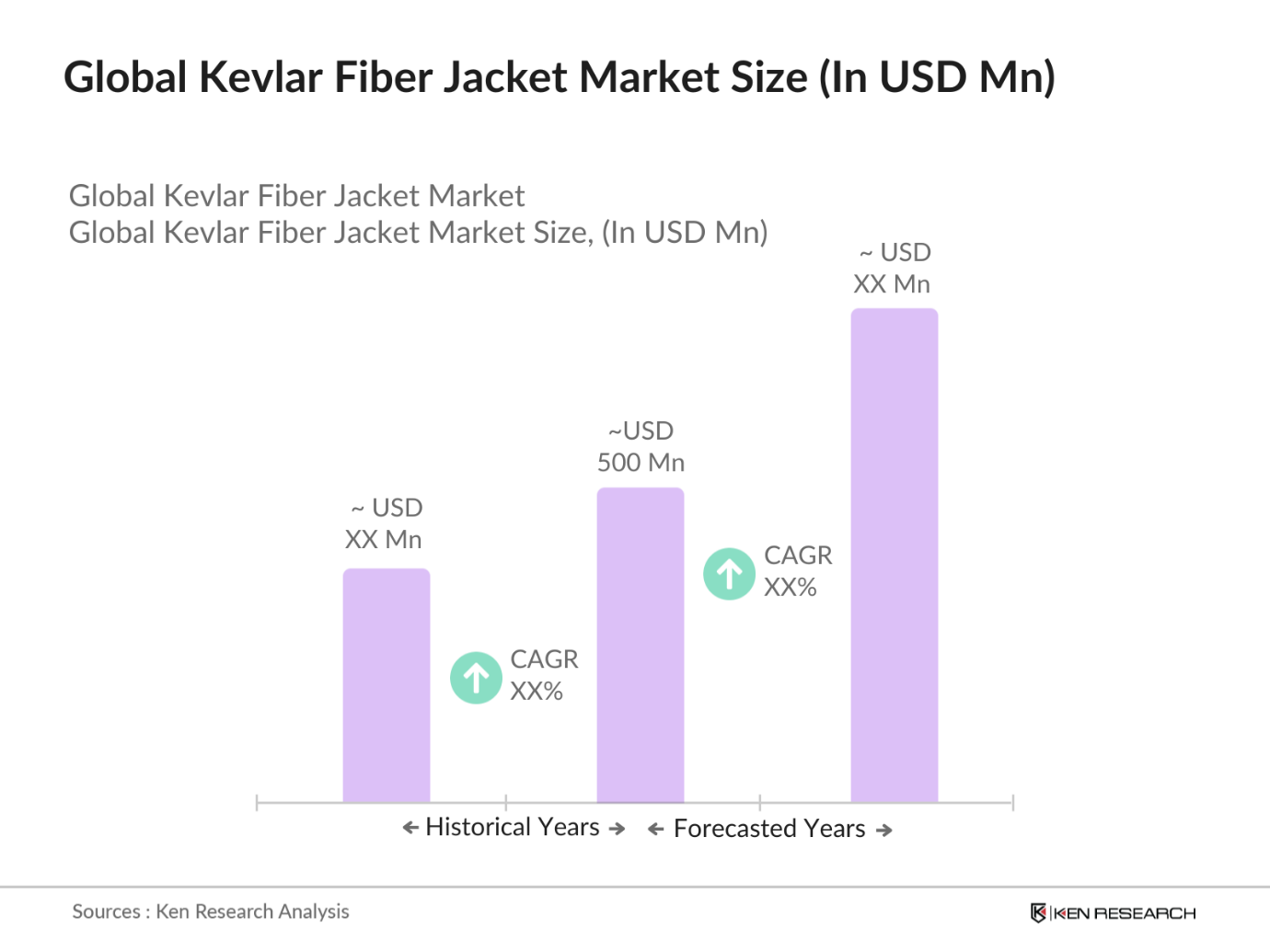
- North America and Europe are currently leading the Kevlar fiber jacket market. North America's dominance stems from its extensive defense sector investments and stringent safety regulations, fostering high demand for protective clothing. In Europe, countries such as Germany and France are at the forefront due to their focus on worker safety standards and advancements in industrial sectors. Asia-Pacific, particularly China and India, is emerging due to increased manufacturing activities and a rising awareness of occupational hazards among industries, solidifying its presence as a growth-oriented market.
- Governments worldwide enforce strict safety standards to ensure that protective clothing, including Kevlar fiber jackets, meets required safety levels. The U.S. Occupational Safety and Health Administration (OSHA) has implemented regulations under standard CFR 1910, ensuring that personal protective equipment meets specific performance benchmarks. These standards mandate testing for factors like puncture resistance and flame resistance, directly influencing manufacturers design and quality control processes, which increases production costs but improves user safety.
Global Kevlar Fiber Jacket Market Segmentation
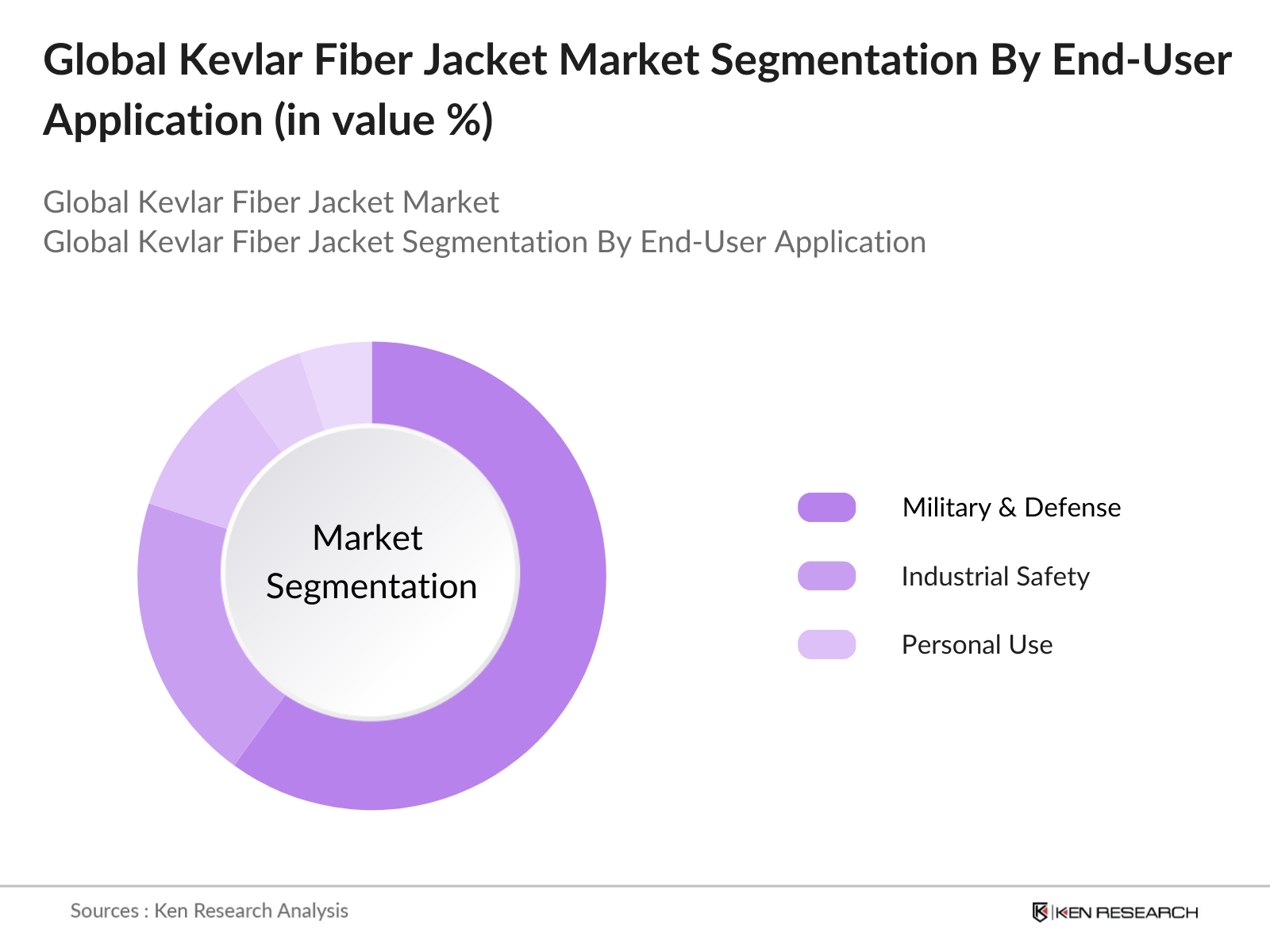
By End-User Application: The Kevlar fibre jacket market is segmented by end-user applications into Military & Dfense, Industrial Safety, and Personal Use. Kevlar jackets used in military and defence applications dominate the end-user segment due to their exceptional durability and resistance to ballistic impacts. The military sector prioritizes this material for soldier protection in combat scenarios, with high demand observed particularly in North America and Europe, where military expenditure remains substantial. The National Dfense Industrial Association reports significant investment in body armour development, ensuring continuous growth in this segment.
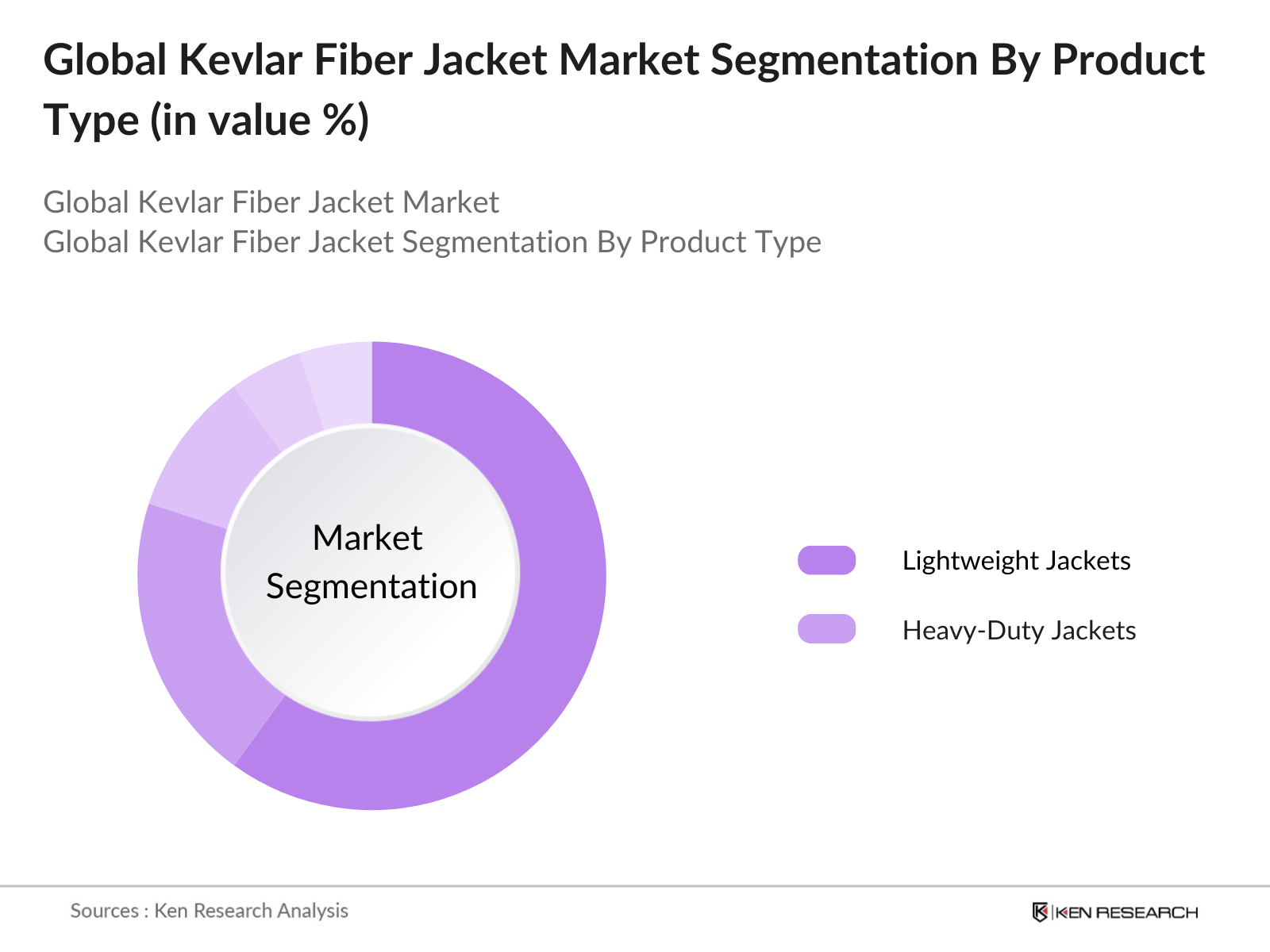
By Product Type: In the product type segmentation, Kevlar fibre jackets are classified into Lightweight Kevlar Jackets and Heavy-Duty Kevlar Jackets. Dominating the market under the product type segmentation, lightweight jackets are preferred for personal and industrial applications where flexibility and comfort are key requirements. These jackets are widely used across sectors that prioritize mobility, such as the manufacturing and automotive industries. Lightweight jackets offer an ideal balance between protection and ease of use, making them a staple in industrial safety gear, as reported by the Occupational Safety and Health Administration.
Global Kevlar Fiber Jacket Market Competitive Landscape
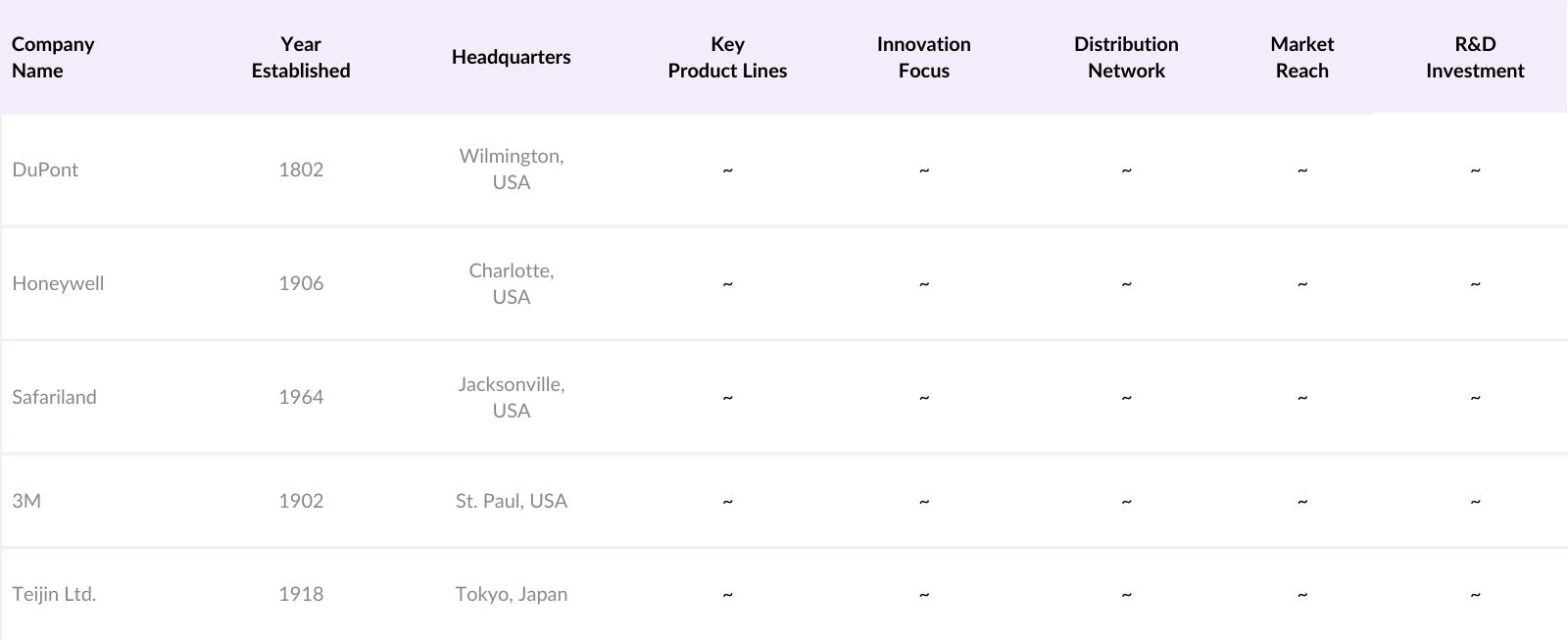
The Kevlar fiber jacket market is marked by the presence of key players focused on innovation, quality enhancement, and extensive distribution networks. A few major companies dominate the landscape, with advancements in technology and safety equipment catering to global defense and industrial safety demands.
Global Kevlar Fiber Jacket Market Analysis
Growth Drivers
- Increasing Demand for Personal Protective Equipment (PPE): Heightened global safety regulations are leading to an increased demand for PPE across multiple sectors. The International Labour Organization reports that each year, about 2.78 million people die from work-related injuries, underscoring the need for protective clothing in high-risk professions. The surge in defense and law enforcement requirements for protective gear is supported by a global defense expenditure, which reached $1.92 trillion in recent years, according to the Stockholm International Peace Research Institute. This rise in defense spending and the increase in workplace safety awareness are boosting the Kevlar fiber jacket markets growth.
- Advancements in Material Technology: Recent advancements in material sciences have made Kevlar fiber jackets more durable, flexible, and resistant to multiple types of threats, including ballistic and thermal hazards. The United Nations Industrial Development Organization reports substantial investment in textile R&D, totaling over $340 billion globally. These improvements directly support sectors like law enforcement and military operations, where the durability of protective gear is critical for personnel safety. Innovations in production methods, such as enhanced weaving and bonding techniques, have also made Kevlar jackets lighter, contributing to ease of use and further driving demand.
- Rising Defense Expenditure: Many countries have increased their defense budgets significantly due to evolving global security concerns. In 2023, the U.S. allocated over $800 billion to defense, with a significant portion directed towards personal protective equipment for military personnel. Similarly, countries in the Asia-Pacific, including India and China, increased their budgets to address modern combat needs. This upward trend in defense spending, driven by government priorities on safety, is propelling the demand for Kevlar fiber jackets as a necessary component in military protective gear.
Challenges
- High Production Costs: Kevlar fiber production requires specialized equipment and skilled labor, leading to high production costs. Reports from the United Nations Industrial Development Organization reveal that global textile and manufacturing sectors incur labor costs as high as $20 per hour in developed countries. Additionally, Kevlar manufacturing involves costly raw materials and energy-intensive processes, making the end product expensive. These costs affect the pricing structure of Kevlar jackets, impacting their affordability and accessibility across various markets, particularly in developing economies.
- Availability of Alternative Materials: With rapid advancements in synthetic fiber technology, alternative materials like UHMWPE (ultra-high molecular weight polyethylene) are being developed for protective clothing. The U.S. National Institute of Standards and Technology highlights UHMWPEs superior impact resistance and affordability, which makes it a competitive alternative to Kevlar. The global textile industry is seeing increased innovation investments, totaling over $300 billion, fueling the development of materials that may replace Kevlar for specific applications. This alternative material development poses a challenge to the Kevlar jacket market.
Global Kevlar Fiber Jacket Market Future Outlook
Over the next five years, the global Kevlar fiber jacket market is anticipated to experience substantial growth, driven by advancements in material technology, increasing industrial safety standards, and rising government investments in military and law enforcement protection gear. A shift towards more lightweight, flexible, and durable fiber compositions is expected to enhance the demand for Kevlar jackets across sectors, ensuring continued market development. Growth is further supported by expanding applications in emerging markets where industrial and defense sectors are rapidly evolving.
Opportunities
- Expansion into Emerging Markets: Emerging markets like India and Brazil present significant opportunities for Kevlar fiber jackets, driven by growing industrialization and heightened awareness of worker safety. Indias manufacturing sector alone employs over 50 million workers, according to the Ministry of Labour and Employment, creating demand for PPE, including Kevlar jackets. Additionally, favorable government policies promoting safety standards in workplaces are encouraging manufacturers to expand operations into these regions, unlocking new revenue streams for the Kevlar jacket market.
- Development of Multi-functional Jackets: The integration of additional protective features, such as thermal insulation and ballistic resistance, in Kevlar jackets is opening up new market segments. The U.S. Bureau of Labor Statistics reports a steady rise in jobs requiring specialized safety gear, such as those in fire services and heavy industry. By developing jackets that cater to multiple protective needs, manufacturers can appeal to a broader range of industries, increasing the potential customer base and allowing for diversification within the protective clothing market.
Scope of the Report
|
Segment |
Sub-Segments |
|
Product Type |
Bulletproof Jackets |
|
End-User |
Military and Defense |
|
Distribution Channel |
Direct Sales |
|
Material Type |
Pure Kevlar |
|
Region |
North America |
Major Players
- DuPont
- Honeywell
- Safariland
- 3M
- Teijin Ltd.
- MCR Safety
- Armor LLC
- Point Blank Enterprises
- DSM Dyneema
- Bristol Uniforms
- Blauer Manufacturing
- Lakeland Industries
- Survitec Group
- Ansell Ltd.
- Uvex Group
Products
Key Target Audience
Government and Regulatory Bodies (U.S. Department of Defense, OSHA)
Industrial Safety Equipment Distributors
Military Procurement Agencies
Industrial Manufacturers
Law Enforcement Agencies
Defense Contractors
Personal Safety Gear Retailers
Investors and Venture Capitalist Firms
Table of Contents
1. Global Kevlar Fiber Jacket Market Overview
1.1 Definition and Scope
1.2 Market Taxonomy
1.3 Market Growth Rate
1.4 Market Segmentation Overview
2. Global Kevlar Fiber Jacket Market Size (in USD Billion)
2.1 Historical Market Size
2.2 Year-On-Year Growth Analysis
2.3 Key Market Developments and Milestones
3. Global Kevlar Fiber Jacket Market Analysis
3.1 Growth Drivers
3.1.1 Increasing Demand for Personal Protective Equipment (PPE)
3.1.2 Advancements in Material Technology
3.1.3 Rising Defense Expenditure
3.1.4 Growth in the Motorcycle Industry
3.2 Market Challenges
3.2.1 High Production Costs
3.2.2 Availability of Alternative Materials
3.2.3 Regulatory Compliance
3.3 Opportunities
3.3.1 Expansion into Emerging Markets
3.3.2 Development of Multi-functional Jackets
3.3.3 Collaboration with Fashion Industry
3.4 Trends
3.4.1 Integration of Smart Technologies
3.4.2 Sustainable Manufacturing Practices
3.4.3 Customization and Personalization
3.5 Government Regulations
3.5.1 Safety Standards for Protective Clothing
3.5.2 Import and Export Regulations
3.5.3 Environmental Regulations
3.6 SWOT Analysis
3.7 Stakeholder Ecosystem
3.8 Porters Five Forces Analysis
3.9 Competitive Landscape
4. Global Kevlar Fiber Jacket Market Segmentation
4.1 By Product Type (in Value %)
4.1.1 Bulletproof Jackets
4.1.2 Fire-Resistant Jackets
4.1.3 Cut-Resistant Jackets
4.1.4 Combination Jackets
4.2 By End-User (in Value %)
4.2.1 Military and Defense
4.2.2 Law Enforcement
4.2.3 Industrial Workers
4.2.4 Motorcyclists
4.2.5 Others
4.3 By Distribution Channel (in Value %)
4.3.1 Direct Sales
4.3.2 Retail Stores
4.3.3 Online Platforms
4.4 By Material Type (in Value %)
4.4.1 Pure Kevlar
4.4.2 Kevlar Blends
4.5 By Region (in Value %)
4.5.1 North America
4.5.2 Europe
4.5.3 Asia-Pacific
4.5.4 Latin America
4.5.5 Middle East & Africa
5. Global Kevlar Fiber Jacket Competitive Analysis
5.1 Detailed Profiles of Major Companies
5.1.1 DuPont
5.1.2 Teijin Limited
5.1.3 Honeywell International Inc.
5.1.4 Armor LLC
5.1.5 Point Blank Enterprises, Inc.
5.1.6 Safariland, LLC
5.1.7 W. L. Gore & Associates, Inc.
5.1.8 MSA Safety Incorporated
5.1.9 3M Company
5.1.10 Ansell Limited
5.1.11 Lakeland Industries, Inc.
5.1.12 Sioen Industries NV
5.1.13 Uvex Safety Group
5.1.14 CQC Ltd.
5.1.15 Blauer Manufacturing Company, Inc.
5.2 Cross Comparison Parameters (Number of Employees, Headquarters, Inception Year, Revenue, Product Portfolio, Market Presence, R&D Investment, Strategic Initiatives)
5.3 Market Share Analysis
5.4 Strategic Initiatives
5.5 Mergers and Acquisitions
5.6 Investment Analysis
5.6.1 Venture Capital Funding
5.6.2 Government Grants
5.6.3 Private Equity Investments
6. Global Kevlar Fiber Jacket Regulatory Framework
6.1 Safety Standards for Protective Clothing
6.2 Compliance Requirements
6.3 Certification Processes
7. Global Kevlar Fiber Jacket Future Market Size (in USD Billion)
7.1 Future Market Size Projections
7.2 Key Factors Driving Future Market Growth
8. Global Kevlar Fiber Jacket Future Market Segmentation
8.1 By Product Type (in Value %)
8.2 By End-User (in Value %)
8.3 By Distribution Channel (in Value %)
8.4 By Material Type (in Value %)
8.5 By Region (in Value %)
9. Global Kevlar Fiber Jacket Analysts Recommendations
9.1 Total Addressable Market (TAM), Serviceable Available Market (SAM), and Serviceable Obtainable Market (SOM) Analysis
9.2 Customer Cohort Analysis
9.3 Marketing Initiatives
9.4 White Space Opportunity Analysis
Disclaimer Contact UsResearch Methodology
Step 1: Identification of Key Variables
This initial phase involved mapping all major stakeholders within the Kevlar Fiber Jacket Market ecosystem. Comprehensive desk research using secondary databases and proprietary res helped define critical variables affecting market trends and demand patterns.
Step 2: Market Analysis and Construction
Historical data collection was integral in evaluating market penetration, major end-use industries, and product availability. Analysis included insights into supply chain networks and quality statistics to estimate revenue accurately.
Step 3: Hypothesis Validation and Expert Consultation
Market hypotheses were refined through structured interviews with industry experts. Consultations provided practical insights into end-user requirements and helped validate market demand forecasts.
Step 4: Research Synthesis and Final Output
Interviews with manufacturers were instrumental in acquiring firsthand data on production, sales trends, and consumer preferences, which bolstered the accuracy of our revenue analysis and ensured comprehensive insights into market dynamics.
Frequently Asked Questions
01. How big is the Global Kevlar Fiber Jacket Market?
The global Kevlar fiber jacket market was valued at USD 500 million, supported by increased demand from the defense and industrial sectors, with significant government expenditure contributing to its growth.
02. What are the challenges in the Global Kevlar Fiber Jacket Market?
Challenges include high production costs, competition from alternative protective materials, and regulatory challenges surrounding import and export regulations, which impact market profitability.
03. Who are the major players in the Global Kevlar Fiber Jacket Market?
Key players include DuPont, Honeywell, Safariland, 3M, and Teijin Ltd., which dominate the market due to strong R&D, innovation in fiber technology, and comprehensive distribution networks.
04. What drives the Global Kevlar Fiber Jacket Market?
The market is propelled by the demand for high-performance protective clothing in defense and industrial applications, driven by stringent safety requirements and government investments in safety equipment.
05. What future trends are expected in the Global Kevlar Fiber Jacket Market?
Emerging trends include advancements in lightweight and flexible Kevlar materials, expanding applications across new sectors, and increased focus on environmental sustainability in product manufacturing.
Why Buy From Us?

What makes us stand out is that our consultants follows Robust, Refine and Result (RRR) methodology. i.e. Robust for clear definitions, approaches and sanity checking, Refine for differentiating respondents facts and opinions and Result for presenting data with story

We have set a benchmark in the industry by offering our clients with syndicated and customized market research reports featuring coverage of entire market as well as meticulous research and analyst insights.

While we don't replace traditional research, we flip the method upside down. Our dual approach of Top Bottom & Bottom Top ensures quality deliverable by not just verifying company fundamentals but also looking at the sector and macroeconomic factors.

With one step in the future, our research team constantly tries to show you the bigger picture. We help with some of the tough questions you may encounter along the way: How is the industry positioned? Best marketing channel? KPI's of competitors? By aligning every element, we help maximize success.

Our report gives you instant access to the answers and sources that other companies might choose to hide. We elaborate each steps of research methodology we have used and showcase you the sample size to earn your trust.

If you need any support, we are here! We pride ourselves on universe strength, data quality, and quick, friendly, and professional service.