















Global Labware Market Outlook to 2030
Region:Global
Author(s):Paribhasha Tiwari
Product Code:KROD7197
December 2024
98
About the Report
Global Labware Market Overview
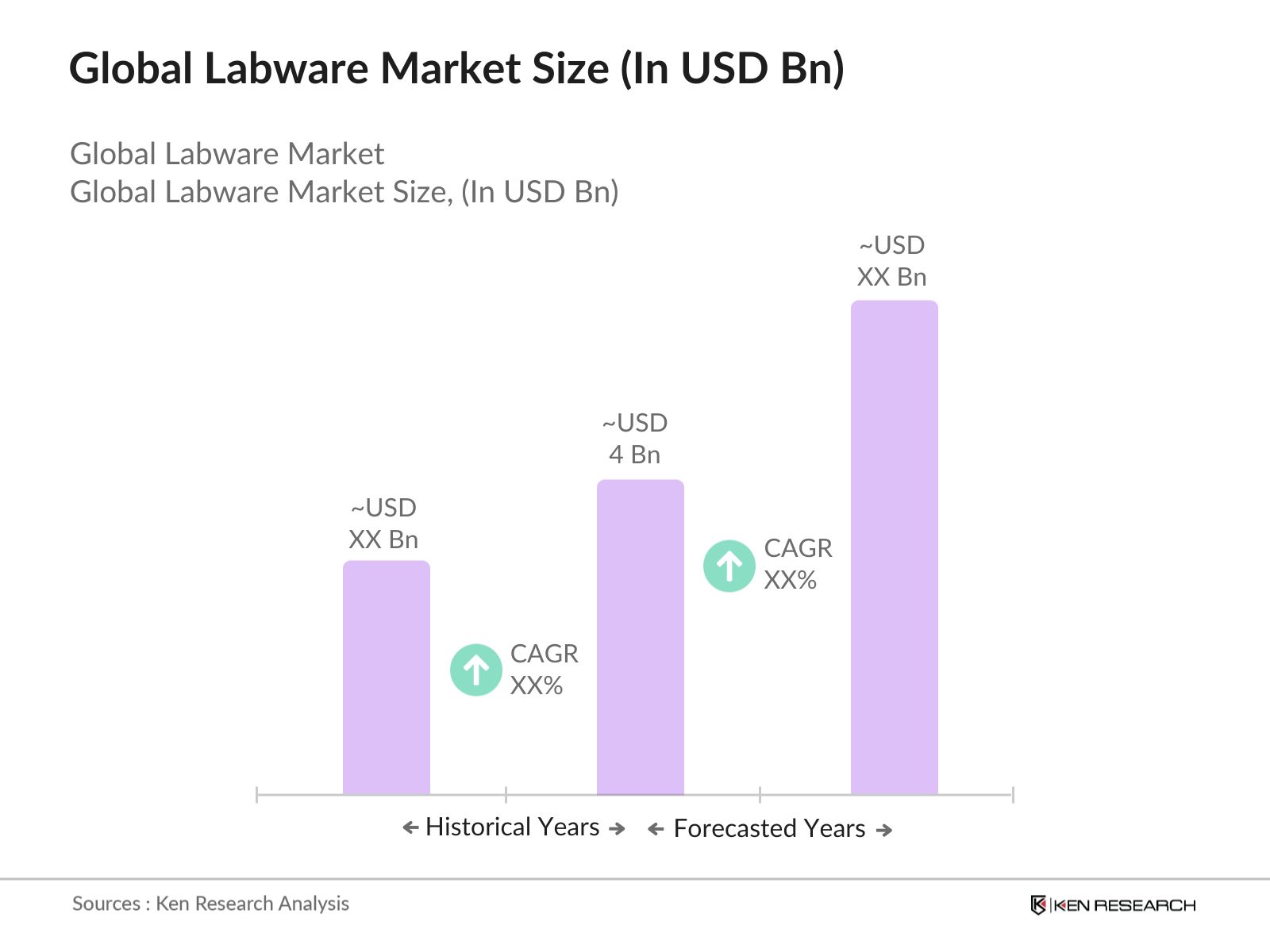
- The Global Labware Market, valued at USD 4 billion, is driven by the increasing demand for advanced materials like glass, plastic, and silicone, alongside rising automation in laboratories. This market has seen significant growth over the past five years due to an expanding need for efficient laboratory tools in research, biotechnology, and clinical diagnostics sectors. Key factors such as technological advancements, the increasing focus on sustainability, and growing demand from academic and research institutions have further bolstered market expansion.
- Countries like the United States, Germany, and China dominate the Global Labware Market. This dominance is due to their well-established research and development infrastructure, a high number of research institutions, and continuous innovation in biotechnology. The presence of major global players, along with strong government support in these regions, has made them key contributors to the global market. Additionally, the rapid growth of healthcare infrastructure in these countries accelerates their dominance in this sector.
- In 2023, several leading labware manufacturers introduced IoT-enabled labware systems, incorporating wireless technology and sensors to improve experimental monitoring. This development has enhanced lab efficiency by providing real-time data on conditions such as temperature and humidity. These systems have been rapidly adopted by over 5,000 research labs globally, primarily in the USA and Europe.
Global Labware Market Segmentation
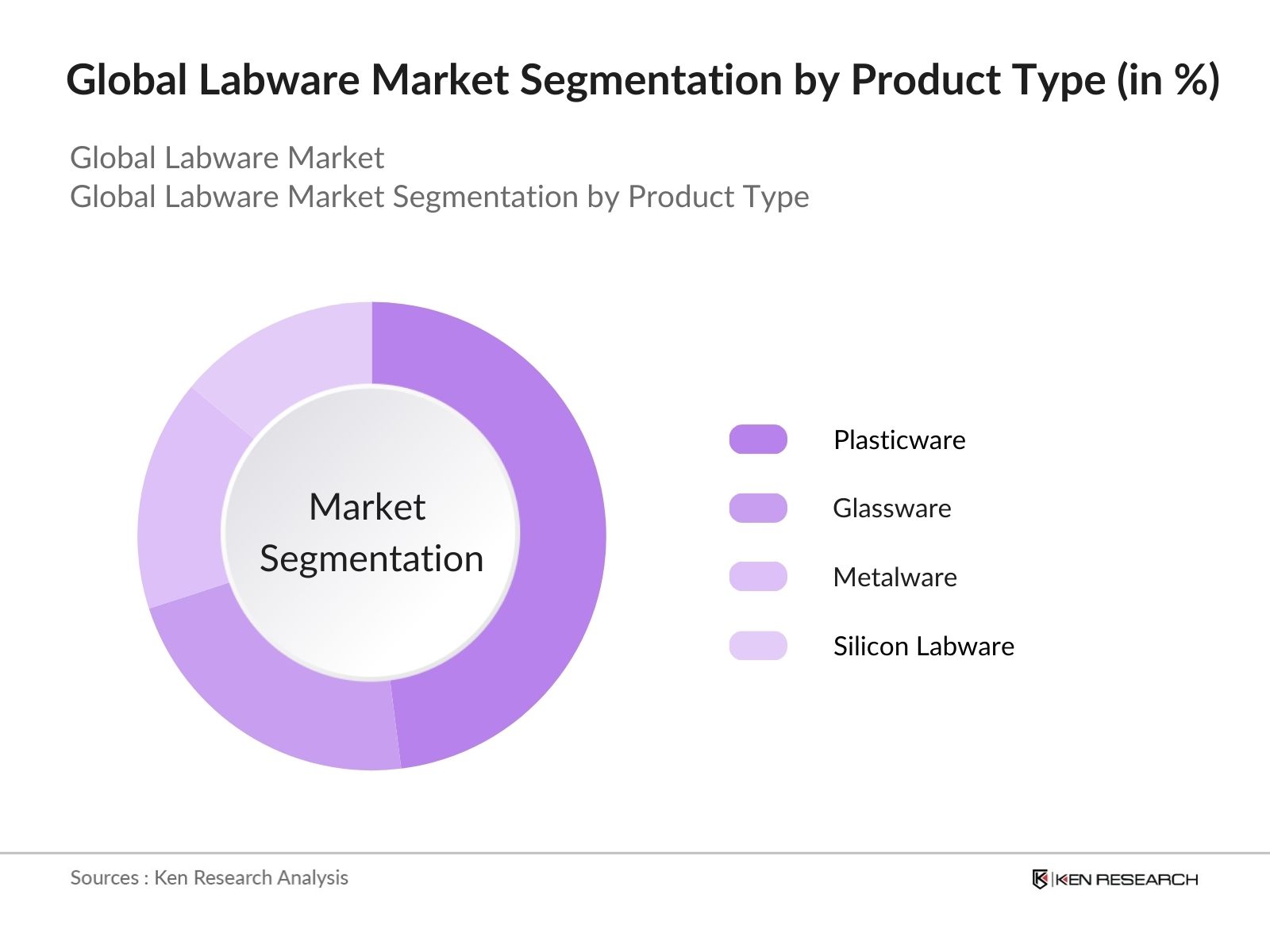
- By Product Type: The Global Labware Market is segmented by product type into glassware, plasticware, metalware, and silicone labware. Among these, plasticware holds a dominant share due to its cost-effectiveness, durability, and wide usage in routine laboratory applications. Plastic labware, such as pipettes, petri dishes, and test tubes, has become the go-to choice for many laboratories due to its disposability and resistance to breakage, which reduces contamination risks.
- By Region: The Global Labware Market is segmented by region into North America, Europe, Asia Pacific, Latin America, and Middle East & Africa. North America continues to lead the market due to its advanced research infrastructure and the presence of key global players. Strong support from governmental research agencies, alongside private sector investments, propels this regions market dominance.

- By Application: The market is segmented by application into research and development, clinical diagnostics, pharmaceuticals, environmental analysis, and food and beverage testing. Research and development dominate the market due to the ongoing innovations in the biotechnology sector and the increasing need for precise and reliable labware in experiments. R&D labs require high-quality, durable labware to conduct various tests, which is a major growth driver.
Global Labware Market Competitive Landscape
The Global Labware Market is dominated by major global players that drive technological advancements and product innovations. Key players leverage their strong R&D capabilities and global distribution networks to maintain market leadership. Companies like Thermo Fisher Scientific and Corning are known for their diverse labware portfolios, ranging from glass and plastic to specialty labware, meeting the needs of various sectors like pharmaceuticals and diagnostics.
|
Company |
Established Year |
Headquarters |
R&D Investment |
Product Portfolio |
No. of Patents |
Certifications |
Sustainability Initiatives |
Revenue (USD Bn) |
|---|---|---|---|---|---|---|---|---|
|
Thermo Fisher Scientific |
1956 |
Waltham, USA |
- | - | - | - | - | - |
|
Corning Incorporated |
1851 |
Corning, USA |
- | - | - | - | - | - |
|
Sartorius AG |
1870 |
Gttingen, Germany |
- | - | - | - | - | - |
|
Merck KGaA |
1668 |
Darmstadt, Germany |
- | - | - | - | - | - |
|
DWK Life Sciences |
1887 |
Wertheim, Germany |
- | - | - | - | - | - |
Global Labware Market Analysis
Market Growth Drivers
- Growing Demand for Advanced Materials (Glass, Plastic, Silicone): The global labware market is seeing increased demand for advanced materials like glass, plastic, and silicone. In 2024, the healthcare sector's reliance on these materials will grow due to their chemical resistance and durability. Over 1.2 million labs worldwide are projected to upgrade their labware materials to these advanced options. Countries like the USA and Germany are increasingly adopting plastic labware in clinical settings, with plastic accounting for nearly 60% of laboratory supplies used in diagnostic processes, which is supported by government-backed research in health technologies.
- Increasing Lab Automation in Research and Diagnostics: In 2024, the push for lab automation will significantly drive the labware market, as institutions and diagnostic labs invest in automated systems. Over 100,000 labs globally are expected to introduce automated labware systems to reduce human error and increase efficiency. North America and Europe are leading this trend, with automation rates in labs exceeding 70%. The demand for sophisticated labware systems, including microplates and tubes compatible with robotic systems, is set to increase by 40% over the next five years.
- Surge in Biotechnology Research and Development: Biotechnology research and development is a major growth driver for the labware market, with global R&D spending reaching $825 billion by 2024. Biotechnology firms are heavily reliant on labware for experimental accuracy, and advanced materials such as borosilicate glass and polypropylene are favored for their inert properties. Countries like Japan and South Korea are expanding their biopharmaceutical research infrastructure, increasing demand for high-precision labware.
Market Challenges
- Supply Chain Disruptions Affecting Material Availability: In 2024, supply chain disruptions remain a challenge, especially for obtaining essential raw materials like silicone and glass for labware. With over 30% of production facilities reporting delays due to shipping and material shortages, countries like India and Brazil have seen notable shortages in these critical materials, impacting labware production and supply.
- Complex Regulatory Frameworks for Labware Standards: The labware market is also challenged by complex regulatory frameworks. In 2024, over 85 nations have adopted stringent quality control standards for labware, particularly in clinical and biopharma labs. These regulations often delay the certification process for new labware products, affecting market entry times, especially in regions like Europe and North America where compliance costs can reach $500,000 per labware product.
Global Labware Market Future Outlook
Over the next five years, the Global Labware Market is expected to witness significant growth due to increasing demand for advanced lab technologies, sustainability-driven initiatives, and the growth of research activities across pharmaceuticals, biotechnology, and healthcare sectors. Rising investments in biotechnology and life sciences will further accelerate demand for specialized labware, especially in North America and Europe.
Market Opportunities
- Expansion into Emerging Markets for Biotechnology: The growing biotechnology sector in emerging markets presents a substantial opportunity for the labware market. In 2024, emerging economies like India, Brazil, and South Africa are forecasted to spend over $200 billion collectively on biopharma and biotechnology R&D, driving demand for high-precision labware. This expansion is expected to fuel growth in the labware market as these regions modernize their research infrastructure.
- Development of Sustainable and Reusable Labware Solutions: The rising demand for environmentally sustainable lab practices is prompting innovation in reusable labware. By 2024, approximately 30% of laboratories worldwide are expected to adopt reusable labware systems, reducing their reliance on single-use plastics. Companies in the USA and Germany are leading the development of durable, reusable labware made from borosilicate glass and stainless steel, which can be sterilized and reused multiple times, addressing both cost and environmental concerns.
Scope of the Report
|
By Product Type |
Glassware Plasticware Metalware Silicone Labware Others (Ceramics, Composite Materials) |
|
By Application |
Research and Development Clinical Diagnostics Pharmaceuticals Environmental Analysis Food and Beverage Testing |
|
By End User |
Hospitals Research Institutions Academic Laboratories Pharmaceutical Companies Biotechnology Firms |
|
By Material Type |
Glass Plastic Silicone Metal Others (Ceramics, Composites) |
|
By Region |
North America Europe Asia Pacific Latin America Middle East and Africa |
Products
Key Target Audience
Labware Manufacturers
Research and Development Institutes
Hospitals and Diagnostic Centers
Pharmaceutical Companies
Biotechnology Firms
Government and Regulatory Bodies (e.g., FDA, European Medicines Agency)
Investors and Venture Capitalist Firms
Environmental and Food Safety Agencies
Companies
Players Mentioned in the Report:
Thermo Fisher Scientific
Corning Incorporated
Sartorius AG
Merck KGaA
DWK Life Sciences
Eppendorf AG
Greiner Bio-One International GmbH
PerkinElmer Inc.
Mettler Toledo
Avantor Inc.
Table of Contents
1. Global Labware Market Overview
1.1 Definition and Scope
1.2 Market Taxonomy
1.3 Market Growth Rate
1.4 Market Segmentation Overview
2. Global Labware Market Size (In USD Bn)
2.1 Historical Market Size
2.2 Year-On-Year Growth Analysis
2.3 Key Market Developments and Milestones
3. Global Labware Market Analysis
3.1 Growth Drivers (Material Innovation, Lab Automation, Clinical Diagnostics, Biotechnology Advancements)
3.1.1 Growing Demand for Advanced Materials (Glass, Plastic, Silicone)
3.1.2 Increasing Lab Automation in Research and Diagnostics
3.1.3 Surge in Biotechnology Research and Development
3.1.4 Rising Clinical Diagnostics and Healthcare Needs
3.2 Market Challenges (Supply Chain Disruptions, Regulatory Barriers, High Cost of Innovation, Environmental Concerns)
3.2.1 Supply Chain Disruptions Affecting Material Availability
3.2.2 Complex Regulatory Frameworks for Labware Standards
3.2.3 High Costs of Innovative Materials and Technologies
3.2.4 Environmental Concerns Over Disposable Labware
3.3 Opportunities (Emerging Markets, Reusable Labware, Customization Solutions, Digital Integration)
3.3.1 Expansion into Emerging Markets for Biotechnology
3.3.2 Development of Sustainable and Reusable Labware Solutions
3.3.3 Increasing Demand for Customizable Labware for Specific Applications
3.3.4 Integration of Digital and IoT Technologies in Labware
3.4 Trends (Biocompatible Materials, Automation, Sustainability, Outsourcing)
3.4.1 Adoption of Biocompatible and Eco-Friendly Materials
3.4.2 Rise of Automation-Compatible Labware
3.4.3 Growing Focus on Sustainability in Material Selection
3.4.4 Outsourcing Labware Manufacturing to Specialized Firms
3.5 Government Regulations (FDA, ISO Standards, Environmental Compliance, Safety Standards)
3.5.1 FDA Guidelines for Clinical and Research Labware
3.5.2 ISO Standards for Quality and Safety in Labware
3.5.3 Compliance with Environmental Regulations for Sustainable Labware
3.5.4 Occupational Safety Standards for Laboratory Equipment Use
3.6 SWOT Analysis
3.7 Stake Ecosystem (Manufacturers, Distributors, Research Institutions, Hospitals)
3.8 Porters Five Forces Analysis
3.9 Competitive Ecosystem
4. Global Labware Market Segmentation
4.1 By Product Type (In Value %)
4.1.1 Glassware
4.1.2 Plasticware
4.1.3 Metalware
4.1.4 Silicone Labware
4.1.5 Others (Ceramics, Composite Materials)
4.2 By Application (In Value %)
4.2.1 Research and Development
4.2.2 Clinical Diagnostics
4.2.3 Pharmaceuticals
4.2.4 Environmental Analysis
4.2.5 Food and Beverage Testing
4.3 By End User (In Value %)
4.3.1 Hospitals
4.3.2 Research Institutions
4.3.3 Academic Laboratories
4.3.4 Pharmaceutical Companies
4.3.5 Biotechnology Firms
4.4 By Material Type (In Value %)
4.4.1 Glass
4.4.2 Plastic
4.4.3 Silicone
4.4.4 Metal
4.4.5 Others (Ceramics, Composites)
4.5 By Region (In Value %)
4.5.1 North America
4.5.2 Europe
4.5.3 Asia Pacific
4.5.4 Latin America
4.5.5 Middle East and Africa
5. Global Labware Market Competitive Analysis
5.1 Detailed Profiles of Major Companies
5.1.1 Corning Incorporated
5.1.2 Thermo Fisher Scientific
5.1.3 Sartorius AG
5.1.4 Merck KGaA
5.1.5 DWK Life Sciences
5.1.6 Eppendorf AG
5.1.7 Greiner Bio-One International GmbH
5.1.8 PerkinElmer Inc.
5.1.9 Gerresheimer AG
5.1.10 Mettler Toledo
5.1.11 BRAND GMBH + CO KG
5.1.12 Gilson Inc.
5.1.13 Avantor Inc.
5.1.14 Hecht Assistent GmbH
5.1.15 Cole-Parmer Instrument Company, LLC
5.2 Cross Comparison Parameters (R&D Investment, Market Penetration, Revenue, Product Portfolio, Number of Patents, Certifications, Headquarters, Sustainability Initiatives)
5.3 Market Share Analysis
5.4 Strategic Initiatives
5.5 Mergers and Acquisitions
5.6 Investment Analysis
5.7 Venture Capital Funding
5.8 Government Grants and Funding Support
5.9 Private Equity Investments
6. Global Labware Market Regulatory Framework
6.1 Industry Standards and Certifications (ISO 9001, ISO 13485, CE Marking)
6.2 Regulatory Compliance for Medical Labware (FDA, CLIA)
6.3 Environmental Regulations and Sustainability Standards
6.4 Safety Guidelines for Laboratory Equipment
7. Global Labware Future Market Size (In USD Bn)
7.1 Future Market Size Projections
7.2 Key Factors Driving Future Market Growth
8. Global Labware Future Market Segmentation
8.1 By Product Type (In Value %)
8.2 By Application (In Value %)
8.3 By Material Type (In Value %)
8.4 By End User (In Value %)
8.5 By Region (In Value %)
9. Global Labware Market Analysts Recommendations
9.1 TAM/SAM/SOM Analysis
9.2 Customer Cohort Analysis
9.3 Marketing and Sales Initiatives
9.4 White Space Opportunity Analysis
Research Methodology
Step 1: Identification of Key Variables
The first step involves creating a detailed map of the entire labware ecosystem, incorporating all relevant stakeholders. Data collection is carried out through extensive desk research utilizing trusted secondary sources and proprietary databases, identifying key market drivers and challenges.
Step 2: Market Analysis and Construction
This step involves the in-depth analysis of historical data, market segmentation, and assessing the performance of key sub-segments. The aim is to derive accurate market revenue estimates and trends, ensuring reliability through triangulation of data.
Step 3: Hypothesis Validation and Expert Consultation
Primary interviews with industry experts and key opinion leaders are conducted to validate the hypotheses formulated from the initial data collection. This provides real-world insights that ensure a practical perspective in the final analysis.
Step 4: Research Synthesis and Final Output
The final stage involves integrating the findings from both primary and secondary research sources into a comprehensive market report. This includes compiling market forecasts, insights, and actionable recommendations for key stakeholders.
Frequently Asked Questions
01. How big is the Global Labware Market?
The Global Labware Market is valued at USD 4 billion, driven by rising demand from research institutions, biotechnology advancements, and clinical diagnostics needs.
02. What are the challenges in the Global Labware Market?
The major challenges in the Global Labware Market include supply chain disruptions, high costs of advanced materials, and environmental concerns due to the use of disposable plastic labware.
03. Who are the major players in the Global Labware Market?
Key players in the Global Labware Market include Thermo Fisher Scientific, Corning Incorporated, Sartorius AG, Merck KGaA, and DWK Life Sciences.
04. What are the growth drivers of the Global Labware Market?
Growth drivers in the Global Labware Market include increasing lab automation, rising demand for advanced lab materials, and expanding research and development activities in biotechnology and healthcare sectors.
Why Buy From Us?

What makes us stand out is that our consultants follows Robust, Refine and Result (RRR) methodology. i.e. Robust for clear definitions, approaches and sanity checking, Refine for differentiating respondents facts and opinions and Result for presenting data with story

We have set a benchmark in the industry by offering our clients with syndicated and customized market research reports featuring coverage of entire market as well as meticulous research and analyst insights.

While we don't replace traditional research, we flip the method upside down. Our dual approach of Top Bottom & Bottom Top ensures quality deliverable by not just verifying company fundamentals but also looking at the sector and macroeconomic factors.

With one step in the future, our research team constantly tries to show you the bigger picture. We help with some of the tough questions you may encounter along the way: How is the industry positioned? Best marketing channel? KPI's of competitors? By aligning every element, we help maximize success.

Our report gives you instant access to the answers and sources that other companies might choose to hide. We elaborate each steps of research methodology we have used and showcase you the sample size to earn your trust.

If you need any support, we are here! We pride ourselves on universe strength, data quality, and quick, friendly, and professional service.