Ken Research Logo

Global Laser Technology Market Outlook to 2030

Region:Global

Author(s):Mukul

Product Code:KROD10439

Published On

November 2024

Total pages

88

About the Report

Global Laser Technology Market Overview

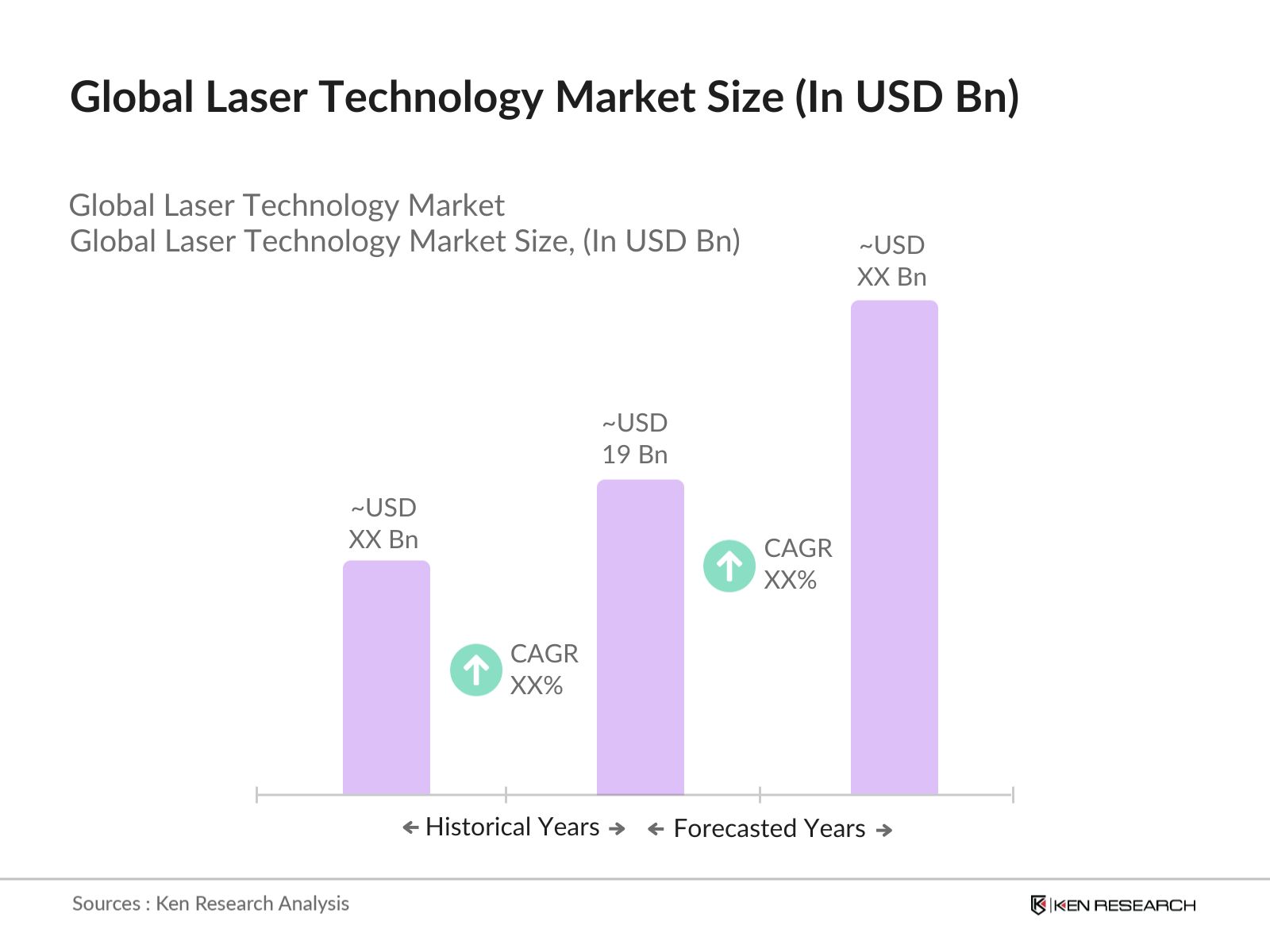
  • The global laser technology market is valued at USD 19 billion, driven primarily by the increasing adoption of laser-based systems across a variety of industries, including manufacturing, healthcare, and communications. This market expansion is largely attributed to the rising demand for precision cutting, welding, and additive manufacturing. Additionally, laser technology is becoming integral to medical devices and telecommunication infrastructure, further fueling its growth. Investments in research and development have led to innovations in fiber and diode lasers, which are widely used across sectors to improve efficiency and reduce operational costs.
  • Countries like the United States, Germany, China, and Japan dominate the global laser technology market. The dominance of these countries can be attributed to their established industrial bases, technological advancements, and significant government support for defense, healthcare, and telecommunications industries. Moreover, these countries are home to leading laser technology companies, which enhances their competitive advantage. The robust demand for advanced laser systems in these nations drives continuous innovation, strengthening their position as key players in the market.
  • Stringent safety standards for laser technologies are enforced worldwide to ensure safe operation across industries. In 2024, the International Organization for Standardization (ISO) continues to uphold ISO 11553, which outlines safety standards for laser equipment used in manufacturing and medical applications. The U.S. Food and Drug Administration (FDA) also regulates medical lasers, ensuring compliance with safety protocols.

market overviews

Global Laser Technology Market Segmentation

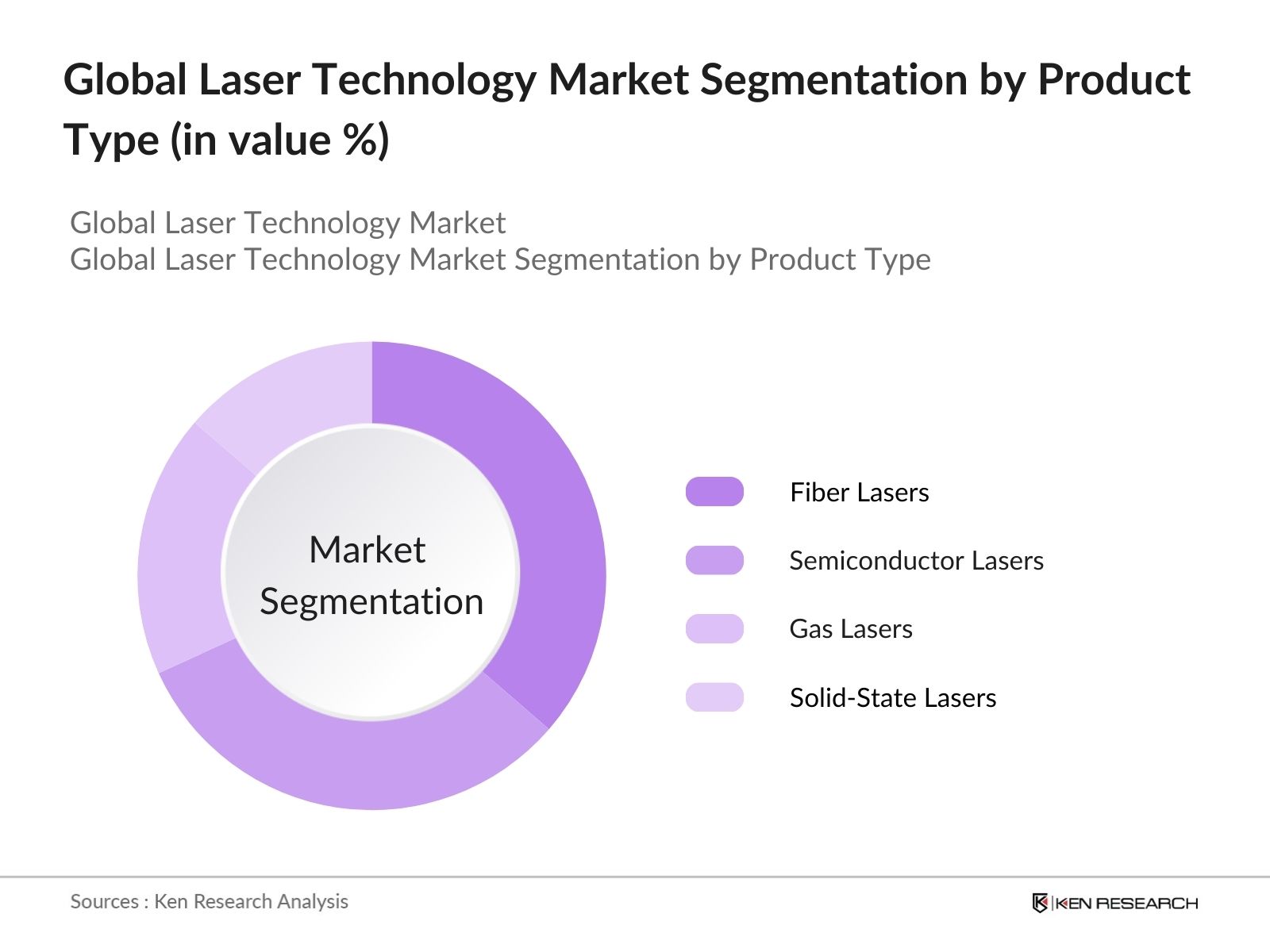
  • By Product Type: The global laser technology market is segmented by product type into solid-state lasers, gas lasers, semiconductor lasers, and fiber lasers. Among these, fiber lasers dominate the market due to their superior performance in industrial applications such as cutting, welding, and engraving. The high beam quality, energy efficiency, and reliability of fiber lasers make them the preferred choice in manufacturing. Additionally, their application in precision manufacturing and increasing adoption in aerospace and automotive industries contribute to their leading market share.

market overviews

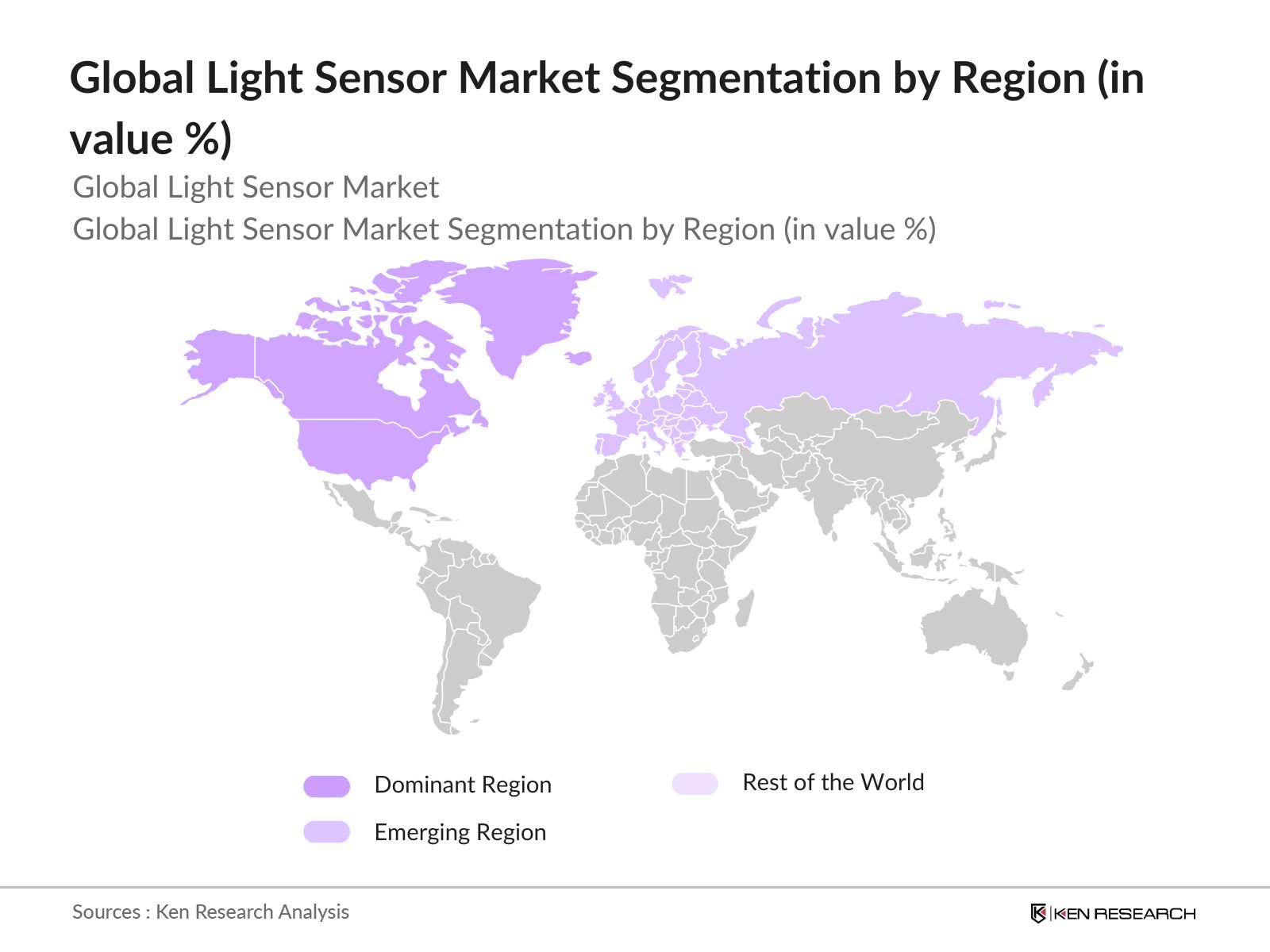
  • By Region: The global laser technology market is also segmented by region into North America, Europe, Asia-Pacific, Middle East and Africa, and Latin America. Asia-Pacific leads the market, driven by the rapid industrialization in countries like China, Japan, and South Korea. The regions manufacturing base, especially in automotive and electronics sectors, heavily relies on laser systems for precision manufacturing. Furthermore, Asia-Pacifics strong focus on research and development in emerging technologies such as telecommunications and defense applications supports its leading position in the market.

market overviews

  • By Application: The market is segmented by application into industrial, medical, defense, telecommunications, and research and development sectors. Industrial applications, such as laser-based cutting, welding, and material processing, hold a dominant share in the laser technology market. This is due to the widespread adoption of laser systems in advanced manufacturing processes. The increasing demand for precise and efficient manufacturing solutions, particularly in automotive, aerospace, and electronics industries, further bolsters the growth of industrial applications in this market.

Global Laser Technology Market Competitive Landscape

The global laser technology market is highly competitive, with a few major players holding a significant market share. Companies are continuously innovating their product offerings to cater to the evolving needs of various industries such as manufacturing, healthcare, and telecommunications. The competitive landscape is shaped by mergers and acquisitions, research and development investments, and strategic partnerships. This consolidation underscores the influence of these key companies on the markets growth and technological advancements.

Company

Establishment Year

Headquarters

Revenue (USD Bn)

Global Presence

No. of Employees

Patents Held

R&D Investments

Key Products

Technology Licensing

Coherent, Inc.

1966

California, USA

-

-

-

-

-

-

-

IPG Photonics Corporation

1990

Massachusetts, USA

-

-

-

-

-

-

-

TRUMPF Group

1923

Ditzingen, Germany

-

-

-

-

-

-

-

Jenoptik AG

1991

Jena, Germany

-

-

-

-

-

-

-

Lumentum Holdings Inc.

2015

California, USA

-

-

-

-

-

-

-

Global Laser Technology Industry Analysis

Growth Drivers

  • Increasing Adoption of Laser Technology in Manufacturing: Laser technology is becoming integral to manufacturing due to its precision, efficiency, and versatility across various industrial sectors. In 2024, global industrial production has been valued at approximately USD 38 trillion, with laser technology playing a key role in automating processes and improving production quality. Laser cutting, welding, and engraving are widely used in industries such as automotive, electronics, and metal fabrication. In automotive manufacturing, over 65 million vehicles produced globally incorporate laser-cut components. This trend aligns with the growing need for precision and faster production cycles.
  • Rising Demand for Precision in Medical Devices: Laser technologys importance in the medical devices industry is significant due to its precision in minimally invasive procedures and device manufacturing. In 2024, the global medical device market is estimated at USD 400 billion, with lasers contributing to advancements in optical diagnostics, ophthalmology, and dermatology. Over 2 million laser eye surgeries are performed annually, highlighting the demand for precision technologies. This growing trend is supported by the rising elderly population, estimated to reach 1.4 billion in 2024, boosting the demand for advanced medical procedures.
  • Expanding Use in Communication Technology: Laser technology is critical in fiber optic communication systems, allowing faster data transmission with minimal signal loss. In 2024, global internet traffic is expected to reach 200 zettabytes, driven by the expansion of 5G networks, which rely heavily on laser-based fiber optics for seamless data transfer. Fiber optics are also a key enabler of cloud computing, supporting the infrastructure of over 1 billion global cloud users. The growing demand for data capacity in telecommunication highlights the essential role lasers play in maintaining efficient networks.

Market Restraints

  • Technical Complexity (Integration in Manufacturing Systems): The technical complexity of integrating laser systems into existing manufacturing processes presents another challenge for businesses. In 2024, 40% of manufacturers reported difficulties in incorporating advanced laser systems due to the need for specialized software, training, and system compatibility. This complexity can lead to production delays and inefficiencies, particularly in sectors with older infrastructure. Developing nations, in particular, face challenges in upgrading facilities to accommodate advanced laser technologies, slowing down adoption rates.
  • Limited Skilled Workforce (Talent Shortage): A shortage of skilled workers trained to operate and maintain laser technology systems is another major challenge. In 2024, it is estimated that over 70% of manufacturing companies face difficulty finding workers with the necessary expertise in laser system operation and maintenance. The demand for skilled labor in laser technology is outpacing the supply, particularly in developed economies where automation is rapidly expanding. The shortage of specialized talent could slow down the adoption of laser technologies across various sectors, including automotive and medical.

Global Laser Technology Market Future Outlook

Over the next five years, the global laser technology market is poised for significant growth, driven by advancements in laser technology, increasing industrial applications, and a growing demand for precision manufacturing. The adoption of laser-based systems in emerging fields such as additive manufacturing and medical device production is expected to further accelerate market expansion. Additionally, the rise of smart manufacturing and Industry 4.0 initiatives will continue to bolster the use of laser technology in various industries, particularly in Asia-Pacific, which is forecasted to maintain its dominance in the market.

Market Opportunities

  • Technological Advancements (Photonics, Fiber Optics): Advances in photonics and fiber optics present significant opportunities for the laser technology market. In 2024, the global photonics market is valued at USD 700 billion, with lasers representing a substantial segment of this growth. These advancements enable more efficient laser systems, particularly in telecommunications, medical devices, and material processing. The ongoing development of next-generation fiber optic technologies is expected to further enhance the capabilities of laser communication systems, leading to increased adoption in industries such as aerospace and defense.
  • in Aerospace Applications (Aerospace Sector): The aerospace sector is increasingly adopting laser technologies for applications such as material processing, welding, and additive manufacturing. In 2024, the global aerospace manufacturing market is estimated at USD 1.8 trillion, with lasers contributing to the precision required in aircraft component production. Laser-based technologies are also vital in the development of lightweight materials, which are crucial for improving fuel efficiency. The growing demand for laser systems in aerospace manufacturing is expected to drive further innovation and market growth.

Scope of the Report

Product Type

Solid-State Lasers


Gas Lasers


Semiconductor Lasers


Fiber Lasers

Application

Industrial Applications (Manufacturing, Welding, Cutting)


Medical Applications (Surgical, Cosmetic, Ophthalmology)


Defense Applications (Military, Aerospace)


Telecommunications (Optical Fiber Communications)


Research and Development (Academic, Scientific Research)

Technology

CO2 Lasers


Diode Lasers


Fiber Lasers


Excimer Lasers

Power Output

Low Power Lasers (<1kW)


Medium Power Lasers (1kW 5kW)


High Power Lasers (>5kW)

Region

North America


Europe


Asia-Pacific


Middle East and Africa


Latin America

Products

Key Target Audience

  • Laser equipment manufacturers

  • Defense and military organizations (U.S. Department of Defense, NATO)

  • Medical device manufacturers

  • Automotive and aerospace industries

  • Research and development institutes

  • Telecommunications service providers

  • Investor and venture capitalist firms

  • Government and regulatory bodies (European Union, ISO Standards)

Companies

Players Mentioned in the Report:

  • Coherent, Inc.

  • IPG Photonics Corporation

  • TRUMPF Group

  • Jenoptik AG

  • Lumentum Holdings Inc.

  • Newport Corporation

  • Amada Holdings Co., Ltd.

  • Hans Laser Technology Industry Group Co., Ltd.

  • Epilog Laser

  • Rofin-Sinar Technologies Inc.

  • GSI Group, Inc.

  • Spectra-Physics (MKS Instruments)

  • EKSPLA

  • Prima Industrie S.p.A.

  • Laserline GmbH

Table of Contents

1. Global Laser Technology Market Overview

1.1. Definition and Scope

1.2. Market Taxonomy

1.3. Market Growth Rate

1.4. Market Segmentation Overview

2. Global Laser Technology Market Size (In USD Bn)

2.1. Historical Market Size

2.2. Year-on-Year Growth Analysis

2.3. Key Market Developments and Milestones

3. Global Laser Technology Market Analysis

3.1. Growth Drivers

3.1.1. Increasing Adoption of Laser Technology in Manufacturing (Industrial Applications)

3.1.2. Rising Demand for Precision in Medical Devices (Medical Sector)

3.1.3. Expanding Use in Communication Technology (Telecommunication Sector)

3.1.4. Government Support for Laser-Based Defense Equipment (Defense Applications)

3.2. Market Challenges

3.2.1. High Initial Costs (Capital Investment)

3.2.2. Technical Complexity (Integration in Manufacturing Systems)

3.2.3. Limited Skilled Workforce (Talent Shortage)

3.3. Opportunities

3.3.1. Technological Advancements (Photonics, Fiber Optics)

3.3.2. Growth in Aerospace Applications (Aerospace Sector)

3.3.3. Expansion into Emerging Markets (Asia-Pacific, Latin America)

3.4. Trends

3.4.1. Increased Demand for Ultra-Short Pulse Lasers (Emerging Technology)

3.4.2. Shift to Laser-Based Additive Manufacturing (3D Printing)

3.4.3. Integration with Artificial Intelligence and Machine Learning (Smart Manufacturing)

3.5. Government Regulations

3.5.1. Laser Safety Standards (International Standards ISO, FDA)

3.5.2. Environmental Regulations for Laser Manufacturing (Energy Efficiency Requirements)

3.5.3. Military and Defense Contracts (Defense Procurement Programs)

3.6. SWOT Analysis

3.7. Stake Ecosystem

3.8. Porters Five Forces Analysis

3.9. Competitive Ecosystem

4. Global Laser Technology Market Segmentation

4.1. By Product Type (In Value %)

4.1.1. Solid-State Lasers

4.1.2. Gas Lasers

4.1.3. Semiconductor Lasers

4.1.4. Fiber Lasers

4.2. By Application (In Value %)

4.2.1. Industrial Applications (Manufacturing, Welding, Cutting)

4.2.2. Medical Applications (Surgical, Cosmetic, Ophthalmology)

4.2.3. Defense Applications (Military, Aerospace)

4.2.4. Telecommunications (Optical Fiber Communications)

4.2.5. Research and Development (Academic, Scientific Research)

4.3. By Technology (In Value %)

4.3.1. CO2 Lasers

4.3.2. Diode Lasers

4.3.3. Fiber Lasers

4.3.4. Excimer Lasers

4.4. By Power Output (In Value %)

4.4.1. Low Power Lasers (<1kW)

4.4.2. Medium Power Lasers (1kW 5kW)

4.4.3. High Power Lasers (>5kW)

4.5. By Region (In Value %)

4.5.1. North America

4.5.2. Europe

4.5.3. Asia-Pacific

4.5.4. Middle East and Africa

4.5.5. Latin America

5. Global Laser Technology Market Competitive Analysis

5.1. Detailed Profiles of Major Companies

5.1.1. Coherent, Inc.

5.1.2. IPG Photonics Corporation

5.1.3. TRUMPF Group

5.1.4. Jenoptik AG

5.1.5. Lumentum Holdings Inc.

5.1.6. Newport Corporation

5.1.7. Amada Holdings Co., Ltd.

5.1.8. Hans Laser Technology Industry Group Co., Ltd.

5.1.9. Epilog Laser

5.1.10. Rofin-Sinar Technologies Inc.

5.1.11. GSI Group, Inc.

5.1.12. Spectra-Physics (MKS Instruments)

5.1.13. EKSPLA

5.1.14. Prima Industrie S.p.A.

5.1.15. Laserline GmbH

5.2. Cross Comparison Parameters (Revenue, Number of Employees, Global Presence, Key Patents, Innovation Index, Market Penetration, Market Share, Technology Licensing)

5.3. Market Share Analysis

5.4. Strategic Initiatives

5.5. Mergers and Acquisitions

5.6. Investment Analysis

5.7. Venture Capital Funding

5.8. Government Grants

5.9. Private Equity Investments

6. Global Laser Technology Market Regulatory Framework

6.1. Compliance Standards (FDA, CE Certification)

6.2. Licensing and Permits (Defense, Medical Applications)

6.3. Environmental Regulations (Green Manufacturing Standards)

7. Global Laser Technology Market Future Size (In USD Bn)

7.1. Future Market Size Projections

7.2. Key Factors Driving Future Market Growth

8. Global Laser Technology Market Future Segmentation

8.1. By Product Type (In Value %)

8.2. By Application (In Value %)

8.3. By Technology (In Value %)

8.4. By Power Output (In Value %)

8.5. By Region (In Value %)

9. Global Laser Technology Market Analysts Recommendations

9.1. TAM/SAM/SOM Analysis

9.2. Customer Cohort Analysis

9.3. Marketing Initiatives

9.4. White Space Opportunity Analysis

Disclaimer Contact Us

Research Methodology

Step 1: Identification of Key Variables

The initial step involves mapping the entire laser technology ecosystem, covering all stakeholders, including manufacturers, suppliers, and end-users. Through comprehensive desk research, key variables such as technological advancements, market drivers, and regional dynamics are identified. This stage lays the groundwork for understanding the complex dynamics within the laser technology market.

Step 2: Market Analysis and Construction

Historical data and trends are analyzed to understand the penetration of laser technology across industries. Key market performance indicators, such as revenue generation and industry penetration, are compiled and assessed. Special focus is placed on sectors with rapid laser adoption, including telecommunications and defense.

Step 3: Hypothesis Validation and Expert Consultation

To ensure data accuracy, market hypotheses are validated through consultations with industry experts via telephonic interviews and surveys. These experts provide insights into operational strategies, technological trends, and market challenges, further refining the analysis.

Step 4: Research Synthesis and Final Output

The final phase involves synthesizing the collected data with insights from industry players, ensuring a comprehensive and validated analysis of the market. The final report is built using both top-down and bottom-up approaches to provide an in-depth view of the market's current state and future trajectory.

Frequently Asked Questions

1. How big is the Global Laser Technology Market?

The global laser technology market is valued at USD 19 billion, driven by increasing adoption across industries like manufacturing, healthcare, and telecommunications.

2. What are the challenges in the Global Laser Technology Market?

Key challenges include high initial costs, technical complexity in integrating laser systems, and a shortage of skilled professionals for operating advanced laser technology.

3. Who are the major players in the Global Laser Technology Market?

Major players include Coherent, Inc., IPG Photonics Corporation, TRUMPF Group, Jenoptik AG, and Lumentum Holdings Inc. These companies dominate the market due to their strong product portfolios, global presence, and consistent innovation.

4. What are the growth drivers of the Global Laser Technology Market?

The market is driven by rising industrial applications, the growing need for precision manufacturing, advancements in medical devices, and increasing demand for fiber and diode lasers.

Why Buy From Us?

RRR
Refine Robust Result (RRR) Framework

What makes us stand out is that our consultants follows Robust, Refine and Result (RRR) methodology. i.e. Robust for clear definitions, approaches and sanity checking, Refine for differentiating respondents facts and opinions and Result for presenting data with story

Our Reach Is Unmatched

We have set a benchmark in the industry by offering our clients with syndicated and customized market research reports featuring coverage of entire market as well as meticulous research and analyst insights.

Research
Shifting the Research Paradigm

While we don't replace traditional research, we flip the method upside down. Our dual approach of Top Bottom & Bottom Top ensures quality deliverable by not just verifying company fundamentals but also looking at the sector and macroeconomic factors.

Insite
More Insights-Better Decisions

With one step in the future, our research team constantly tries to show you the bigger picture. We help with some of the tough questions you may encounter along the way: How is the industry positioned? Best marketing channel? KPI's of competitors? By aligning every element, we help maximize success.

Trust
Transparency and Trust

Our report gives you instant access to the answers and sources that other companies might choose to hide. We elaborate each steps of research methodology we have used and showcase you the sample size to earn your trust.

support
Round the Clock Support

If you need any support, we are here! We pride ourselves on universe strength, data quality, and quick, friendly, and professional service.

Why Client Choose Us?

400000+ Reports in repository
150+ Consulting project a year
100+ Analysts
8000+ Client Queries in 2022