
Global LiDAR Industry Outlook to 2030
Region:Global
Author(s):Mukul
Product Code:KROD4885
Region:Global
Author(s):Mukul
Product Code:KROD4885
December 2024
87
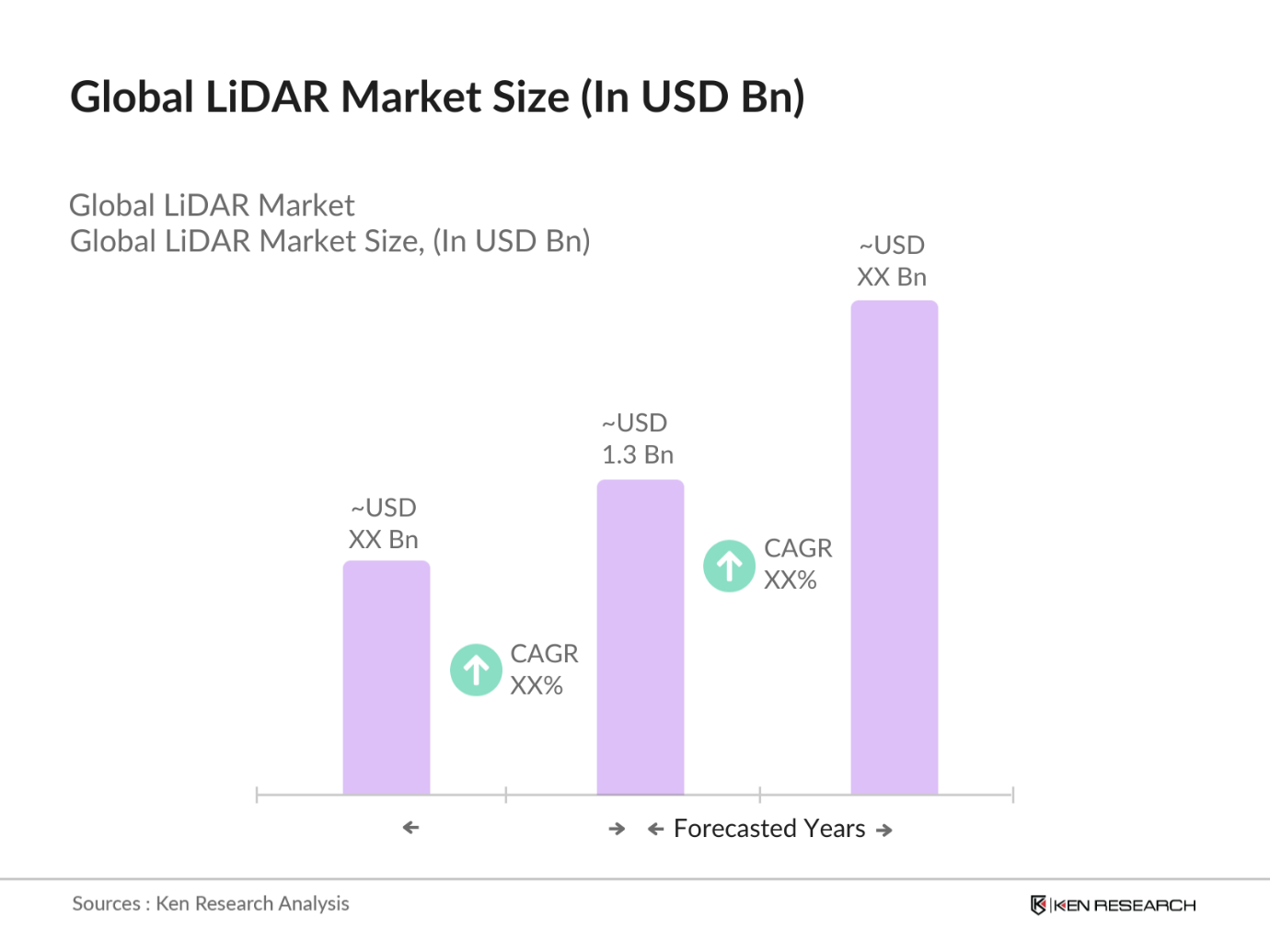
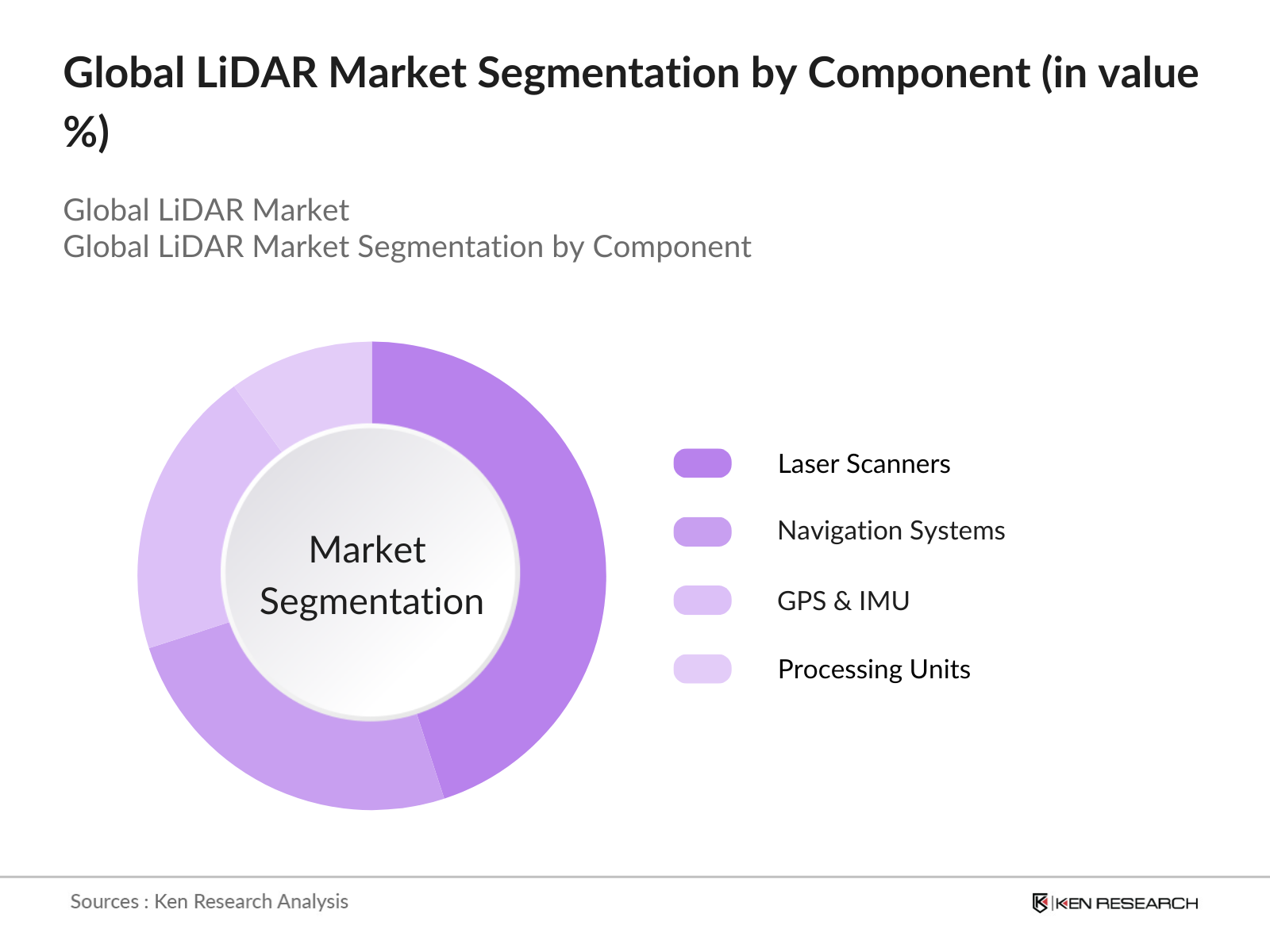
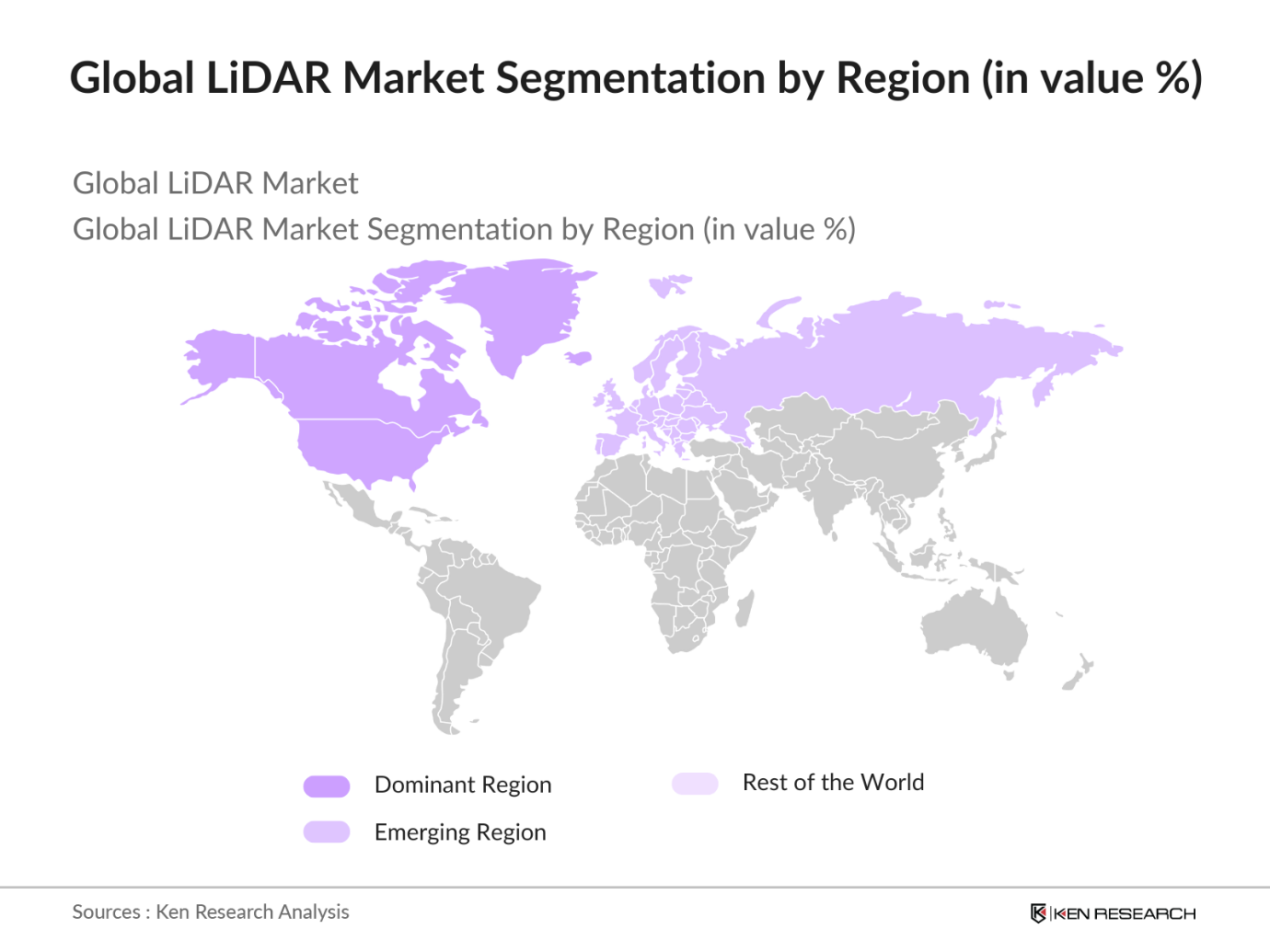
The Global LiDAR Market is characterized by a blend of well-established companies and emerging players. Companies like Velodyne, Trimble, and Teledyne dominate the landscape, backed by technological advancements and a stronghold in essential applications like autonomous driving and smart city projects. This market consolidation underscores the influence of key players in setting industry standards and expanding market applications.
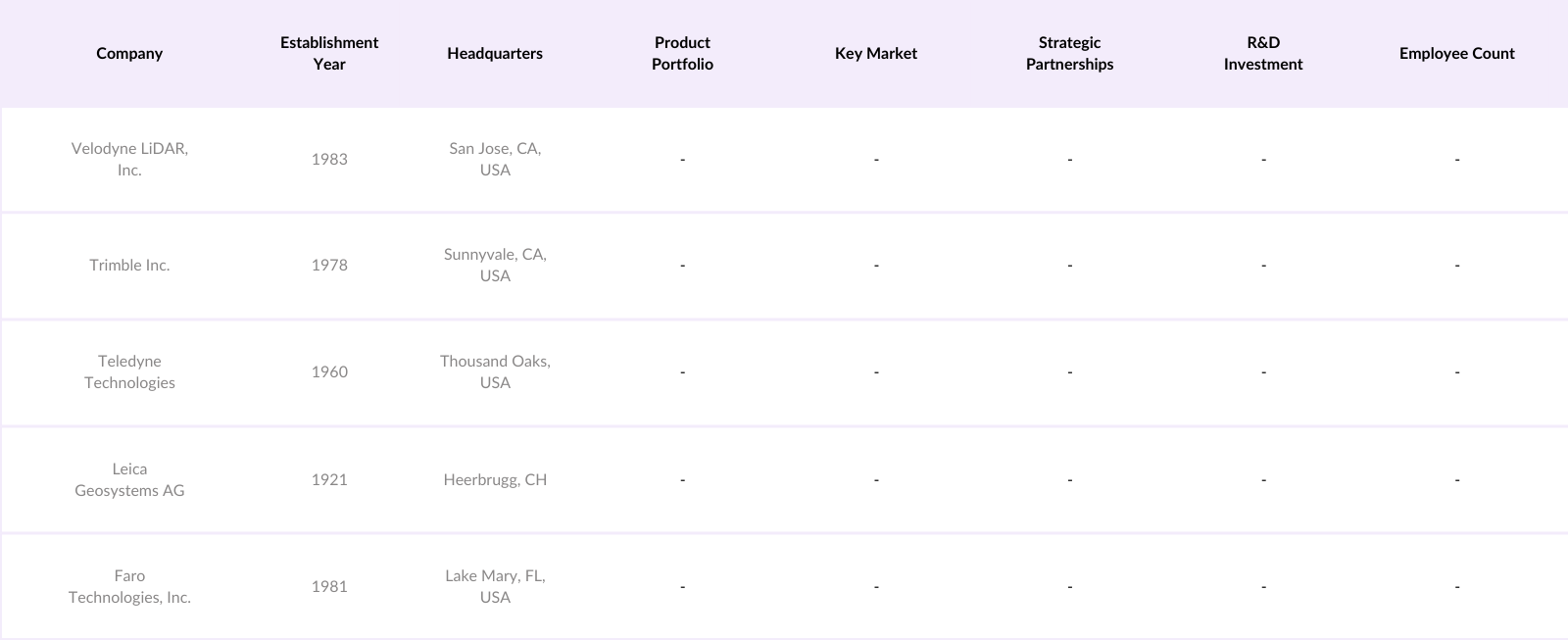
The Global LiDAR Market is poised for significant expansion as technology advances and adoption increases across multiple industries. The integration of LiDAR in autonomous vehicles, coupled with its application in environmental monitoring, is expected to create substantial growth opportunities. Additionally, innovations in solid-state and miniaturized LiDAR systems will likely drive cost reductions, making the technology more accessible across diverse sectors.
|
By Component |
Laser Scanner Navigation Systems GPS & IMU Processing Units |
|
By Type |
Terrestrial LiDAR Aerial LiDAR Mobile LiDAR Short-Range LiDAR |
|
By Application |
Automotive & Transportation Mapping & Cartography Urban Planning Environment & Forestry Oil & Gas |
|
By Technology |
Solid-State Mechanical/Rotating Flash LiDAR |
|
By Region |
North America Europe Asia Pacific Middle East & Africa Latin America |
1.1. Definition and Scope
1.2. Market Taxonomy
1.3. Market Dynamics Overview
1.4. Market Segmentation Overview
2.1. Historical Market Analysis
2.2. Year-On-Year Growth Trends
2.3. Key Market Milestones & Technological Developments
3.1. Growth Drivers
3.1.1. Expansion in Autonomous Vehicles
3.1.2. Advancements in Mapping & Surveying Technologies
3.1.3. Increasing Demand in Environmental Monitoring
3.1.4. Adoption of LiDAR in Urban Planning
3.2. Market Challenges
3.2.1. Cost Constraints in Manufacturing & Deployment
3.2.2. Data Storage and Processing Requirements
3.2.3. Regulatory and Standardization Challenges
3.3. Opportunities
3.3.1. Integration with IoT and AI Technologies
3.3.2. Expansion in Developing Regions
3.3.3. Enhanced Application in Archeological & Geological Studies
3.4. Trends
3.4.1. Miniaturization of LiDAR Systems
3.4.2. Adoption of Solid-State LiDAR
3.4.3. Multi-Layer Scanning Technologies
3.5. Government Regulation
3.5.1. Environmental Safety Compliance
3.5.2. Regulations for Automotive and Drone Use
3.5.3. Public Sector Use Cases and Guidelines
3.6. SWOT Analysis
3.7. Stakeholder Ecosystem
3.8. Porters Five Forces Analysis
3.9. Competition Landscape
4.1. By Component (In Value %)
4.1.1. Laser Scanner
4.1.2. Navigation Systems
4.1.3. GPS & IMU
4.1.4. Processing Units
4.2. By Type (In Value %)
4.2.1. Terrestrial LiDAR
4.2.2. Aerial LiDAR
4.2.3. Mobile LiDAR
4.2.4. Short-Range LiDAR
4.3. By Application (In Value %)
4.3.1. Automotive & Transportation
4.3.2. Mapping & Cartography
4.3.3. Urban Planning
4.3.4. Environment & Forestry
4.3.5. Oil & Gas
4.4. By Technology (In Value %)
4.4.1. Solid-State
4.4.2. Mechanical/Rotating
4.4.3. Flash LiDAR
4.5. By Region (In Value %)
4.5.1. North America
4.5.2. Europe
4.5.3. Asia Pacific
4.5.4. Middle East & Africa
4.5.5. Latin America
5.1. Profiles of Major Companies
5.1.1. Velodyne LiDAR, Inc.
5.1.2. Trimble Inc.
5.1.3. Teledyne Technologies Incorporated
5.1.4. Leica Geosystems AG
5.1.5. Faro Technologies, Inc.
5.1.6. Quanergy Systems, Inc.
5.1.7. LeddarTech Inc.
5.1.8. RIEGL Laser Measurement Systems GmbH
5.1.9. Innoviz Technologies Ltd.
5.1.10. Luminar Technologies, Inc.
5.1.11. Topcon Corporation
5.1.12. Sick AG
5.1.13. Ouster, Inc.
5.1.14. AEye, Inc.
5.1.15. Velodyne Lidar Inc.
5.2. Cross Comparison Parameters (Revenue, Geographic Presence, Product Portfolio, No. of Patents, Innovation Index, Market Share, Strategic Partnerships, Employee Strength)
5.3. Market Share Analysis
5.4. Strategic Initiatives & Competitive Benchmarking
5.5. Mergers, Acquisitions & Collaborations
5.6. Investment Analysis (Venture Capital, Government Funding)
5.7. Emerging Start-Ups and Disruptors
6.1. Environmental Compliance & Certifications
6.2. Automotive & Transportation Regulations
6.3. Aviation & Aerospace Guidelines
6.4. Privacy and Data Security Standards
6.5. Compliance Requirements for Infrastructure Projects
7.1. Future Market Growth Prospects
7.2. Key Drivers Influencing Future Demand
8.1. By Component (In Value %)
8.2. By Type (In Value %)
8.3. By Application (In Value %)
8.4. By Technology (In Value %)
8.5. By Region (In Value %)
9.1. Total Addressable Market (TAM) & Serviceable Addressable Market (SAM) Analysis
9.2. Competitive Positioning Strategy
9.3. Consumer Cohort Identification
9.4. Opportunity Matrix Analysis
The initial phase involves identifying significant market components such as LiDAR technology types, application areas, and regional factors, leveraging secondary databases and proprietary industry information. This process ensures a clear understanding of the foundational market variables.
We then analyze historical market data, examining product adoption rates, geographic market dynamics, and market-specific revenue generation. This phase ensures accurate foundational statistics and a comprehensive understanding of market mechanics.
Expert consultations with industry stakeholders provide insights into the market's technical and operational aspects. Structured interviews and focus groups yield critical data on market challenges and opportunities, refining our hypotheses and ensuring reliability.
Engagements with multiple market players help gather data on sales, consumer preferences, and product performance. These interactions validate the accuracy of the market analysis, culminating in a cohesive and precise report output.
The Global LiDAR Market, valued at USD 1.3 billion, is driven by the integration of this technology in autonomous vehicles, urban infrastructure projects, and environmental monitoring.
Challenges include high production costs, limited skilled workforce for technical operations, and data storage demands that may restrict broader adoption in developing regions.
Prominent players include Velodyne, Trimble, Teledyne, Leica Geosystems, and Faro Technologies, recognized for their advancements in LiDAR technology and extensive market presence.
The market is propelled by technological advancements, demand for precise 3D mapping, and growing use in autonomous vehicles and environmental monitoring.

What makes us stand out is that our consultants follows Robust, Refine and Result (RRR) methodology. i.e. Robust for clear definitions, approaches and sanity checking, Refine for differentiating respondents facts and opinions and Result for presenting data with story

We have set a benchmark in the industry by offering our clients with syndicated and customized market research reports featuring coverage of entire market as well as meticulous research and analyst insights.

While we don't replace traditional research, we flip the method upside down. Our dual approach of Top Bottom & Bottom Top ensures quality deliverable by not just verifying company fundamentals but also looking at the sector and macroeconomic factors.

With one step in the future, our research team constantly tries to show you the bigger picture. We help with some of the tough questions you may encounter along the way: How is the industry positioned? Best marketing channel? KPI's of competitors? By aligning every element, we help maximize success.

Our report gives you instant access to the answers and sources that other companies might choose to hide. We elaborate each steps of research methodology we have used and showcase you the sample size to earn your trust.

If you need any support, we are here! We pride ourselves on universe strength, data quality, and quick, friendly, and professional service.