
Global Lithium Iron Phosphate (LFP) Batteries Market Outlook to 2030
Region:Global
Author(s):Vijay Kumar
Product Code:KROD7236
Region:Global
Author(s):Vijay Kumar
Product Code:KROD7236
November 2024
97
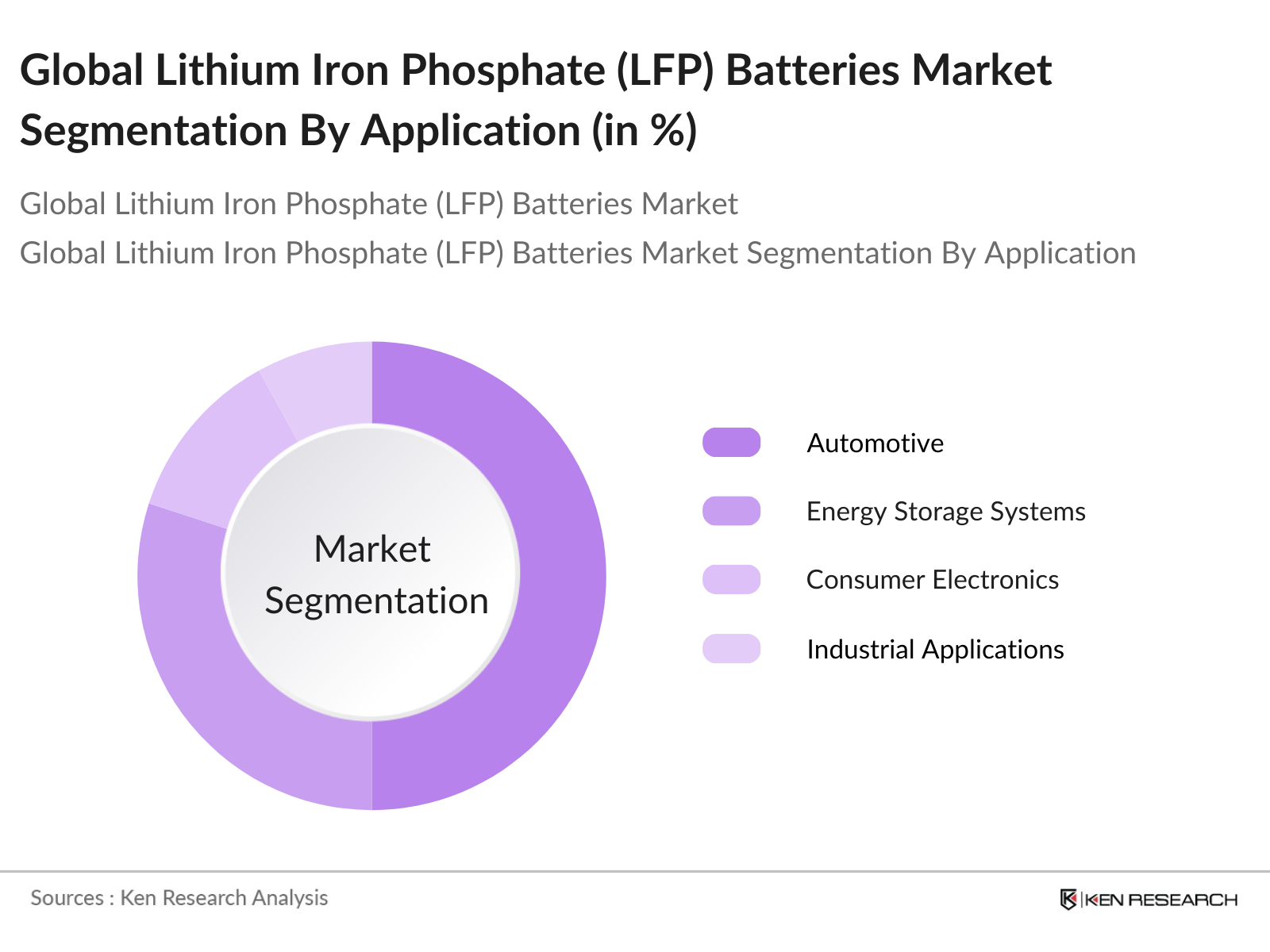
By Application: The LFP battery market is segmented by application into automotive, energy storage systems, consumer electronics, industrial applications, and aerospace & defense. The automotive sector dominates this segmentation due to the growing adoption of electric vehicles globally. Companies like Tesla and BYD utilize LFP batteries due to their long cycle life and enhanced safety.
By Power Capacity: The market is segmented by power capacity into up to 20 kWh, 20-50 kWh, 50-100 kWh, and above 100 kWh. The 20-50 kWh segment holds the largest market share, as this range is widely used in electric vehicles (EVs) and energy storage systems (ESS), offering an optimal balance between performance, weight, and cost. This segment benefits from advancements in EV production and the rapid deployment of renewable energy systems.
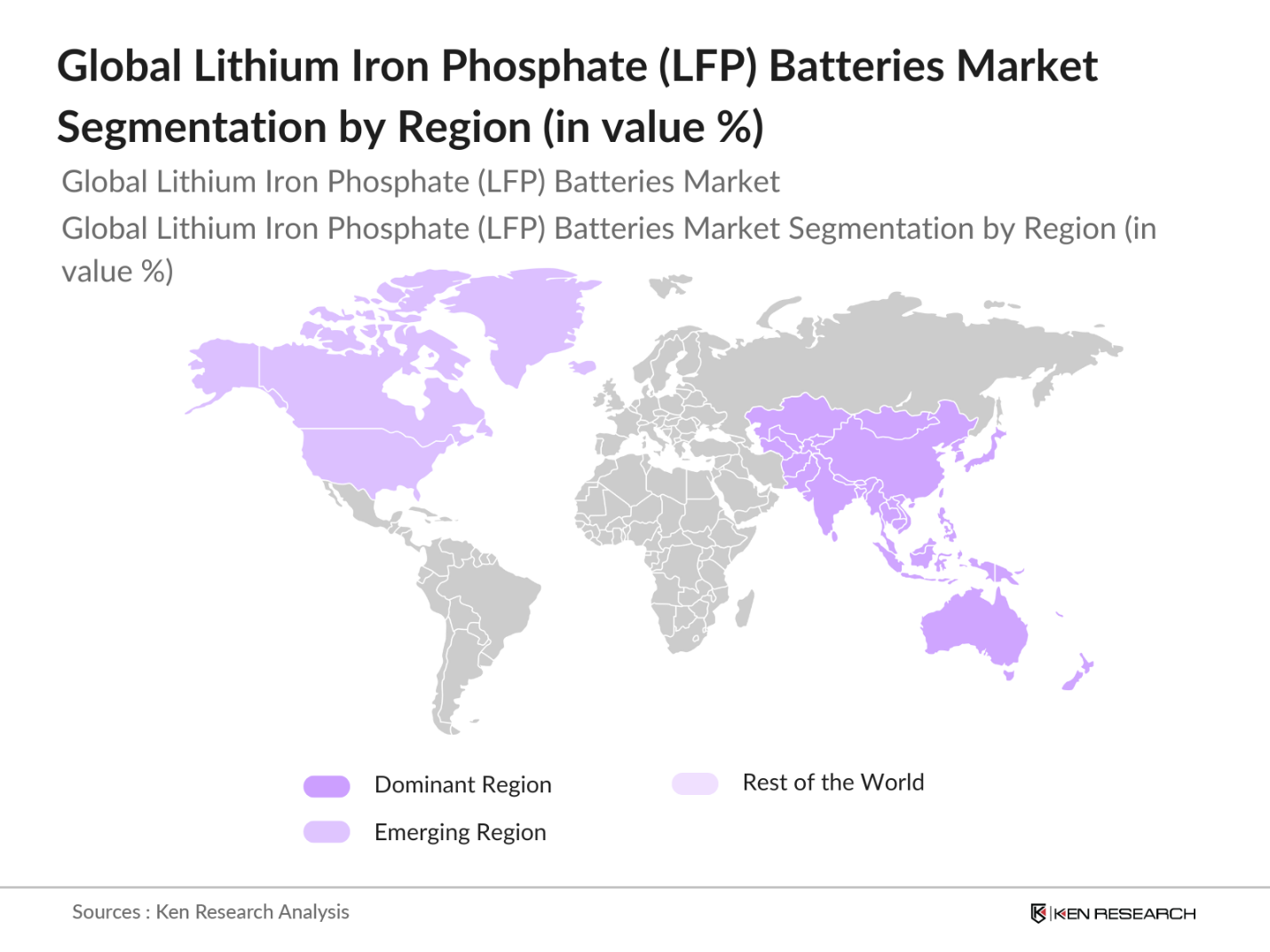
By Region: The LFP battery market is segmented into North America, Europe, Asia-Pacific, Latin America, and the Middle East & Africa. Asia-Pacific dominates the regional market share, driven primarily by China's leadership in EV production and battery manufacturing. With substantial government investments and favorable policies, China has become a hub for LFP battery innovation, making the region a critical player in the global market.
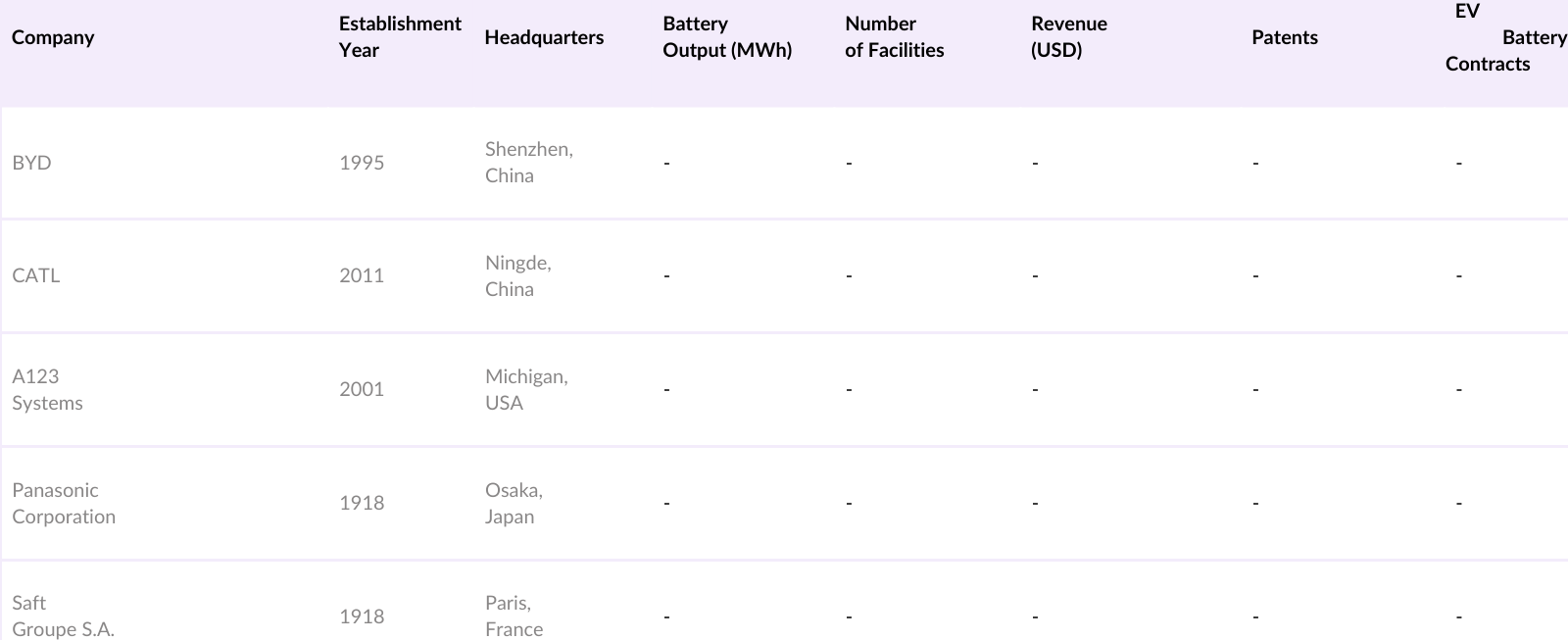
The global lithium iron phosphate (LFP) batteries market is dominated by a few key players, including large-scale manufacturers and integrators of battery solutions for the automotive and energy storage sectors. The competitive landscape is defined by these major companies, their innovations in battery technology, and their ability to scale production to meet growing demand. Substantial investments in research and development, partnerships with automotive OEMs, and vertical integration strategies further consolidate their market presence.
Over the next five years, the global LFP battery market is expected to experience significant growth, driven by continuous advancements in battery technology, the expansion of electric vehicle production, and the rising demand for renewable energy storage. Government regulations promoting clean energy, along with growing investments in battery recycling and sustainability, will likely contribute to the market's future development.
|
By Application |
Automotive Energy Storage Systems Consumer Electronics Industrial Applications Aerospace & Defense |
|
By Power Capacity |
Up to 20 kWh 20-50 kWh 50-100 kWh Above 100 kWh |
|
By Type |
Cylindrical Prismatic Pouch |
|
By End User |
Automotive Renewable Energy Storage Industrial Electronics Aerospace & Defense |
|
By Region |
North America Europe Asia-Pacific Latin America Middle East & Africa |
1.1 Definition and Scope
1.2 Market Taxonomy
1.3 Market Growth Rate (LFP Battery Growth Trajectories)
1.4 Market Segmentation Overview (Battery Chemistry, Applications, End-user Industry, Geography, Capacity)
2.1 Historical Market Size (LFP Batteries Global Revenues)
2.2 Year-On-Year Growth Analysis (Annual Growth in LFP Battery Adoption)
2.3 Key Market Developments and Milestones (Key Developments in Battery Technology, Market Expansion)
3.1 Growth Drivers
3.1.1 Growing Demand for Electric Vehicles (EV Adoption Impact on LFP)
3.1.2 Increased Use in Energy Storage Systems (ESS Deployment and LFP Role)
3.1.3 Cost-Effectiveness and Safety Advantages (Comparative Advantages in Safety and Cost-Reduction)
3.1.4 Regulatory Push for Sustainable Energy (Government Policies Encouraging LFP Battery Use)
3.2 Market Challenges
3.2.1 Limited Energy Density Compared to Other Batteries
3.2.2 Recycling and Environmental Concerns (End-of-life Management)
3.2.3 High Competition from Lithium Nickel Cobalt Manganese Oxide (NCM) Batteries
3.3 Opportunities
3.3.1 Growing Stationary Energy Storage Demand (Utility-Scale and Residential)
3.3.2 Emerging Markets and Regions (LFP Demand in Developing Economies)
3.3.3 Advances in Manufacturing Technologies (Cost-Efficiency in Production)
3.4 Trends
3.4.1 Use of LFP in Electric Commercial Fleets (Fleet Electrification)
3.4.2 Adoption in Grid-Scale Storage (Role in Renewable Energy Integration)
3.4.3 Development of Solid-State LFP Batteries
3.5 Government Regulation
3.5.1 Regulatory Support for EVs (Incentives and Subsidies Driving LFP Battery Use)
3.5.2 Emission Reduction Targets (Impact of Climate Goals on LFP Adoption)
3.5.3 Recycling and Waste Management Regulations (LFP Battery End-of-life Regulations)
3.6 SWOT Analysis
3.7 Value Chain Ecosystem
3.8 Porters Five Forces
3.9 Competitive Ecosystem
4.1 By Battery Chemistry (In Value %)
4.1.1. Lithium Iron Phosphate (LFP)
4.1.2. Lithium Nickel Manganese Cobalt Oxide (NMC)
4.1.3. Lithium Cobalt Oxide (LCO)
4.2 By Application (In Value %)
4.2.1. Automotive (EVs, E-bikes, Buses)
4.2.2. Energy Storage Systems (Grid, Residential, Commercial)
4.2.3. Consumer Electronics (Wearable Devices, Laptops)
4.2.4. Industrial (Robotics, Forklifts, Marine)
4.3 By End-user Industry (In Value %)
4.3.1. Automotive
4.3.2. Power Generation and Utilities
4.3.3. Consumer Electronics
4.3.4. Industrial and Manufacturing
4.4 By Capacity (In Value %)
4.4.1. Up to 16,000 mAh
4.4.2. 16,00030,000 mAh
4.4.3. Above 30,000 mAh
4.5 By Region (In Value %)
4.5.1. North America
4.5.2. Europe
4.5.3. Asia-Pacific
4.5.4. Latin America
4.5.5. Middle East & Africa
5.1 Detailed Profiles of Major Companies
5.1.1. CATL
5.1.2. BYD Company Ltd.
5.1.3. Panasonic Corporation
5.1.4. Toshiba Corporation
5.1.5. LG Energy Solution
5.1.6. A123 Systems LLC
5.1.7. K2 Energy
5.1.8. Samsung SDI Co., Ltd.
5.1.9. Lithium Werks B.V.
5.1.10. Saft Groupe S.A.
5.1.11. RELiON Battery
5.1.12. BAK Power Battery Co., Ltd.
5.1.13. OptimumNano Energy Co., Ltd.
5.1.14. Pylon Technologies Co., Ltd.
5.1.15. Farasis Energy
5.2 Cross Comparison Parameters (Market Share, Revenue, Production Capacity, Battery Cell Chemistry, Manufacturing Locations, Key R&D Projects, Strategic Partnerships, Expansion Plans)
5.3 Market Share Analysis
5.4 Strategic Initiatives (Partnerships, Collaborations, Licensing Agreements)
5.5 Mergers and Acquisitions
5.6 Investment Analysis (Private Equity, Venture Capital, Government Investments)
5.7 New Product Developments and Innovations
5.8 Market Positioning Analysis
6.1. Regulatory Standards for Battery Safety
6.2. Compliance with Emission Norms
6.3. Certification Processes for Automotive Batteries
6.4. Environmental Regulations and Disposal Norms
7.1. Future Market Size Projections
7.2. Key Factors Driving Future Market Growth (Renewable Integration, EV Growth)
8.1. By Battery Chemistry (In Value %)
8.2. By Application (In Value %)
8.3. By End-user Industry (In Value %)
8.4. By Capacity (In Value %)
8.5. By Region (In Value %)
9.1. TAM/SAM/SOM Analysis
9.2. Supply Chain Optimization Strategies
9.3. White Space Opportunity Analysis
9.4. Mergers and Acquisitions Prospects
In the first step, we build a comprehensive ecosystem map encompassing all significant stakeholders in the global LFP battery market. This involves thorough desk research using a mix of secondary and proprietary databases to gather comprehensive industry-level data. The goal is to identify and define the key variables driving market dynamics, including technological trends, manufacturing capacity, and government regulations.
In this phase, we collect and analyze historical data on LFP battery production, demand in various application sectors, and revenue generation trends. This step includes assessing manufacturing processes and the adoption of LFP technology by electric vehicle and energy storage companies to ensure accurate market estimates.
We develop market hypotheses based on the collected data, which are then validated through expert consultations with industry insiders. These consultations provide valuable insights into production trends, supply chain challenges, and future market directions, ensuring our estimates are reliable and accurate.
In the final phase, we engage directly with battery manufacturers and EV producers to gather detailed data on product segments, market trends, and consumer preferences. This process helps in cross-verifying our findings through a bottom-up approach, ensuring a holistic and validated market analysis.
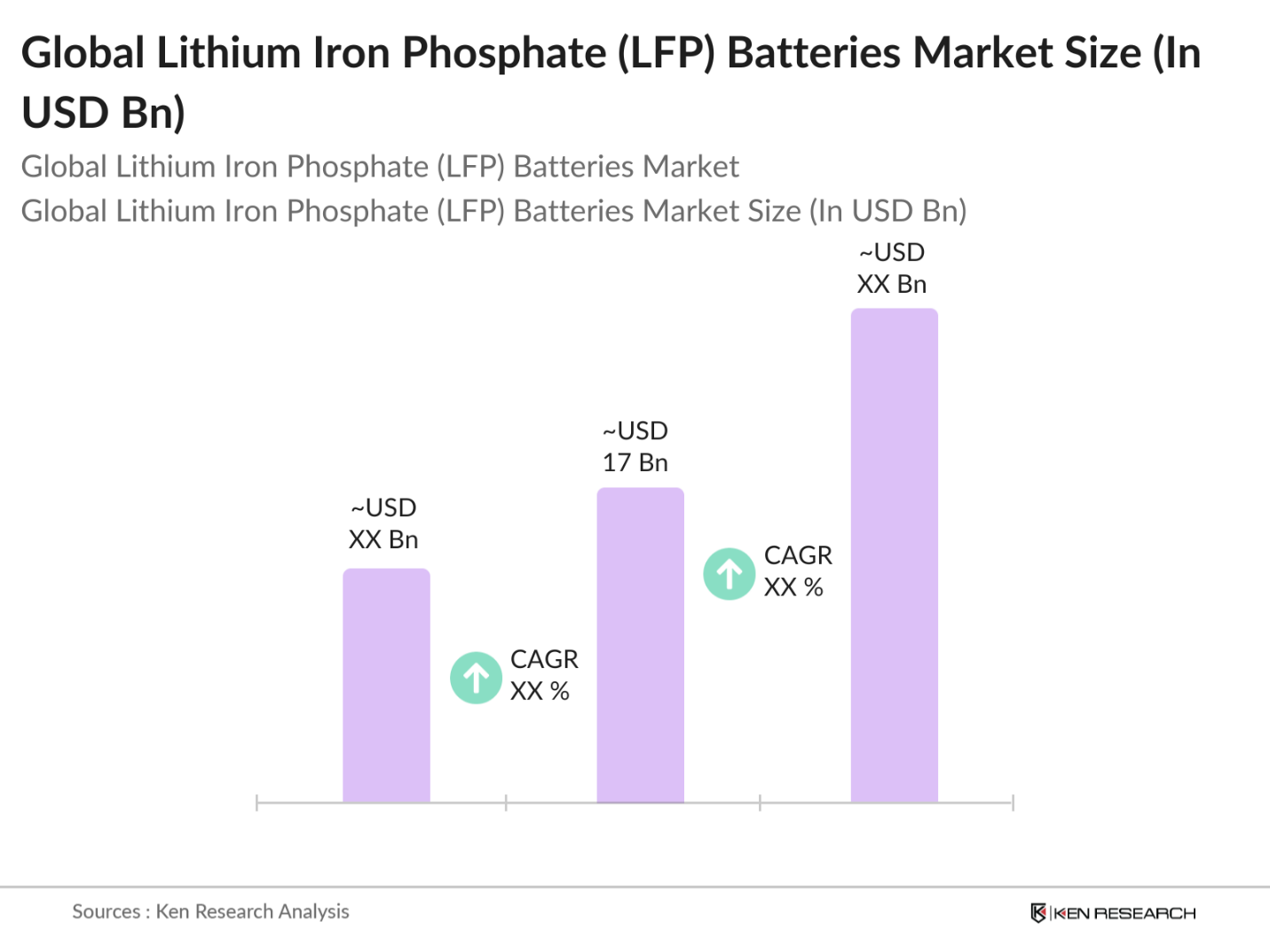
The global lithium iron phosphate (LFP) batteries market is valued at USD 17 billion, based on a five-year historical analysis.
The major challenges include competition from other battery chemistries like nickel-cobalt-manganese (NMC), energy density limitations, and battery recycling regulations.
Key players include BYD Company Ltd., Contemporary Amperex Technology Co. Ltd. (CATL), A123 Systems LLC, Panasonic Corporation, and Valence Technology, Inc.
The market is propelled by the rising demand for electric vehicles, renewable energy storage solutions, and advancements in battery safety and cost-effectiveness.

What makes us stand out is that our consultants follows Robust, Refine and Result (RRR) methodology. i.e. Robust for clear definitions, approaches and sanity checking, Refine for differentiating respondents facts and opinions and Result for presenting data with story

We have set a benchmark in the industry by offering our clients with syndicated and customized market research reports featuring coverage of entire market as well as meticulous research and analyst insights.

While we don't replace traditional research, we flip the method upside down. Our dual approach of Top Bottom & Bottom Top ensures quality deliverable by not just verifying company fundamentals but also looking at the sector and macroeconomic factors.

With one step in the future, our research team constantly tries to show you the bigger picture. We help with some of the tough questions you may encounter along the way: How is the industry positioned? Best marketing channel? KPI's of competitors? By aligning every element, we help maximize success.

Our report gives you instant access to the answers and sources that other companies might choose to hide. We elaborate each steps of research methodology we have used and showcase you the sample size to earn your trust.

If you need any support, we are here! We pride ourselves on universe strength, data quality, and quick, friendly, and professional service.