
Global Livestock Monitoring Market Outlook 2030
Region:Global
Author(s):Shivani Mehra
Product Code:KROD3591
Region:Global
Author(s):Shivani Mehra
Product Code:KROD3591
December 2024
85
By Component: The livestock monitoring market is segmented into hardware, software, and services. Hardware holds the largest share, driven by the use of devices such as wearable sensors, RFID tags, and cameras for real-time animal tracking. These tools provide farmers with critical data on livestock health, behavior, and feeding patterns, enabling timely interventions and improved productivity.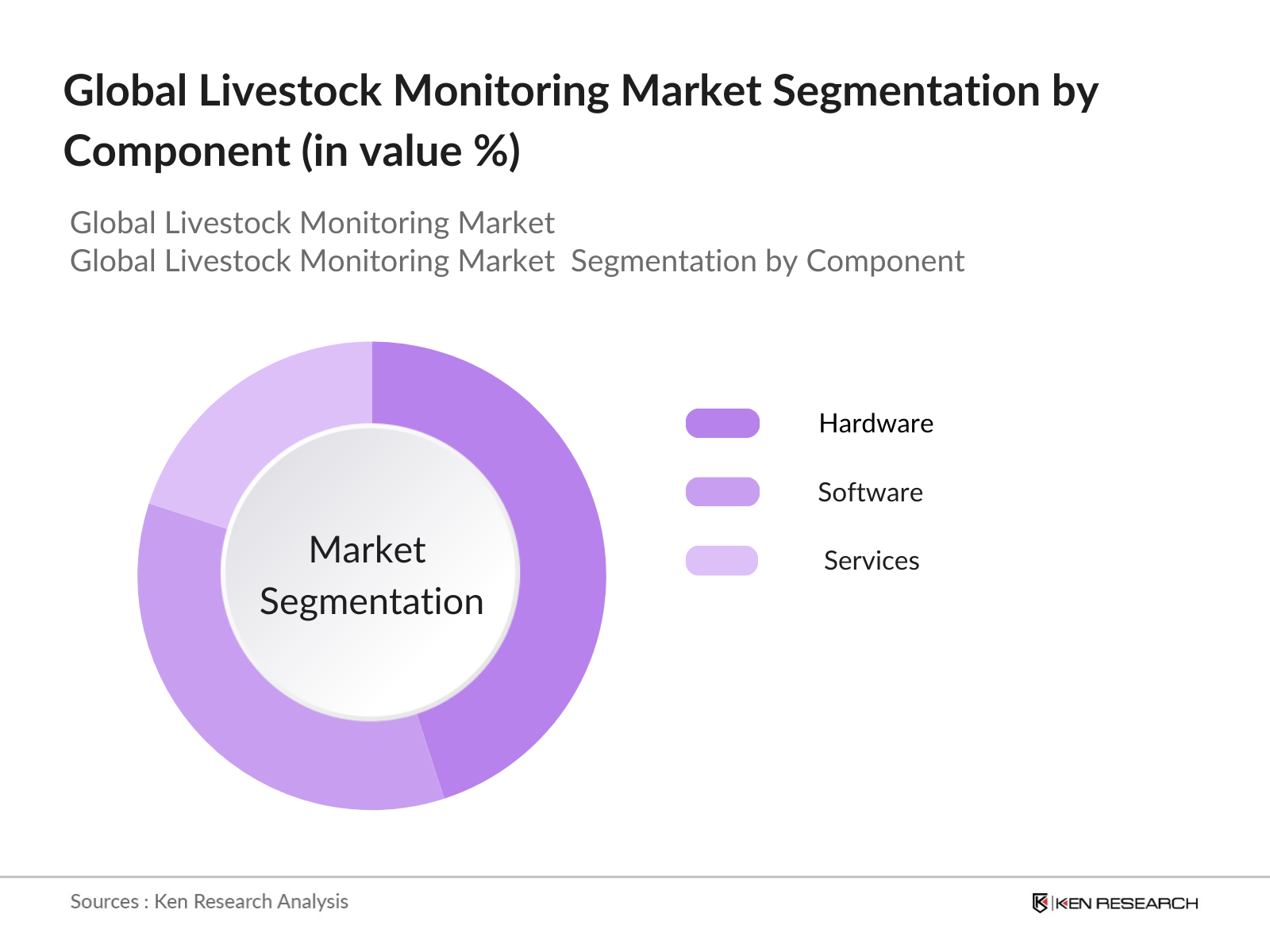
By Region: The global livestock monitoring market is led by North America, driven by advanced technological infrastructure and a high adoption rate of smart farming practices. Europe follows with a focus on stringent animal welfare regulations and sustainable farming. The Asia-Pacific region, led by China and India, is experiencing rapid growth due to rising demand for livestock products and increasing awareness of smart farming benefits.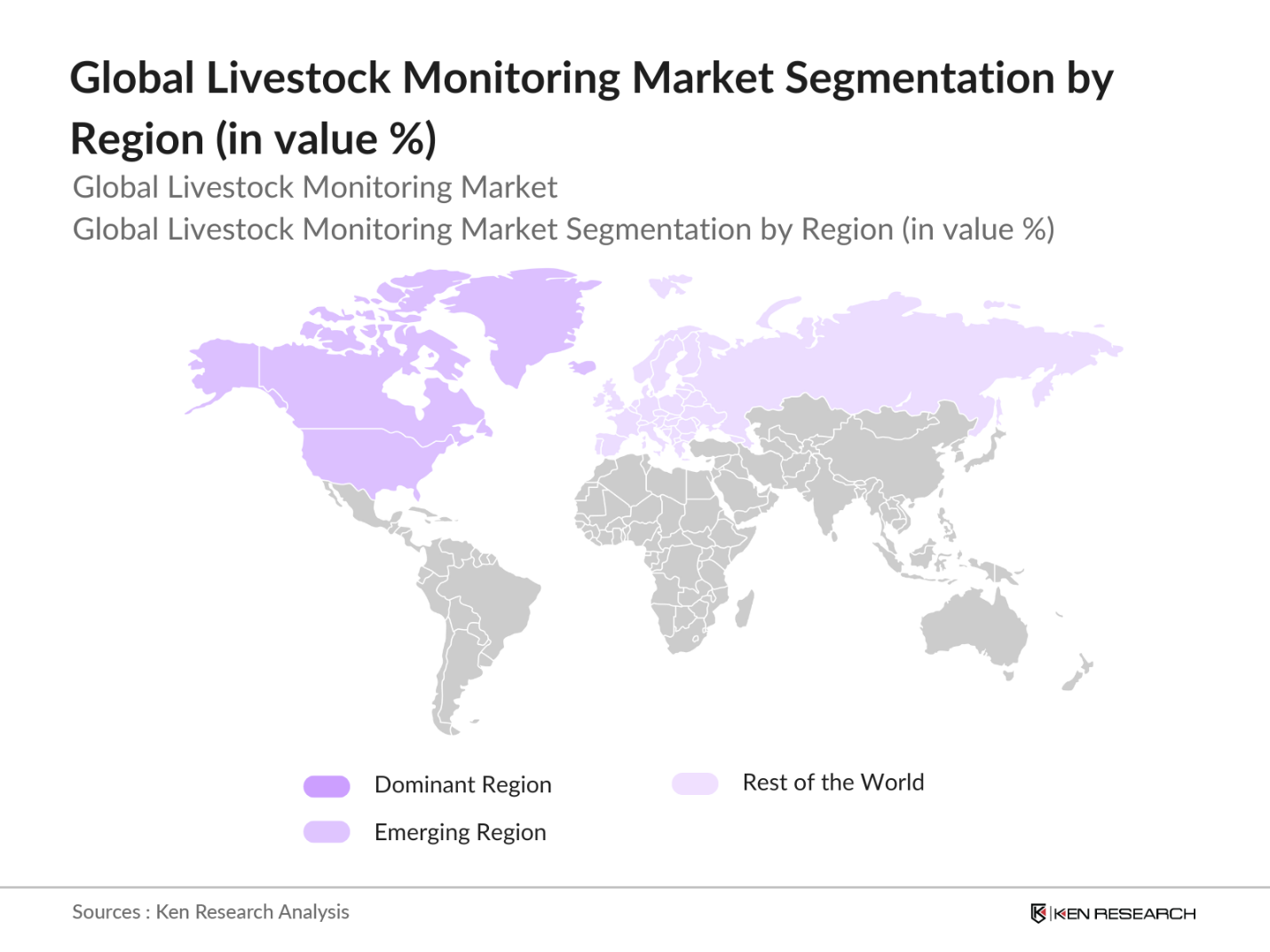
The global livestock monitoring market is highly competitive, with key players focusing on technological innovations and strategic partnerships to expand their market share. Companies are investing in R&D to enhance their product offerings and improve the accuracy of livestock monitoring systems. Major players include DeLaval, Afimilk Ltd., and BouMatic, which dominate the market through their extensive product portfolios and partnerships with large dairy and livestock farms.
|
Company Name |
Establishment Year |
Headquarters |
Revenue (USD bn) |
Market Share |
Key Products |
R&D Investments |
Partnerships |
|
DeLaval |
1883 |
Sweden |
- |
- |
- |
- |
- |
|
Afimilk Ltd. |
1977 |
Israel |
- |
- |
- |
- |
- |
|
BouMatic |
1939 |
USA |
- |
- |
- |
- |
- |
|
GEA Group |
1881 |
Germany |
- |
- |
- |
- |
- |
|
Lely |
1948 |
Netherlands |
- |
- |
- |
- |
- |
The global livestock monitoring market is expected to experience substantial growth over the next five years, driven by the rising demand for quality livestock products and the increasing adoption of smart farming technologies. Technological advancements in IoT, AI, and Big Data will continue to revolutionize livestock management, improving productivity and animal welfare. Government support through subsidies and financial assistance will further accelerate the adoption of livestock monitoring solutions
|
By Component |
Hardware Software Services |
|
By Application |
Health Monitoring Breeding Management Feeding Management Behavior Monitoring |
|
By Application |
Medical Imaging AR/VR Advertising and Marketing Engineering and Design |
|
By Livestock Type |
Cattle Poultry Swine Others |
|
By Region |
North America Europe Latin America Middle East & Africa |
1.1. Definition and Scope
1.2. Market Taxonomy
1.3. Market Growth Rate
1.4. Market Segmentation Overview
1.5. Government Initiatives Supporting Livestock Monitoring
1.6. Key Market Trends in Livestock Monitoring Applications
2.1. Historical Market Size
2.2. Year-On-Year Growth Analysis
2.3. Key Market Developments and Milestones
3.1. Growth Drivers
3.1.1. Rising Demand for Quality Meat and Dairy Products
3.1.2. Technological Advancements in IoT and AI
3.1.3. Government Support for Smart Farming
3.1.4. Increasing Prevalence of Zoonotic Diseases
3.2. Market Challenges
3.2.1. High Initial Investment Costs
3.2.2. Lack of Technical Knowledge Among Farmers
3.2.3. Data Privacy Concerns
3.3. Opportunities
3.3.1. Collaborations with Organic Farms
3.3.2. Partnerships with Government Agencies
4.1. By Component (In Value %)
4.1.1. Hardware
4.1.2. Software
4.1.3. Services
4.2. By Application (In Value %)
4.2.1. Health Monitoring
4.2.2. Breeding Management
4.2.3. Feeding Management
4.2.4. Behavior Monitoring
4.3. By Region (In Value %)
4.3.1. North America
4.3.2. Europe
4.3.3. Asia-Pacific
4.3.4. Latin America
4.3.5. Middle East & Africa
5.1. Detailed Profiles of Major Companies
5.1.1. DeLaval
5.1.2. Afimilk Ltd.
5.1.3. BouMatic
5.1.4. GEA Group
5.1.5. Lely
5.1.6. Allflex Livestock Intelligence
5.1.7. DairyMaster
5.1.8. Connecterra
5.1.9. Cainthus
5.1.10. Nedap N.V.
5.1.11. Smartbow GmbH
5.1.12. SCR Dairy
5.1.13. AgroLogic
5.1.14. Moocall
5.1.15. Zoetis
5.2. Cross Comparison Parameters (No. of Employees, Headquarters, Revenue, Product Portfolio, Market Share, Strategic Partnerships, R&D Investments, Geographic Presence)
6.1. Industry Standards (ISO, FAO)
6.2. Compliance Requirements (Animal Welfare, Data Privacy Regulations)
6.3. Certification Processes (Livestock Health, Food Safety)
7.1. Future Market Size Projections
7.2. Key Factors Driving Future Market Growth
8.1. By Component (In Value %)
8.2. By Application (In Value %)
8.3. By Region (In Value %)
9.1. TAM/SAM/SOM Analysis
9.2. Customer Cohort Analysis
9.3. Marketing Initiatives
9.4. White Space Opportunity Analysis
Disclaimer Contact UsThe first step involves identifying the key variables that impact the global livestock monitoring market. These include technological advancements (IoT, AI), government regulations, animal health trends, and market demand for livestock products. Extensive desk research was conducted using secondary data from industry reports, government publications, and proprietary databases to map out the key market stakeholders and variables (Global report format).
This phase focuses on compiling and analyzing historical data on market penetration, product adoption, and livestock monitoring system usage across different regions. The analysis includes evaluating market trends, consumer behavior, and revenue estimates to construct an accurate depiction of the global livestock monitoring market from 2018 to 2023 (Global report format).
Market hypotheses are validated through interviews with industry experts, including farmers, livestock monitoring solution providers, and agricultural technology professionals. This helps refine the assumptions and projections based on operational and practical insights gained from direct industry experience (Global report format).
In the final step, all insights gathered from desk research and expert consultations are synthesized into a comprehensive market report. The report includes detailed market segmentation, key growth drivers, market challenges, competitive landscape analysis, and a five-year outlook, ensuring that the data is accurate and actionable for stakeholders in the livestock monitoring market (Global report format).
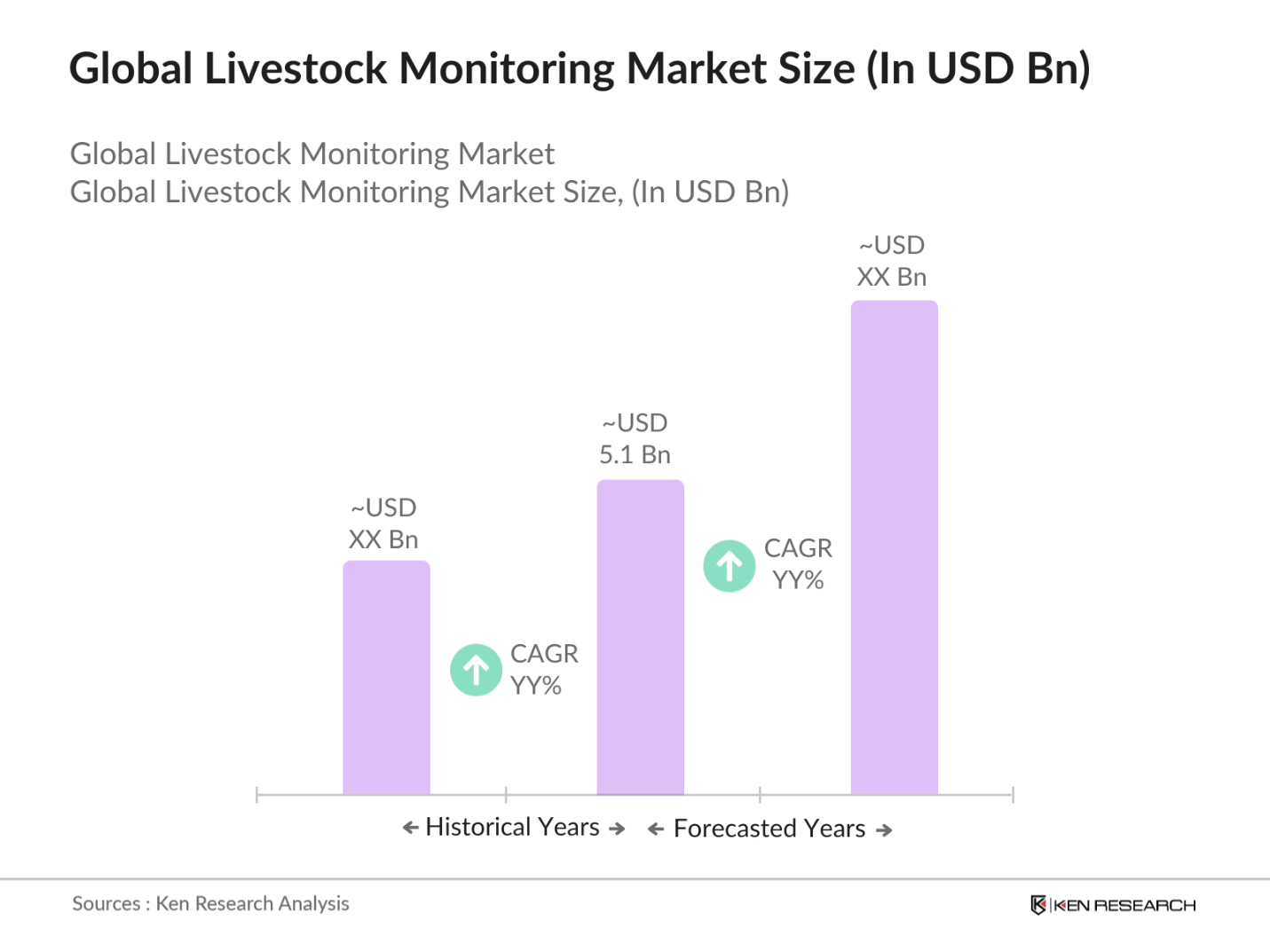
The global livestock monitoring market is valued at USD 5.1 billion, driven by the increasing demand for real-time data and technological advancements in farming practices (Global report format).
The main challenges include high initial investment costs for implementing livestock monitoring systems, lack of technical knowledge among farmers, and concerns regarding data privacy in cloud-based solutions (Global report format).
The key players in the market include DeLaval, Afimilk Ltd., BouMatic, GEA Group, and Lely. These companies dominate through their advanced monitoring tools and strong partnerships with dairy and livestock farms (Global report format).
Key growth drivers include the rising demand for quality meat and dairy products, technological advancements in IoT and AI, government support for smart farming, and the increasing prevalence of zoonotic diseases (Global report format).

What makes us stand out is that our consultants follows Robust, Refine and Result (RRR) methodology. i.e. Robust for clear definitions, approaches and sanity checking, Refine for differentiating respondents facts and opinions and Result for presenting data with story

We have set a benchmark in the industry by offering our clients with syndicated and customized market research reports featuring coverage of entire market as well as meticulous research and analyst insights.

While we don't replace traditional research, we flip the method upside down. Our dual approach of Top Bottom & Bottom Top ensures quality deliverable by not just verifying company fundamentals but also looking at the sector and macroeconomic factors.

With one step in the future, our research team constantly tries to show you the bigger picture. We help with some of the tough questions you may encounter along the way: How is the industry positioned? Best marketing channel? KPI's of competitors? By aligning every element, we help maximize success.

Our report gives you instant access to the answers and sources that other companies might choose to hide. We elaborate each steps of research methodology we have used and showcase you the sample size to earn your trust.

If you need any support, we are here! We pride ourselves on universe strength, data quality, and quick, friendly, and professional service.