
Global Low-Cost Airlines Market Outlook 2030
Region:Global
Author(s):Shivani Mehra
Product Code:KROD11384
Region:Global
Author(s):Shivani Mehra
Product Code:KROD11384
December 2024
88
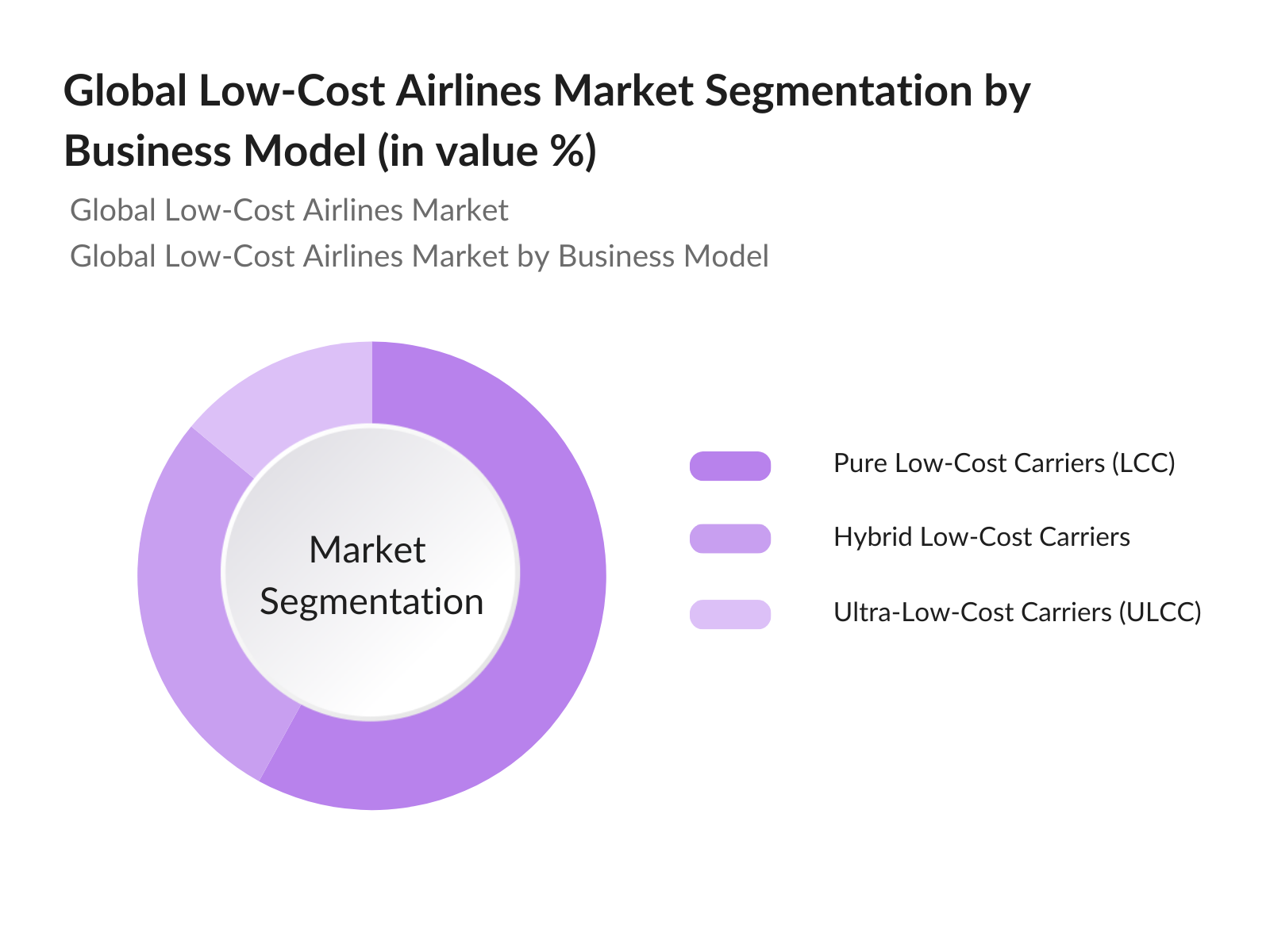
By Business Model: The global low-cost airlines market is segmented by business model into pure low-cost carriers (LCC), hybrid low-cost carriers, and ultra-low-cost carriers (ULCC). Among these, pure low-cost carriers hold the largest market share. This dominance is attributed to the straightforward, no-frills model, which focuses on efficiency, cost control, and providing affordable travel options to consumers. Pure LCCs, such as Ryanair and Southwest Airlines, maintain a significant presence due to their established routes, large fleets, and ability to offer consistently low fares through stringent operational practices.
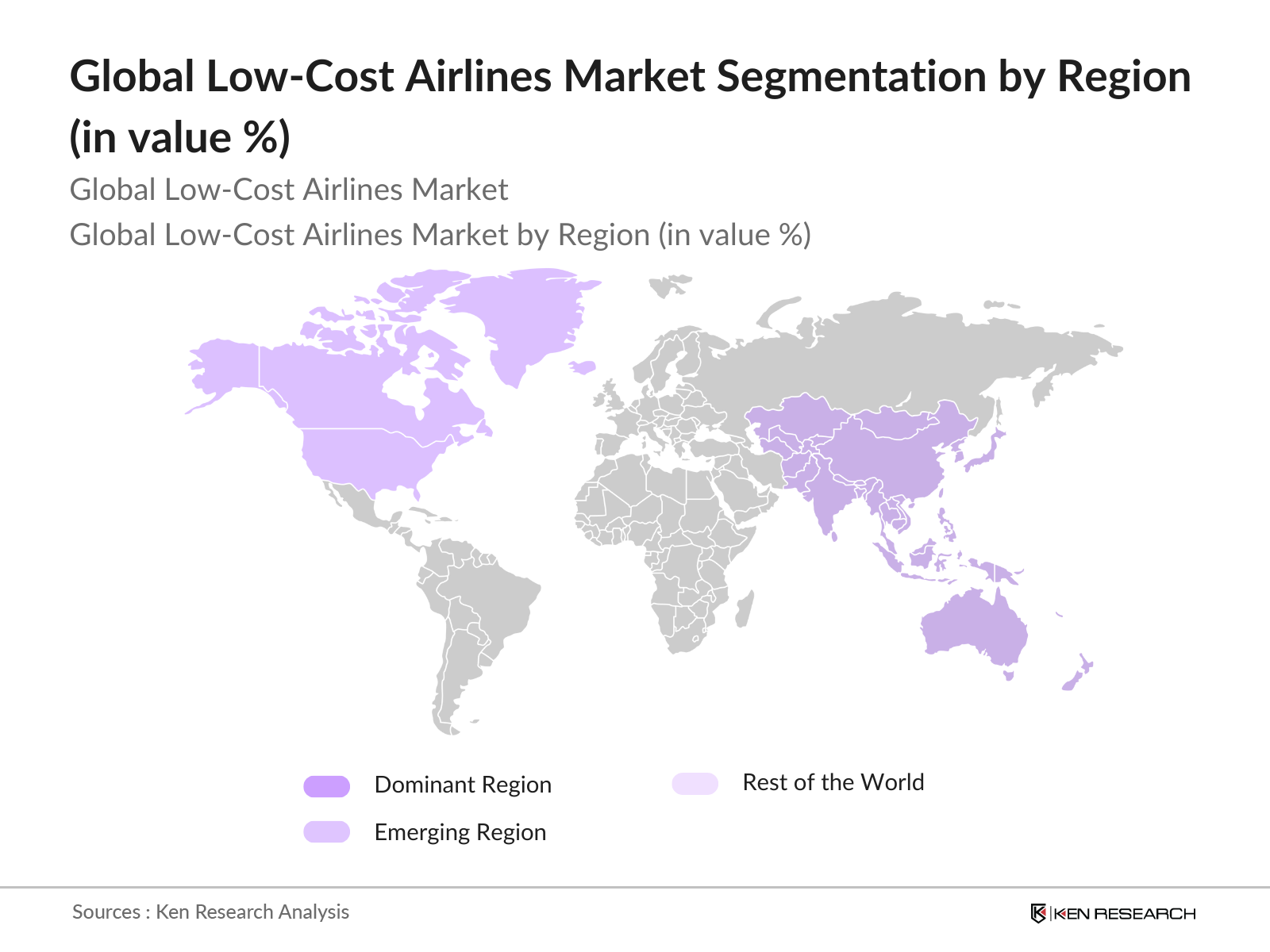
By Region: The market is segmented into North America, Europe, Asia-Pacific, Latin America, and Middle East & Africa. Asia-Pacific dominates, owing to the rapid growth of low-cost airlines in countries like India, China, and Southeast Asia. The growing middle class, government initiatives to boost regional connectivity, and increasing leisure travel are key factors driving market growth in this region. North America and Europe follow, driven by established airline networks and consistent demand for affordable travel options.
The global low-cost airlines market is dominated by a few key players, each vying for market share through fleet expansion, competitive pricing, and strategic partnerships. These companies, such as Ryanair and Southwest Airlines, have solidified their positions through large-scale operations and efficient business models that capitalize on cost-effective measures. The consolidation within the industry highlights the competitive nature of the market, where economies of scale and network optimization play crucial roles.
|
Company |
Established Year |
Headquarters |
Fleet Size |
Revenue (USD bn) |
Route Network |
Ancillary Revenue |
Load Factor |
Sustainability Initiatives |
Customer Satisfaction Ratings |
|
Ryanair Holdings |
1984 |
Dublin, Ireland |
500+ |
9.1 |
|||||
|
Southwest Airlines |
1967 |
Dallas, USA |
750+ |
22.6 |
|||||
|
easyJet Plc |
1995 |
Luton, UK |
300+ |
8.3 |
|||||
|
AirAsia Group |
1993 |
Sepang, Malaysia |
250+ |
2.9 |
|||||
|
Indigo Airlines |
2006 |
Gurgaon, India |
270+ |
5.7 |
Over the next few years, the global low-cost airlines market is poised for significant growth, driven by an increasing demand for affordable air travel options and continued expansion in emerging markets. Factors such as rising disposable incomes, urbanization, and the availability of low-cost travel alternatives will further stimulate the market. Additionally, technological advancements, including the integration of digital sales platforms and the adoption of sustainable aviation practices, will shape the future of the industry, ensuring airlines meet evolving consumer and environmental demands.
|
By Business Model |
Pure Low-Cost Carriers (LCC) Hybrid Low-Cost Carriers Ultra-Low-Cost Carriers (ULCC) |
|
By Service Type |
Domestic Flights |
|
By Passenger Type |
Leisure Travelers |
|
By Distribution Channel |
Direct Sales (Airline Websites, Mobile Apps) Indirect Sales (Online Travel Agencies, Travel Agents) |
|
By Region |
North America Europe Asia-Pacific Latin America Middle East & Africa |
1.1. Definition and Scope
1.2. Market Taxonomy
1.3. Market Growth Rate
1.4. Market Segmentation Overview
2.1. Historical Market Size
2.2. Year-On-Year Growth Analysis (Passenger Traffic Growth, Revenue Per Seat, Average Ticket Price)
2.3. Key Market Developments and Milestones
3.1. Growth Drivers
3.1.1. Increasing Air Passenger Traffic
3.1.2. Expansion of Regional Connectivity
3.1.3. Price-Sensitive Consumers
3.1.4. Fleet Modernization Initiatives
3.2. Market Challenges
3.2.1. Fuel Price Volatility
3.2.2. Regulatory Restrictions (Airline Regulations, Bilateral Agreements)
3.2.3. Infrastructure Limitations (Airport Capacity, Slots)
3.3. Opportunities
3.3.1. Expanding Middle-Class Income in Emerging Markets
3.3.2. Strategic Alliances and Partnerships
3.3.3. Growth in Digital Sales Channels (Mobile Ticketing, Online Bookings)
3.4. Trends
3.4.1. Increasing Focus on Ancillary Revenues (Baggage Fees, Seat Selection, On-Board Purchases)
3.4.2. Use of Data Analytics for Route Optimization
3.4.3. Green Aviation Initiatives (Sustainable Fuels, Carbon Offset Programs)
3.5. Government Regulation
3.5.1. Aviation Safety Standards
3.5.2. Deregulation Policies (Open Skies Agreements, Slot Allocations)
3.5.3. Subsidies for Regional Connectivity
3.6. SWOT Analysis
3.7. Stakeholder Ecosystem (Airports, Aircraft Manufacturers, Travel Agencies)
3.8. Porters Five Forces (Supplier Power, Buyer Power, Threat of New Entrants, Threat of Substitutes, Industry Rivalry)
3.9. Competitive Ecosystem
4.1. By Business Model (In Value %)
4.1.1. Pure Low-Cost Carriers (LCC)
4.1.2. Hybrid Low-Cost Carriers
4.1.3. Ultra-Low-Cost Carriers (ULCC)
4.2. By Service Type (In Value %)
4.2.1. Domestic Flights
4.2.2. International Flights
4.2.3. Long-Haul Budget Flights
4.3. By Passenger Type (In Value %)
4.3.1. Leisure Travelers
4.3.2. Business Travelers
4.4. By Distribution Channel (In Value %)
4.4.1. Direct Sales (Airline Websites, Mobile Apps)
4.4.2. Indirect Sales (Online Travel Agencies, Travel Agents)
4.5. By Region (In Value %)
4.5.1. North America
4.5.2. Europe
4.5.3. Asia-Pacific
4.5.4. Latin America
4.5.5. Middle East & Africa
5.1. Detailed Profiles of Major Companies
5.1.1. Ryanair Holdings
5.1.2. Southwest Airlines
5.1.3. easyJet Plc
5.1.4. AirAsia Group
5.1.5. Indigo Airlines
5.1.6. Jetstar Airways
5.1.7. Wizz Air
5.1.8. Spirit Airlines
5.1.9. Norwegian Air Shuttle
5.1.10. Viva Aerobus
5.1.11. Eurowings
5.1.12. Frontier Airlines
5.1.13. Flydubai
5.1.14. Scoot
5.1.15. Pegasus Airlines
5.2. Cross Comparison Parameters (Fleet Size, Route Network, Headquarters, Ancillary Revenue, Load Factor, Profit Margins, Sustainability Initiatives, Customer Satisfaction Ratings)
5.3. Market Share Analysis (By Revenue, By Passengers)
5.4. Strategic Initiatives (Fleet Expansion, Service Enhancements)
5.5. Mergers and Acquisitions (Partnerships, Alliances)
5.6. Investment Analysis (CapEx, Funding for Growth)
5.7. Venture Capital and Private Equity Investments
5.8. Government Grants and Subsidies
6.1. Aviation Regulations (Safety Standards, Operational Rules)
6.2. Compliance Requirements (Security Measures, Environmental Regulations)
6.3. Certification Processes (IATA Certifications, FAA Approvals)
7.1. Future Market Size Projections
7.2. Key Factors Driving Future Market Growth (Population Growth, Rising Middle Class)
8.1. By Business Model (In Value %)
8.2. By Service Type (In Value %)
8.3. By Passenger Type (In Value %)
8.4. By Distribution Channel (In Value %)
8.5. By Region (In Value %)
9.1. TAM/SAM/SOM Analysis
9.2. Customer Cohort Analysis (Leisure vs Business)
9.3. Marketing Initiatives (Price Positioning, Branding)
9.4. White Space Opportunity Analysis
The research process begins by mapping the low-cost airline industrys ecosystem, identifying critical stakeholders such as airline operators, regulatory bodies, and aviation infrastructure providers. Extensive secondary research is conducted to gather relevant data on these stakeholders, which helps in defining the key variables that influence the market.
Historical data pertaining to the low-cost airline industry, including fleet sizes, passenger volumes, and ancillary revenue statistics, is compiled and analyzed. This step helps in establishing a clear understanding of market trends and growth drivers, ensuring the analysis is grounded in factual information.
To verify the accuracy of the data and refine market projections, expert consultations are conducted through structured interviews with professionals from leading airlines. Their insights provide operational perspectives, helping to fine-tune revenue estimates and market forecasts.
In the final phase, the gathered data is synthesized into a comprehensive market report. This includes verifying the findings through triangulation methods, comparing different data sources, and validating the trends observed with industry insights to ensure a robust analysis of the global low-cost airline market.
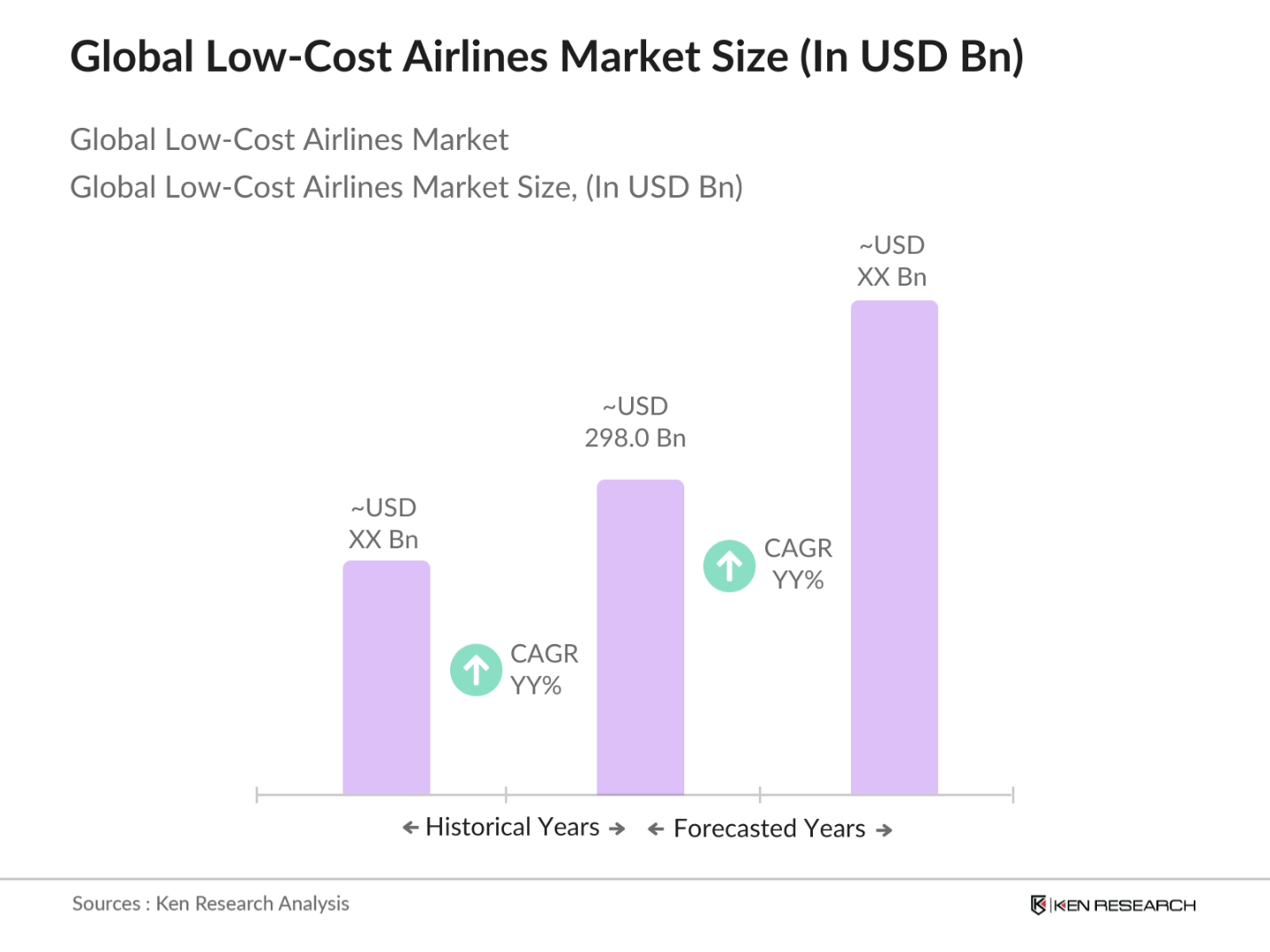
The global low-cost airlines market is valued at USD 298.0 billion, driven by rising demand for budget-friendly air travel, particularly in emerging markets and among leisure travelers.
The market faces challenges such as volatile fuel prices, regulatory restrictions in certain regions, and infrastructure limitations at key airports, which can hamper airlines' operational efficiency and expansion plans.
Key players include Ryanair Holdings, Southwest Airlines, AirAsia Group, and easyJet, among others. These companies have strong brand presence, large fleet sizes, and expansive route networks that contribute to their market dominance.
The market is driven by factors such as increasing air travel demand, expansion of regional air connectivity, and the growth of middle-class populations, particularly in emerging economies like India and China.

What makes us stand out is that our consultants follows Robust, Refine and Result (RRR) methodology. i.e. Robust for clear definitions, approaches and sanity checking, Refine for differentiating respondents facts and opinions and Result for presenting data with story

We have set a benchmark in the industry by offering our clients with syndicated and customized market research reports featuring coverage of entire market as well as meticulous research and analyst insights.

While we don't replace traditional research, we flip the method upside down. Our dual approach of Top Bottom & Bottom Top ensures quality deliverable by not just verifying company fundamentals but also looking at the sector and macroeconomic factors.

With one step in the future, our research team constantly tries to show you the bigger picture. We help with some of the tough questions you may encounter along the way: How is the industry positioned? Best marketing channel? KPI's of competitors? By aligning every element, we help maximize success.

Our report gives you instant access to the answers and sources that other companies might choose to hide. We elaborate each steps of research methodology we have used and showcase you the sample size to earn your trust.

If you need any support, we are here! We pride ourselves on universe strength, data quality, and quick, friendly, and professional service.