
Global Lubricants Market Outlook to 2030
Region:Global
Author(s):Shivani Mehra
Product Code:KROD5243
Region:Global
Author(s):Shivani Mehra
Product Code:KROD5243
December 2024
88
Listen to the audio summary
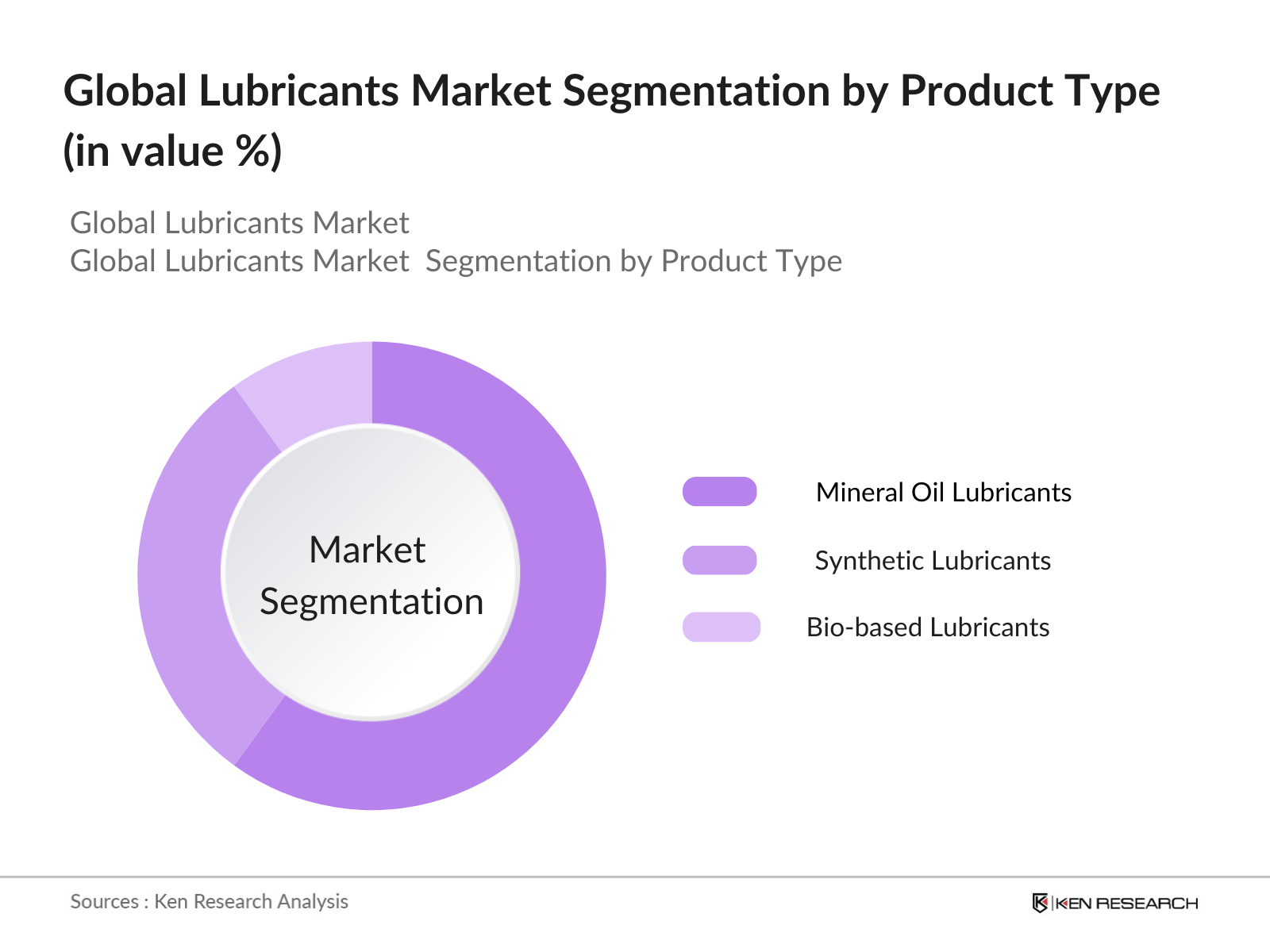
By Product Type: The global lubricants market is divided into mineral oil lubricants, synthetic lubricants, and bio-based lubricants. Each product type caters to different industries and applications based on performance requirements, pricing, and environmental considerations. Mineral Oil Lubricants of the market in 2023, mineral oil lubricants are widely used due to their cost-effectiveness and availability. They are primarily used in the automotive and industrial sectors in developing regions where price sensitivity is higher. However, environmental concerns about mineral oil lubricants are shifting the market towards more sustainable alternatives.
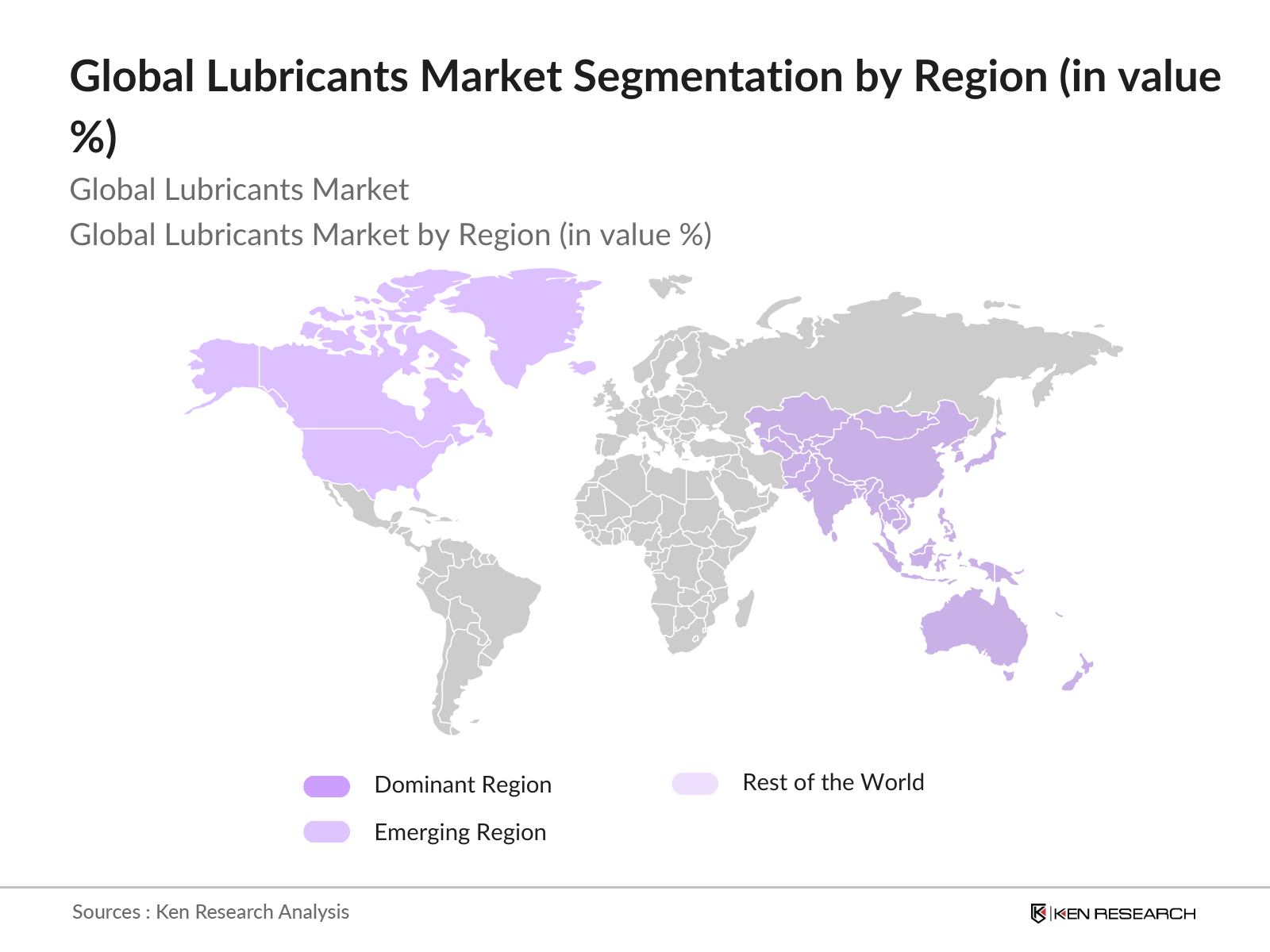
By Region: The market is also segmented by region, including Asia-Pacific, North America, Europe, Latin America, and Middle East & Africa. Asia-Pacific: The Asia-Pacific region holds the largest share of the global market, accounting for of the total sales. This dominance is due to the rapid industrialization, urbanization, and increasing vehicle ownership in countries such as China, India, and Japan.
The global lubricants market is highly fragmented, with a mix of global giants and regional players competing across various product categories. The competition is primarily driven by the need for innovation, adherence to environmental regulations, and expanding product portfolios that cater to diverse industries such as automotive, industrial machinery, aviation, marine, and others. Major players are focusing on the development of sustainable lubricants, such as bio-based and synthetic oils, to meet evolving consumer preferences and regulatory requirements. Investments in R&D, mergers and acquisitions, and strategic partnerships are common strategies adopted by key players to strengthen their market positions. These companies are also focusing on increasing their geographical footprint, particularly in emerging markets, where industrial growth and automotive ownership are on the rise.
|
Company |
Year Founded |
HQ |
Revenue (USD bn) |
Key Products |
R&D Investment |
Market Share |
|
Royal Dutch Shell |
1907 |
Netherlands |
||||
|
ExxonMobil |
1870 |
Texas, USA |
||||
|
BP (Castrol) |
1909 |
UK |
Global Lubricants Market Growth Drivers
Global Lubricants Market Challenges
The global lubricants market is projected to grow steadily through 2028, driven by the increasing adoption of synthetic and bio-based lubricants and the rising demand from the automotive and industrial sectors. The Asia-Pacific region is expected to maintain its dominance, with countries like China and India leading the market in both production and consumption of lubricants. The automotive sector, particularly in emerging economies, will continue to be a significant driver of demand, while the industrial sector will also contribute to growth as manufacturing and construction activities expand globally.
Future Trends:
|
By Product Type |
Mineral oil lubricants Synthetic lubricants Bio-based lubricants |
|
By Application |
Engine Oils Hydraulic Fluids Gear Oils Transmission Fluids Metalworking Fluids |
|
By Base Oil |
Group I (Conventional) Group II (Hydrocracked) Group III (Synthetic) Group IV (PAO - Polyalphaolefin) Group V (Other Synthetics) |
|
By Sales Channel |
OEM (Original Equipment Manufacturer) Aftermarket Online Retail Distributors |
|
By Region |
North-East Midwest West Coast Southern States |
1.1. Definition and Scope
1.2. Market Taxonomy
1.3. Market Growth Drivers
1.4. Market Trends
2.1. Historical Market Size
2.2. Year-on-Year Growth Analysis
2.3. Key Developments and Milestones
3.1. Growth Drivers (in-depth stats-based)
3.2. Market Challenges
3.3. Market Opportunities
3.4. Market Trends
4.1. By Product Type (in Value %)
4.1.1. Mineral Oil Lubricants
4.1.2. Synthetic Lubricants
4.1.3. Bio-based Lubricants
4.2. By Application (in Value %)
4.2.1. Automotive
4.2.2. Industrial
4.2.3. Marine
4.2.4. Aviation
4.3. By Region (in Value %)
4.3.1. Asia-Pacific
4.3.2. North America
4.3.3. Europe
4.3.4. Latin America
4.3.5. Middle East & Africa
5.1. Profiles of Major Companies (15 Major Players)
5.1.1. Royal Dutch Shell
5.1.2. ExxonMobil
5.1.3. BP (Castrol)
5.1.4. Chevron Corporation
5.1.5. TotalEnergies
5.1.6. Fuchs Petrolub
5.1.7. Valvoline
5.1.8. Idemitsu Kosan Co. Ltd.
5.1.9. Sinopec Lubricants
5.1.10. Petronas Lubricants International
5.1.11. Repsol
5.1.12. Indian Oil Corporation
5.1.13. Phillips 66
5.1.14. Gazprom Neft
5.1.15. Gulf Oil International
5.2. Cross-Comparison Parameters (Employees, Headquarters, Revenue)
5.3. Market Share Analysis
5.4. Strategic Initiatives
6.1. Environmental Standards
6.2. Compliance Requirements
6.3. Certification Processes
7.1. Future Market Size Projections
7.2. Key Factors Driving Future Growth
8.1. TAM/SAM/SOM Analysis
8.2. Customer Cohort Analysis
8.3. White Space Opportunity Analysis
9.1. By Product Type
9.2. By Application
9.3. By Region
In the first phase, the identification of critical variables influencing the global lubricants market was undertaken. This involved extensive desk research that analyzed various industry reports, government regulations, and key stakeholder insights. Secondary data was gathered from trusted industry bodies such as OPEC, IEA, and U.S. Energy Information Administration (EIA) to map the major demand drivers and challenges for different lubricant segments.
After the initial identification of variables, quantitative data from both public and proprietary databases was used to analyze trends such as lubricant consumption patterns, industrial penetration rates, and environmental compliance statistics. The data was then structured to project future demand and understand historical market performance in major regions, including Asia-Pacific, North America, and Europe.
To validate our market assumptions, in-depth interviews were conducted with key executives from Royal Dutch Shell, ExxonMobil, and Fuchs Petrolub, among others. These consultations provided critical insights into the market dynamics, including emerging trends, challenges with raw material prices, and the rising adoption of bio-based lubricants. This expert feedback helped fine-tune our projections and growth drivers.
In the final phase, all the collected data and insights were synthesized into a comprehensive report. Both qualitative and quantitative analysis methods were employed to ensure the robustness of the forecasts. The report includes a balanced mix of market size projections, segmentation analysis, competitive landscape assessments, and expert commentary on key growth areas for the global lubricants market.
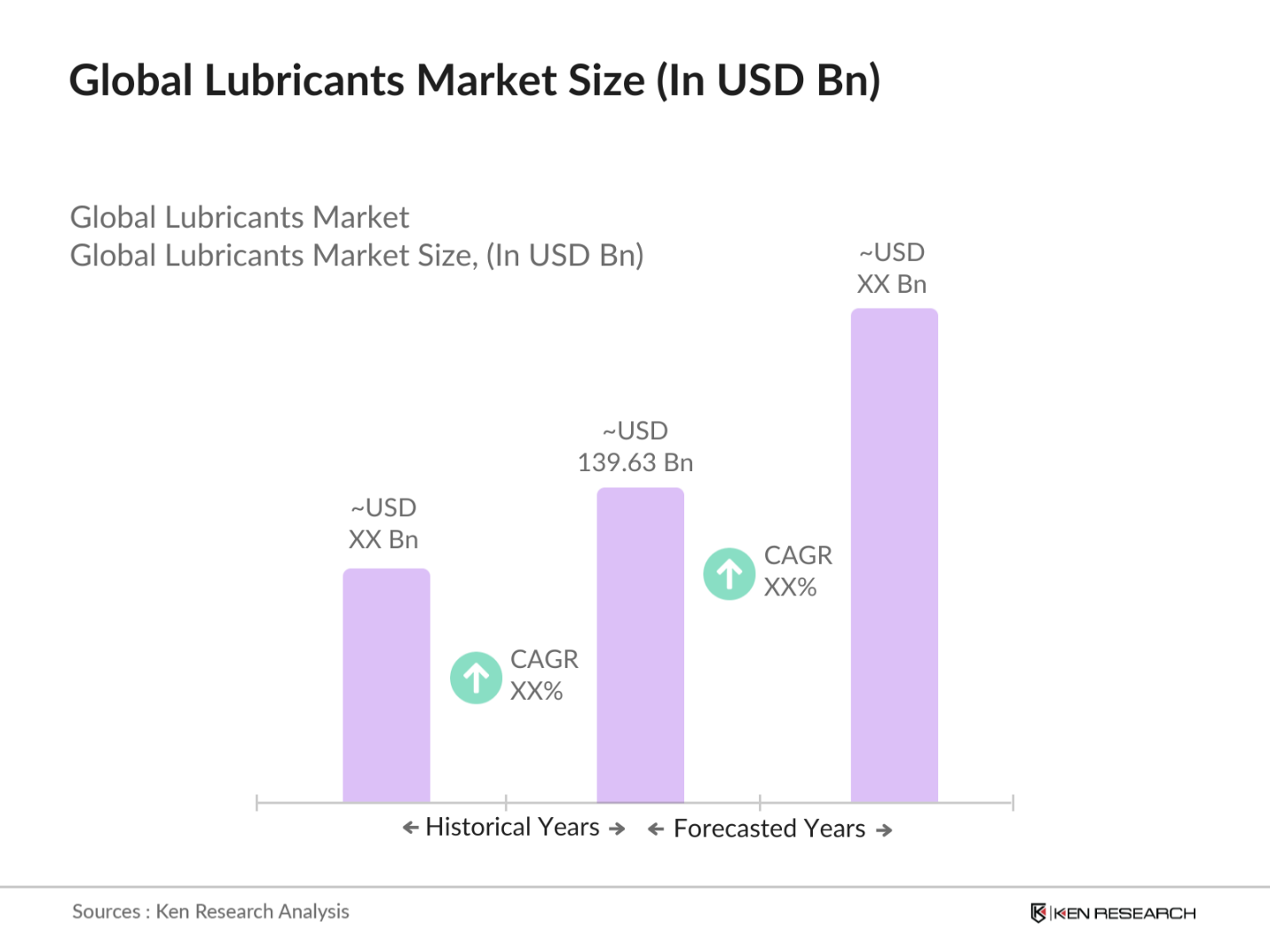
The global lubricants market is valued at USD 139.63 Billion, driven by demand from automotive, industrial, marine, and aviation sectors. The market is expanding rapidly due to increasing industrialization and the adoption of synthetic lubricants.
Some key challenges include stringent environmental regulations, fluctuating crude oil prices, and rising competition from synthetic and bio-based lubricants. Compliance with regulations like REACH in Europe has increased operational costs for lubricant manufacturers.
The major players in the lubricants market include Royal Dutch Shell, ExxonMobil, BP (Castrol), Chevron Corporation, and TotalEnergies. These companies lead the market due to their strong distribution networks and extensive R&D investments.
The growth of synthetic lubricants is driven by their superior performance in extreme temperatures and high-stress conditions, as well as their longer lifespan compared to mineral oil-based lubricants. Increased environmental awareness and stringent regulations are pushing industries to adopt synthetic lubricants.

What makes us stand out is that our consultants follows Robust, Refine and Result (RRR) methodology. i.e. Robust for clear definitions, approaches and sanity checking, Refine for differentiating respondents facts and opinions and Result for presenting data with story

We have set a benchmark in the industry by offering our clients with syndicated and customized market research reports featuring coverage of entire market as well as meticulous research and analyst insights.

While we don't replace traditional research, we flip the method upside down. Our dual approach of Top Bottom & Bottom Top ensures quality deliverable by not just verifying company fundamentals but also looking at the sector and macroeconomic factors.

With one step in the future, our research team constantly tries to show you the bigger picture. We help with some of the tough questions you may encounter along the way: How is the industry positioned? Best marketing channel? KPI's of competitors? By aligning every element, we help maximize success.

Our report gives you instant access to the answers and sources that other companies might choose to hide. We elaborate each steps of research methodology we have used and showcase you the sample size to earn your trust.

If you need any support, we are here! We pride ourselves on universe strength, data quality, and quick, friendly, and professional service.