
Global Magnetic Levitation Train Market Outlook to 2030
Region:Global
Author(s):Sanjna Verma
Product Code:KROD8307
Region:Global
Author(s):Sanjna Verma
Product Code:KROD8307
November 2024
89
Listen to the audio summary
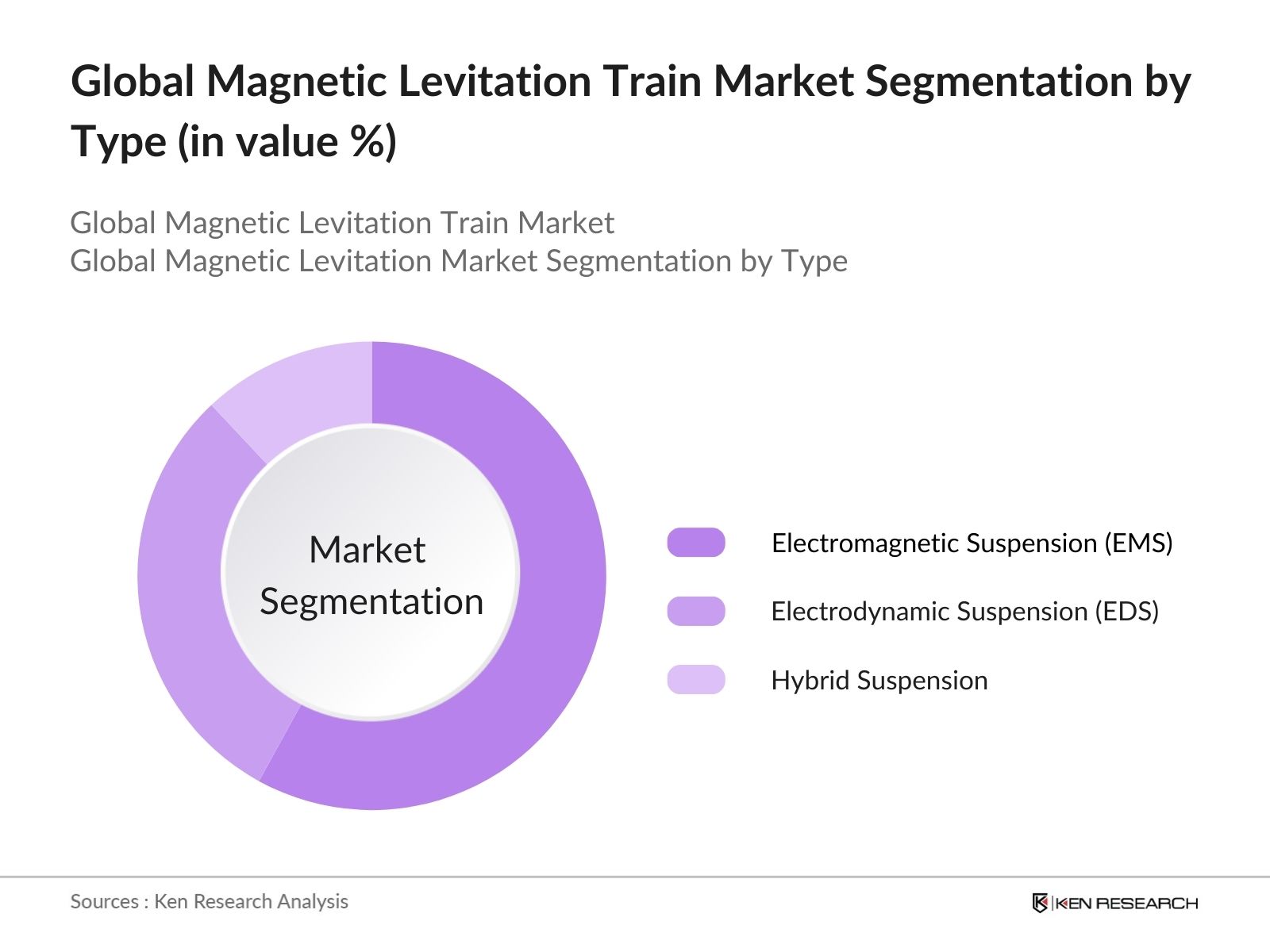
By Type: The global magnetic levitation train market is segmented by type into Electromagnetic Suspension (EMS), Electrodynamic Suspension (EDS), and Hybrid Suspension. EMS currently dominates this segmentation, due to its widespread adoption for commercial applications in both passenger and cargo transport. EMS is preferred because it offers smoother and quieter rides, making it ideal for urban transportation systems. Furthermore, the lower operational cost associated with this system makes it a more economically viable option for many countries that are exploring high-speed rail solutions.
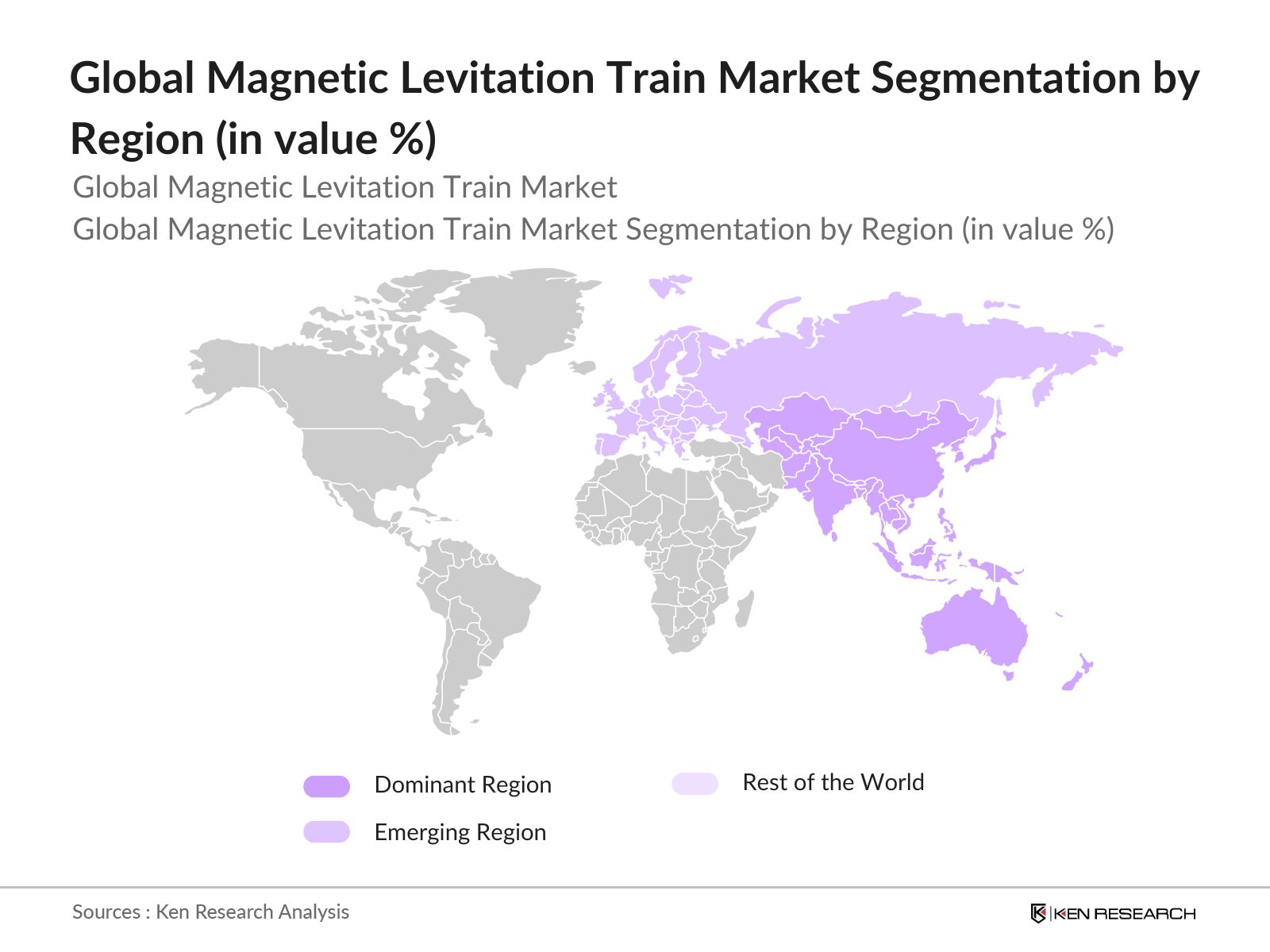
By Region: The market is segmented regionally into North America, Europe, Asia Pacific, Middle East & Africa, and Latin America. Asia Pacific holds the dominant market share due to massive investments in infrastructure projects in countries like China and Japan. These nations have been at the forefront of adopting advanced maglev technologies for both commercial and governmental projects. The region's significant share can be attributed to its focus on reducing urban congestion and promoting high-speed, low-emission transport solutions.
By Application: The market is segmented by application into passenger transport, cargo transport, urban transportation, and intercity transportation. Passenger transport holds the largest market share, primarily driven by the need for faster commute times between major cities. This sub-segment benefits from the ability of maglev trains to reduce travel times significantly compared to conventional rail and road transport. Governments in densely populated areas are increasingly focusing on passenger convenience and efficient transport, thereby boosting the demand for maglev trains in this sub-segment.
The global magnetic levitation train market is dominated by key players that have extensive expertise in rail technology, as well as partnerships with national governments. The competitive landscape is marked by collaborations between public and private sector companies to expand rail networks and incorporate cutting-edge technologies. Companies like CRRC Corporation Limited and Siemens AG have focused on research and development to enhance the efficiency and safety of maglev trains. These companies hold a significant influence over the market, thanks to their strong global presence and continued innovation in rail transport technologies.
|
Company |
Establishment Year |
Headquarters |
Production Capacity |
R&D Investment (USD Mn) |
No. of Employees |
Installed Base (Units) |
Geographical Reach |
Market Share (%) |
|
CRRC Corporation Limited |
2015 |
Beijing, China |
- |
- |
- |
- |
- |
- |
|
Siemens AG |
1847 |
Munich, Germany |
- |
- |
- |
- |
- |
- |
|
Mitsubishi Heavy |
1950 |
Tokyo, Japan |
- |
- |
- |
- |
- |
- |
|
Alstom |
1928 |
Saint-Ouen, France |
- |
- |
- |
- |
- |
- |
|
Hitachi Rail |
1920 |
Tokyo, Japan |
- |
- |
- |
- |
- |
- |
Over the next five years, the global magnetic levitation train market is expected to show significant growth. This expansion is driven by government initiatives focusing on reducing carbon footprints and enhancing transportation efficiency. Countries are likely to continue investing in sustainable transportation solutions, further supporting the demand for maglev systems. Additionally, innovations in magnetic levitation technology are poised to enhance the speed, safety, and energy efficiency of these systems, making them more attractive for urban and intercity transportation.
|
Segment |
Sub-Segment |
|
By Type |
Electromagnetic Suspension (EMS) Electrodynamic Suspension (EDS) Hybrid Suspension |
|
By Speed |
Low-Speed (<150 km/h) High-Speed (150-300 km/h) Ultra High-Speed (>300 km/h) |
|
By Application |
Passenger Transport Cargo Transport Urban Transportation Intercity Transportation |
|
By Technology |
Contactless Power Transmission Wireless Communication Technologies Magnetic Field Containment Systems |
|
By Region |
North America Europe Asia Pacific Middle East and Africa Latin America |
1.1. Definition and Scope
1.2. Market Taxonomy
1.3. Industry Lifecycle Stage
1.4. Historical and Current Market Trends
1.5. Key Market Dynamics
2.1. Historical Market Size (In USD Bn)
2.2. Year-On-Year Market Growth Analysis
2.3. Key Milestones and Developments
2.4. Region-Wise Market Size Breakdown
3.1. Growth Drivers (Rail Infrastructure Investment, Transportation Demand, Energy Efficiency, Urbanization)
3.1.1. Infrastructure Modernization Initiatives
3.1.2. Environmental Regulations on Emissions
3.1.3. Technological Advancements in High-Speed Transport
3.1.4. Growing Population Density in Urban Areas
3.2. Market Challenges (High Initial Investment, Technical Complexity, Regulatory Constraints)
3.2.1. High Capital and Maintenance Costs
3.2.2. Limited Geographic Adoption
3.2.3. Resistance from Traditional Rail Operators
3.2.4. Supply Chain Dependencies
3.3. Opportunities (Public-Private Partnerships, Expansion of Rail Networks, International Collaborations)
3.3.1. Emerging Markets for High-Speed Rail
3.3.2. Technological Innovations in Magnetic Levitation Systems
3.3.3. Rise of Green Transport Initiatives
3.3.4. Investment in Sustainable Transportation Solutions
3.4. Trends (Hybrid Systems, Autonomous Operation, Smart City Integration)
3.4.1. Integration with Smart Mobility Systems
3.4.2. Adoption of Autonomous Magnetic Levitation Trains
3.4.3. Expansion of Urban and Suburban Magnetic Levitation Networks
3.4.4. Introduction of Hybrid Systems for Energy Efficiency
3.5. Government Regulations (Rail Safety Standards, Emission Standards, Public Funding Policies)
3.5.1. Emission Control Legislations for Rail Transportation
3.5.2. Subsidy and Incentive Policies
3.5.3. International Rail Safety Standards and Certifications
3.5.4. Public-Private Partnership Regulations
3.6. SWOT Analysis
3.7. Porters Five Forces Analysis (Supplier Power, Buyer Power, Threat of Substitutes, Industry Rivalry, Entry Barriers)
3.8. Industry Stakeholder Ecosystem (Suppliers, Manufacturers, End-Users, Governments)
3.9. Competitive Landscape Overview
4.1. By Type (In Value %)
4.1.1. Electromagnetic Suspension (EMS)
4.1.2. Electrodynamic Suspension (EDS)
4.1.3. Hybrid Suspension
4.2. By Speed (In Value %)
4.2.1. Low-Speed (<150 km/h)
4.2.2. High-Speed (150-300 km/h)
4.2.3. Ultra High-Speed (>300 km/h)
4.3. By Application (In Value %)
4.3.1. Passenger Transport
4.3.2. Cargo Transport
4.3.3. Urban Transportation
4.3.4. Intercity Transportation
4.4. By Technology (In Value %)
4.4.1. Contactless Power Transmission
4.4.2. Wireless Communication Technologies
4.4.3. Magnetic Field Containment Systems
4.5. By Region (In Value %)
4.5.1. North America
4.5.2. Europe
4.5.3. Asia Pacific
4.5.4. Middle East and Africa
4.5.5. Latin America
5.1. Detailed Profiles of Major Companies
5.1.1. CRRC Corporation Limited
5.1.2. Alstom
5.1.3. Siemens AG
5.1.4. Mitsubishi Heavy Industries
5.1.5. Transrapid International
5.1.6. Central Japan Railway Company
5.1.7. Hyundai Rotem
5.1.8. Nippon Sharyo
5.1.9. Hitachi Rail
5.1.10. Bombardier Transportation
5.2. Cross Comparison Parameters (Revenue, Market Share, Installed Base, R&D Spending, Technological Innovations, Geographical Presence, Rail Network Partnerships, Production Capacity)
5.3. Market Share Analysis
5.4. Strategic Initiatives (Collaborations, Technological Partnerships, Joint Ventures)
5.5. Mergers and Acquisitions
5.6. Investment and Funding Analysis
5.7. Venture Capital Investments
5.8. Government Subsidies and Grants
5.9. Private Equity Investments
6.1. Global Rail Safety Standards
6.2. Emission Compliance
6.3. Certification and Approval Processes
7.1. Projected Market Size
7.2. Key Factors for Future Market Growth
8.1. By Type (In Value %)
8.2. By Speed (In Value %)
8.3. By Application (In Value %)
8.4. By Technology (In Value %)
8.5. By Region (In Value %)
9.1. Market Expansion Opportunities
9.2. Customer Segmentation Strategies
9.3. Investment Opportunities Analysis
9.4. Strategic Partnerships Analysis
The first step involves mapping all major stakeholders within the global magnetic levitation train market. This is achieved through extensive desk research and the utilization of secondary and proprietary data sources. The goal is to identify the variables influencing market dynamics, such as technological advancements and government policies.
Next, historical data related to market penetration, infrastructure development, and transportation needs is collected and analyzed. The analysis includes evaluating key metrics like revenue generation from high-speed rail services and advancements in maglev technologies.
Key market hypotheses are developed based on the data and are validated through interviews with industry experts and stakeholders, including rail manufacturers and infrastructure developers. These consultations provide valuable insights into the operational dynamics of the market.
The final stage involves engaging with manufacturers and transport authorities to verify the data collected. This ensures that the findings are accurate and representative of the market's current conditions. The synthesis of these insights results in a comprehensive, data-driven report.
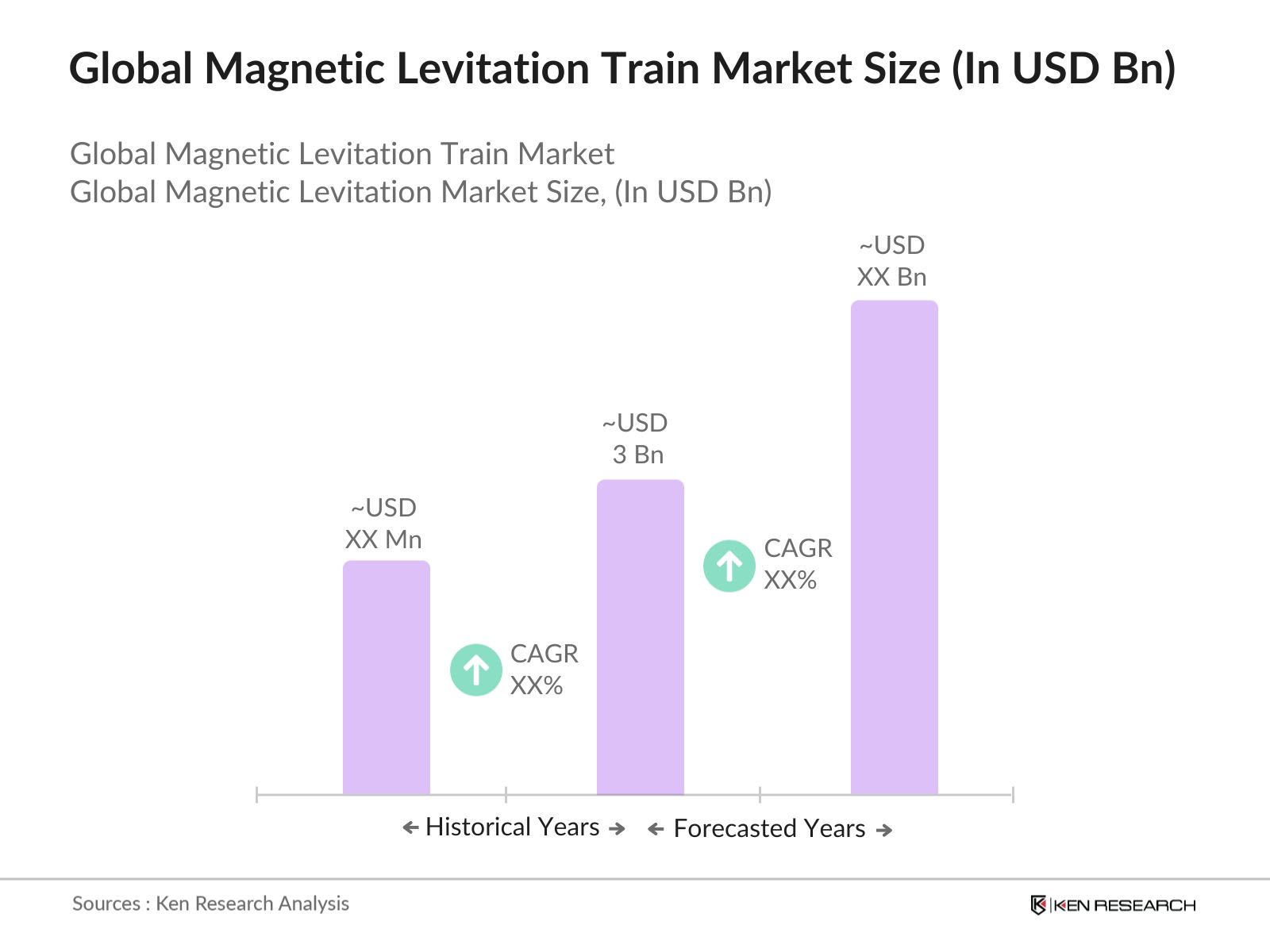
The global magnetic levitation train market is valued at USD 3 billion in 2023. This valuation is driven by increasing infrastructure investments in high-speed transportation and the demand for energy-efficient systems.
Challenges of Global Magnetic Levitation Train Market include high initial investment costs, limited geographic adoption, and complex regulatory hurdles. The technical requirements and the need for continuous innovation also add complexity to the market.
Key players in Global Magnetic Levitation Train Market include CRRC Corporation Limited, Siemens AG, Mitsubishi Heavy Industries, Alstom, and Hitachi Rail. These companies lead the market due to their technological innovations and extensive global presence.
Global Magnetic Levitation Train Market is driven by government support for reducing carbon emissions, technological advancements in rail transportation, and the need for faster, more efficient transit solutions in urban and intercity regions.

What makes us stand out is that our consultants follows Robust, Refine and Result (RRR) methodology. i.e. Robust for clear definitions, approaches and sanity checking, Refine for differentiating respondents facts and opinions and Result for presenting data with story

We have set a benchmark in the industry by offering our clients with syndicated and customized market research reports featuring coverage of entire market as well as meticulous research and analyst insights.

While we don't replace traditional research, we flip the method upside down. Our dual approach of Top Bottom & Bottom Top ensures quality deliverable by not just verifying company fundamentals but also looking at the sector and macroeconomic factors.

With one step in the future, our research team constantly tries to show you the bigger picture. We help with some of the tough questions you may encounter along the way: How is the industry positioned? Best marketing channel? KPI's of competitors? By aligning every element, we help maximize success.

Our report gives you instant access to the answers and sources that other companies might choose to hide. We elaborate each steps of research methodology we have used and showcase you the sample size to earn your trust.

If you need any support, we are here! We pride ourselves on universe strength, data quality, and quick, friendly, and professional service.