















Global Managed Security Information and Event Management (SIEM) Market Outlook to 2030
Region:Global
Author(s):Sanjeev
Product Code:KROD1384
November 2024
86
About the Report
Global Managed SIEM Market Overview
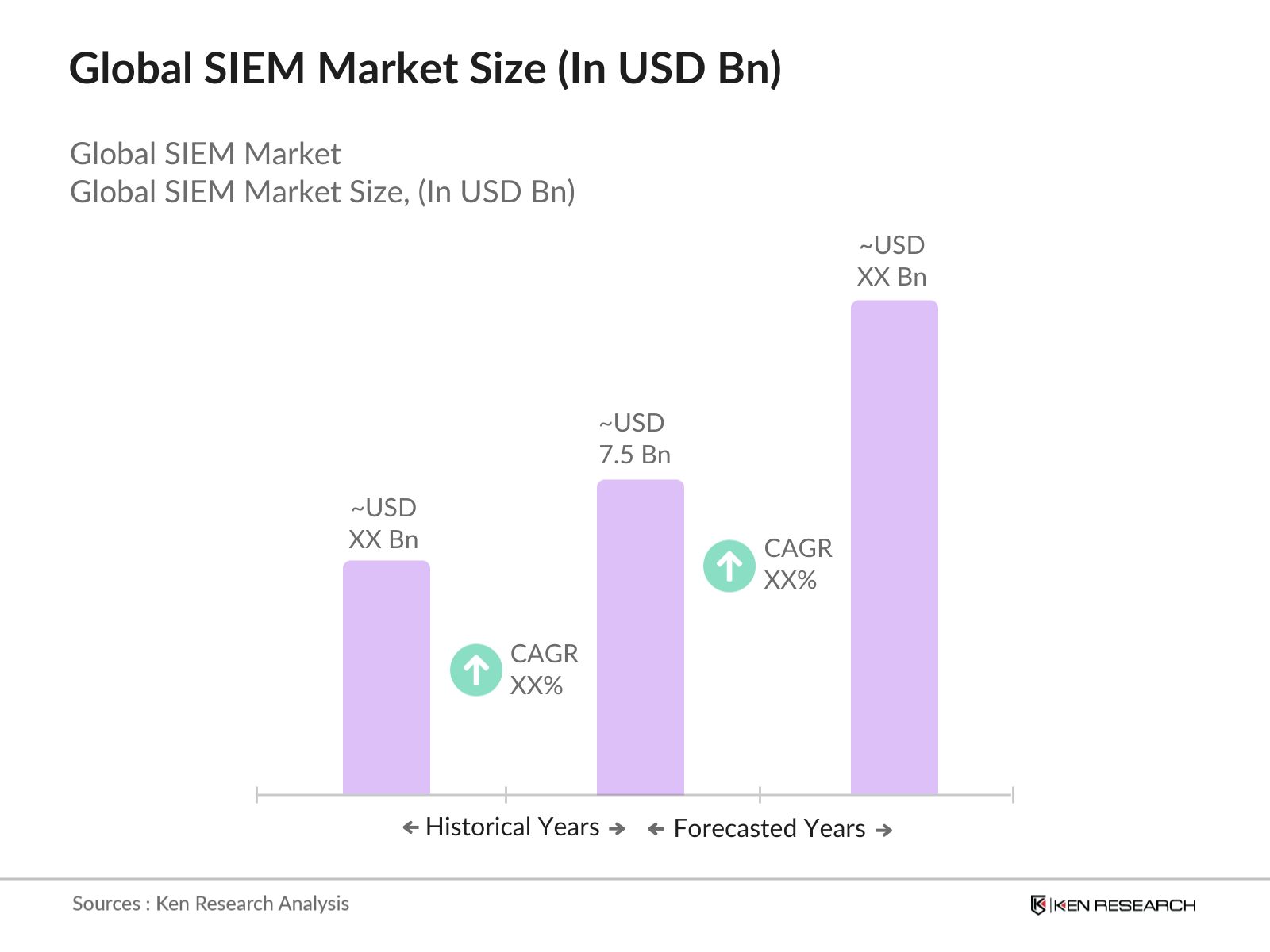
- In 2023, the Global Managed SIEM Market was valued at USD 7.5 billion, reflecting significant growth driven by the increasing need for advanced cybersecurity solutions across various industries. The market's expansion is propelled by the rising frequency of cyberattacks, growing regulatory compliance requirements, and the need for comprehensive threat detection and response systems.
- Key players in the SIEM market include IBM Security, Splunk Inc., Microsoft Corporation, Sumo Logic, and LogRhythm. These companies are at the forefront of the industry, offering innovative SIEM solutions and investing heavily in research and development. For instance, IBM Security is renowned for its robust SIEM platform, which integrates with various security tools to provide enhanced visibility and incident response capabilities.
- In North America, the United States is the leading country in the SIEM market. This dominance is due to its early adoption of advanced cybersecurity technologies, stringent regulatory requirements, and substantial investments in IT security infrastructure. The U.S. continues to drive substantial growth in the SIEM market within the region through continuous innovation and integration of new technologies.
- In 2023, Microsoft Corporation announced the launch of its new SIEM solution, which leverages artificial intelligence and machine learning to improve threat detection and response times. This development underscores the ongoing innovations and advancements within the SIEM market.
Global Managed SIEM Market Segmentation
The Global Managed SIEM Market can be segmented based on deployment model, organization size, application, and region:
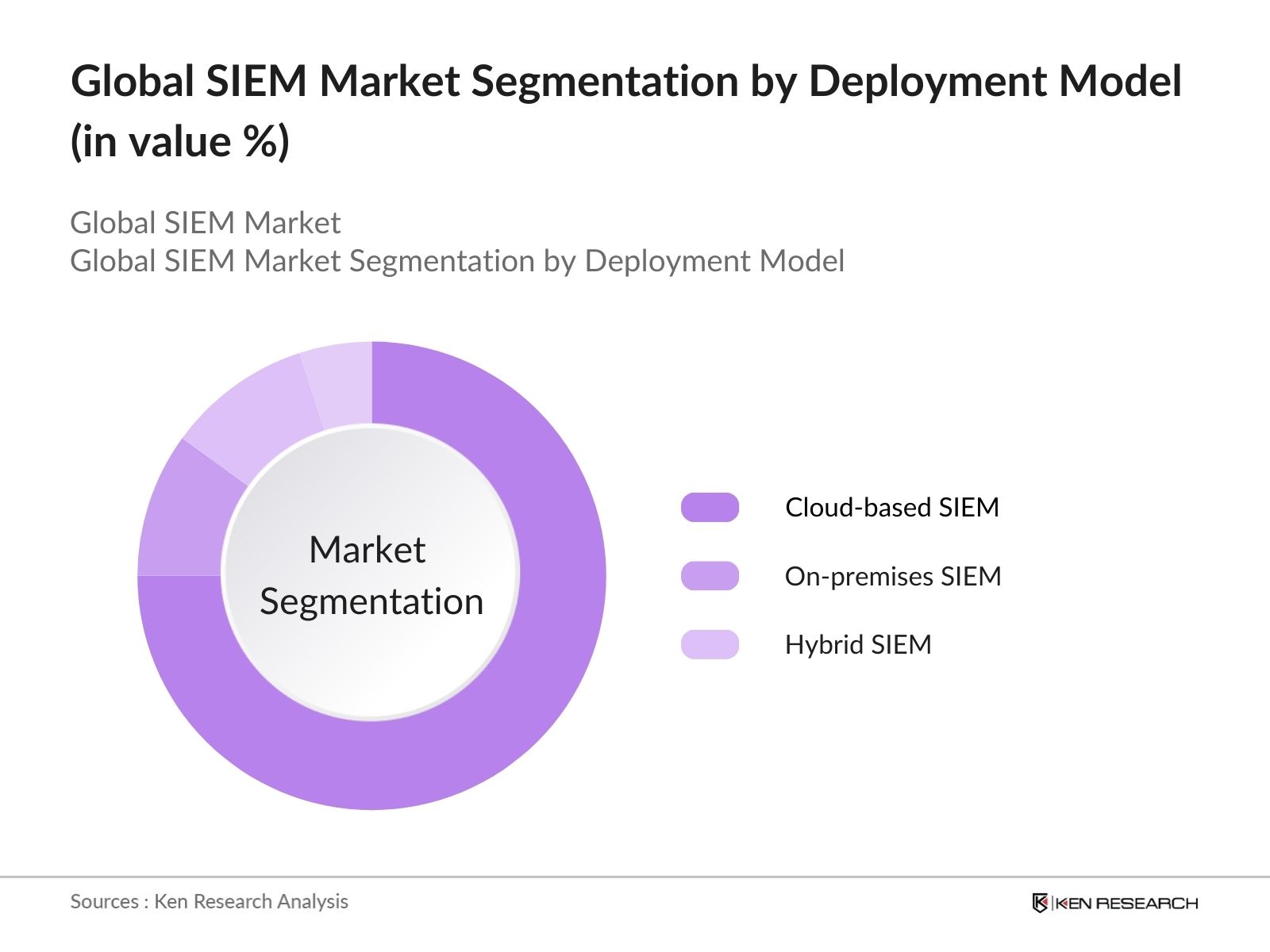
- By Deployment Model: The Global Managed SIEM market is segmented into Cloud-based SIEM and On-premises SIEM and Hybrid SIEM. In 2023, Cloud-based SIEM solutions held a market share due to their scalability, cost-effectiveness, and ease of deployment. Companies like Splunk and Sumo Logic have capitalized on this trend by offering comprehensive cloud-based SIEM solutions.
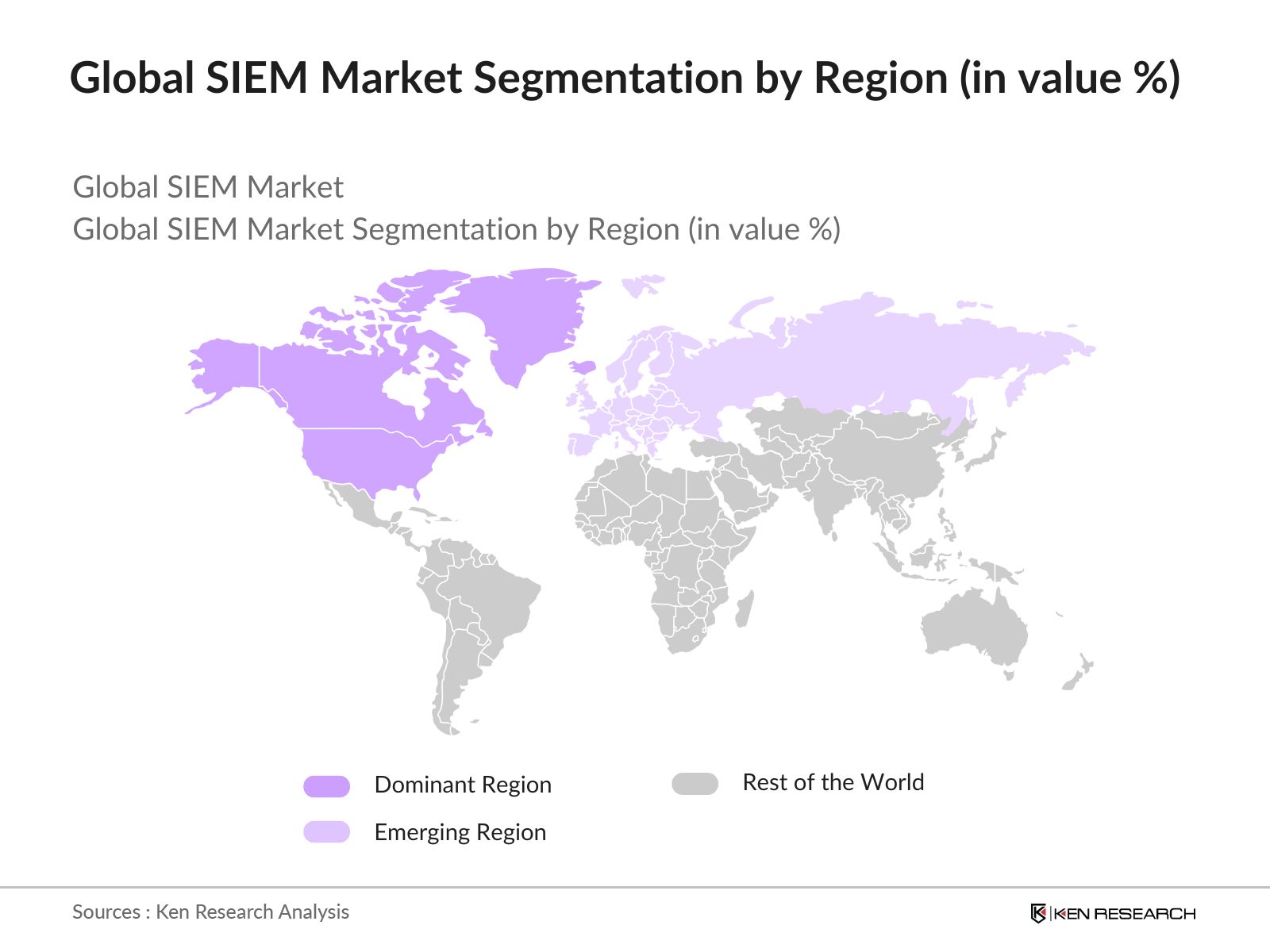
- By Region: The Global Managed SIEM market is segmented into North America, Europe, Asia-Pacific, Latin America, and Middle East & Africa. North America led the global market in 2023, holding the largest share due to its high adoption rate of cybersecurity technologies and proactive stance on regulatory compliance.
- By Application: The Global Managed SIEM market is segmented into Healthcare, Finance, Government, IT & Telecom. The Finance segment dominated the market in 2023 due to the stringent regulatory requirements and high-value data that necessitate advanced SIEM solutions to protect against financial fraud and cyber threats.
Global Managed SIEM Market Competitive Landscape
|
Company |
Establishment Year |
Headquarters |
|
IBM Security |
1911 |
Armonk, USA |
|
Splunk Inc. |
2003 |
San Francisco, USA |
|
Microsoft Corp. |
1975 |
Redmond, USA |
|
Sumo Logic |
2010 |
San Francisco, USA |
|
LogRhythm |
2003 |
Boulder, USA |
- IBM Security: In 2023, IBM Security continued to lead the SIEM market with its enhanced AI-driven analytics capabilities, offering improved threat detection and automated response features. This innovation reinforces IBM's position as a key player in the SIEM market.
- Splunk Inc.: In 2023, Splunk announced a major upgrade to its SIEM platform, incorporating advanced machine learning algorithms to provide more accurate threat intelligence and faster incident response. This upgrade highlights Splunk's commitment to advancing SIEM technology.
Global Managed SIEM Market Analysis
Market Growth Drivers:
- Increasing Cybersecurity Threats: The growing frequency and sophistication of cyberattacks, including ransomware and data breaches, are driving the demand for advanced SIEM solutions. Organizations are investing in SIEM systems to enhance their security posture and ensure timely threat detection and response.
- Regulatory Compliance: With stringent regulatory requirements such as GDPR, HIPAA, and PCI-DSS, organizations are compelled to implement robust SIEM solutions to meet compliance standards and avoid hefty fines. This regulatory pressure is growth driver for the SIEM market.
- Adoption of Cloud Computing: As more organizations migrate to cloud environments, there is a rising need for cloud-based SIEM solutions that can provide visibility and security across hybrid and multi-cloud infrastructures.
Market Challenges:
- High Implementation Costs: The cost of deploying and maintaining advanced SIEM solutions can be substantial, particularly for small and medium-sized enterprises. The initial investment and ongoing operational expenses pose a challenge for budget-constrained organizations.
- Complexity in Integration: Integrating SIEM solutions with existing IT infrastructure and security tools can be complex and time-consuming. Organizations may face challenges in ensuring seamless integration and interoperability with other security systems.
- Skill Shortages: The shortage of skilled cybersecurity professionals can hinder the effective implementation and management of SIEM solutions. Organizations may struggle to find qualified personnel to operate and optimize their SIEM systems.
Government Initiatives:
- EU Cybersecurity Act: The European Union's Cybersecurity Act aims to enhance the overall cybersecurity framework across member states. The act promotes the adoption of advanced cybersecurity measures, including SIEM solutions, to strengthen network and information security. In EU, Germany has allocated approximately Euro 80 billion for broadband network expansion and digital infrastructure improvements by 2025, supporting the deployment of SIEM technologies.
- U.S. Federal Information Security Modernization Act (FISMA): In the U.S., FISMA requires federal agencies to implement comprehensive security measures, including SIEM systems, to protect sensitive information and maintain regulatory compliance. The U.S. government has allocated over USD 2.5 billion to the Cybersecurity and Infrastructure Security Agency (CISA) for improving national cybersecurity infrastructure, including SIEM capabilities.
Global Managed SIEM Market Future Outlook
The Global Managed SIEM Market is expected to continue its growth trajectory, driven by advancements in cybersecurity technologies, increasing regulatory requirements, and the ongoing digital transformation.
Market Trends:
- Growth in Cloud-Based SIEM: By 2028, cloud-based SIEM solutions are anticipated to see increased adoption due to their scalability, flexibility, and cost advantages. The growing shift towards cloud environments will drive demand for cloud-native SIEM solutions.
- Integration of AI and Machine Learning: The integration of artificial intelligence (AI) and machine learning (ML) into SIEM systems is expected to revolutionize threat detection and response capabilities. AI-driven SIEM solutions will offer more accurate threat intelligence and automated incident management.
- Expansion of Managed Security Services: The rise of managed security service providers (MSSPs) will drive the adoption of managed SIEM solutions, as organizations seek to offload the complexities of SIEM management to specialized providers.
Scope of the Report
|
By Region |
North America Europe Asia-Pacific Latin America Middle East & Africa |
|
By Deployment Model |
Cloud-based SIEM On-premises SIEM Hybrid SIEM |
|
By Industry Verticals |
Healthcare Finance Government IT & Telecom Retail Manufacturing Energy & Utilities Education Transportation & Logistics |
|
By Security Function |
Incident Detection and Response Compliance Management Threat Intelligence Vulnerability Management Access Management Log Management Data Protection |
|
By Organization Size |
Small and Medium-sized Enterprises (SMEs) Large Enterprises Large Public Sector Organizations Global Enterprises |
Products
Key Target Audience Organizations and Entities Who Can Benefit by Subscribing This Report:
Financial Institutions
Government and Regulatory Bodies (NIST, CISA, etc.)
Managed Security Service Providers (MSSPs)
Cloud Service Providers
Healthcare Organizations
IT and Telecom Companies
Technology Integrators and Consultants
Time Period Captured in the Report:
Historical Period: 2018-2023
Base Year: 2023
Forecast Period: 2023-2028
Companies
Players Mentioned in the Report:
Palo Alto Networks
Fortinet, Inc.
Elastic N.V.
AlienVault (AT&T Cybersecurity)
McAfee Enterprise
Rapid7
ArcSight (Micro Focus)
Tenable, Inc.
Sumo Logic
Trend Micro
Logz.io
Sophos
CrowdStrike
Netskope
Duo Security (Cisco)
Table of Contents
1. Global Managed Security Information and Event Management (SIEM) Market Overview
1.1. Definition and Scope
1.2. Market Taxonomy
1.3. Market Growth Rate
1.4. Market Segmentation Overview
2. Global Managed Security Information and Event Management (SIEM) Market Size (in USD Bn), 2018-2023
2.1. Historical Market Size
2.2. Year-on-Year Growth Analysis
2.3. Key Market Developments and Milestones
3. Global Managed Security Information and Event Management (SIEM) Market Analysis
3.1. Growth Drivers
3.1.1. Increasing Cybersecurity Threats
3.1.2. Regulatory Compliance Requirements
3.1.3. Adoption of Cloud Computing
3.1.4. Digital Transformation Initiatives
3.2. Restraints
3.2.1. High Implementation Costs
3.2.2. Complexity in Integration
3.2.3. Skill Shortages
3.3. Opportunities
3.3.1. Technological Advancements in AI and ML
3.3.2. Expansion of Managed Security Services
3.3.3. Growing Demand for Cloud-based Solutions
3.4. Trends
3.4.1. Integration with AI and Machine Learning
3.4.2. Increased Adoption of Cloud-native SIEM Solutions
3.4.3. Expansion into Emerging Markets
3.5. Government Regulation
3.5.1. EU Cybersecurity Act
3.5.2. U.S. Federal Information Security Modernization Act (FISMA)
3.5.3. National Initiatives for Cybersecurity Infrastructure
3.5.4. Public-Private Partnerships in Cybersecurity
3.6. SWOT Analysis
3.7. Stake Ecosystem
3.8. Competition Ecosystem
4. Global Managed Security Information and Event Management (SIEM) Market Segmentation, 2023
4.1. By Deployment Model (in Value %)
4.1.1. Cloud-based SIEM
4.1.2. On-premises SIEM
4.1.3. Hybrid SIEM
4.2. By Organization Size (in Value %)
4.2.1. Small and Medium-sized Enterprises (SMEs)
4.2.2. Large Enterprises
4.2.3. Large Public Sector Organizations
4.2.4. Global Enterprises
4.3. By Application (in Value %)
4.3.1. Healthcare
4.3.2. Finance
4.3.3. Government
4.3.4. IT & Telecom
4.4. By Security Function (in Value %)
4.4.1. Incident Detection and Response
4.4.2. Compliance Management
4.4.3. Threat Intelligence
4.4.4. Vulnerability Management
4.4.5. Access Management
4.4.6. Log Management
4.4.7. Data Protection
4.5. By Region (in Value %)
4.5.1. North America
4.5.2. Europe
4.5.3. Asia-Pacific
4.5.4. Latin America
4.5.5. Middle East & Africa
5. Global Managed Security Information and Event Management (SIEM) Market Cross Comparison
5.1. Detailed Profiles of Major Companies
5.1.1. IBM Security
5.1.2. Splunk Inc.
5.1.3. Microsoft Corporation
5.1.4. Sumo Logic
5.1.5. LogRhythm
5.1.6. Palo Alto Networks
5.1.7. Fortinet Inc.
5.1.8. Elastic N.V.
5.1.9. AlienVault (AT&T Cybersecurity)
5.1.10. McAfee Enterprise
5.1.11. Rapid7
5.1.12. ArcSight (Micro Focus)
5.1.13. Tenable Inc.
5.1.14. Trend Micro
5.1.15. Logz.io
5.2. Cross Comparison Parameters (No. of Employees, Headquarters, Inception Year, Revenue)
6. Global Managed Security Information and Event Management (SIEM) Market Competitive Landscape
6.1. Market Share Analysis
6.2. Strategic Initiatives
6.3. Mergers and Acquisitions
6.4. Investment Analysis
6.4.1. Venture Capital Funding
6.4.2. Government Grants
6.4.3. Private Equity Investments
7. Global Managed Security Information and Event Management (SIEM) Market Regulatory Framework
7.1. Cybersecurity Standards
7.2. Compliance Requirements
7.3. Certification Processes
8. Global Managed Security Information and Event Management (SIEM) Future Market Size (in USD Bn), 2023-2028
8.1. Future Market Size Projections
8.2. Key Factors Driving Future Market Growth
9. Global Managed Security Information and Event Management (SIEM) Future Market Segmentation, 2028
9.1. By Deployment Model (in Value %)
9.2. By Organization Size (in Value %)
9.3. By Application (in Value %)
9.4. By Security Function (in Value %)
9.5. By Region (in Value %)
10. Global Managed Security Information and Event Management (SIEM) Market Analysts Recommendations
10.1. TAM/SAM/SOM Analysis
10.2. Customer Cohort Analysis
10.3. Marketing Initiatives
10.4. White Space Opportunity Analysis
Disclaimer Contact UsResearch Methodology
Step 1: Identifying Key Variables
Creating an ecosystem of major entities in the Global Managed SIEM Market and referencing multiple secondary and proprietary databases to perform desk research. This involves collating industry-level information on market drivers, challenges, and key players, as well as understanding technological advancements and regulatory impacts.
Step 2: Market Building
Gathering statistics on the global Managed SIEM market over the years, including historical market size, growth rates, and the adoption of SIEM technologies. We will analyze market share, revenue generated by major players, and emerging trends to ensure accuracy and reliability in the data presented.
Step 3: Validating and Finalizing
Formulating market hypotheses and conducting CATIs (Computer-Assisted Telephone Interviews) with industry experts from leading SIEM technology companies. These interviews will help validate the collected statistics and provide insights into operational and financial aspects directly from company representatives.
Step 4: Research Output
Our team will engage with multiple SIEM technology providers to understand the dynamics of market segments, consumer preferences, and sales trends. This process will validate the derived statistics using a bottom-to-top approach, ensuring that the final data accurately reflects the actual market conditions.
Frequently Asked Questions
01. How big is the Global Managed SIEM Market?
In 2023, the Global Managed SIEM Market was valued at USD 7.5 billion. The market is driven by a surge in demand for advanced cybersecurity solutions due to increasing cyber threats, as well as the need for regulatory compliance across various industries. The market's growth reflects the critical role of SIEM systems in enhancing organizational security and threat detection capabilities.
02. What are the challenges in the Global Managed SIEM Market?
Challenges in the Global Managed SIEM Market include high initial implementation costs and the complexity involved in integrating new technologies into existing IT infrastructure. Additionally, there is a notable shortage of skilled personnel required to manage and operate sophisticated SIEM solutions, which can further strain resources and impact operational efficiency.
03. Who are the major players in the Global Managed SIEM Market?
Major players in the Managed SIEM Market include IBM Security, Splunk Inc., Microsoft Corporation, Sumo Logic, and LogRhythm. These companies are at the forefront of innovation in SIEM technologies, offering comprehensive solutions that cater to various security needs. Their leadership is characterized by investments in R&D and a commitment to addressing evolving cybersecurity threats.
04. What are the growth drivers of the Global Managed SIEM Market?
Key growth drivers include the increasing frequency and sophistication of cyberattacks, which necessitate advanced security solutions to protect sensitive data and infrastructure. Regulatory compliance requirements are also a driver, as organizations seek to meet stringent standards. Furthermore, the growing adoption of cloud computing and digital transformation initiatives across industries is fueling the demand for robust and scalable SIEM systems.
Why Buy From Us?

What makes us stand out is that our consultants follows Robust, Refine and Result (RRR) methodology. i.e. Robust for clear definitions, approaches and sanity checking, Refine for differentiating respondents facts and opinions and Result for presenting data with story

We have set a benchmark in the industry by offering our clients with syndicated and customized market research reports featuring coverage of entire market as well as meticulous research and analyst insights.

While we don't replace traditional research, we flip the method upside down. Our dual approach of Top Bottom & Bottom Top ensures quality deliverable by not just verifying company fundamentals but also looking at the sector and macroeconomic factors.

With one step in the future, our research team constantly tries to show you the bigger picture. We help with some of the tough questions you may encounter along the way: How is the industry positioned? Best marketing channel? KPI's of competitors? By aligning every element, we help maximize success.

Our report gives you instant access to the answers and sources that other companies might choose to hide. We elaborate each steps of research methodology we have used and showcase you the sample size to earn your trust.

If you need any support, we are here! We pride ourselves on universe strength, data quality, and quick, friendly, and professional service.