
Global Manga Market Outlook to 2030
Region:Global
Author(s):Yogita Sahu
Product Code:KROD7260
Region:Global
Author(s):Yogita Sahu
Product Code:KROD7260
December 2024
87
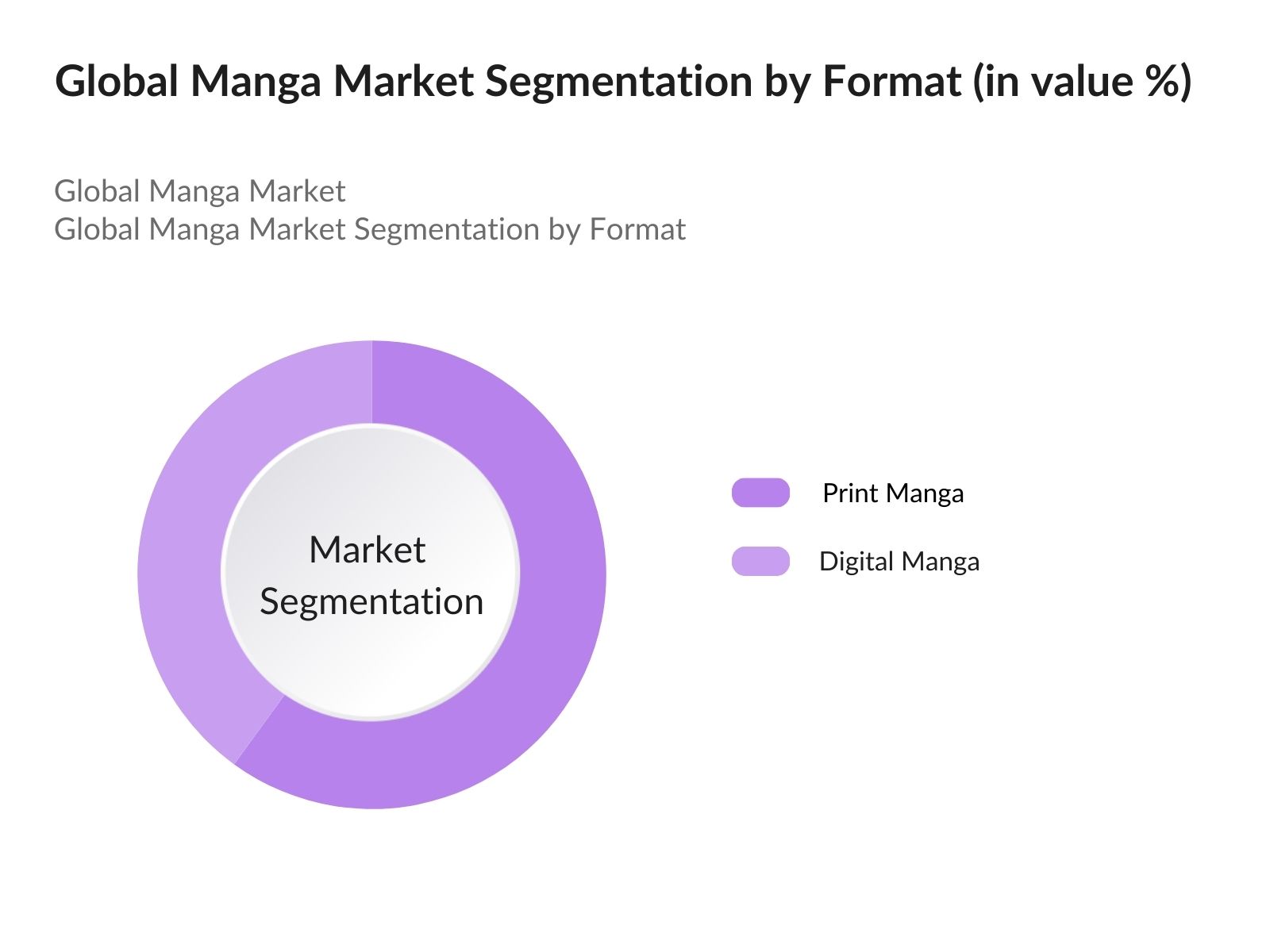
By Format: The manga market is divided by format into print and digital segments. Print manga retains a dominant position, as the tangible experience of printed copies attracts dedicated fans. Physical collections remain popular, especially in Japan, where collectors and enthusiasts often prefer hard copies. Digital manga, however, is gaining traction globally, especially in the U.S. and Europe, driven by convenience and availability on platforms like Kindle and Manga Plus.
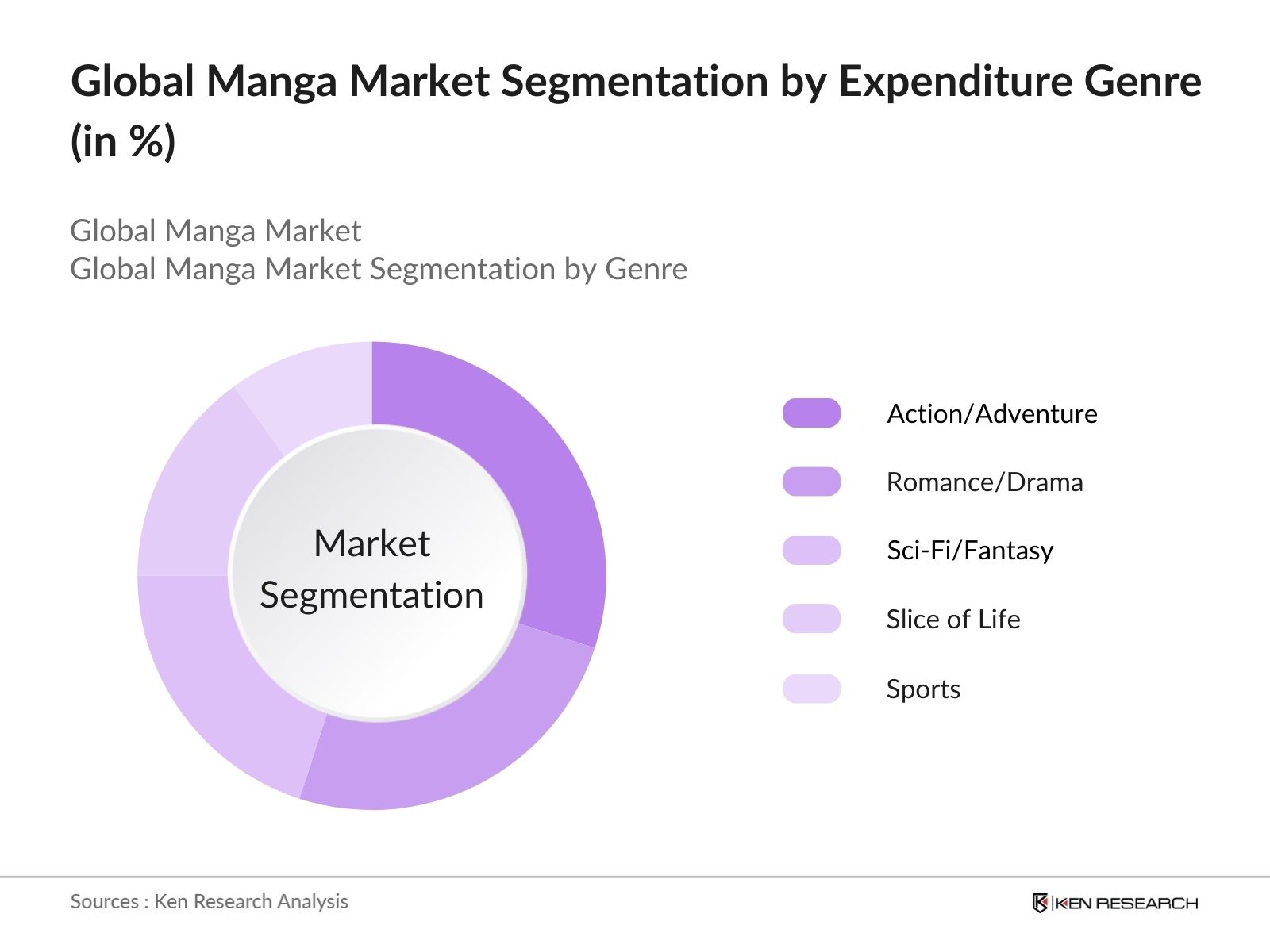
By Genre: The manga genre segmentation includes action/adventure, romance/drama, sci-fi/fantasy, slice of life, and sports. Action/adventure titles lead the genre segmentation due to the global popularity of titles like Naruto and One Piece. These titles offer dynamic, long-running storylines that captivate diverse audiences across demographics. The romance/drama genre is also growing in popularity, particularly in the Asia Pacific and Western Europe, driven by a younger audience seeking relatable and emotionally resonant content.
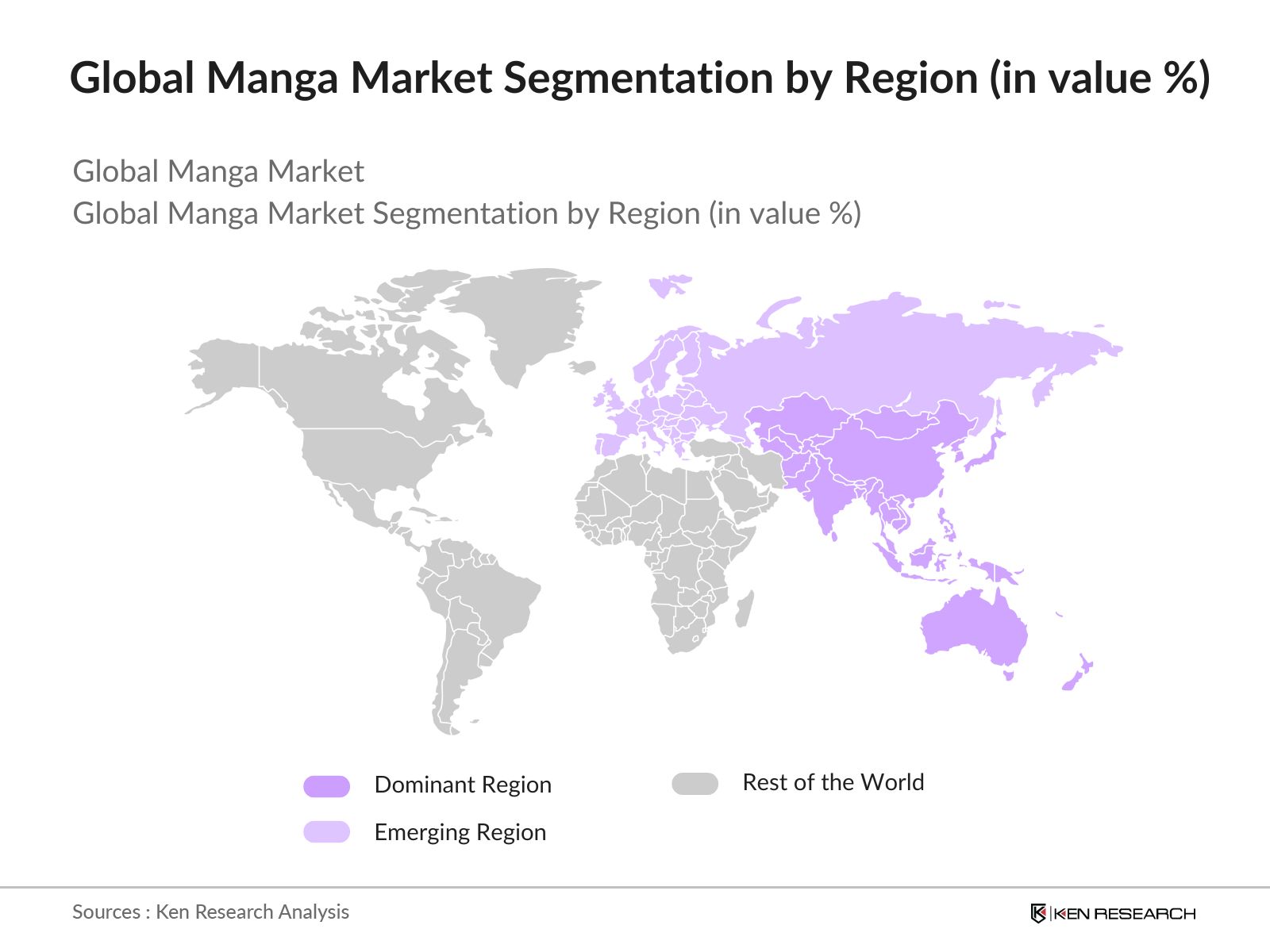
By Region: The regional segmentation includes Asia Pacific, North America, Europe, South America, and the Middle East & Africa. Asia Pacific dominates due to Japans central role in manga production and consumption. North America, primarily the U.S., ranks second, fueled by the popularity of anime conventions and growing retail support for manga. Europe, led by France, has also become a market due to widespread translations and localization efforts that make manga more accessible to non-Japanese audiences.
The market is led by established Japanese publishers alongside emerging international brands. Japan-based companies dominate due to their control over popular intellectual properties and established distribution channels.
Over the next five years, the global manga industry is expected to experience accelerated growth driven by factors such as increased digital consumption, international licensing, and the popularity of anime adaptations.
|
Format |
Digital |
|
Genre |
Action and Adventure Romance and Drama Sci-Fi and Fantasy Slice of Life Others |
|
Demographics |
Children Teenagers Adults |
|
Gender |
Male Female |
|
Distribution Channel |
Online Platforms Offline Retail |
|
Region |
North America Latin America Asia Pacific South Africa Europe |
1.1 Definition and Scope
1.2 Market Taxonomy
1.3 Market Growth Rate
1.4 Key Market Developments and Milestones
2.1 Historical Market Size
2.2 Year-on-Year Growth Analysis
2.3 Key Revenue Contributions by Format (Print, Digital)
3.1 Growth Drivers (Consumer Preferences, Digital Expansion)
3.2 Market Challenges (Intellectual Property, Piracy)
3.3 Opportunities (Localization, Multimedia Adaptations)
3.4 Trends (Webtoons, Cultural Influences)
3.5 Government Initiatives (Intellectual Property Laws, Cultural Funding)
3.6 SWOT Analysis
3.7 Value Chain Analysis
3.8 Stakeholder Ecosystem
3.9 Porters Five Forces Analysis
4.1 By Format (Revenue Share %)
4.1.1 Print Manga
4..1.2 Digital Manga
4.2 By Genre (Revenue Share %)
4.2.1 Action and Adventure
4.2.2 Romance and Drama
4.2.3 Sci-Fi and Fantasy
4.2.4 Slice of Life
4.2.5 Others
4.3 By Demographics (Revenue Share %)
4.3.1 Children
4.3.2 Teenagers
4.3.3 Adults
4.4 By Gender (Revenue Share %)
4.4.1 Male
4.4.2 Female
4.5 By Distribution Channel (Revenue Share %)
4.5.1 Online Platforms
4.5.2 Offline Retail
4.6 By Region
4.6.1 North America
4.6.2 Latin America
4.6.3 Asia Pacific
4.6.4 Europe
4.6.5 South Africa
5.1 Detailed Profiles of Key Players
5.1.1 Shueisha Inc.
5.1.2 Shogakukan Inc.
5.1.3 Yen Press
5.1.4 VIZ Media
5.1.5 Houbunsha Co., Ltd.
5.1.6 Bilibili Comics
5.1.7 Seven Seas Entertainment, Inc.
5.1.8 Kadokawa Corporation
5.1.9 AKITA Publishing Co., Ltd.
5.1.10 Kodansha Ltd.
5.1.11 IDW Media Holdings
5.1.12 DMG Entertainment Inc.
5.1.13 Futabasha Publishers Ltd.
5.1.14 Archie Comic Publications, Inc.
5.1.15 Titan Books (Titan Entertainment Group)
5.2 Cross Comparison Parameters (Market Revenue, Distribution Reach, Content Adaptations, Localization Initiatives, Social 5.2.1 Media Engagement, Number of Licensed Titles, Digital Expansion, Strategic Partnerships)
5.3 Market Share Analysis
5.4 Strategic Initiatives
5.5 Mergers & Acquisitions
5.6 Investment Analysis
5.7 Intellectual Property and Legal Developments
5.8 Regional Competitiveness
6.1 Intellectual Property Regulations
6.2 Market Compliance and Certification Requirements
6.3 Government Policies Supporting Cultural Exports
6.4 Trade Regulations Impacting Manga Distribution
7.1 Future Market Growth Potential
7.2 Factors Driving Future Expansion
8.1 By Content Type (Projected Revenue %)
8.2 By Genre (Projected Revenue %)
8.3 By Audience Demographics (Projected Revenue %)
8.4 By Distribution Channels (Projected Revenue %)
8.5 By Region (Projected Revenue %)
9.1 Total Addressable Market (TAM), Serviceable Addressable Market (SAM), and Serviceable Obtainable Market (SOM) Analysis
9.2 Consumer Cohort Analysis
9.3 Marketing Strategies for Market Penetration
9.4 Emerging Opportunities for Niche Genres
Disclaimer Contact UsThis stage involves defining the main industry influencers in the global manga market, using extensive desk research and proprietary databases to gather primary data on key players, content types, and geographic consumption trends.
Historical market data is analyzed for market penetration, key product segments, and market dynamics. Revenue estimates are calculated based on available sales data and subscription rates for digital platforms.
Initial market hypotheses are validated through industry expert interviews, capturing insights on market challenges and growth opportunities. This includes interviews with professionals from major manga publishing companies.
Final data synthesis includes cross-validation with direct information from publishers and platforms, producing a validated and accurate depiction of the manga market with projections for future growth.
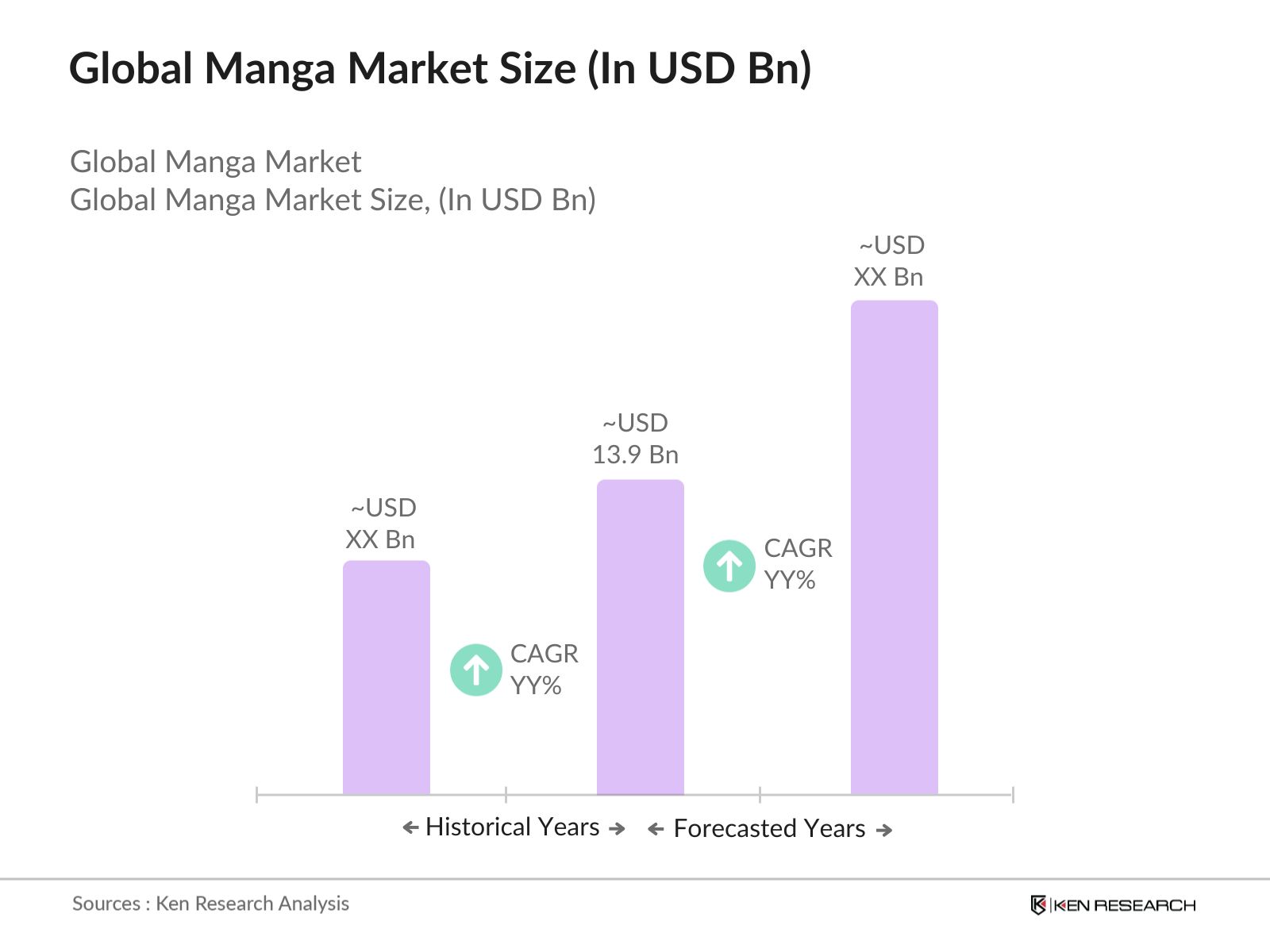
The global manga market is valued at USD 13.9 billion, primarily driven by the rising popularity of digital platforms and a strong base of physical manga readers.
Challenges in the global manga market include high competition from digital content alternatives, piracy, and the need for intellectual property protection to safeguard creators' rights.
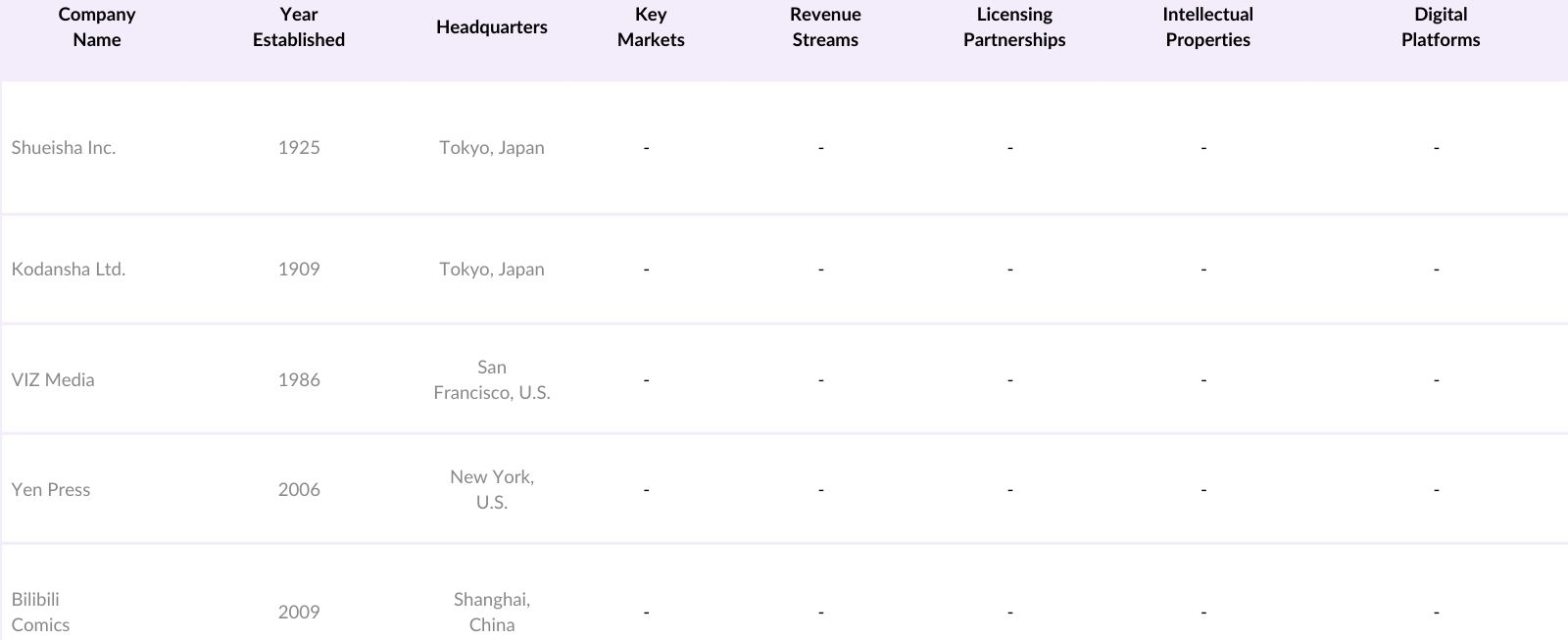
Key players in the global manga market include Shueisha Inc., Shogakukan Inc., Yen Press, VIZ Media, and Kodansha Ltd., all known for their extensive content portfolios and international reach.
Key growth drivers in the global manga market include the expansion of digital platforms, rising international demand, and increased popularity of anime adaptations that create global fan engagement.

What makes us stand out is that our consultants follows Robust, Refine and Result (RRR) methodology. i.e. Robust for clear definitions, approaches and sanity checking, Refine for differentiating respondents facts and opinions and Result for presenting data with story

We have set a benchmark in the industry by offering our clients with syndicated and customized market research reports featuring coverage of entire market as well as meticulous research and analyst insights.

While we don't replace traditional research, we flip the method upside down. Our dual approach of Top Bottom & Bottom Top ensures quality deliverable by not just verifying company fundamentals but also looking at the sector and macroeconomic factors.

With one step in the future, our research team constantly tries to show you the bigger picture. We help with some of the tough questions you may encounter along the way: How is the industry positioned? Best marketing channel? KPI's of competitors? By aligning every element, we help maximize success.

Our report gives you instant access to the answers and sources that other companies might choose to hide. We elaborate each steps of research methodology we have used and showcase you the sample size to earn your trust.

If you need any support, we are here! We pride ourselves on universe strength, data quality, and quick, friendly, and professional service.