















Global Marijuana Seeds Market Outlook to 2030
Region:Global
Author(s):Shubham Kashyap
Product Code:KROD4705
December 2024
88
About the Report
Global Marijuana Seeds Market Overview
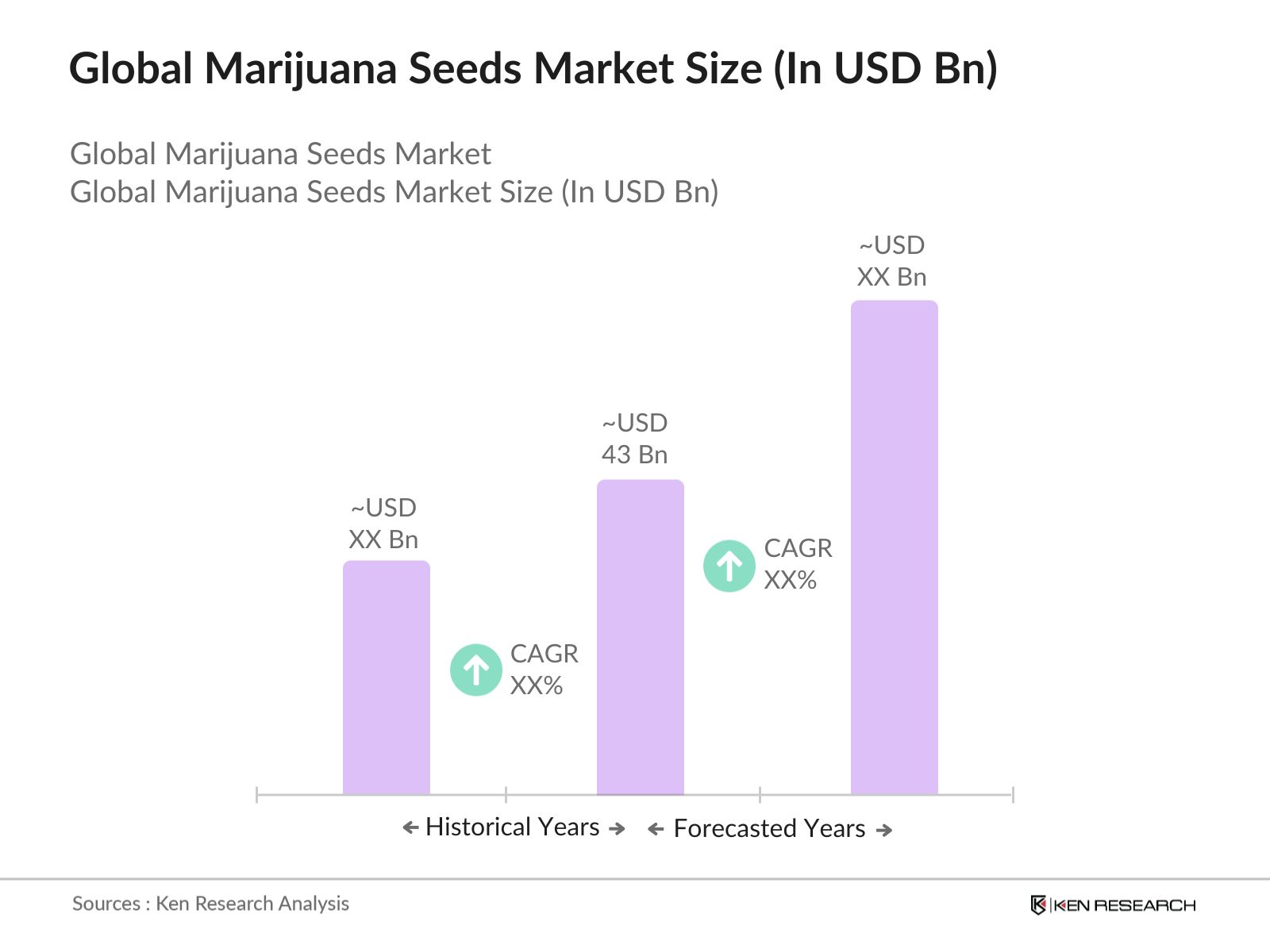
- The global marijuana seeds market is valued at USD 43 billion, according to historical analysis and data from credible sources. This market growth is driven by increasing legalization for both medicinal and recreational purposes across key regions such as North America, Europe, and parts of Asia-Pacific. As more countries adopt favorable cannabis laws, the demand for high-quality marijuana seeds has surged, particularly among commercial growers and hobbyist cultivators. Growing interest in medical cannabis treatments and advanced cultivation technologies has also contributed to the expansion of this market.
- The United States, Canada, and Germany are key contributors to the global marijuana seeds market. The U.S. leads the market due to a well-established legal cannabis industry, while Canadas fully legalized market continues to provide a stable foundation for seed producers. Germany, as a leader in Europes medical cannabis industry, shows great potential for future growth, particularly in medicinal marijuana seeds. Other European countries like the Netherlands and Spain are also seeing an increase in demand for marijuana seeds due to favorable legislative frameworks.
- Government regulations around seed certification and licensing are becoming increasingly stringent. In the European Union, cannabis seeds must meet rigorous certification standards before they can be sold. Similarly, in Canada, the Cannabis Act mandates that all seeds be licensed by Health Canada, ensuring that only compliant, high-quality seeds enter the market. This emphasis on certification ensures product consistency and safety but adds to the operational costs for seed producers.
Global Marijuana Seeds Market Segmentation
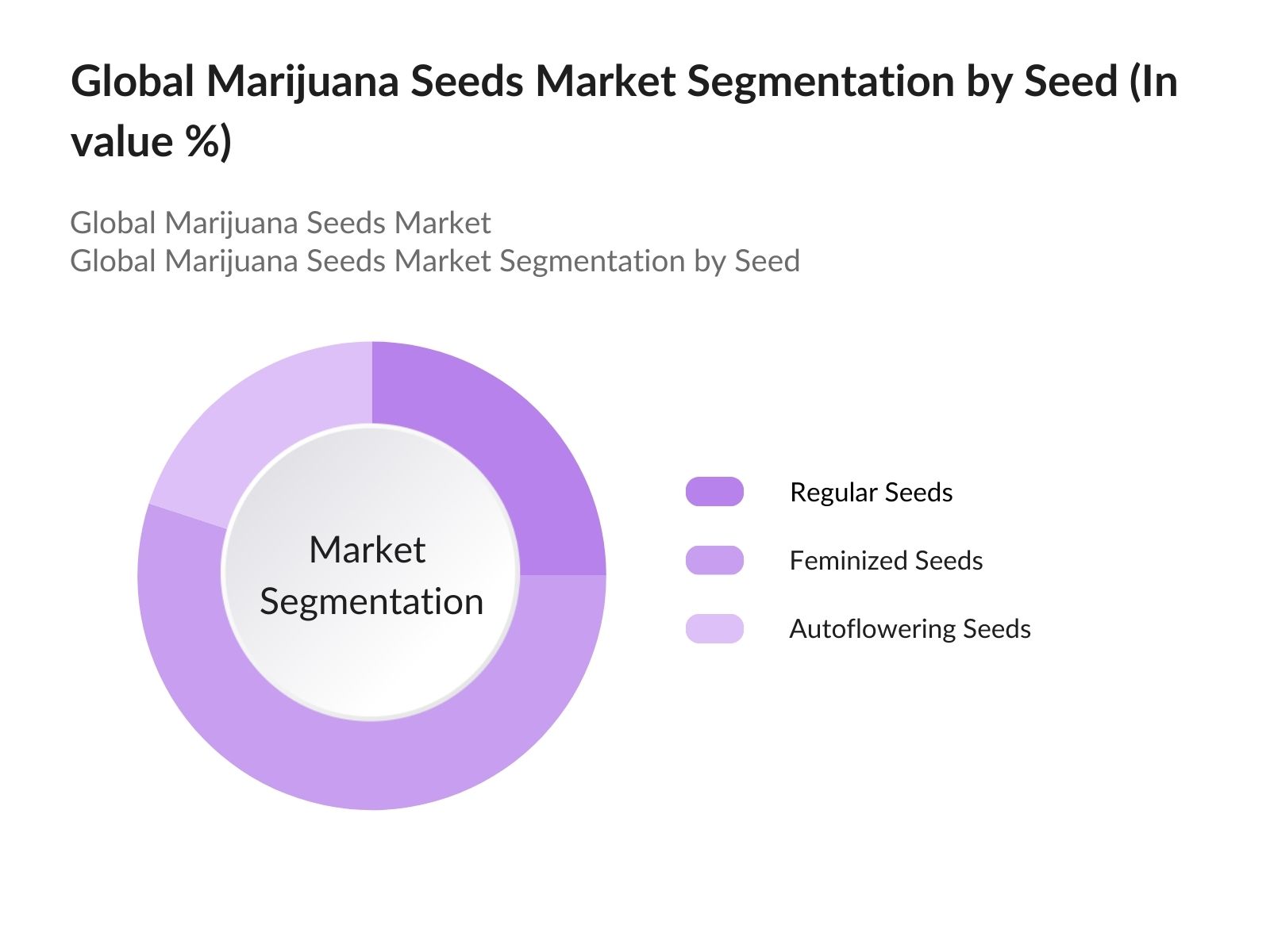
- By Seed Type: The market is segmented into regular seeds, feminized seeds, and auto-flowering seeds. Feminized seeds dominate the market, accounting for a major share due to their ability to produce only female plants, which are essential for flowering and cannabinoid production. Feminized seeds eliminate the need for gender identification, making them a preferred choice for commercial and home growers alike. Autoflowering seeds are also gaining popularity, particularly among novice growers, due to their ease of cultivation and faster harvest cycles. Regular seeds, while less popular, still have a niche market for breeders and genetic purists.
- By Application: The market is further divided into medicinal and recreational uses. The medicinal segment holds a significant portion of the market, driven by increasing acceptance of cannabis as a treatment for a wide range of health conditions, including chronic pain, epilepsy, and anxiety disorders. The recreational segment is also expanding, particularly in regions where cannabis use is legal for adults. Recreational users tend to prefer seeds that produce higher THC content, while medical users often seek strains high in CBD. This segmentation is expected to continue evolving as more countries adjust their cannabis laws.
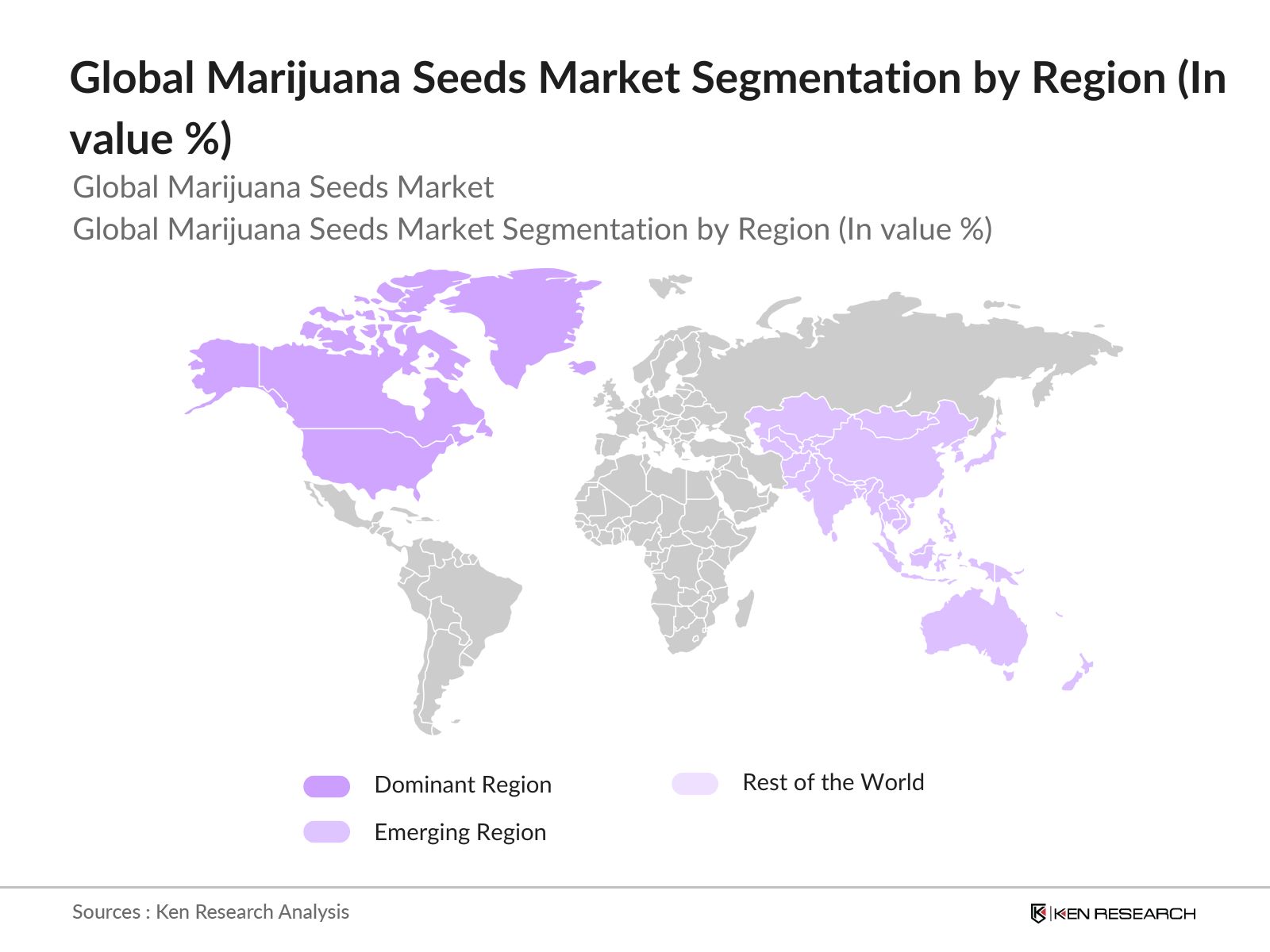
- By Region: The global marijuana seeds market is segmented by region into North America, Europe, Asia-Pacific, Latin America, and the Middle East & Africa. North America, particularly the United States and Canada, holds the largest share of the marijuana seeds market. This is attributed to progressive cannabis regulations for both medicinal and recreational use, coupled with the high demand from commercial and home cultivators. Canadas full legalization of cannabis has created a stable market environment, while the U.S. continues to dominate due to a robust legal cannabis industry.
Global Marijuana Seeds Market Competitive Landscape
The global marijuana seeds market is characterized by a few dominant players and several smaller, region-specific companies. Major seed banks such as Sensi Seeds, Green House Seed Co., and Barneys Farm have established a strong presence, offering a wide variety of strains to cater to different consumer needs. The competitive landscape is shaped by factors such as seed quality, strain variety, and the ability to innovate through genetic modifications. Established companies invest heavily in research and development to create superior seeds that offer higher yields, pest resistance, and enhanced cannabinoid profiles.
|
Company Name |
Establishment Year |
Headquarters |
Revenue (2023) |
Market Presence |
R&D Investment |
Global Reach |
Product Portfolio |
Certifications |
Recent Developments |
|
Sensi Seeds |
1985 |
Amsterdam, Netherlands |
|||||||
|
Green House Seed Co. |
1985 |
Amsterdam, Netherlands |
|||||||
|
Barneys Farm |
1980 |
Amsterdam, Netherlands |
|||||||
|
Royal Queen Seeds |
2007 |
Barcelona, Spain |
Global Marijuana Seeds Market Analysis
Growth Drivers
- Legalization of Cannabis: The ongoing legalization of cannabis is a major growth driver for the marijuana seeds market. In the United States, cannabis is now legal for recreational use in 23 states and medical use in 38 states as of 2024. Canada's cannabis industry continues to grow post-legalization, generating CAD 4.5 billion in total cannabis sales in 2022, with cultivation increasing significantly due to the legal framework. Germanys recent steps toward cannabis legalization for recreational use are projected to create similar growth in Europe. Legal frameworks are expanding opportunities for seed producers as they adhere to new licensing systems.
- Advances in Genetic Engineering: Recent advances in genetic engineering have enabled the development of more resilient and high-yield cannabis strains. In 2023, the cannabis industry saw significant growth in the use of CRISPR technology, allowing for the hybridization of strains resistant to pests and environmental stress. The U.S. cannabis seed market has capitalized on these technologies, with seed sales for genetically modified strains exceeding million units in 2023. This progress in strain hybridization and GMO seeds is transforming the cultivation process, leading to more efficient production.
- Increasing Adoption of Cannabis for Medical Use: Countries such as Australia, Israel, and many parts of the European Union have established medical cannabis programs, allowing cultivation of seeds for approved medical treatments. The U.S. medical cannabis market saw over 5 million registered patients by 2023, leading to high demand for specific strains bred for medical use. In Israel, medical cannabis prescriptions doubled in 2022 to 100,000 patients, fostering the growth of seed development targeted toward chronic pain, epilepsy, and PTSD treatments.
Market Challenges
- Regulatory Hurdles: Despite growing legalization, the marijuana seeds market still faces significant regulatory challenges, particularly in regions where cannabis remains illegal or where laws are ambiguous. Countries in Asia and Africa have stringent regulations, which limit the markets global reach. Moreover, the regulatory framework in countries that have legalized cannabis is often complex, creating barriers for seed producers looking to expand. Compliance with different laws in each country, along with the necessary certifications, makes it difficult for smaller players to compete in the international market.
- High Cost of Quality Seeds: The cost of high-quality marijuana seeds, particularly those that are genetically modified or feminized, remains a challenge for small-scale growers and cultivators in developing regions. While large-scale producers can afford to invest in premium seeds, the high prices make it difficult for smaller growers to access the same quality, limiting their yield potential. This cost barrier affects market penetration in emerging markets, particularly in regions with lower disposable income and limited access to financing.
Global Marijuana Seeds Market Future Outlook
The global marijuana seeds market is expected to experience continued growth through 2028, driven by expanding legalization and increasing consumer awareness about the benefits of high-quality seeds. Companies are likely to focus on further improving seed genetics and expanding their product offerings to meet the diverse needs of both recreational and medicinal users.
Future Market Opportunities
- Expansion in Emerging Markets: The legalization of cannabis in emerging markets presents significant growth opportunities for the marijuana seeds industry. Countries in Latin America, such as Brazil and Mexico, are showing increasing acceptance of both medical and recreational cannabis, driving demand for marijuana seeds. In 2023, a noteworthy cannabis users were reported in Brazil alone, highlighting the potential for seed producers to tap into this growing market. Similarly, Southeast Asian countries are expected to follow suit with changes in cannabis legislation, offering new avenues for market expansion.
- Increased Investment in Research and Development: As the cannabis industry becomes more mainstream, investments in R&D are expected to grow, particularly in the area of seed genetics. Companies are focusing on creating hybrid strains that cater to specific consumer needs, such as high-CBD strains for medicinal use or high-THC strains for recreational purposes. In 2023, over a substantial amount was invested globally in cannabis-related R&D, with a significant portion dedicated to improving seed quality and developing new strains.
Scope of the Report
|
By Seed Type |
Regular Seeds Feminized Seeds Autoflowering Seeds High-CBD Seeds GMO Seeds |
|
By Application |
Medicinal Use Recreational Use Industrial Hemp Cultivation |
|
By Strain Type |
Sativa Indica Hybrid Strains |
|
By Cultivation Environment |
Indoor Cultivation Outdoor Cultivation Greenhouse Cultivation |
|
By Region |
North America Europe Asia-Pacific Latin America Middle East & Africa |
Products
Key Target Audience
Investors and Venture Capitalist Firms
Government and Regulatory Bodies (FDA, European Medicines Agency)
Cannabis Cultivators
Medical Cannabis Dispensaries
Pharmaceutical Companies
Seed Banks and Distributors
Agriculture Technology Companies
Hemp Product Manufacturers
Banks and Financial Institutions
Companies
Mjaor Players Mentioned in the Report
Sensi Seeds
Green House Seed Co.
Barneys Farm
Royal Queen Seeds
Dinafem Seeds
Dutch Passion
DNA Genetics
Humboldt Seed Organization
Paradise Seeds
Advanced Seeds
Serious Seeds
The Bulldog Seeds
Nirvana Seeds
Sweet Seeds
FastBuds Seeds
Table of Contents
1. Global Marijuana Seeds Market Overview
1.1. Definition and Scope
1.2. Market Taxonomy
1.3. Market Growth Rate
1.4. Market Segmentation Overview
2. Global Marijuana Seeds Market Size (In USD Bn)
2.1. Historical Market Size
2.2. Year-On-Year Growth Analysis
2.3. Key Market Developments and Milestones
3. Global Marijuana Seeds Market Analysis
3.1. Growth Drivers
3.1.1. Legalization of Cannabis (Country-Specific Legalization Policies)
3.1.2. Increasing Adoption of Cannabis for Medical Use (Approved Medical Conditions)
3.1.3. Rising Consumer Awareness (Cannabis Education Programs)
3.1.4. Advances in Genetic Engineering (Strain Hybridization, GMO Seeds)
3.2. Market Challenges
3.2.1. Regulatory Barriers (Licensing and Compliance Requirements)
3.2.2. High Production Costs (Cost of Seed Cultivation, Genetic Research)
3.2.3. Market Fragmentation (Lack of Standardization Across Regions)
3.2.4. Limited Export Opportunities (International Trade Restrictions)
3.3. Opportunities
3.3.1. Expansion of Recreational Cannabis Markets (Adult-Use Cannabis Markets)
3.3.2. Development of Specialty Cannabis Seeds (High-CBD, Low-THC Strains)
3.3.3. Emergence of New Breeding Technologies (CRISPR, AI-Based Selection)
3.3.4. Growth in Online Seed Sales (E-Commerce Platforms for Cannabis Seeds)
3.4. Trends
3.4.1. Increased Use of Feminized and Autoflowering Seeds (Cultivation Efficiency)
3.4.2. Demand for Organic and Sustainable Seed Varieties (Eco-Friendly Cultivation)
3.4.3. Rise of Home-Grow Cultivation (Home Grow Licenses and DIY Kits)
3.4.4. Popularity of High-THC Strains for Recreational Use (Potency Preferences)
3.5. Government Regulation
3.5.1. Legalization Frameworks by Region (North America, Europe, APAC)
3.5.2. Seed Certification and Licensing (Certification Programs, Compliance)
3.5.3. Import/Export Policies (Cross-Border Trade Regulations)
3.5.4. Pesticide and Environmental Regulations (Sustainability in Cultivation)
3.6. SWOT Analysis
3.7. Stake Ecosystem (Seed Banks, Distributors, Cultivators)
3.8. Porters Five Forces
3.9. Competition Ecosystem
4. Global Marijuana Seeds Market Segmentation
4.1. By Seed Type (In Value %)
4.1.1. Regular Seeds
4.1.2. Feminized Seeds
4.1.3. Autoflowering Seeds
4.1.4. High-CBD Seeds
4.1.5. GMO Seeds
4.2. By Application (In Value %)
4.2.1. Medicinal Use
4.2.2. Recreational Use
4.2.3. Industrial Hemp Cultivation
4.3. By Strain Type (In Value %)
4.3.1. Sativa
4.3.2. Indica
4.3.3. Hybrid Strains
4.4. By Cultivation Environment (In Value %)
4.4.1. Indoor Cultivation
4.4.2. Outdoor Cultivation
4.4.3. Greenhouse Cultivation
4.5. By Region (In Value %)
4.5.1. North America
4.5.2. Europe
4.5.3. Asia-Pacific
4.5.4. Latin America
4.5.5. Middle East & Africa
5. Global Marijuana Seeds Market Competitive Analysis
5.1. Detailed Profiles of Major Companies
5.1.1. Sensi Seeds
5.1.2. Green House Seed Co.
5.1.3. Barneys Farm
5.1.4. Royal Queen Seeds
5.1.5. Dinafem Seeds
5.1.6. Dutch Passion
5.1.7. DNA Genetics
5.1.8. Humboldt Seed Organization
5.1.9. Paradise Seeds
5.1.10. Advanced Seeds
5.1.11. Serious Seeds
5.1.12. The Bulldog Seeds
5.1.13. Nirvana Seeds
5.1.14. Sweet Seeds
5.1.15. FastBuds Seeds
5.2. Cross Comparison Parameters (Company Size, Headquarters, Year of Establishment, Revenue, No. of Patented Strains, Global Market Reach, Seed Variety, R&D Investment)
5.3. Market Share Analysis
5.4. Strategic Initiatives
5.5. Mergers and Acquisitions
5.6. Investment Analysis
5.7. Venture Capital Funding
5.8. Government Grants
5.9. Private Equity Investments
6. Global Marijuana Seeds Market Regulatory Framework
6.1. Legalization Status by Region (Medical and Recreational Use)
6.2. Compliance Requirements (Seed Certification, THC Limits)
6.3. Certification Processes (Organic, Sustainable Farming Certifications)
7. Global Marijuana Seeds Future Market Size (In USD Bn)
7.1. Future Market Size Projections
7.2. Key Factors Driving Future Market Growth
8. Global Marijuana Seeds Future Market Segmentation
8.1. By Seed Type (In Value %)
8.2. By Application (In Value %)
8.3. By Strain Type (In Value %)
8.4. By Cultivation Environment (In Value %)
8.5. By Region (In Value %)
9. Global Marijuana Seeds Market Analyst's Recommendations
9.1. TAM/SAM/SOM Analysis
9.2. Customer Cohort Analysis
9.3. Marketing Initiatives
9.4. White Space Opportunity Analysis
Research Methodology
Step 1: Identification of Key Variables
The first step involves mapping the global marijuana seeds market ecosystem, focusing on key stakeholders such as cultivators, distributors, and regulatory bodies. Extensive desk research is conducted using both secondary sources and proprietary databases to identify the critical variables that affect the market, such as legalization status, seed genetics, and demand from both recreational and medicinal users.
Step 2: Market Analysis and Construction
In this phase, historical market data is compiled and analyzed, focusing on seed sales, cultivation methods, and consumer demand trends. This analysis includes evaluating the penetration of seed varieties (regular, feminized, autoflowering) and assessing how different applications (medicinal vs. recreational) drive revenue generation.
Step 3: Hypothesis Validation and Expert Consultation
To validate market hypotheses, interviews are conducted with industry experts, including seed producers and cannabis cultivators. These consultations provide insights into operational challenges, technological advancements, and market dynamics. This expert feedback is used to corroborate the market data and refine the analysis.
Step 4: Research Synthesis and Final Output
In the final step, all data is synthesized into a comprehensive analysis of the global marijuana seeds market. The bottom-up approach, verified through direct engagement with manufacturers, ensures the final report is accurate and reliable. Detailed insights into market segments, competition, and future trends are provided to give business professionals a complete overview.
Frequently Asked Questions
1. How big is the global marijuana seeds market?
The global marijuana seeds market was valued at USD 43 billion in 2023, driven by increasing legalization for medical and recreational use, as well as rising consumer demand for high-quality cannabis strains.
2. What are the challenges in the global marijuana seeds market?
Challenges in the global marijuana seeds market include stringent regulatory barriers, high production costs, and market fragmentation due to varying cannabis laws across regions. The lack of standardization in cannabis cultivation practices also poses a challenge for seed producers.
3. Who are the major players in the global marijuana seeds market?
Key players in the global marijuana seeds market include Sensi Seeds, Green House Seed Co., Barneys Farm, Royal Queen Seeds, and Dinafem Seeds. These companies dominate due to their extensive product portfolios, R&D investments, and strong global distribution networks.
4. What are the growth drivers of the global marijuana seeds market?
The global marijuana seeds market is driven by factors such as expanding cannabis legalization, rising demand for medicinal cannabis, and advancements in seed genetics. The development of feminized and autoflowering seeds has also contributed to the markets growth.
Why Buy From Us?

What makes us stand out is that our consultants follows Robust, Refine and Result (RRR) methodology. i.e. Robust for clear definitions, approaches and sanity checking, Refine for differentiating respondents facts and opinions and Result for presenting data with story

We have set a benchmark in the industry by offering our clients with syndicated and customized market research reports featuring coverage of entire market as well as meticulous research and analyst insights.

While we don't replace traditional research, we flip the method upside down. Our dual approach of Top Bottom & Bottom Top ensures quality deliverable by not just verifying company fundamentals but also looking at the sector and macroeconomic factors.

With one step in the future, our research team constantly tries to show you the bigger picture. We help with some of the tough questions you may encounter along the way: How is the industry positioned? Best marketing channel? KPI's of competitors? By aligning every element, we help maximize success.

Our report gives you instant access to the answers and sources that other companies might choose to hide. We elaborate each steps of research methodology we have used and showcase you the sample size to earn your trust.

If you need any support, we are here! We pride ourselves on universe strength, data quality, and quick, friendly, and professional service.