















Global Meat Products Market Outlook to 2030
Region:Global
Author(s):Mukul
Product Code:KROD9781
December 2024
111
About the Report
Global Meat Products Market Overview
- The global meat products market is valued at USD 44.2 billion, based on a five-year historical analysis. The market is driven by several factors, including increasing global population, rising urbanization, and changing dietary preferences towards protein-rich diets. Consumers in both developed and developing countries are showing greater demand for processed and convenience meat products. Technological advancements in meat processing and packaging, along with growing awareness of high-protein diets, have further fueled the market's growth.
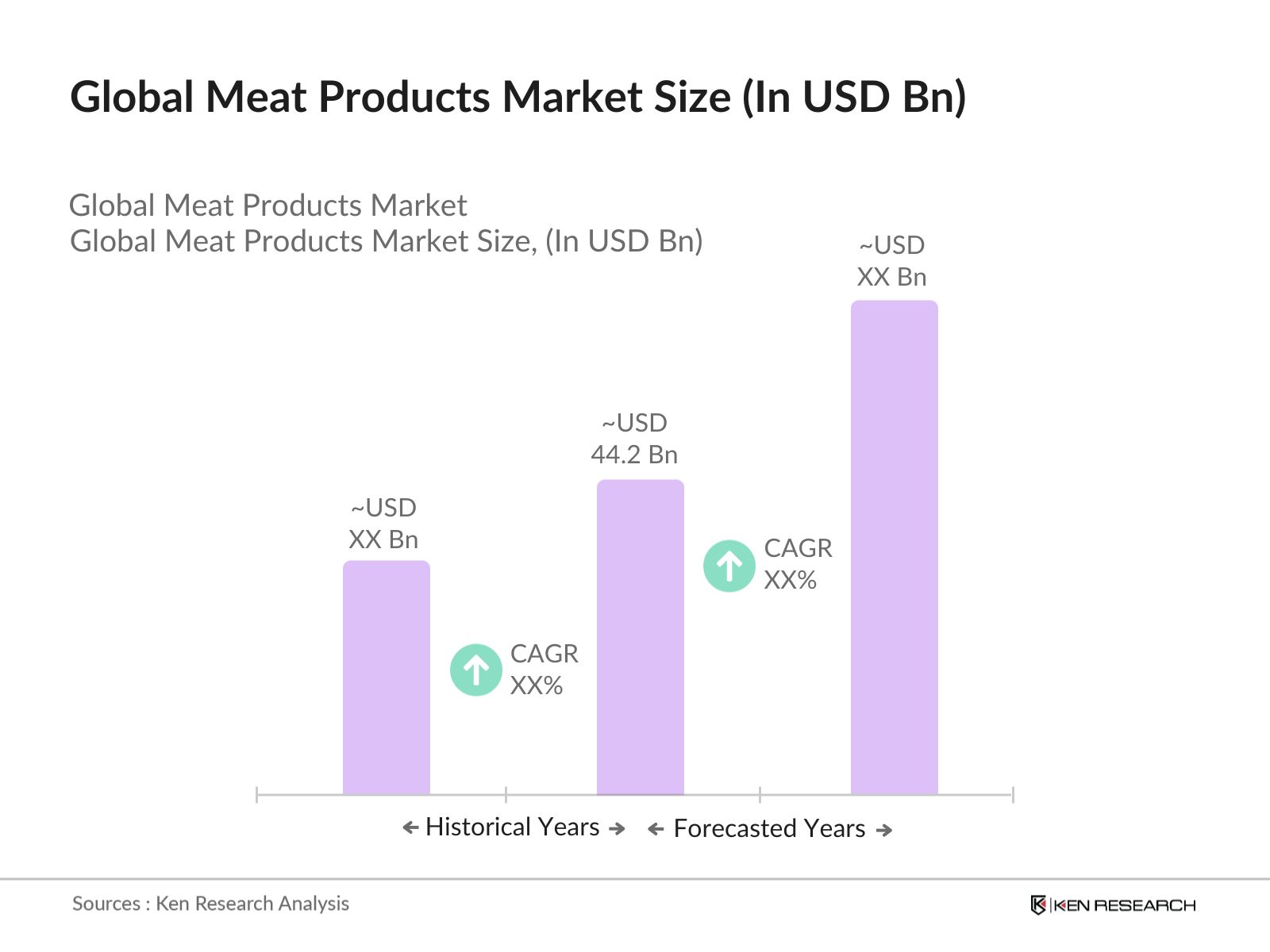
- The market is dominated by major players in countries like the United States, China, and Brazil, which have strong infrastructures for meat production and export. The dominance of these countries stems from their efficient livestock farming, substantial investments in meat processing technologies, and strong distribution networks. Additionally, factors like government subsidies and the abundance of natural resources (land, feed, etc.) contribute to their global leadership in meat production.
- Animal welfare policies are increasingly influencing the meat industry, with many countries enacting stricter regulations. In 2023, the European Union revised its animal welfare legislation to ban certain confinement practices for livestock, such as battery cages for poultry. Similarly, the U.S. introduced legislation aimed at improving the welfare of farm animals, mandating more humane slaughtering techniques. These policies reflect growing consumer demand for ethically produced meat and are pushing the industry toward more sustainable practices.
Global Meat Products Market Segmentation
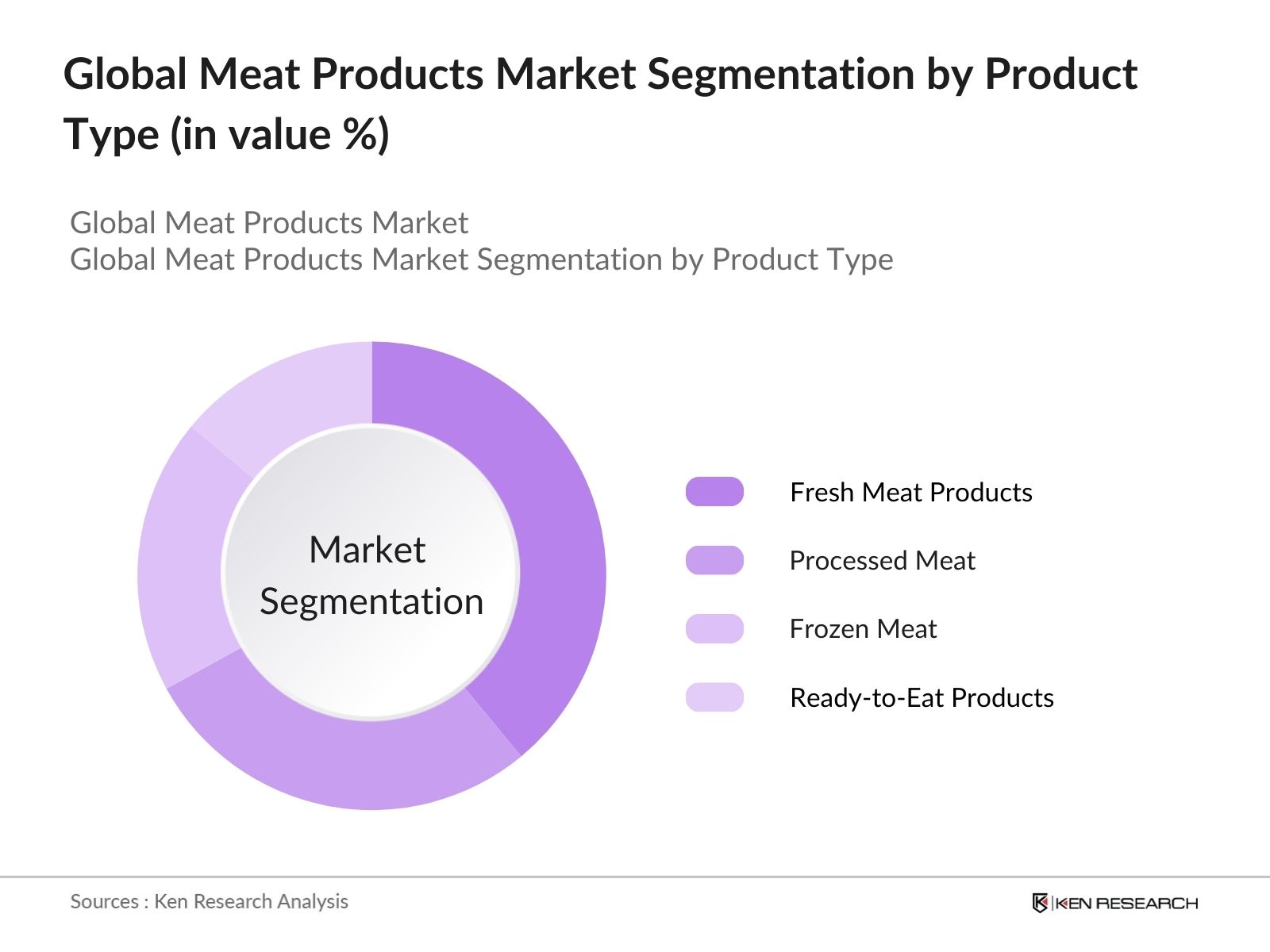
- By Product Type: The global meat products market is segmented by product type into fresh meat products, processed meat, frozen meat, ready-to-eat products, and organic/free-range meat. The processed meat segment holds a dominant market share, largely due to its convenience and longer shelf life, making it popular among urban consumers. Processed meat includes products like sausages, hams, and bacon, which have seen growing demand due to the fast-paced lifestyle of consumers, especially in urban areas. Major companies are investing heavily in this segment, leveraging innovations in packaging and preservation to cater to global consumers.
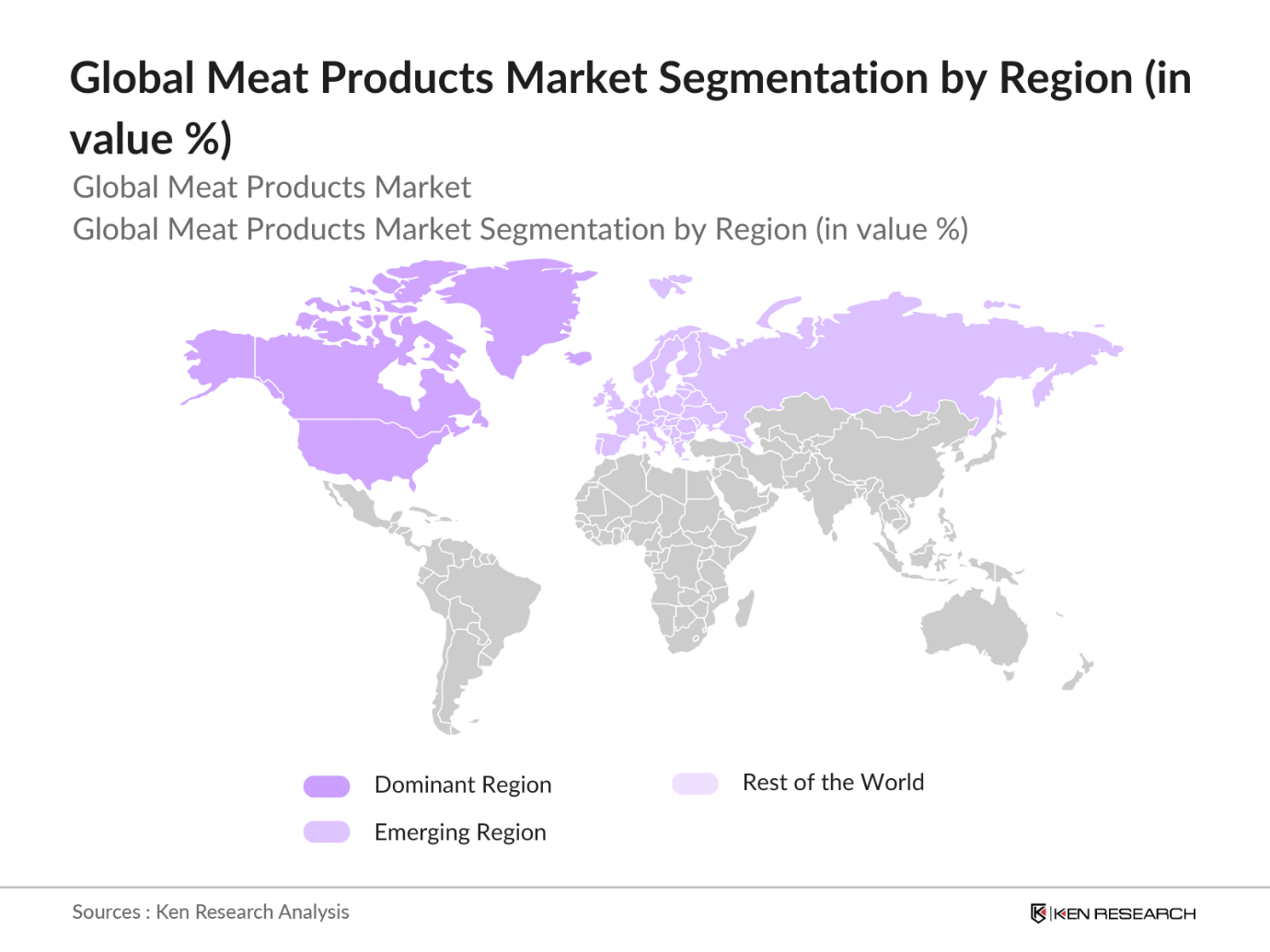
- By Region: Geographically, the market is segmented into North America, Europe, Asia-Pacific, Latin America, and the Middle East & Africa. North America dominates the global meat products market, driven by the high consumption of beef and processed meats. The presence of well-established players, advanced meat processing technologies, and strong consumer demand for premium meat products have cemented the regions leadership. Moreover, government policies in the US supporting meat exports have helped maintain North America's dominance in the global market.
- By Source: The market is segmented by source into beef, pork, poultry, lamb, and others (including game meat and specialty meats). Poultry remains the largest segment due to its affordability, lower environmental impact compared to red meat, and rising health consciousness among consumers. The increasing awareness of the health risks associated with excessive red meat consumption has driven the preference for leaner meats like chicken, contributing to the strong performance of this segment.
Global Meat Products Market Competitive Landscape
The global meat products market is consolidated, with a few major players dominating the space. Large companies, such as JBS S.A. and Tyson Foods, have a significant influence due to their scale of operations, strong supply chain, and established brand recognition. These companies are also at the forefront of innovation, focusing on sustainability initiatives and new product development to meet changing consumer preferences.
|
Company Name |
Established |
Headquarters |
Revenue |
No. of Employees |
Product Portfolio |
Geographical Reach |
Sustainability Initiatives |
Certifications |
Technological Innovations |
|
JBS S.A. |
1953 |
So Paulo, Brazil |
- |
- |
- |
- |
- |
- |
- |
|
Tyson Foods |
1935 |
Arkansas, USA |
- |
- |
- |
- |
- |
- |
- |
|
Cargill Inc. |
1865 |
Minneapolis, USA |
- |
- |
- |
- |
- |
- |
- |
|
WH Group |
1958 |
Hong Kong |
- |
- |
- |
- |
- |
- |
- |
|
Hormel Foods |
1891 |
Austin, USA |
- |
- |
- |
- |
- |
- |
- |
Global Meat Products Industry Analysis
Growth Drivers
- Increasing Demand for Protein-Rich Diets: The global demand for protein-rich diets is being driven by increasing consumer awareness about health and wellness. In 2024, global meat consumption per capita is estimated at around 42.9 kg, according to the Food and Agriculture Organization (FAO). Higher protein consumption is particularly prominent in developed economies like the United States, where meat intake accounts for a significant portion of daily protein intake. This trend is reflected in regions like Asia-Pacific, where growing urbanization has increased the demand for high-quality, protein-rich food products. Rising incomes also make meat more affordable, stimulating demand.
- Expansion of Meat Processing Technologies: Advances in meat processing technologies are enhancing the efficiency and shelf life of meat products. Automation in slaughterhouses and processing plants has led to a significant reduction in waste. For instance, modern processing technologies like high-pressure processing (HPP) and microwave-assisted pasteurization can extend the shelf life of meat products from 2-3 weeks to over 6 months without preservatives, increasing product appeal globally. This shift is driving the market by reducing costs associated with spoilage and logistics. Additionally, the global meat processing equipment market is expanding with heavy investments in tech-driven solutions.
- Growth in Urbanization and Higher Disposable Income: Global urbanization is steadily increasing, with 56.9% of the world population living in urban areas in 2022, and this figure is expected to climb to 60% by 2025. Higher disposable incomes, especially in emerging markets such as India and Brazil, are driving increased consumption of meat products. In India, disposable income per capita increased by 10% in 2023, contributing to a greater demand for premium meat products. The FAO reports that rising incomes lead to dietary shifts toward meat consumption as it becomes more affordable for middle-class households.
Market Restraints
- Impact of Veganism and Plant-Based Alternatives: The growing popularity of vegan diets and plant-based meat alternatives is challenging the traditional meat market. In 2024, approximately 79 million people worldwide identified as vegan, with demand for plant-based meat alternatives projected to rise sharply. This is particularly noticeable in Europe and North America, where plant-based meat alternatives are increasingly available. In Germany, for example, meat consumption dropped by 3.1 kg per capita between 2019 and 2022 due to the rising adoption of plant-based diets.
- Stringent Environmental Regulations: The meat industry faces stringent environmental regulations, particularly concerning greenhouse gas (GHG) emissions and land use. According to the United Nations, livestock production accounts for 14.5% of all human-induced GHG emissions globally. In response, many countries have introduced stricter emission targets. For instance, the European Unions Farm to Fork strategy aims to reduce methane emissions from livestock by 29 million tons by 2030. Compliance with these regulations may increase operational costs and place pressure on meat producers to adopt more sustainable practices.
Global Meat Products Market Future Outlook
Over the next few years, the global meat products market is expected to show steady growth, driven by increasing consumer demand for protein, technological advancements in meat processing, and greater emphasis on sustainability and ethical sourcing. As the demand for meat alternatives continues to rise, companies are expected to invest in lab-grown and plant-based meat solutions. Furthermore, emerging markets in Asia-Pacific and Latin America present significant opportunities for expansion, as rising disposable incomes and changing dietary preferences fuel the demand for meat products.
Market Opportunities
- Development of Alternative Proteins and Lab-Grown Meat: The development of alternative protein sources such as lab-grown meat offers promising growth opportunities for the meat industry. According to the Good Food Institute, global investments in alternative proteins exceeded $3 billion in 2023. Lab-grown meat has the potential to reduce the environmental footprint of meat production while meeting rising consumer demand for sustainable and ethical protein sources. Israel and Singapore are at the forefront of this industry, with the first lab-grown meat products hitting shelves in these markets in 2023.
- Growth in Emerging Economies: Emerging economies present significant growth potential for the meat market. For instance, meat consumption in Sub-Saharan Africa has increased by 7.8% annually, driven by population growth and rising incomes. Similarly, in Southeast Asia, nations such as Vietnam and Indonesia are experiencing rapid urbanization, with a 5% year-on-year increase in meat consumption since 2022. Government-backed agricultural subsidies and investments in cold chain infrastructure are further supporting the expansion of the meat sector in these regions.
Scope of the Report
|
Product Type |
Fresh Meat Products Processed Meat Frozen Meat Ready-to-Eat Meat Products Organic and Free-Range Meat |
|
Source |
Beef Pork Poultry Lamb Others (Game Meat, Specialty Meat) |
|
Distribution Channel |
Supermarkets/Hypermarkets Specialty Meat Shops Online Retail Foodservice (Hotels, Restaurants) |
|
Packaging Type |
Vacuum-Sealed Packaging Canned Packaging Modified Atmosphere Packaging (MAP) |
|
Region |
North America Europe Asia-Pacific Latin America Middle East & Africa |
Products
Key Target Audience
Meat Processing Companies
Retailers and Wholesalers
Investors and Venture Capitalist Firms
Foodservice Operators (Hotels, Restaurants)
Meat Packaging Companies
Government and Regulatory Bodies (USDA, EFSA)
Agricultural Equipment Manufacturers
Livestock Farmers and Feed Providers
Companies
Players Mentioned in the Report:
JBS S.A.
Tyson Foods Inc.
Cargill, Inc.
WH Group Ltd.
BRF S.A.
Hormel Foods Corporation
Marfrig Global Foods
Danish Crown A/S
Vion Food Group
NH Foods Ltd.
Smithfield Foods, Inc.
Sanderson Farms Inc.
Maple Leaf Foods
Pilgrim's Pride Corporation
OSI Group
Table of Contents
1. Global Meat Products Market Overview
1.1. Definition and Scope
1.2. Market Taxonomy
1.3. Market Growth Rate
1.4. Market Segmentation Overview
2. Global Meat Products Market Size (In USD Bn)
2.1. Historical Market Size
2.2. Year-On-Year Growth Analysis
2.3. Key Market Developments and Milestones
3. Global Meat Products Market Analysis
3.1. Growth Drivers (e.g., Rising Protein Consumption, Growing Processed Food Industry)
3.1.1. Increasing Demand for Protein-Rich Diets
3.1.2. Expansion of Meat Processing Technologies
3.1.3. Growth in Urbanization and Higher Disposable Income
3.1.4. Adoption of Western Diets in Emerging Markets
3.2. Market Challenges (e.g., Rising Health Concerns, Regulatory Restrictions)
3.2.1. Impact of Veganism and Plant-Based Alternatives
3.2.2. Stringent Environmental Regulations
3.2.3. Volatility in Meat Prices due to Supply Chain Disruptions
3.3. Opportunities (e.g., Innovations in Sustainable Meat Production)
3.3.1. Development of Alternative Proteins and Lab-Grown Meat
3.3.2. Growth in Emerging Economies
3.3.3. Technological Advancements in Meat Processing
3.4. Trends (e.g., Clean Labeling, Traceability)
3.4.1. Rise in Demand for Organic and Grass-Fed Meat Products
3.4.2. Increased Focus on Transparency and Ethical Sourcing
3.4.3. Integration of Blockchain for Supply Chain Traceability
3.5. Government Regulations (e.g., Meat Import/Export Tariffs, Health Standards)
3.5.1. Food Safety and Inspection Standards
3.5.2. Meat Quotas and Tariff Barriers
3.5.3. Animal Welfare Policies
3.6. SWOT Analysis
3.7. Stakeholder Ecosystem
3.8. Porters Five Forces Analysis (Bargaining Power of Suppliers, Threat of New Entrants, etc.)
3.9. Competition Ecosystem
4. Global Meat Products Market Segmentation
4.1. By Product Type (In Value %)
4.1.1. Fresh Meat Products
4.1.2. Processed Meat (Cured, Smoked, Canned)
4.1.3. Frozen Meat
4.1.4. Ready-to-Eat Meat Products
4.1.5. Organic and Free-Range Meat
4.2. By Source (In Value %)
4.2.1. Beef
4.2.2. Pork
4.2.3. Poultry
4.2.4. Lamb
4.2.5. Others (Game Meat, Specialty Meat)
4.3. By Distribution Channel (In Value %)
4.3.1. Supermarkets/Hypermarkets
4.3.2. Specialty Meat Shops
4.3.3. Online Retail
4.3.4. Foodservice (Hotels, Restaurants, etc.)
4.4. By Packaging Type (In Value %)
4.4.1. Vacuum-Sealed Packaging
4.4.2. Canned Packaging
4.4.3. Modified Atmosphere Packaging (MAP)
4.5. By Region (In Value %)
4.5.1. North America
4.5.2. Europe
4.5.3. Asia-Pacific
4.5.4. Latin America
4.5.5. Middle East & Africa
5. Global Meat Products Market Competitive Analysis
5.1. Detailed Profiles of Major Competitors
5.1.1. JBS S.A.
5.1.2. Tyson Foods Inc.
5.1.3. Cargill, Inc.
5.1.4. WH Group Ltd.
5.1.5. BRF S.A.
5.1.6. Hormel Foods Corporation
5.1.7. Marfrig Global Foods
5.1.8. Danish Crown A/S
5.1.9. Vion Food Group
5.1.10. NH Foods Ltd.
5.1.11. Smithfield Foods, Inc.
5.1.12. Sanderson Farms Inc.
5.1.13. Maple Leaf Foods
5.1.14. Pilgrim's Pride Corporation
5.1.15. OSI Group
5.2. Cross Comparison Parameters (Employee Strength, Headquarters, Revenue, Geographical Presence, Product Portfolio, Sustainability Initiatives, Certifications, Innovation Initiatives)
5.3. Market Share Analysis
5.4. Strategic Initiatives (New Product Launches, Joint Ventures, Partnerships, etc.)
5.5. Mergers & Acquisitions
5.6. Investment Analysis
5.7. Venture Capital Funding
5.8. Private Equity Investments
5.9. Government Grants and Subsidies
6. Global Meat Products Market Regulatory Framework
6.1. Food Safety Standards and Certifications
6.2. Import/Export Regulations
6.3. Environmental Impact and Compliance Requirements
6.4. Animal Welfare and Ethical Slaughter Regulations
7. Global Meat Products Future Market Size (In USD Bn)
7.1. Future Market Size Projections
7.2. Key Factors Driving Future Growth
8. Global Meat Products Future Market Segmentation
8.1. By Product Type (In Value %)
8.2. By Source (In Value %)
8.3. By Distribution Channel (In Value %)
8.4. By Packaging Type (In Value %)
8.5. By Region (In Value %)
9. Global Meat Products Market Analyst Recommendations
9.1. TAM/SAM/SOM Analysis
9.2. Consumer Behavior Analysis
9.3. Marketing Initiatives
9.4. Product Innovation Opportunities
9.5. White Space Opportunity Analysis
Research Methodology
Step 1: Identification of Key Variables
This step involves constructing an ecosystem map encompassing all major stakeholders within the global meat products market. Extensive desk research is conducted using secondary and proprietary databases to gather industry-level information. The aim is to identify and define the key variables influencing the market, such as consumer preferences and production costs
Step 2: Market Analysis and Construction
In this phase, historical data for the meat products market is analyzed, including market penetration, production rates, and resulting revenue generation. An evaluation of factors such as supply chain efficiency and market trends is carried out to ensure accurate revenue estimates and market forecasts.
Step 3: Hypothesis Validation and Expert Consultation
Market hypotheses are developed and validated through interviews with industry experts from various companies. These consultations offer operational insights and financial data, which help corroborate and refine the gathered market data.
Step 4: Research Synthesis and Final Output
The final phase involves detailed engagement with meat producers and retailers to acquire further insights into sales performance, consumer preferences, and emerging trends. This information is used to finalize the analysis, ensuring that the market data is comprehensive and accurate.
Frequently Asked Questions
01. How big is the global meat products market?
The global meat products market is valued at USD 44.2 billion, driven by a growing population, increased urbanization, and a shift towards high-protein diets.
02. What are the challenges in the global meat products market?
Challenges include rising health concerns over red meat consumption, environmental regulations, and the increasing popularity of plant-based alternatives.
03. Who are the major players in the global meat products market?
Key players include JBS S.A., Tyson Foods, Cargill, Hormel Foods, and WH Group, with these companies dominating due to their large-scale operations and global supply chains.
04. What are the growth drivers of the global meat products market?
The market is driven by increased global demand for protein-rich foods, innovations in meat processing, and rising disposable incomes in emerging markets.
Why Buy From Us?

What makes us stand out is that our consultants follows Robust, Refine and Result (RRR) methodology. i.e. Robust for clear definitions, approaches and sanity checking, Refine for differentiating respondents facts and opinions and Result for presenting data with story

We have set a benchmark in the industry by offering our clients with syndicated and customized market research reports featuring coverage of entire market as well as meticulous research and analyst insights.

While we don't replace traditional research, we flip the method upside down. Our dual approach of Top Bottom & Bottom Top ensures quality deliverable by not just verifying company fundamentals but also looking at the sector and macroeconomic factors.

With one step in the future, our research team constantly tries to show you the bigger picture. We help with some of the tough questions you may encounter along the way: How is the industry positioned? Best marketing channel? KPI's of competitors? By aligning every element, we help maximize success.

Our report gives you instant access to the answers and sources that other companies might choose to hide. We elaborate each steps of research methodology we have used and showcase you the sample size to earn your trust.

If you need any support, we are here! We pride ourselves on universe strength, data quality, and quick, friendly, and professional service.