
Global Medical Aesthetics Market Outlook 2030
Region:Global
Author(s):Shivani Mehra
Product Code:KROD5250
Region:Global
Author(s):Shivani Mehra
Product Code:KROD5250
December 2024
87
Listen to the audio summary
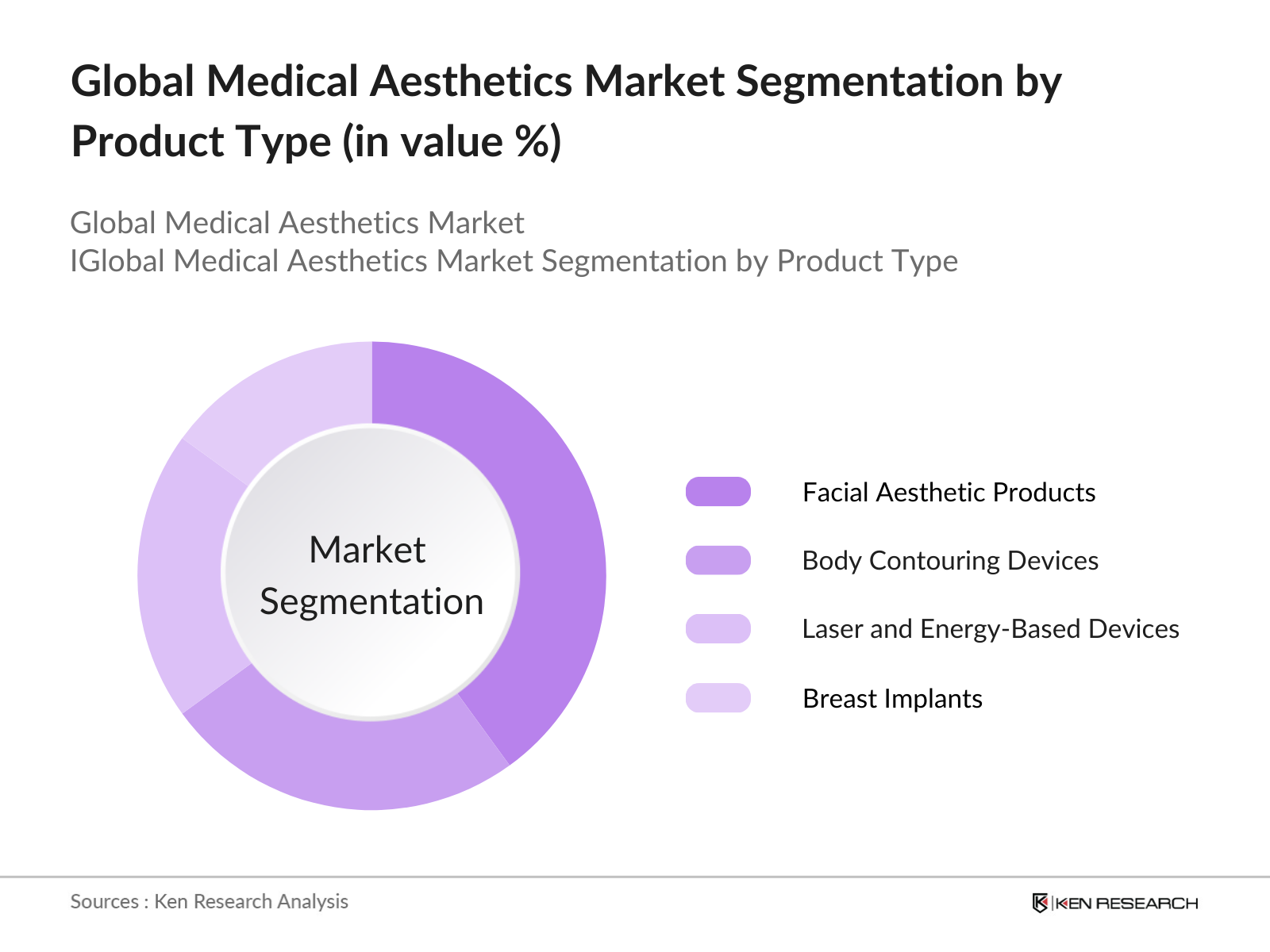
By Product Type: The global medical aesthetics market is segmented by product type into facial aesthetic products, body contouring devices, laser and energy-based devices, and breast implants. Facial aesthetic products, including dermal fillers and botulinum toxin, hold the dominant market share due to their widespread use in non-surgical procedures for wrinkle reduction and volume restoration. The non-invasive nature of these treatments and the growing demand for anti-aging solutions contribute to the significant market share of facial aesthetic products. In addition, increasing awareness about facial rejuvenation options has driven the demand for these products globally.
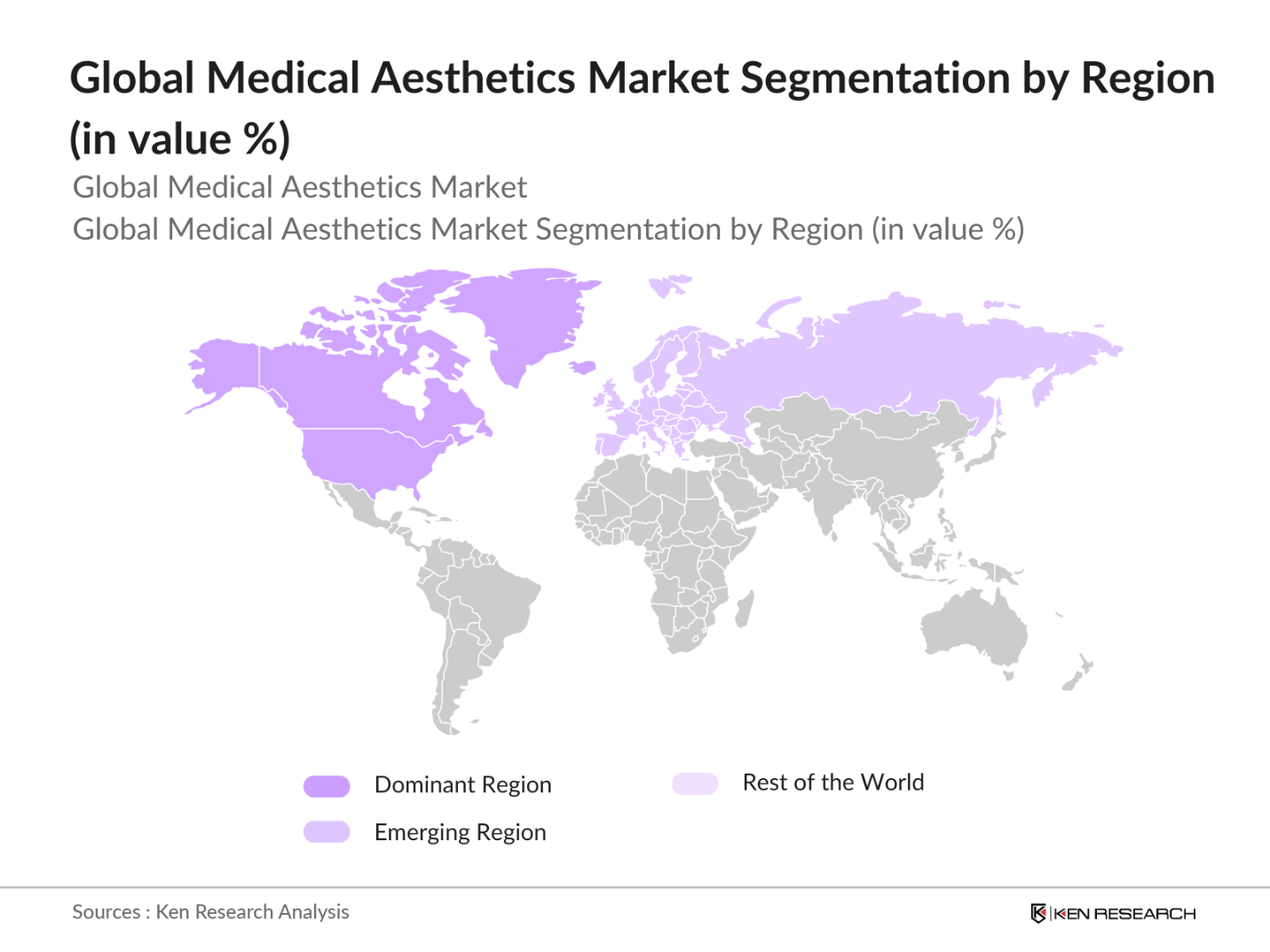
By Region: The global medical aesthetics market is segmented by region into North America, Europe, Asia-Pacific, the Middle East & Africa, and Latin America. North America holds the largest market share due to the high disposable income, increasing acceptance of aesthetic procedures, and the presence of leading market players. The strong regulatory framework in the U.S. and Canada also supports the growth of this segment. In the Asia-Pacific region, South Korea is a major hub for cosmetic treatments, driven by the popularity of beauty standards and a booming medical tourism industry.
The global medical aesthetics market is dominated by a few key players who have established strong product portfolios and innovation pipelines. Companies are focusing on mergers and acquisitions, product launches, and partnerships to maintain a competitive edge. The market's competitive landscape features both global giants and specialized companies. Companies such as Allergan and Galderma lead in facial aesthetic products, while Cynosure and Lumenis dominate in laser-based devices. This consolidation of power in the hands of a few players is due to their ability to innovate and meet the growing demand for non-invasive procedures.
|
Company Name |
Establishment Year |
Headquarters |
Revenue |
Number of Employees |
Products Offered |
Technological Specialization |
R&D Investments |
Geographical Reach |
Recent Developments |
|
Allergan |
1950 |
Ireland |
|||||||
|
Galderma |
1981 |
Switzerland |
|||||||
|
Cynosure |
1991 |
USA |
|||||||
|
Lumenis |
1966 |
Israel |
|||||||
|
Johnson & Johnson |
1886 |
USA |
Global Medical Aesthetics Market Growth Drivers
Global Medical Aesthetics Market Challenges
Over the next five years, the global medical aesthetics market is expected to witness significant growth, driven by advancements in non-invasive technologies, increasing consumer demand for anti-aging solutions, and a growing awareness of aesthetic treatments. The expansion into emerging markets, along with the introduction of more sophisticated and user-friendly devices, is set to bolster market growth. Furthermore, the rise in medical tourism, especially in countries like South Korea, Thailand, and Mexico, will present lucrative opportunities for key players to expand their market presence.
Market Opportunities:
|
By Product Type |
Facial Aesthetic Products Body Contouring Devices Laser and Energy-Based Devices Breast Implants Others (Hair Restoration, Vaginal Rejuvenation) |
|
By End-User |
Hospitals Dermatology Clinics Medical Spas Home Use |
|
By Application |
Skin Resurfacing and Tightening Hair Removal Fat Reduction and Body Contouring Tattoo Removal Others |
|
By Technology |
Laser-based Radiofrequency-based Ultrasound-based Injectable-based |
|
By Region |
North America Europe Asia-Pacific Middle East & Africa Latin America |
1.1 Definition and Scope
1.2 Market Taxonomy
1.3 Market Growth Rate
1.4 Market Segmentation Overview
2.1 Historical Market Size
2.2 Year-on-Year Growth Analysis
2.3 Key Market Developments and Milestones
3.1 Growth Drivers (Aging Population, Rising Demand for Minimally Invasive Procedures, Increased Awareness of Aesthetic Procedures, Technological Advancements)
3.2 Market Challenges (High Costs, Regulatory Hurdles, Lack of Skilled Professionals)
3.3 Opportunities (Expansion into Emerging Markets, Product Innovations, Partnerships with Dermatology Clinics)
3.4 Trends (Integration of AI in Aesthetic Procedures, Popularity of Non-Invasive Treatments, Increasing Male Participation in Aesthetic Treatments)
3.5 Government Regulations (FDA Approvals, Medical Device Compliance, Regional Regulatory Standards)
3.6 SWOT Analysis
3.7 Value Chain Ecosystem
3.8 Porters Five Forces Analysis
3.9 Competition Ecosystem
4.1 By Product Type (In Value %)
4.1.1 Facial Aesthetic Products (Dermal Fillers, Botulinum Toxin, Chemical Peels)
4.1.2 Body Contouring Devices (Cryolipolysis, Liposuction Devices)
4.1.3 Laser and Energy-Based Devices (Laser Hair Removal, Skin Resurfacing, Tattoo Removal)
4.1.4 Breast Implants
4.1.5 Others (Hair Restoration, Vaginal Rejuvenation)
4.2 By End-User (In Value %)
4.2.1 Hospitals
4.2.2 Dermatology Clinics
4.2.3 Medical Spas
4.2.4 Home Use
4.3 By Application (In Value %)
4.3.1 Skin Resurfacing and Tightening
4.3.2 Hair Removal
4.3.3 Fat Reduction and Body Contouring
4.3.4 Tattoo Removal
4.3.5 Others
4.4 By Technology (In Value %)
4.4.1 Laser-based
4.4.2 Radiofrequency-based
4.4.3 Ultrasound-based
4.4.4 Injectable-based
4.5 By Region (In Value %)
4.5.1 North America
4.5.2 Europe
4.5.3 Asia-Pacific
4.5.4 Middle East & Africa
4.5.5 Latin America
5.1 Detailed Profiles of Major Companies
5.1.1 Allergan
5.1.2 Galderma
5.1.3 Merz Pharmaceuticals
5.1.4 Syneron Candela
5.1.5 Hologic Inc. (Cynosure)
5.1.6 Johnson & Johnson
5.1.7 Lumenis
5.1.8 Solta Medical
5.1.9 Cutera Inc.
5.1.10 Alma Lasers
5.1.11 Sientra
5.1.12 Revance Therapeutics
5.1.13 Venus Concept
5.1.14 Sciton Inc.
5.1.15 Sinclair Pharma
5.2 Cross Comparison Parameters (Revenue, Number of Aesthetic Products, Geographical Reach, R&D Investments, Employee Strength, Technology Specialization, Key Innovations, Acquisition Activity)
5.3 Market Share Analysis
5.4 Strategic Initiatives
5.5 Mergers and Acquisitions
5.6 Investment Analysis
5.7 Venture Capital Funding
5.8 Government Grants
5.9 Private Equity Investments
6.1 Medical Device Regulations
6.2 Compliance Requirements for Aesthetic Devices
6.3 Certification and Quality Standards
7.1 Future Market Size Projections
7.2 Key Factors Driving Future Market Growth
8.1 By Product Type (In Value %)
8.2 By End-User (In Value %)
8.3 By Application (In Value %)
8.4 By Technology (In Value %)
8.5 By Region (In Value %)
9.1 Total Addressable Market (TAM) / Serviceable Available Market (SAM) / Serviceable Obtainable Market (SOM) Analysis
9.2 Customer Cohort Analysis
9.3 Marketing Initiatives
9.4 White Space Opportunity Analysis
Disclaimer Contact UsThis stage involves mapping out the key stakeholders in the global medical aesthetics market. Through extensive desk research and secondary data from proprietary databases, we establish the ecosystem dynamics, identifying critical variables such as consumer trends, technological advancements, and regulatory influences.
We analyze historical data to assess market penetration and revenue generation for various medical aesthetic products and services. This phase includes evaluating the adoption rate of minimally invasive procedures and consumer preferences for non-surgical treatments.
Industry-specific hypotheses are validated through direct consultations with experts in the medical aesthetics field. These consultations, conducted via structured interviews, provide critical insights into market trends, growth drivers, and challenges.
We synthesize data collected from both primary and secondary research, incorporating the feedback from industry experts. This ensures that the final report is comprehensive and provides accurate, data-backed insights into the market landscape.
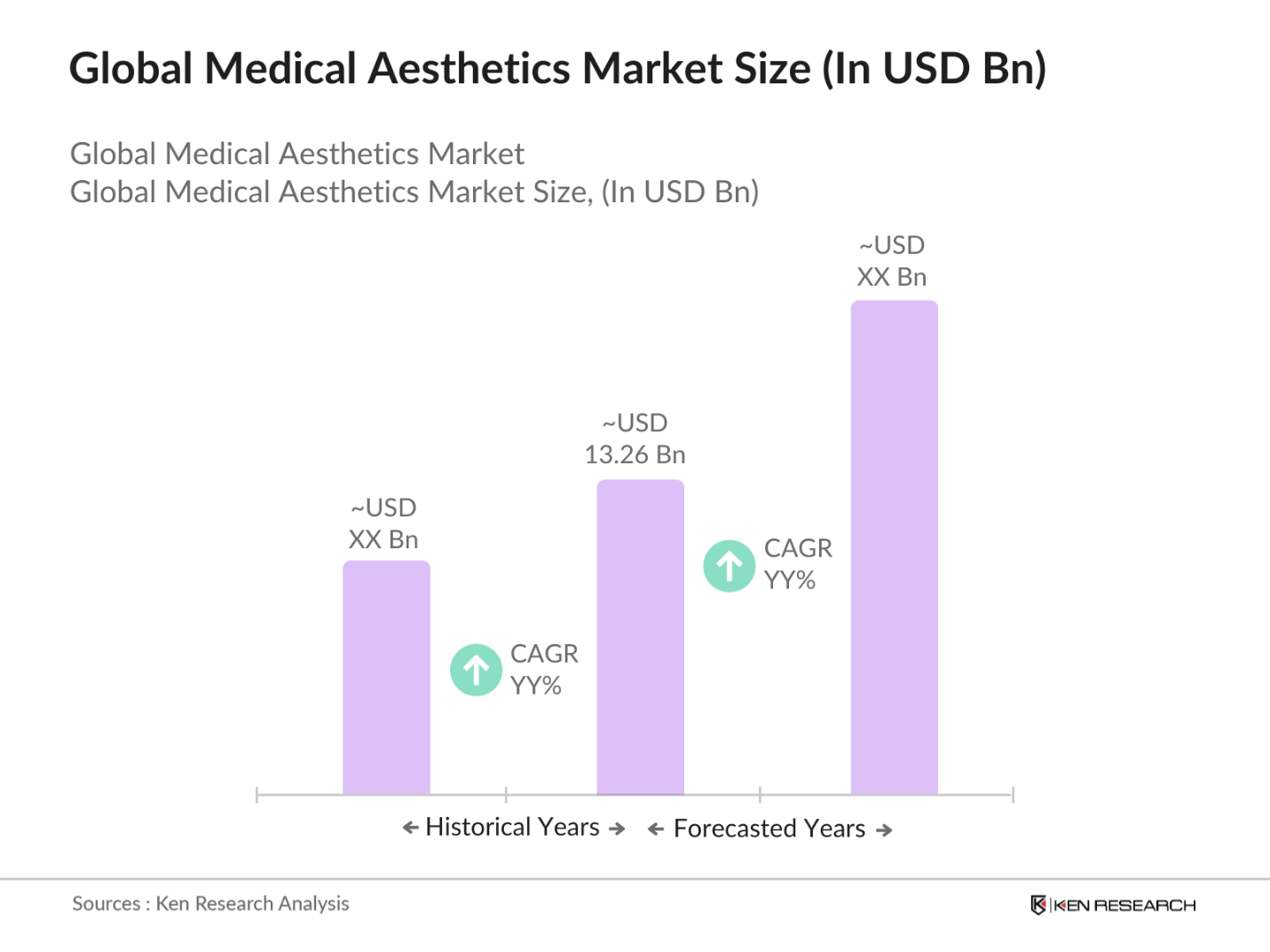
The global medical aesthetics market is valued at USD 13.26 billion, driven by increasing demand for non-invasive treatments and the rising aging population.
Challenges include the high cost of aesthetic treatments, regulatory hurdles, and the need for highly skilled professionals to perform these procedures.
Key players include Allergan, Galderma, Merz Pharmaceuticals, Syneron Candela, and Hologic Inc. (Cynosure), among others, dominating due to their advanced products and strong global presence.
Growth is driven by advancements in non-invasive technologies, increasing consumer awareness about aesthetic treatments, and the rise in medical tourism, particularly in Asia-Pacific.

What makes us stand out is that our consultants follows Robust, Refine and Result (RRR) methodology. i.e. Robust for clear definitions, approaches and sanity checking, Refine for differentiating respondents facts and opinions and Result for presenting data with story

We have set a benchmark in the industry by offering our clients with syndicated and customized market research reports featuring coverage of entire market as well as meticulous research and analyst insights.

While we don't replace traditional research, we flip the method upside down. Our dual approach of Top Bottom & Bottom Top ensures quality deliverable by not just verifying company fundamentals but also looking at the sector and macroeconomic factors.

With one step in the future, our research team constantly tries to show you the bigger picture. We help with some of the tough questions you may encounter along the way: How is the industry positioned? Best marketing channel? KPI's of competitors? By aligning every element, we help maximize success.

Our report gives you instant access to the answers and sources that other companies might choose to hide. We elaborate each steps of research methodology we have used and showcase you the sample size to earn your trust.

If you need any support, we are here! We pride ourselves on universe strength, data quality, and quick, friendly, and professional service.