















Global Medical Clothing Market
Region:Global
Author(s):Paribhasha Tiwari
Product Code:KROD10937
December 2024
87
About the Report
Global Medical Clothing Market Overview
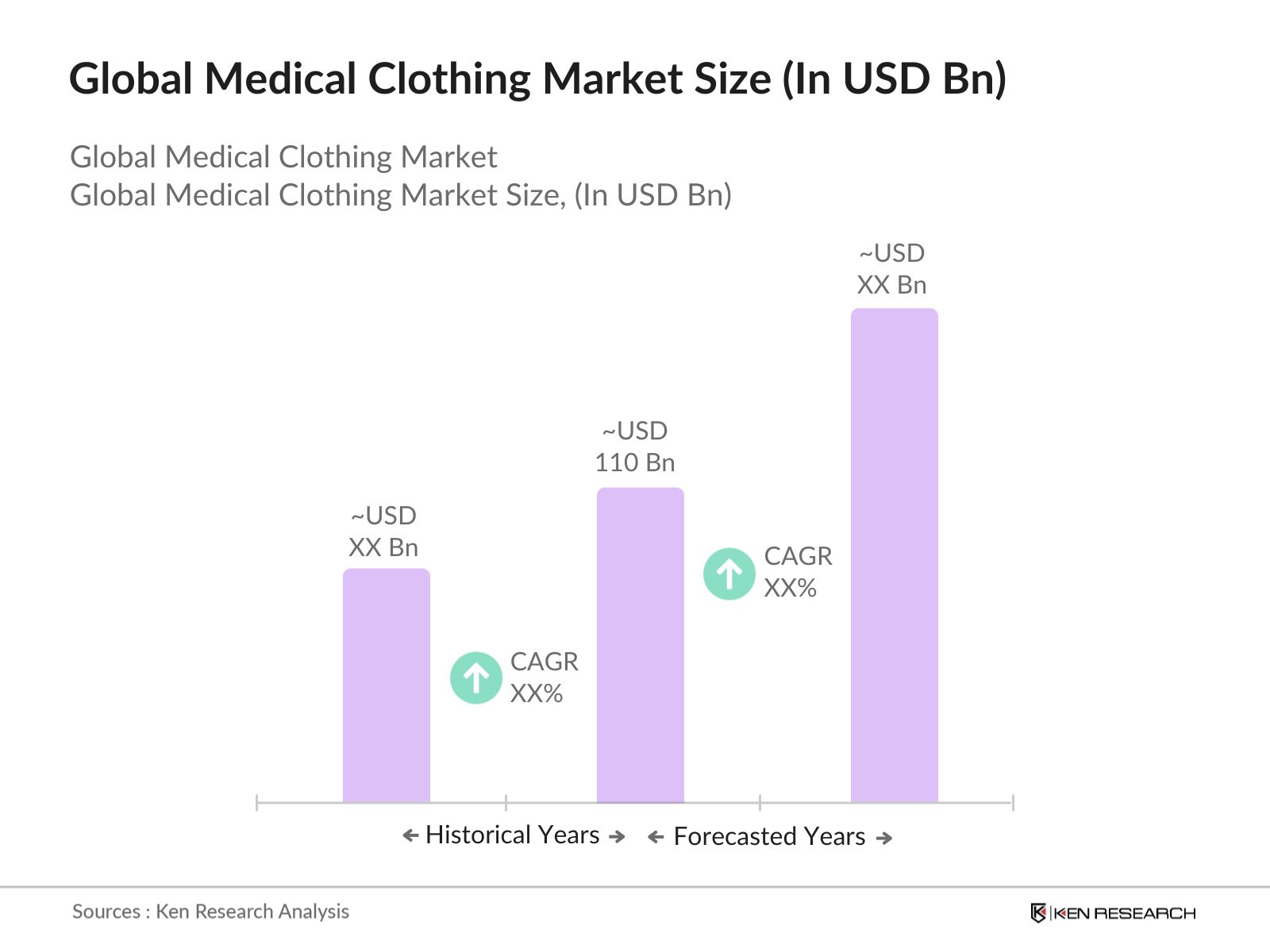
- The global medical clothing market is valued at USD 110 billion, driven by the increasing adoption of advanced healthcare infrastructure and a rising demand for safe, high-quality personal protective equipment. Influences such as a focus on infection control and sustainable materials further enhance growth in the medical apparel segment, especially within hospital settings and healthcare services that prioritize hygiene and durability.
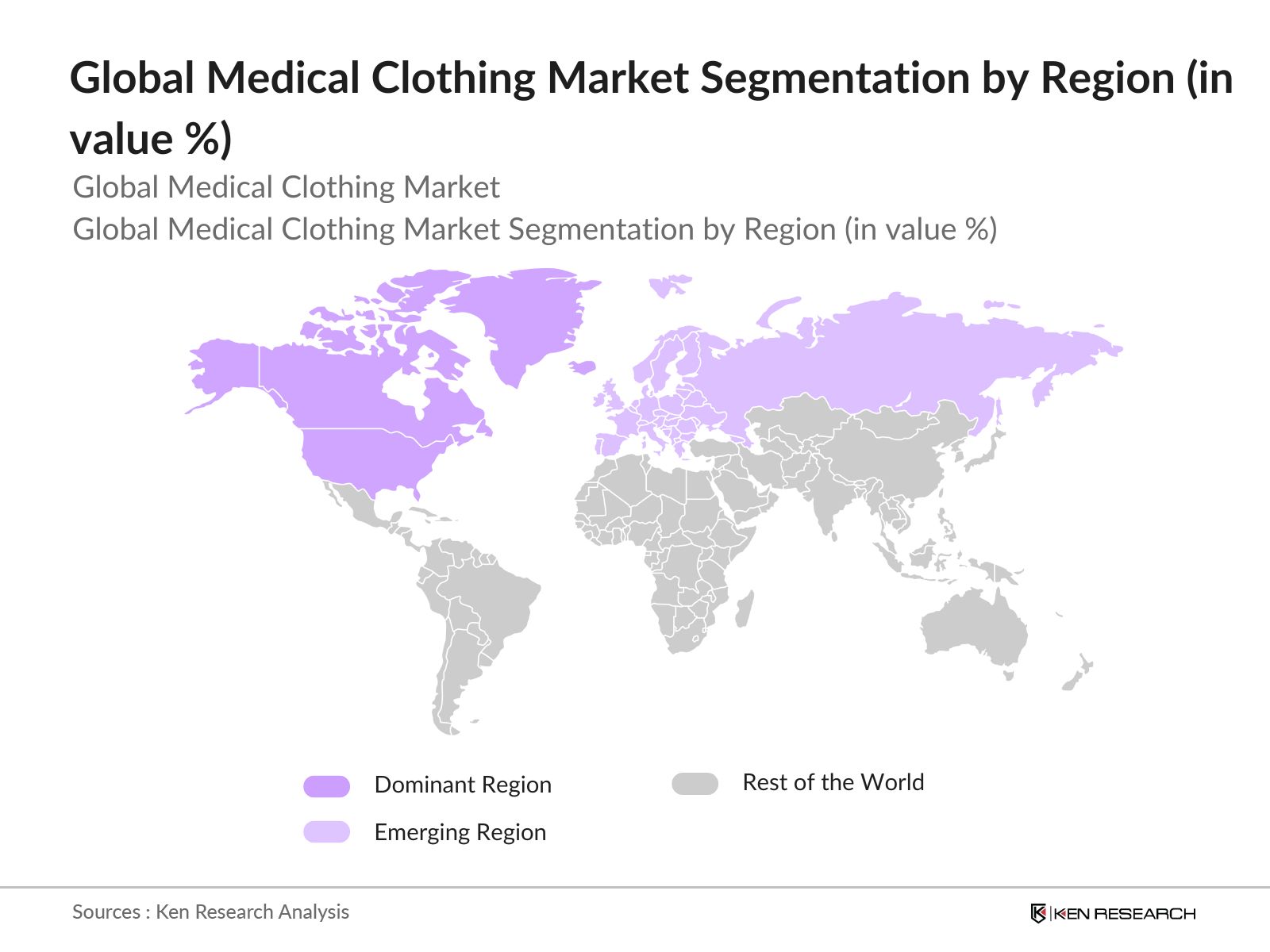
- North America and Europe lead in the global medical clothing market due to their established healthcare sectors, stringent regulatory standards, and a high focus on patient care and safety. Additionally, the presence of key manufacturers and strong distribution networks in these regions solidifies their dominant position, supporting high demand across healthcare facilities and specialty clinics.
Global Medical Clothing Market Segmentation
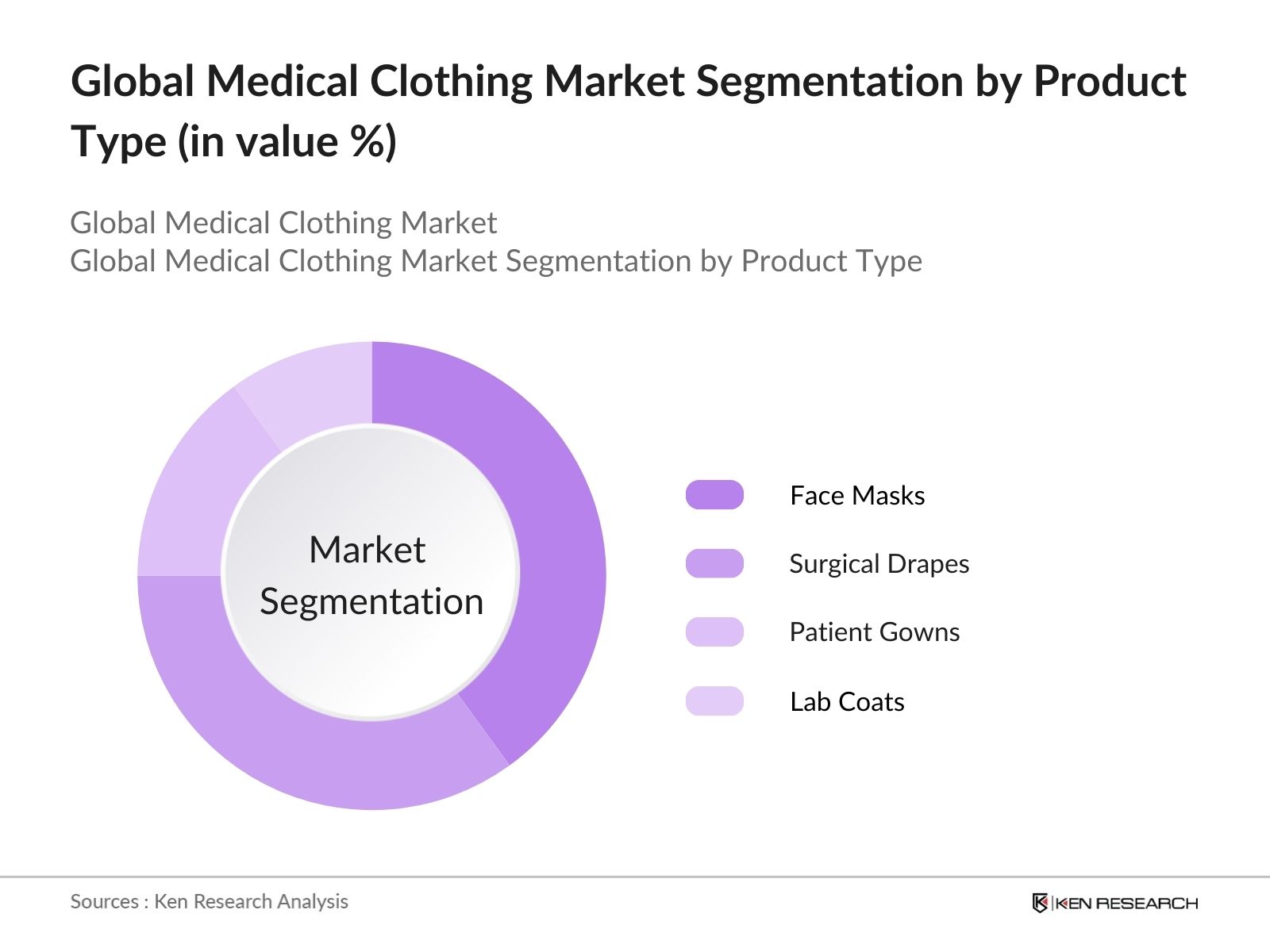
By Product Type: The global medical clothing market is segmented by product type into surgical drapes, patient gowns, lab coats, and face masks. Among these, face masks hold a dominant market share owing to their universal application across healthcare settings and public spaces. Increased health awareness and policies mandating mask usage further bolster this segment's presence, especially post-pandemic, as health institutions and consumers alike prioritize readily available protective gear.
By Material: The market segmentation by material includes cotton, polypropylene, polyester, and polyethylene. Cotton-based materials dominate due to their breathable, reusable, and environmentally friendly characteristics, making them preferable in both surgical and outpatient settings. The comfort offered by cotton appeals to medical personnel who require both durability and convenience in high-stress environments, reinforcing this segment's leading position.
By Region: The global market segmentation by region includes North America, Europe, Asia Pacific, Latin America, and the Middle East & Africa. North America dominates the regional landscape, supported by its robust healthcare infrastructure and high demand for advanced medical textiles, with the U.S. taking the lead. Factors like technological advancements and compliance with stringent healthcare standards further strengthen this region's market share.
Global Medical Clothing Market Competitive Landscape
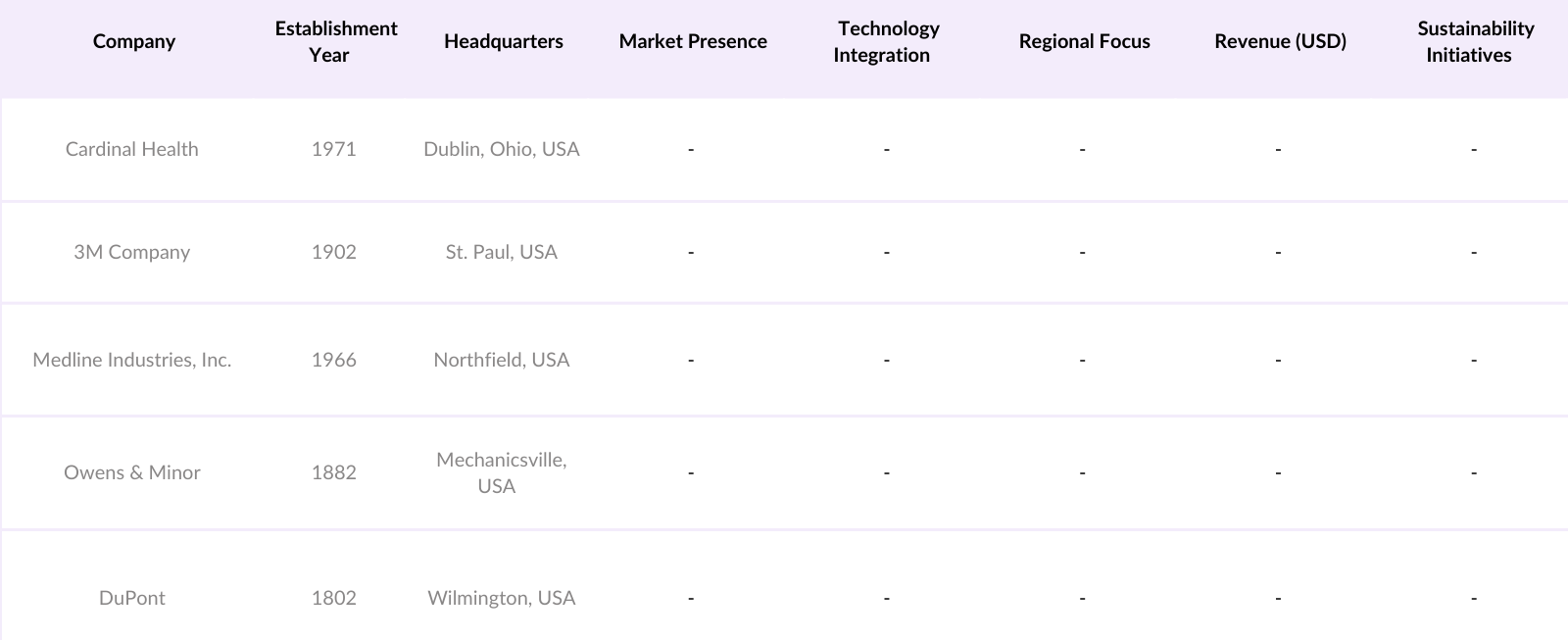
The global medical clothing market features key players who maintain a stronghold through extensive R&D, advanced production capabilities, and a focus on high-quality and sustainable products.
Global Medical Clothing Market Analysis
Growth Drivers
- Healthcare Infrastructure Development: The development of advanced healthcare facilities worldwide has led to a higher demand for quality medical clothing to ensure safety in medical procedures and patient care. According to the World Bank, global healthcare expenditure reached an estimated USD 9 trillion in 2024, which has accelerated investments in hospitals and healthcare centers. This increase has led to heightened demand for durable and high-standard medical clothing, particularly in regions with expanding healthcare infrastructure, such as the Asia Pacific and Middle East regions.
- Rise in Infectious Diseases: The prevalence of infectious diseases, such as COVID-19, and new viruses has significantly heightened the need for protective medical clothing, with healthcare professionals now relying more on antimicrobial and disposable materials for everyday safety. In 2024, the World Health Organization noted a sharp rise in infectious disease cases across urban areas, where infectious disease rates have pressured healthcare facilities to adopt higher standards of hygiene, thus driving the market for medical clothing.
- Aging Population: As populations age, especially in countries like Japan, Germany, and Italy, the demand for healthcare services continues to expand, increasing the consumption of medical clothing. The United Nations reports that over 1.4 billion people were aged 60 and above globally in 2024, translating to more frequent hospital visits, surgeries, and treatment sessions, necessitating a continual supply of high-quality medical garments.
Market Challenges
- Cost and Reusability Issues: Medical clothing, particularly high-grade disposable items, can be costly for healthcare providers, creating a financial challenge, especially in resource-constrained hospitals and clinics. For instance, specialized gowns and masks are priced between USD 5 to USD 25 per unit, with disposable options adding to operational costs in high-usage settings like hospitals in developing regions.
- Raw Material Sourcing Constraints: The reliance on specific materials, such as polypropylene and polyester, often sourced from limited suppliers, poses a significant challenge. The 2024 report from the European Chemicals Agency highlighted disruptions in the supply chain for these materials, resulting in delays and increased production costs in medical clothing.
Global Medical Clothing Market Future Outlook
The global medical clothing market is set for robust growth over the next five years, propelled by the increasing demand for infection control measures, innovation in fabric technology, and a rising awareness of sustainable materials. Additionally, enhanced regulatory standards and healthcare investments will drive the market as more regions embrace advanced protective medical apparel.
Opportunities
- Technological Advancements in Fabric: Innovative fabrics with antimicrobial and liquid-resistant properties have created opportunities for companies to develop premium, long-lasting products. With fabric development investments reaching an estimated USD 500 million globally in 2024, as noted by textile industry associations, medical clothing manufacturers can now deliver more durable and safer options for healthcare professionals.
- Emerging Markets and Untapped Regions: Emerging markets, including Southeast Asia and Africa, are witnessing a boom in healthcare infrastructure, offering lucrative opportunities for medical clothing suppliers. In 2024, government-backed healthcare projects in India and Kenya created significant demand, with apparel imports for medical use valued over USD 300 million in these regions.
Scope of the Report
|
Segment |
Sub-Segments |
|---|---|
|
Product Type |
Surgical Drapes Patient Gowns Surgical Scrubs Lab Coats Face Masks |
|
Material |
Cotton Polypropylene Polyester Polyethylene |
|
Usage |
Disposable Reusable |
|
End-User |
Hospitals Ambulatory Surgical Centers Clinics Long-Term Care Facilities |
|
Region |
North America Europe Asia Pacific Latin America Middle East & Africa |
Products
Key Target Audience
Hospitals and Healthcare Facilities
Ambulatory Surgical Centers
Long-term Care Facilities
Distributors and Wholesalers
Government and Regulatory Bodies (e.g., U.S. FDA, European Medicines Agency)
Textile Manufacturers
Investors and Venture Capitalist Firms
Healthcare Associations and Bodies
Companies
Players Mentioned in the Report:
Cardinal Health
3M Company
Medline Industries, Inc.
Owens & Minor
DuPont
Kimberly-Clark Corporation
Molnlycke Health Care AB
Ansell Healthcare
Superior Uniform Group, Inc.
Lakeland Industries
Table of Contents
1. Global Medical Clothing Market Overview
1.1. Definition and Scope
1.2. Market Taxonomy
1.3. Market Growth Rate
1.4. Market Segmentation Overview
2. Global Medical Clothing Market Size (In USD Billion)
2.1. Historical Market Size
2.2. Year-on-Year Growth Analysis
2.3. Key Market Developments and Milestones
3. Global Medical Clothing Market Analysis
3.1. Growth Drivers
3.1.1. Healthcare Infrastructure Development
3.1.2. Rise in Infectious Diseases
3.1.3. Aging Population
3.1.4. Increasing Focus on Hygiene and Safety Standards
3.2. Market Challenges
3.2.1. Cost and Reusability Issues
3.2.2. Raw Material Sourcing Constraints
3.2.3. Environmental Concerns in Production and Disposal
3.3. Opportunities
3.3.1. Technological Advancements in Fabric
3.3.2. Emerging Markets and Untapped Regions
3.3.3. Increasing R&D in Antimicrobial Textiles
3.4. Trends
3.4.1. Adoption of Sustainable Materials
3.4.2. Customization and Design Innovation
3.4.3. Use of Wearable Technology Integration
3.5. Regulatory Standards and Compliance
3.5.1. FDA Regulations (US)
3.5.2. CE Marking (Europe)
3.5.3. ISO Certifications (Global)
3.5.4. PPE Standards and Guidelines
3.6. SWOT Analysis
3.7. Stakeholder Ecosystem
3.8. Porters Five Forces
3.9. Competition Ecosystem
4. Global Medical Clothing Market Segmentation
4.1. By Product Type (In Value %)
4.1.1. Surgical Drapes
4.1.2. Patient Gowns
4.1.3. Surgical Scrubs
4.1.4. Lab Coats
4.1.5. Face Masks
4.2. By Material (In Value %)
4.2.1. Cotton
4.2.2. Polypropylene
4.2.3. Polyester
4.2.4. Polyethylene
4.3. By Usage (In Value %)
4.3.1. Disposable
4.3.2. Reusable
4.4. By End-User (In Value %)
4.4.1. Hospitals
4.4.2. Ambulatory Surgical Centers
4.4.3. Clinics
4.4.4. Long-Term Care Facilities
4.5. By Region (In Value %)
4.5.1. North America
4.5.2. Europe
4.5.3. Asia Pacific
4.5.4. Latin America
4.5.5. Middle East & Africa
5. Global Medical Clothing Market Competitive Analysis
5.1. Detailed Profiles of Major Companies
5.1.1. Cardinal Health
5.1.2. 3M Company
5.1.3. Medline Industries, Inc.
5.1.4. Owens & Minor
5.1.5. DuPont
5.1.6. Kimberly-Clark Corporation
5.1.7. Molnlycke Health Care AB
5.1.8. Ansell Healthcare
5.1.9. Superior Uniform Group, Inc.
5.1.10. Kossan Rubber Industries Bhd
5.1.11. Cintas Corporation
5.1.12. Lakeland Industries
5.1.13. Landau Uniforms
5.1.14. Barco Uniforms
5.1.15. Vestagen Protective Technologies
5.2. Cross Comparison Parameters (Revenue, Headquarters, Market Reach, Production Capacity, Specialization, R&D Investments, Product Range, Sustainability Initiatives)
5.3. Market Share Analysis
5.4. Strategic Initiatives
5.5. Mergers and Acquisitions
5.6. Investment Analysis
5.7. Joint Ventures and Partnerships
5.8. Government Funding and Grants
5.9. Private Equity and Venture Capital Investments
6. Global Medical Clothing Market Regulatory Framework
6.1. Industry Standards
6.2. Compliance and Certification Requirements
6.3. Healthcare Industry Guidelines
6.4. Product Quality and Testing Standards
7. Global Medical Clothing Future Market Size (In USD Billion)
7.1. Future Market Size Projections
7.2. Key Factors Influencing Future Growth
8. Global Medical Clothing Future Market Segmentation
8.1. By Product Type (In Value %)
8.2. By Material (In Value %)
8.3. By Usage (In Value %)
8.4. By End-User (In Value %)
8.5. By Region (In Value %)
9. Global Medical Clothing Market Analysts Recommendations
9.1. Total Addressable Market (TAM)/Serviceable Available Market (SAM)/Serviceable Obtainable Market (SOM) Analysis
9.2. Customer Segment Analysis
9.3. Strategic Marketing Insights
9.4. White Space and Opportunity Mapping
Disclaimer Contact UsResearch Methodology
Step 1: Identification of Key Variables
In this initial phase, we mapped all key stakeholders within the global medical clothing ecosystem, with extensive research from proprietary databases, identifying factors affecting market size, demand drivers, and constraints.
Step 2: Market Analysis and Construction
This step involved historical data assessment on market penetration, production capacities, and pricing trends to calculate revenue and market shares accurately.
Step 3: Hypothesis Validation and Expert Consultation
Using CATIs and in-depth interviews with industry professionals, we validated key insights about fabric innovations, sustainability trends, and regulatory impact.
Step 4: Research Synthesis and Final Output
The final analysis involved data consolidation from bottom-up and top-down approaches to produce a detailed report on market dynamics, highlighting growth opportunities and challenges.
Frequently Asked Questions
1. How big is the Global Medical Clothing Market?
The global medical clothing market is valued at USD X billion, driven by healthcare infrastructure development and rising infection control needs.
2. What are the key challenges in the Global Medical Clothing Market?
Challenges include high production costs, raw material shortages, and strict regulatory requirements, which affect operational efficiency.
3. Who are the major players in the Global Medical Clothing Market?
Key players include Cardinal Health, 3M Company, Medline Industries, Inc., and Owens & Minor, driven by robust distribution networks and innovation.
4. What drives growth in the Global Medical Clothing Market?
The market is propelled by advancements in textile technology, the need for infection control, and sustainable material demand, enhancing product adoption globally.
Why Buy From Us?

What makes us stand out is that our consultants follows Robust, Refine and Result (RRR) methodology. i.e. Robust for clear definitions, approaches and sanity checking, Refine for differentiating respondents facts and opinions and Result for presenting data with story

We have set a benchmark in the industry by offering our clients with syndicated and customized market research reports featuring coverage of entire market as well as meticulous research and analyst insights.

While we don't replace traditional research, we flip the method upside down. Our dual approach of Top Bottom & Bottom Top ensures quality deliverable by not just verifying company fundamentals but also looking at the sector and macroeconomic factors.

With one step in the future, our research team constantly tries to show you the bigger picture. We help with some of the tough questions you may encounter along the way: How is the industry positioned? Best marketing channel? KPI's of competitors? By aligning every element, we help maximize success.

Our report gives you instant access to the answers and sources that other companies might choose to hide. We elaborate each steps of research methodology we have used and showcase you the sample size to earn your trust.

If you need any support, we are here! We pride ourselves on universe strength, data quality, and quick, friendly, and professional service.