
Global Medical Devices Market Outlook to 2030
Region:Global
Author(s):Mukul
Product Code:KROD10866
Region:Global
Author(s):Mukul
Product Code:KROD10866
December 2024
112
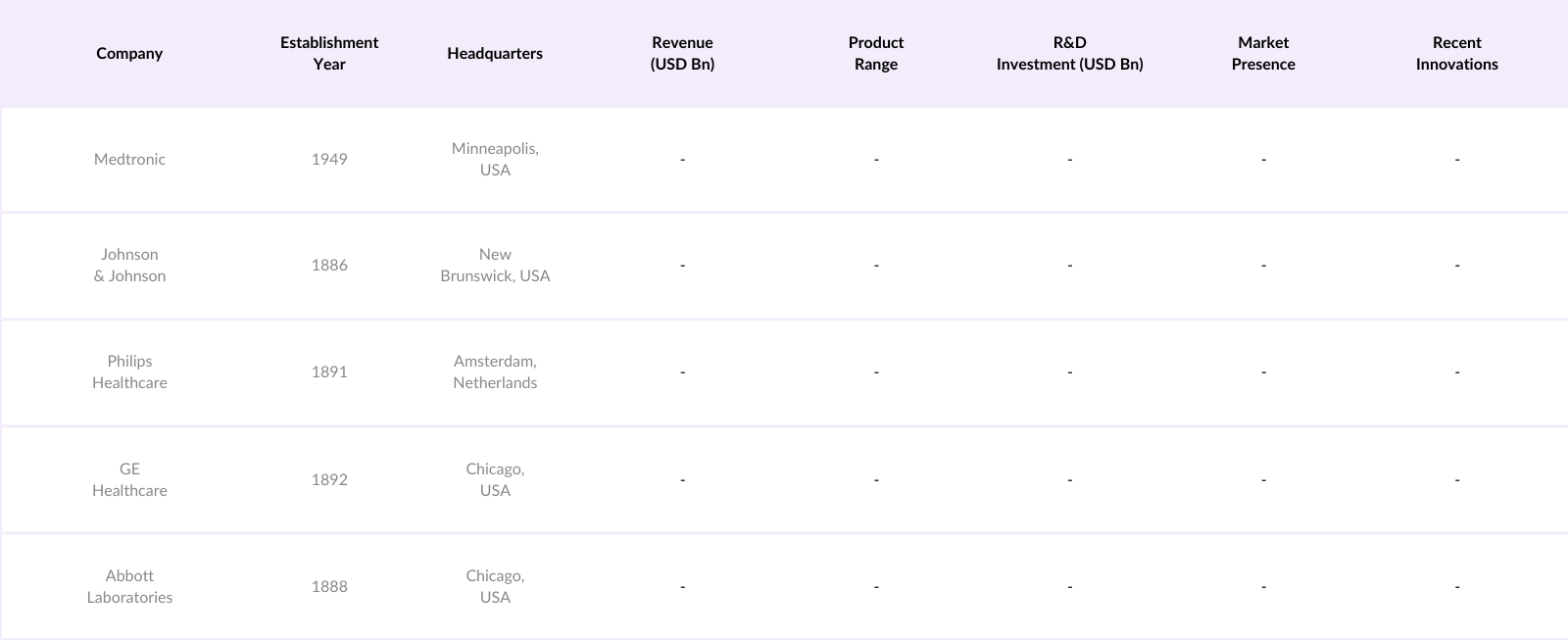
The Global Medical Devices Market is led by a few dominant players that leverage innovation and strong distribution networks to maintain their market positions. Notable companies include Medtronic, Johnson & Johnson, and Philips Healthcare. These firms invest significantly in R&D and expand through strategic partnerships and acquisitions to increase market presence.
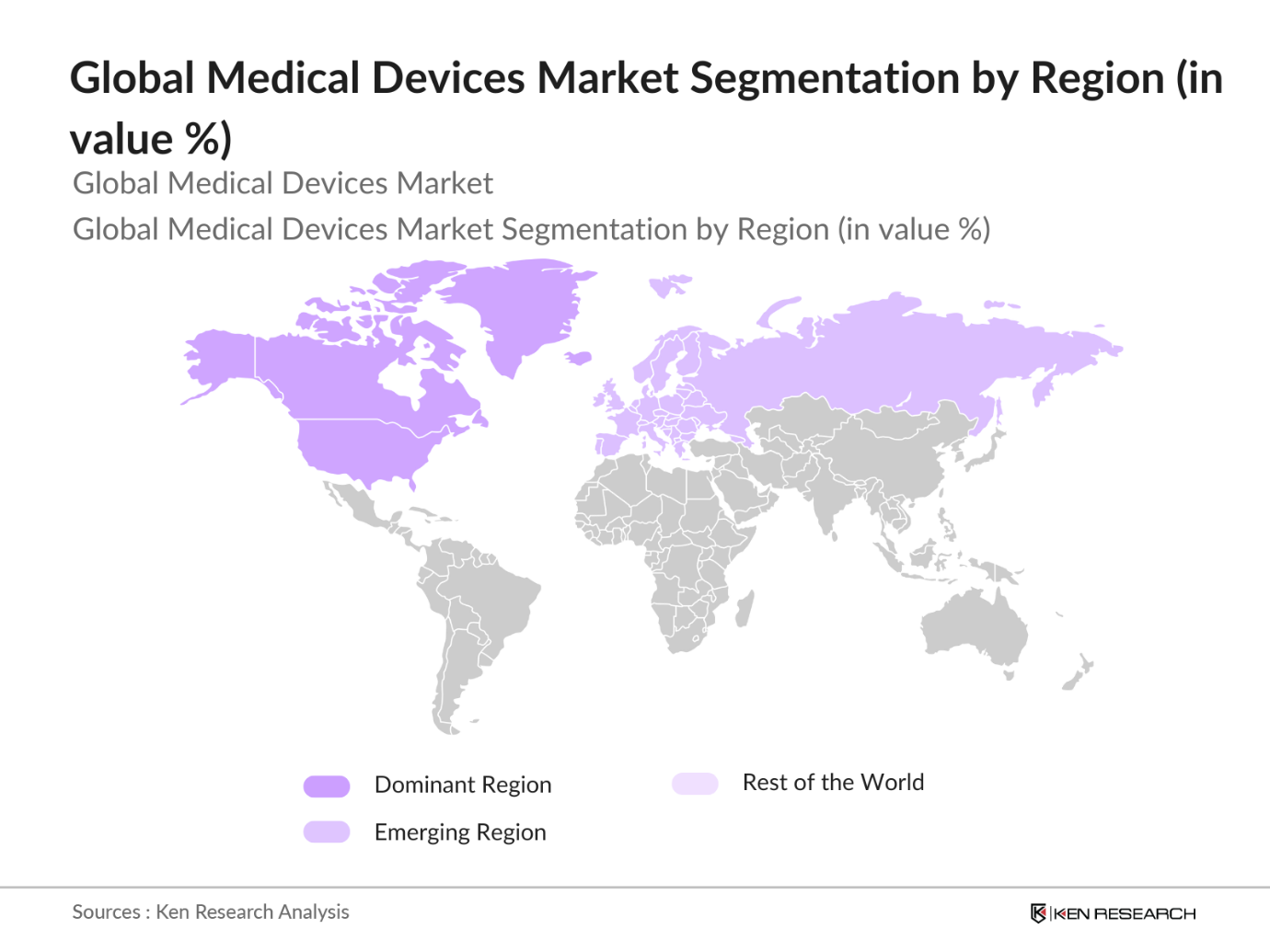
The Global Medical Devices Market is expected to experience substantial growth over the next five years, driven by advancements in medical technology, increasing demand for portable and minimally invasive devices, and a rise in home healthcare services. Growing investments in wearable technology and artificial intelligence applications are anticipated to fuel market expansion, providing better diagnostics, treatment monitoring, and patient outcomes. Furthermore, emerging markets like Asia-Pacific present lucrative opportunities for growth due to rising healthcare expenditures and improved access to healthcare.
|
Device Type |
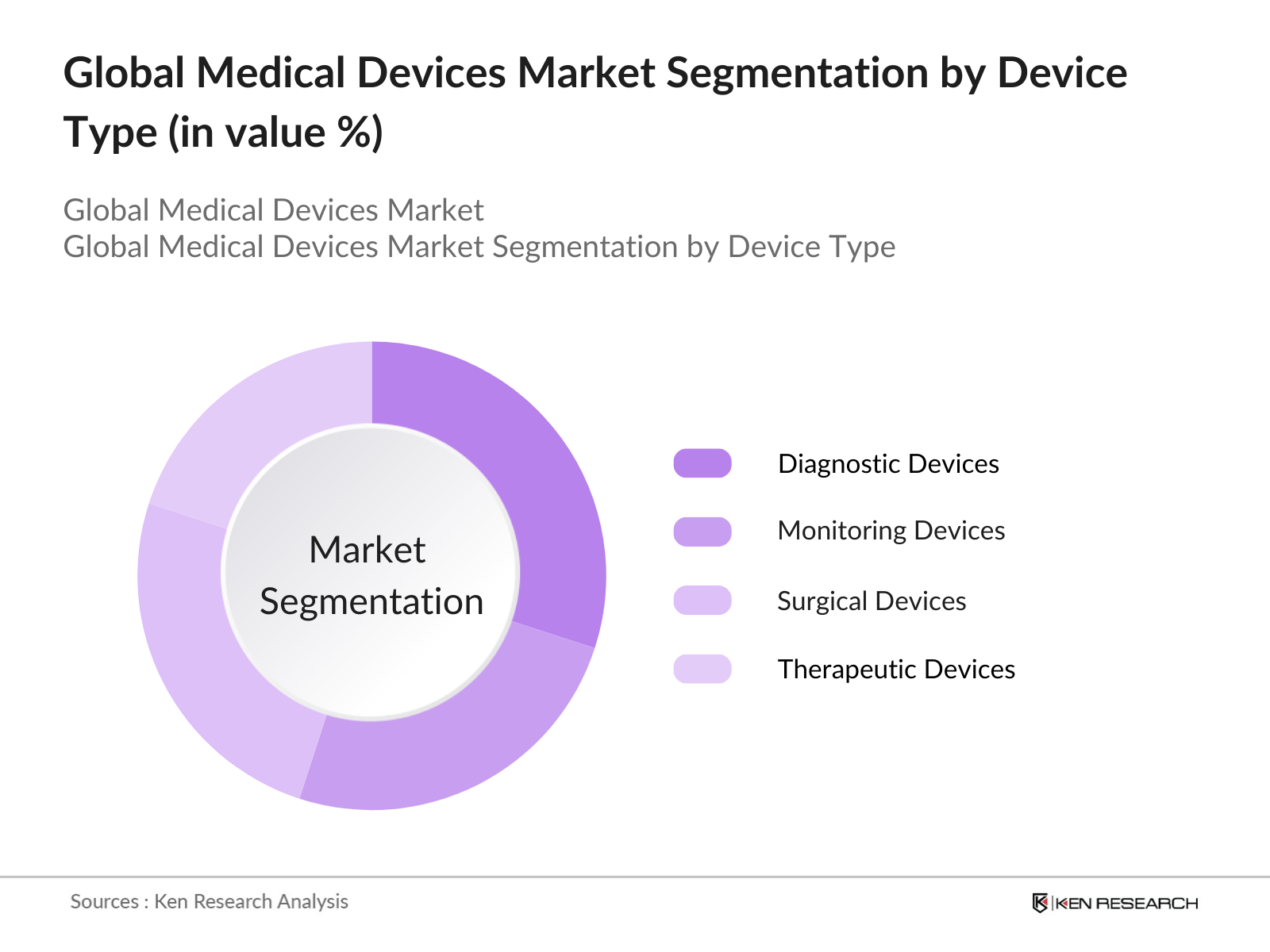
Diagnostic Devices Monitoring Devices Therapeutic Devices Surgical Devices Others |
|
Application |
Cardiovascular Orthopedic Neurology Respiratory Others |
|
End User |
Hospitals and Clinics Home Healthcare Ambulatory Surgical Centers |
|
Technology |
Portable Medical Devices Implantable Medical Devices Wearable Medical Devices |
|
Region |
North America Europe Asia-Pacific Latin America Middle East & Africa |
1.1. Definition and Scope
1.2. Market Taxonomy
1.3. Market Dynamics Overview
1.4. Market Segmentation Overview
2.1. Historical Market Size (In USD Billion)
2.2. Year-On-Year Growth Analysis
2.3. Key Market Milestones
2.4. Market Size Breakdown by Device Category
3.1. Growth Drivers
3.1.1. Aging Population and Chronic Diseases
3.1.2. Technological Advancements
3.1.3. Rising Healthcare Expenditure
3.1.4. Favorable Government Regulations
3.2. Market Challenges
3.2.1. High R&D Costs
3.2.2. Regulatory Compliance
3.2.3. Complex Reimbursement Policies
3.3. Opportunities
3.3.1. Emerging Markets
3.3.2. Increasing Demand for Home Healthcare
3.3.3. Expansion in Minimally Invasive Technologies
3.4. Trends
3.4.1. Internet of Medical Things (IoMT)
3.4.2. AI Integration
3.4.3. Digital Health and Telemedicine
3.5. Regulatory Landscape
3.5.1. FDA Regulations
3.5.2. European CE Marking
3.5.3. China's NMPA Standards
3.6. Stakeholder Ecosystem
3.7. Porters Five Forces Analysis
3.8. Competitive Landscape Overview
4.1. By Device Type (In Value %)
4.1.1. Diagnostic Devices
4.1.2. Monitoring Devices
4.1.3. Therapeutic Devices
4.1.4. Surgical Devices
4.1.5. Others
4.2. By Application (In Value %)
4.2.1. Cardiovascular
4.2.2. Orthopedic
4.2.3. Neurology
4.2.4. Respiratory
4.2.5. Others
4.3. By End User (In Value %)
4.3.1. Hospitals and Clinics
4.3.2. Home Healthcare
4.3.3. Ambulatory Surgical Centers
4.4. By Technology (In Value %)
4.4.1. Portable Medical Devices
4.4.2. Implantable Medical Devices
4.4.3. Wearable Medical Devices
4.5. By Region (In Value %)
4.5.1. North America
4.5.2. Europe
4.5.3. Asia-Pacific
4.5.4. Latin America
4.5.5. Middle East & Africa
5.1. Detailed Profiles of Major Companies
5.1.1. Medtronic
5.1.2. Johnson & Johnson
5.1.3. Philips Healthcare
5.1.4. GE Healthcare
5.1.5. Siemens Healthineers
5.1.6. Abbott Laboratories
5.1.7. Stryker Corporation
5.1.8. Boston Scientific
5.1.9. Baxter International
5.1.10. B. Braun Melsungen
5.1.11. Olympus Corporation
5.1.12. Zimmer Biomet
5.1.13. Terumo Corporation
5.1.14. Smith & Nephew
5.1.15. 3M Healthcare
5.2. Cross Comparison Parameters (Number of Patents, Headquarters, Revenue, R&D Investments, Product Launch Frequency, Market Presence, Innovation Index, M&A Activity)
5.3. Market Share Analysis
5.4. Strategic Initiatives
5.5. Partnerships and Collaborations
5.6. Venture Capital Funding Analysis
6.1. Key Compliance Standards
6.2. Certification Processes
6.3. Global Harmonization Efforts
7.1. Future Market Size Projections
7.2. Key Drivers for Future Growth
8.1. Investment and R&D Prioritization
8.2. Entry Strategy for Emerging Markets
8.3. Key Target Segment Recommendations
8.4. Risk Mitigation in Regulatory Compliance
The initial phase involves creating an ecosystem map for stakeholders in the Global Medical Devices Market. This includes extensive desk research and use of secondary and proprietary databases to capture industry-level insights. Key variables affecting market dynamics are identified.
This step includes data compilation from historical records, assessing market penetration and device usage trends. An analysis of revenue generation from major sub-segments is conducted to ensure accuracy in estimating market size and growth.
Hypotheses developed for market trends and growth projections are validated through expert consultations, including interviews with representatives from leading device manufacturers and industry analysts. This step ensures reliable and nuanced market insights.
In the final phase, direct engagement with medical device manufacturers provides insights into product segmentations, sales performance, and consumer preferences. This enhances the accuracy and validity of market statistics and trends.
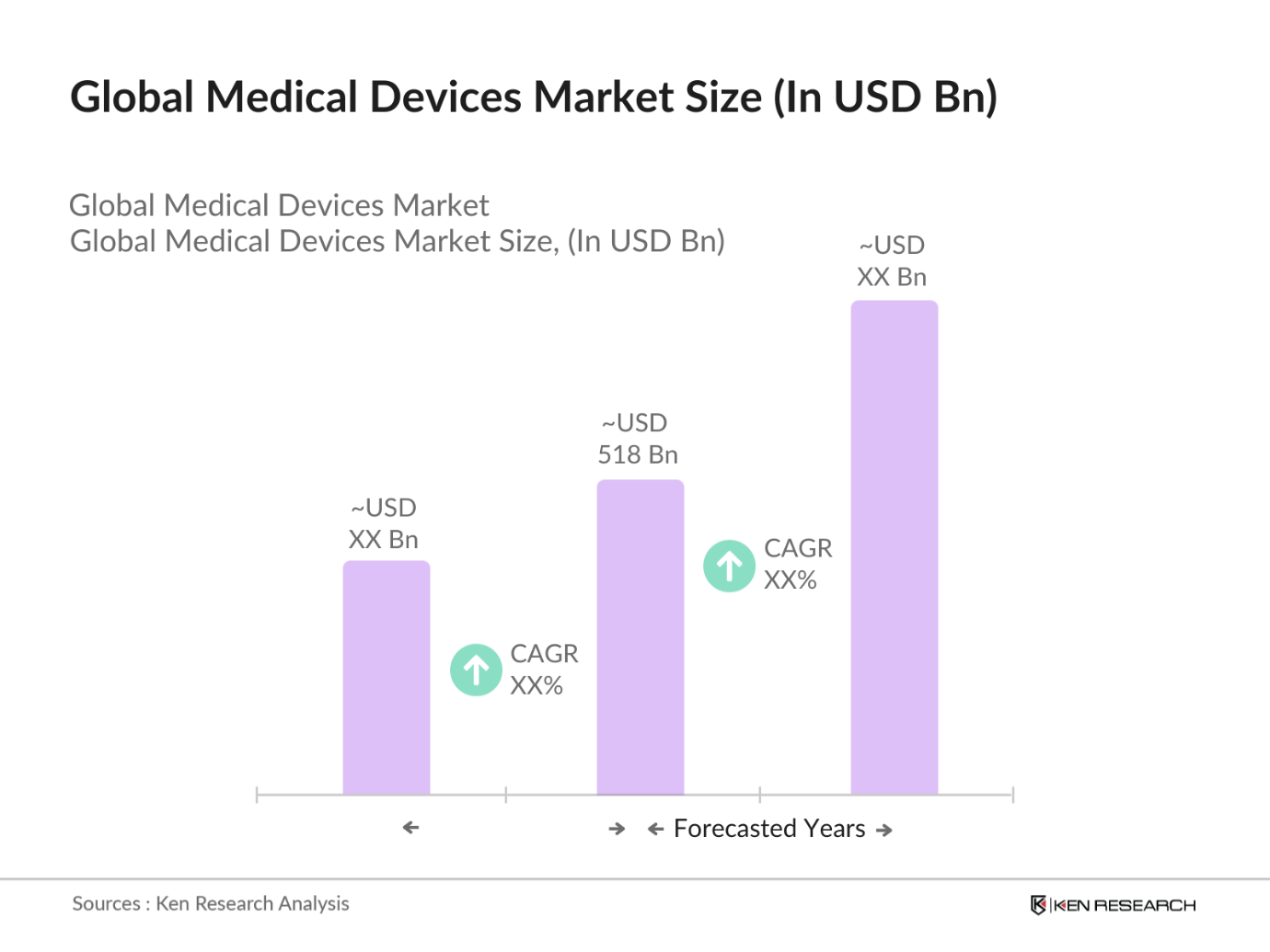
The Global Medical Devices Market is valued at USD 518 billion, driven by rapid technological advancements and increasing demand for efficient healthcare solutions worldwide.
Challenges include high R&D costs, stringent regulatory compliance requirements, and complex reimbursement processes, which can hinder market growth and innovation.
Key players include Medtronic, Johnson & Johnson, Philips Healthcare, GE Healthcare, and Abbott Laboratories, all of which have a strong global presence and broad product portfolios.
The market's growth is driven by an aging global population, increased prevalence of chronic diseases, technological innovations, and a demand for minimally invasive devices.

What makes us stand out is that our consultants follows Robust, Refine and Result (RRR) methodology. i.e. Robust for clear definitions, approaches and sanity checking, Refine for differentiating respondents facts and opinions and Result for presenting data with story

We have set a benchmark in the industry by offering our clients with syndicated and customized market research reports featuring coverage of entire market as well as meticulous research and analyst insights.

While we don't replace traditional research, we flip the method upside down. Our dual approach of Top Bottom & Bottom Top ensures quality deliverable by not just verifying company fundamentals but also looking at the sector and macroeconomic factors.

With one step in the future, our research team constantly tries to show you the bigger picture. We help with some of the tough questions you may encounter along the way: How is the industry positioned? Best marketing channel? KPI's of competitors? By aligning every element, we help maximize success.

Our report gives you instant access to the answers and sources that other companies might choose to hide. We elaborate each steps of research methodology we have used and showcase you the sample size to earn your trust.

If you need any support, we are here! We pride ourselves on universe strength, data quality, and quick, friendly, and professional service.