















Global Medical Gas and Equipment Market Outlook to 2030
Region:Global
Author(s):Mukul
Product Code:KROD9017
October 2024
95
About the Report
Global Medical Gas and Equipment Market Overview
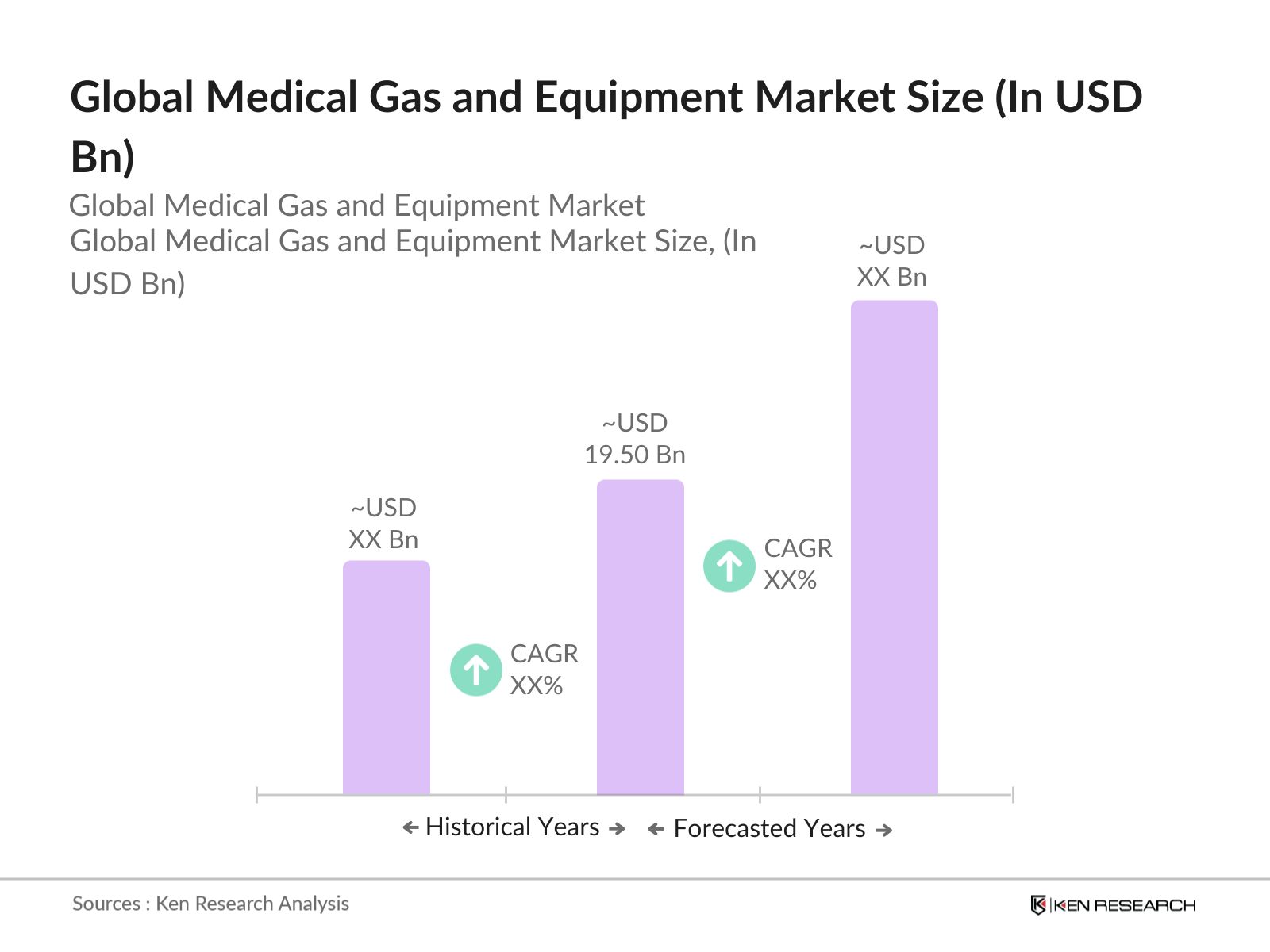
- The global medical gas and equipment market is valued at USD 19.50 billion, based on a five-year historical analysis. The demand for medical gases and associated equipment has been growing steadily due to the increasing prevalence of respiratory diseases, an aging global population, and the rising need for emergency medical services. Additionally, the expansion of healthcare infrastructure, particularly in developing countries, is driving the market's growth.
- Countries like the United States, China, and Germany dominate the medical gas and equipment market due to their advanced healthcare infrastructure, high number of hospitals, and increasing patient admissions. The dominance of these countries is further reinforced by strict regulatory standards for medical gas use, driving investments in technologically advanced equipment. China, in particular, has been a key market due to its rapid urbanization and expansion in the healthcare sector.
- Hospitals are required to meet accreditation standards to ensure proper handling and utilization of medical gases. In 2024, the Joint Commission on Accreditation of Healthcare Organizations (JCAHO) in the U.S. mandated that all accredited hospitals must adhere to updated safety protocols for medical gas usage, affecting over 4,000 healthcare facilities across the country. Similar accreditation standards have been adopted globally, ensuring safe and efficient gas usage in patient care.
Global Medical Gas and Equipment Market Segmentation
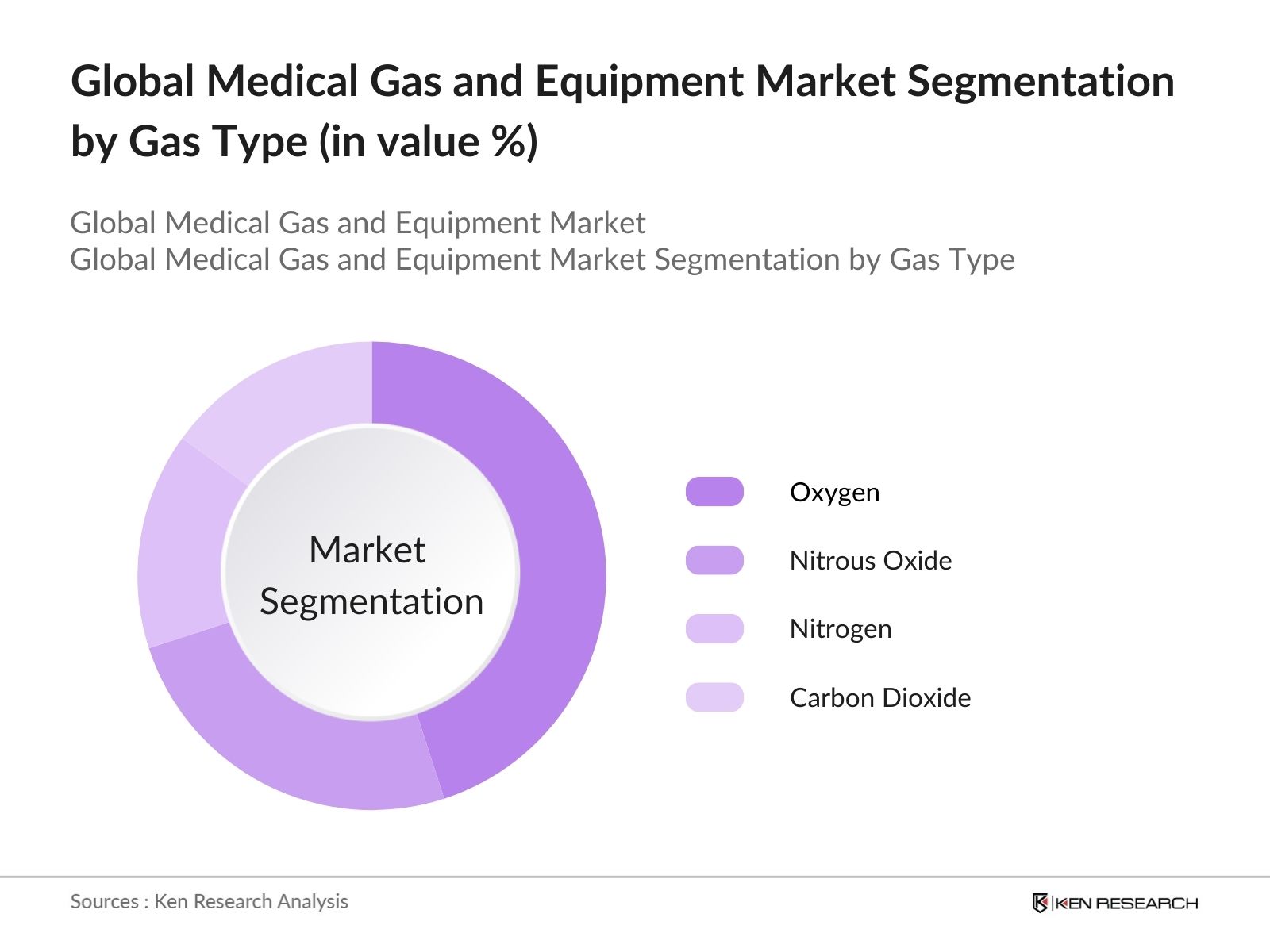
- By Gas Type: The global medical gas market is segmented by gas type into oxygen, nitrous oxide, nitrogen, and carbon dioxide. Recently, oxygen has maintained a dominant share due to its critical role in emergency care, surgeries, and respiratory treatments. The rising cases of chronic obstructive pulmonary disease (COPD), pneumonia, and other respiratory disorders are further fueling the demand for medical oxygen, particularly in hospitals and emergency care settings.
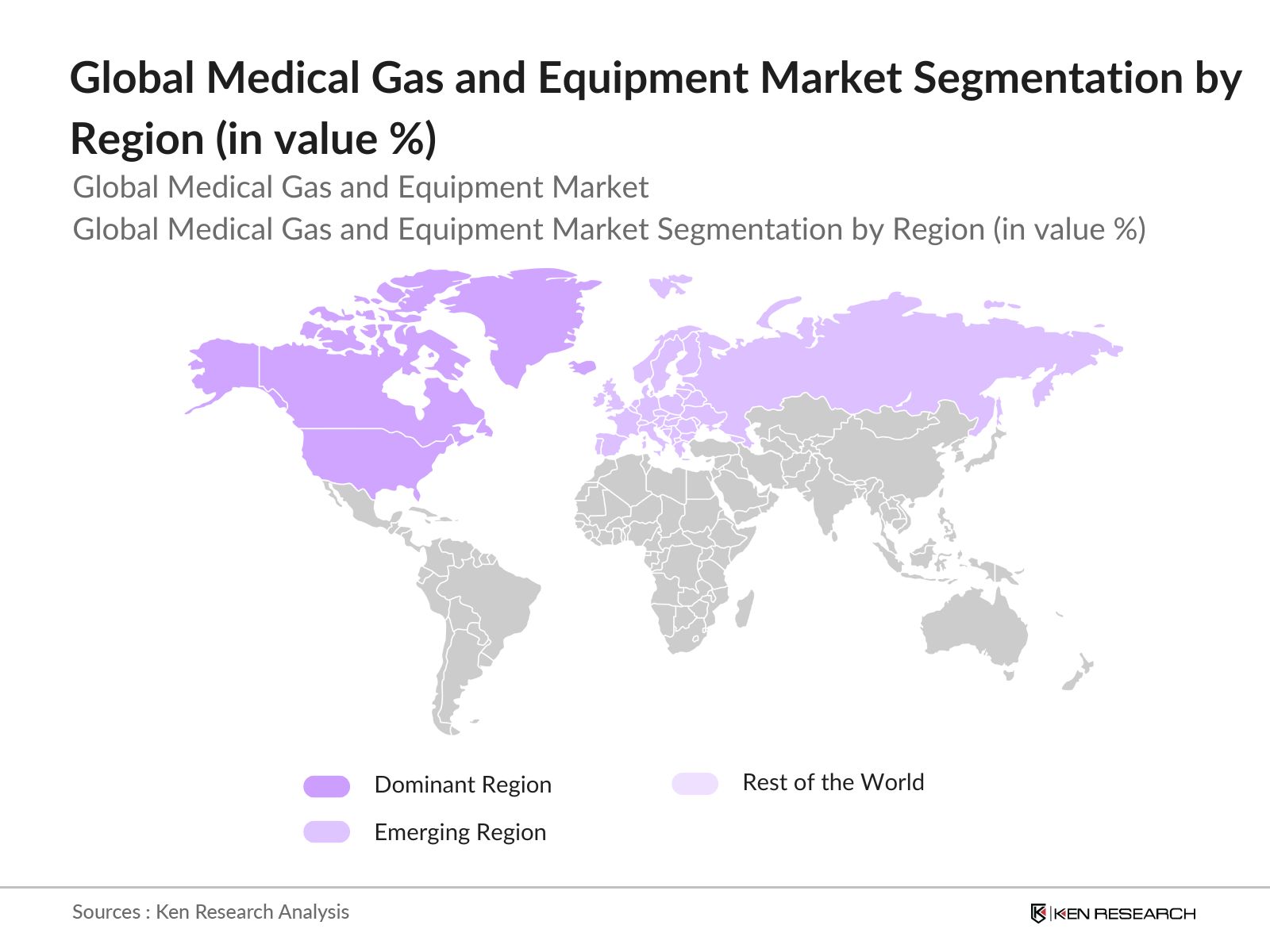
- By Region: The global medical gas and equipment market is segmented by region into North America, Europe, Asia Pacific, Middle East & Africa, and Latin America. North America holds the largest share in this market due to the high prevalence of chronic diseases and the presence of advanced healthcare infrastructure. The Asia Pacific region, particularly countries like China and India, is witnessing significant growth due to increasing healthcare investments and rising patient admissions in hospitals.
- By Equipment Type: The global medical gas equipment market is segmented by equipment type into manifolds, outlets, flowmeters, and regulators. Among these, manifolds have emerged as a dominant segment due to their essential role in managing the distribution of gases in hospitals. Manifolds ensure a continuous and safe supply of medical gases to various parts of a healthcare facility, making them indispensable in large hospital setups and emergency care centers.
Global Medical Gas and Equipment Market Competitive Landscape
The global medical gas and equipment market is dominated by key players with a strong presence in multiple geographies. These players leverage their extensive distribution networks, technological expertise, and large-scale production capacities to maintain their competitive edge. The market is characterized by high consolidation, with companies focusing on expanding their product portfolios and entering into strategic collaborations to enhance their market share.
|
Company Name |
Establishment Year |
Headquarters |
Revenue |
Employees |
R&D Investments |
Product Portfolio |
Geographic Reach |
Market Share |
Partnerships |
|
Air Liquide |
1902 |
Paris, France |
|||||||
|
Praxair, Inc. |
1907 |
Danbury, USA |
|||||||
|
Linde Healthcare |
1879 |
Guildford, UK |
|||||||
|
Air Products & Chemicals |
1940 |
Allentown, USA |
|||||||
|
Atlas Copco AB |
1873 |
Nacka, Sweden |
Global Medical Gas and Equipment Market
Growth Drivers
- Expansion of Hospital and Healthcare Facilities: The global healthcare industry has been significantly expanding its infrastructure, with over 18,000 hospitals established globally by 2024, driven by government investments in healthcare systems. According to the World Bank, governments in key regions such as the United States and Europe have allocated nearly $3 trillion in public healthcare expenditures in 2023. In 2024, China's public spending on healthcare reached $720 billion, ensuring a rise in hospital infrastructure. This growth in medical infrastructure has fueled the demand for medical gas systems and equipment, particularly in operating rooms, ICUs, and diagnostic centers.
- Growing Geriatric Population: The aging global population is rapidly increasing the need for medical gases, particularly oxygen and nitrous oxide, which are vital for surgeries and respiratory care. In 2024, the global population aged 65 and above surpassed 800 million, with Japan, Italy, and Germany having more than 20% of their populations in this age group. The World Health Organization (WHO) reports that geriatric populations are more prone to chronic respiratory illnesses, significantly increasing the consumption of medical gases. In 2024, oxygen consumption in Europes hospitals reached an estimated 4,000 cubic meters per day.
- Rising Prevalence of Chronic Respiratory Diseases: In 2024, over 500 million people globally were reported to suffer from chronic respiratory conditions such as asthma, Chronic Obstructive Pulmonary Disease (COPD), and bronchitis, with high incidences in Asia and North America. According to the WHO, respiratory diseases are among the top causes of hospitalizations, driving the demand for medical gases like oxygen and nitrous oxide. India's oxygen demand in healthcare saw a 35% increase between 2022 and 2024, reflecting the rising burden of respiratory diseases across key regions.
Market Restraints
- Compliance with Strict Safety Regulations: Medical gas equipment must comply with stringent safety regulations set by governmental bodies. For instance, the U.S. FDA and ISO have imposed strict standards for the production, storage, and handling of medical gases. In 2023, nearly 20% of healthcare facilities worldwide reported challenges in meeting updated safety regulations for gas systems, especially concerning storage and distribution. Compliance with these regulations incurs additional costs for hospitals, with U.S. hospitals spending $500 million on regulatory upgrades in 2023 alone.
- High Initial Setup Costs: The installation of medical gas infrastructure, including centralized gas supply systems and monitoring technologies, incurs substantial initial costs. In 2024, the average setup cost for a medium-sized hospital in Europe was approximately $1.2 million. This financial burden is particularly challenging for smaller healthcare providers in developing economies, where capital allocation for healthcare infrastructure is lower. For instance, Southeast Asian countries have reported slower adoption of advanced medical gas systems due to financial constraints.
Global Medical Gas and Equipment Market Future Outlook
Over the next five years, the global medical gas and equipment market is expected to witness robust growth, driven by advancements in healthcare infrastructure, increasing demand for home healthcare services, and the rising prevalence of chronic diseases. Governments worldwide are focusing on improving healthcare access, which is likely to boost the demand for medical gases and equipment. Additionally, the integration of advanced technology into gas distribution systems and the development of portable medical gas systems will further fuel market growth.
Market Opportunities
- Expansion in Home Healthcare Services: Home healthcare services are on the rise due to the increasing prevalence of chronic diseases and an aging population. In 2024, the global home healthcare market was valued at $320 billion, with a significant share driven by demand for home oxygen therapy and other respiratory treatments. The adoption of portable medical gas systems for home use has surged, particularly in the U.S. and Europe, where government incentives for home care programs are robust. The demand for portable oxygen systems in the U.S. rose by 15% in 2023.
- Development of Portable Gas Systems: Technological advancements have facilitated the development of compact and portable gas systems, which cater to home healthcare and emergency services. In 2024, nearly 20,000 portable oxygen concentrators were sold in the U.S. alone, according to the U.S. Department of Health and Human Services. These portable systems have proven to be a game-changer for patients requiring long-term oxygen therapy outside hospital settings, promoting independence and improving quality of life.
Scope of the Report
|
Gas Type |
Oxygen, Nitrous Oxide, Nitrogen, Carbon Dioxide |
|
Equipment Type |
Manifolds, Outlets, Flowmeters, Regulators |
|
End-User |
Hospitals, Home Healthcare, Ambulatory Surgical Centers |
|
Delivery Method |
Centralized Gas Systems, Cylinders |
|
Region |
North America, Europe, Asia Pacific, Middle East & Africa, Latin America |
Products
Key Target Audience
Medical Gas Suppliers
Healthcare Equipment Manufacturers
Hospitals and Clinics
Home Healthcare Providers
Ambulatory Surgical Centers
Government and Regulatory Bodies (FDA, ISO)
Investors and Venture Capitalist Firms
Pharmaceutical Companies
Companies
Players Mentioned in the Report:
Air Liquide
Praxair, Inc.
Linde Healthcare
Air Products & Chemicals, Inc.
Atlas Copco AB
Matheson Tri-Gas Inc.
Amico Group of Companies
GCE Group
Rotarex S.A.
BeaconMedaes
Allied Healthcare Products Inc.
Ohio Medical
Precision Medical Inc.
Ingersoll Rand PLC
Messer Group GmbH
Table of Contents
1. Global Medical Gas and Equipment Market Overview
1.1. Definition and Scope
1.2. Market Taxonomy
1.3. Market Growth Rate
1.4. Market Segmentation Overview
2. Global Medical Gas and Equipment Market Size (In USD Bn)
2.1. Historical Market Size
2.2. Year-On-Year Growth Analysis
2.3. Key Market Developments and Milestones
3. Global Medical Gas and Equipment Market Analysis
3.1. Growth Drivers (Increased Healthcare Infrastructure, Aging Population, Chronic Diseases, and Technological Advancements)
3.1.1. Expansion of Hospital and Healthcare Facilities
3.1.2. Growing Geriatric Population
3.1.3. Rising Prevalence of Chronic Respiratory Diseases
3.1.4. Technological Innovations in Medical Gas Systems
3.2. Market Challenges (High Equipment Costs, Stringent Regulatory Requirements)
3.2.1. Compliance with Strict Safety Regulations
3.2.2. High Initial Setup Costs
3.2.3. Lack of Skilled Workforce in Operating Equipment
3.3. Opportunities (Home Healthcare Services, Portable Gas Systems)
3.3.1. Expansion in Home Healthcare Services
3.3.2. Development of Portable Gas Systems
3.3.3. Collaborations with Hospitals for Integrated Solutions
3.4. Trends (Automation, Telemedicine, Sustainability Initiatives)
3.4.1. Automation in Medical Gas Distribution Systems
3.4.2. Integration with Telemedicine Solutions
3.4.3. Use of Sustainable and Environment-Friendly Gases
3.5. Government Regulations (Medical Gas Safety Standards, Regulatory Certifications)
3.5.1. FDA and ISO Certifications for Medical Gases
3.5.2. Compliance with Environmental Safety Regulations
3.5.3. Hospital Accreditation Standards for Medical Gas Usage
3.6. SWOT Analysis
3.7. Stake Ecosystem
3.8. Porters Five Forces Analysis
3.9. Competitive Landscape and Market Share Analysis
4. Global Medical Gas and Equipment Market Segmentation
4.1. By Gas Type (In Value %)
4.1.1. Oxygen
4.1.2. Nitrous Oxide
4.1.3. Nitrogen
4.1.4. Carbon Dioxide
4.2. By Equipment Type (In Value %)
4.2.1. Manifolds
4.2.2. Outlets
4.2.3. Flowmeters
4.2.4. Regulators
4.3. By End-User (In Value %)
4.3.1. Hospitals
4.3.2. Home Healthcare
4.3.3. Ambulatory Surgical Centers
4.4. By Delivery Method (In Value %)
4.4.1. Centralized Gas Systems
4.4.2. Cylinders
4.5. By Region (In Value %)
4.5.1. North America
4.5.2. Europe
4.5.3. Asia Pacific
4.5.4. Middle East & Africa
4.5.5. Latin America
5. Global Medical Gas and Equipment Market Competitive Analysis
5.1. Detailed Profiles of Major Companies
5.1.1. Air Liquide
5.1.2. Praxair, Inc.
5.1.3. Linde Healthcare
5.1.4. Air Products and Chemicals, Inc.
5.1.5. Atlas Copco AB
5.1.6. Messer Group GmbH
5.1.7. Matheson Tri-Gas Inc.
5.1.8. Amico Group of Companies
5.1.9. GCE Group
5.1.10. Rotarex S.A.
5.1.11. BeaconMedaes
5.1.12. Allied Healthcare Products Inc.
5.1.13. Ohio Medical
5.1.14. Precision Medical Inc.
5.1.15. Ingersoll Rand PLC
5.2. Cross Comparison Parameters (Market Share, Revenue, Inception Year, Headquarters, Product Portfolio, Employee Strength, Manufacturing Locations, R&D Investments)
5.3. Market Share Analysis
5.4. Strategic Initiatives
5.5. Mergers and Acquisitions
5.6. Investment Analysis
5.7. Government Grants
5.8. Private Equity Investments
5.9. Venture Capital Funding
6. Global Medical Gas and Equipment Market Regulatory Framework
6.1. International Standards for Medical Gases (ISO, NFPA)
6.2. Compliance Requirements for Medical Gas Equipment
6.3. Certification Processes for Safety and Efficacy
7. Global Medical Gas and Equipment Future Market Size (In USD Bn)
7.1. Future Market Size Projections
7.2. Key Factors Driving Future Market Growth
8. Global Medical Gas and Equipment Future Market Segmentation
8.1. By Gas Type (In Value %)
8.2. By Equipment Type (In Value %)
8.3. By End-User (In Value %)
8.4. By Delivery Method (In Value %)
8.5. By Region (In Value %)
9. Global Medical Gas and Equipment Market Analysts Recommendations
9.1. TAM/SAM/SOM Analysis
9.2. Market Penetration Strategies
9.3. White Space Opportunity Analysis
9.4. Customer Segmentation and Targeting
9.5. Marketing Initiatives and Brand Positioning
Disclaimer
Contact Us
Research Methodology
Step 1: Identification of Key Variables
The first step involves constructing a comprehensive overview of the global medical gas and equipment market. This includes mapping key stakeholders, such as manufacturers, healthcare providers, and government agencies. Extensive desk research and secondary data sources like industry reports, government publications, and proprietary databases are used to identify critical market variables.
Step 2: Market Analysis and Construction
In this phase, historical data from the medical gas and equipment market is compiled and analyzed to assess market trends, penetration rates, and revenue generation. The data covers all relevant sub-segments, ensuring accuracy in the assessment of market shares and regional performance.
Step 3: Hypothesis Validation and Expert Consultation
Key hypotheses regarding market growth and challenges are validated through consultations with industry experts and stakeholders. Computer-assisted telephone interviews (CATI) are conducted with key players, providing insights into operational efficiencies, product innovations, and market expansion strategies.
Step 4: Research Synthesis and Final Output
The final phase involves synthesizing all gathered data and market insights. The data is validated through engagement with multiple manufacturers, healthcare providers, and equipment suppliers to ensure the accuracy and reliability of the analysis. The final output provides a comprehensive overview of market trends, key growth drivers, and challenges.
Frequently Asked Questions
1. How big is the Global Medical Gas and Equipment Market?
The global medical gas and equipment market is valued at USD 19.50 billion, driven by an increasing number of hospitalizations, chronic diseases, and the rising demand for home healthcare services.
2. What are the key challenges in the Global Medical Gas and Equipment Market?
Key challenges include high initial costs for setting up medical gas systems, stringent regulatory requirements for safety, and a lack of skilled personnel to manage these systems effectively in healthcare facilities.
3. Who are the major players in the Global Medical Gas and Equipment Market?
Major players include Air Liquide, Praxair, Linde Healthcare, Air Products & Chemicals, and Atlas Copco, who dominate the market due to their extensive product portfolios, strong distribution networks, and technological advancements.
4. What drives the growth of the Global Medical Gas and Equipment Market?
The market is driven by increasing healthcare investments, growing demand for medical oxygen in hospitals, and the rising need for home healthcare services due to an aging population and the prevalence of chronic diseases.
Why Buy From Us?

What makes us stand out is that our consultants follows Robust, Refine and Result (RRR) methodology. i.e. Robust for clear definitions, approaches and sanity checking, Refine for differentiating respondents facts and opinions and Result for presenting data with story

We have set a benchmark in the industry by offering our clients with syndicated and customized market research reports featuring coverage of entire market as well as meticulous research and analyst insights.

While we don't replace traditional research, we flip the method upside down. Our dual approach of Top Bottom & Bottom Top ensures quality deliverable by not just verifying company fundamentals but also looking at the sector and macroeconomic factors.

With one step in the future, our research team constantly tries to show you the bigger picture. We help with some of the tough questions you may encounter along the way: How is the industry positioned? Best marketing channel? KPI's of competitors? By aligning every element, we help maximize success.

Our report gives you instant access to the answers and sources that other companies might choose to hide. We elaborate each steps of research methodology we have used and showcase you the sample size to earn your trust.

If you need any support, we are here! We pride ourselves on universe strength, data quality, and quick, friendly, and professional service.