Global Medical Polymer Market Outlook to 2030

Region:Global

Author(s):Mukul

Product Code:KROD7298

Published On

November 2024

Total pages

82

About the Report

Global Medical Polymer Market Overview

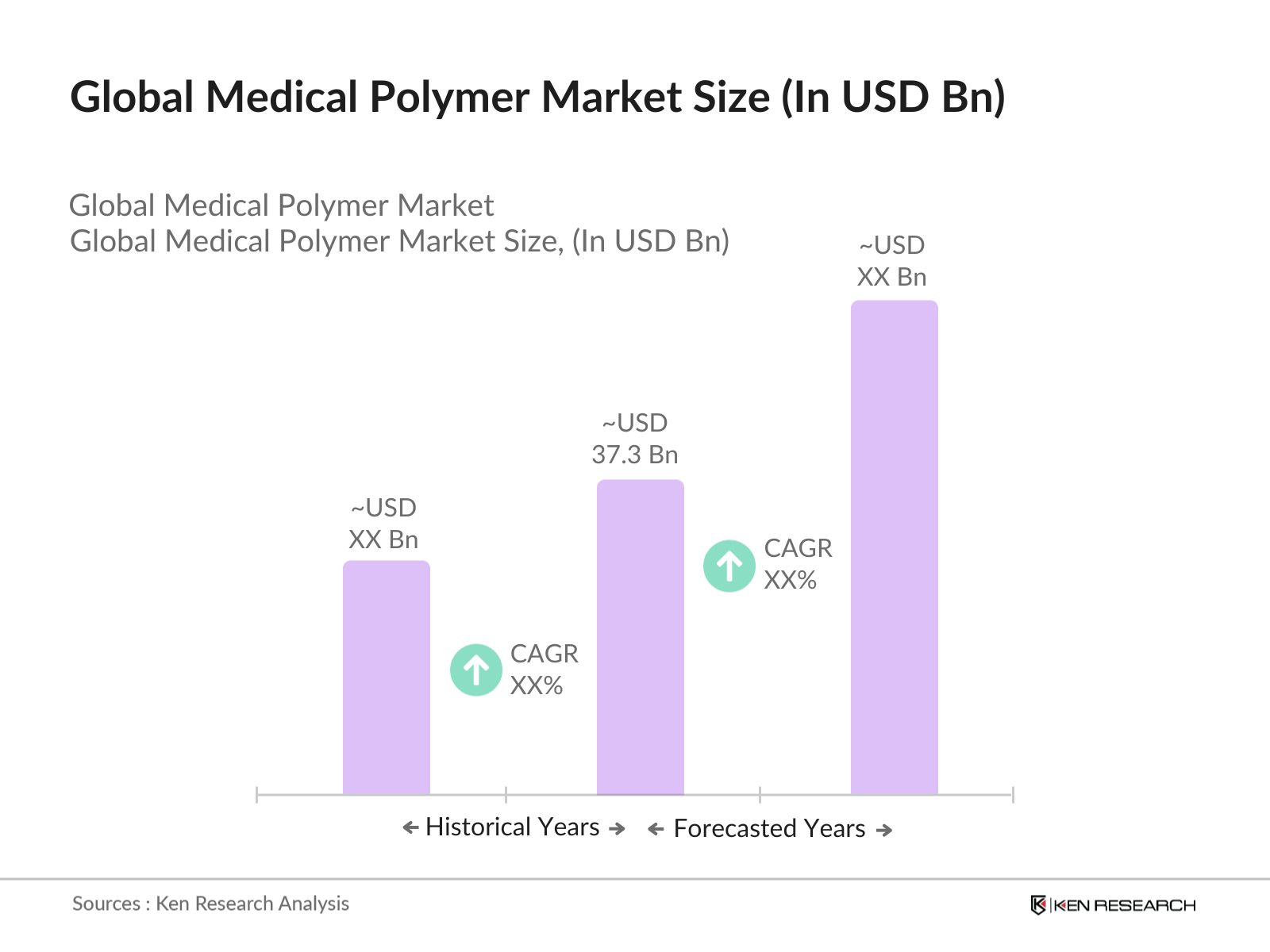
  • The global medical polymer market is valued at USD 37.3 billion based on a five-year historical analysis, driven by the rising demand for innovative, lightweight, and biocompatible materials in healthcare applications. The markets growth is fueled by technological advancements in medical devices, increased adoption of medical polymers in drug delivery systems, and growing investments in healthcare infrastructure. These polymers are critical for manufacturing medical equipment, implants, and packaging materials, all of which are necessary in todays advanced healthcare environment. This markets expansion is supported by credible sources such as the World Health Organization and government health agencies.
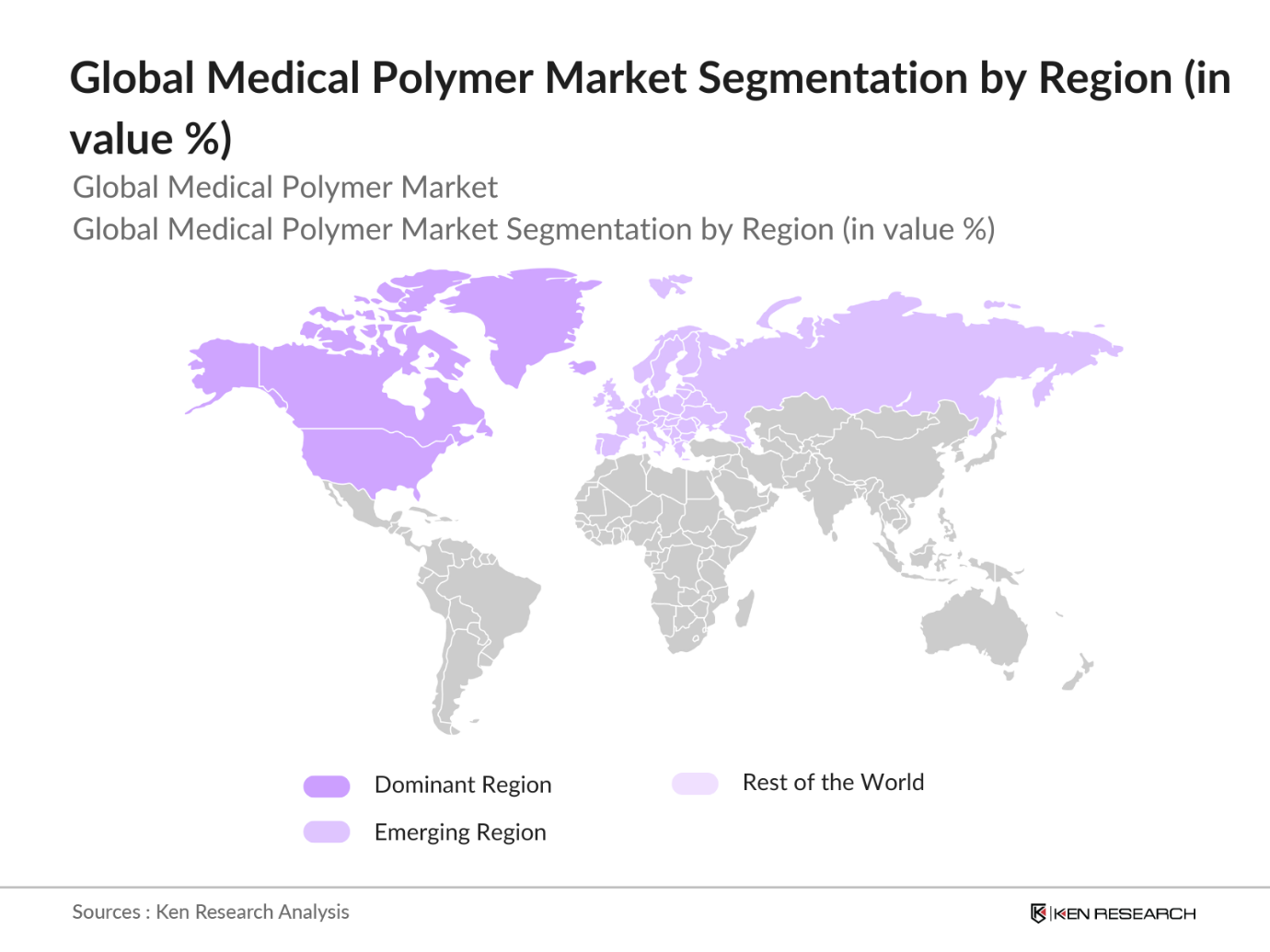
  • Countries like the United States, Germany, and Japan dominate the global medical polymer market due to their strong presence in medical device manufacturing, well-established healthcare systems, and high demand for advanced medical solutions. The U.S. leads in R&D activities and is home to major medical polymer manufacturers. Germany's robust medical technology sector and Japan's aging population further solidify these countries' dominance in the market. This dominance is attributed to favorable government policies and innovations in the healthcare sector.
  • In 2023, the FDA introduced new guidelines for medical-grade plastics, emphasizing the need for improved biocompatibility and resistance to degradation over time. These updates require manufacturers to conduct more rigorous testing on polymers before devices can be approved for use. Similarly, Chinas National Medical Products Administration (NMPA) has implemented stricter standards for medical polymers used in implants and surgical devices. These regulatory updates are crucial to ensuring the safety and longevity of polymer-based medical devices.

Global Medical Polymer Market Size

Global Medical Polymer Market Segmentation

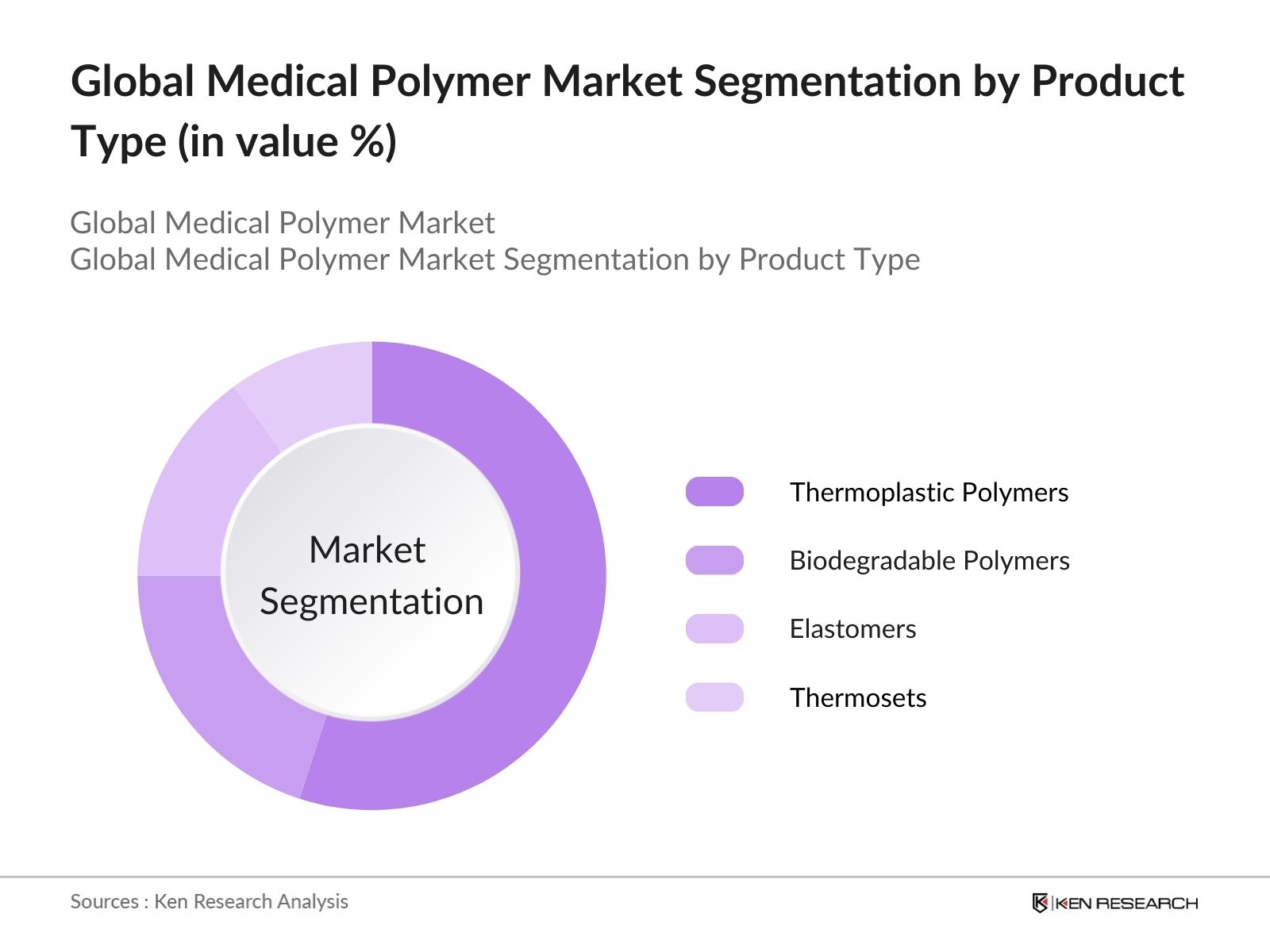
  • By Product Type: The global medical polymer market is segmented by product type into thermoplastic polymers, biodegradable polymers, elastomers, and thermosets. Thermoplastic polymers hold a dominant market share in the medical polymer market due to their versatility and ability to be molded into complex shapes while maintaining durability. They are preferred in the manufacturing of disposable medical devices such as syringes, catheters, and surgical tools. The demand for thermoplastic polymers continues to rise as healthcare facilities emphasize cost-effective solutions that offer high performance, especially in disposable and single-use products.

Global Medical Polymer Market Segmentation By Product Type

  • By Region: The global medical polymer market is segmented by region into North America, Europe, Asia-Pacific, Latin America, and the Middle East & Africa. North America leads the market, driven by its well-established healthcare infrastructure and the presence of major polymer manufacturers. The regions growing elderly population and rising demand for advanced medical technologies are also key factors driving its dominance. The U.S. remains at the forefront of medical innovation, leading to significant polymer consumption in medical applications.

Global Medical Polymer Market Segmentation By Region

  • By Application: The medical polymer market is further segmented by application into medical devices, pharmaceutical packaging, implants, tissue engineering, and drug delivery systems. Medical devices dominate the market, primarily driven by the need for high-performance materials that can meet stringent safety and biocompatibility standards. Polymers are used extensively in medical devices for their flexibility, sterilization capabilities, and durability. The continuous advancements in medical technologies, combined with the rising prevalence of chronic diseases, are expected to drive further growth in this segment.

Global Medical Polymer Market Competitive Landscape

The global medical polymer market is highly competitive, with key players focusing on innovations in polymer technology and strategic collaborations. The market features a mix of established global giants and emerging players that are leveraging technology and material science to meet the healthcare industrys evolving needs. These companies focus on developing biocompatible, sustainable, and high-performance medical polymers to meet the growing demand.

Company

Establishment Year

Headquarters

Revenue (USD)

Global Market Presence

Product Portfolio

R&D Investment

Patent Filings

Innovative Technologies

Sustainability Initiatives

BASF SE

1865

Ludwigshafen, Germany

Dow Inc.

1897

Midland, U.S.

Covestro AG

2015

Leverkusen, Germany

Solvay S.A.

1863

Brussels, Belgium

Evonik Industries AG

2007

Essen, Germany

Global Medical Polymer Industry Analysis

Growth Drivers

  • Increased Demand for Minimally Invasive Procedures: Minimally invasive procedures, which reduce recovery time and hospital stays, have surged globally due to growing healthcare demands. In 2023, over 20 million minimally invasive surgeries were performed in the U.S. alone. Polymers such as polyethylene and polypropylene are essential in manufacturing catheter tubing and implants for these procedures. These lightweight materials offer flexibility and durability, driving their usage. Additionally, countries like India have seen a rise in minimally invasive procedures, supported by government health programs aimed at improving surgical healthcare infrastructure.
  • Rising Aging Population and Chronic Diseases: The global aging population has significantly increased, with over 771 million people aged 65 and above in 2022. This demographic is more prone to chronic diseases like diabetes and cardiovascular conditions, requiring frequent medical interventions. Medical-grade polymers are widely used in devices like stents, catheters, and orthopedic implants to address these conditions. The rising number of hospital admissions for elderly patients has driven the demand for polymer-based devices, especially in countries with aging populations like Japan and Germany.
  • Innovations in Polymer Technologies: Recent innovations in polymer technologies have enabled the development of more sophisticated medical devices, such as bioresorbable stents and antimicrobial wound dressings. For instance, in 2023, poly(ether ether ketone) (PEEK) has been adopted for spinal implants due to its high strength and compatibility. These advancements make polymers critical in replacing traditional materials like metals and ceramics, enhancing performance in medical devices. Continuous R&D investments by governments in countries like the U.S. and China have further accelerated the evolution of medical polymers.

Market Restraints

  • Stringent Regulatory Approvals: Medical polymers face stringent regulatory approval processes from bodies like the U.S. FDA and the European Medicines Agency (EMA). These agencies assess biocompatibility, toxicity, and performance to ensure patient safety. In 2023, only 60% of submitted medical-grade polymer products passed initial FDA reviews due to complex testing requirements. This slow approval process delays market entry for new materials and drives up costs for manufacturers, affecting profitability. As regulatory bodies tighten guidelines on medical polymers, manufacturers must invest heavily in compliance.
  • High Cost of Medical Grade Polymers: Medical-grade polymers, such as polytetrafluoroethylene (PTFE) and PEEK, are more expensive than general-use polymers due to their stringent quality standards. For example, PTFE prices in 2023 were approximately $55 per kilogram, compared to $1.5 per kilogram for commodity-grade plastics. The high costs pose challenges for small medical device manufacturers, limiting their ability to scale production. Rising healthcare expenses in developed markets like the U.S. and Europe further exacerbate the financial burden on healthcare providers.

Global Medical Polymer Market Future Outlook

Over the next five years, the global medical polymer market is expected to grow significantly, driven by advancements in material science, an increasing focus on sustainability, and rising demand for personalized medical solutions. Technological innovations in biodegradable and smart polymers, combined with the increasing use of medical polymers in 3D printing, will open new opportunities for market players. Additionally, the aging global population and the rise in chronic diseases will further drive demand for medical devices and implants, contributing to the market's expansion.

Market Opportunities

  • Growth in Healthcare in Emerging Economies: Emerging economies like Brazil, India, and China have witnessed significant investments in healthcare infrastructure. In 2023, India allocated $30 billion to healthcare, driving demand for medical devices, particularly those incorporating polymers. As these countries enhance their healthcare systems, the demand for cost-effective, durable, and lightweight medical polymers increases. Medical-grade polymers offer a solution to expanding healthcare facilities in emerging economies, where they are used in a wide range of medical applications, from diagnostic tools to implants.
  • Expansion into New Medical Applications: Polymers are finding expanded applications in areas such as tissue engineering, regenerative medicine, and drug delivery systems. In 2024, over 1.5 million patients were treated using drug-eluting stents, which use polymers to control drug release. Innovations in nanopolymers and bioactive polymers have allowed for enhanced drug delivery systems, ensuring targeted therapy and reducing side effects. This growing range of applications presents significant opportunities for manufacturers to enter new segments of the medical device market.

Scope of the Report

By Product Type

Thermoplastic Polymers, Biodegradable Polymers, Elastomers, Thermosets, Smart Polymers

By Application

Medical Devices, Pharmaceutical Packaging, Implants, Tissue Engineering, Drug Delivery Systems

By End-User

Hospitals, Clinics, Research Institutions, Diagnostic Laboratories, Home Healthcare

By Polymer Type

Polyvinyl Chloride (PVC), Polypropylene (PP), Polyethylene (PE), Polymethyl Methacrylate (PMMA), Polyamide (PA)

By Region

North America, Europe, Asia-Pacific, Latin America, Middle East & Africa

Products

Key Target Audience

  • Medical Device Manufacturers

  • Healthcare Providers

  • Pharmaceutical Companies

  • Government and Regulatory Bodies (FDA, European Medicines Agency)

  • Polymer Manufacturers

  • Investors and Venture Capitalist Firms

  • Research Institutions

  • 3D Printing Technology Companies

Companies

Players Mentioned in the Report:

  • BASF SE

  • Dow Inc.

  • Covestro AG

  • Solvay S.A.

  • Evonik Industries AG

  • Arkema S.A.

  • SABIC

  • DSM Biomedical

  • Celanese Corporation

  • Eastman Chemical Company

  • Lubrizol Corporation

  • Tekni-Plex, Inc.

  • Raumedic AG

  • Trelleborg AB

  • DuPont de Nemours, Inc.

Table of Contents

1. Global Medical Polymer Market Overview

1.1. Definition and Scope
1.2. Market Taxonomy
1.3. Market Growth Rate
1.4. Market Segmentation Overview

2. Global Medical Polymer Market Size (In USD Bn)

2.1. Historical Market Size
2.2. Year-On-Year Growth Analysis
2.3. Key Market Developments and Milestones

3. Global Medical Polymer Market Analysis

3.1. Growth Drivers (Technological advancements, increasing demand for lightweight materials in medical devices)
3.1.1. Increased Demand for Minimally Invasive Procedures
3.1.2. Rising Aging Population and Chronic Diseases
3.1.3. Innovations in Polymer Technologies
3.1.4. Government Initiatives Supporting Health Infrastructure
3.2. Market Challenges (Environmental sustainability concerns, fluctuating raw material prices)
3.2.1. Stringent Regulatory Approvals
3.2.2. High Cost of Medical Grade Polymers
3.2.3. Limited Recycling Options for Medical Polymers
3.3. Opportunities (Shift towards biocompatible and biodegradable polymers)
3.3.1. Growth in Healthcare in Emerging Economies
3.3.2. Expansion into New Medical Applications
3.3.3. Increasing Adoption of 3D Printing Technologies
3.4. Trends (Customization of polymers for personalized medicine, bioresorbable materials)
3.4.1. Development of Nanopolymers
3.4.2. Integration of Smart Polymers in Medical Devices
3.4.3. Expansion of Sustainable Polymer Alternatives
3.5. Government Regulation (FDA and EU medical-grade polymer certifications)
3.5.1. Medical Device Regulations
3.5.2. Health and Safety Standards for Polymers
3.5.3. Waste Management and Sustainability Mandates
3.5.4. Regulatory Updates on Medical Grade Plastics
3.6. SWOT Analysis
3.7. Stakeholder Ecosystem (Manufacturers, healthcare providers, regulators, distributors)
3.8. Porters Five Forces (Supplier Power, Buyer Power, Competitive Rivalry, Threat of Substitution, Threat of New Entry)
3.9. Competitive Ecosystem

4. Global Medical Polymer Market Segmentation

4.1. By Product Type (In Value %)
4.1.1. Thermoplastic Polymers
4.1.2. Biodegradable Polymers
4.1.3. Elastomers
4.1.4. Thermosets
4.1.5. Smart Polymers
4.2. By Application (In Value %)
4.2.1. Medical Devices
4.2.2. Pharmaceutical Packaging
4.2.3. Implants
4.2.4. Tissue Engineering
4.2.5. Drug Delivery Systems
4.3. By End-User (In Value %)
4.3.1. Hospitals
4.3.2. Clinics
4.3.3. Research Institutions
4.3.4. Diagnostic Laboratories
4.3.5. Home Healthcare
4.4. By Polymer Type (In Value %)
4.4.1. Polyvinyl Chloride (PVC)
4.4.2. Polypropylene (PP)
4.4.3. Polyethylene (PE)
4.4.4. Polymethyl Methacrylate (PMMA)
4.4.5. Polyamide (PA)
4.5. By Region (In Value %)
4.5.1. North America
4.5.2. Europe
4.5.3. Asia-Pacific
4.5.4. Latin America
4.5.5. Middle East & Africa

5. Global Medical Polymer Market Competitive Analysis

5.1 Detailed Profiles of Major Companies
5.1.1. BASF SE
5.1.2. Covestro AG
5.1.3. Evonik Industries AG
5.1.4. Dow Inc.
5.1.5. Solvay S.A.
5.1.6. Arkema S.A.
5.1.7. SABIC
5.1.8. Eastman Chemical Company
5.1.9. ExxonMobil Corporation
5.1.10. Lubrizol Corporation
5.1.11. DSM Biomedical
5.1.12. Celanese Corporation
5.1.13. Tekni-Plex, Inc.
5.1.14. Raumedic AG
5.1.15. Trelleborg AB
5.2 Cross Comparison Parameters (Revenue, No. of Employees, Headquarters, Inception Year, Global Market Presence, Product Portfolio, Patent Filings, Recent Innovations)
5.3. Market Share Analysis
5.4. Strategic Initiatives
5.5. Mergers And Acquisitions
5.6. Investment Analysis
5.7 Venture Capital Funding
5.8. Government Grants
5.9. Private Equity Investments

6. Global Medical Polymer Market Regulatory Framework

6.1. Medical Device Classifications
6.2. Biocompatibility Standards
6.3. Compliance with ISO Standards
6.4. FDA Regulations for Medical Polymers
6.5. CE Marking Requirements for Europe
6.6. Environmental Policies on Polymer Use in Healthcare

7. Global Medical Polymer Future Market Size (In USD Bn)

7.1. Future Market Size Projections
7.2. Key Factors Driving Future Market Growth

8. Global Medical Polymer Future Market Segmentation

8.1. By Product Type (In Value %)
8.2. By Application (In Value %)
8.3. By End-User (In Value %)
8.4. By Polymer Type (In Value %)
8.5. By Region (In Value %)

9. Global Medical Polymer Market Analysts Recommendations

9.1. TAM/SAM/SOM Analysis
9.2. Innovation Pipeline
9.3. Marketing Initiatives
9.4. White Space Opportunity Analysis

Disclaimer

Contact Us

Research Methodology

Step 1: Identification of Key Variables

In the initial phase, we identify critical variables that impact the global medical polymer market. This includes conducting thorough desk research, using credible sources like industry reports and proprietary databases. The aim is to outline the key stakeholders and build an ecosystem map.

Step 2: Market Analysis and Construction

The next step involves analyzing historical data and constructing a framework for market analysis. We gather insights on medical polymer usage across various applications, such as medical devices and packaging, to estimate market penetration and revenue generation.

Step 3: Hypothesis Validation and Expert Consultation

We then engage industry experts through structured interviews to validate our market hypotheses. Experts from leading medical polymer companies provide operational and strategic insights that complement our desk research.

Step 4: Research Synthesis and Final Output

Finally, we synthesize our findings, ensuring data accuracy through bottom-up approaches. Engagement with polymer manufacturers and healthcare providers ensures that our insights are practical and directly relevant to market trends and consumer preferences.

Frequently Asked Questions

1. How big is the global medical polymer market?

The global medical polymer market is valued at USD 37.3 billion based on a five-year historical analysis, driven by the increased demand for lightweight and biocompatible materials in healthcare.

2. What are the challenges in the global medical polymer market?

Challenges in the medical polymer market include stringent regulatory approvals, fluctuating raw material prices, and the limited recyclability of some medical-grade polymers.

3. Who are the major players in the global medical polymer market?

Key players include BASF SE, Dow Inc., Covestro AG, Solvay S.A., and Evonik Industries AG, all of which have a strong presence in medical device material manufacturing.

4. What are the growth drivers of the global medical polymer market?

The market is propelled by innovations in polymer technology, rising demand for minimally invasive surgical tools, and the aging global population requiring advanced medical devices.

Why Buy From Us?

RRR
Refine Robust Result (RRR) Framework

What makes us stand out is that our consultants follows Robust, Refine and Result (RRR) methodology. i.e. Robust for clear definitions, approaches and sanity checking, Refine for differentiating respondents facts and opinions and Result for presenting data with story

Our Reach Is Unmatched

We have set a benchmark in the industry by offering our clients with syndicated and customized market research reports featuring coverage of entire market as well as meticulous research and analyst insights.

Research
Shifting the Research Paradigm

While we don't replace traditional research, we flip the method upside down. Our dual approach of Top Bottom & Bottom Top ensures quality deliverable by not just verifying company fundamentals but also looking at the sector and macroeconomic factors.

Insite
More Insights-Better Decisions

With one step in the future, our research team constantly tries to show you the bigger picture. We help with some of the tough questions you may encounter along the way: How is the industry positioned? Best marketing channel? KPI's of competitors? By aligning every element, we help maximize success.

Trust
Transparency and Trust

Our report gives you instant access to the answers and sources that other companies might choose to hide. We elaborate each steps of research methodology we have used and showcase you the sample size to earn your trust.

support
Round the Clock Support

If you need any support, we are here! We pride ourselves on universe strength, data quality, and quick, friendly, and professional service.

Why Client Choose Us?

400000+ Reports in repository
150+ Consulting project a year
100+ Analysts
8000+ Client Queries in 2022