















Global Memory Packaging Market Outlook to 2030
Region:Global
Author(s):Yogita Sahu
Product Code:KROD7302
December 2024
83
About the Report
Global Memory Packaging Market Overview
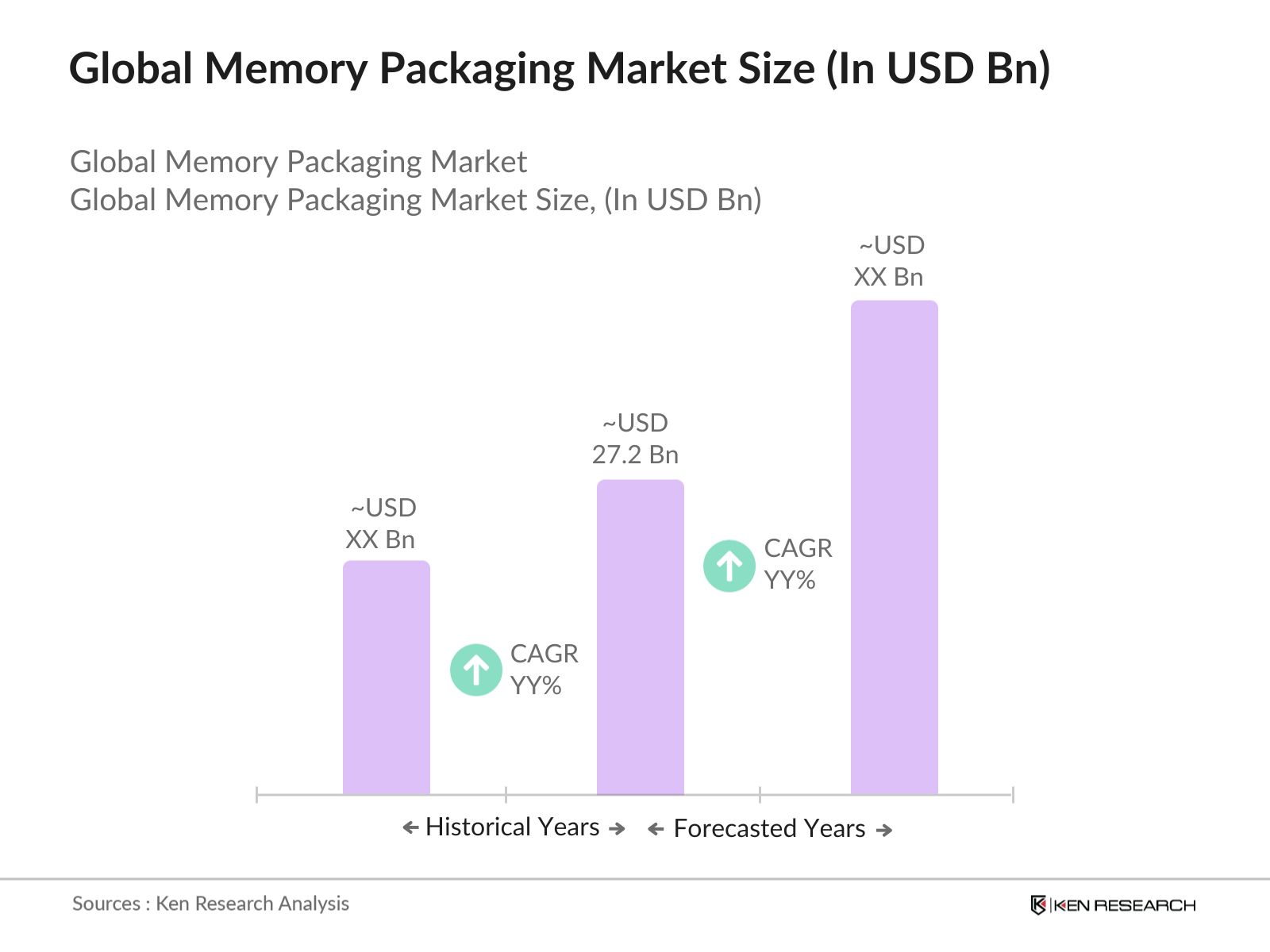
- The Global Memory Packaging Market, valued at USD 27.2 billion, has demonstrated steady growth based on a five-year historical analysis. This growth is primarily driven by rising demand across industries such as consumer electronics, automotive, and telecommunications. Increasing adoption of technologies like 5G, AI, and IoT is amplifying the demand for advanced memory packaging solutions, particularly in high-density packaging formats like 3D NAND and DRAM.
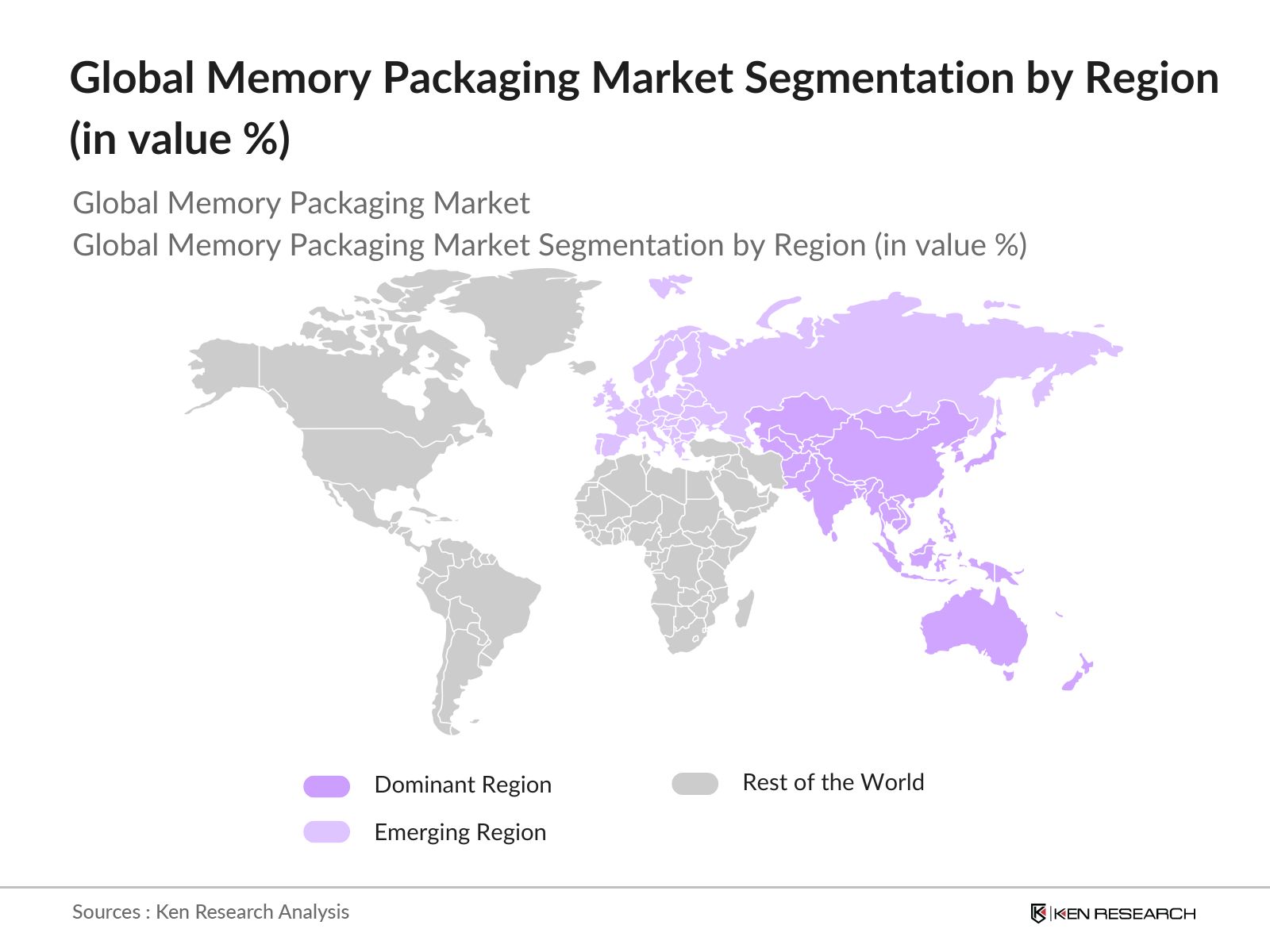
- The Asia-Pacific region dominates the market due to contributions from countries like China, South Korea, and Taiwan. This dominance is attributed to the presence of established semiconductor manufacturers and technological advancements in these regions. Companies in these areas are heavily investing in R&D to develop high-performance, cost-effective packaging solutions that meet the demands of various applications, especially in consumer electronics and automotive sectors.
- Governments worldwide, particularly in the USA and EU, have allocated billions to fund semiconductor and memory packaging production domestically to reduce reliance on foreign suppliers. This initiative aims to bolster the semiconductor supply chain, increase domestic production, and support memory packaging companies. The US, for example, invested around $50 billion in the CHIPS Act, creating opportunities for memory packaging manufacturers to expand operations locally.
Global Memory Packaging Market Segmentation
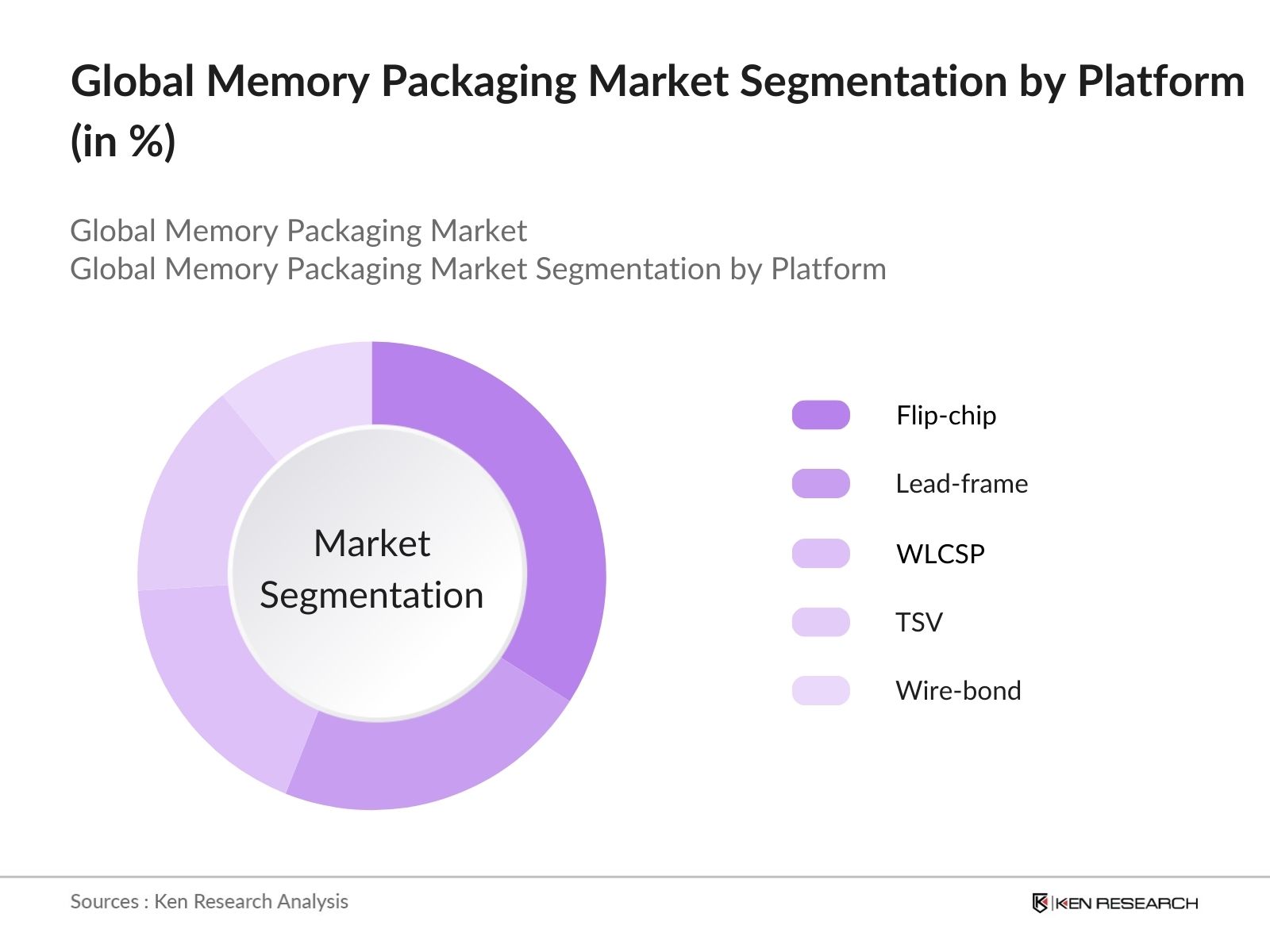
By Platform: The market is segmented by platform into flip-chip, lead-frame, wafer-level chip-scale packaging (WLCSP), through-silicon via (TSV), and wire-bond. Recently, flip-chip has taken a dominant share within this segment. Its low power consumption and suitability for high-density applications make it the preferred choice for advanced devices, particularly in mobile applications.
By Application: By application, the market is categorized into NAND flash packaging, NOR flash packaging, and DRAM packaging. DRAM packaging holds the dominant share due to its extensive use in data-intensive applications such as data centers and cloud computing. High-bandwidth DRAM packaging has seen increased adoption in sectors requiring high-speed processing and storage, driven by the ongoing growth of digitalization across multiple industries.
By Region: The market is regionally divided into North America, Europe, Asia-Pacific, Middle East & Africa, and Latin America. Asia-Pacific dominates due to the concentration of memory packaging and semiconductor companies. Nations like South Korea and Taiwan lead in technological advancements and manufacturing, enabling rapid innovation and extensive product availability, particularly for the electronics and automotive industries.
Global Memory Packaging Market Competitive Landscape
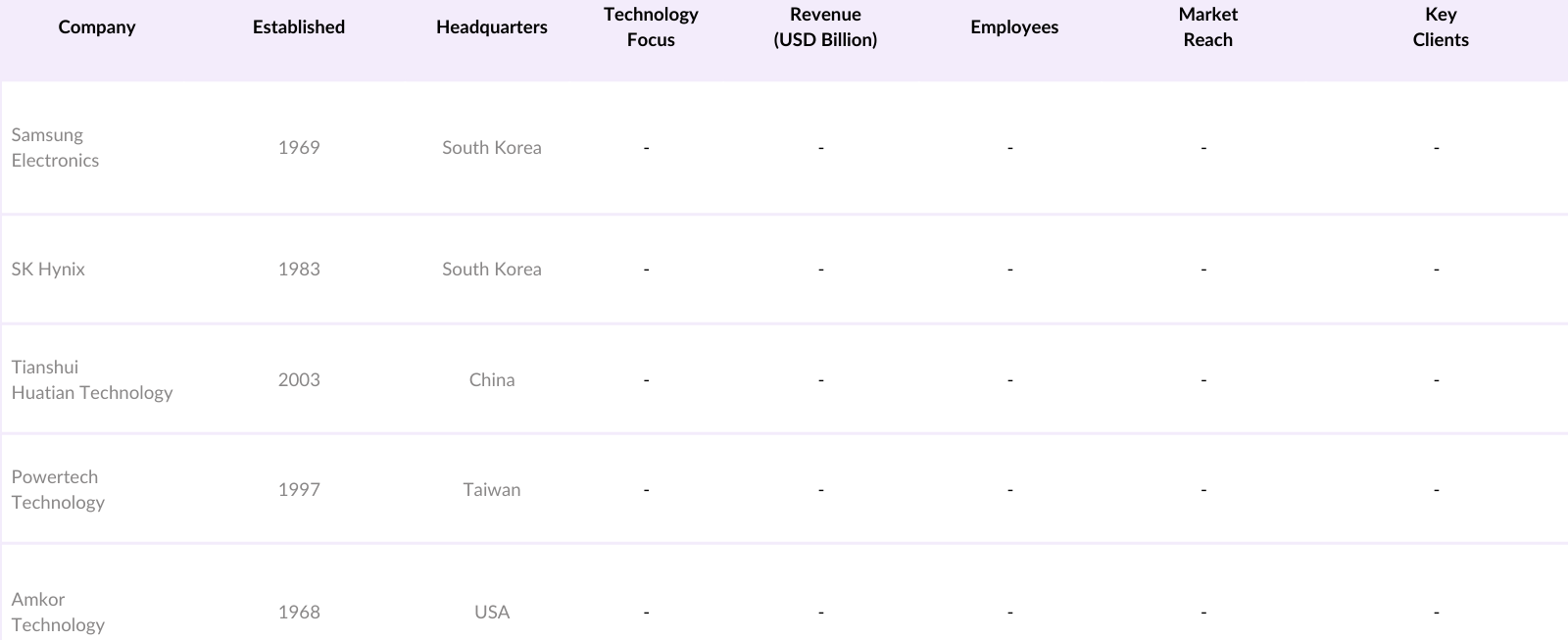
The market is characterized by competition among a mix of well-established global players. Companies like Samsung Electronics and SK Hynix continue to expand their production capacities and engage in R&D to innovate memory packaging solutions.
Global Memory Packaging Market Analysis
Market Growth Drivers
- Increasing Demand for High-Density Memory: In 2024, industries like artificial intelligence, big data, and cloud computing generated demand for advanced high-density memory, projected to surpass billions of GB in storage requirements by the year-end. The push for memory packaging solutions in high-performance servers and data centers has become significant as these sectors require reliable memory with high data transfer rates.
- Rising Investments in 5G Infrastructure: Global investments in 5G infrastructure are anticipated to reach hundreds of billions of USD by the end of 2024, sparking demand for advanced memory packaging in telecom equipment, servers, and end-user devices. This expansion of 5G infrastructure aims to enhance network speed and connectivity, driving the need for faster and more efficient memory solutions.
- Automotive Industrys Shift Toward Electric and Autonomous Vehicles: The automotive sector's transition towards electric and autonomous vehicles, projected to result in over 20 million electric vehicles by 2024 globally, has necessitated robust memory packaging solutions. Advanced driver assistance systems (ADAS), autonomous driving capabilities, and infotainment systems rely heavily on efficient memory solutions, spurring demand for durable and reliable memory packaging.
Market Challenges
- High Production Costs: Memory packaging involves complex manufacturing processes requiring precision and high-grade materials, leading to substantial production costs. The need for specialized equipment and quality materials for reliable packaging has resulted in manufacturers spending billions annually, putting pressure on their profitability.
- Supply Chain Disruptions: Disruptions in the global supply chain, with semiconductor shortages affecting over 169 industries by 2024, pose a considerable challenge to the memory packaging market. Issues such as material shortages and logistics delays affect the timely production and distribution of memory packaging components.
Global Memory Packaging Market Future Outlook
Over the next five years, the Global Memory Packaging industry is expected to experience growth, propelled by technological advancements, rising data demands, and expanding application of memory packaging solutions across emerging sectors like IoT and autonomous driving.
Future Market Opportunities
- Expansion of 3D Packaging and Heterogeneous Integration: Over the next five years, 3D packaging and heterogeneous integration are expected to become mainstream, driven by the need for advanced high-performance memory solutions. According to industry forecasts, the demand for 3D integrated circuits in memory packaging will likely surpass traditional packaging, as they offer higher storage capacities and faster processing times for applications in AI, cloud computing, and IoT.
- Shift Towards Chiplet-Based Memory Architectures: The adoption of chiplet-based memory architecture is anticipated to gain momentum, with projections estimating substantial market growth in this segment by 2028. This architecture enables modular assembly, reducing manufacturing costs while offering scalability and flexibility, which is crucial as industries transition towards more customized memory solutions.
Scope of the Report
|
Platform |
Flip-chip Lead-frame WLCSP TSV Wire-bond |
|
Application |
NAND Flash Packaging NOR Flash Packaging DRAM Packaging |
|
End-User Industry |
IT and Telecom Consumer Electronics Automotive Embedded Systems |
|
Region |
North America Europe Asia-Pacific Middle East & Africa Latin America |
Products
Key Target Audience Organizations and Entities Who Can Benefit by Subscribing This Report:
Memory and semiconductor manufacturers
Telecommunications providers
Banks and Financial Institution
Consumer electronics manufacturers
Cloud computing and data center providers
Government and regulatory bodies (NIST, FCC)
Investor and venture capitalist firms
Industrial electronics OEMs
Companies
Players Mentioned in the Report:
Samsung Electronics
SK Hynix
Tianshui Huatian Technology
Powertech Technology
Amkor Technology
ASE Technology Holding
Lingsen Precision Industries
Hana Micron Inc.
Formosa Advanced Technologies
Jiangsu Changjiang Electronics Technology
Table of Contents
1. Global Memory Packaging Market Overview
1.1 Definition and Scope
1.2 Market Taxonomy
1.3 Industry Landscape and Stakeholders
2. Global Memory Packaging Market Size
2.1 Historical Market Size (In USD Billion)
2.2 Key Market Milestones
2.3 Year-on-Year Growth Analysis
3. Global Memory Packaging Market Analysis
3.1 Growth Drivers
3.1.1 Increase in demand for high-density memory packaging in consumer electronics
3.1.2 Expanding applications in automotive and embedded systems
3.1.3 Rising adoption of 3D NAND technology
3.2 Market Challenges
3.2.1 High power consumption and limited capacity
3.2.2 Technical complexities in new packaging technologies
3.3 Opportunities
3.3.1 Development of advanced packaging for IoT and AI applications
3.3.2 Strategic alliances among OSAT players and memory manufacturers
3.4 Trends
3.4.1 Evolution towards multi-chip and HBM packaging
3.4.2 Growth in system-on-chip solutions
3.5 Government Regulations
3.6 Industry Analysis
3.6.1 Porters Five Forces
3.6.2 Stake Ecosystem Analysis
3.6.3 SWOT Analysis
4. Global Memory Packaging Market Segmentation
4.1 By Platform (In Value %)
4.1.1 Flip-chip
4.1.2 Lead-frame
4.1.3 Wafer-level Chip-scale Packaging (WLCSP)
4.1.4 Through-silicon Via (TSV)
4.1.5 Wire-bond
4.2 By Application (In Value %)
4.2.1 NAND Flash Packaging
4.2.2 NOR Flash Packaging
4.2.3 DRAM Packaging
4.3 By End-User Industry (In Value %)
4.3.1 IT and Telecom
4.3.2 Consumer Electronics
4.3.3 Automotive
4.3.4 Embedded Systems
4.4 By Region (In Value %)
4.4.1 North America
4.4.2 Europe
4.4.3 Asia-Pacific
4.4.4 Middle East & Africa
4.4.5 Latin America
5. Global Memory Packaging Market Competitive Analysis
5.1 Detailed Company Profiles
5.1.1 Amkor Technology Inc.
5.1.2 ASE Technology Holding Co., Ltd.
5.1.3 Hana Micron Inc.
5.1.4 Powertech Technology Inc.
5.1.5 Tianshui Huatian Technology Co., Ltd.
5.1.6 Lingsen Precision Industries
5.1.7 Jiangsu Changjiang Electronics Technology
5.1.8 King Yuan Electronics Corp. Ltd.
5.1.9 ChipMOS Technologies
5.1.10 TongFu Microelectronics
5.1.11 Signetics Corporation
5.1.12 Formosa Advanced Technologies Co.
5.1.13 JCET Group
5.1.14 Samsung Electronics
5.1.15 SK Hynix
5.2 Cross Comparison Parameters (Headquarters, Revenue, Market Share, Technology Focus, Production Capacity, Workforce, Geographic Presence, Product Portfolio)
5.3 Market Share Analysis
5.4 Strategic Initiatives
5.5 Mergers & Acquisitions
5.6 Venture Capital & Private Equity Investments
6. Global Memory Packaging Regulatory Framework
6.1 Compliance Standards for Memory Packaging
6.2 Certification Requirements
6.3 Environmental Standards
7. Global Memory Packaging Future Market Size
7.1 Projected Growth by Segment
7.2 Key Factors Affecting Future Growth
8. Global Memory Packaging Future Market Segmentation
8.1 By Platform (In Value %)
8.2 By Application (In Value %)
8.3 By End-User Industry (In Value %)
8.4 By Region (In Value %)
9. Global Memory Packaging Market Analysts Recommendations
9.1 White Space Analysis
9.2 Growth & Market Penetration Strategy
9.3 Customer Cohort Analysis
9.4 Key Marketing Initiatives
Research Methodology
Step 1: Identification of Key Variables
The initial stage involves defining all significant variables impacting the Memory Packaging Market, drawing on data from reliable sources like company reports, industry publications, and proprietary databases.
Step 2: Market Analysis and Construction
This phase compiles historical data on market penetration, consumer trends, and revenue generation, helping to create a well-rounded view of market performance.
Step 3: Hypothesis Validation and Expert Consultation
Through consultations with industry experts, hypotheses are verified using insights gathered via structured interviews, ensuring data accuracy and reliability.
Step 4: Research Synthesis and Final Output
Final data integration and validation occur in this step, involving a cross-referencing of statistics with industry insights, thus delivering a robust and validated market overview.
Frequently Asked Questions
01. How big is the Global Memory Packaging Market?
The Global Memory Packaging Market was valued at USD 27.2 billion, influenced by high demand in consumer electronics and telecommunications.
02. What are the challenges in the Memory Packaging Market?
Challenges in the Global Memory Packaging Market include high power consumption, limited capacity, and reliability requirements, which hinder broader adoption across applications.
03. Who are the major players in the Memory Packaging Market?
Key players in the Global Memory Packaging Market include Samsung Electronics, SK Hynix, Tianshui Huatian Technology, Powertech Technology, and Amkor Technology, dominating through robust product portfolios and global reach.
04. What are the growth drivers of the Memory Packaging Market?
Growth in the Global Memory Packaging Market is driven by increased demand in AI and IoT sectors, alongside innovations in high-density memory packaging technologies like 3D NAND and DRAM.
Why Buy From Us?

What makes us stand out is that our consultants follows Robust, Refine and Result (RRR) methodology. i.e. Robust for clear definitions, approaches and sanity checking, Refine for differentiating respondents facts and opinions and Result for presenting data with story

We have set a benchmark in the industry by offering our clients with syndicated and customized market research reports featuring coverage of entire market as well as meticulous research and analyst insights.

While we don't replace traditional research, we flip the method upside down. Our dual approach of Top Bottom & Bottom Top ensures quality deliverable by not just verifying company fundamentals but also looking at the sector and macroeconomic factors.

With one step in the future, our research team constantly tries to show you the bigger picture. We help with some of the tough questions you may encounter along the way: How is the industry positioned? Best marketing channel? KPI's of competitors? By aligning every element, we help maximize success.

Our report gives you instant access to the answers and sources that other companies might choose to hide. We elaborate each steps of research methodology we have used and showcase you the sample size to earn your trust.

If you need any support, we are here! We pride ourselves on universe strength, data quality, and quick, friendly, and professional service.