
Global Menopause Supplement Market Outlook to 2030
Region:Global
Author(s):Mukul
Product Code:KROD6501
Region:Global
Author(s):Mukul
Product Code:KROD6501
December 2024
100
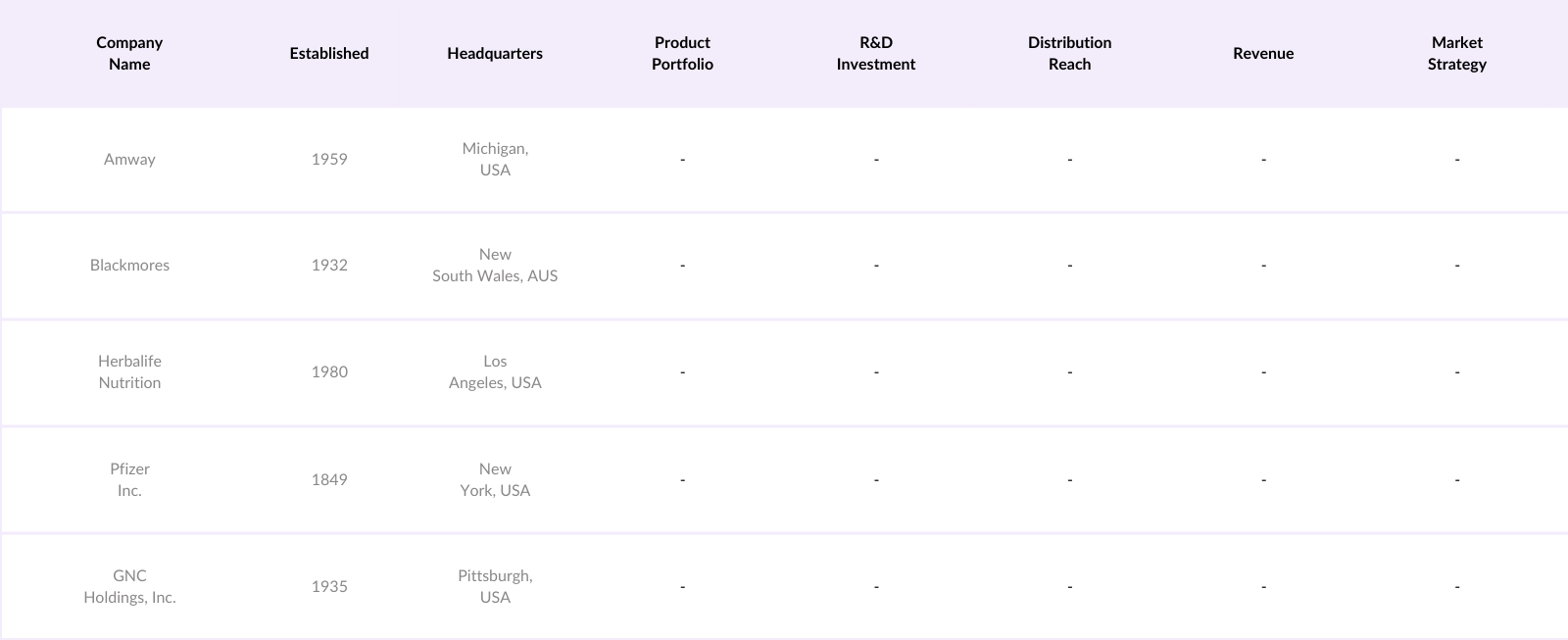
The global menopause supplement market is consolidated, with a few key players dominating the space. These companies lead through robust product portfolios, continuous innovation, and extensive distribution networks. The competitive landscape is shaped by both international and regional players, with some companies focusing on herbal and natural products, while others emphasize scientific formulations and hormonal supplements.
Over the next five years, the menopause supplement market is expected to witness considerable growth, driven by increasing consumer awareness, advancements in botanical and non-hormonal formulations, and the expansion of e-commerce platforms. Companies are focusing on innovation in personalized nutrition, adapting their products to meet the unique needs of individual consumers. In addition, emerging markets in the Asia Pacific and Latin America present new growth opportunities as consumer demand for preventive healthcare rises.
|
By Product Type |
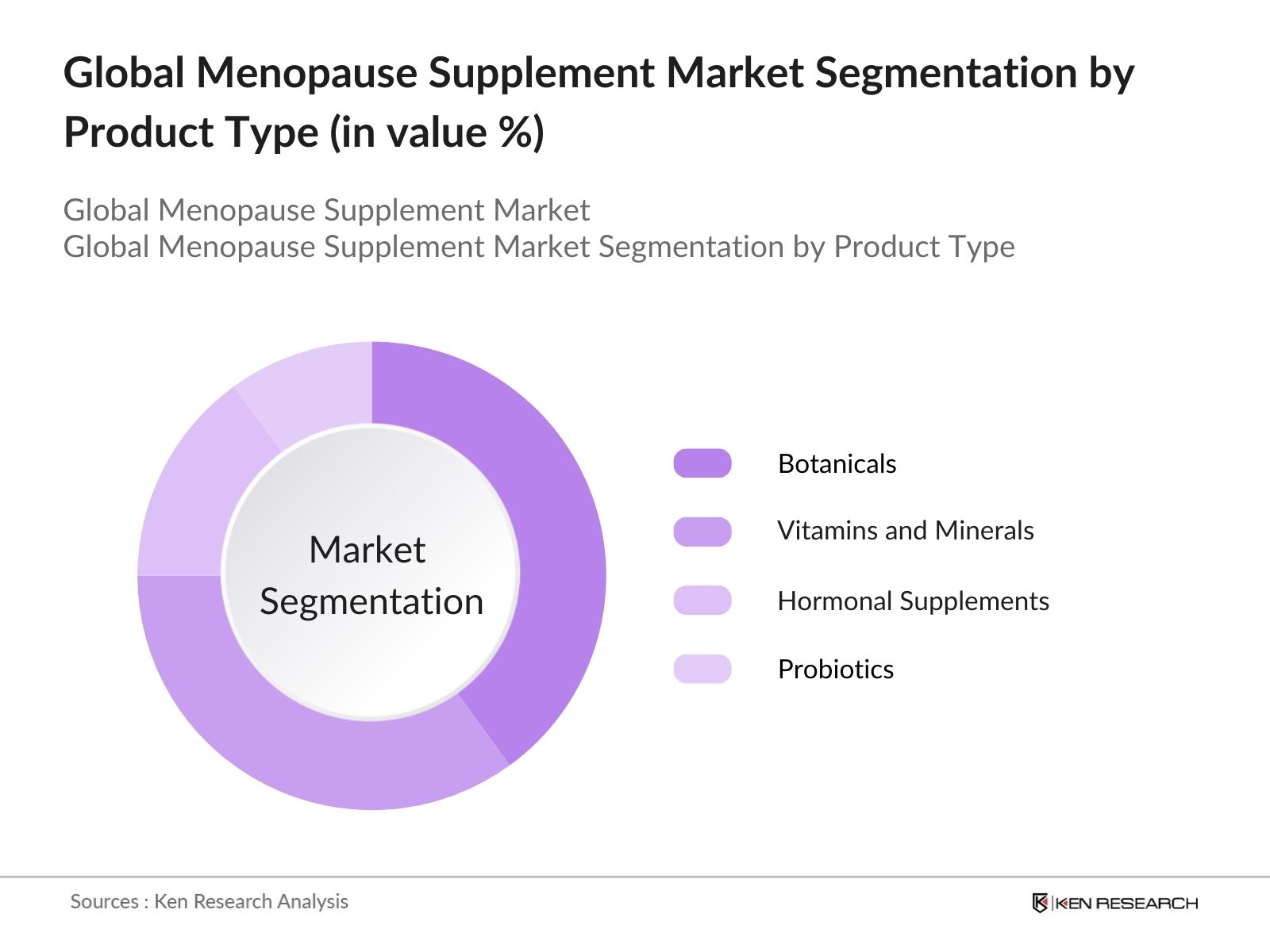
Vitamins and Minerals Botanicals Hormonal Supplements Probiotics Combination Supplements |
|
By Dosage Form |
Tablets Capsules Softgels Powders Liquids |
|
By Distribution Channel |
Pharmacies and Drug Stores Supermarkets and Hypermarkets E-commerce Specialty Stores |
|
By Ingredients |
Black Cohosh Soy Isoflavones Red Clover Flaxseed Evening Primrose Oil |
|
By Region |
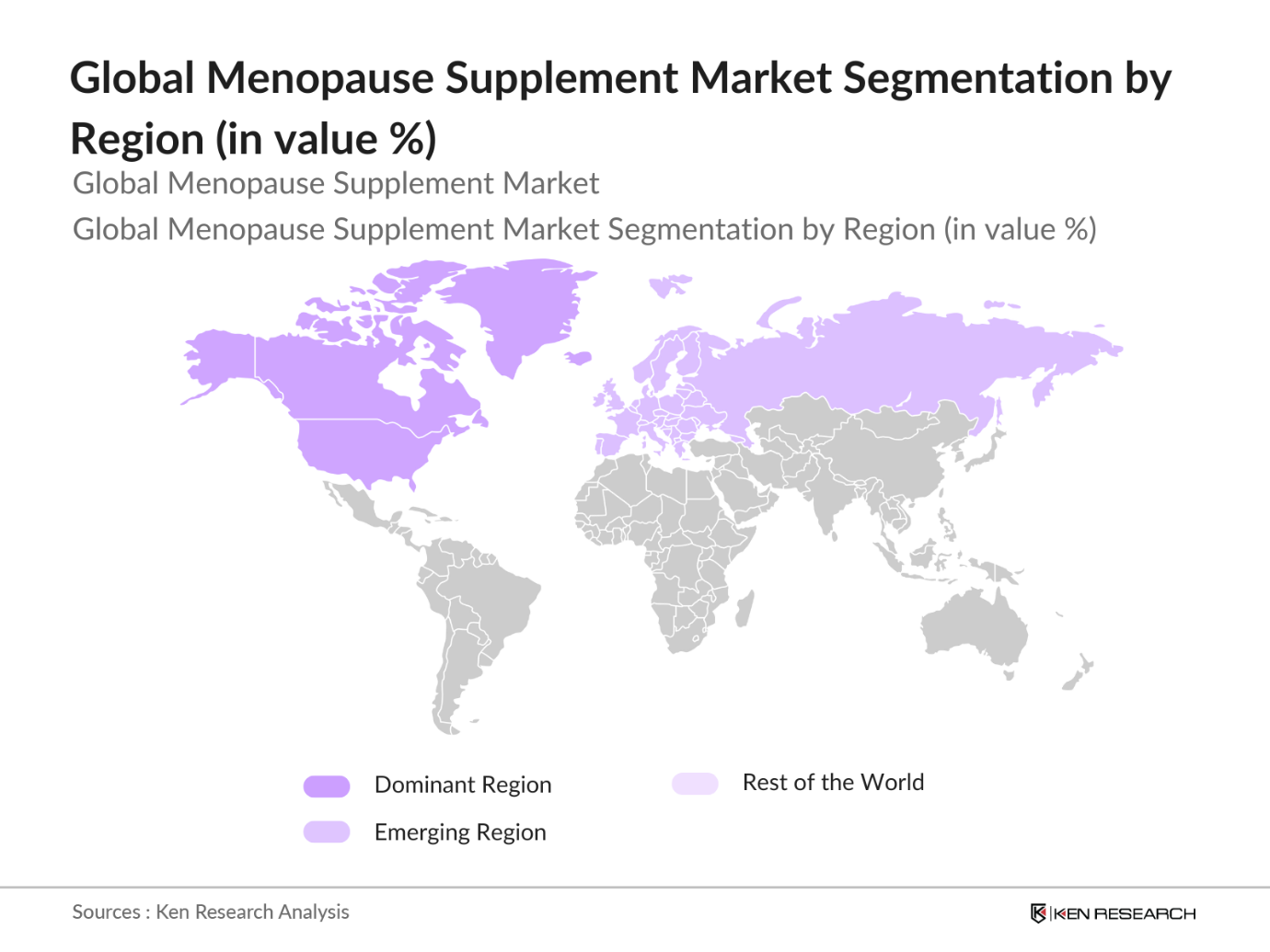
North America Europe Asia Pacific Latin America Middle East & Africa |
1.1. Definition and Scope
1.2. Market Taxonomy
1.3. Market Growth Rate
1.4. Market Segmentation Overview
2.1. Historical Market Size
2.2. Year-On-Year Growth Analysis
2.3. Key Market Developments and Milestones
3.1. Growth Drivers
3.1.1. Increasing Awareness of Women's Health
3.1.2. Rising Prevalence of Menopause Symptoms
3.1.3. Growing Adoption of Natural and Herbal Supplements
3.1.4. Expansion of E-commerce Platforms
3.2. Market Challenges
3.2.1. Regulatory Approvals and Compliance (FDA, EMA)
3.2.2. Product Efficacy and Consumer Trust
3.2.3. High Competition from Conventional Pharmaceuticals
3.3. Opportunities
3.3.1. Innovation in Formulation (Botanicals, Hormone-Free)
3.3.2. Untapped Emerging Markets
3.3.3. Increasing Focus on Preventative Healthcare
3.4. Trends
3.4.1. Personalized Nutrition Solutions
3.4.2. Functional Beverages with Menopause Benefits
3.4.3. Incorporation of Probiotics and Adaptogens
3.4.4. Growth in Vegan and Non-GMO Supplements
3.5. Regulatory Landscape
3.5.1. U.S. FDA Guidelines for Dietary Supplements
3.5.2. European Food Safety Authority (EFSA) Regulations
3.5.3. Labeling and Health Claims Restrictions
3.6. SWOT Analysis
3.7. Stakeholder Ecosystem
3.8. Porters Five Forces Analysis
3.9. Competitive Ecosystem
4.1. By Product Type (In Value %)
4.1.1. Vitamins and Minerals
4.1.2. Botanicals
4.1.3. Hormonal Supplements (Non-Prescription)
4.1.4. Probiotics
4.1.5. Combination Supplements
4.2. By Dosage Form (In Value %)
4.2.1. Tablets
4.2.2. Capsules
4.2.3. Softgels
4.2.4. Powders
4.2.5. Liquids
4.3. By Distribution Channel (In Value %)
4.3.1. Pharmacies and Drug Stores
4.3.2. Supermarkets and Hypermarkets
4.3.3. E-commerce
4.3.4. Specialty Stores
4.4. By Ingredients (In Value %)
4.4.1. Black Cohosh
4.4.2. Soy Isoflavones
4.4.3. Red Clover
4.4.4. Flaxseed
4.4.5. Evening Primrose Oil
4.5. By Region (In Value %)
4.5.1. North America
4.5.2. Europe
4.5.3. Asia Pacific
4.5.4. Latin America
4.5.5. Middle East & Africa
5.1. Detailed Profiles of Major Companies
5.1.1. Amway
5.1.2. Blackmores
5.1.3. Herbalife Nutrition
5.1.4. Pfizer Inc.
5.1.5. GNC Holdings, Inc.
5.1.6. NOW Foods
5.1.7. Nature's Way Products
5.1.8. Jarrow Formulas
5.1.9. The Honest Company
5.1.10. Rainbow Light
5.1.11. Swisse Wellness
5.1.12. Estroven
5.1.13. Life Extension
5.1.14. MegaFood
5.1.15. Pure Encapsulations
5.2. Cross Comparison Parameters (No. of Employees, Headquarters, Inception Year, Revenue, Product Portfolio, Market Reach, R&D Investment, Strategic Initiatives)
5.3. Market Share Analysis
5.4. Strategic Initiatives
5.5. Mergers and Acquisitions
5.6. Investment Analysis
5.7. Venture Capital Funding
5.8. Government Grants
5.9. Private Equity Investments
6.1. Regional Regulatory Standards (North America, Europe, APAC)
6.2. Ingredient Safety and Testing Requirements
6.3. Certification Processes (Non-GMO, Organic, Vegan Certifications)
7.1. Future Market Size Projections
7.2. Key Factors Driving Future Market Growth
8.1. By Product Type (In Value %)
8.2. By Dosage Form (In Value %)
8.3. By Distribution Channel (In Value %)
8.4. By Ingredients (In Value %)
8.5. By Region (In Value %)
9.1. TAM/SAM/SOM Analysis
9.2. Customer Cohort Analysis
9.3. Marketing Initiatives
9.4. White Space Opportunity Analysis
The initial phase involved identifying key variables affecting the global menopause supplement market, including consumer preferences, regulatory impacts, and technological advancements. This step leveraged extensive desk research and proprietary industry databases to outline major stakeholders.
Historical data was compiled to analyze market trends, growth drivers, and challenges. This analysis also included detailed market segmentation and revenue estimations, focusing on the leading product types, dosage forms, and regional markets.
Industry experts were consulted to validate market hypotheses and gather operational insights. This process involved interviews with professionals from key companies in the dietary supplement industry to ensure accuracy and relevance in the analysis.
The final phase synthesized all collected data to produce a comprehensive and validated market analysis. Cross-referencing with multiple industry sources helped ensure that the data presented is reliable and actionable for stakeholders in the menopause supplement market.
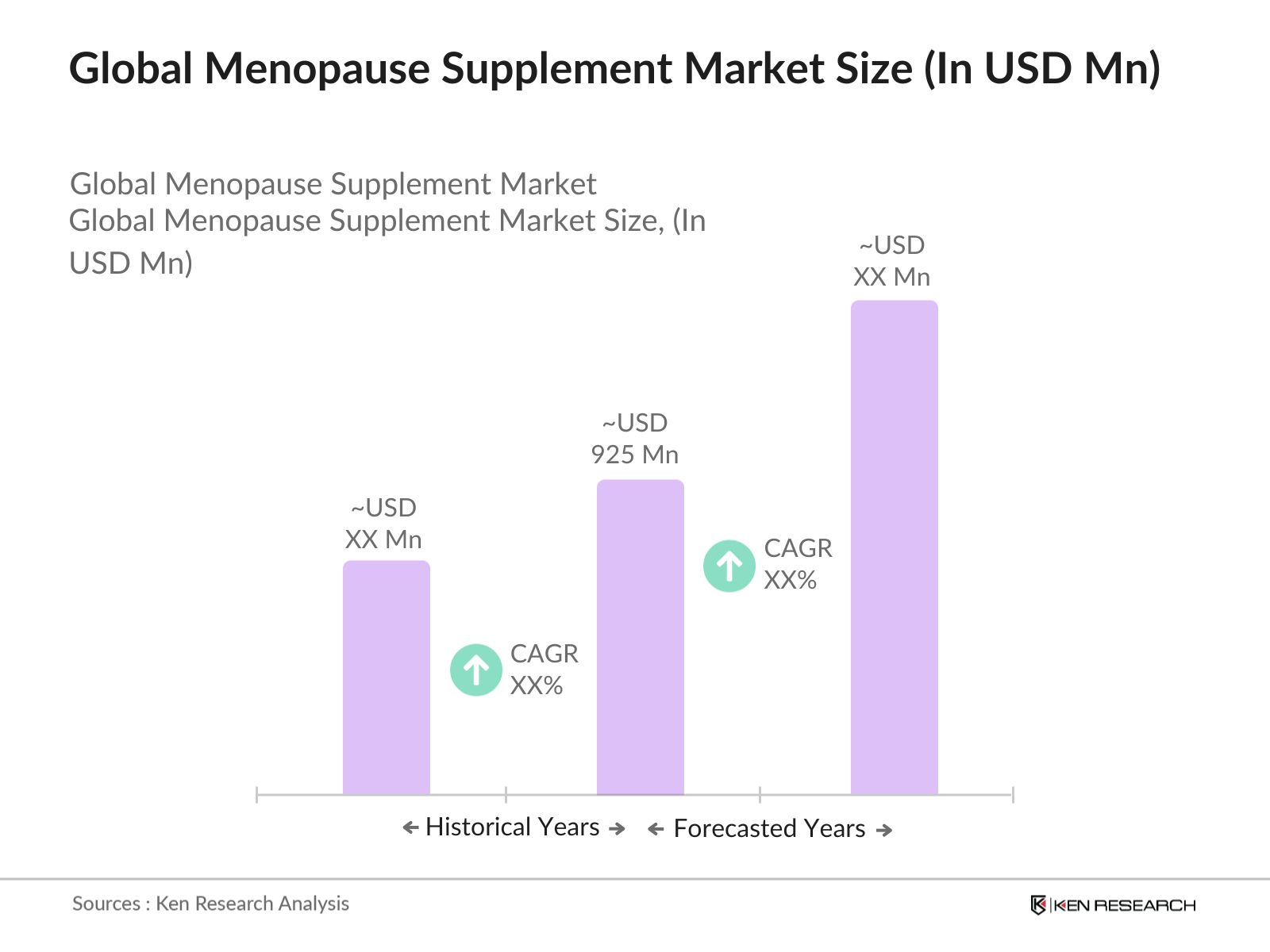
The global menopause supplement market, valued at USD 925 million, is growing due to increasing awareness of menopause-related health issues and the rising demand for natural and herbal supplements.
The market faces challenges such as stringent regulatory approvals, product efficacy concerns, and competition from pharmaceutical alternatives. High consumer skepticism regarding the effectiveness of supplements also impacts growth.
Major players include Amway, Blackmores, Herbalife Nutrition, Pfizer Inc., and GNC Holdings. These companies dominate due to their extensive product portfolios, strong distribution networks, and continuous investment in R&D.
Key drivers include the rising prevalence of menopause symptoms, increasing consumer demand for natural remedies, and growing awareness of womens health. Additionally, the expansion of online retail channels boosts accessibility to these products.

What makes us stand out is that our consultants follows Robust, Refine and Result (RRR) methodology. i.e. Robust for clear definitions, approaches and sanity checking, Refine for differentiating respondents facts and opinions and Result for presenting data with story

We have set a benchmark in the industry by offering our clients with syndicated and customized market research reports featuring coverage of entire market as well as meticulous research and analyst insights.

While we don't replace traditional research, we flip the method upside down. Our dual approach of Top Bottom & Bottom Top ensures quality deliverable by not just verifying company fundamentals but also looking at the sector and macroeconomic factors.

With one step in the future, our research team constantly tries to show you the bigger picture. We help with some of the tough questions you may encounter along the way: How is the industry positioned? Best marketing channel? KPI's of competitors? By aligning every element, we help maximize success.

Our report gives you instant access to the answers and sources that other companies might choose to hide. We elaborate each steps of research methodology we have used and showcase you the sample size to earn your trust.

If you need any support, we are here! We pride ourselves on universe strength, data quality, and quick, friendly, and professional service.