Ken Research Logo

Global Mental Health Apps Market Outlook to 2030

Region:Global

Author(s):Naman Rohilla

Product Code:KROD10515

Published On

December 2024

Total pages

87

About the Report

Global Mental Health Apps Market Overview

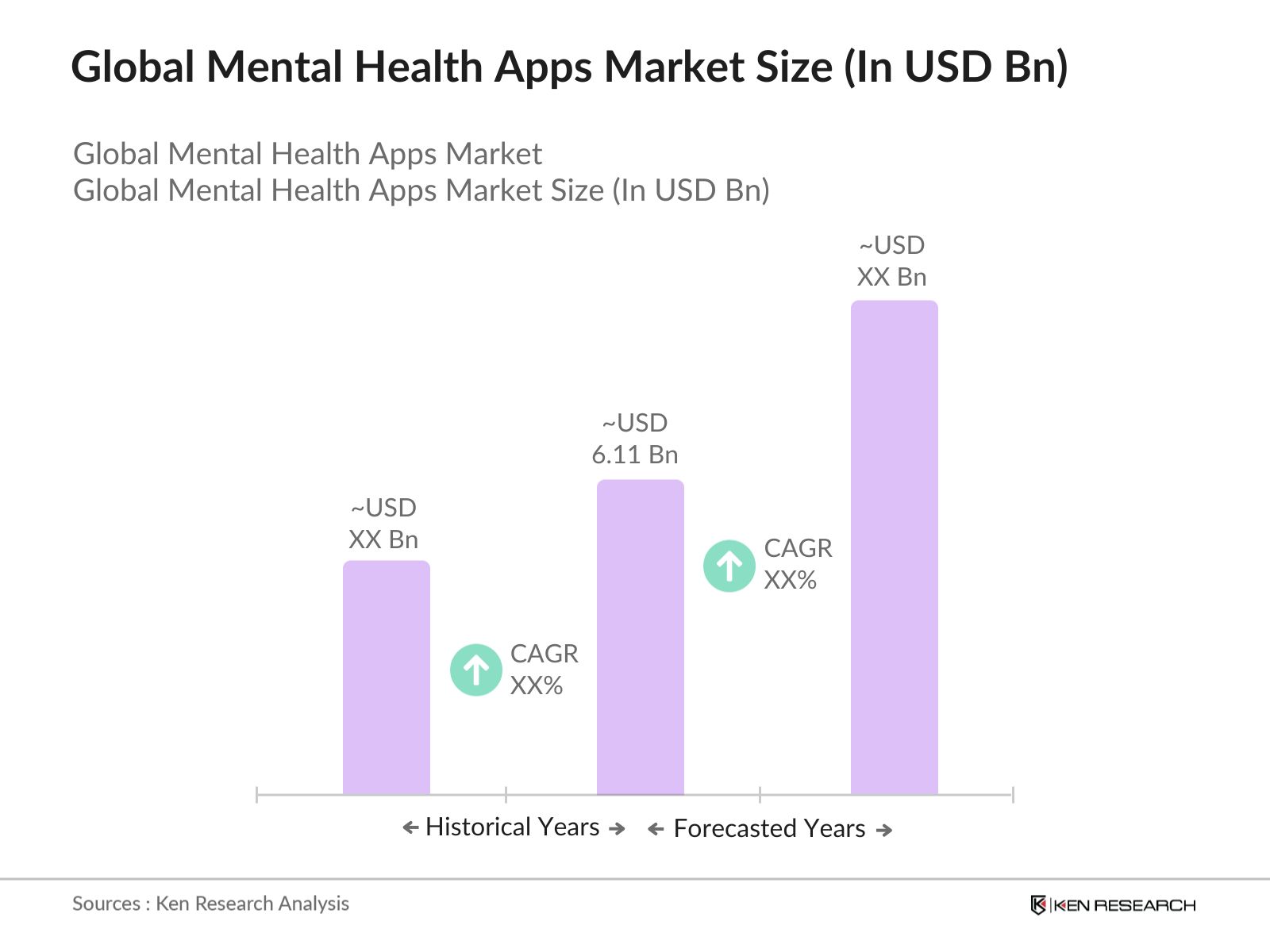
  • The global mental health apps market has experienced growth, reaching a valuation of USD 6.11 billion. This expansion is primarily driven by the increasing prevalence of mental health disorders, heightened awareness of mental well-being, and the widespread adoption of smartphones, which facilitate easy access to mental health applications.

Global Mental Health Apps Market Size

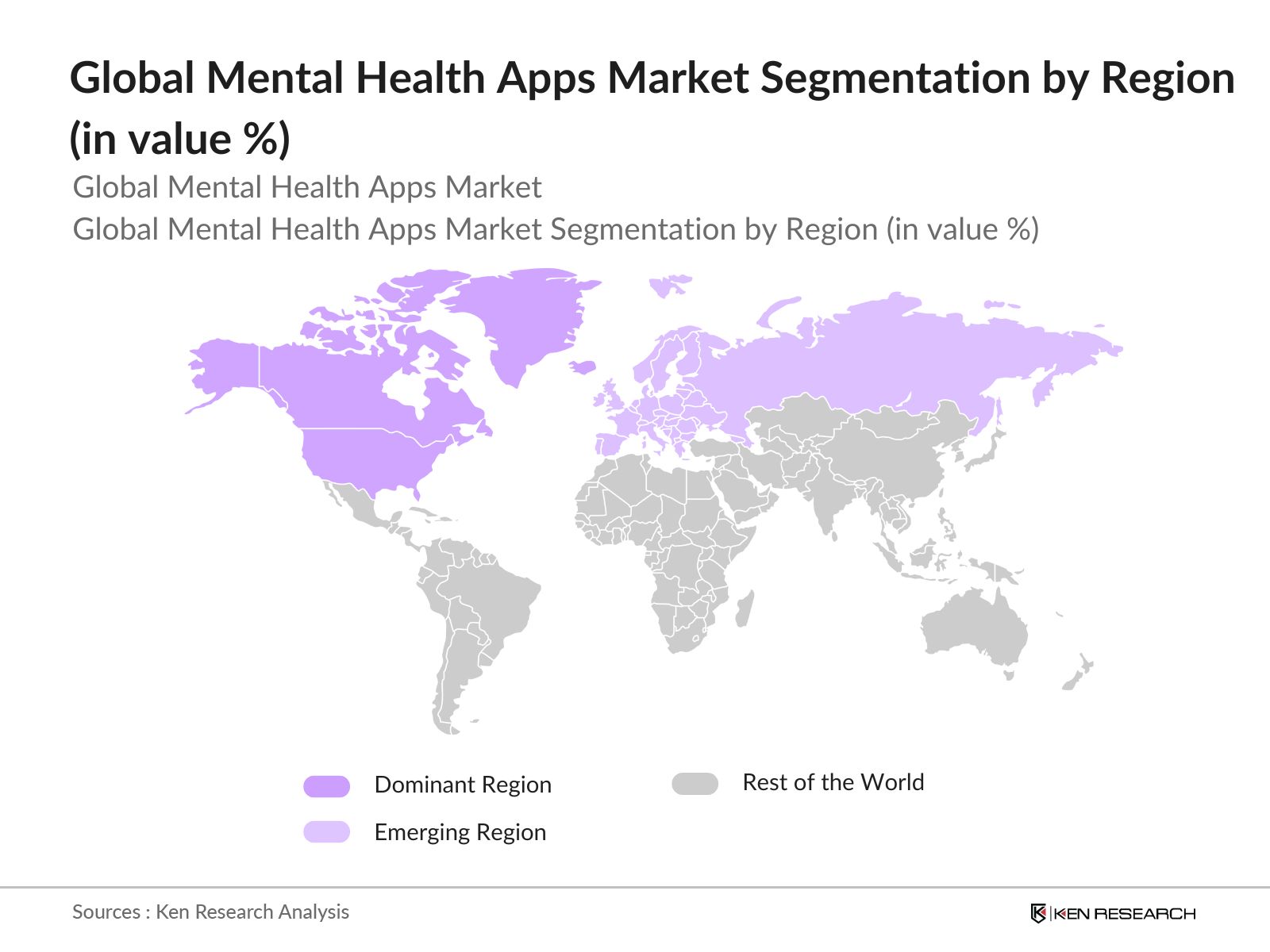
  • North America stands as the dominant region in the mental health apps market. This dominance is attributed to advanced healthcare infrastructure, high smartphone penetration, and a proactive approach toward mental health awareness and treatment. Additionally, supportive government initiatives and a strong presence of key market players contribute to the region's leading position.
  • Governments globally have increased regulatory scrutiny around data privacy in mental health apps, with a sharp focus on data handling and protection. The European Unions GDPR enforces stringent requirements for health data, mandating explicit user consent and data encryption measures for digital health applications. In the United States, data regulations are further fragmented, with multiple states, including California, enforcing privacy standards through the California Consumer Privacy Act (CCPA). Such measures ensure that mental health apps prioritize data security to protect user information, which has become critical given that over 60% of app users express concerns regarding data privacy.

Global Mental Health Apps Market Segmentation

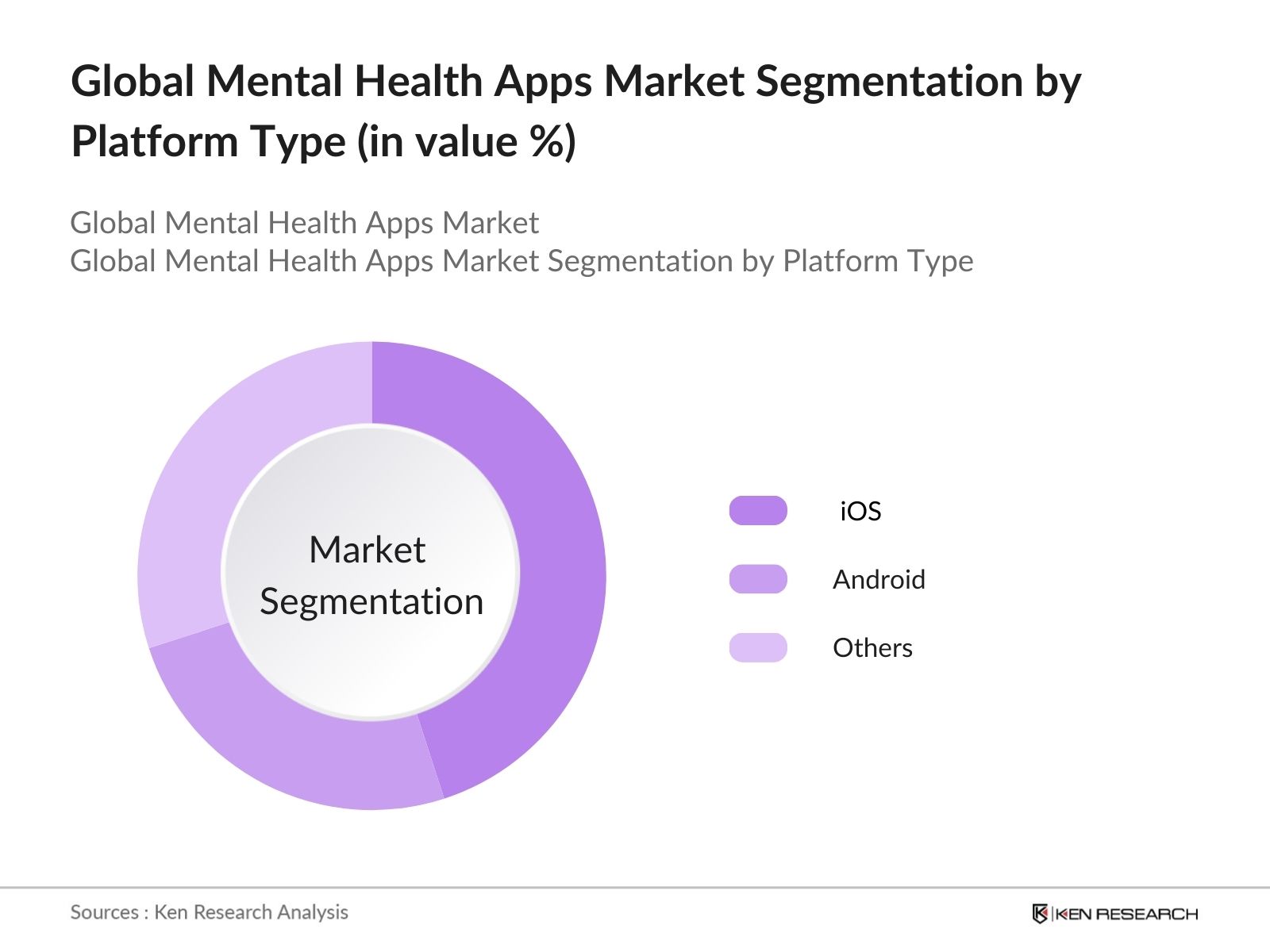
  • By Platform Type: The market is segmented by platform type into iOS, Android, and others. The iOS segment holds a dominant market share, driven by the higher spending capacity of iOS users and the platform's stringent app quality standards, which enhance user trust and engagement.

Global Mental Health Apps Market Share

  • By Application: Applications within the mental health apps market include depression and anxiety management, meditation management, stress management, wellness management, and others. The depression and anxiety management segment leads the market, reflecting the high global prevalence of these conditions and the demand for accessible management tools.
  • By Region: Regionally, the market is divided into North America, Europe, Asia-Pacific, Latin America, and the Middle East & Africa. North America dominates due to its advanced healthcare systems, high awareness levels, and significant investments in mental health technologies.

Global Mental Health Apps Market Future

Global Mental Health Apps Market Competitive Landscape

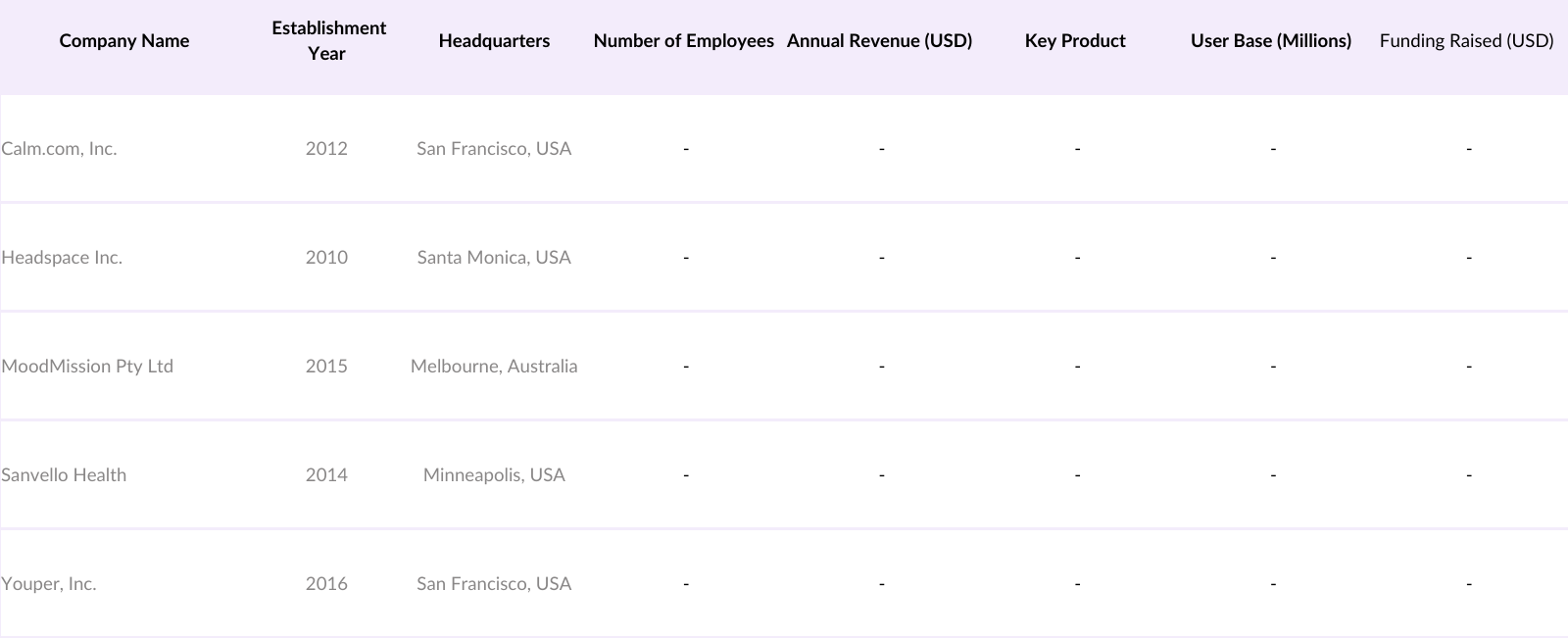
The global mental health apps market is characterized by the presence of several key players who contribute to its growth and innovation.
market overviews

Global Mental Health Apps Market Analysis

Market Growth Drivers

  • Increasing Prevalence of Mental Health Disorders: Mental health disorders are a significant global concern, with the World Health Organization (WHO) reporting that 280 million people worldwide suffer from depression, and about 264 million are affected by anxiety disorders. These conditions contribute to a substantial burden of disease, emphasizing the need for accessible mental health solutions. The rising prevalence of these disorders has led to an increased demand for mental health apps, which offer convenient and scalable support options.
  • Rising Smartphone Penetration: The global number of smartphone users has reached approximately 4.88 billion, accounting for about 60.42% of the world's population. This widespread adoption provides a vast platform for the dissemination of mental health applications, making them accessible to a large segment of the population. In regions like India, there are around 659 million smartphone users, highlighting opportunities for mental health app developers to reach diverse demographics.
  • Growing Awareness and Acceptance of Mental Health Issues: In recent years, there has been a notable increase in global awareness and acceptance of mental health issues. Campaigns and initiatives by organizations such as the WHO have played a crucial role in reducing stigma and encouraging individuals to seek help. This shift in societal attitudes has created a more supportive environment for the adoption of mental health apps, as individuals are more willing to explore digital solutions for their mental well-being.

Market Challenges

  • Data Privacy and Security Concerns: The handling of sensitive personal data by mental health apps raises significant privacy and security concerns. In the United States, the absence of a comprehensive federal data privacy law has resulted in a patchwork of state regulations, creating complexity for app developers. As of 2024, 19 states have enacted comprehensive consumer privacy laws, each with varying requirements. This fragmented regulatory landscape poses challenges for ensuring consistent data protection across different jurisdictions.
  • Limited Clinical Validation of Apps: Many mental health apps lack rigorous clinical validation, raising questions about their efficacy and safety. The U.S. Food and Drug Administration (FDA) has approved only a limited number of digital therapeutics, indicating that most apps have not undergone stringent evaluation. This lack of validation can undermine user trust and hinder the adoption of mental health apps as reliable treatment options.

Global Mental Health Apps Market Future Outlook

Over the next five years, the global mental health apps market is expected to exhibit substantial growth. This expansion will be driven by continuous technological advancements, increasing integration of artificial intelligence for personalized user experiences, and a growing emphasis on mental health awareness worldwide. Additionally, the expansion into emerging markets and the development of apps catering to diverse linguistic and cultural needs will further propel market growth.

Market Opportunities

  • Integration with Wearable Technology: The wearable technology market is experiencing growth, with global shipments of wearable devices projected to reach about 560 million units in 2024. This expansion presents opportunities for mental health apps to integrate with wearables, enabling real-time monitoring of physiological indicators such as heart rate variability and sleep patterns. Such integration can enhance the personalization and effectiveness of mental health interventions.
  • Expansion into Emerging Markets: Emerging markets, particularly in Asia and Africa, are witnessing rapid increases in smartphone adoption. India has about 659 million smartphone users, providing a substantial user base for mental health apps. Expanding into these markets offers opportunities to address unmet mental health needs and tap into new user demographics.

Scope of the Report

Segment

Sub-Segments

Platform Type

iOS
Android
Others

Application

Depression and Anxiety Management
Meditation Management
Stress Management
Wellness Management
Others

Revenue Model

Free Apps
Subscription-Based
In-App Purchases

End-User

Home Care Settings
Healthcare Providers
Others

Region

North America
Europe
Asia-Pacific
Latin America
Middle East & Africa

Products

Key Target Audience

  • Mental Health Professionals

  • Healthcare Providers

  • Insurance Companies

  • Corporate Wellness Programs

  • Educational Institutions

  • Government and Regulatory Bodies (e.g., FDA, EMA)

  • Investors and Venture Capitalist Firms

  • Technology Developers

Companies

Players Mentioned in the Report

  • Calm.com, Inc.

  • Headspace Inc.

  • MoodMission Pty Ltd

  • Sanvello Health

  • Youper, Inc.

  • Happify, Inc.

  • BetterHelp

  • Talkspace

  • MindShift

  • MoodKit

Table of Contents

1. Global Mental Health Apps Market Overview

1.1. Definition and Scope

1.2. Market Taxonomy

1.3. Market Growth Rate

1.4. Market Segmentation Overview

2. Global Mental Health Apps Market Size (In USD Billion)

2.1. Historical Market Size

2.2. Year-On-Year Growth Analysis

2.3. Key Market Developments and Milestones

3. Global Mental Health Apps Market Analysis

3.1. Growth Drivers

3.1.1. Increasing Prevalence of Mental Health Disorders

3.1.2. Rising Smartphone Penetration

3.1.3. Growing Awareness and Acceptance of Mental Health Issues

3.1.4. Technological Advancements in Digital Health

3.2. Market Challenges

3.2.1. Data Privacy and Security Concerns

3.2.2. Limited Clinical Validation of Apps

3.2.3. Regulatory and Compliance Issues

3.3. Opportunities

3.3.1. Integration with Wearable Technology

3.3.2. Expansion into Emerging Markets

3.3.3. Partnerships with Healthcare Providers

3.4. Trends

3.4.1. Adoption of Artificial Intelligence and Machine Learning

3.4.2. Personalization of User Experience

3.4.3. Incorporation of Gamification Elements

3.5. Government Regulations

3.5.1. Data Protection Laws

3.5.2. Health App Certification Standards

3.5.3. Telehealth Reimbursement Policies

3.6. SWOT Analysis

3.7. Stakeholder Ecosystem

3.8. Porters Five Forces Analysis

3.9. Competitive Landscape

4. Global Mental Health Apps Market Segmentation

4.1. By Platform Type (In Value %)

4.1.1. iOS

4.1.2. Android

4.1.3. Others

4.2. By Application (In Value %)

4.2.1. Depression and Anxiety Management

4.2.2. Meditation Management

4.2.3. Stress Management

4.2.4. Wellness Management

4.2.5. Others

4.3. By Revenue Model (In Value %)

4.3.1. Free Apps

4.3.2. Subscription-Based

4.3.3. In-App Purchases

4.4. By End-User (In Value %)

4.4.1. Home Care Settings

4.4.2. Healthcare Providers

4.4.3. Others

4.5. By Region (In Value %)

4.5.1. North America

4.5.2. Europe

4.5.3. Asia-Pacific

4.5.4. Latin America

4.5.5. Middle East & Africa

5. Global Mental Health Apps Market Competitive Analysis

5.1. Detailed Profiles of Major Companies

5.1.1. Calm.com, Inc.

5.1.2. Headspace Inc.

5.1.3. MoodMission Pty Ltd.

5.1.4. Sanvello Health

5.1.5. Youper, Inc.

5.1.6. Happify, Inc.

5.1.7. BetterHelp

5.1.8. Talkspace

5.1.9. MindShift

5.1.10. MoodKit

5.1.11. 7 Cups of Tea Co.

5.1.12. NOCD Inc.

5.1.13. Flow Neuroscience AB

5.1.14. SilverCloud Health

5.1.15. Woebot Health

5.2. Cross Comparison Parameters (Number of Employees, Headquarters, Inception Year, Revenue, User Base, Funding Raised, Key Partnerships, Market Presence)

5.3. Market Share Analysis

5.4. Strategic Initiatives

5.5. Mergers and Acquisitions

5.6. Investment Analysis

5.6.1. Venture Capital Funding

5.6.2. Government Grants

5.6.3. Private Equity Investments

6. Global Mental Health Apps Market Regulatory Framework

6.1. Data Privacy Regulations

6.2. Health App Certification Processes

6.3. Compliance Requirements for Digital Health Solutions

7. Global Mental Health Apps Future Market Size (In USD Billion)

7.1. Future Market Size Projections

7.2. Key Factors Driving Future Market Growth

8. Global Mental Health Apps Future Market Segmentation

8.1. By Platform Type (In Value %)

8.2. By Application (In Value %)

8.3. By Revenue Model (In Value %)

8.4. By End-User (In Value %)

8.5. By Region (In Value %)

9. Global Mental Health Apps Market Analysts Recommendations

9.1. Total Addressable Market (TAM), Serviceable Available Market (SAM), and Serviceable Obtainable Market (SOM) Analysis

9.2. Customer Cohort Analysis

9.3. Marketing Initiatives

9.4. White Space Opportunity Analysis

Disclaimer Contact Us

Research Methodology

Step 1: Identification of Key Variables

The initial phase involves constructing an ecosystem map encompassing all major stakeholders within the global mental health apps market. This step is underpinned by extensive desk research, utilizing a combination of secondary and proprietary databases to gather comprehensive industry-level information. The primary objective is to identify and define the critical variables that influence market dynamics.

Step 2: Market Analysis and Construction

In this phase, we compile and analyze historical data pertaining to the global mental health apps market. This includes assessing market penetration, the ratio of marketplaces to service providers, and the resultant revenue generation. Furthermore, an evaluation of service quality statistics is conducted to ensure the reliability and accuracy of the revenue estimates.

Step 3: Hypothesis Validation and Expert Consultation

Market hypotheses are developed and subsequently validated through computer-assisted telephone interviews (CATIs) with industry experts representing a diverse array of companies. These consultations provide valuable operational and financial insights directly from industry practitioners, which are instrumental in refining and corroborating the market data.

Step 4: Research Synthesis and Final Output

The final phase involves direct engagement with multiple mental health app developers to acquire detailed insights into product segments, sales performance, consumer preferences, and other pertinent factors. This interaction serves to verify and complement the statistics derived from the bottom-up approach, thereby ensuring a comprehensive, accurate, and validated analysis of the global mental health apps market.

Frequently Asked Questions

01. How big is the global mental health apps market?

The global mental health apps market is valued at USD 6.11 billion, driven by increasing awareness of mental health issues and the widespread adoption of smartphones.

02. What are the challenges in the global mental health apps market?

The Global Mental Health App market challenges include data privacy and security concerns, limited clinical validation of apps, and regulatory compliance issues that may hinder market growth.

03. Who are the major players in the global mental health apps market?

The global mental health apps market is dominated by key players like Calm.com, Inc., Headspace Inc., MoodMission Pty Ltd, Sanvello Health, and Youper, Inc. These companies have established a significant presence due to their user-centric platforms, strong brand recognition, and partnerships with healthcare providers.

04. What are the growth drivers of the global mental health apps market?

The market is primarily driven by factors such as rising awareness of mental health issues, high smartphone penetration, and technological advancements, including AI-driven personalization and integration with wearable devices. The increasing willingness of individuals to address mental well-being is also boosting the demand for mental health apps.

Why Buy From Us?

RRR
Refine Robust Result (RRR) Framework

What makes us stand out is that our consultants follows Robust, Refine and Result (RRR) methodology. i.e. Robust for clear definitions, approaches and sanity checking, Refine for differentiating respondents facts and opinions and Result for presenting data with story

Our Reach Is Unmatched

We have set a benchmark in the industry by offering our clients with syndicated and customized market research reports featuring coverage of entire market as well as meticulous research and analyst insights.

Research
Shifting the Research Paradigm

While we don't replace traditional research, we flip the method upside down. Our dual approach of Top Bottom & Bottom Top ensures quality deliverable by not just verifying company fundamentals but also looking at the sector and macroeconomic factors.

Insite
More Insights-Better Decisions

With one step in the future, our research team constantly tries to show you the bigger picture. We help with some of the tough questions you may encounter along the way: How is the industry positioned? Best marketing channel? KPI's of competitors? By aligning every element, we help maximize success.

Trust
Transparency and Trust

Our report gives you instant access to the answers and sources that other companies might choose to hide. We elaborate each steps of research methodology we have used and showcase you the sample size to earn your trust.

support
Round the Clock Support

If you need any support, we are here! We pride ourselves on universe strength, data quality, and quick, friendly, and professional service.

Why Client Choose Us?

400000+ Reports in repository
150+ Consulting project a year
100+ Analysts
8000+ Client Queries in 2022