Ken Research Logo

Global Microwave Oven Market Outlook 2030

Region:Global

Author(s):Shivani Mehra

Product Code:KROD6111

Published On

December 2024

Total pages

82

About the Report

Global Microwave Oven Market Overview

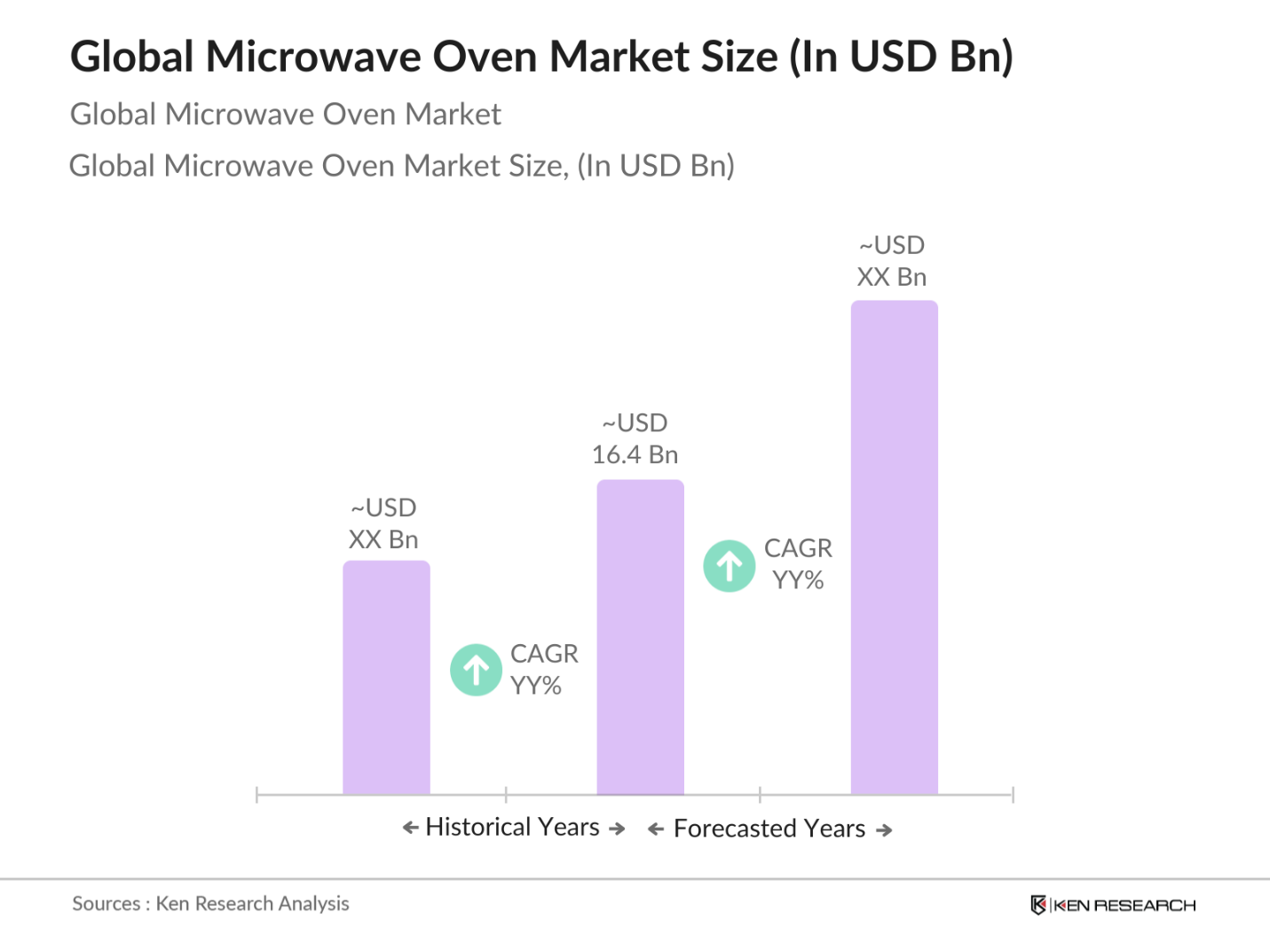
  • The global microwave oven market is valued at USD 16.4 billion, driven by technological advancements and increasing demand for convenient kitchen appliances. The growing urban population, coupled with rising disposable income levels, is fueling the demand for microwave ovens, especially in developing economies. Additionally, the integration of smart technologies like IoT, which enables remote operations and energy efficiency, is enhancing the appeal of modern microwave ovens among consumers. The expanding retail sector, both online and offline, is further contributing to market growth.

market overviews

  • Countries such as the United States, China, and India are leading the global microwave oven market. The dominance of these nations can be attributed to their large consumer base, technological innovation, and robust manufacturing capabilities. The U.S. market is driven by high disposable incomes and the preference for advanced kitchen appliances. In China, the booming urbanization and the presence of numerous domestic manufacturers help maintain its market leadership. Meanwhile, Indias market is growing rapidly due to an increase in middle-class households and the demand for energy-efficient appliances.
  • Governments are also pushing for more sustainable appliance disposal methods, with many countries implementing appliance recycling initiatives. According to the United Nations Environment Programme (UNEP), over 50 million metric tons of e-waste were generated globally in 2022, with a significant portion coming from household appliances. Recycling programs aim to reduce the environmental impact of discarded appliances, and manufacturers are increasingly required to design products that are easier to recycle. This focus on sustainability is prompting microwave oven manufacturers to adopt eco-friendly production and recycling practices.

Global Microwave Oven Market Segmentation

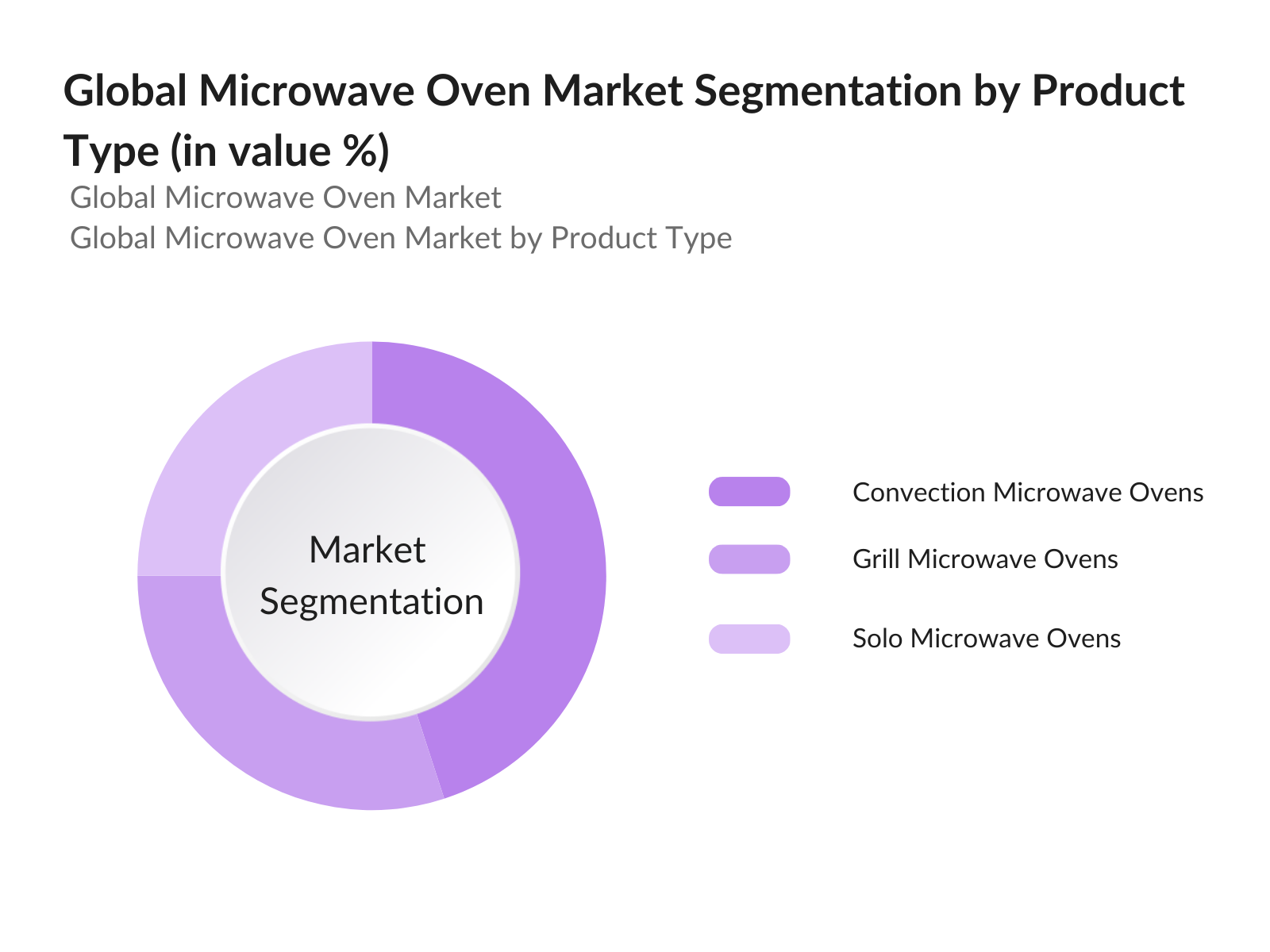
By Product Type: The microwave oven market is segmented into solo microwave ovens, grill microwave ovens, and convection microwave ovens. Convection microwave ovens dominate the market, driven by their multifunctionality, which includes baking, grilling, and reheating. Their versatility makes them highly popular among consumers who prefer a single appliance that offers multiple cooking options. The rising adoption of convection microwave ovens in urban households is also attributed to the increasing availability of affordable models from leading brands.
market overviews

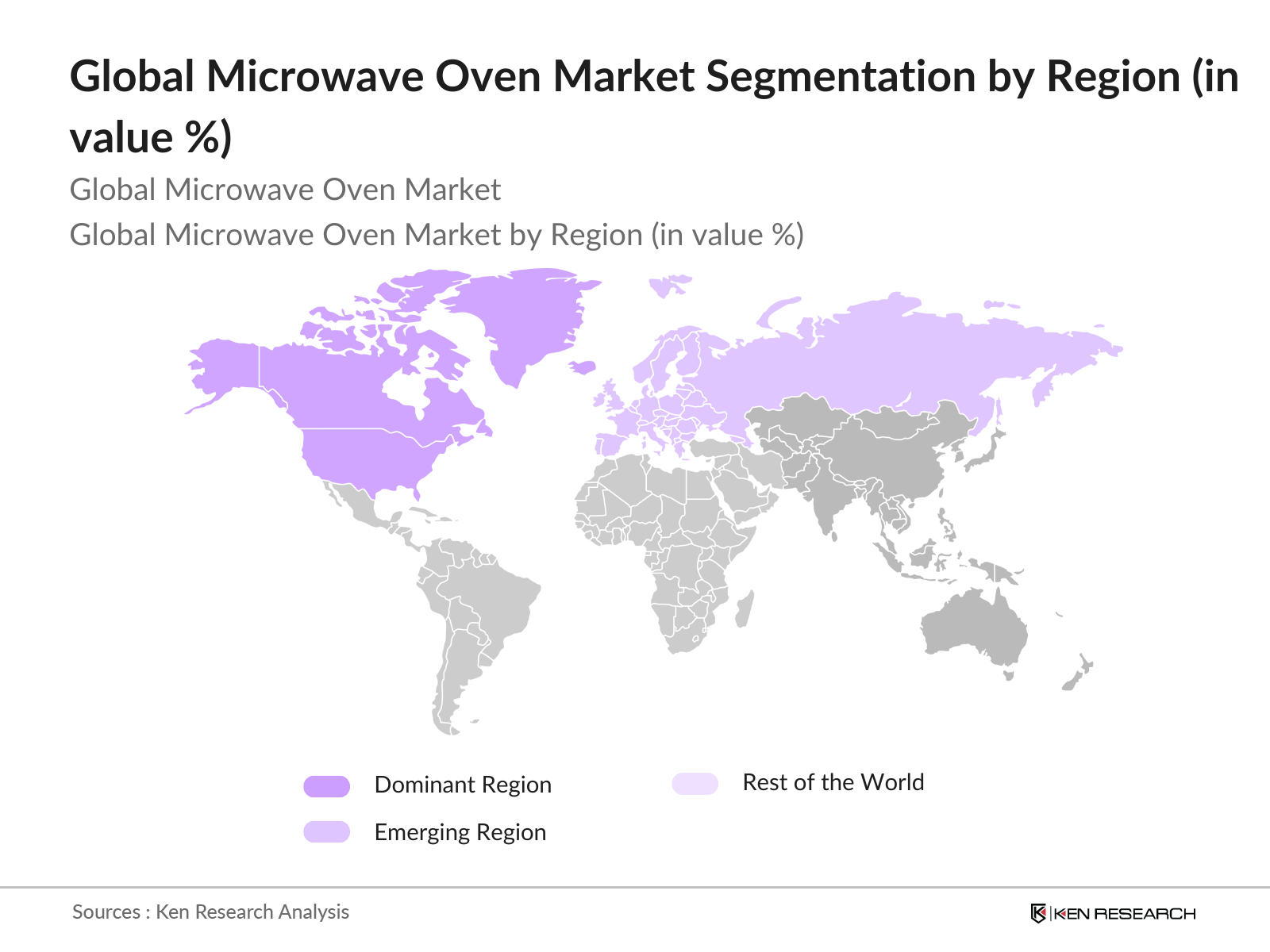
By Region: The microwave oven market is divided into North America, Europe, Asia-Pacific, Latin America, and the Middle East & Africa. North America holds the largest market share, supported by technological advancements and the widespread adoption of smart appliances. Asia-Pacific is witnessing rapid growth due to rising disposable incomes and increasing consumer demand in countries like China, India, and Japan.
market overviews

Global Microwave Oven Market Competitive Landscape

The global microwave oven market is dominated by key players who continue to innovate in terms of product design, technology integration, and customer engagement strategies. These companies are investing in R&D to develop energy-efficient and smart kitchen appliances, which cater to modern consumer preferences. The market competition is further intensified by the presence of both established global players and local manufacturers, particularly in emerging economies.

Company Name

Establishment Year

Headquarters

Revenue (USD Bn)

Product Range

Technological Innovation

Sustainability Initiatives

Market Presence

Customer Satisfaction

Samsung Electronics

1969

South Korea

LG Electronics

1958

South Korea

Whirlpool Corporation

1911

USA

Panasonic Corporation

1918

Japan

Haier Group

1984

China

Global Microwave Oven Market Analysis

Market Growth Drivers

  • Urbanization and Changing Consumer Preferences: Urbanization has been rapidly advancing globally, leading to significant shifts in consumer behavior and demand for household appliances such as microwave ovens. Countries like India and China, which are experiencing substantial urban growth, are driving this trend. The move to urban areas typically results in increased disposable income, enabling consumers to invest in modern, time-saving kitchen appliances. With busier lifestyles in urban centers, microwave ovens have gained popularity for their convenience and versatility. As urbanization continues, the demand for these appliances is expected to rise, reflecting the changing preferences of urban households.
  • Increased Demand for Energy-Efficient Appliances: The global focus on reducing energy consumption is driving demand for energy-efficient kitchen appliances. Energy-efficient appliances are becoming increasingly appealing to cost-conscious consumers as they offer long-term savings on electricity bills. Countries like Germany and Japan have implemented incentive programs to promote the adoption of such appliances, with microwave ovens that consume less power gaining popularity. As energy costs rise and sustainability initiatives continue to expand worldwide, the demand for energy-efficient microwave ovens is expected to grow, aligning with consumers preferences for eco-friendly solutions.
  • Environmental Concerns (e-waste, energy consumption): Environmental concerns are increasingly influencing consumer behavior and government policies. Microwave ovens contribute to e-waste, which is expected to reach 57 million metric tons globally by 2023, according to the United Nations Environment Programme (UNEP). Additionally, conventional microwave ovens consume substantial energy, which contributes to global carbon emissions. Governments across Europe and Asia have implemented stringent e-waste management policies, which have led manufacturers to focus on developing more sustainable products. The environmental challenges are pushing companies to adopt eco-friendly manufacturing practices and energy-efficient designs.

Market Challenges

  • Integration of IoT and AI in Microwave Ovens: The integration of IoT and AI technologies in microwave ovens represents a significant growth opportunity. In 2023, the number of IoT-connected devices is projected to surpass 30 billion globally, according to the World Bank. Microwave ovens with AI can automatically adjust cooking times and power levels based on the type of food, enhancing the consumer experience. This integration is particularly popular in North America and Europe, where smart kitchens are increasingly common. The potential for manufacturers to tap into this market by developing AI-driven appliances is immense.
  • Growing Demand in Emerging Markets: Emerging markets, particularly in Asia and Latin America, are experiencing a surge in demand for microwave ovens. According to the World Bank, economies like India and Brazil are witnessing an increase in middle-class households, contributing to higher demand for modern appliances. The microwave oven market in these regions is benefiting from rising disposable incomes and increasing urbanization. Furthermore, manufacturers are tailoring their product offerings to meet the preferences of consumers in these regions, providing affordable and energy-efficient microwave ovens that cater to local tastes.

Global Microwave Oven Market Future Outlook

Over the next five years, the global microwave oven market is expected to experience significant growth, driven by the rising adoption of smart kitchen appliances, growing consumer demand for energy-efficient products, and the continued development of multifunctional ovens. Moreover, the increasing penetration of e-commerce platforms, particularly in emerging economies, will contribute to the widespread distribution of microwave ovens globally.

Market Opportunities

  • Emergence of Multi-Functional Microwaves: The demand for multi-functional microwave ovens, which combine grilling, steaming, and convection features, is rising globally. According to the World Bank, households are increasingly opting for compact and versatile kitchen appliances that save space and serve multiple cooking needs. This trend is especially prominent in urban areas where space constraints are common. Multi-functional microwaves are also gaining traction in emerging markets due to their cost-effectiveness and convenience, making them a popular choice for consumers looking to optimize their kitchen appliances.
  • Customization and Design Innovations: Customization and design innovations are becoming key differentiators in the microwave oven market. According to the United Nations Industrial Development Organization (UNIDO), the demand for customized kitchen appliances has grown significantly in recent years, with consumers looking for aesthetically pleasing and personalized appliances. Manufacturers are increasingly offering products with customizable designs, colors, and features to cater to this demand. This trend is particularly noticeable in premium segments, where consumers are willing to pay a premium for unique, high-end designs.

Scope of the Report

By Product Type

Solo Microwave Ovens

Grill Microwave Ovens

Convection Microwave Ovens

By Application

Household

Commercial

By Technology

Conventional

Inverter Technology

By Distribution Channel

Online Retail

Offline Retail (Supermarkets, Hypermarkets, Specialty Stores)

By Region

North America

Europe

Asia-Pacific

Middle East & Africa

Latin America

Products

Key Target Audience

  • Microwave Oven Manufacturers

  • Retailers and Distributors

  • Technology and Innovation Firms

  • Smart Appliance Providers

  • E-Commerce Platforms

  • Hospitality Sector (Hotels, Restaurants)

  • Government and Regulatory Bodies (Environmental Protection Agency, Energy Star Program)

  • Investment and Venture Capitalist Firms

Companies

Players Mention in the Report 

  • Samsung Electronics

  • LG Electronics

  • Whirlpool Corporation

  • Panasonic Corporation

  • Haier Group

  • Sharp Corporation

  • Electrolux AB

  • Breville Group Limited

  • Toshiba Corporation

  • Godrej Appliances

  • Midea Group

  • IFB Industries Ltd.

  • Galanz Group

  • Hoover Candy Group

  • Bosch-Siemens Hausgerte GmbH

Table of Contents

01. Global Microwave Oven Market Overview

1.1. Definition and Scope

1.2. Market Taxonomy

1.3. Market Growth Rate

1.4. Market Segmentation Overview

02. Global Microwave Oven Market Size (In USD Bn)

2.1. Historical Market Size

2.2. Year-On-Year Growth Analysis

2.3. Key Market Developments and Milestones

03. Global Microwave Oven Market Analysis

3.1. Growth Drivers

3.1.1. Urbanization and Changing Consumer Preferences

3.1.2. Increased Demand for Energy-Efficient Appliances

3.1.3. Technological Advancements in Smart Kitchen Appliances

3.1.4. Rising Disposable Income

3.2. Market Challenges

3.2.1. High Initial Cost and Maintenance

3.2.2. Competition from Alternative Cooking Technologies

3.2.3. Environmental Concerns (e-waste, energy consumption)

3.3. Opportunities

3.3.1. Integration of IoT and AI in Microwave Ovens

3.3.2. Growing Demand in Emerging Markets

3.3.3. Expanding Retail Chains and E-commerce Growth

3.4. Trends

3.4.1. Adoption of Convection and Inverter Technology

3.4.2. Emergence of Multi-Functional Microwaves

3.4.3. Customization and Design Innovations

3.5. Government Regulations

3.5.1. Energy Efficiency Standards

3.5.2. Appliance Recycling Initiatives

3.5.3. Compliance with Safety Standards

3.6. SWOT Analysis

3.7. Stakeholder Ecosystem

3.8. Porters Five Forces Analysis

3.9. Competitive Landscape Analysis

04. Global Microwave Oven Market Segmentation

4.1. By Product Type (In Value %)

4.1.1. Solo Microwave Ovens

4.1.2. Grill Microwave Ovens

4.1.3. Convection Microwave Ovens

4.2. By Application (In Value %)

4.2.1. Household

4.2.2. Commercial

4.3. By Technology (In Value %)

4.3.1. Conventional

4.3.2. Inverter Technology

4.4. By Distribution Channel (In Value %)

4.4.1. Online Retail

4.4.2. Offline Retail (Supermarkets, Hypermarkets, Specialty Stores)

4.5. By Region (In Value %)

4.5.1. North America

4.5.2. Europe

4.5.3. Asia-Pacific

4.5.4. Middle East & Africa

4.5.5. Latin America

05. Global Microwave Oven Market Competitive Analysis

5.1. Detailed Profiles of Major Companies

5.1.1. Samsung Electronics

5.1.2. LG Electronics

5.1.3. Whirlpool Corporation

5.1.4. Panasonic Corporation

5.1.5. Sharp Corporation

5.1.6. Electrolux AB

5.1.7. Breville Group Limited

5.1.8. Haier Group

5.1.9. BSH Hausgerte GmbH

5.1.10. Toshiba Corporation

5.1.11. Godrej Appliances

5.1.12. Midea Group

5.1.13. IFB Industries Ltd.

5.1.14. Galanz Group

5.1.15. Hoover Candy Group

5.2. Cross Comparison Parameters (Headquarters, Revenue, Product Launches, Market Presence, Technological Innovation, Sustainability Initiatives, Partnerships/Collaborations, Customer Reviews)

5.3. Market Share Analysis

5.4. Strategic Initiatives

5.5. Mergers and Acquisitions

5.6. Investment Analysis

5.7. Venture Capital Funding

5.8. Private Equity Investments

06. Global Microwave Oven Market Regulatory Framework

6.1. Environmental Standards

6.2. Compliance Requirements

6.3. Certification Processes

07. Global Microwave Oven Future Market Size (In USD Bn)

7.1. Future Market Size Projections

7.2. Key Factors Driving Future Market Growth

08. Global Microwave Oven Future Market Segmentation

8.1. By Product Type (In Value %)

8.2. By Application (In Value %)

8.3. By Technology (In Value %)

8.4. By Distribution Channel (In Value %)

8.5. By Region (In Value %)

09. Global Microwave Oven Market Analysts Recommendations

9.1. TAM/SAM/SOM Analysis

9.2. Customer Cohort Analysis

9.3. Marketing Initiatives

9.4. White Space Opportunity Analysis

Disclaimer
Contact Us

Research Methodology

Step 1: Identification of Key Variables

The first step in the research process involves mapping out the entire ecosystem of the microwave oven market, including key stakeholders such as manufacturers, distributors, and retailers. This step uses extensive desk research and data from proprietary databases to identify variables such as consumer behavior, technological trends, and market dynamics.

Step 2: Market Analysis and Construction

In this phase, historical data is compiled and analyzed to assess trends and penetration levels in different regions. This involves examining product categories and distribution channels to build accurate revenue estimates. The analysis also includes assessing technological advancements in smart ovens.

Step 3: Hypothesis Validation and Expert Consultation

Market hypotheses are developed based on secondary research and validated through interviews with industry experts. These consultations offer operational and strategic insights, helping to refine market data and ensure its accuracy.

Step 4: Research Synthesis and Final Output

The final phase involves synthesizing the data and generating the final report. The insights obtained from consultations and statistical analysis are used to create a comprehensive and validated outlook on the global microwave oven market.

Frequently Asked Questions

01. How big is the Global Microwave Oven Market?

The global microwave oven market is valued at USD 16.4 billion, driven by technological advancements and the increasing demand for energy-efficient and smart appliances.

02. What are the challenges in the Global Microwave Oven Market?

Challenges include high competition among key players, rising environmental concerns related to e-waste, and the need for continuous innovation to meet evolving consumer demands.

03. Who are the major players in the Global Microwave Oven Market?

Major players include Samsung Electronics, LG Electronics, Whirlpool Corporation, Panasonic Corporation, and Haier Group, all of whom dominate the market due to their strong product portfolios and technological innovations.

04. What are the growth drivers of the Global Microwave Oven Market?

Growth is propelled by the increasing adoption of smart appliances, rising disposable incomes, and technological innovations in the kitchen appliance sector.

Why Buy From Us?

RRR
Refine Robust Result (RRR) Framework

What makes us stand out is that our consultants follows Robust, Refine and Result (RRR) methodology. i.e. Robust for clear definitions, approaches and sanity checking, Refine for differentiating respondents facts and opinions and Result for presenting data with story

Our Reach Is Unmatched

We have set a benchmark in the industry by offering our clients with syndicated and customized market research reports featuring coverage of entire market as well as meticulous research and analyst insights.

Research
Shifting the Research Paradigm

While we don't replace traditional research, we flip the method upside down. Our dual approach of Top Bottom & Bottom Top ensures quality deliverable by not just verifying company fundamentals but also looking at the sector and macroeconomic factors.

Insite
More Insights-Better Decisions

With one step in the future, our research team constantly tries to show you the bigger picture. We help with some of the tough questions you may encounter along the way: How is the industry positioned? Best marketing channel? KPI's of competitors? By aligning every element, we help maximize success.

Trust
Transparency and Trust

Our report gives you instant access to the answers and sources that other companies might choose to hide. We elaborate each steps of research methodology we have used and showcase you the sample size to earn your trust.

support
Round the Clock Support

If you need any support, we are here! We pride ourselves on universe strength, data quality, and quick, friendly, and professional service.

Why Client Choose Us?

400000+ Reports in repository
150+ Consulting project a year
100+ Analysts
8000+ Client Queries in 2022