Global Mini Refrigerator Market Outlook to 2030

Region:Global

Author(s):Naman Rohilla

Product Code:KROD6354

Published On

December 2024

Total pages

96

About the Report


Global Mini Refrigerator Market Overview

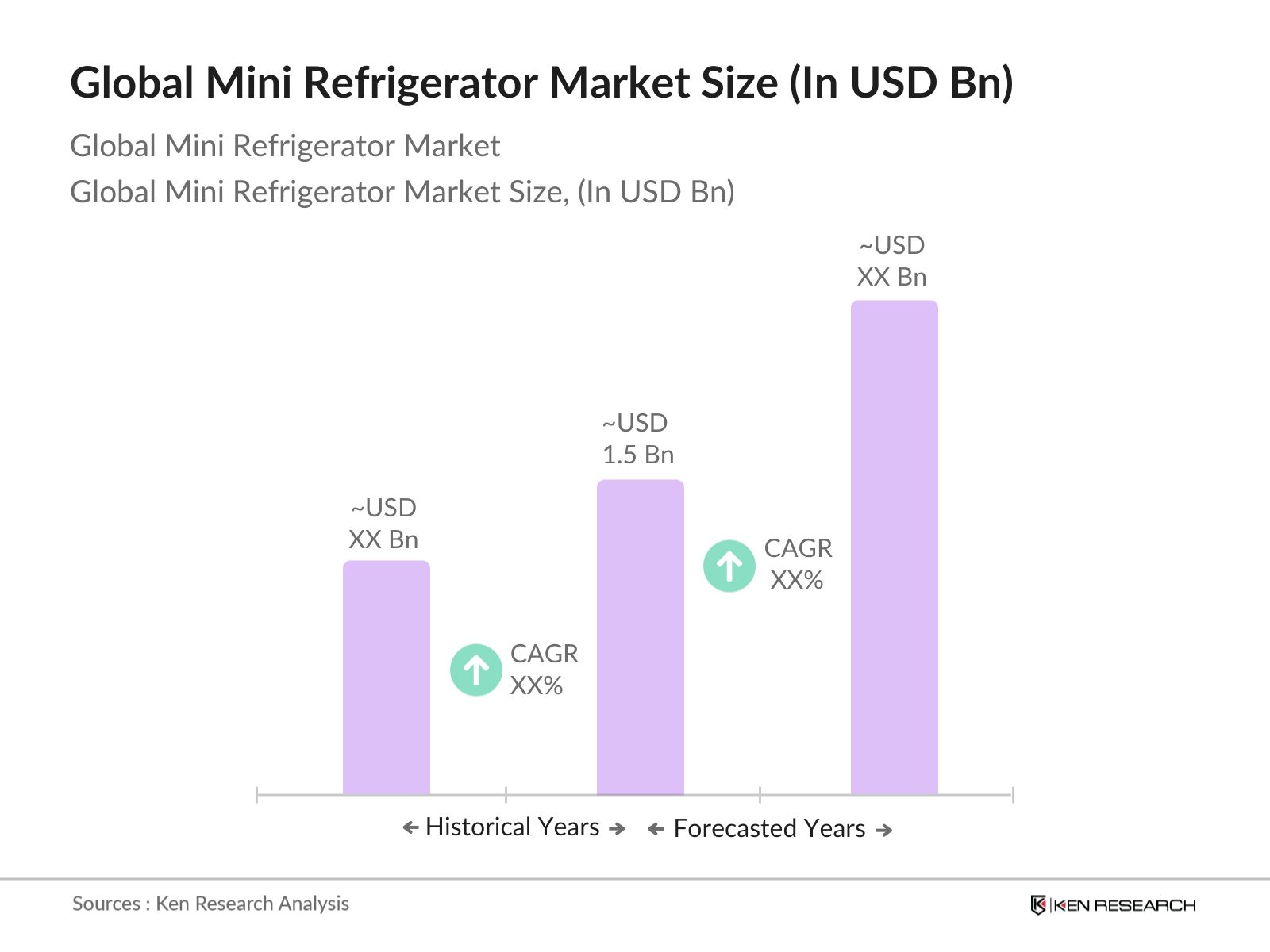
  • The global mini refrigerator market is valued at USD 1.5 billion, driven by the increasing demand for compact and energy-efficient cooling solutions. The rise in urbanization, smaller living spaces, and the growing hospitality sector are major factors propelling the demand for mini refrigerators. Consumers are prioritizing appliances that offer convenience and space efficiency, which has pushed manufacturers to innovate in terms of design and functionality.
  • Countries like the United States, China, and Japan dominate the global mini refrigerator market due to their advanced economies, urban population, and flourishing hospitality sectors. The presence of global hospitality chains and a robust tourism industry have created a sustained demand for compact refrigeration solutions. Additionally, the increasing trend of tiny homes and urban apartments has bolstered sales in these regions.
  • Energy efficiency standards continue to shape the mini refrigerator market, with governments implementing stricter regulations. In 2023, the U.S. Environmental Protection Agencys (EPA) Energy Star program included specific criteria for compact refrigerators, requiring them to consume 20% less energy than standard models. In the European Union, energy labeling mandates ensure that all refrigerators, including mini models, are rated for efficiency, which affects consumer purchasing decisions.

Global Mini Refrigerator Market Size

Global Mini Refrigerator Market Segmentation

  • By Product Type: The global mini refrigerator market is segmented by product type into single door, double door, and portable mini refrigerators. Single door mini refrigerators have a dominant market share under this segmentation, primarily due to their compact design and affordability, making them a popular choice for dormitories and small apartments. Furthermore, their energy-efficient features appeal to environmentally conscious consumers who seek practical solutions for limited space.
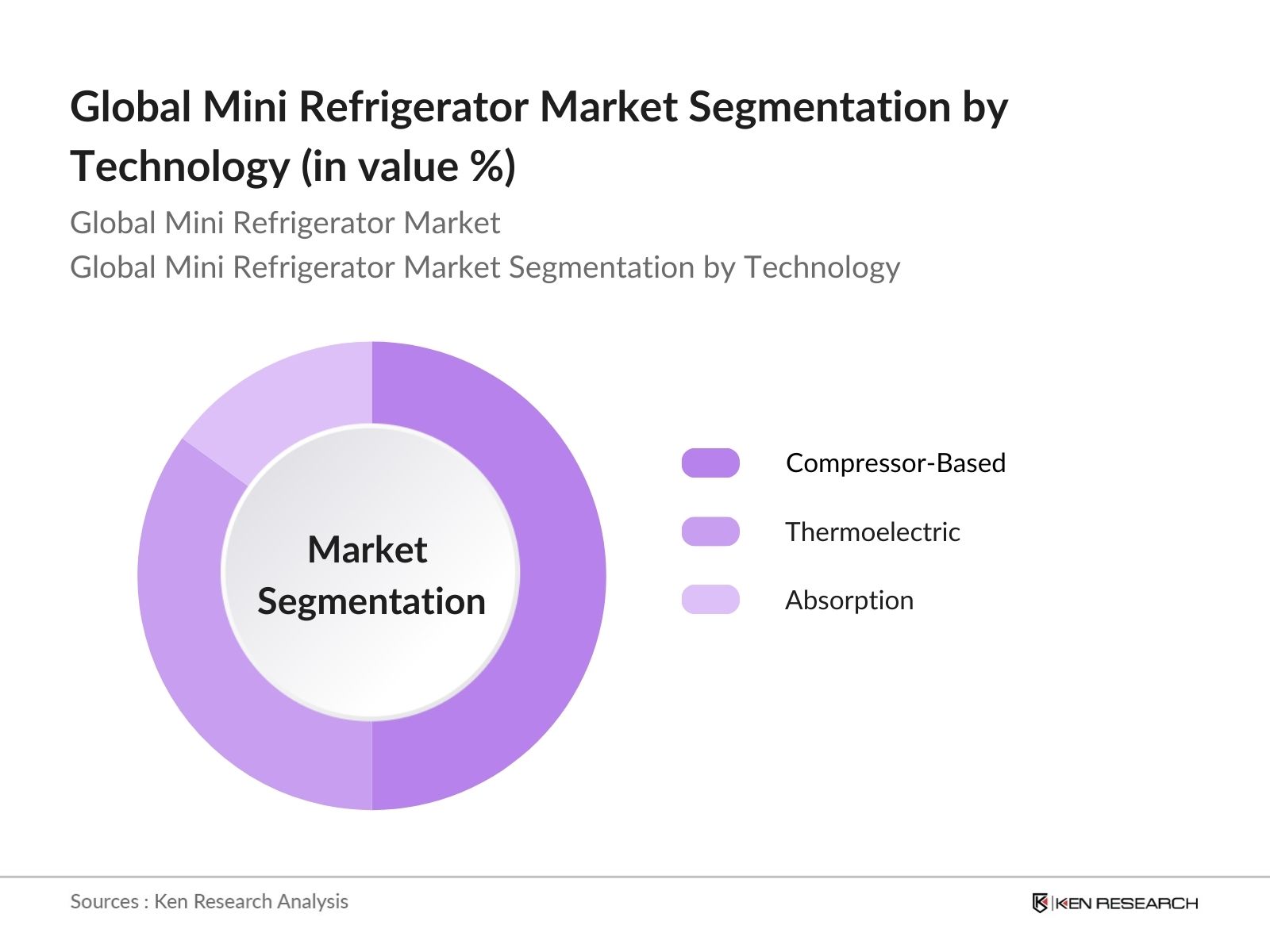
  • By Technology: The market is divided into compressor-based, thermoelectric, and absorption refrigerators. Compressor-based refrigerators hold a major share in the market because they provide superior cooling performance, especially in commercial applications like hotels and offices. These units are known for their durability and efficiency, making them the preferred choice in regions with high ambient temperatures.

Global Mini Refrigerator Market Segmentation By Technology

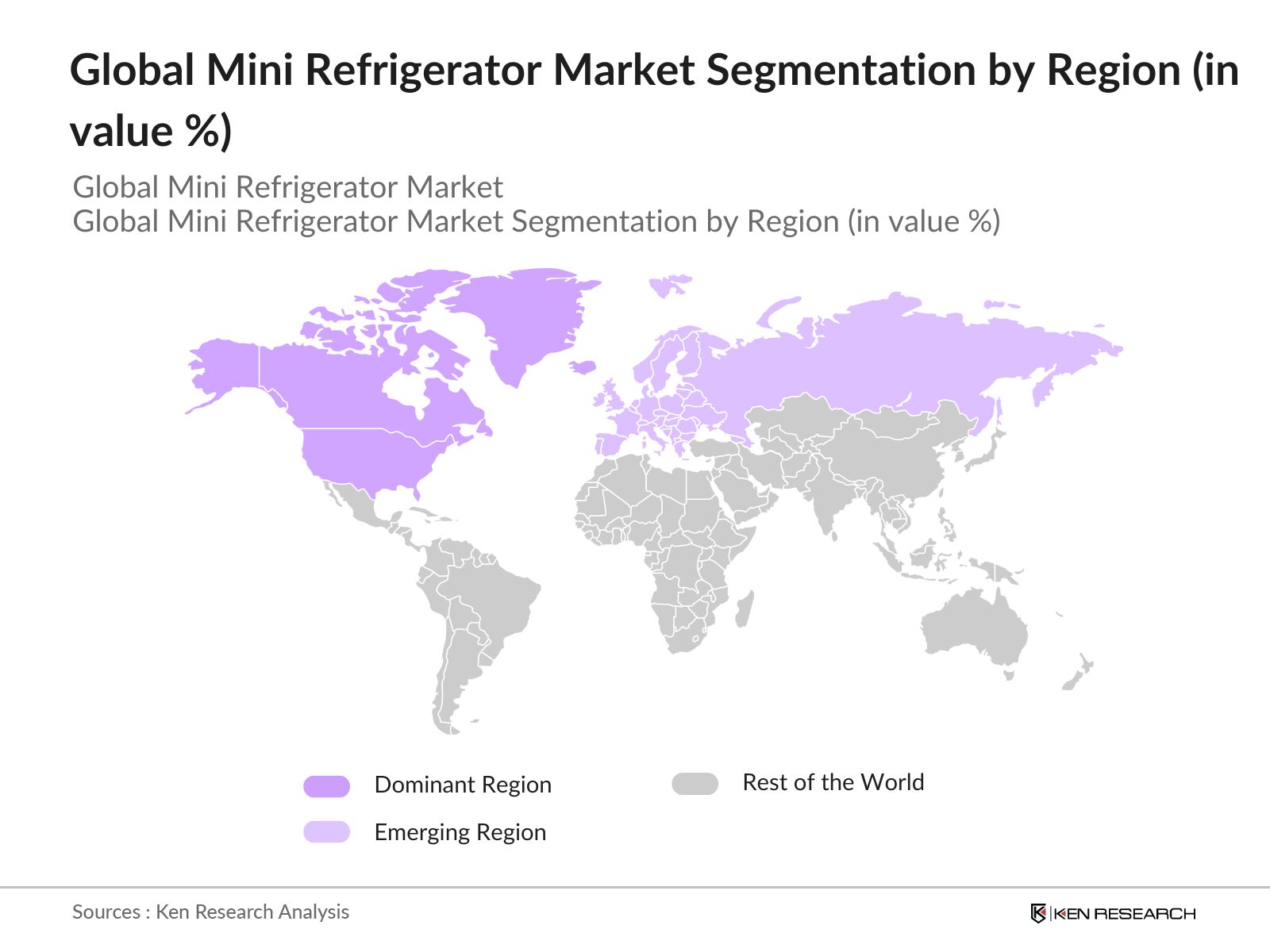
  • By Region: The global mini refrigerator market is segmented into North America, Europe, Asia Pacific, Middle East & Africa, and Latin America. North America holds the dominant share in this market due to its well-established hospitality and real estate industries. The rising trend of tiny homes and studio apartments has further driven the demand for compact refrigeration in the region, and favorable government energy efficiency policies have encouraged the adoption of energy-saving models.

Global Mini Refrigerator Market Segmentation By Region

Global Mini Refrigerator Market Competitive Landscape

The global mini refrigerator market is characterized by the presence of numerous key players who focus on product innovation, energy efficiency, and expanding their distribution networks to maintain their market positions. The market is dominated by a few major players, including Haier, Whirlpool, and Samsung, among others. These companies leverage their global reach and strong distribution networks to stay competitive.

Company

Establishment Year

Headquarters

Market Focus

No. of Employees

Revenue (2023)

Product Range

Sustainability Initiatives

Haier Group Corporation

1984

Qingdao, China

-

-

-

-

-

Whirlpool Corporation

1911

Michigan, USA

-

-

-

-

-

Samsung Electronics

1969

Suwon, South Korea

-

-

-

-

-

LG Electronics

1958

Seoul, South Korea

-

-

-

-

-

Electrolux AB

1919

Stockholm, Sweden

-

-

-

-

-

Global Mini Refrigerator Market Analysis

Global Mini Refrigerator Market Growth Drivers

  • Demand for Compact Living Solutions: The global demand for mini refrigerators is driven by the rising trend of compact living, particularly in urban areas. According to the United Nations, 56.2% of the global population resides in urban areas, and this is expected to rise further, fueling demand for space-efficient appliances such as mini refrigerators. The need for compact appliances is particularly acute in high-density urban centers where living spaces are small. In the United States, over 80% of households are in metropolitan areas, which has led to a higher demand for small and energy-efficient appliances.
  • Growing Tourism and Hospitality Industry: The hospitality industry has become a substantial growth driver for the mini refrigerator market. According to the World Tourism Organization, international tourist arrivals reached 1.4 billion in 2022, resulting in higher demand for hotel amenities such as mini-bar refrigerators. In addition, the rise of budget and boutique hotels, which often use mini-refrigerators in guest rooms, contributes to this demand. The US hospitality industry alone generated over $200 billion in revenue, with mini-refrigerators being a standard offering in most hotels and motels.
  • Energy Efficiency Regulations: Energy efficiency standards have been a key factor in driving demand for mini refrigerators as governments push for more environmentally friendly appliances. In the European Union, the implementation of the Energy Efficiency Directive mandates energy savings of 32.5% by 2030, impacting appliance manufacturers. In the U.S., standards set by the Department of Energy require that all refrigerators, including mini models, meet specific energy efficiency thresholds. These regulations have increased the demand for mini refrigerators that comply with these rules, offering a smaller environmental footprint.

Global Mini Refrigerator Market Challenges

  • High Competition from Regular Refrigerators: Despite growing demand for mini refrigerators, the market faces competition from regular-sized models. In 2023, global refrigerator shipments surpassed 300 million units, with the majority being standard-sized refrigerators. Many consumers prefer these larger models, particularly in regions with lower space constraints. Furthermore, advancements in energy efficiency and storage capacity in regular refrigerators have made them more appealing, limiting the market share of mini refrigerators.
  • Supply Chain Disruptions: The global supply chain for electronic components, including semiconductors, has experienced disruptions due to geopolitical tensions and the COVID-19 pandemic. According to the World Trade Organization, the shortage of essential components has affected over 50% of home appliance manufacturers in 2023, leading to production delays and higher costs. This has particularly impacted smaller appliance markets, like mini refrigerators, which depend on timely access to components for production and distribution.

Global Mini Refrigerator Market Future Outlook

Over the next few years, the global mini refrigerator market is expected to grow substantially, driven by advancements in smart refrigeration technologies and increased demand for energy-efficient solutions. Manufacturers are investing in research and development to cater to the growing demand for connected and automated appliances. Moreover, rising consumer awareness about sustainability and government incentives for energy-efficient appliances will further accelerate market growth. The Asia Pacific region is likely to emerge as a lucrative market, supported by rapid urbanization and increased disposable income.

Global Mini Refrigerator Market Opportunities

  • Technological Advancements: Technological advancements, particularly in smart home appliances, present opportunities for mini refrigerator manufacturers. According to the International Data Corporation (IDC), global shipments of smart home devices, including smart refrigerators, reached 897 million units in 2023. Mini refrigerators integrated with smart features, such as IoT connectivity, temperature control via mobile apps, and energy monitoring, are gaining traction, particularly among tech-savvy consumers in urban areas. The availability of these features enhances the value proposition for mini refrigerators in premium segments.
  • Growth of E-Commerce for Appliance Sales: E-commerce platforms have contributed to the rise in mini refrigerator sales. According to the United Nations Conference on Trade and Development (UNCTAD), global e-commerce sales reached $5.2 trillion in 2022, with a notable increase in home appliance categories. Platforms like Amazon, Flipkart, and Alibaba have made it easier for consumers to purchase mini refrigerators online, with flexible financing and home delivery options further driving sales. The convenience of online shopping has especially benefited the urban population with limited time for in-store visits.

Scope of the Report

Product Type

Single Door

Double Door

Portable

Application

Residential

Commercial

Recreational Vehicles

Dormitories

Technology

Compressor-Based

Thermoelectric

Absorption

Distribution Channel

Offline (Retail Stores, Appliance Chains)

Online (E-Commerce, Brand Websites)

Region

North America

Europe

Asia Pacific

Middle East & Africa

Latin America

Products


Key Target Audience

  • Hospitality Chains

  • Residential Developers

  • Retailers and E-commerce Companies

  • Government and Regulatory Bodies (Energy Star Program, EPA)

  • Investors and Venture Capitalist Firms

  • Electronics Manufacturers

  • Banks and Financial Institutions

  • Travel and Recreational Vehicle Manufacturers

  • Appliance Distributors and Wholesalers

Companies


Players Mentioned in the Report

  • Haier Group Corporation

  • Whirlpool Corporation

  • Samsung Electronics

  • LG Electronics

  • Electrolux AB

  • Danby Appliances

  • Midea Group

  • Panasonic Corporation

  • Godrej Appliances

  • Hisense Co. Ltd.

Table of Contents

1. Global Mini Refrigerator Market Overview1.1. Definition and Scope

1.2. Market Taxonomy

1.3. Market Growth Rate

1.4. Market Segmentation Overview

2. Global Mini Refrigerator Market Size (In USD Bn)

2.1. Historical Market Size

2.2. Year-On-Year Growth Analysis

2.3. Key Market Developments and Milestones

3. Global Mini Refrigerator Market Analysis

3.1. Growth Drivers

3.1.1. Demand for Compact Living Solutions

3.1.2. Growing Tourism and Hospitality Industry

3.1.3. Energy Efficiency Regulations

3.1.4. Urbanization and Increasing Disposable Income

3.2. Market Challenges

3.2.1. High Competition from Regular Refrigerators

3.2.2. Supply Chain Disruptions (Component Shortages)

3.2.3. Price Sensitivity in Developing Markets

3.3. Opportunities

3.3.1. Technological Advancements (Smart Refrigerators)

3.3.2. Growth of E-Commerce for Appliance Sales

3.3.3. Customization and Mini-Bar Industry Growth

3.4. Trends

3.4.1. Integration of Smart Features (Wi-Fi, IoT)

3.4.2. Sustainable and Eco-Friendly Refrigerators

3.4.3. Growth in Dormitory and Small Office Spaces

3.5. Regulatory Framework

3.5.1. Energy Efficiency Standards (Region-specific Regulations)

3.5.2. Environmental Policies on Refrigerants

3.5.3. Certification Requirements (Energy Star, etc.)

3.6. SWOT Analysis

3.7. Stakeholder Ecosystem

3.8. Porters Five Forces

3.9. Competitive Ecosystem

4. Global Mini Refrigerator Market Segmentation

4.1. By Product Type (In Value %)

4.1.1. Single Door Mini Refrigerators

4.1.2. Double Door Mini Refrigerators

4.1.3. Portable Mini Refrigerators

4.2. By Application (In Value %)

4.2.1. Residential

4.2.2. Commercial (Hotels, Offices)

4.2.3. Recreational Vehicles (Camping, Travel)

4.2.4. Dormitories

4.3. By Technology (In Value %)

4.3.1. Compressor-Based Refrigerators

4.3.2. Thermoelectric Refrigerators

4.3.3. Absorption Refrigerators

4.4. By Distribution Channel (In Value %)

4.4.1. Offline (Retail Stores, Appliance Chains)

4.4.2. Online (E-Commerce Platforms, Brand Websites)

4.5. By Region (In Value %)

4.5.1. North America

4.5.2. Europe

4.5.3. Asia Pacific

4.5.4. Middle East & Africa

4.5.5. Latin America

5. Global Mini Refrigerator Market Competitive Analysis

5.1. Detailed Profiles of Major Companies

5.1.1. Haier Group Corporation

5.1.2. Danby Appliances

5.1.3. Electrolux AB

5.1.4. Whirlpool Corporation

5.1.5. LG Electronics

5.1.6. Samsung Electronics

5.1.7. Godrej Appliances

5.1.8. Hisense Co. Ltd.

5.1.9. Midea Group

5.1.10. Panasonic Corporation

5.1.11. SMEG S.p.A.

5.1.12. Liebherr Group

5.1.13. Avanti Products

5.1.14. EdgeStar

5.1.15. Black+Decker

5.2. Cross Comparison Parameters (No. of Employees, Headquarters, Product Range, Revenue, Market Share, Distribution Channels, Innovation Rate, Energy Efficiency Compliance)

5.3. Market Share Analysis

5.4. Strategic Initiatives

5.5. Mergers and Acquisitions

5.6. Investment Analysis

5.7. Venture Capital Funding

5.8. Private Equity Investments

6. Global Mini Refrigerator Market Regulatory Framework

6.1. Environmental Standards

6.2. Compliance Requirements

6.3. Certification Processes

7. Global Mini Refrigerator Future Market Size (In USD Bn)

7.1. Future Market Size Projections

7.2. Key Factors Driving Future Market Growth

8. Global Mini Refrigerator Future Market Segmentation

8.1. By Product Type (In Value %)

8.2. By Application (In Value %)

8.3. By Technology (In Value %)

8.4. By Distribution Channel (In Value %)

8.5. By Region (In Value %)

9. Global Mini Refrigerator Market Analysts Recommendations

9.1. TAM/SAM/SOM Analysis

9.2. Customer Cohort Analysis

9.3. Marketing Initiatives

9.4. White Space Opportunity Analysis

Disclaimer Contact Us

Research Methodology

Step 1: Identification of Key Variables

The research process begins with mapping the ecosystem, involving detailed desk research to identify all major stakeholders in the global mini refrigerator market. Various credible databases, including proprietary and secondary data sources, are used to define the variables influencing market dynamics.

Step 2: Market Analysis and Construction

This phase involves the collection and analysis of historical market data, covering product penetration, consumer demand, and competitive landscape. The revenue analysis also considers variations across different product types and regions, ensuring data accuracy.

Step 3: Hypothesis Validation and Expert Consultation

Key market hypotheses are tested through consultations with industry experts, leveraging Computer-Assisted Telephone Interviews (CATIs) with manufacturers and distributors. These interactions provide qualitative insights to support the data findings.

Step 4: Research Synthesis and Final Output

In this final phase, the data collected from both primary and secondary research is synthesized to form the reports output. Comprehensive validation processes ensure the accuracy of market insights and projections.

Frequently Asked Questions

01. How big is the Global Mini Refrigerator Market?

The global mini refrigerator market is valued at USD 1.5 billion, driven by increasing demand for compact, energy-efficient cooling solutions in residential and commercial sectors.

02. What are the challenges in the Global Mini Refrigerator Market?

Challenges in the global mini refrigerator market include supply chain disruptions, especially for key components like compressors, and high competition from larger refrigerator models in price-sensitive markets.

03. Who are the major players in the Global Mini Refrigerator Market?

Key players in the global mini refrigerator market include Haier Group Corporation, Whirlpool Corporation, Samsung Electronics, LG Electronics, and Electrolux AB, all of which have strong global presence and innovation capabilities.

04. What are the growth drivers of the Global Mini Refrigerator Market?

The global mini refrigerator market is propelled by the rising trend of compact living, growth in hospitality, and increasing consumer preference for energy-efficient appliances. Advances in smart technology are also contributing to the markets growth.

Why Buy From Us?

RRR
Refine Robust Result (RRR) Framework

What makes us stand out is that our consultants follows Robust, Refine and Result (RRR) methodology. i.e. Robust for clear definitions, approaches and sanity checking, Refine for differentiating respondents facts and opinions and Result for presenting data with story

Our Reach Is Unmatched

We have set a benchmark in the industry by offering our clients with syndicated and customized market research reports featuring coverage of entire market as well as meticulous research and analyst insights.

Research
Shifting the Research Paradigm

While we don't replace traditional research, we flip the method upside down. Our dual approach of Top Bottom & Bottom Top ensures quality deliverable by not just verifying company fundamentals but also looking at the sector and macroeconomic factors.

Insite
More Insights-Better Decisions

With one step in the future, our research team constantly tries to show you the bigger picture. We help with some of the tough questions you may encounter along the way: How is the industry positioned? Best marketing channel? KPI's of competitors? By aligning every element, we help maximize success.

Trust
Transparency and Trust

Our report gives you instant access to the answers and sources that other companies might choose to hide. We elaborate each steps of research methodology we have used and showcase you the sample size to earn your trust.

support
Round the Clock Support

If you need any support, we are here! We pride ourselves on universe strength, data quality, and quick, friendly, and professional service.

Why Client Choose Us?

400000+ Reports in repository
150+ Consulting project a year
100+ Analysts
8000+ Client Queries in 2022