
Global Mobility Devices Market Outlook 2030
Region:Global
Author(s):Shivani Mehra
Product Code:KROD11227
December 2024
97
About the Report
Global Mobility Devices Market Overview
- The Global Mobility Devices Market has experienced significant growth due to increasing demand from aging populations, rising mobility disorders, and advancements in assistive technologies. Valued at approximately USD 11.30 billion, the market includes a wide range of devices designed to aid mobility for individuals with disabilities or mobility impairments. Key products include wheelchairs, scooters, walkers, and wearable mobility aids. The market growth is supported by increased accessibility, government support for disability assistance, and a growing emphasis on comfort, convenience, and technology in mobility devices.
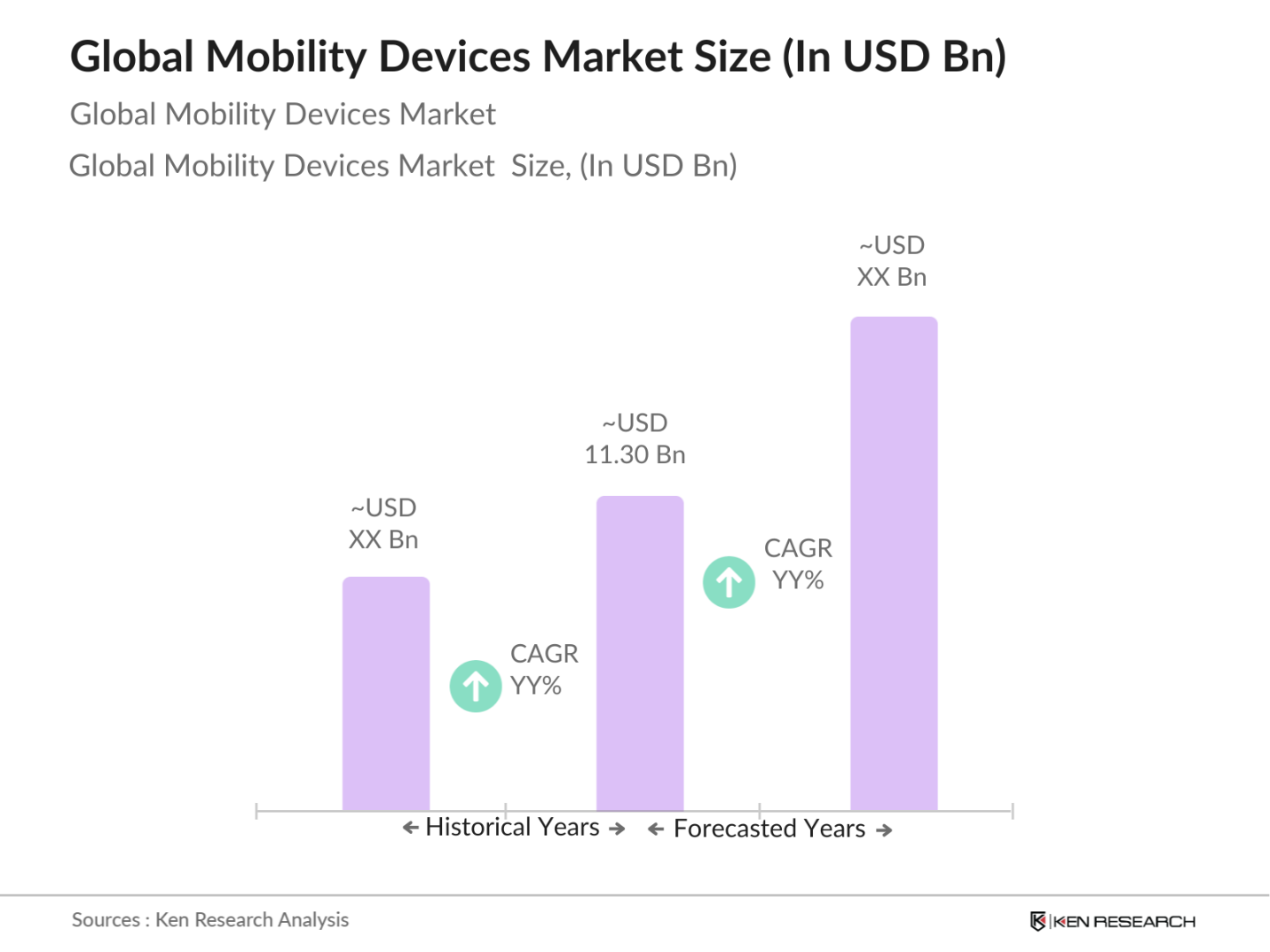
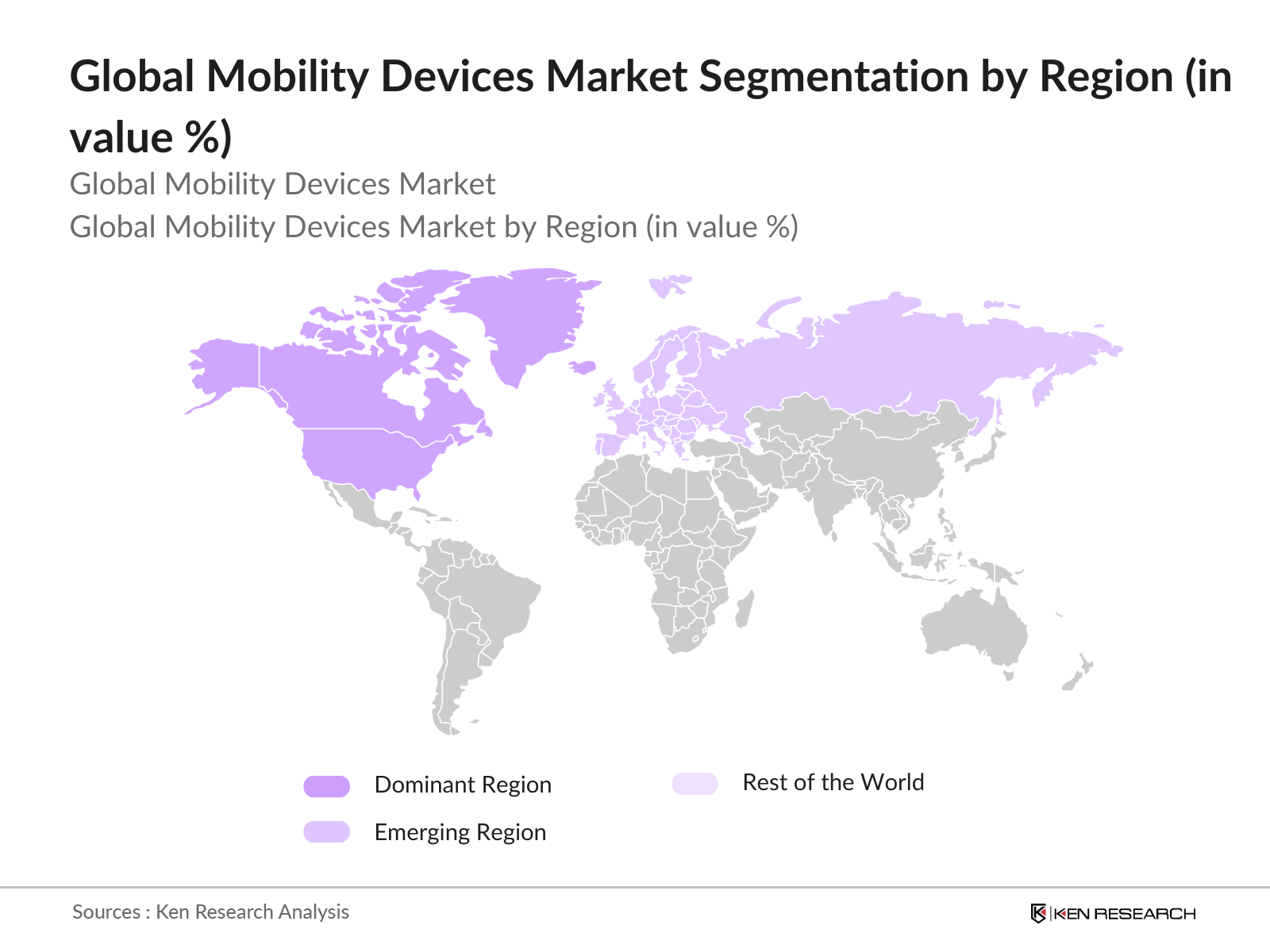
- North America holds the largest market share due to high healthcare expenditure, well-developed infrastructure, and strong insurance coverage for mobility devices. Europe follows, with a high adoption rate driven by government initiatives for elderly support. The Asia-Pacific region is expected to witness rapid growth, propelled by a large aging population, increasing awareness, and improved healthcare access in countries like Japan, China, and India.
- Governments worldwide classify mobility devices as medical devices, subjecting them to stringent regulatory standards for safety and efficacy. In the U.S., the FDA categorizes wheelchairs and similar aids as Class II medical devices, requiring specific safety and performance standards. These classifications ensure that mobility devices meet essential health and safety criteria, but they also increase the regulatory burden for manufacturers. Compliance with these classification standards is crucial for market entry and aligns with patient safety objectives.
Global Mobility Devices Market Segmentation
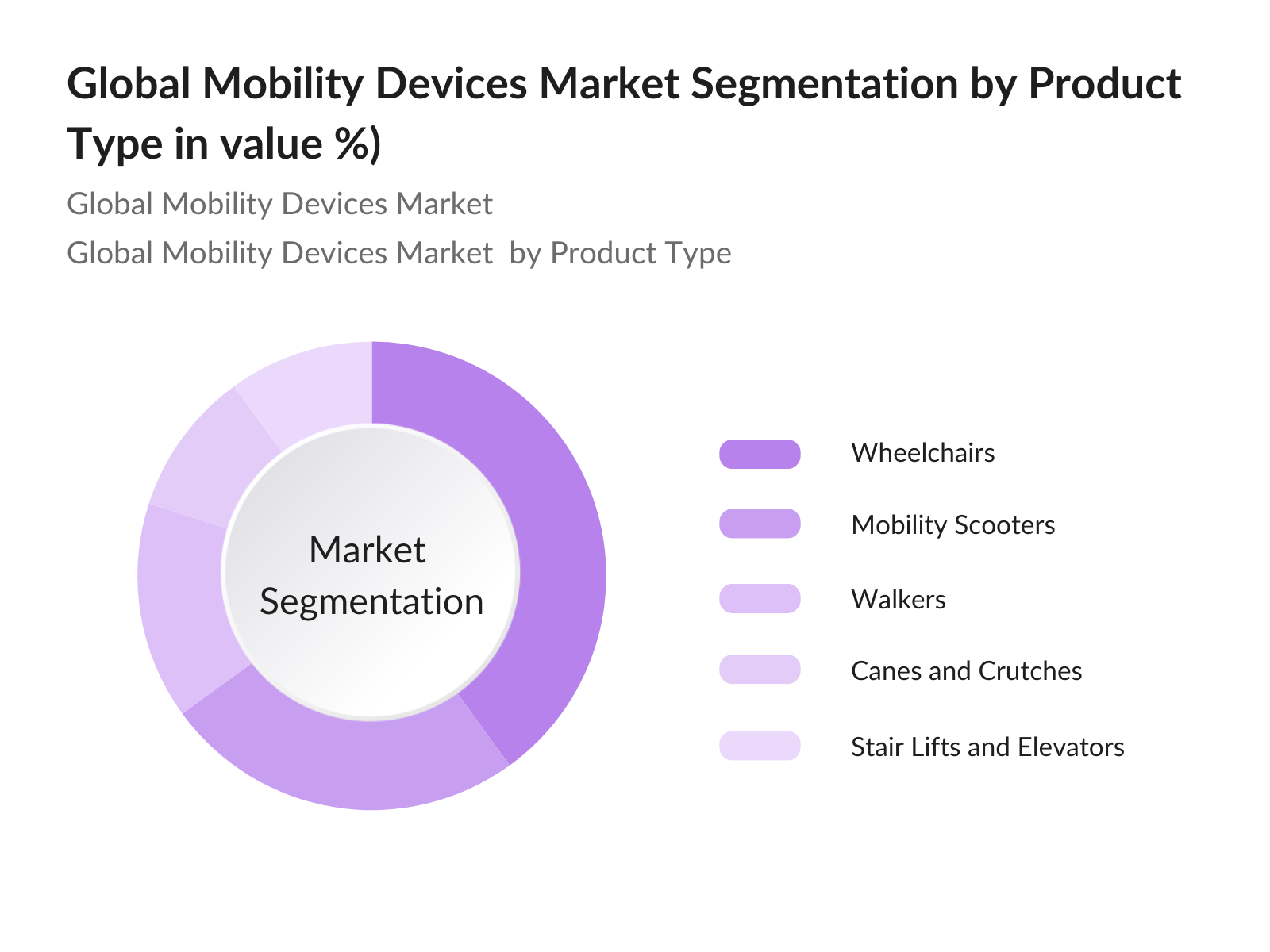
By Product Type: The Mobility Devices Market is segmented by product type into wheelchairs, mobility scooters, walkers, canes and crutches, and stair lifts and elevators. Wheelchairs hold the largest market share, widely used in both personal and medical settings for various mobility needs. Mobility scooters are gaining popularity, particularly among the elderly, due to ease of use and electric propulsion.
By Region: The Mobility Devices Market is segmented by region into North America, Europe, Asia-Pacific, Latin America, and the Middle East & Africa. North America leads the market with a strong healthcare infrastructure and high expenditure on mobility aids. Europe is a significant market due to high government support for elderly care, while Asia-Pacific is expected to grow rapidly due to its large aging population and increasing healthcare access.
Global Mobility Devices Market Competitive Landscape
The Global Mobility Devices Market is highly competitive, with major companies focusing on technological advancements, innovative product design, and expanding their distribution networks. Leading companies such as Invacare Corporation, Drive DeVilbiss Healthcare, and Sunrise Medical dominate the market with extensive product portfolios, strong distribution channels, and focus on quality and innovation. The competitive landscape is shaped by strategic partnerships, acquisitions, and investments in R&D for smarter and more convenient mobility devices.
|
Company |
Establishment Year |
Headquarters |
Employees |
Revenue |
Product Range |
Technological Advancements |
Customer Satisfaction Ratings |
Global Presence |
|
Invacare Corporation |
1885 |
Elyria, USA |
||||||
|
Drive DeVilbiss Healthcare |
2000 |
Pennsylvania, USA |
||||||
|
Sunrise Medical |
1983 |
Malsch, Germany |
||||||
|
Ottobock Healthcare |
1919 |
Duderstadt, Germany |
||||||
|
Pride Mobility Products |
1986 |
Pennsylvania, USA |
Global Mobility Devices Market Analysis
Market Growth Drivers
- Increase in Global Aging Population Driving Demand for Mobility Solutions: The global aging population is a significant driver for the mobility devices market, as the number of individuals aged 65 and older surpassed 700 million in 2023. Mobility impairments are common in this demographic, increasing the demand for assistive devices like wheelchairs, walkers, and mobility scooters. In developed regions such as North America and Europe, where over of the population is above 60, the demand for mobility aids is particularly high. This trend reflects the essential role mobility devices play in supporting independence and quality of life among older adults.
- Rise in Mobility Disorders Due to Lifestyle and Health Factors: The prevalence of mobility disorders has risen due to lifestyle and health-related factors, such as obesity and arthritis. Globally, nearly 200 million people suffer from osteoarthritis, a condition that often results in reduced mobility. This increase in mobility-related conditions has fueled demand for devices that assist with movement and support. The rise in conditions like stroke, spinal cord injuries, and degenerative diseases further amplifies the need for mobility aids, driving market growth as healthcare systems aim to support mobility-impaired individuals.
- Increased Awareness and Accessibility in Emerging Markets: Increased awareness and accessibility in emerging markets are driving growth in the mobility devices sector. In countries such as China and India, government programs and NGO initiatives are raising awareness about mobility aids, providing financial support, and increasing access to these devices. As healthcare infrastructure improves in these regions, the demand for mobility devices is expected to rise, providing growth opportunities for manufacturers and suppliers to cater to these underserved markets.
Market Challenges:
- High Costs of Advanced Mobility Devices Limiting Adoption: Advanced mobility devices, such as power wheelchairs and mobility scooters, are often costly, limiting their adoption, particularly among low-income populations. In 2023, high-end power wheelchairs cost over $5,000 on average, making them unaffordable for many. The high costs are due to the use of advanced technologies, specialized materials, and stringent quality standards. This price barrier restricts access to essential mobility aids, especially in developing regions where healthcare coverage is limited, posing a challenge for industry growth.
- Limited Accessibility in Low-Income Regions: In low-income regions, accessibility to mobility devices remains limited due to inadequate healthcare infrastructure, low awareness, and financial constraints. In sub-Saharan Africa, for example, only a small fraction of those requiring mobility aids have access to them due to a lack of distribution networks and financial support. This disparity restricts market reach and impacts quality of life for individuals who lack access to necessary mobility assistance, making accessibility a key challenge for the mobility devices market.
Global Mobility Devices Market Future Outlook
Over the next five years, the Mobility Devices Market is expected to grow due to the increasing aging population, technological advancements in assistive devices, and government initiatives for disability and elderly support. Innovations in smart mobility solutions, including IoT-enabled wheelchairs and mobility aids with fall-detection features, are expected to drive growth. Asia-Pacific will likely see significant expansion as awareness, accessibility, and healthcare infrastructure improve.
Market Opportunities:
- Expansion Opportunities in Developing Economies with Aging Populations: Developing economies, particularly in Asia and Latin America, present significant growth opportunities for mobility device manufacturers. As populations age and income levels rise in these regions, the demand for affordable and accessible mobility devices is increasing. Governments in these regions are investing in healthcare infrastructure and providing support for elderly care, creating a favorable environment for market expansion. Companies can tap into these emerging markets by offering cost-effective mobility solutions that cater to the needs of aging populations.
- Partnerships with Healthcare Providers and Insurers to Improve Access: Partnerships with healthcare providers and insurance companies offer a pathway for increased adoption of mobility devices. Collaborations with hospitals, rehabilitation centers, and insurers facilitate funding and access to mobility devices for patients in need. In 2023, several major insurers began covering mobility devices as part of healthcare policies, reducing out-of-pocket costs for users. These partnerships provide an opportunity for manufacturers to expand their reach, improve device affordability, and enhance accessibility for end-users.
Scope of the Report
|
By Product Type |
Wheelchairs Mobility Scooters Walkers Canes and Crutches Stair Lifts and Elevators |
|
By Usage |
Personal Mobility Devices |
|
By End-User |
Elderly |
|
By Distribution Channel |
Hospitals and Pharmacies |
|
By Region |
North America |
Products
Key Target Audience
Elderly Individuals
Rehabilitation Centers and Hospitals
Disability Support Organizations
Government and Regulatory Bodies (e.g., ADA Compliance Authorities)
Investments and Venture Capitalist Firms
Retail Pharmacies and E-commerce Platforms
Healthcare Providers and Insurance Companies
Manufacturers of Assistive and Medical Devices
Companies
Players Mention in the Report
Invacare Corporation
Drive DeVilbiss Healthcare
Sunrise Medical
Ottobock Healthcare
GF Health Products, Inc.
Pride Mobility Products Corporation
Medline Industries, Inc.
Permobil AB
Hoveround Corporation
Karman Healthcare
Stryker Corporation
Meyra Group
Handicare Group AB
Besco Medical
ArjoHuntleigh
Table of Contents
1. Global Mobility Devices Market Overview
1.1 Definition and Scope
1.2 Market Taxonomy
1.3 Market Growth Rate
1.4 Market Segmentation Overview
2. Global Mobility Devices Market Size (In USD Billion)
2.1 Historical Market Size
2.2 Year-On-Year Growth Analysis
2.3 Key Market Developments and Milestones
3. Global Mobility Devices Market Analysis
3.1 Growth Drivers (Aging Population, Rise in Mobility Disorders, Technological Advancements)
Increase in Global Aging Population Driving Demand for Mobility Solutions
Rise in Mobility Disorders Due to Lifestyle and Health Factors
Technological Advancements Enabling Smart and Lightweight Mobility Devices
Increased Awareness and Accessibility in Emerging Markets
3.2 Market Challenges (High Costs, Limited Accessibility, Regulatory Approvals)
High Costs of Advanced Mobility Devices Limiting Adoption
Limited Accessibility in Low-Income Regions
Regulatory Hurdles for Medical Device Approval
3.3 Opportunities (Growth in Emerging Markets, Smart Mobility Devices, Partnerships with Healthcare Providers)
Expansion Opportunities in Developing Economies with Aging Populations
Rise of Smart and Connected Mobility Devices for Enhanced Safety
Partnerships with Healthcare Providers and Insurers to Improve Access
3.4 Trends (Wearable Mobility Aids, Lightweight and Foldable Devices, Online Retail Growth)
Growth in Wearable Mobility Aids and Assistive Technology
Shift Toward Lightweight and Foldable Mobility Devices for Convenience
Increase in Online Sales of Mobility Devices through E-commerce Platforms
3.5 Government Regulations (Medical Device Classification, Safety Standards, Accessibility Laws)
Medical Device Classification Standards for Mobility Devices
Safety and Quality Standards for Medical Devices
Accessibility Laws and Government Support for Disability Aids
3.6 SWOT Analysis
3.7 Stakeholder Ecosystem
3.8 Porters Five Forces Analysis
3.9 Competition Ecosystem
4. Global Mobility Devices Market Segmentation
4.1 By Product Type (In Value %)
Wheelchairs
Mobility Scooters
Walkers
Canes and Crutches
Stair Lifts and Elevators
4.2 By Usage (In Value %)
Personal Mobility Devices
Rehabilitation and Therapy Devices
Hospital-Based Mobility Solutions
4.3 By End-User (In Value %)
Elderly
Disabled Individuals
Rehabilitation Centers and Hospitals
4.4 By Distribution Channel (In Value %)
Hospitals and Pharmacies
Specialty Retail Stores
Online Platforms
4.5 By Region (In Value %)
North America
Europe
Asia-Pacific
Latin America
Middle East & Africa
5. Global Mobility Devices Market Competitive Analysis
5.1 Detailed Profiles of Major Companies
Invacare Corporation
Drive DeVilbiss Healthcare
Sunrise Medical
Ottobock Healthcare
GF Health Products, Inc.
Pride Mobility Products Corporation
Medline Industries, Inc.
Permobil AB
Hoveround Corporation
Karman Healthcare
Stryker Corporation
Meyra Group
Handicare Group AB
Besco Medical
ArjoHuntleigh
5.2 Cross Comparison Parameters (Headquarters, Inception Year, Revenue, Product Range, Technological Advancements, Customer Satisfaction Ratings, Global Presence)
5.3 Market Share Analysis
5.4 Strategic Initiatives
5.5 Mergers and Acquisitions
5.6 Investment Analysis
5.7 Government Investments in Disability and Elderly Support
5.8 Private Equity in Healthcare Devices
5.9 Venture Capital in Assistive Technology
6. Global Mobility Devices Market Regulatory Framework
6.1 Medical Device Classification and Approval Processes
6.2 Safety and Quality Standards for Assistive Devices
6.3 Accessibility and Disability Support Laws
7. Global Mobility Devices Market Future Size (In USD Billion)
7.1 Future Market Size Projections
7.2 Key Factors Driving Future Market Growth
8. Global Mobility Devices Market Future Segmentation
8.1 By Product Type (In Value %)
8.2 By Usage (In Value %)
8.3 By End-User (In Value %)
8.4 By Distribution Channel (In Value %)
8.5 By Region (In Value %)
9. Global Mobility Devices Market Analysts Recommendations
9.1 TAM/SAM/SOM Analysis
9.2 Customer Cohort Analysis
9.3 Marketing Initiatives
9.4 White Space Opportunity Analysis
Disclaimer Contact UsResearch Methodology
Step 1: Identification of Key Variables
The research started with identifying key drivers, such as demand for assistive devices among the elderly, rising prevalence of mobility disorders, and government support for disability assistance. Data was sourced from proprietary databases, government reports, and industry publications.
Step 2: Market Analysis and Construction
This phase involved historical data analysis on mobility device sales, segmentation by product type, and regional adoption rates. Trends like smart mobility and lightweight device innovation were also examined.
Step 3: Hypothesis Validation and Expert Consultation
Hypotheses were validated through expert consultations with healthcare providers, device manufacturers, and regulatory agencies. These insights ensured alignment of projections with industry trends and healthcare needs.
Step 4: Research Synthesis and Final Output
The final synthesis integrated quantitative data and qualitative insights, presenting a comprehensive analysis of the Mobility Devices Market, including growth drivers, challenges, and opportunities for stakeholders.
Frequently Asked Questions
01. How big is the Global Mobility Devices Market?
The global mobility devices market is valued at approximately USD 11.30 billion, driven by the aging population and demand for mobility aids for those with disabilities.
02. What are the challenges in the Global Mobility Devices Market?
Challenges include high costs of advanced devices, limited accessibility in low-income regions, and regulatory barriers impacting medical device approvals.
03. Who are the major players in the Global Mobility Devices Market?
Key players include Invacare Corporation, Drive DeVilbiss Healthcare, Sunrise Medical, Ottobock Healthcare, and Pride Mobility Products Corporation, known for their diverse product offerings.
04. What are the growth drivers of the Global Mobility Devices Market?
Growth drivers include the rising aging population, increased prevalence of mobility disorders, and advancements in assistive technology and smart mobility solutions.
Why Buy From Us?

What makes us stand out is that our consultants follows Robust, Refine and Result (RRR) methodology. i.e. Robust for clear definitions, approaches and sanity checking, Refine for differentiating respondents facts and opinions and Result for presenting data with story

We have set a benchmark in the industry by offering our clients with syndicated and customized market research reports featuring coverage of entire market as well as meticulous research and analyst insights.

While we don't replace traditional research, we flip the method upside down. Our dual approach of Top Bottom & Bottom Top ensures quality deliverable by not just verifying company fundamentals but also looking at the sector and macroeconomic factors.

With one step in the future, our research team constantly tries to show you the bigger picture. We help with some of the tough questions you may encounter along the way: How is the industry positioned? Best marketing channel? KPI's of competitors? By aligning every element, we help maximize success.

Our report gives you instant access to the answers and sources that other companies might choose to hide. We elaborate each steps of research methodology we have used and showcase you the sample size to earn your trust.

If you need any support, we are here! We pride ourselves on universe strength, data quality, and quick, friendly, and professional service.