
Global Movies and Entertainment Market Outlook to 2030
Region:Global
Author(s):Mukul
Product Code:KROD11106
Region:Global
Author(s):Mukul
Product Code:KROD11106
December 2024
118
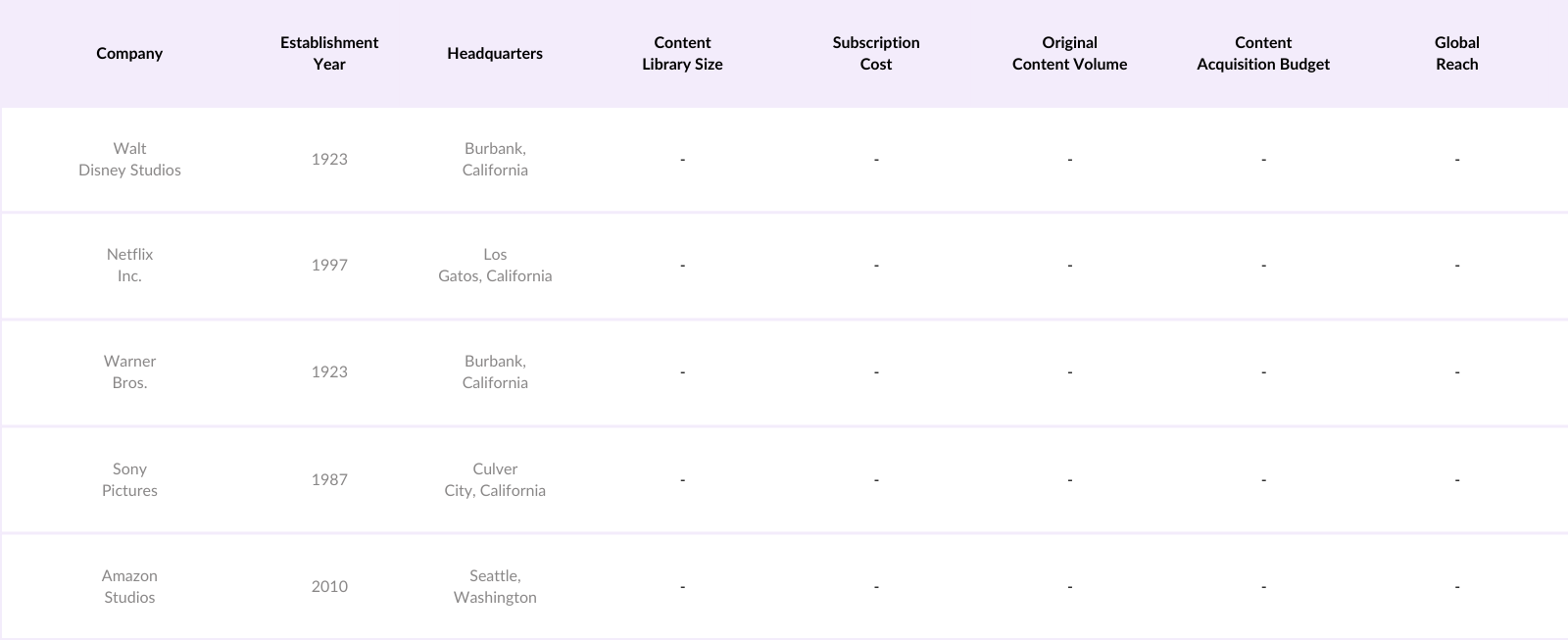
The global movies and entertainment market is consolidated, with a few key players controlling a significant portion of market share. Major companies like Walt Disney Studios and Netflix lead in revenue and content production, leveraging extensive distribution networks. The market remains competitive with constant innovation in content types, partnerships, and regional expansions.
Over the next five years, the global movies and entertainment market is anticipated to experience growth driven by the continued expansion of streaming services, technological advancements, and rising consumer demand for personalized and diverse content. Industry players are likely to invest in immersive technologies, such as augmented and virtual reality, to enhance the user experience and create more interactive content.
|
Content Type |
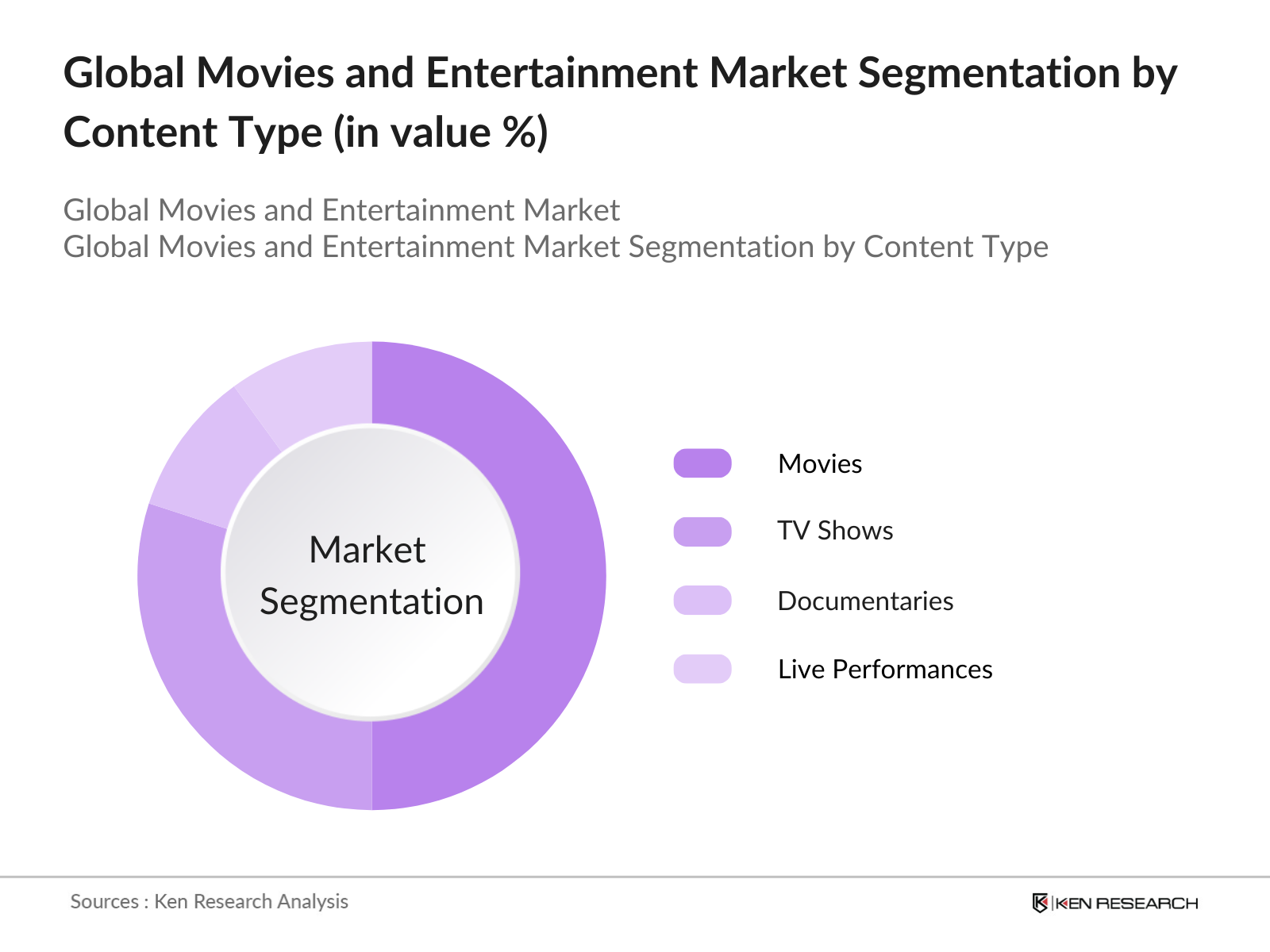
Movies TV Shows and Series Documentaries Live Performances Music/Audio |
|
Distribution Channel |
Theatrical Releases Streaming Platforms Cable and Satellite Physical Sales |
|
Genre |
Action Drama Comedy Thriller Animation |
|
Revenue Model |
Subscription-Based Pay-Per-View Advertising-Based Freemium |
|
Region |
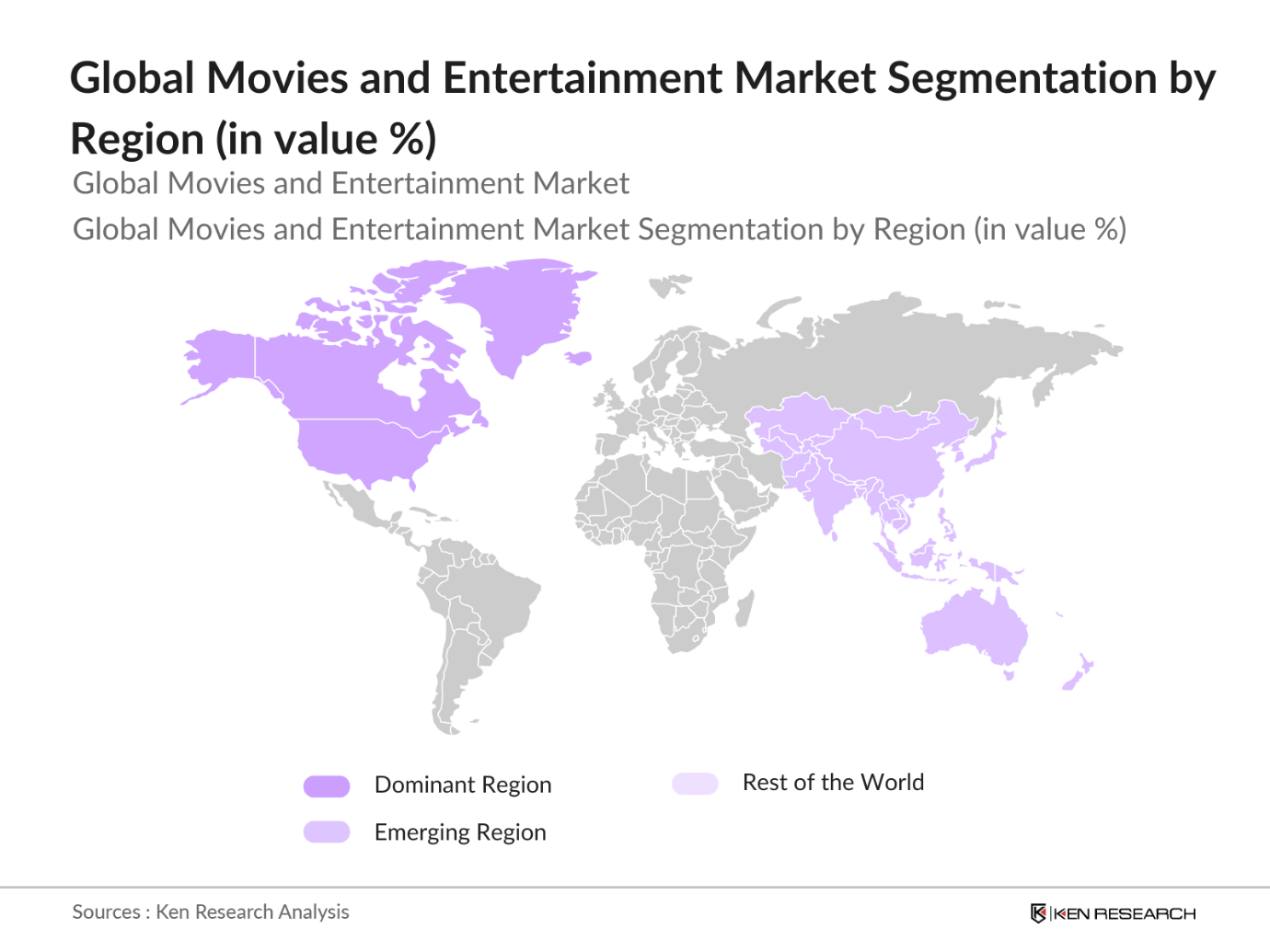
North America Europe Asia-Pacific Latin America Middle East & Africa |
1.1 Definition and Scope
1.2 Market Taxonomy
1.3 Market Growth Rate
1.4 Market Segmentation Overview
2.1 Historical Market Size
2.2 Year-on-Year Growth Analysis
2.3 Key Market Developments and Milestones
3.1 Growth Drivers
3.1.1 Increasing Digital Consumption
3.1.2 Expanding Streaming Platforms
3.1.3 Technological Advancements (AR, VR, AI in Content)
3.1.4 Global Expansion of Content Production
3.2 Market Challenges
3.2.1 Piracy Concerns
3.2.2 Content Censorship and Regulation
3.2.3 High Production Costs
3.2.4 Market Saturation in Developed Economies
3.3 Opportunities
3.3.1 New Revenue Streams through NFTs
3.3.2 Cross-Platform Content Integration
3.3.3 Growth in Emerging Markets
3.3.4 Collaborations with Telecom Operators
3.4 Trends
3.4.1 Rise of On-Demand Content
3.4.2 Interactive and Personalized Viewing Experiences
3.4.3 Expansion of Multilingual Content
3.4.4 Growth of Independent Filmmakers and Studios
3.5 Government Regulations
3.5.1 Digital Content Regulation Policies
3.5.2 Subsidies for Local Production
3.5.3 Export Regulations for Content
3.5.4 Intellectual Property (IP) Protections
3.6 SWOT Analysis
3.7 Value Chain Analysis
3.8 Porter's Five Forces
3.9 Competitive Ecosystem
4.1 By Content Type (in Value %)
4.1.1 Movies
4.1.2 TV Shows and Series
4.1.3 Documentaries
4.1.4 Live Performances and Events
4.1.5 Music and Audio Content
4.2 By Distribution Channel (in Value %)
4.2.1 Theatrical Releases
4.2.2 Digital/Streaming Platforms
4.2.3 Cable and Satellite
4.2.4 Physical Sales (DVDs, Blu-ray)
4.2.5 Licensing and Merchandising
4.3 By Genre (in Value %)
4.3.1 Action
4.3.2 Drama
4.3.3 Comedy
4.3.4 Thriller and Horror
4.3.5 Animation
4.4 By Revenue Model (in Value %)
4.4.1 Subscription-Based
4.4.2 Pay-Per-View
4.4.3 Advertising-Based
4.4.4 Freemium
4.5 By Region (in Value %)
4.5.1 North America
4.5.2 Europe
4.5.3 Asia-Pacific
4.5.4 Latin America
4.5.5 Middle East & Africa
5.1 Detailed Profiles of Major Companies
5.1.1 Walt Disney Studios
5.1.2 Netflix Inc.
5.1.3 Warner Bros. Entertainment
5.1.4 Universal Pictures
5.1.5 Sony Pictures Entertainment
5.1.6 Paramount Pictures
5.1.7 Lionsgate Films
5.1.8 Amazon Studios
5.1.9 Apple TV+
5.1.10 ViacomCBS
5.1.11 NBCUniversal Media
5.1.12 DreamWorks Animation
5.1.13 Metro-Goldwyn-Mayer (MGM)
5.1.14 Hulu LLC
5.1.15 HBO Max
5.2 Cross Comparison Parameters (Revenue, Content Library Size, Subscription Cost, Original Content Volume, Content Acquisition Budget, Global Reach, Genre Diversity, Partnerships)
5.3 Market Share Analysis
5.4 Strategic Initiatives
5.5 Mergers and Acquisitions
5.6 Investment Analysis
5.7 Joint Ventures and Collaborations
5.8 Technological Innovations
5.9 Content Licensing and Syndication Agreements
6.1 Content Licensing Standards
6.2 Data Protection and Privacy Laws
6.3 Copyright and Anti-Piracy Regulations
6.4 Content Classification Standards
7.1 Future Market Size Projections
7.2 Key Factors Driving Future Market Growth
8.1 By Content Type (in Value %)
8.2 By Distribution Channel (in Value %)
8.3 By Genre (in Value %)
8.4 By Revenue Model (in Value %)
8.5 By Region (in Value %)
9.1 Market Penetration Strategies
9.2 Consumer Cohort Analysis
9.3 Targeted Advertising Initiatives
9.4 White Space Opportunity Analysis
Disclaimer Contact Us
The first step involved identifying all relevant stakeholders within the global movies and entertainment market. Extensive desk research was conducted using secondary databases to define critical variables influencing market performance.
In this stage, historical data for the movies and entertainment market was collected, with a focus on market penetration, subscription rates, and revenue generated. This also included quality assessments for market segment accuracy.
Market hypotheses were validated through expert interviews, providing insights into industry challenges, trends, and projections. Consultations were instrumental in validating the accuracy of the dataset.
The final synthesis stage included cross-verifying data with top industry players to acquire insights on market trends and segmentation. This ensured a comprehensive and validated analysis of the global movies and entertainment market.
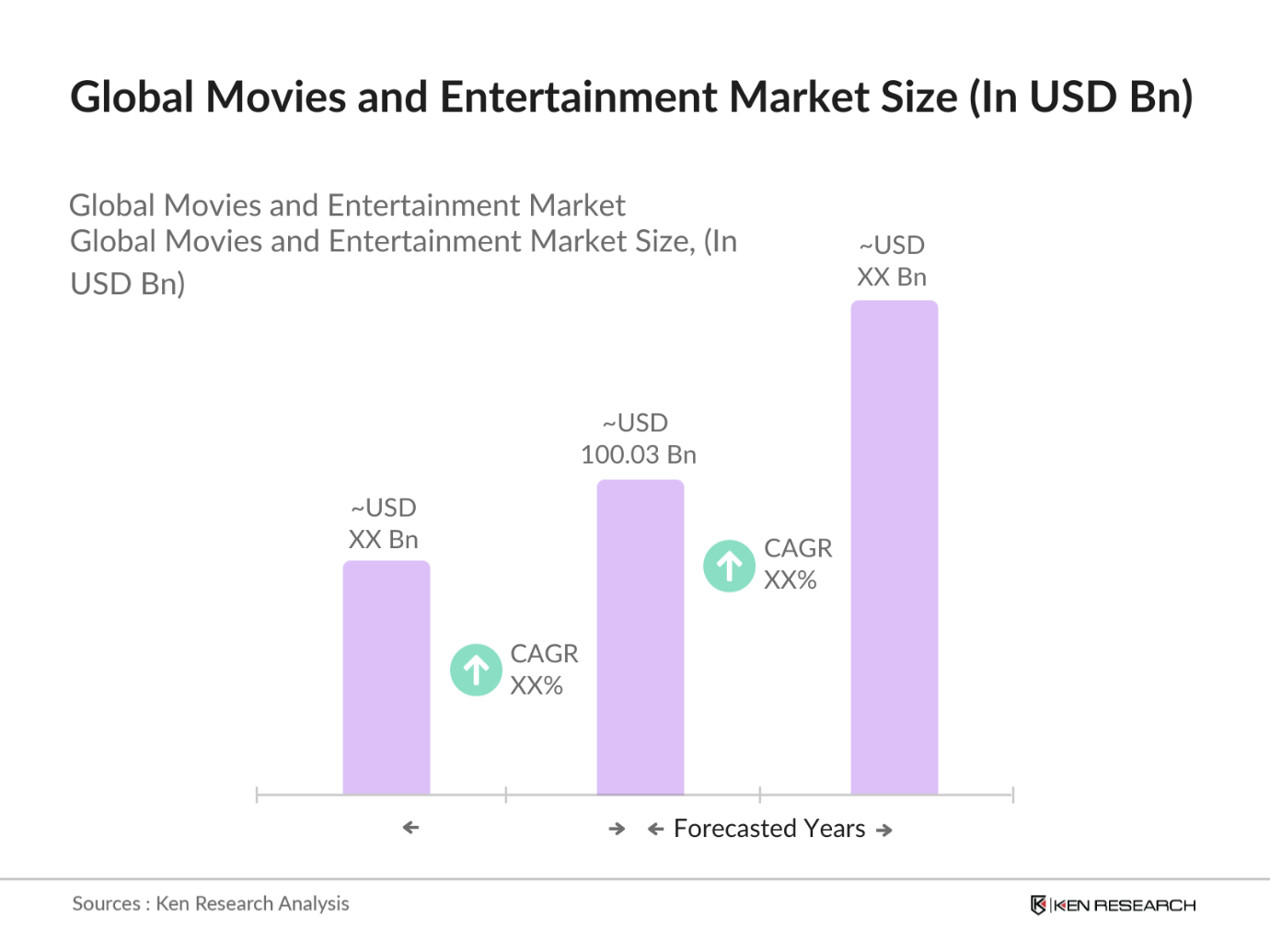
The global movies and entertainment market is valued at USD 100.3 billion, propelled by the expansion of digital platforms and increased consumer spending on on-demand content.
Challenges include piracy, regulatory restrictions, high production costs, and market saturation in established economies. These factors can impact profitability and market expansion.
Key players include Walt Disney Studios, Netflix, Warner Bros., Universal Pictures, and Amazon Studios, dominating due to their strong distribution channels and extensive content libraries.
Key growth drivers include technological advancements, increasing digital consumption, and rising investments in streaming platforms, enhancing the consumer experience.

What makes us stand out is that our consultants follows Robust, Refine and Result (RRR) methodology. i.e. Robust for clear definitions, approaches and sanity checking, Refine for differentiating respondents facts and opinions and Result for presenting data with story

We have set a benchmark in the industry by offering our clients with syndicated and customized market research reports featuring coverage of entire market as well as meticulous research and analyst insights.

While we don't replace traditional research, we flip the method upside down. Our dual approach of Top Bottom & Bottom Top ensures quality deliverable by not just verifying company fundamentals but also looking at the sector and macroeconomic factors.

With one step in the future, our research team constantly tries to show you the bigger picture. We help with some of the tough questions you may encounter along the way: How is the industry positioned? Best marketing channel? KPI's of competitors? By aligning every element, we help maximize success.

Our report gives you instant access to the answers and sources that other companies might choose to hide. We elaborate each steps of research methodology we have used and showcase you the sample size to earn your trust.

If you need any support, we are here! We pride ourselves on universe strength, data quality, and quick, friendly, and professional service.