
Global MRAP Vehicle Market Outlook to 2030
Region:Global
Author(s):Shivani Mehra
Product Code:KROD4126
December 2024
99
About the Report
Global MRAP Vehicle Market Overview
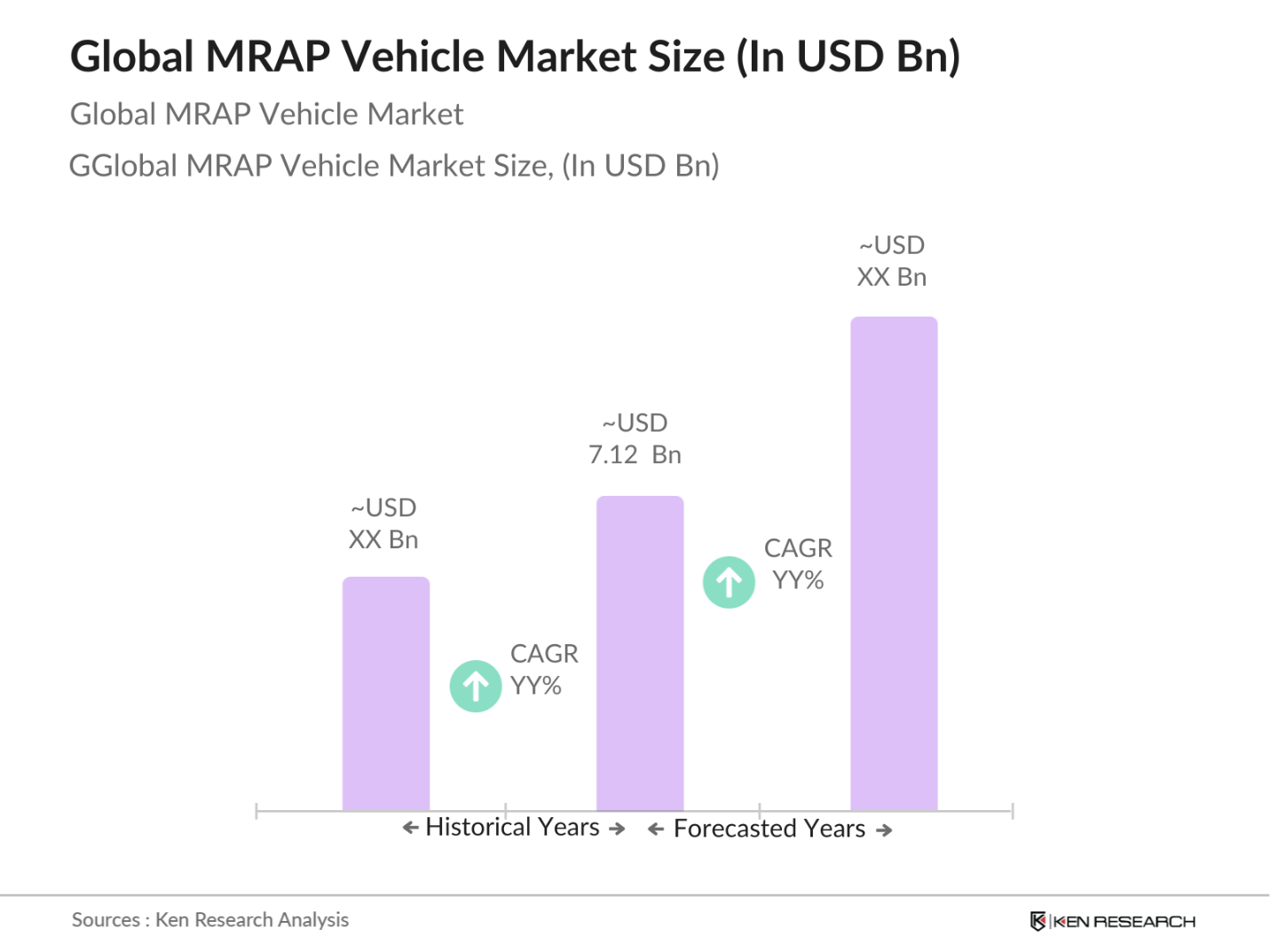
- The Global MRAP Vehicle Market has shown steady growth, fueled by the increasing need for protected transportation in conflict zones and areas with asymmetric warfare threats. MRAP vehicles are designed to withstand ambushes, landmines, and IEDs, providing crucial safety for military personnel. The market is valued at around USD 7.12 billion, with demand driven primarily by rising defense budgets and increased focus on soldier protection. Technological advancements in vehicle armor and modular designs have further contributed to this markets growth.
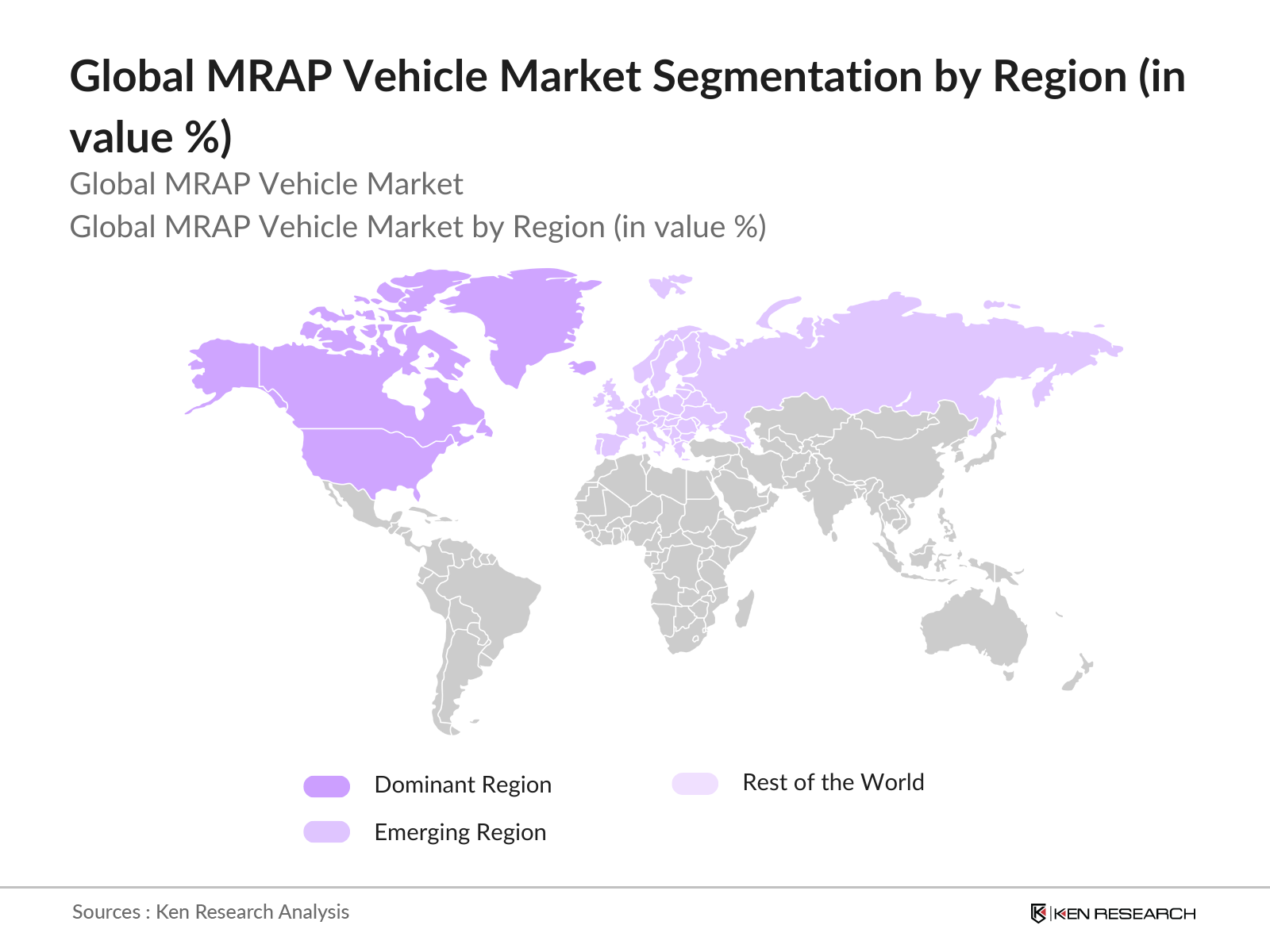
- North America leads the market, with the U.S. being the largest consumer due to its substantial defense budget and emphasis on soldier safety. Europe follows closely, with countries like the UK, Germany, and France investing heavily in protected mobility for military operations. The Middle East and Africa are emerging markets, driven by geopolitical tensions and conflicts in regions such as the Gulf.
- Governments enforce rigorous safety and performance standards for armor and ballistic protection to ensure MRAP vehicles provide adequate defense against threats. These standards outline minimum protection levels, impact resistance, and durability requirements that MRAPs must meet. Compliance with these standards is critical, as they ensure the safety and reliability of MRAPs in combat situations, with performance standards tailored to address modern combat threats.
Global MRAP Vehicle Market Segmentation
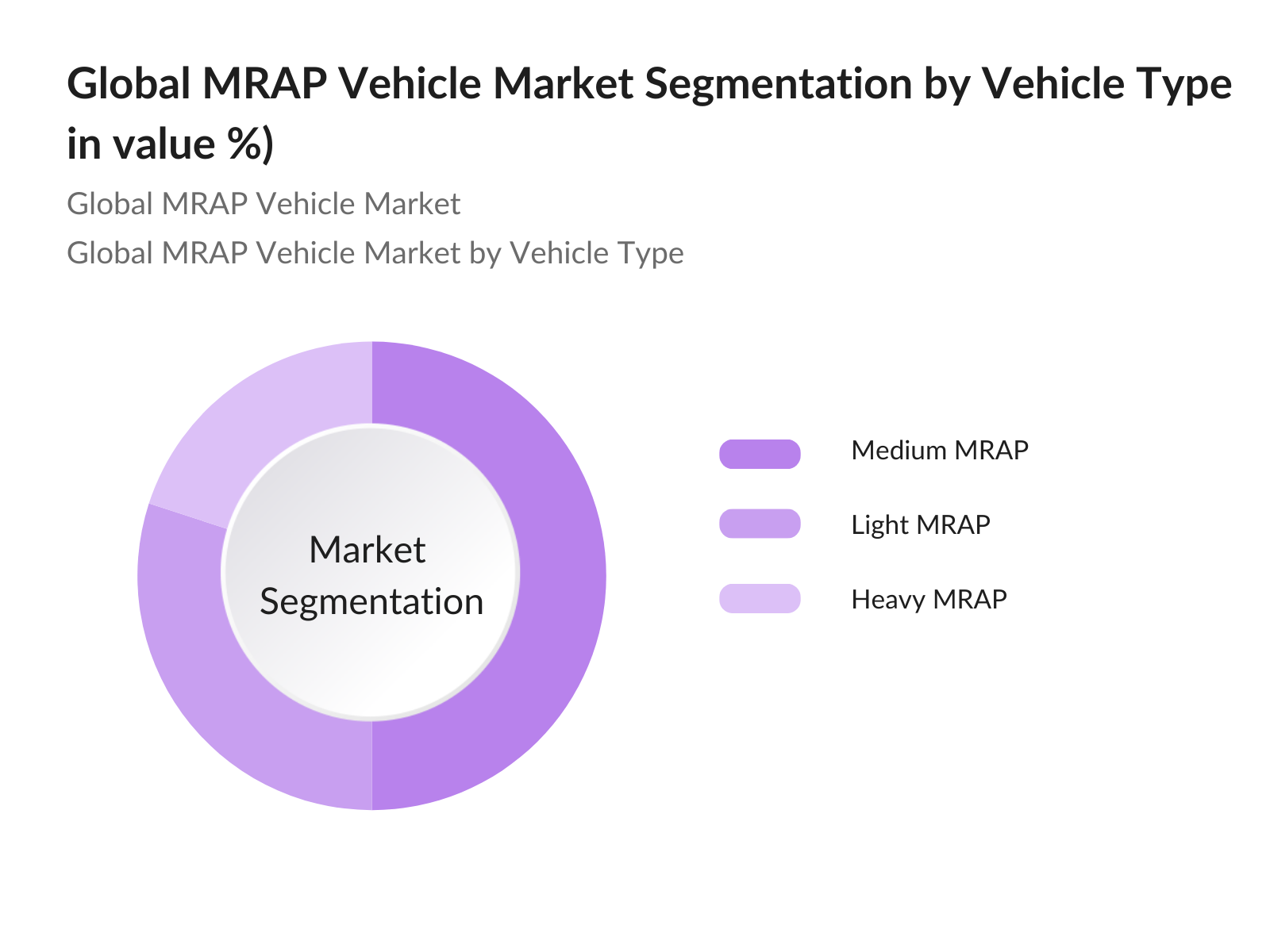
By Vehicle Type:The MRAP market is segmented by vehicle type into light, medium, and heavy MRAP vehicles. Medium MRAP vehicles dominate due to their balance of protection, maneuverability, and versatility in various terrain. These vehicles are favored for frontline and tactical operations, providing high levels of protection while maintaining mobility and deployment flexibility.
By Region: The MRAP market is segmented by region into North America, Europe, Asia-Pacific, Latin America, and the Middle East & Africa. North America leads due to the U.S. governments investment in MRAP programs for troop protection. Europe also has a strong presence, with NATO allies focusing on upgrading armored vehicle fleets for enhanced soldier safety. The Middle East & Africa are emerging markets, with rising demand for MRAP vehicles in conflict-prone areas.
Global MRAP Vehicle Competitive Landscape
The Global MRAP Vehicle Market is competitive, with key players specializing in advanced armor technologies, modular designs, and military-grade manufacturing capabilities. Companies like Oshkosh Defense, General Dynamics, and BAE Systems dominate the market, known for their extensive product ranges, strong R&D investments, and collaborations with defense agencies. The competitive landscape underscores the importance of alliances with government bodies and continuous innovation to meet evolving battlefield requirements.
|
Company |
Establishment Year |
Headquarters |
Employees |
Revenue |
Product Range |
Regional Presence |
Technological Advancements |
Production Capacity |
|
Oshkosh Defense |
1917 |
Oshkosh, USA |
||||||
|
General Dynamics |
1952 |
Reston, USA |
||||||
|
BAE Systems |
1999 |
London, UK |
||||||
|
Rheinmetall AG |
1889 |
Dsseldorf, Germany |
||||||
|
Textron Inc. |
1923 |
Providence, USA |
Global MRAP Vehicle Market Analysis
Growth Drivers
- Increased Defense Spending by Major Countries: Global defense spending has reached unprecedented levels, with countries like the U.S., China, and India collectively investing billions into modernizing their military assets. This increased budget allocation supports the procurement of advanced vehicles, including MRAPs, which are designed to withstand explosive threats. As defense budgets rise to address both conventional and unconventional threats, MRAP adoption is expected to grow, providing militaries with enhanced protection capabilities against roadside bombs and IEDs.
- Rising Threat of Asymmetric and Guerrilla Warfare: The rise of asymmetric and guerrilla warfare, characterized by non-traditional combat methods, has heightened the demand for MRAP vehicles. In conflict zones where roadside bombs and ambushes are common, MRAPs are essential for safeguarding troops. Militaries in regions such as the Middle East, Africa, and parts of Asia, where these threats are particularly prevalent, are increasingly investing in MRAPs to counteract such tactics, enhancing troop mobility and safety in high-risk areas.
- Government Initiatives to Enhance Soldier Safety: Governments worldwide are prioritizing soldier safety, implementing initiatives to equip armed forces with the latest protective technologies. Programs focusing on enhanced armor, blast protection, and vehicle survivability are integral to many countries defense strategies. MRAPs are a direct response to these safety initiatives, featuring advanced design elements that minimize risks to personnel from explosive threats, making them a crucial asset in military fleets.
Global MRAP Vehicle Market Challenges
- High Costs of Acquisition and Lifecycle Maintenance: The procurement and maintenance of MRAP vehicles involve substantial costs. MRAPs are highly specialized vehicles, and their advanced armor, blast-resistant design, and reinforced structures contribute to high acquisition expenses. Maintenance costs over the vehicle's lifespan are also significant due to the need for specialized parts and regular inspections. These costs limit accessibility for smaller defense budgets, making MRAPs primarily feasible for well-funded militaries.
- Limited Operational Flexibility in Urban and Civilian Settings: MRAP vehicles are designed for combat and rugged terrains, which limits their versatility in urban or civilian environments. Due to their large size and heavy armor, MRAPs face challenges in maneuverability and fuel efficiency, making them less suitable for deployment in urban operations. This lack of adaptability can reduce their utility in missions that require stealth or discretion, often making smaller, more flexible vehicles preferable in these settings.
Global MRAP Vehicle Market Future Outlook
Over the next five years, the MRAP market is anticipated to grow due to continued global defense spending, increased focus on soldier protection, and the growing need for armored vehicles in asymmetric warfare scenarios. Advances in lightweight materials, modular designs, and autonomous capabilities are expected to drive innovation in MRAP vehicles, while demand in emerging markets will provide growth opportunities for manufacturers.
Market Opportunities:
- Innovation in Lightweight and Advanced Composite Armor: The development of lightweight and advanced composite armor presents opportunities to enhance MRAP effectiveness. Innovations in materials science are enabling the production of armor that is both lighter and more resistant to blasts, reducing vehicle weight while maintaining or even improving protection levels. This shift allows MRAPs to be more fuel-efficient and agile, expanding their operational flexibility and making them more attractive to militaries focused on both protection and mobility.
- Demand for MRAPs in Border and Homeland Security: The demand for MRAPs extends beyond military operations, as they are increasingly used in border security and homeland defense. With growing concerns about cross-border threats and the need to secure national boundaries, MRAPs are being deployed for surveillance and patrol in rugged border areas. Homeland security agencies are recognizing MRAPs as valuable assets for managing potential threats, enhancing security operations with their advanced protection capabilities.
Scope of the Report
|
By Vehicle Type |
Light MRAP Vehicles Medium MRAP Vehicles Heavy MRAP Vehicles |
|
By Application |
Military Operations Border Security Law Enforcement |
|
By Technology |
Autonomous MRAP Manned MRAP |
|
By Armor Type |
Composite Armor Ballistic Armor Blast Resistant Armor |
|
By Region |
North America Europe Asia Pacific Latin America Middle East & Africa |
Products
Key Target Audience
Military and Defense Agencies
Border and Homeland Security Agencies
Defense Equipment Suppliers
Government and Regulatory Bodies (e.g., NATO, U.S. Department of Defense)
Investments and Venture Capitalist Firms
Armored Vehicle Manufacturers
Research and Development Institutions in Defense Technology
Public-Private Partnerships in Defense Infrastructure
Companies
Players Mention in the Report
Oshkosh Defense
General Dynamics Land Systems
BAE Systems
Rheinmetall AG
Navistar Defense LLC
Textron Inc.
Thales Group
Streit Group
IVECO Defense Vehicles
Armormax
Krauss-Maffei Wegmann
INKAS Armored Vehicle Manufacturing
Paramount Group
FNSS Defense Systems
International Armored Group
Table of Contents
01. Global MRAP Vehicle Market Overview
1.1 Definition and Scope
1.2 Market Taxonomy
1.3 Market Growth Rate
1.4 Market Segmentation Overview
02. Global MRAP Vehicle Market Size (In USD Billion)
2.1 Historical Market Size
2.2 Year-On-Year Growth Analysis
2.3 Key Market Developments and Milestones
03. Global MRAP Vehicle Market Analysis
3.1 Growth Drivers (Rising Defense Budgets, Threat of Asymmetric Warfare, Safety of Military Personnel)
3.1.1 Increased Defense Spending by Major Countries
3.1.2 Rising Threat of Asymmetric and Guerrilla Warfare
3.1.3 Government Initiatives to Enhance Soldier Safety
3.1.4 Technological Advancements in Armor and Vehicle Design
3.2 Market Challenges (High Procurement and Maintenance Costs, Limited Versatility, Regulatory Compliance)
3.2.1 High Costs of Acquisition and Lifecycle Maintenance
3.2.2 Limited Operational Flexibility in Urban and Civilian Settings
3.2.3 Regulatory Barriers for Military Equipment Exports
3.3 Opportunities (R&D in Lightweight Armor, Demand for Border Security, Emerging Market Expansion)
3.3.1 Innovation in Lightweight and Advanced Composite Armor
3.3.2 Demand for MRAPs in Border and Homeland Security
3.3.3 Expansion Opportunities in Developing Defense Markets
3.4 Trends (Integration of Autonomous Systems, Focus on Modular Design, Adoption of Hybrid Power)
3.4.1 Increasing Integration of Autonomous Driving and Surveillance Systems
3.4.2 Shift Toward Modular and Scalable MRAP Designs
3.4.3 Rising Use of Hybrid and Electric Power Solutions for MRAP Vehicles
3.5 Government Regulations (Export Controls, Safety Standards, Environmental Compliance)
3.5.1 Export Regulations for Military-Grade Vehicles (e.g., ITAR)
3.5.2 Safety and Performance Standards for Armor and Ballistic Protection
3.5.3 Environmental Standards for Vehicle Emissions and Disposal
3.6 SWOT Analysis
3.7 Stakeholder Ecosystem
3.8 Porters Five Forces Analysis
3.9 Competition Ecosystem
04. Global MRAP Vehicle Market Segmentation
4.1 By Vehicle Type (In Value %)
4.1.1 Light MRAP
4.1.2 Medium MRAP
4.1.3 Heavy MRAP
4.2 By Application (In Value %)
4.2.1 Military Operations
4.2.2 Border Security
4.2.3 Law Enforcement
4.3 By Technology (In Value %)
4.3.1 Autonomous MRAP
4.3.2 Manned MRAP
4.4 By Armor Type (In Value %)
4.4.1 Composite Armor
4.4.2 Ballistic Armor
4.4.3 Blast Resistant Armor
4.5 By Region (In Value %)
4.5.1 North America
4.5.2 Europe
4.5.3 Asia-Pacific
4.5.4 Latin America
4.5.5 Middle East & Africa
05. Global MRAP Vehicle Market Competitive Analysis
5.1 Detailed Profiles of Major Companies
5.1.1 Oshkosh Defense
5.1.2 General Dynamics Land Systems
5.1.3 BAE Systems
5.1.4 Rheinmetall AG
5.1.5 Navistar Defense LLC
5.1.6 Textron Inc.
5.1.7 Thales Group
5.1.8 Streit Group
5.1.9 IVECO Defense Vehicles
5.1.10 Armormax
5.1.11 Krauss-Maffei Wegmann
5.1.12 INKAS Armored Vehicle Manufacturing
5.1.13 Paramount Group
5.1.14 FNSS Defense Systems
5.1.15 International Armored Group
5.2 Cross Comparison Parameters (Headquarters, Inception Year, Revenue, Product Range, Geographic Presence, Technological Advancements, Production Capacity, Strategic Alliances)
5.3 Market Share Analysis
5.4 Strategic Initiatives
5.5 Mergers and Acquisitions
5.6 Investment Analysis
5.6.1 Government Defense Spending
5.6.2 Private Equity Investments
5.6.3 Public-Private Partnerships in Defense
06. Global MRAP Vehicle Market Regulatory Framework
6.1 Export Control Laws and Compliance (e.g., ITAR)
6.2 Safety and Performance Standards
6.3 Environmental Standards for Production and Disposal
07. Global MRAP Vehicle Market Future Size (In USD Billion)
7.1 Future Market Size Projections
7.2 Key Factors Driving Future Market Growth
08. Global MRAP Vehicle Market Future Segmentation
8.1 By Vehicle Type (In Value %)
8.2 By Application (In Value %)
8.3 By Technology (In Value %)
8.4 By Armor Type (In Value %)
8.5 By Region (In Value %)
09. Global MRAP Vehicle Market Analysts Recommendations
9.1 TAM/SAM/SOM Analysis
9.2 Customer Cohort Analysis
9.3 Marketing Initiatives
9.4 White Space Opportunity Analysis
Disclaimer Contact UsResearch Methodology
Step 1: Identification of Key Variables
The research began by mapping key variables such as defense spending, geopolitical tensions, and technology advancements influencing the MRAP market. Data from government and defense agency reports, along with industry-specific publications, were used to analyze market drivers and restraints.
Step 2: Market Analysis and Construction
Historical data on MRAP production, sales, and adoption in defense forces was analyzed, with segmentation covering vehicle type, applications, and regional demand. This phase included comprehensive insights into demand by end-user sectors and future growth prospects.
Step 3: Hypothesis Validation and Expert Consultation
Key assumptions were validated through interviews with defense experts, vehicle manufacturers, and military procurement officials. Their insights added depth to the analysis and helped align data with real-world requirements in defense.
Step 4: Research Synthesis and Final Output
The final synthesis combined quantitative and qualitative data to deliver a comprehensive market report, addressing growth trends, challenges, and opportunities in the Global MRAP Vehicle Market.
Frequently Asked Questions
01. How big is the Global MRAP Vehicle Market?
The global MRAP vehicle market is valued at approximately USD 7.12 billion, driven by rising defense budgets and increasing demand for soldier protection in conflict zones.
02. What are the challenges in the Global MRAP Vehicle Market?
Challenges include high procurement and maintenance costs, limited versatility in non-military settings, and strict regulatory controls on military-grade vehicle exports.
03. Who are the major players in the Global MRAP Vehicle Market?
Key players include Oshkosh Defense, General Dynamics, BAE Systems, Rheinmetall AG, and Textron Inc., known for their advanced technology and strong defense industry partnerships.
04. What are the growth drivers of the Global MRAP Vehicle Market?
Growth drivers include rising defense spending, increasing threats of asymmetric warfare, and government focus on improving soldier safety through advanced armored vehicles.
Why Buy From Us?

What makes us stand out is that our consultants follows Robust, Refine and Result (RRR) methodology. i.e. Robust for clear definitions, approaches and sanity checking, Refine for differentiating respondents facts and opinions and Result for presenting data with story

We have set a benchmark in the industry by offering our clients with syndicated and customized market research reports featuring coverage of entire market as well as meticulous research and analyst insights.

While we don't replace traditional research, we flip the method upside down. Our dual approach of Top Bottom & Bottom Top ensures quality deliverable by not just verifying company fundamentals but also looking at the sector and macroeconomic factors.

With one step in the future, our research team constantly tries to show you the bigger picture. We help with some of the tough questions you may encounter along the way: How is the industry positioned? Best marketing channel? KPI's of competitors? By aligning every element, we help maximize success.

Our report gives you instant access to the answers and sources that other companies might choose to hide. We elaborate each steps of research methodology we have used and showcase you the sample size to earn your trust.

If you need any support, we are here! We pride ourselves on universe strength, data quality, and quick, friendly, and professional service.