Global Multi-Chip Module (MCM) Market Outlook 2030

Region:Global

Author(s):Shivani Mehra

Product Code:KROD10536

Published On

December 2024

Total pages

91

About the Report

Global Multi-Chip Module (MCM) Market Overview

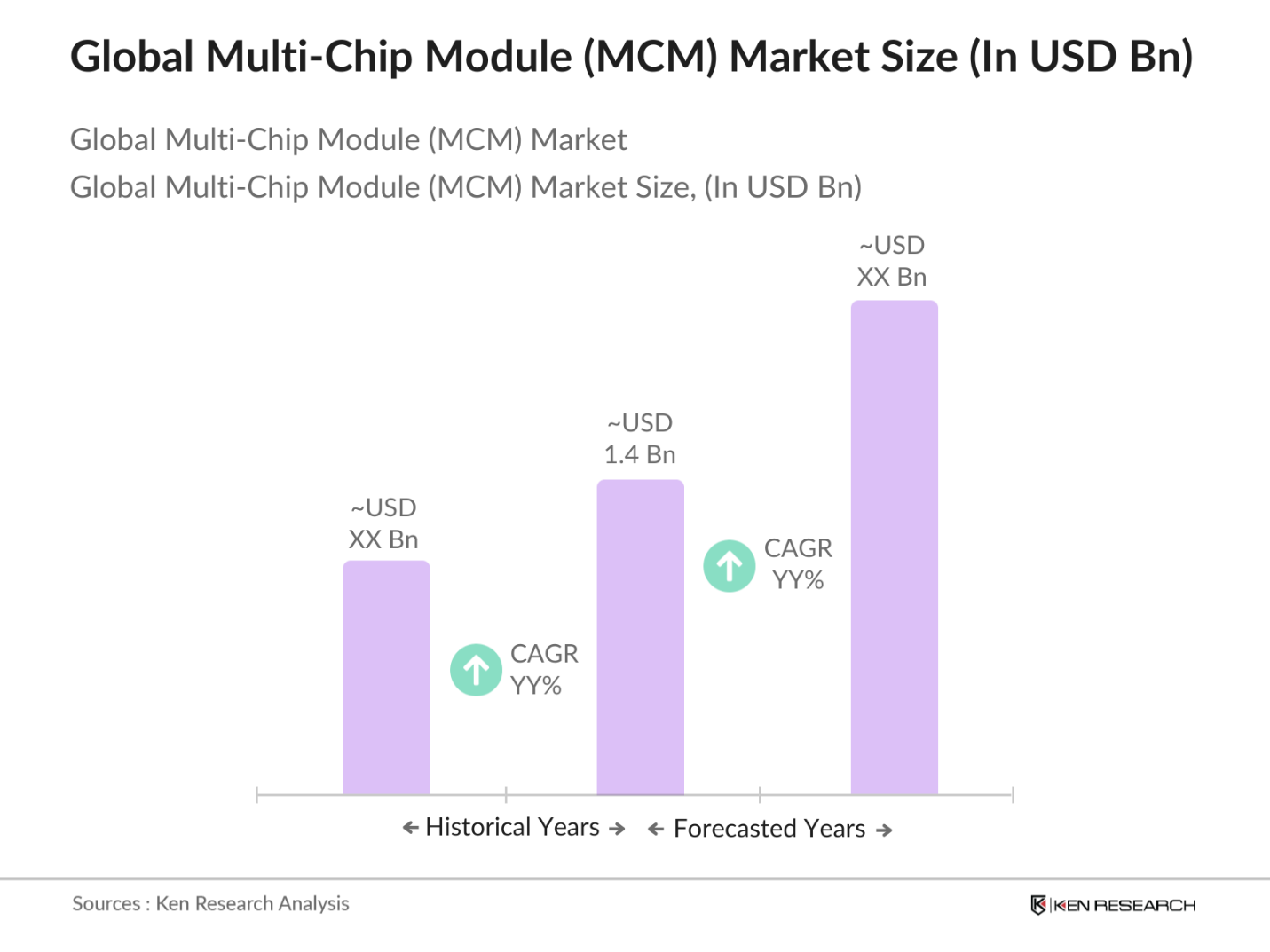
  • The global Multi-Chip Module (MCM) market, driven by increased demand for space-efficient electronic devices, is valued at USD 1.4 billion. The expansion in industries such as automotive, consumer electronics, and telecommunications has intensified the demand for integrated, high-performance semiconductor solutions. Innovations in miniaturization, essential for advanced consumer electronics and 5G networks, further fuel this growth. This trend aligns with the industry shift toward compact, high-speed solutions, as these modules enhance device functionality while reducing space requirements.

market overviews

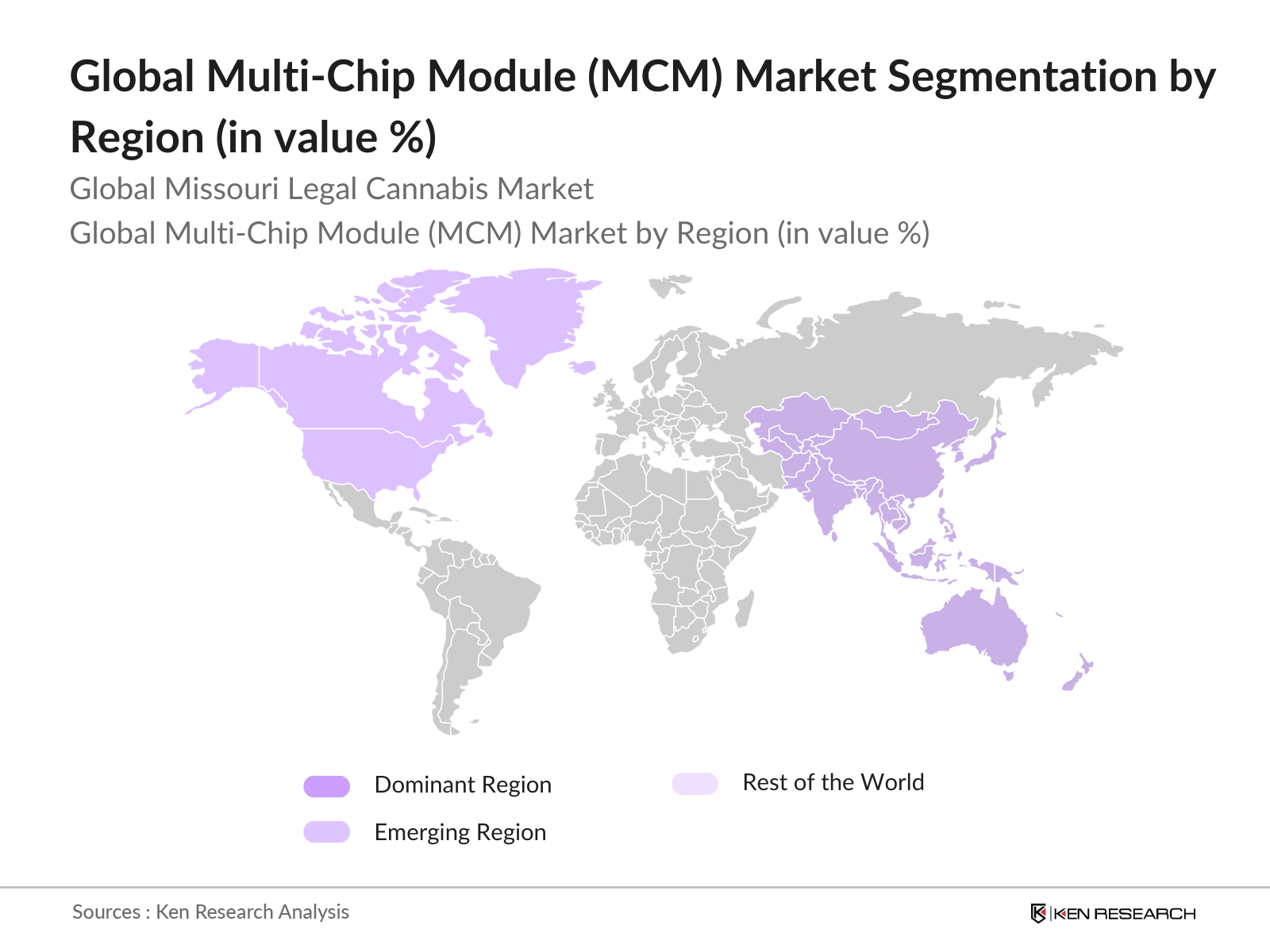
  • Asia-Pacific, particularly countries like China, Japan, and South Korea, dominates the MCM market due to a well-established electronics manufacturing base, abundant resources, and strategic government investments. Additionally, North America is a major contributor, driven by technological advancements and the high adoption rate of multi-chip modules in automotive, aerospace, and defense sectors. The favorable infrastructure in these regions supports both large-scale production and research initiatives, strengthening their position in the market.
  • The U.S. CHIPS Act, signed in 2022, has allocated $52 billion to boost domestic semiconductor manufacturing, research, and workforce development. This initiative aims to reduce dependence on foreign supply chains and strengthen the semiconductor ecosystem by funding new manufacturing facilities, R&D, and training programs. By 2024, several U.S.-based semiconductor projects are underway, expected to produce thousands of jobs and contribute to stabilizing the global semiconductor supply chain. The CHIPS Act supports various industries by ensuring reliable access to components, directly benefiting sectors reliant on advanced semiconductor technologies.

Global Multi-Chip Module (MCM) Market Segmentation

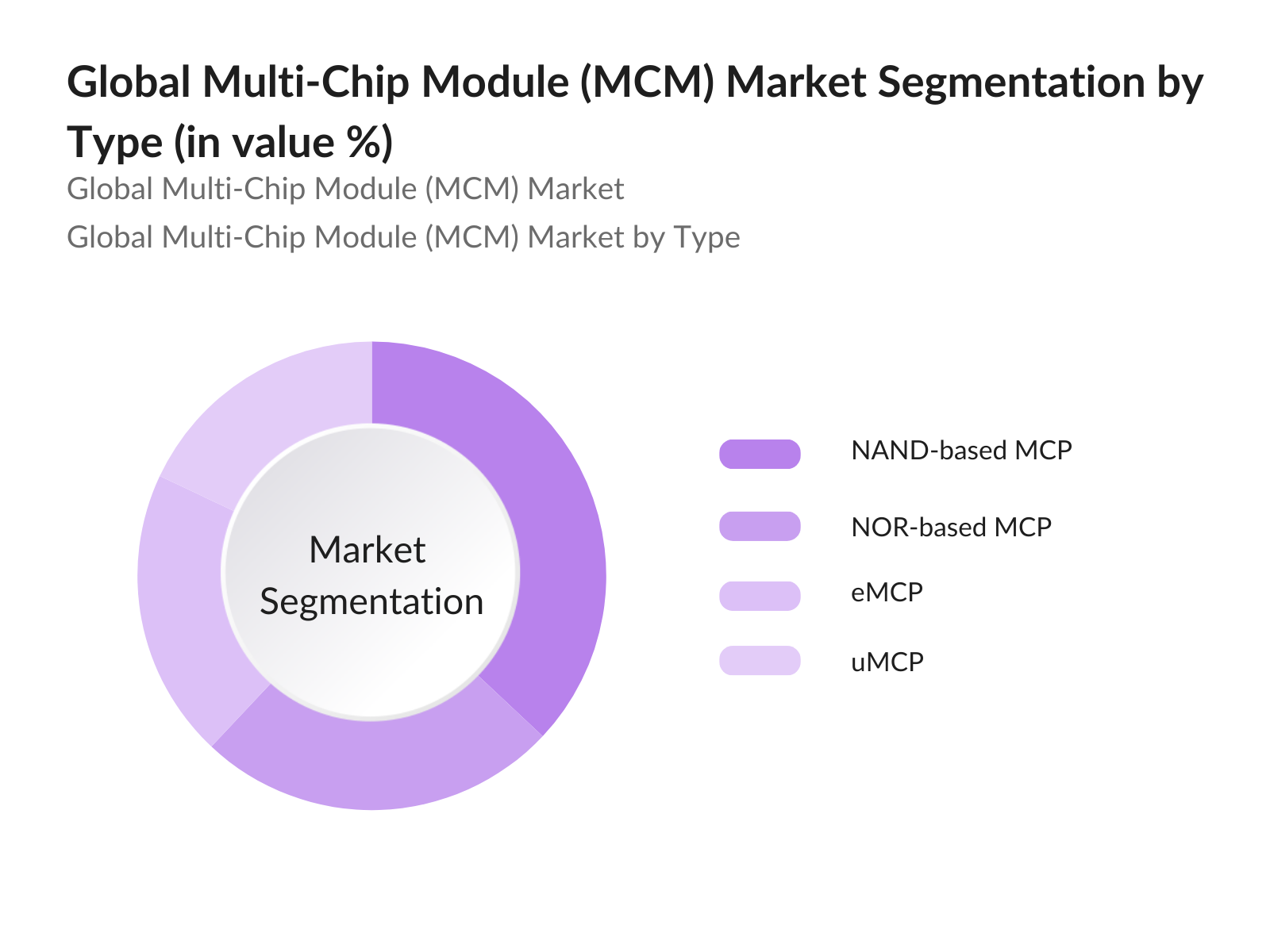
By Type: The Multi-Chip Module market is segmented by type into NAND-based MCP, NOR-based MCP, eMCP, and uMCP. In particular, NAND-based MCP modules are highly demanded for their data storage efficiency, which is crucial in smartphones, memory cards, and USB drives. The need for cost-effective, high-density storage solutions has positioned NAND-based MCPs as a dominant segment in this category.
market overviews

By Region: The MCM market is segmented regionally into North America, Europe, Asia-Pacific, and LAMEA. Asia-Pacific leads with the highest market share due to the presence of major semiconductor manufacturing hubs in countries such as China and Japan. High investments in R&D and manufacturing capabilities position Asia-Pacific as a growth leader in the MCM market.
market overviews

Global Multi-Chip Module (MCM) Market Competitive Landscape

The global MCM market features a consolidated landscape dominated by established corporations. Companies like Intel and Samsung lead through innovation in 3D integration and heterogeneous packaging, establishing a stronghold in critical sectors. The competitive landscape is marked by vertical integration, research alliances, and focused R&D.

Company

Establishment Year

Headquarters

Technology Innovations

Market Revenue (USD Mn)

R&D Investments

Strategic Partnerships

Manufacturing Locations

Product Range

Intel

1968

U.S.

3D Stacking

-

-

-

-

-

Samsung Electronics

1969

South Korea

HBM memory modules

-

-

-

-

-

SK Hynix

1983

South Korea

HBM3 chip

-

-

-

-

-

Texas Instruments

1930

U.S.

Embedded designs

-

-

-

-

-

STMicroelectronics

1987

Switzerland

Power efficiency

-

-

-

-

-

Global Multi-Chip Module (MCM) Market Analysis

Market Growth Drivers

  • Miniaturization Demand (Space Optimization, Performance Enhancement): With the rapid pace of device miniaturization across industries, demand for smaller, high-performance components is increasing to enhance efficiency and functionality. In 2023, the global electronics industry saw a strong push toward space optimization, particularly for applications in telecommunications and automotive sectors, which rely on compact circuitry to maximize device utility. According to recent data, the electronics manufacturing sector reached 9.3 million jobs in Asia alone, where manufacturing is critical to fulfilling this demand for miniaturization. Miniaturization aligns with the trend toward high-performance computing, ensuring devices remain compact while processing power increases.
  • Rise in IoT and Smart Devices: The Internet of Things (IoT) ecosystem and smart devices significantly drive component demand, especially for connectivity and computing needs. Over 15 billion IoT devices are active globally in 2024, largely in sectors such as home automation, healthcare, and industrial manufacturing. This growth has led to a heightened need for components capable of supporting wireless communication and processing, meeting the surge in connectivity requirements for IoT-integrated products. Industrial IoT is also advancing, with over 500 million devices connected in industrial applications.
  • Expansion in High-Performance Computing: High-performance computing (HPC) is expanding rapidly, with 72 countries now investing in data centers and supercomputers as of 2024. HPC advancements have become critical for sectors like finance, healthcare, and scientific research, where extensive data processing capabilities are essential. The 2024 data indicates that the global data center market invested over $300 billion in enhancing their capacities, which drives the demand for semiconductor components capable of handling intensive computing tasks. This requirement has pushed demand for advanced materials and technologies in semiconductor manufacturing.

Market Challenges:

  • Raw Material Shortages (Chipset and Silicon): The global semiconductor industry has faced persistent raw material shortages, impacting chipset production significantly. In 2023, the supply of silicon and rare earth elements essential to semiconductor fabrication declined, with China and the U.S. reporting over 1.4 million tons of silicon production affected by supply chain issues. This shortage has impacted production timelines, especially in automotive and electronics manufacturing, contributing to increased production costs and delivery delays.
  • Semiconductor Supply Chain Constraints: Supply chain bottlenecks have become a persistent restraint, affecting the availability and pricing of semiconductor components. In 2023, global semiconductor lead times averaged 27 weeks for critical components, driven by factors like shipping delays and limited production capacities in major semiconductor-producing regions. The U.S. and South Korea saw significant investments in their supply chains, yet dependencies on key materials from specific regions remained a hurdle, impacting sectors from consumer electronics to automotive manufacturing.

Global Multi-Chip Module (MCM) Market Future Outlook

Over the coming years, the Multi-Chip Module market is expected to witness substantial growth, driven by advancements in IoT, automotive applications, and high-performance computing. As industries focus on integrating smart technology, demand for compact and efficient MCMs is likely to rise. Technological advancements, such as the transition to 5G and 3D stacking, will enable companies to meet the increasing performance and density requirements.

Market Opportunities:

  • Growth of Embedded Device Markets: The embedded device market is expanding rapidly, as global demand for smart home devices, healthcare wearables, and industrial sensors increases. In 2023, the embedded systems market observed substantial growth, with an estimated 8 million devices produced monthly for the healthcare and home automation sectors alone. Countries in Europe and Asia have invested heavily in smart infrastructure, creating a favorable environment for embedded system providers to support smart cities, manufacturing, and IoT ecosystems.
  • Integration in Medical Devices: The healthcare sectors adoption of digital solutions, especially medical IoT devices, provides significant growth opportunities. By 2024, over 3 million patient-monitoring devices were active globally, driven by the increased focus on preventive healthcare and remote patient monitoring. Governments in regions like North America and Europe have allocated substantial resources to digital healthcare, increasing the need for reliable and secure semiconductor components that power medical monitoring, imaging, and diagnostic equipment.

Scope of the Report

By Type

NAND-Based MCP

NOR-Based MCP

eMCP

uMCP

By Industry Vertical

Consumer Electronics

Automotive

Healthcare

Aerospace & Defense

Industrial

By Technology

3D Integration

Fan-Out Wafer-Level Packaging (FOWLP)

Embedded Passives

Flip Chip

By Application Areas

Data Storage

Processing Units

Sensor Integration

Connectivity Modules

Displays

By Region

North America

Europe

Asia-Pacific

LAMEA

Products

Key Target Audience

  • Investments and Venture Capitalist Firms

  • Government and Regulatory Bodies (FCC, Semiconductor Industry Association)

  • Automotive Manufacturers

  • Healthcare Equipment Providers

  • Consumer Electronics Manufacturers

  • Telecommunications Infrastructure Providers

  • OEMs (Original Equipment Manufacturers)

  • Research Institutions in Semiconductor Technology

Companies

Players Mention in the Report 

  • Intel

  • Samsung Electronics

  • SK Hynix Inc.

  • Texas Instruments

  • STMicroelectronics

  • Infineon Technologies

  • Cypress Semiconductor Corporation

  • Macronix International Co., Ltd.

  • Amkor Technology

  • ASE Group

  • Qualcomm

  • Tektronix

  • Qorvo

  • Maxim Integrated

  • NGK Insulators

Table of Contents

1. Market Overview

  • 1.1. Definition and Scope
  • 1.2. Market Taxonomy
  • 1.3. Market Evolution
  • 1.4. Technology Landscape and Applications

2. Global Multi-Chip Module Market Size

  • 2.1. Historical Market Size (USD Bn)
  • 2.2. Key Developments and Milestones
  • 2.3. Year-on-Year Growth Analysis

3. Market Dynamics

  • 3.1. Growth Drivers
    • 3.1.1. Miniaturization Demand (Space Optimization, Performance Enhancement)
    • 3.1.2. Rise in IoT and Smart Devices
    • 3.1.3. Expansion in High-Performance Computing
    • 3.1.4. Advancements in Automotive and 5G Technologies
  • 3.2. Market Restraints
    • 3.2.1. Raw Material Shortages (Chipset and Silicon)
    • 3.2.2. Complexity in Integration Processes
    • 3.2.3. Semiconductor Supply Chain Constraints
  • 3.3. Opportunities
    • 3.3.1. Growth of Embedded Device Markets
    • 3.3.2. Integration in Medical Devices
    • 3.3.3. Increased Demand in Autonomous and Connected Vehicles
  • 3.4. Key Trends
    • 3.4.1. Shift to 3D Integration (Vertical Stacking, Heterogeneous Integration)
    • 3.4.2. Fan-Out Wafer-Level Packaging (FOWLP)
    • 3.4.3. Expansion in Edge Computing and Data Centers

4. Competitive Landscape

  • 4.1. Competitive Ecosystem Overview
  • 4.2. Market Share Analysis by Key Competitors
  • 4.3. Strategic Initiatives by Key Players
  • 4.4. Mergers and Acquisitions
  • 4.5. Key Market Players (Top 15)
    • Intel, Samsung Electronics, SK Hynix, Texas Instruments, Cypress Semiconductor, Macronix International, Infineon Technologies, Amkor Technology, ASE Group, Qorvo, Maxim Integrated, STMicroelectronics, Tektronix, Qualcomm, NGK Insulators

5. Cross-Comparison Parameters (Top 8)

  • Headquarters Location
  • Technology Innovations (2.5D/3D, Fan-Out WLP)
  • Market Share by Region
  • Revenue (USD Mn)
  • Number of Employees
  • Strategic Partnerships
  • Manufacturing Facilities (Presence in High-Demand Regions)
  • Investment in R&D

6. Market Segmentation Analysis

  • 6.1. By Type
    • 6.1.1. NAND-Based MCP
    • 6.1.2. NOR-Based MCP
    • 6.1.3. eMCP
    • 6.1.4. uMCP
  • 6.2. By Industry Vertical
    • 6.2.1. Consumer Electronics
    • 6.2.2. Automotive
    • 6.2.3. Healthcare
    • 6.2.4. Aerospace & Defense
    • 6.2.5. Industrial Applications
  • 6.3. By Region
    • 6.3.1. North America (U.S., Canada, Mexico)
    • 6.3.2. Europe (Germany, UK, France, Italy, Rest of Europe)
    • 6.3.3. Asia-Pacific (China, Japan, South Korea, India)
    • 6.3.4. LAMEA (Latin America, Middle East, Africa)

7. Value Chain Analysis

  • 7.1. Raw Material Procurement (Chipsets, Silicon)
  • 7.2. Assembly and Packaging Processes
  • 7.3. Distribution Networks

8. Regulatory Landscape

  • 8.1. Compliance Standards (RoHS, REACH)
  • 8.2. Industry-Specific Certifications (Automotive, Medical Devices)
  • 8.3. Environmental Standards and Sustainability Initiatives

9. Future Market Projections

  • 9.1. Growth Drivers for Future Market Size
  • 9.2. Expected Market Expansion across Applications
  • 9.3. Innovation-Driven Market Segments

10. Analysts Recommendations

  • 10.1. Customer Target Analysis (Demand-Driven Opportunities)
  • 10.2. TAM/SAM/SOM Analysis
  • 10.3. Strategic Recommendations for Market Penetration
  • 10.4. White Space Identification
Disclaimer Contact Us

Research Methodology

Step 1: Identification of Key Variables

This phase involved mapping out the MCM market ecosystem, identifying stakeholders, and defining core industry variables. It included desk research using proprietary databases to gather comprehensive industry insights, enabling the identification of key market drivers.

Step 2: Market Analysis and Construction

In this stage, historical data was analyzed, focusing on industry penetration and segment growth. Data was corroborated through revenue assessments, comparing service quality and supplier data to validate accuracy.

Step 3: Hypothesis Validation and Expert Consultation

Industry hypotheses were tested using CATI interviews with experts from leading MCM firms, providing operational insights. These consultations were vital for confirming projections and understanding market nuances.

Step 4: Research Synthesis and Final Output

The concluding phase involved engaging with multiple MCM manufacturers, validating product segment data, and examining consumer preferences. This final synthesis provided a robust framework for presenting an accurate, verified market analysis.

Frequently Asked Questions

01. How big is the Global Multi-Chip Module Market?

The global Multi-Chip Module market is valued at approximately USD 1.4 billion, driven by demand from consumer electronics and automotive applications.

02. What are the main challenges in the Multi-Chip Module Market?

Challenges include raw material shortages, complex manufacturing processes, and supply chain bottlenecks, impacting production timelines and scaling efforts.

03. Which companies dominate the Multi-Chip Module Market?

Leading players include Intel, Samsung Electronics, and SK Hynix, dominating due to advanced R&D, high-performance product lines, and strategic partnerships with automotive and telecommunications sectors.

04. What drives growth in the Multi-Chip Module Market?

Key growth drivers include the miniaturization demand from consumer electronics and 5G technology advancements, which require compact and high-speed solutions.

Why Buy From Us?

RRR
Refine Robust Result (RRR) Framework

What makes us stand out is that our consultants follows Robust, Refine and Result (RRR) methodology. i.e. Robust for clear definitions, approaches and sanity checking, Refine for differentiating respondents facts and opinions and Result for presenting data with story

Our Reach Is Unmatched

We have set a benchmark in the industry by offering our clients with syndicated and customized market research reports featuring coverage of entire market as well as meticulous research and analyst insights.

Research
Shifting the Research Paradigm

While we don't replace traditional research, we flip the method upside down. Our dual approach of Top Bottom & Bottom Top ensures quality deliverable by not just verifying company fundamentals but also looking at the sector and macroeconomic factors.

Insite
More Insights-Better Decisions

With one step in the future, our research team constantly tries to show you the bigger picture. We help with some of the tough questions you may encounter along the way: How is the industry positioned? Best marketing channel? KPI's of competitors? By aligning every element, we help maximize success.

Trust
Transparency and Trust

Our report gives you instant access to the answers and sources that other companies might choose to hide. We elaborate each steps of research methodology we have used and showcase you the sample size to earn your trust.

support
Round the Clock Support

If you need any support, we are here! We pride ourselves on universe strength, data quality, and quick, friendly, and professional service.

Why Client Choose Us?

400000+ Reports in repository
150+ Consulting project a year
100+ Analysts
8000+ Client Queries in 2022