
Global Multi-Purpose Vehicle (MPV) Market Outlook to 2030
Region:Global
Author(s):Abhinav kumar
Product Code:KROD8347
November 2024
84
About the Report
Global Multi-Purpose Vehicle Market Overview
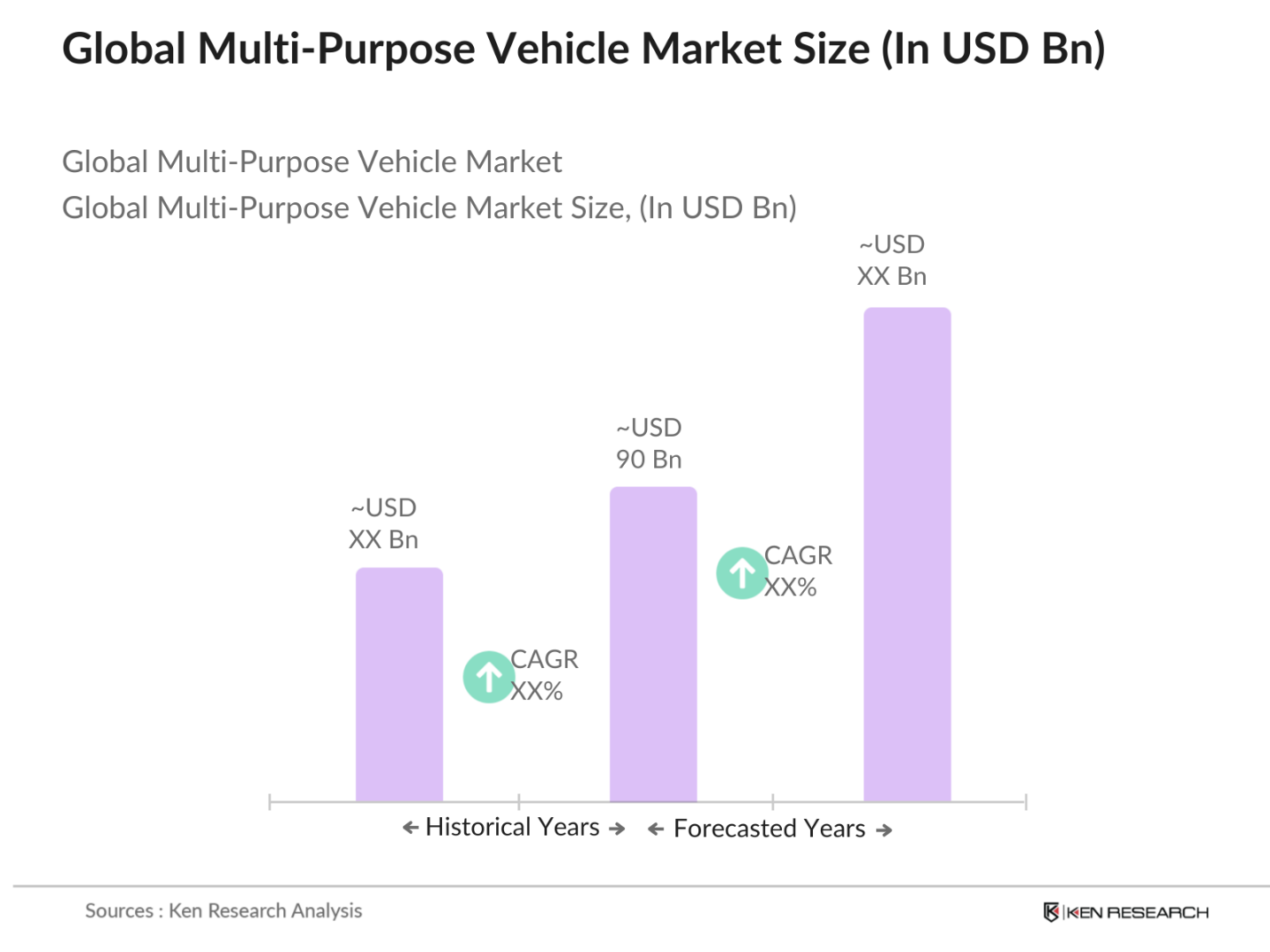
- The Global Multi-Purpose Vehicle (MPV) market is valued at approximately USD 90 billion, supported by a comprehensive five-year historical analysis. Growth in this market is primarily driven by increasing urbanization, rising demand for family-oriented vehicles, and a shift in consumer preference toward larger, more versatile vehicle types. The expanding middle-class population and increasing disposable incomes in emerging markets, such as Southeast Asia and Latin America, are further supporting this demand for MPVs, which are increasingly seen as vehicles capable of serving multiple purposes, such as family transport and light commercial use.
- Countries such as China, Japan, and the United States are key players in the MPV market, with China dominating due to its massive production capacity, growing domestic demand, and government initiatives supporting electric and hybrid vehicles. The United States is a major consumer of MPVs, driven by the popularity of SUVs and family-oriented vehicles, while Japan continues to lead in fuel-efficient and hybrid MPV models due to its advanced automotive technology.
- Governments around the world are enforcing stricter emission standards for MPVs to combat climate change. For example, the European Unions 2024 regulations mandate that MPVs meet a CO2 emission limit of 95 g/km, down from 110 g/km in 2022. Similar standards are being implemented in the U.S. and China, which are focusing on lowering vehicle emissions to meet their 2030 climate targets. Automakers failing to comply with these regulations face heavy fines, pushing manufacturers to prioritize electric and hybrid MPV development to avoid penalties.
Global Multi-Purpose Vehicle Market Segmentation
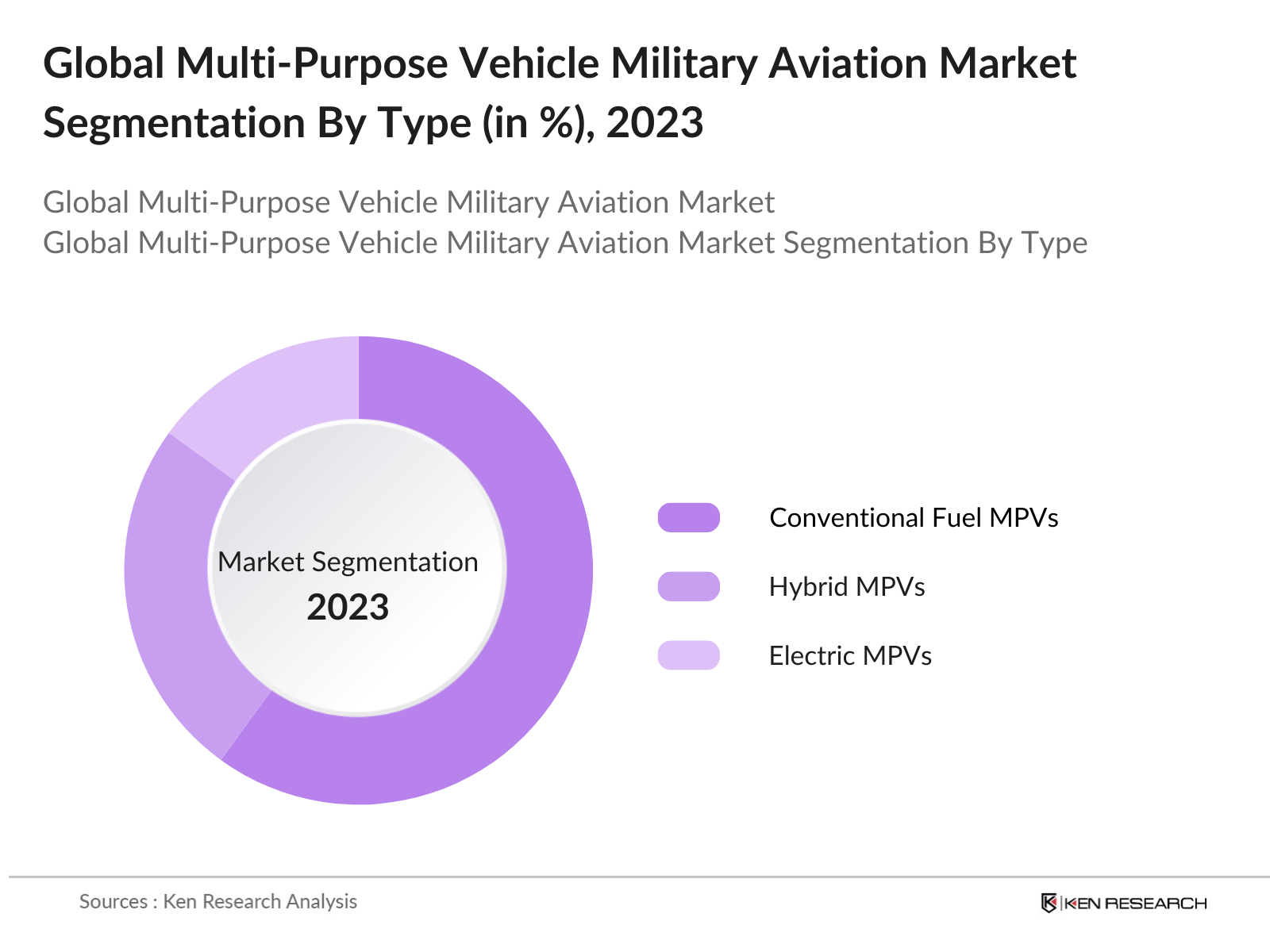
By Type: The Global MPV market is segmented by type into conventional fuel MPVs, hybrid MPVs, and electric MPVs. Conventional fuel MPVs continue to dominate the market due to their established infrastructure and affordability, particularly in regions where fuel prices remain relatively stable. Hybrid MPVs are gaining momentum, especially in developed regions like North America and Europe, where there is growing environmental awareness and government policies favoring eco-friendly alternatives. Electric MPVs are still an emerging segment but are expected to see rapid growth, driven by technological advancements and stricter emission standards in key markets.
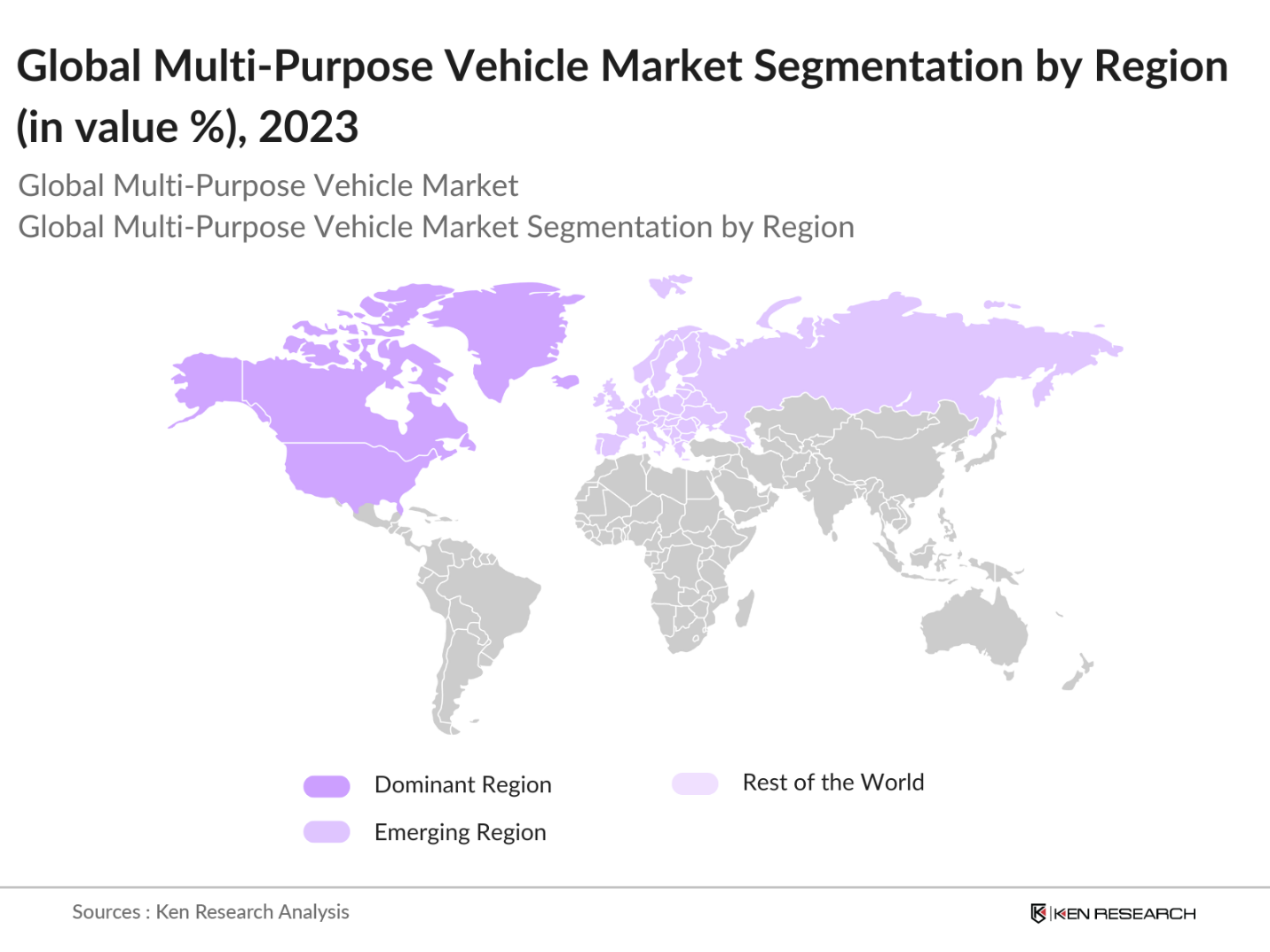
By Region: Regionally, the market is divided into North America, Europe, Asia Pacific, Latin America, and the Middle East & Africa. Asia Pacific dominates the MPV market, with China leading the region due to its large production base, robust domestic demand, and rising electric vehicle production. Europe follows closely, with significant demand for hybrid and electric MPVs, driven by stringent environmental regulations. North America also plays a key role in the global market due to the popularity of SUVs and crossover MPVs among families.
By Seating Capacity: The MPV market is also segmented by seating capacity into 5-seater, 7-seater, and 8+ seater models. The 7-seater MPVs hold a dominant market share, owing to their versatile use for both family and light commercial purposes. These vehicles are highly popular in regions like Asia-Pacific, where larger family sizes and shared mobility platforms (such as ride-hailing services) are common. The 5-seater MPVs are also favored, particularly in urban areas where compactness and maneuverability are key. The 8+ seater segment caters to niche markets such as shuttle services and large families.
Global Multi-Purpose Vehicle Market Competitive Landscape
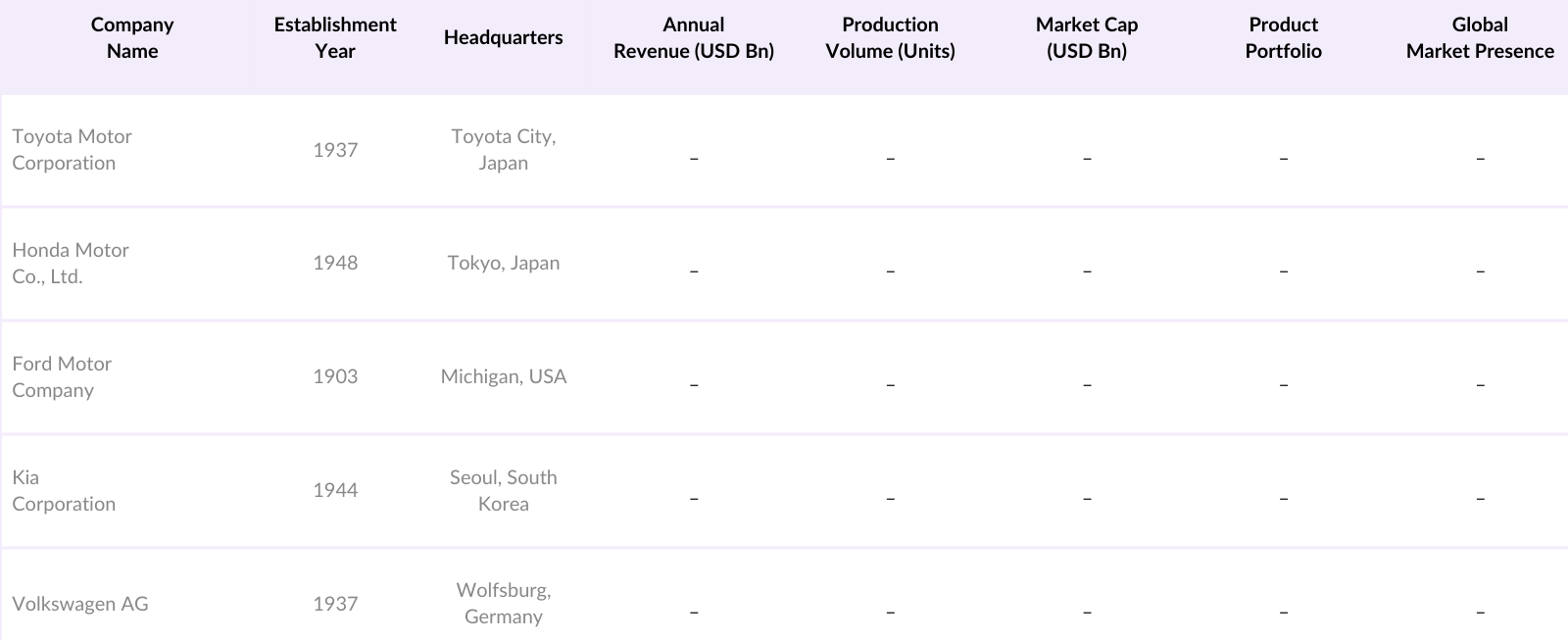
The global MPV market is dominated by several major players that contribute significantly to the market's competitive landscape. These players include both traditional automakers and companies focusing on hybrid and electric vehicles. The consolidation of key market players enhances their influence on market trends, technological advancements, and production capacity.
Global Multi-Purpose Vehicle Industry Analysis
Growth Drivers
- Increasing Demand for Family Vehicles: The demand for Multi-Purpose Vehicles (MPVs) continues to rise, particularly as family size and travel needs increase. A key factor is the global rise in households with more than two children, driving the necessity for spacious vehicles. The World Bank highlights that in 2023, the number of families with multiple children exceeded 1.5 billion globally, notably in regions like South Asia and Sub-Saharan Africa. Additionally, MPVs capability for seating 6-8 passengers, combined with growing middle-class wealth, contributes to their growing popularity. Global vehicle sales data shows a 9% increase in family vehicle purchases across emerging markets since 2022.
- Growing Urban Population and Mobility Needs: Urbanization has been a driving factor in increasing MPV sales, as cities expand and mobility needs grow. The United Nations projects that 57% of the global population now resides in urban areas, with this number having already surpassed 4.3 billion by 2024. Urban families often require larger, multi-functional vehicles to accommodate their work, school, and recreational needs. MPVs versatility and ability to function in both urban and suburban environments makes them the preferred option for families living in cities where public transport is unreliable or inefficient.
- Rising Disposable Income and Changing Lifestyles: As disposable income rises globally, especially in emerging economies, consumer preferences are shifting toward more versatile and comfortable vehicle options, including MPVs. The IMFs 2024 data shows that the global average annual disposable income per capita increased by $1,500 compared to 2022, driven by rapid economic growth in countries like India, Vietnam, and Brazil. This rise in disposable income correlates with the demand for higher-value vehicles, including MPVs, which are preferred by growing middle-class families due to their utility, comfort, and space for personal and professional use.
Market Challenges
- High Fuel Costs Affecting Conventional MPV Sales: Rising global fuel prices have created challenges for the MPV market, particularly for conventional gasoline-powered models. In 2024, the global average price of gasoline reached $1.42 per liter, as reported by the International Energy Agency (IEA). This steep increase is discouraging consumers from purchasing fuel-dependent MPVs and pushing them toward more fuel-efficient alternatives such as hybrid and electric vehicles. Additionally, the higher operational costs of traditional MPVs, combined with economic uncertainties, are causing a gradual decline in sales of conventional models.
- Competitive Pressure from SUVs and Crossovers: The growing popularity of SUVs and crossovers is putting pressure on MPV sales. In 2023, SUV sales increased by over 6 million units, significantly outpacing MPVs, according to the International Organization of Motor Vehicle Manufacturers (OICA). Consumers are increasingly favoring SUVs and crossovers for their perceived ruggedness and off-road capabilities, as well as for their luxurious interiors and better fuel economy. This trend is shifting consumer preferences away from MPVs, which are perceived as more family-oriented and less versatile compared to SUVs.
Global Multi-Purpose Vehicle Market Future Outlook
The global MPV market is poised for significant growth over the next five years, driven by continuous innovations in electric and hybrid MPV models and increased demand for versatile family and commercial vehicles. The shift toward electrification, coupled with government initiatives promoting cleaner technologies, will likely reshape the market dynamics. Additionally, growing urban populations in Asia Pacific and Latin America are expected to boost demand for compact yet spacious vehicles, making MPVs an attractive option for both personal and shared mobility.
Opportunities
- Expansion of Electric MPV Market: The electric MPV market presents significant growth opportunities, particularly as governments increase their support for electric vehicle (EV) infrastructure. By 2024, global sales of electric vehicles reached 14 million units, a marked increase from 2022 figures, with MPVs representing a substantial portion of this growth. Countries like China and Norway have led the way in creating EV-friendly ecosystems, offering subsidies and establishing extensive charging networks, thus encouraging consumers to purchase electric MPVs. This shift is expected to transform the MPV market as automakers increasingly develop electrified variants to meet rising consumer demand.
- Technological Integration: Advanced Driver Assistance Systems (ADAS), enhanced infotainment systems, and cutting-edge connectivity features are driving the next wave of MPV innovations. In 2024, approximately 76% of newly sold MPVs globally were equipped with ADAS technology, according to data from the International Transport Forum (ITF). Features such as adaptive cruise control, lane-keeping assistance, and collision avoidance systems are now standard in many MPV models, providing consumers with enhanced safety and driving convenience. Additionally, modern infotainment systems with seamless connectivity options (e.g., Apple CarPlay, Android Auto) are becoming major selling points for tech-savvy consumers.
Scope of the Report
|
By Type |
Conventional Fuel MPVs Hybrid MPVs Electric MPVs |
|
By Seating Capacity |
5-Seater MPVs 7-Seater MPVs 8+ Seater MPVs |
|
By End-user |
Family Use Commercial Use Fleet Operators |
|
By Sales Channel |
Online Sales Dealership Sales Direct Sales |
|
By Region |
North America Europe, Asia Pacific Latin America Middle East & Africa |
Products
Key Target Audience Organizations and Entities Who Can Benefit by Subscribing This Report:
Automotive Manufacturing Companies
Component Supplier Companies
Electric Vehicle Manufacturing Industries
Government Agencies (Environmental Protection Agencies, Department of Transport)
Investment and Venture Capital Firms
Automotive Dealers and Distributor Companies
Ride-sharing and Mobility Service Provider Companies
Government and Regulatory Bodies (National Transport Authorities, Urban Development Agencies)
Companies
Players Mentioned in the Report
Toyota Motor Corporation
Honda Motor Co., Ltd.
Ford Motor Company
Volkswagen AG
Kia Corporation
Hyundai Motor Company
General Motors
Nissan Motor Co., Ltd.
SAIC Motor Corporation
Stellantis N.V.
Table of Contents
1. Global Multi-purpose Vehicle (MPV) Market Overview
1.1. Definition and Scope
1.2. Market Taxonomy
1.3. Market Growth Rate (MPV Market Growth Rate based on global urban mobility trends)
1.4. Market Segmentation Overview
2. Global Multi-purpose Vehicle (MPV) Market Size (in USD Mn)
2.1. Historical Market Size (In-depth analysis of past 5 years based on sales data)
2.2. Year-on-Year Growth Analysis (Based on changes in customer preferences for vehicle size and functionality)
2.3. Key Market Developments and Milestones (Including major technology shifts and regulatory updates)
3. Global Multi-purpose Vehicle (MPV) Market Analysis
3.1. Growth Drivers
3.1.1. Increasing Demand for Family Vehicles
3.1.2. Growing Urban Population and Mobility Needs
3.1.3. Rising Disposable Income and Changing Lifestyles
3.1.4. Government Incentives for Electric and Hybrid MPVs
3.2. Market Challenges
3.2.1. High Fuel Costs Affecting Conventional MPV Sales
3.2.2. Competitive Pressure from SUVs and Crossovers
3.2.3. Environmental Regulations Impacting Traditional MPV Manufacturing
3.3. Opportunities
3.3.1. Expansion of Electric MPV Market
3.3.2. Technological Integration (ADAS, Infotainment Systems, Connectivity Features)
3.3.3. Demand from Emerging Markets (Increased vehicle sales in developing regions)
3.4. Trends
3.4.1. Shift Towards Electrification of MPVs
3.4.2. Development of Autonomous MPVs
3.4.3. Customizable Interiors for Flexible Use Cases
3.5. Government Regulations
3.5.1. Emission Standards for MPVs
3.5.2. Safety Regulations and Testing Compliance
3.5.3. Tax Benefits for Electric and Hybrid MPVs
3.6. SWOT Analysis
3.7. Value Chain and Stakeholder Ecosystem
3.8. Porters Five Forces Analysis
3.9. Competitive Ecosystem
4. Global Multi-purpose Vehicle (MPV) Market Segmentation
4.1. By Type (In Value %)
4.1.1. Conventional Fuel MPVs
4.1.2. Hybrid MPVs
4.1.3. Electric MPVs
4.2. By Seating Capacity (In Value %)
4.2.1. 5-Seater MPVs
4.2.2. 7-Seater MPVs
4.2.3. 8+ Seater MPVs
4.3. By End-user (In Value %)
4.3.1. Family Use
4.3.2. Commercial Use (Shuttle services, Ride-sharing platforms)
4.3.3. Fleet Operators
4.4. By Sales Channel (In Value %)
4.4.1. Online Sales
4.4.2. Dealership Sales
4.4.3. Direct Sales
4.5. By Region (In Value %)
4.5.1. North America
4.5.2. Europe
4.5.3. Asia Pacific
4.5.4. Latin America
4.5.5. Middle East & Africa
5. Global Multi-purpose Vehicle (MPV) Market Competitive Analysis
5.1 Detailed Profiles of Major Companies
5.1.1. Toyota Motor Corporation
5.1.2. Honda Motor Co., Ltd.
5.1.3. Kia Corporation
5.1.4. Ford Motor Company
5.1.5. Volkswagen AG
5.1.6. Stellantis N.V.
5.1.7. General Motors
5.1.8. Hyundai Motor Company
5.1.9. Nissan Motor Co., Ltd.
5.1.10. SAIC Motor Corporation
5.1.11. Mahindra & Mahindra Ltd.
5.1.12. Peugeot S.A.
5.1.13. Suzuki Motor Corporation
5.1.14. Mercedes-Benz Group AG
5.1.15. Tata Motors Ltd.
5.2 Cross Comparison Parameters (Revenue, Headquarters, Number of Employees, Inception Year, Global Sales Volume, Product Portfolio, R&D Investment, Global Market Presence)
5.3. Market Share Analysis
5.4. Strategic Initiatives (Collaborations, Joint Ventures, Strategic Partnerships)
5.5. Mergers and Acquisitions
5.6. Investment Analysis
5.7. Government Grants and Funding for R&D
5.8. Technological Advancements
6. Global Multi-purpose Vehicle (MPV) Market Regulatory Framework
6.1. Environmental Regulations
6.2. Safety Standards and Compliance Requirements
6.3. Import/Export Regulations for MPVs
7. Global Multi-purpose Vehicle (MPV) Future Market Size (In USD Mn)
7.1. Future Market Size Projections
7.2. Key Factors Driving Future Market Growth (Increase in electric vehicle demand, Rise in fuel-efficient MPVs)
8. Global Multi-purpose Vehicle (MPV) Future Market Segmentation
8.1. By Type (In Value %)
8.2. By Seating Capacity (In Value %)
8.3. By End-user (In Value %)
8.4. By Sales Channel (In Value %)
8.5. By Region (In Value %)
9. Global Multi-purpose Vehicle (MPV) Market Analyst's Recommendations
9.1. TAM/SAM/SOM Analysis
9.2. Customer Cohort Analysis
9.3. Marketing Initiatives
9.4. White Space Opportunity Analysis
Disclaimer Contact UsResearch Methodology
Step 1: Identification of Key Variables
The research begins by identifying key variables influencing the global MPV market, including sales volume, customer demand, and technological advancements. Secondary research is conducted to define the impact of these variables on market dynamics.
Step 2: Market Analysis and Construction
Historical data for the past five years is analyzed to assess market growth and identify trends in the production and sales of MPVs. The market construction is based on reliable data sources and supported by primary insights from industry experts.
Step 3: Hypothesis Validation and Expert Consultation
Interviews with industry experts and stakeholders are conducted to validate the market data, providing insights into future trends and confirming hypotheses related to product innovations and market expansion.
Step 4: Research Synthesis and Final Output
The final analysis involves synthesizing all data points and producing a detailed report on the market outlook. The report is cross-verified with both top-down and bottom-up approaches to ensure the accuracy of the market projections.
Frequently Asked Questions
01. How big is the Global MPV Market?
The global MPV market is valued at approximately USD 90 billion, supported by increasing demand for versatile vehicles that serve both family and commercial use cases.
02. What are the challenges in the Global MPV Market?
Challenges include growing competition from SUVs and crossovers, high fuel costs impacting conventional MPV sales, and stringent environmental regulations, particularly in developed markets.
03. Who are the major players in the Global MPV Market?
Key players include Toyota, Honda, Ford, Volkswagen, and Kia, dominating the market with their extensive product portfolios and global production capacity.
04. What are the growth drivers of the Global MPV Market?
The market is driven by rising urbanization, increasing family sizes, and a growing preference for versatile and spacious vehicles. Additionally, government incentives for electric and hybrid vehicles boost the market's growth.
Why Buy From Us?

What makes us stand out is that our consultants follows Robust, Refine and Result (RRR) methodology. i.e. Robust for clear definitions, approaches and sanity checking, Refine for differentiating respondents facts and opinions and Result for presenting data with story

We have set a benchmark in the industry by offering our clients with syndicated and customized market research reports featuring coverage of entire market as well as meticulous research and analyst insights.

While we don't replace traditional research, we flip the method upside down. Our dual approach of Top Bottom & Bottom Top ensures quality deliverable by not just verifying company fundamentals but also looking at the sector and macroeconomic factors.

With one step in the future, our research team constantly tries to show you the bigger picture. We help with some of the tough questions you may encounter along the way: How is the industry positioned? Best marketing channel? KPI's of competitors? By aligning every element, we help maximize success.

Our report gives you instant access to the answers and sources that other companies might choose to hide. We elaborate each steps of research methodology we have used and showcase you the sample size to earn your trust.

If you need any support, we are here! We pride ourselves on universe strength, data quality, and quick, friendly, and professional service.