















Global Multimodal AI Market Outlook to 2030
Region:Global
Author(s):Mukul
Product Code:KROD8348
October 2024
84
About the Report
Global Multimodal AI Market Overview
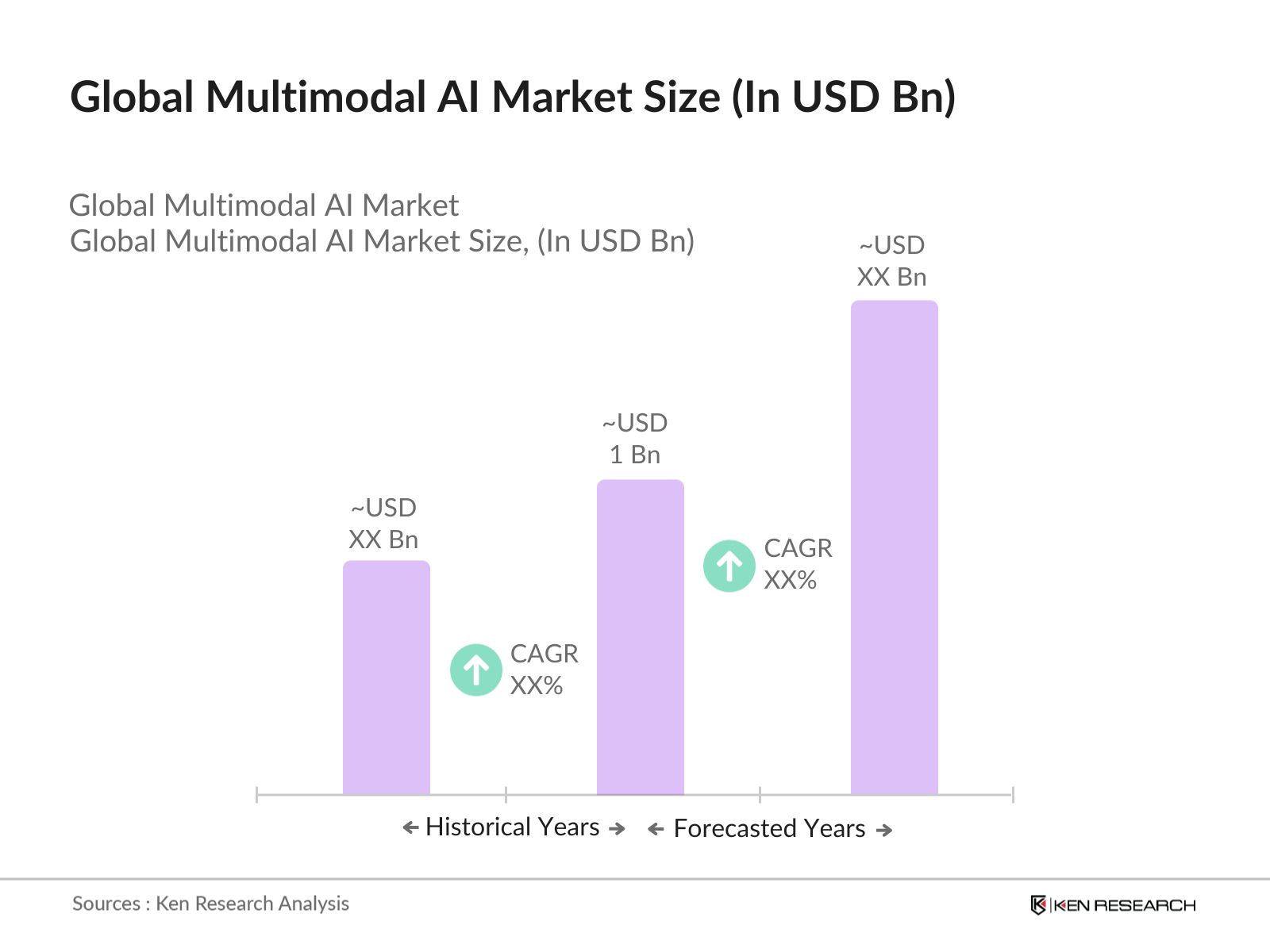
- The global multimodal AI market is valued at USD 1 billion. The market has grown significantly due to advancements in natural language processing (NLP), computer vision, and machine learning (ML) integration. Key drivers include the rise of AI-powered applications across industries such as healthcare, e-commerce, and autonomous vehicles. The increased need for real-time, accurate data processing across various modes (text, image, video) has fueled this growth. Moreover, the expansion of cloud-based AI services has facilitated wider adoption, enhancing the markets scalability.
- Countries like the United States, China, and Japan dominate the global multimodal AI market due to their robust technological infrastructure and significant investments in AI research and development. The U.S. leads with its extensive AI ecosystem, home to key players such as Google, Microsoft, and Amazon, driving innovation. Chinas dominance stems from strong government support for AI and vast data resources, while Japan leverages its advancements in robotics and AI integration in industrial applications.
- Cross-border data movement is heavily regulated due to privacy and security concerns. In 2024, the European Unions GDPR remained one of the strictest regulatory frameworks governing international data transfers, with fines for non-compliance reaching $1.2 billion . The global flow of data is crucial for AI systems that rely on large datasets from multiple regions, but regulations like GDPR and similar policies in the U.S. and Asia create barriers for companies. To mitigate risks, companies are investing in local data centers and adopting privacy-enhancing technologies to comply with cross-border data policies.
Global Multimodal AI Market Segmentation
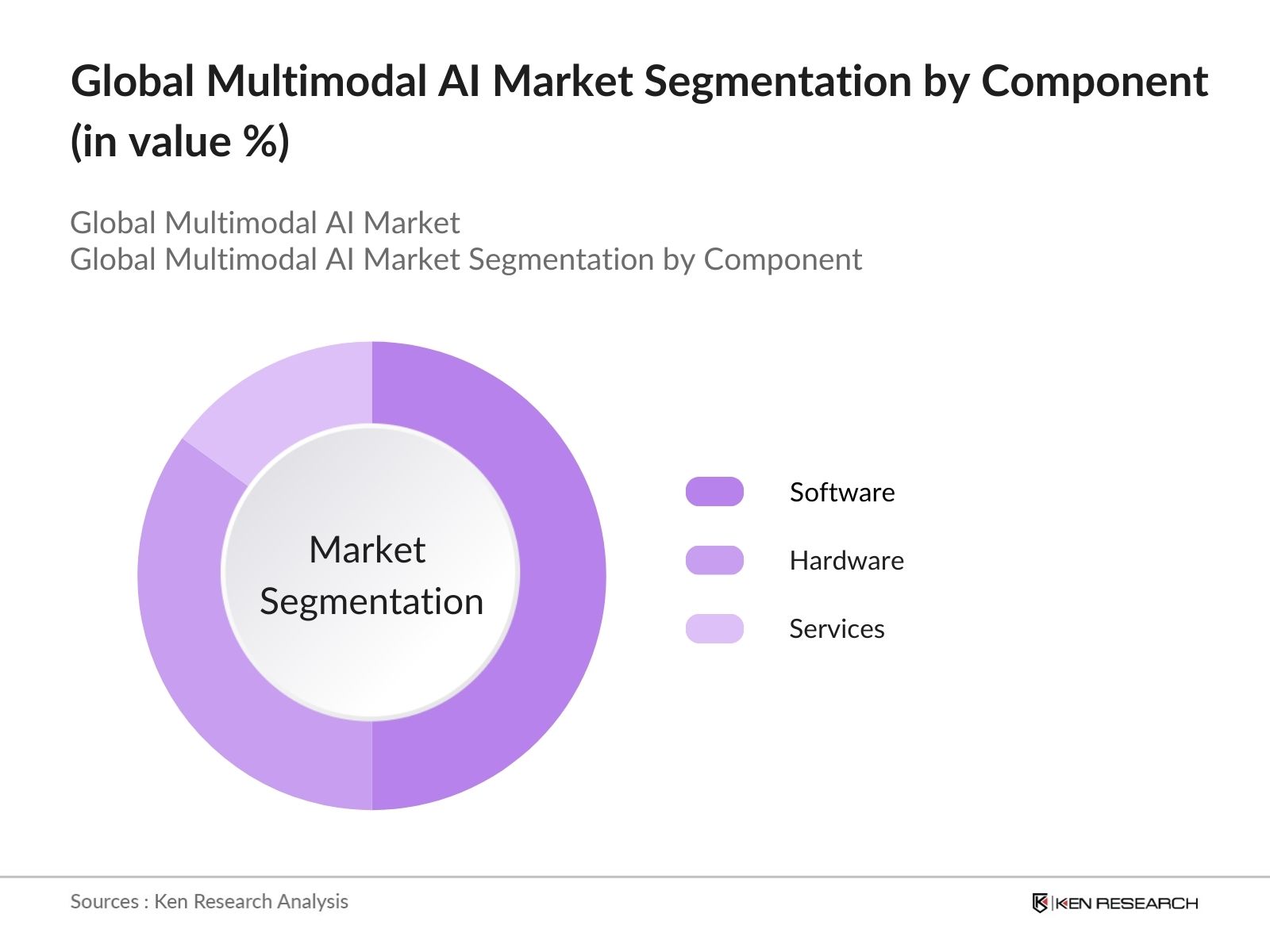
- By Component: The global multimodal AI market is segmented by component into hardware, software, and services. Software holds the dominant market share due to the increasing demand for AI-based platforms that integrate machine learning and deep learning algorithms. The ease of deployment and scalability of AI solutions as a service has led to their widespread adoption in sectors such as healthcare, e-commerce, and financial services. Companies continue to invest in AI-powered applications, leading to significant advancements in software capabilities.
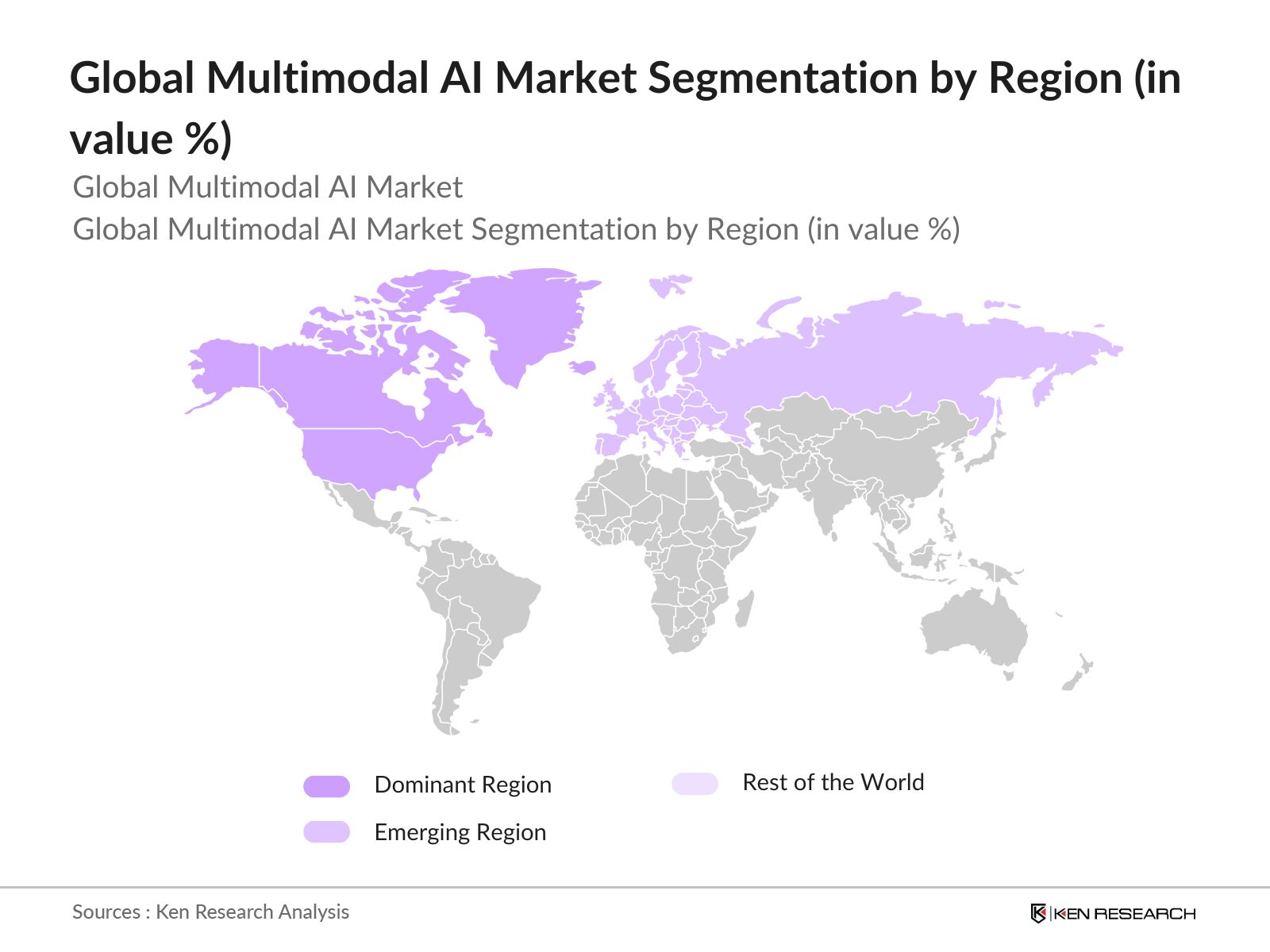
- By Region: Regionally, the global multimodal AI market is segmented into North America, Europe, Asia Pacific, Middle East & Africa, and Latin America. North America holds the largest share due to the presence of leading AI companies and a well-established technological ecosystem. The U.S., in particular, leads in terms of research, development, and deployment of AI technologies across industries. Additionally, increased investment in AI infrastructure by public and private sectors has contributed to the region's dominance.
- By Application: The market is segmented by application into healthcare, automotive, e-commerce, and others. Healthcare dominates the market due to the increasing use of multimodal AI in diagnostics, personalized medicine, and robotic surgery. AI solutions are enhancing the accuracy and speed of medical data analysis, enabling real-time decision-making in critical care scenarios. Multimodal AI systems are also revolutionizing telemedicine by integrating visual and textual inputs for improved diagnostics.
Global Multimodal AI Market Competitive Landscape
The competitive landscape is dominated by companies such as Google, Microsoft, IBM, and Amazon, which lead the market due to their strong AI platforms and solutions. These companies continue to innovate by integrating multimodal AI capabilities into existing services such as cloud computing, healthcare, and e-commerce, strengthening their market position. The competition is characterized by a focus on developing AI solutions that can process and analyze multiple data types simultaneously, providing holistic insights across industries.
|
Company |
Establishment Year |
Headquarters |
AI Investments |
R&D Budget |
AI Patents |
Partnerships |
AI Workforce |
Major Application Areas |
|
Google LLC |
1998 |
Mountain View |
||||||
|
Microsoft Corporation |
1975 |
Redmond |
||||||
|
IBM Corporation |
1911 |
Armonk |
||||||
|
Amazon Web Services |
2006 |
Seattle |
||||||
|
Meta Platforms, Inc. |
2004 |
Menlo Park |
Global Multimodal AI Industry Analysis
Growth Drivers
- AI Advancements in Natural Language Processing: The multimodal AI market is being propelled by rapid advancements in Natural Language Processing (NLP). In 2024, the demand for NLP solutions grew significantly, with healthcare, education, and finance sectors utilizing AI-driven language models for data analysis and customer interactions. For instance, over 2.5 billion devices worldwide are now equipped with NLP capabilities, especially in virtual assistants and conversational agents . These innovations enable businesses to automate text and voice analysis, enhancing human-computer interactions across industries. The increasing accessibility of these technologies supports the continued development of more efficient and accurate AI systems.
- Increasing Demand in Healthcare and Diagnostics: Healthcare and diagnostics represent one of the fastest-growing segments of the multimodal AI market. In 2024, global healthcare expenditures reached $8.45 trillion, with a large portion attributed to AI-driven diagnostics and automation . AI is used in hospitals for improving diagnostic accuracy, enabling personalized treatment plans, and reducing human error. A 2024 report by the World Health Organization indicates that 50% of healthcare institutions in developed economies have adopted AI tools for diagnostic purposes . These figures reflect the substantial role AI plays in improving healthcare outcomes, driving growth in this sector.
- Rising Adoption in E-commerce and Retail: The adoption of multimodal AI in e-commerce and retail has surged in recent years. By 2024, it was estimated that more than 80% of global online transactions involved some form of AI automation. This includes personalized product recommendations, virtual shopping assistants, and AI-powered chatbots, which have become integral to improving the customer experience. In 2024, the global e-commerce market was valued at $4.9 trillion, with AI playing a crucial role in reducing cart abandonment and boosting sales . Retailers use multimodal AI to integrate data from different channels, driving personalized customer interactions.
Market Restraints
- Data Privacy Regulations: As multimodal AI applications expand, data privacy concerns have become a significant challenge. In 2024, the European Unions General Data Protection Regulation (GDPR) imposed fines totaling over $1.4 billion for AI-related data breaches . The complex regulatory environment has made it essential for companies to ensure compliance when processing large volumes of data across different AI modalities. This regulatory burden limits AI innovation and increases the cost of compliance for businesses, as companies must prioritize the protection of sensitive user data to avoid penalties.
- High Infrastructure and Integration Costs: The adoption of multimodal AI technologies faces hurdles due to high infrastructure and integration costs. In 2024, global spending on AI infrastructure reached $84 billion, driven by the need for specialized hardware, such as GPUs and TPUs, and the complexity of integrating AI systems into existing workflows. The World Bank reported that the lack of reliable internet and data infrastructure in developing economies further exacerbates these challenges, limiting the accessibility of AI solutions . As businesses strive to keep pace with AI advancements, the high costs associated with implementation remain a significant barrier.
Global Multimodal AI Market Future Outlook
Over the next five years, the global multimodal AI market is expected to witness significant growth, driven by increasing AI adoption across industries, advancements in AI technologies, and the expanding scope of AI in healthcare, automotive, and e-commerce sectors. The demand for real-time, accurate data interpretation and AI-driven decision-making will continue to fuel the market. Additionally, improvements in AI hardware capabilities and cloud infrastructure will enhance the deployment of multimodal AI solutions, enabling businesses to leverage AI for complex, data-heavy tasks.
Market Opportunities
- Rise of Cloud-Based Multimodal AI Platforms: Cloud-based multimodal AI platforms are gaining traction, offering scalable solutions for businesses to deploy AI across various sectors. In 2024, global spending on cloud AI services reached $158 billion , driven by the need for cost-effective AI deployment without the overhead of maintaining on-premise infrastructure. Cloud providers like AWS and Google Cloud are increasingly offering AI as a Service (AIaaS), which simplifies access to advanced multimodal AI tools. This trend is expected to support AI adoption across smaller enterprises, creating new market opportunities in industries like manufacturing, healthcare, and retail.
- Expansion into AI-Powered Analytics and Insights: AI-powered analytics is transforming how businesses interpret vast amounts of data. By 2024, nearly 75% of large enterprises globally used AI-driven analytics platforms to gain insights from multimodal data . AI's ability to process text, images, and speech simultaneously allows companies to extract actionable insights from complex datasets, enhancing decision-making processes. In industries like finance and healthcare, multimodal AI systems provide predictive analytics, improving operational efficiency and customer outcomes. The growing demand for AI-enhanced analytics tools presents significant opportunities for market expansion.
Scope of the Report
|
By Component |
Hardware, Software, Services |
|
By Application |
Healthcare, E-commerce, Automotive, BFSI, Others |
|
By Technology |
Machine Learning, NLP, Computer Vision |
|
By Deployment Mode |
Cloud-Based, On-Premise |
|
By Region |
North America, Europe, Asia Pacific, Middle East & Africa, Latin America |
Products
Global Multimodal AI Market Key Target Audience
AI Software Developers
AI Hardware Manufacturers
Multinational Corporations
Healthcare Providers and Diagnostic Centers
Automotive OEMs and Suppliers
E-commerce and Retail Companies
Investors and Venture Capitalist Firms
Government and Regulatory Bodies (U.S. Department of Commerce, European Commission)
Companies
Players Mentioned in the Report:
Google LLC
Microsoft Corporation
IBM Corporation
Amazon Web Services (AWS)
Meta Platforms, Inc.
NVIDIA Corporation
Baidu Inc.
Alibaba Group Holding Limited
Intel Corporation
Qualcomm Technologies, Inc.
Salesforce.com, Inc.
Adobe Inc.
SAP SE
Tencent Holdings Ltd.
OpenAI
Table of Contents
1. Global Multimodal AI Market Overview
1.1. Definition and Scope
1.2. Market Taxonomy
1.3. Market Growth Rate
1.4. Market Segmentation Overview
2. Global Multimodal AI Market Size (In USD Bn)
2.1. Historical Market Size
2.2. Year-On-Year Growth Analysis
2.3. Key Market Developments and Milestones
3. Global Multimodal AI Market Analysis
3.1. Growth Drivers (AI Innovation, NLP advancements, Healthcare, E-commerce, Autonomous Systems)
3.1.1. AI Advancements in Natural Language Processing
3.1.2. Increasing Demand in Healthcare and Diagnostics
3.1.3. Rising Adoption in E-commerce and Retail
3.1.4. Surge in Autonomous and Smart Systems
3.2. Market Challenges (Data Privacy, Infrastructure Limitations, Ethical Concerns, Integration Complexities)
3.2.1. Data Privacy Regulations
3.2.2. High Infrastructure and Integration Costs
3.2.3. Ethical and Responsible AI Development
3.3. Opportunities (Cloud AI, AI-Powered Analytics, Edge Computing)
3.3.1. Rise of Cloud-Based Multimodal AI Platforms
3.3.2. Expansion into AI-Powered Analytics and Insights
3.3.3. Integration with Edge Computing for Real-Time Applications
3.4. Trends (AI Democratization, Cross-Modal Learning, Multimodal Applications)
3.4.1. Democratization of AI Through Open Source Frameworks
3.4.2. Increasing Focus on Cross-Modal Learning for Enhanced AI Capabilities
3.4.3. Expansion of Multimodal AI in Conversational Agents and Assistants
3.5. Government Regulation (AI Ethics, Data Security, Cross-Border Data Policies)
3.5.1. Government Initiatives for AI Ethics and Responsible Use
3.5.2. Regulations on Cross-Border Data Movement
3.5.3. Policies on AI in Defense and Public Safety
3.6. SWOT Analysis
3.7. Stake Ecosystem (Developers, End-users, Regulatory Bodies, Investors)
3.8. Porters Five Forces Analysis
3.9. Competition Ecosystem
4. Global Multimodal AI Market Segmentation
4.1. By Component (In Value %)
4.1.1. Hardware
4.1.2. Software
4.1.3. Services
4.2. By Application (In Value %)
4.2.1. Healthcare
4.2.2. E-commerce and Retail
4.2.3. Automotive
4.2.4. BFSI
4.2.5. Others
4.3. By Technology (In Value %)
4.3.1. Machine Learning
4.3.2. Natural Language Processing
4.3.3. Computer Vision
4.4. By Deployment Mode (In Value %)
4.4.1. Cloud-Based
4.4.2. On-Premise
4.5. By Region (In Value %)
4.5.1. North America
4.5.2. Europe
4.5.3. Asia Pacific
4.5.4. Middle East & Africa
4.5.5. Latin America
5. Global Multimodal AI Market Competitive Analysis
5.1. Detailed Profiles of Major Companies
5.1.1. Google LLC
5.1.2. Microsoft Corporation
5.1.3. IBM Corporation
5.1.4. Amazon Web Services (AWS)
5.1.5. OpenAI
5.1.6. NVIDIA Corporation
5.1.7. Meta Platforms, Inc.
5.1.8. Baidu Inc.
5.1.9. Alibaba Group Holding Limited
5.1.10. Intel Corporation
5.1.11. Qualcomm Technologies, Inc.
5.1.12. Tencent Holdings Ltd.
5.1.13. Salesforce.com, Inc.
5.1.14. Adobe Inc.
5.1.15. SAP SE
5.2. Cross Comparison Parameters (No. of Patents, AI Investments, Research and Development, AI Use Cases, AI Partnerships, Revenue Share, AI Workforce, Key Customers)
5.3. Market Share Analysis
5.4. Strategic Initiatives
5.5. Mergers And Acquisitions
5.6. Investment Analysis
5.7. Venture Capital Funding
5.8. Government Grants
5.9. Private Equity Investments
6. Global Multimodal AI Market Regulatory Framework
6.1. AI Governance and Ethical Standards
6.2. Data Security and Privacy Regulations
6.3. AI Certification and Compliance Requirements
7. Global Multimodal AI Future Market Size (In USD Bn)
7.1. Future Market Size Projections
7.2. Key Factors Driving Future Market Growth
8. Global Multimodal AI Future Market Segmentation
8.1. By Component (In Value %)
8.2. By Application (In Value %)
8.3. By Technology (In Value %)
8.4. By Deployment Mode (In Value %)
8.5. By Region (In Value %)
9. Global Multimodal AI Market Analysts Recommendations
9.1. TAM/SAM/SOM Analysis
9.2. Customer Cohort Analysis
9.3. AI Use Case Prioritization
9.4. White Space Opportunity Analysis
Research Methodology
Step 1: Identification of Key Variables
The initial phase of research involves the construction of an ecosystem map, identifying all key stakeholders within the global multimodal AI market. This step includes extensive desk research to gather relevant industry data and trends using secondary sources such as market reports and government databases. The objective is to identify critical variables influencing the market, including technological advancements, regulatory frameworks, and competitive dynamics.
Step 2: Market Analysis and Construction
The second phase involves a detailed analysis of historical market data, including market penetration rates, service adoption trends, and revenue generation across different industry verticals. We will assess the market structure and conduct a financial analysis to project future growth based on the identified key variables.
Step 3: Hypothesis Validation and Expert Consultation
In this step, market hypotheses will be validated through direct consultations with industry experts and AI practitioners. These experts will provide insights into current market trends, technological advancements, and challenges, ensuring that the data is reliable and accurate.
Step 4: Research Synthesis and Final Output
Finally, we will synthesize all the research data into a comprehensive market report, including detailed segment-wise analysis, competitive landscape, and future outlook. The output will be validated through cross-checking data points with primary sources such as industry experts and AI solution providers.
Frequently Asked Questions
01. How big is the Global Multimodal AI Market?
The global multimodal AI market is valued at USD 1 billion, driven by the increasing integration of AI technologies such as NLP, computer vision, and machine learning across various industries.
02. What are the challenges in the Global Multimodal AI Market?
Key challenges in the multimodal AI market include data privacy concerns, high infrastructure costs, and ethical issues related to AI implementation and decision-making.
03. Who are the major players in the Global Multimodal AI Market?
Major players include Google, Microsoft, IBM, Amazon Web Services, and Meta Platforms, which dominate the market due to their advanced AI capabilities and robust technological infrastructure.
04. What drives the Global Multimodal AI Market?
The market is driven by factors such as increasing demand for AI-based solutions in healthcare, e-commerce, and automotive industries, along with advancements in AI hardware and software technologies.
Why Buy From Us?

What makes us stand out is that our consultants follows Robust, Refine and Result (RRR) methodology. i.e. Robust for clear definitions, approaches and sanity checking, Refine for differentiating respondents facts and opinions and Result for presenting data with story

We have set a benchmark in the industry by offering our clients with syndicated and customized market research reports featuring coverage of entire market as well as meticulous research and analyst insights.

While we don't replace traditional research, we flip the method upside down. Our dual approach of Top Bottom & Bottom Top ensures quality deliverable by not just verifying company fundamentals but also looking at the sector and macroeconomic factors.

With one step in the future, our research team constantly tries to show you the bigger picture. We help with some of the tough questions you may encounter along the way: How is the industry positioned? Best marketing channel? KPI's of competitors? By aligning every element, we help maximize success.

Our report gives you instant access to the answers and sources that other companies might choose to hide. We elaborate each steps of research methodology we have used and showcase you the sample size to earn your trust.

If you need any support, we are here! We pride ourselves on universe strength, data quality, and quick, friendly, and professional service.