















Global Multiomics Market Outlook to 2030
Region:Global
Author(s):Sanjna Verma
Product Code:KROD8349
December 2024
97
About the Report
Global Multiomics Market Overview
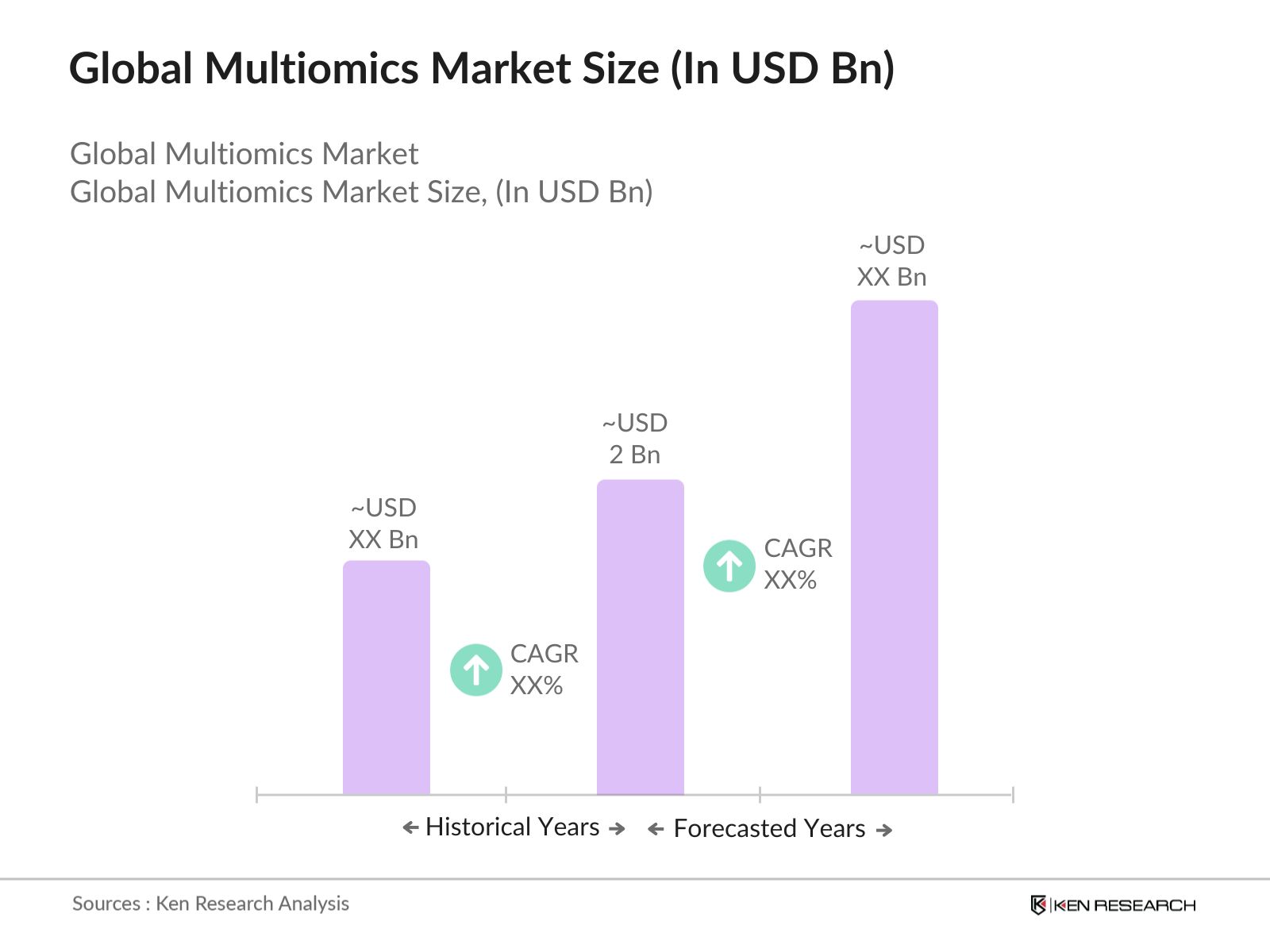
- Global Multiomics Market, valued at USD 2.5 billion in 2023, is driven by increased investments in biomedical research and the adoption of multiomics approaches across pharmaceutical and biotechnology sectors. The demand for multiomics tools such as genomics, proteomics, and metabolomics is growing, driven by the integration of these tools into precision medicine, drug discovery, and diagnostics. This growth is supported by continuous technological advancements in sequencing technologies and bioinformatics, making multiomics a core aspect of modern biomedical research.
- Countries such as the United States and China dominate the global multiomics market due to their extensive research infrastructure and strong government initiatives supporting omics-based research. In the U.S., the National Institutes of Health (NIH) funds large-scale genomics and multiomics projects, while Chinas government has heavily invested in developing its biotech industry, particularly in genomics.
- Governments globally are developing regulatory frameworks to facilitate the sharing of genomic data while ensuring patient privacy. As of 2023, 18 countries had established national genomic data-sharing policies, with an emphasis on compliance with international guidelines such as those from the Global Alliance for Genomics and Health (GA4GH). These frameworks are designed to promote cross-border collaboration while protecting sensitive patient data, creating a more cohesive approach to genomic research.
Global Multiomics Market Segmentation
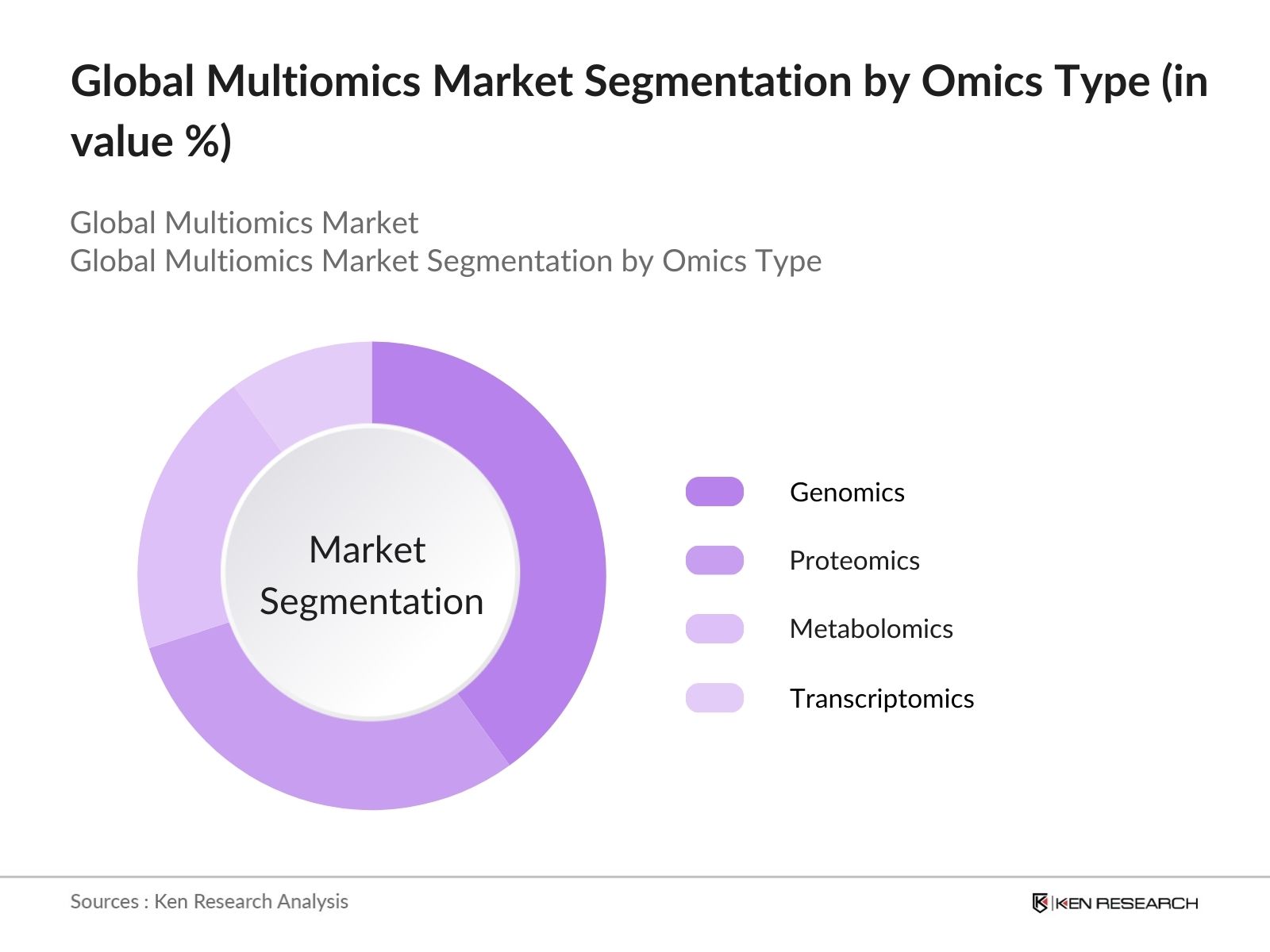
By Omics Type: The global multiomics market is segmented by omics type into genomics, proteomics, metabolomics, and transcriptomics. Genomics holds a dominant market share due to the widespread application of next-generation sequencing (NGS) in research and clinical settings. Genomics continues to be a cornerstone in areas such as personalized medicine and cancer research, where it is used to identify gene mutations and develop targeted therapies. The rise of genome-wide association studies (GWAS) and large-scale genomic data projects also contribute to the segment's growth.
By Application: The market is segmented by application into drug discovery, clinical diagnostics, personalized medicine, and agriculture & crop science. Drug discovery dominates this segment, driven by the use of multiomics tools in identifying new drug targets, understanding disease mechanisms, and developing novel therapeutic strategies. Pharmaceutical companies heavily invest in multiomics to accelerate the drug development pipeline and improve drug efficacy by incorporating omics data into early-stage trials and preclinical research.
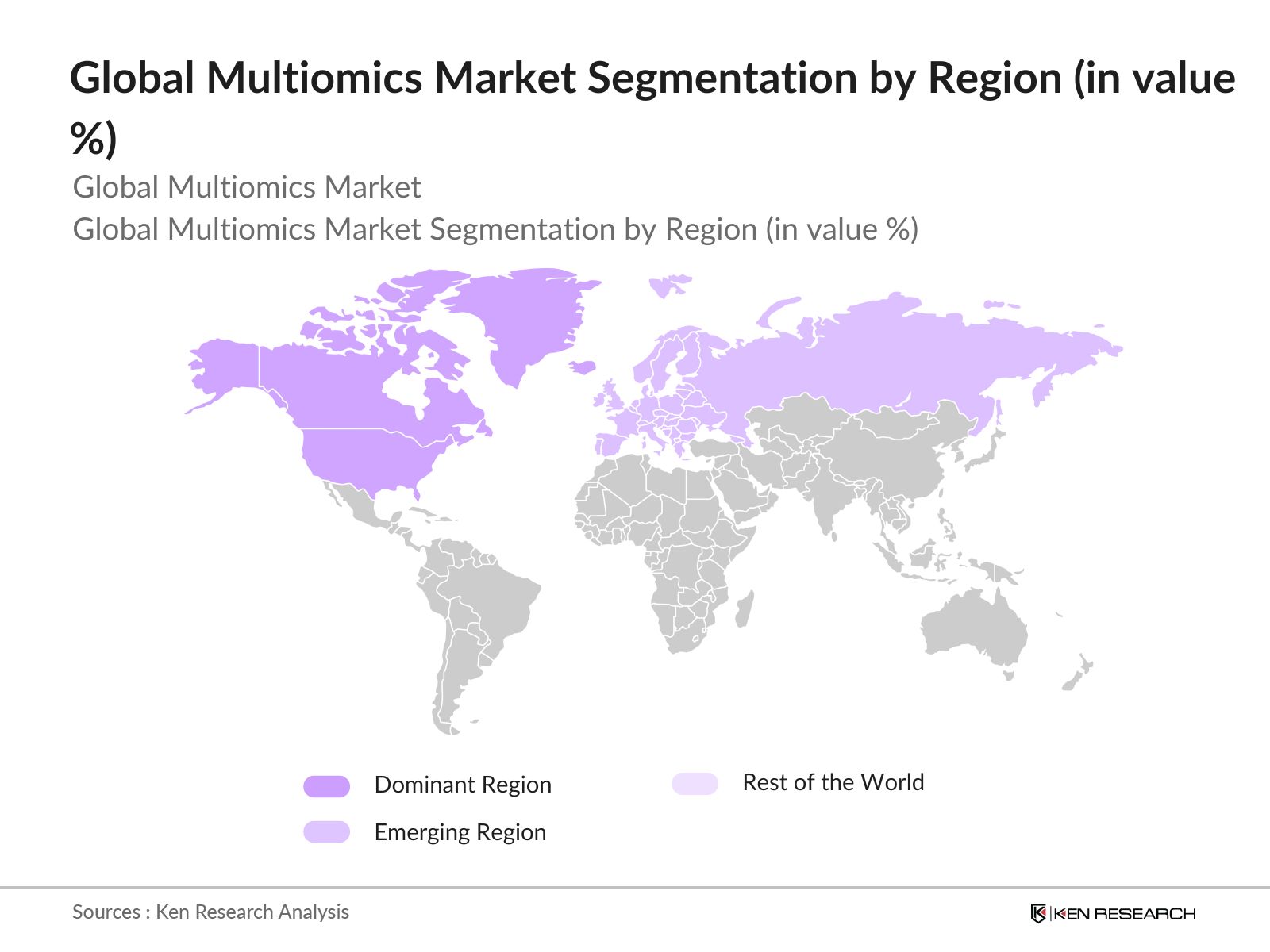
By Region: The global multiomics market is segmented into North America, Europe, Asia Pacific, Latin America, and Middle East & Africa. North America holds a dominant market share due to the presence of leading multiomics companies, government initiatives, and a robust research infrastructure. The region is home to several key players in the multiomics space, and it benefits from strong funding from government agencies such as the NIH. Additionally, high adoption rates of advanced technologies in healthcare and research contribute to the regions leadership position in the market.
Global Multiomics Market Competitive Landscape
The global multiomics market is highly competitive, with several key players driving innovation and market growth. Companies in this space are leveraging strategic partnerships, mergers, and acquisitions to expand their technological capabilities and market presence. The competition is primarily fueled by the need for integrated omics platforms that provide comprehensive biological insights, combining genomics, proteomics, metabolomics, and other omics data.
|
Company Name |
Establishment Year |
Headquarters |
Revenue (USD Mn) |
No. of Employees |
Market Specialization |
R&D Spend (USD Mn) |
No. of Patents |
Collaborations |
Core Technology |
|
Illumina, Inc. |
1998 |
San Diego, USA |
- |
- |
- |
- |
- |
- |
- |
|
Thermo Fisher Scientific |
1956 |
Waltham, USA |
- |
- |
- |
- |
- |
- |
- |
|
Qiagen N.V. |
1984 |
Venlo, Netherlands |
- |
- |
- |
- |
- |
- |
- |
|
Bio-Rad Laboratories |
1952 |
Hercules, USA |
- |
- |
- |
- |
- |
- |
- |
|
Agilent Technologies |
1999 |
Santa Clara, USA |
- |
- |
- |
- |
- |
- |
- |
Global Multiomics Market Analysis
Growth Drivers
- Rising Investment in Omics-based Research: The global multiomics landscape has experienced a significant increase in research funding, driven by the need for precision medicine and biomarker discovery. In 2023, the United States allocated over $45 billion to life sciences R&D, with a substantial portion directed toward genomics and multiomics research. The European Union also increased funding for omics-based projects, contributing more than 14 billion to Horizon Europe programs, which focus on health-related R&D. This influx of capital fosters collaborations between research institutions and industry players, further advancing the capabilities of multiomics technologies .
- Technological Advancements in Sequencing: Sequencing technology has become a cornerstone of multiomics research, enabling comprehensive analysis of genomics, transcriptomics, and proteomics. In 2024, advancements in next-generation sequencing (NGS) have reduced the time needed for whole-genome sequencing to under 24 hours, while the cost per genome has dropped to approximately $500. This cost reduction, along with faster data processing speeds, allows for broader adoption of sequencing in clinical settings and pharmaceutical R&D.
- Integration of Multiomics in Precision Medicine: The integration of multiomics in precision medicine is transforming healthcare by tailoring treatments to individual genetic profiles. As of 2024, more than 100 clinical trials involving multiomics approaches are ongoing globally, targeting cancers, rare diseases, and autoimmune disorders. The U.S. National Institutes of Health has invested $10 billion into precision medicine research, with a focus on utilizing multiomics data for personalized treatment strategies.
Market Challenges
- High Cost of Multiomics Platforms: Despite technological advancements, the high cost of multiomics platforms remains a significant barrier to widespread adoption. A typical multiomics analysis in a clinical setting costs between $5,000 to $15,000, depending on the scope of the study. These expenses, driven by equipment, reagents, and computational infrastructure, limit accessibility, particularly in developing regions.
- Data Analysis Complexity: Multiomics generates vast amounts of data across genomics, transcriptomics, proteomics, and metabolomics, creating a challenge in integrating and analyzing these datasets. In 2023, researchers generated approximately 20 petabytes of multiomics data globally, requiring advanced bioinformatics tools for analysis. The complexity of harmonizing this data across various omics layers is compounded by the lack of standardized platforms, slowing the translation of multiomics research into clinical applications.
Global Multiomics Market Future Outlook
Over the next five years, the global multiomics market is expected to experience significant growth, driven by continuous advancements in omics technologies, growing demand for personalized medicine, and increasing government support for large-scale multiomics projects. The integration of artificial intelligence (AI) and machine learning in multiomics data analysis is anticipated to revolutionize drug discovery and diagnostic processes, further accelerating market expansion.
Market Opportunities
- Increasing Demand for Biomarker Discovery: The demand for biomarker discovery using multiomics is accelerating in pharmaceutical R&D. In 2024, approximately 30% of all clinical trials globally were focused on identifying biomarkers for cancer, autoimmune diseases, and neurological disorders. Companies are investing heavily in biomarker discovery, with over $3 billion allocated for omics-based drug development initiatives in North America alone.
- Rising Investment in Multiomics Startups: Investment in multiomics-focused startups has surged in recent years. In 2023, venture capital firms poured over $4 billion into startups specializing in omics technologies, particularly in the U.S. and Europe. These companies are focusing on developing innovative solutions for multiomics data integration, biomarker discovery, and personalized medicine. The increasing interest from investors is driving rapid advancements in the field and providing startups with the capital needed to bring cutting-edge technologies to the market .
Scope of the Report
|
Omics Type |
Genomics Proteomics Metabolomics Transcriptomics Epigenomics |
|
Application |
Drug Discovery Clinical Diagnostics Personalized Medicine Agriculture & Crop Science |
|
Technology |
Next-Generation Sequencing (NGS) Mass Spectrometry Chromatography Data Analysis Platforms |
|
End-User |
Pharmaceutical and Biotechnology Companies Research Institutes Contract Research Organizations (CROs) Academic & Government Institutes |
|
Region |
North America Europe Asia Pacific Latin America Middle East & Africa |
Products
Key Target Audience
Pharmaceutical Companies
Biotechnology Firms
Healthcare Providers and Diagnostic Companies
Government and Regulatory Bodies (e.g., National Institutes of Health, U.S. Food and Drug Administration)
Investors and Venture Capitalist Firms
Healthcare Providers
Clinical Diagnostics Companies
Companies
Players Mentioned in the Report
Illumina, Inc.
Thermo Fisher Scientific
Agilent Technologies, Inc.
Qiagen N.V.
Bio-Rad Laboratories, Inc.
Bruker Corporation
PerkinElmer, Inc.
Waters Corporation
BGI Genomics
Danaher Corporation
Table of Contents
1. Global Multiomics Market Overview
1.1. Definition and Scope
1.2. Market Taxonomy
1.3. Market Growth Rate
1.4. Market Segmentation Overview
2. Global Multiomics Market Size (In USD Bn)
2.1. Historical Market Size
2.2. Year-On-Year Growth Analysis
2.3. Key Market Developments and Milestones
3. Global Multiomics Market Analysis
3.1. Growth Drivers (Research Collaboration, Genomics Funding, Advances in Bioinformatics)
3.1.1. Rising Investment in Omics-based Research
3.1.2. Technological Advancements in Sequencing
3.1.3. Integration of Multiomics in Precision Medicine
3.1.4. Government Initiatives for Large-Scale Multiomics Programs
3.2. Market Challenges (Data Integration, Lack of Standardization)
3.2.1. High Cost of Multiomics Platforms
3.2.2. Data Analysis Complexity
3.2.3. Regulatory Hurdles in Genomic Data Sharing
3.2.4. Shortage of Skilled Professionals
3.3. Opportunities (Pharmaceutical R&D, Personalized Therapies)
3.3.1. Increasing Demand for Biomarker Discovery
3.3.2. Expanding Clinical Applications of Multiomics
3.3.3. Adoption of AI and Machine Learning in Omics Data Analysis
3.3.4. Rising Investment in Multiomics Startups
3.4. Trends (Single-Cell Omics, Metabolomics)
3.4.1. Adoption of Single-Cell Multiomics Technologies
3.4.2. Growing Importance of Microbiome Studies in Multiomics
3.4.3. Expansion of Proteomics and Metabolomics in Drug Development
3.4.4. Data Integration Across Multiomics Platforms
3.5. Government Regulation (Regulatory Guidelines, Data Protection Laws)
3.5.1. Regulatory Frameworks for Genomic Data Sharing
3.5.2. Compliance with Global Standards for Omics Data
3.5.3. Data Privacy Laws for Patient Genomics Information
3.5.4. Public-Private Partnerships in Omics Research
3.6. SWOT Analysis
3.7. Stake Ecosystem
3.8. Porters Five Forces Analysis
3.9. Competition Ecosystem
4. Global Multiomics Market Segmentation
4.1. By Omics Type (In Value %)
4.1.1. Genomics
4.1.2. Proteomics
4.1.3. Metabolomics
4.1.4. Transcriptomics
4.1.5. Epigenomics
4.2. By Application (In Value %)
4.2.1. Drug Discovery
4.2.2. Clinical Diagnostics
4.2.3. Personalized Medicine
4.2.4. Agriculture & Crop Science
4.3. By Technology (In Value %)
4.3.1. Next-Generation Sequencing (NGS)
4.3.2. Mass Spectrometry
4.3.3. Chromatography
4.3.4. Data Analysis Platforms
4.4. By End-User (In Value %)
4.4.1. Pharmaceutical and Biotechnology Companies
4.4.2. Research Institutes
4.4.3. Contract Research Organizations (CROs)
4.4.4. Academic & Government Institutes
4.5. By Region (In Value %)
4.5.1. North America
4.5.2. Europe
4.5.3. Asia Pacific
4.5.4. Latin America
4.5.5. Middle East & Africa
5. Global Multiomics Market Competitive Analysis
5.1. Detailed Profiles of Major Companies
5.1.1. Illumina, Inc.
5.1.2. Thermo Fisher Scientific
5.1.3. Agilent Technologies, Inc.
5.1.4. Qiagen N.V.
5.1.5. Bio-Rad Laboratories, Inc.
5.1.6. Bruker Corporation
5.1.7. Danaher Corporation
5.1.8. PerkinElmer, Inc.
5.1.9. Waters Corporation
5.1.10. BGI Genomics
5.2. Cross Comparison Parameters (No. of Patents, Omics Type Focus, Annual R&D Spend, Number of Collaborations, Headquarters, No. of Employees, Revenue)
5.3. Market Share Analysis
5.4. Strategic Initiatives
5.5. Mergers And Acquisitions
5.6. Investment Analysis
5.7. Government Grants
5.8. Private Equity Investments
6. Global Multiomics Market Regulatory Framework
6.1. Genomic Data Regulation
6.2. Data Protection and Privacy Laws
6.3. Compliance and Certification for Multiomics Platforms
7. Global Multiomics Future Market Size (In USD Bn)
7.1. Future Market Size Projections
7.2. Key Factors Driving Future Market Growth
8. Global Multiomics Future Market Segmentation
8.1. By Omics Type (In Value %)
8.2. By Application (In Value %)
8.3. By Technology (In Value %)
8.4. By End-User (In Value %)
8.5. By Region (In Value %)
9. Global Multiomics Market Analysts Recommendations
9.1. TAM/SAM/SOM Analysis
9.2. Customer Segmentation Analysis
9.3. Strategic Market Entry Recommendations
9.4. White Space Opportunity Analysis
Research Methodology
Step 1: Identification of Key Variables
The initial phase involves mapping the global multiomics market ecosystem by identifying all the key stakeholders and influential players. This process is facilitated by thorough secondary research using proprietary databases, industry reports, and credible open-source material to establish the core market drivers, challenges, and opportunities.
Step 2: Market Analysis and Construction
Historical data from 2018 to 2023 is collected to analyze the market growth trajectory. This phase involves evaluating market penetration levels, assessing key trends, and determining the relationship between technological advancements and market revenue generation. The analysis also includes an examination of key applications such as drug discovery and personalized medicine.
Step 3: Hypothesis Validation and Expert Consultation
Key industry hypotheses, such as the growing demand for single-cell omics and integration of AI in multiomics data analysis, are validated through interviews with industry experts. These interviews provide insights into the operational strategies of major players and the markets growth potential.
Step 4: Research Synthesis and Final Output
The final phase includes synthesizing the findings from the market analysis and expert consultations to create a comprehensive report. The conclusions drawn from this data are cross-verified with bottom-up market approaches, ensuring the accuracy and reliability of the market projections.
Frequently Asked Questions
1. How big is the global multiomics market?
The global multiomics market was valued at USD 2.5 billion in 2023, with its growth fueled by increasing investments in multiomics research and the integration of omics tools in precision medicine and drug discovery.
2. What are the challenges in the global multiomics market?
Challenges in global multiomics market include the high cost of multiomics platforms, complexity in data analysis and integration, and a shortage of skilled professionals capable of working with multiomics technologies.
3. Who are the major players in the global multiomics market?
Key players in global multiomics market include Illumina, Thermo Fisher Scientific, Agilent Technologies, Qiagen, and Bio-Rad Laboratories. These companies dominate due to their technological advancements, strategic collaborations, and large-scale R&D investments.
4. What are the growth drivers of the global multiomics market?
Global multiomics market is driven by advancements in sequencing technologies, increased adoption of omics tools in precision medicine, and government initiatives supporting large-scale genomics projects.
Why Buy From Us?

What makes us stand out is that our consultants follows Robust, Refine and Result (RRR) methodology. i.e. Robust for clear definitions, approaches and sanity checking, Refine for differentiating respondents facts and opinions and Result for presenting data with story

We have set a benchmark in the industry by offering our clients with syndicated and customized market research reports featuring coverage of entire market as well as meticulous research and analyst insights.

While we don't replace traditional research, we flip the method upside down. Our dual approach of Top Bottom & Bottom Top ensures quality deliverable by not just verifying company fundamentals but also looking at the sector and macroeconomic factors.

With one step in the future, our research team constantly tries to show you the bigger picture. We help with some of the tough questions you may encounter along the way: How is the industry positioned? Best marketing channel? KPI's of competitors? By aligning every element, we help maximize success.

Our report gives you instant access to the answers and sources that other companies might choose to hide. We elaborate each steps of research methodology we have used and showcase you the sample size to earn your trust.

If you need any support, we are here! We pride ourselves on universe strength, data quality, and quick, friendly, and professional service.