
Global Music Production Software Market Outlook to 2030
Region:Global
Author(s):Vijay Kumar
Product Code:KROD5781
Region:Global
Author(s):Vijay Kumar
Product Code:KROD5781
December 2024
99
Listen to the audio summary
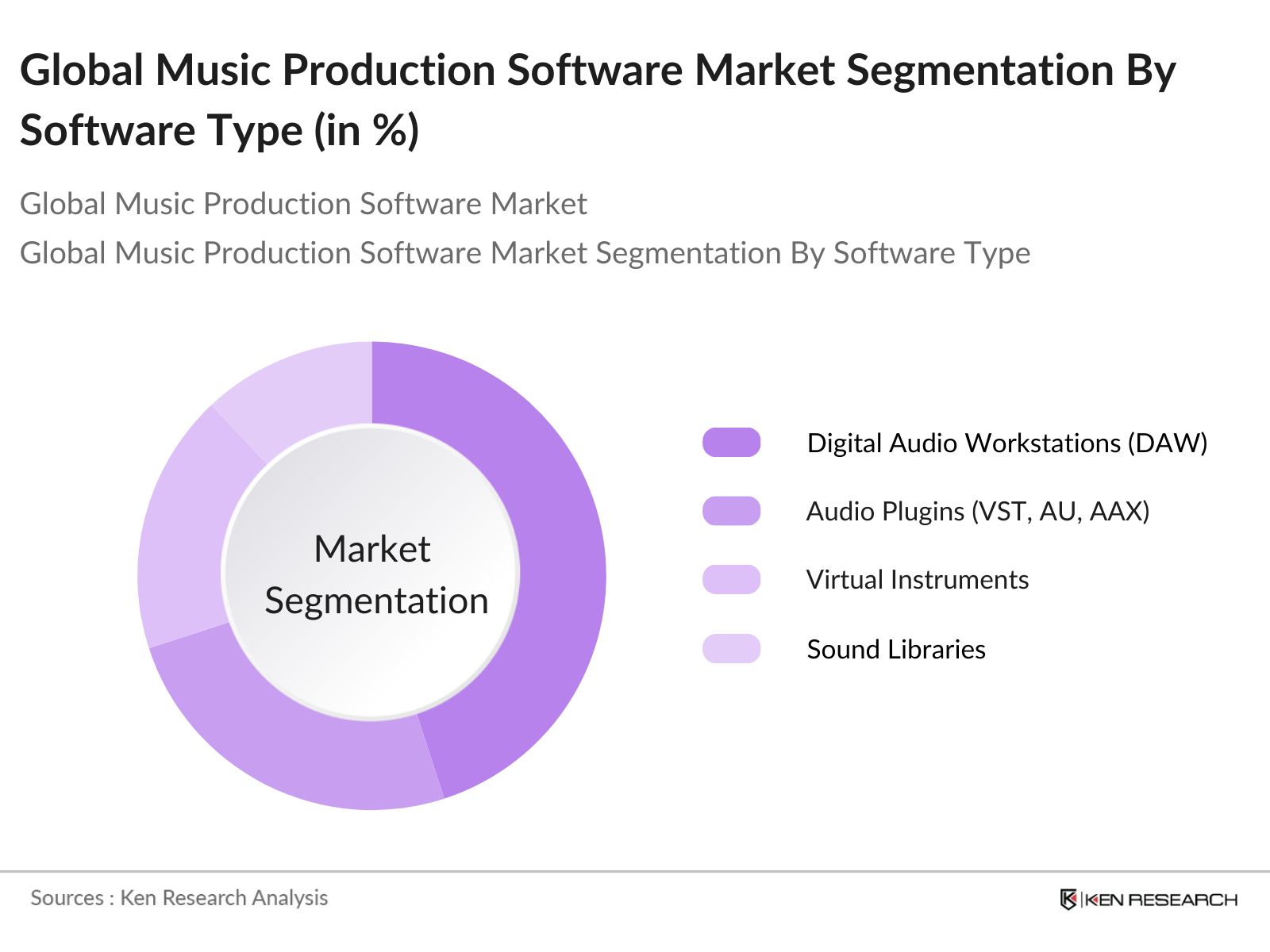
By Software Type: The market is segmented by software type into digital audio workstations (DAW), audio plugins (VST, AU, AAX), virtual instruments, and sound libraries. Among these, digital audio workstations hold a dominant market share due to their versatility and widespread use in music creation. Leading DAW products such as Ableton Live, FL Studio, and Logic Pro X have established a loyal user base, especially in professional and independent music studios, which rely on their comprehensive feature sets and ease of use.
By Deployment Mode: The market is divided into on-premise and cloud-based deployment modes. Cloud-based solutions are gaining popularity, holding a significant market share due to their accessibility and scalability. Producers and sound engineers increasingly prefer cloud-based solutions because they offer collaboration tools, automatic software updates, and seamless access to projects from multiple devices, making the production process more flexible and efficient.
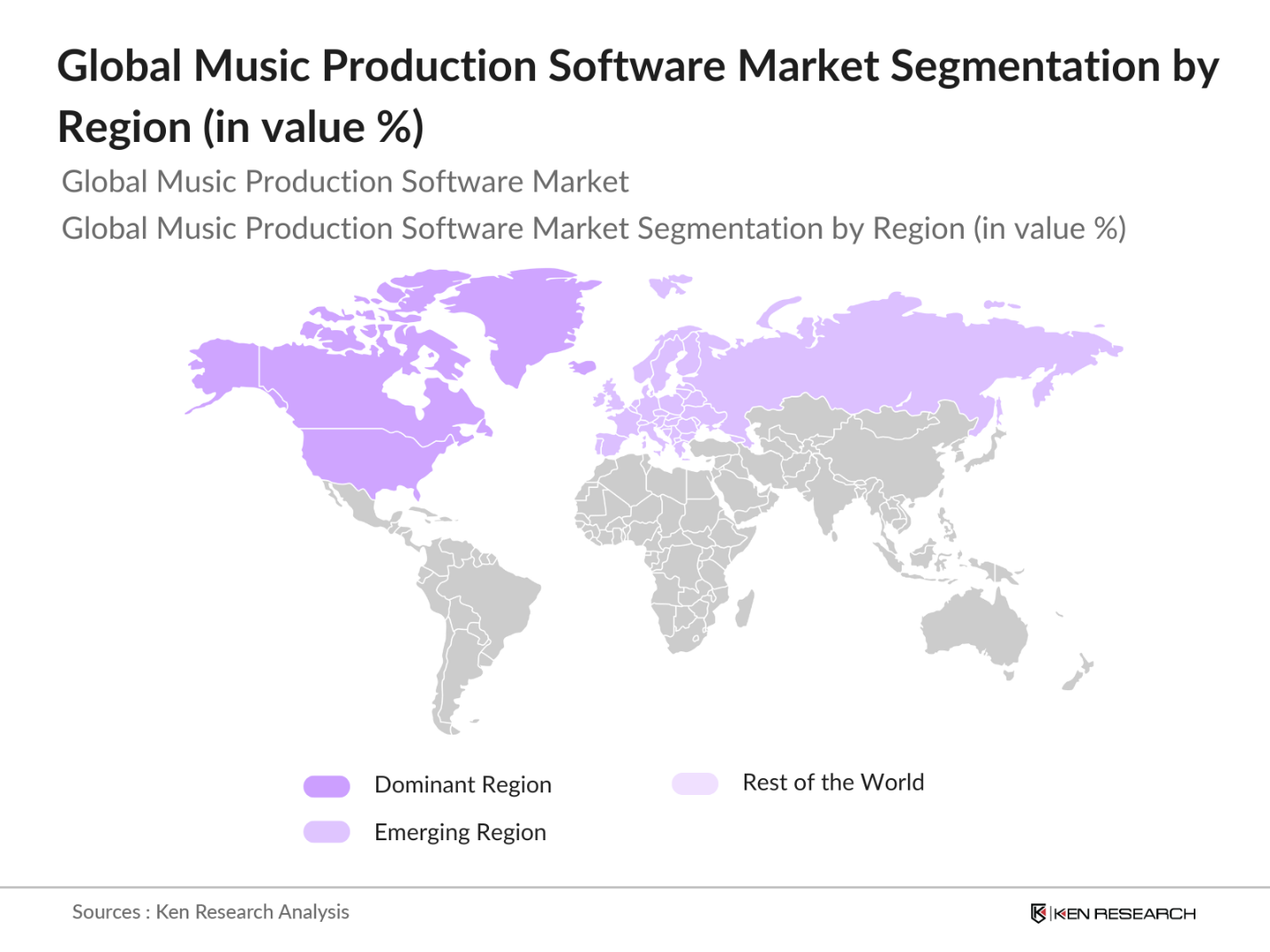
By Region: The market is segmented regionally into North America, Europe, Asia Pacific, Latin America, and the Middle East & Africa. North America dominates the market with the highest share, driven by the presence of a mature music industry and a large number of professional users. Cities like Los Angeles and New York are hubs for music production, leading to high demand for premium software tools.
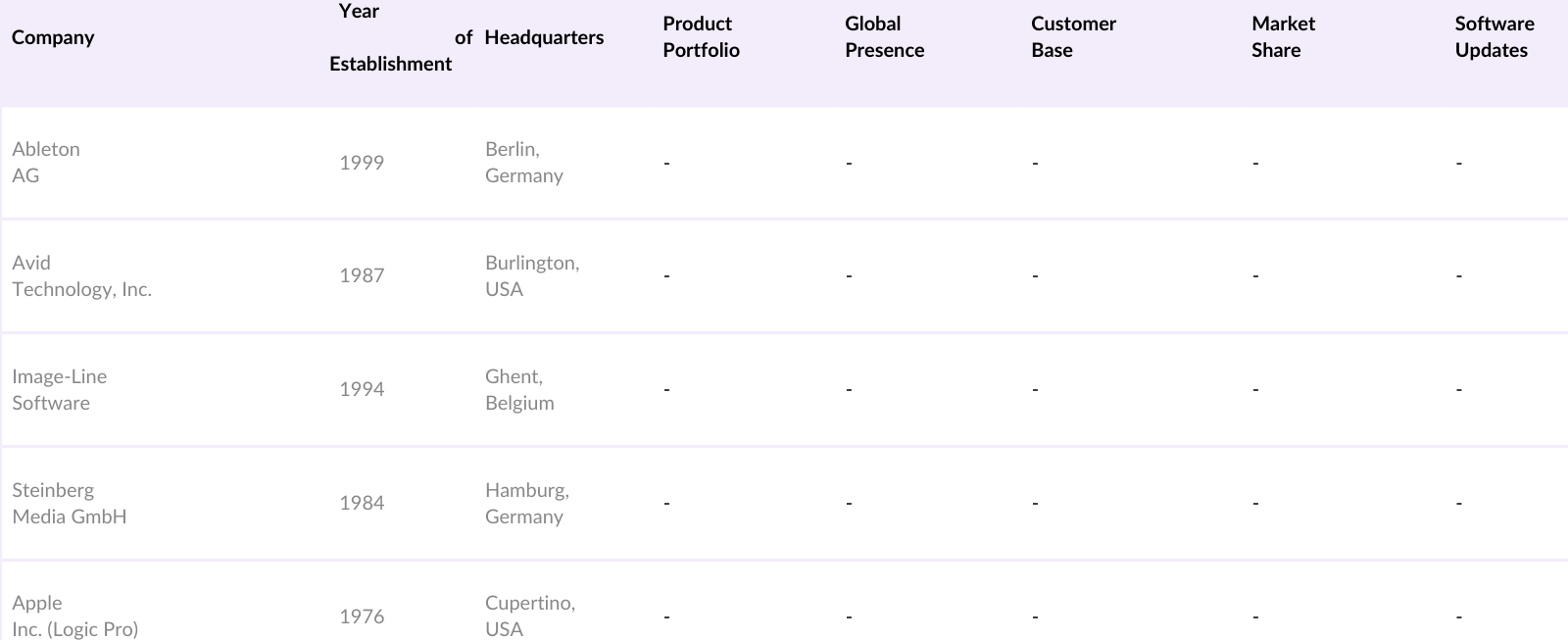
The global music production software market is characterized by the presence of both established companies and emerging players offering innovative solutions. Major industry leaders such as Ableton, Avid Technology, and Apple have a strong hold on the market due to their diverse product portfolios, regular software updates, and widespread user communities. The market also sees significant competition from specialized firms like Image-Line and Native Instruments, which offer unique tools catering to specific user needs.
Over the next five years, the global music production software market is expected to experience significant growth driven by continuous technological advancements, increasing penetration of cloud-based solutions, and rising demand for music production across all genres. The market will continue to see new innovations, particularly in artificial intelligence (AI)-driven software that assists with composing, mixing, and mastering.
|
Software Type |
Digital Audio Workstations (DAW) Audio Plugins (VST, AU, AAX) Virtual Instruments Sound Libraries |
|
Deployment Mode |
On-Premise Cloud-Based |
|
End Users |
Professional Music Studios Independent Producers Educational Institutions Hobbyists & Freelancers |
|
Distribution Channel |
Direct Sales Third-Party Resellers Online Marketplaces |
|
By Region |
North America Europe Asia Pacific Latin America Middle East & Africa |
1.1. Definition and Scope
1.2. Market Taxonomy
1.3. Market Growth Rate (CAGR, Revenue Growth %, Installed Base)
1.4. Market Segmentation Overview (Software Type, Deployment Mode, End Users, Distribution Channel, Region)
2.1. Historical Market Size (Market Penetration Rate, Growth % YoY)
2.2. Year-On-Year Growth Analysis (Volume and Value)
2.3. Key Market Developments and Milestones (Product Launches, Platform Innovations, Licensing Agreements)
3.1. Growth Drivers
3.1.1. Proliferation of Home Studios
3.1.2. Expansion of Streaming Services
3.1.3. Rising Demand for Audio Content Creation (Podcasts, YouTube)
3.1.4. Growth in Music Technology Integration (AI, Machine Learning in Production) 3.2. Market Challenges
3.2.1. High Cost of Professional Software Licenses
3.2.2. Piracy and Software Cracking
3.2.3. Complex Learning Curve for Users
3.3. Opportunities
3.3.1. Expansion of Subscription-Based Models
3.3.2. Integration of AI-Assisted Production Tools
3.3.3. Increased Demand in Emerging Markets
3.3.4. Collaborations with Online Learning Platforms
3.4. Trends
3.4.1. Growth in Mobile Music Production Apps
3.4.2. Increased Integration of Cloud-Based Software Solutions
3.4.3. Collaboration Tools for Remote Production
3.5. Government Regulation (Taxation, Data Security, Licensing)
3.6. SWOT Analysis
3.7. Stake Ecosystem (Developers, Music Producers, Distribution Platforms)
3.8. Porters Five Forces
3.8.1. Threat of New Entrants
3.8.2. Bargaining Power of Suppliers
3.8.3. Bargaining Power of Buyers
3.8.4. Threat of Substitutes
3.8.5. Industry Rivalry
3.9. Competition Ecosystem
4.1. By Software Type (In Value %)
4.1.1. Digital Audio Workstations (DAW)
4.1.2. Audio Plugins (VST, AU, AAX)
4.1.3. Virtual Instruments
4.1.4. Sound Libraries
4.2. By Deployment Mode (In Value %)
4.2.1. On-Premise
4.2.2. Cloud-Based
4.3. By End Users (In Value %)
4.3.1. Professional Music Studios
4.3.2. Independent Producers
4.3.3. Educational Institutions
4.3.4. Hobbyists & Freelancers
4.4. By Distribution Channel (In Value %)
4.4.1. Direct Sales
4.4.2. Third-Party Resellers
4.4.3. Online Marketplaces
4.5. By Region (In Value %)
4.5.1. North America
4.5.2. Europe
4.5.3. Asia Pacific
4.5.4. Latin America
4.5.5. Middle East & Africa
5.1. Detailed Profiles of Major Companies
5.1.1. Ableton AG
5.1.2. Avid Technology, Inc.
5.1.3. Image-Line Software
5.1.4. Steinberg Media Technologies GmbH
5.1.5. PreSonus Audio Electronics, Inc.
5.1.6. Apple Inc. (Logic Pro)
5.1.7. Cockos Incorporated (Reaper)
5.1.8. Native Instruments GmbH
5.1.9. Propellerhead Software
5.1.10. MAGIX Software GmbH
5.1.11. Bitwig GmbH
5.1.12. Roland Corporation
5.1.13. Serato Audio Research
5.1.14. Reason Studios
5.1.15. BandLab Technologies
5.2. Cross Comparison Parameters (Revenue, Product Portfolio, Software Updates, Global Presence, Customer Base, Pricing Strategy, Market Share, Partnerships)
5.3. Market Share Analysis
5.4. Strategic Initiatives (Product Development, Collaborations, Marketing Strategies)
5.5. Mergers And Acquisitions
5.6. Investment Analysis
5.7. Venture Capital Funding
5.8. Government Grants
5.9. Private Equity Investments
6.1. Software Licensing and Copyright Regulations
6.2. Compliance Requirements (Regional Music Licensing Laws)
6.3. Data Security Standards (GDPR, CCPA)
6.4. Certification Processes (Software Standards for Security and Performance)
7.1. Future Market Size Projections
7.2. Key Factors Driving Future Market Growth (Expansion of AI Tools, Cloud Adoption, Emerging Markets)
8.1. By Software Type (In Value %)
8.2. By Deployment Mode (In Value %)
8.3. By End Users (In Value %)
8.4. By Distribution Channel (In Value %)
8.5. By Region (In Value %)
9.1. TAM/SAM/SOM Analysis
9.2. Customer Cohort Analysis
9.3. Marketing Initiatives
9.4. White Space Opportunity Analysis (Unexplored Segments, Niche Markets)
This initial phase involved mapping the music production ecosystem, identifying all key stakeholders, including music software developers, end-users, and distributors. Secondary research from proprietary databases was used to define the critical variables affecting market dynamics, such as software adoption rates and technological advancements.
Historical data for the global music production software market was compiled to assess market penetration and revenue generation. Service quality statistics, market share by key players, and the impact of software piracy were analyzed to ensure the accuracy of the estimates.
The third phase focused on validating market hypotheses through interviews with industry experts from leading music production software companies. These consultations provided insights into product performance, customer preferences, and the challenges faced by companies.
The final step involved direct interaction with major music production software developers to refine data on software segment performance and market forecasts. This bottom-up approach ensured the reliability of the analysis and projections for future market growth.
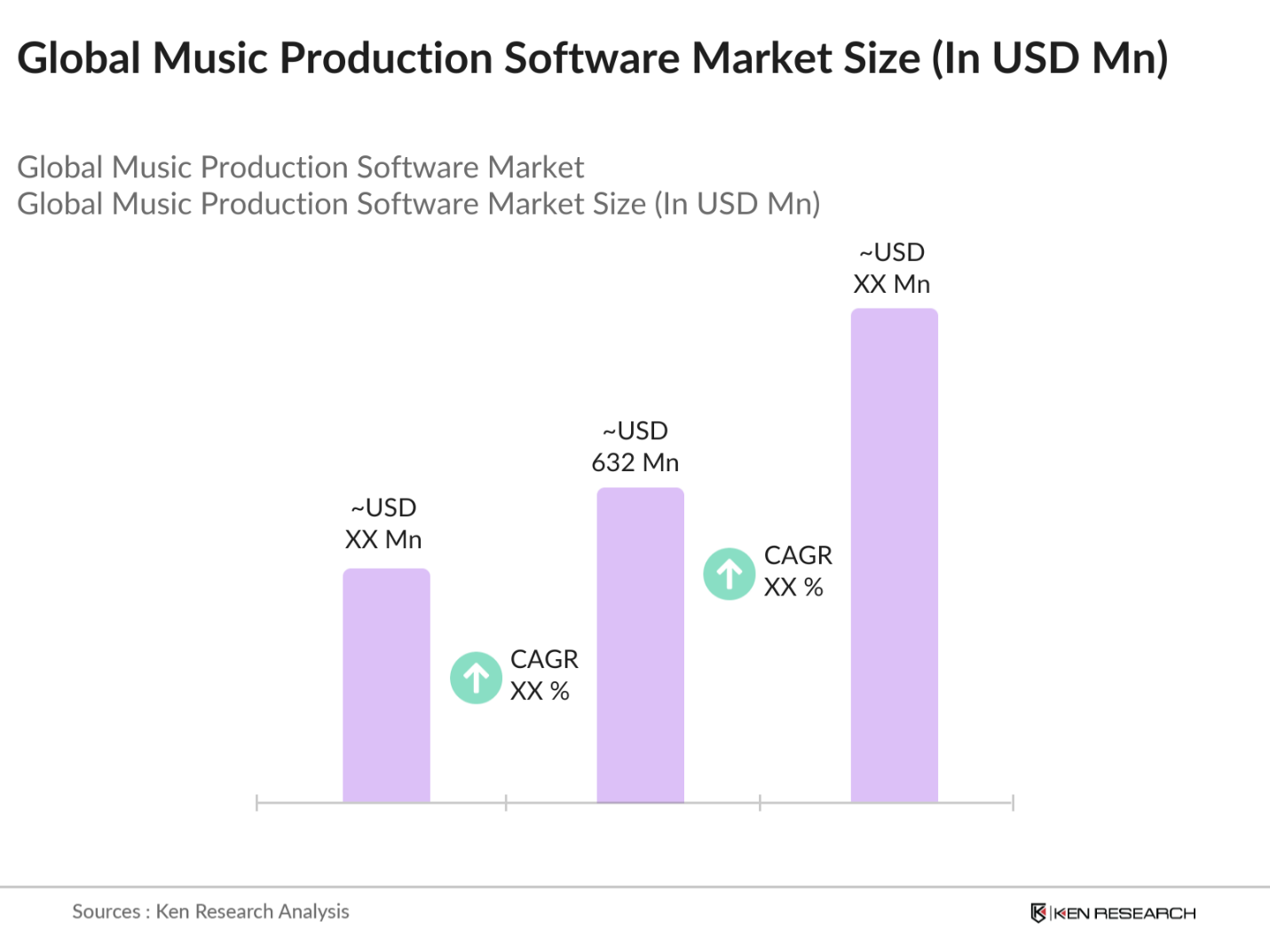
The Global Music Production Software Market is valued at USD 632 billion, based on a five-year historical analysis. This market is driven by the rise of home studios, fueled by affordability and ease of access to production tools.
Challenges include high licensing costs for professional software, widespread piracy, and the steep learning curve associated with mastering advanced music production software tools.
Major players include Ableton, Avid Technology, Apple (Logic Pro), Image-Line Software, and Steinberg Media Technologies GmbH. These companies dominate due to their innovative product offerings, strong brand presence, and large user communities.
Growth drivers include the rise of home studios, the increasing use of AI and machine learning in music production, and the growing demand for audio content in new media formats like podcasts and streaming platforms.

What makes us stand out is that our consultants follows Robust, Refine and Result (RRR) methodology. i.e. Robust for clear definitions, approaches and sanity checking, Refine for differentiating respondents facts and opinions and Result for presenting data with story

We have set a benchmark in the industry by offering our clients with syndicated and customized market research reports featuring coverage of entire market as well as meticulous research and analyst insights.

While we don't replace traditional research, we flip the method upside down. Our dual approach of Top Bottom & Bottom Top ensures quality deliverable by not just verifying company fundamentals but also looking at the sector and macroeconomic factors.

With one step in the future, our research team constantly tries to show you the bigger picture. We help with some of the tough questions you may encounter along the way: How is the industry positioned? Best marketing channel? KPI's of competitors? By aligning every element, we help maximize success.

Our report gives you instant access to the answers and sources that other companies might choose to hide. We elaborate each steps of research methodology we have used and showcase you the sample size to earn your trust.

If you need any support, we are here! We pride ourselves on universe strength, data quality, and quick, friendly, and professional service.