
Global Musical Instrument Market Outlook to 2030
Region:Global
Author(s):Mukul
Product Code:KROD4686
Region:Global
Author(s):Mukul
Product Code:KROD4686
November 2024
89
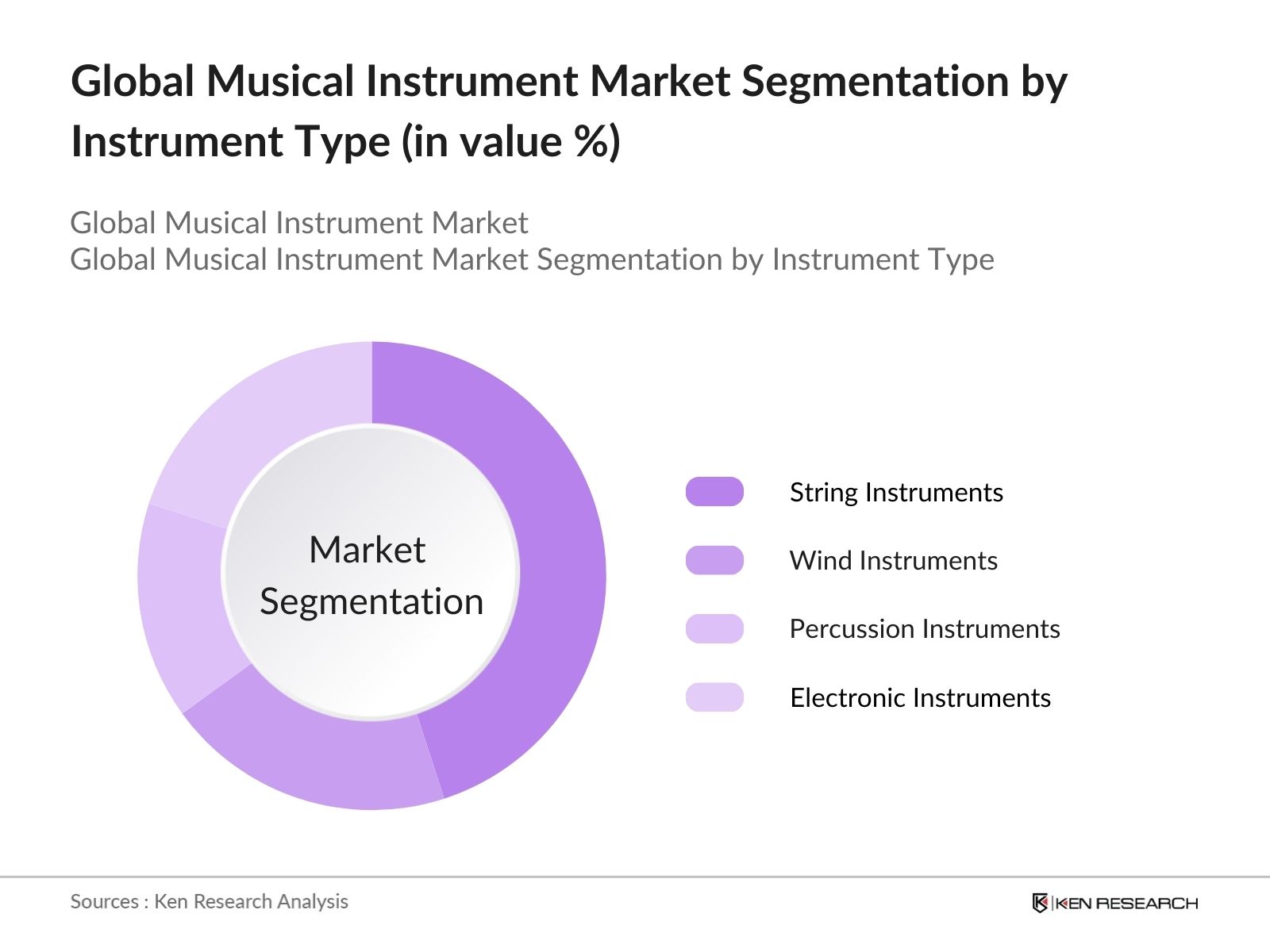
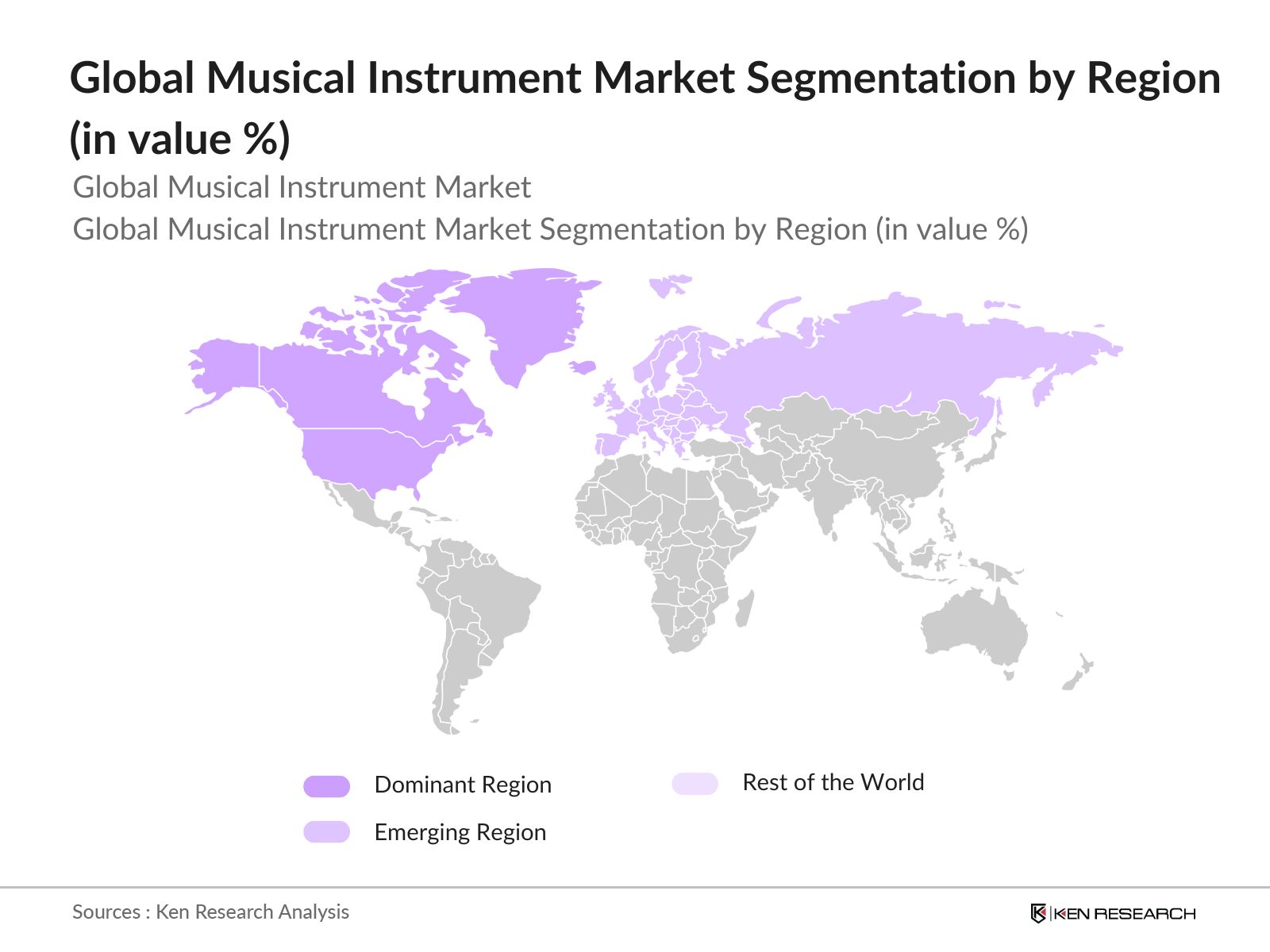
The global musical instrument market is highly competitive, with several key players holding significant market shares. These players compete on various factors such as innovation, product quality, brand reputation, and distribution reach. The competition is intense among leading brands like Yamaha, Fender, and Roland. Additionally, there is a growing focus on sustainable manufacturing practices and technological integration in musical instruments, including the development of smart instruments.
|
Company |
Establishment Year |
Headquarters |
Instrument Portfolio |
Global Presence |
Market Share (%) |
Innovation Capability |
R&D Investment |
Sustainability Efforts |
Distribution Network |
|
Yamaha Corporation |
1887 |
Japan |
- |
- |
- |
- |
- |
- |
- |
|
Fender Musical Instruments Corporation |
1946 |
USA |
- |
- |
- |
- |
- |
- |
- |
|
Gibson Brands, Inc. |
1902 |
USA |
- |
- |
- |
- |
- |
- |
- |
|
Roland Corporation |
1972 |
Japan |
- |
- |
- |
- |
- |
- |
- |
|
Kawai Musical Instruments Manufacturing Co. |
1927 |
Japan |
- |
- |
- |
- |
- |
- |
- |
Over the next five years, the global musical instrument market is expected to witness significant growth driven by advancements in digital technology, the rise of online music learning platforms, and increasing consumer interest in music education. The demand for smart musical instruments that integrate AI and other digital technologies is set to rise as consumers seek enhanced playing experiences. Additionally, growing environmental consciousness is likely to push manufacturers towards more sustainable production processes and the use of eco-friendly materials in instrument production.
|
Instrument Type |
String Instruments |
|
Wind Instruments |
|
|
Percussion Instruments |
|
|
Electronic Instruments |
|
|
Others |
|
|
Distribution Channel |
Offline Retailers |
|
Online Retailers |
|
|
End-User |
Professional Musicians |
|
Amateurs and Hobbyists |
|
|
Educational Institutions |
|
|
Music Production Houses |
|
|
Region |
North America |
|
Europe |
|
|
Asia-Pacific |
|
|
Latin America |
|
|
Middle East & Africa |
1.1. Definition and Scope
1.2. Market Taxonomy
1.3. Market Growth Rate
1.4. Market Segmentation Overview
2.1. Historical Market Size
2.2. Year-On-Year Growth Analysis
2.3. Key Market Developments and Milestones
3.1. Growth Drivers (Demand for personalized experiences, Influence of digital music production, Expanding consumer base)
3.1.1. Rising Disposable Income
3.1.2. Technological Advancements in Instrument Design
3.1.3. Growth of E-Commerce
3.2. Market Challenges (High competition from digital sound tools, High cost of premium instruments)
3.2.1. Decline in Acoustic Instrument Demand
3.2.2. Supply Chain Disruptions
3.2.3. Environmental Concerns (Wood sourcing regulations)
3.3. Opportunities (Rise in music education programs, Increasing adoption of smart musical instruments, Growth in online music classes)
3.4. Trends (Integration of artificial intelligence, Smart instruments, Customization options, Sustainability efforts)
3.5. Government Regulation (Import/export tariffs, Certification for instrument materials, Standards for environmental impact)
3.6. SWOT Analysis
3.7. Stake Ecosystem
3.8. Porters Five Forces (Power of suppliers, buyers, competitive rivalry, substitution threats, and new entrants)
3.9. Competition Ecosystem
4.1. By Instrument Type (In Value %)
4.1.1. String Instruments (Guitars, Violins, Cellos)
4.1.2. Wind Instruments (Flutes, Saxophones, Trumpets)
4.1.3. Percussion Instruments (Drums, Cymbals, Xylophones)
4.1.4. Electronic Instruments (Synthesizers, Keyboards, Electric Guitars)
4.1.5. Others (Harmonicas, Accordions)
4.2. By Distribution Channel (In Value %)
4.2.1. Offline Retailers (Specialized music stores, Hypermarkets)
4.2.2. Online Retailers (E-commerce platforms, Brand-owned websites)
4.3. By End-User (In Value %)
4.3.1. Professional Musicians
4.3.2. Amateurs and Hobbyists
4.3.3. Educational Institutions
4.3.4. Music Production Houses
4.4. By Region (In Value %)
4.4.1. North America
4.4.2. Europe
4.4.3. Asia-Pacific
4.4.4. Latin America
4.4.5. Middle East & Africa
5.1. Detailed Profiles of Major Companies
5.1.1. Yamaha Corporation
5.1.2. Fender Musical Instruments Corporation
5.1.3. Gibson Brands, Inc.
5.1.4. Roland Corporation
5.1.5. Kawai Musical Instruments Manufacturing Co. Ltd.
5.1.6. Steinway & Sons
5.1.7. C. F. Martin & Co.
5.1.8. Harman International (a Samsung company)
5.1.9. Shure Incorporated
5.1.10. Casio Computer Co., Ltd.
5.1.11. Ibanez Guitars (Hoshino Gakki)
5.1.12. Pearl Musical Instrument Company
5.1.13. Gibson Guitar Corporation
5.1.14. DAddario & Company, Inc.
5.1.15. Ernie Ball Inc.
5.2. Cross Comparison Parameters (Instrument portfolio, Innovation capability, Global presence, Market share, Distribution network, Pricing strategy, R&D investment, Brand reputation)
5.3. Market Share Analysis
5.4. Strategic Initiatives
5.5. Mergers And Acquisitions
5.6. Investment Analysis
5.7. Venture Capital Funding
5.8. Government Grants
5.9. Private Equity Investments
6.1. Environmental Standards
6.2. Certification for Material Use (e.g., CITES for wood)
6.3. Import/Export Regulations
7.1. Future Market Size Projections
7.2. Key Factors Driving Future Market Growth
8.1. By Instrument Type (In Value %)
8.2. By Distribution Channel (In Value %)
8.3. By End-User (In Value %)
8.4. By Region (In Value %)
9.1. TAM/SAM/SOM Analysis
9.2. Customer Cohort Analysis
9.3. Marketing Initiatives
9.4. White Space Opportunity Analysis
Disclaimer Contact UsThe initial phase involves creating a detailed ecosystem map of the global musical instrument market, considering the key stakeholders such as manufacturers, retailers, and end-users. Desk research using proprietary and public databases was conducted to capture all relevant market variables such as production capacity, sales channels, and product innovations.
This step focuses on historical data analysis for the musical instrument market. It includes the examination of market penetration trends, sales data across product segments, and revenue generation. The analysis also assesses consumer preferences and technological trends that have impacted market growth.
Market hypotheses regarding future growth, product trends, and consumer behavior were developed and validated through interviews with industry experts from leading companies in the musical instrument market. These interviews provided critical insights into market dynamics and the operational challenges faced by industry players.
This phase involved direct engagement with top musical instrument manufacturers and retailers to verify the initial findings. The result is a comprehensive report that accurately reflects market dynamics, key trends, and forecasts.
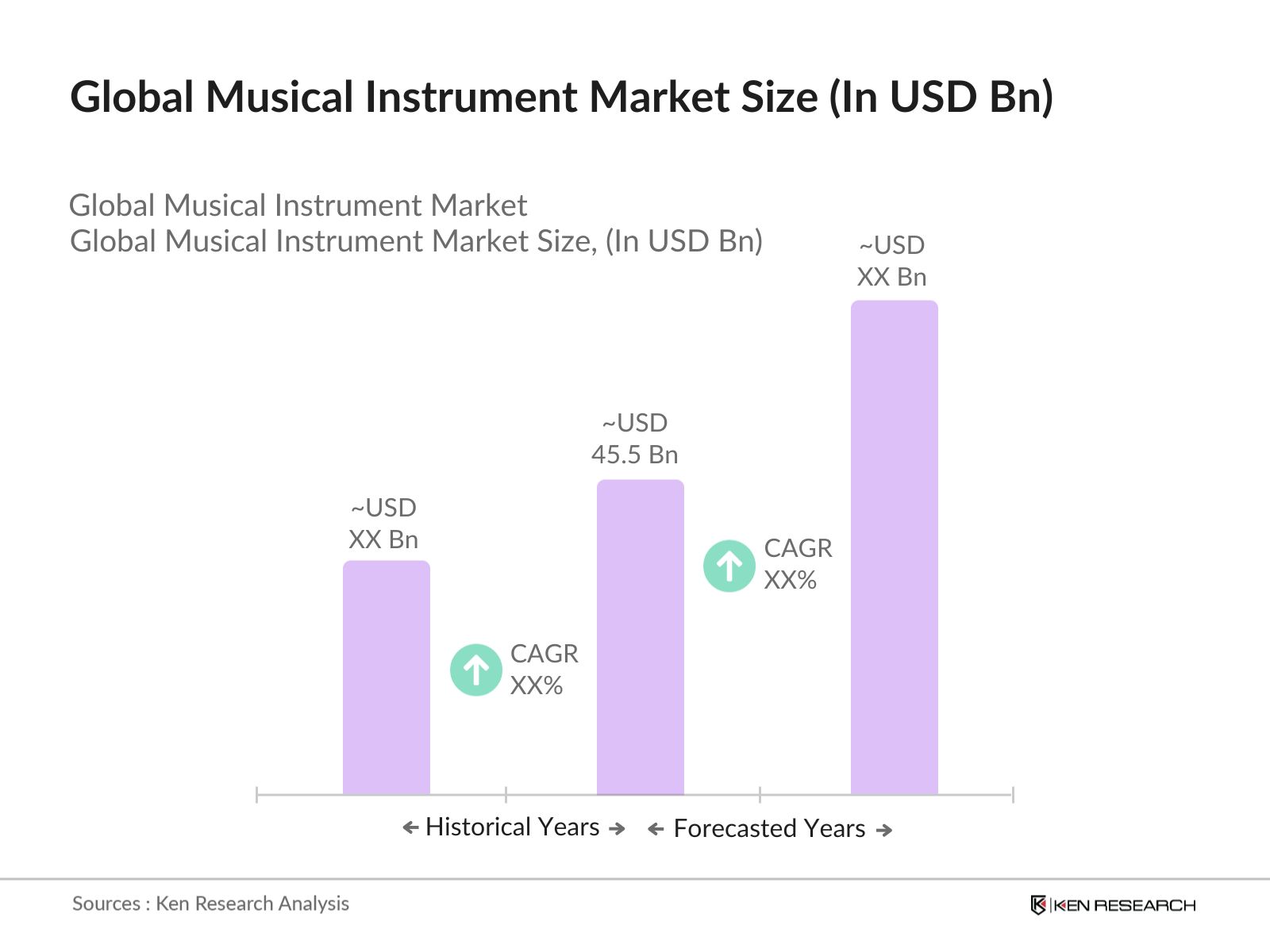
The global musical instrument market was valued at USD 45.5 billion based on a five-year historical analysis, driven by the rising popularity of music education, technological advancements in instruments, and increased consumer spending on premium instruments.
Key challenges include the decline in demand for acoustic instruments, increasing competition from digital sound tools, and environmental concerns regarding wood sourcing for instrument manufacturing.
The major players include Yamaha Corporation, Fender Musical Instruments Corporation, Gibson Brands, Roland Corporation, and Kawai Musical Instruments Manufacturing Co. Ltd.
The market is propelled by the growing influence of music education, the rise of smart musical instruments, and increasing demand for digital and electronic instruments, supported by advancements in AI and IoT integration.

What makes us stand out is that our consultants follows Robust, Refine and Result (RRR) methodology. i.e. Robust for clear definitions, approaches and sanity checking, Refine for differentiating respondents facts and opinions and Result for presenting data with story

We have set a benchmark in the industry by offering our clients with syndicated and customized market research reports featuring coverage of entire market as well as meticulous research and analyst insights.

While we don't replace traditional research, we flip the method upside down. Our dual approach of Top Bottom & Bottom Top ensures quality deliverable by not just verifying company fundamentals but also looking at the sector and macroeconomic factors.

With one step in the future, our research team constantly tries to show you the bigger picture. We help with some of the tough questions you may encounter along the way: How is the industry positioned? Best marketing channel? KPI's of competitors? By aligning every element, we help maximize success.

Our report gives you instant access to the answers and sources that other companies might choose to hide. We elaborate each steps of research methodology we have used and showcase you the sample size to earn your trust.

If you need any support, we are here! We pride ourselves on universe strength, data quality, and quick, friendly, and professional service.