
Global Neuromorphic Computing Market Outlook to 2030
Region:Global
Author(s):Vijay Kumar
Product Code:KROD2105
October 2024
99
About the Report
Global Neuromorphic Computing Market Overview
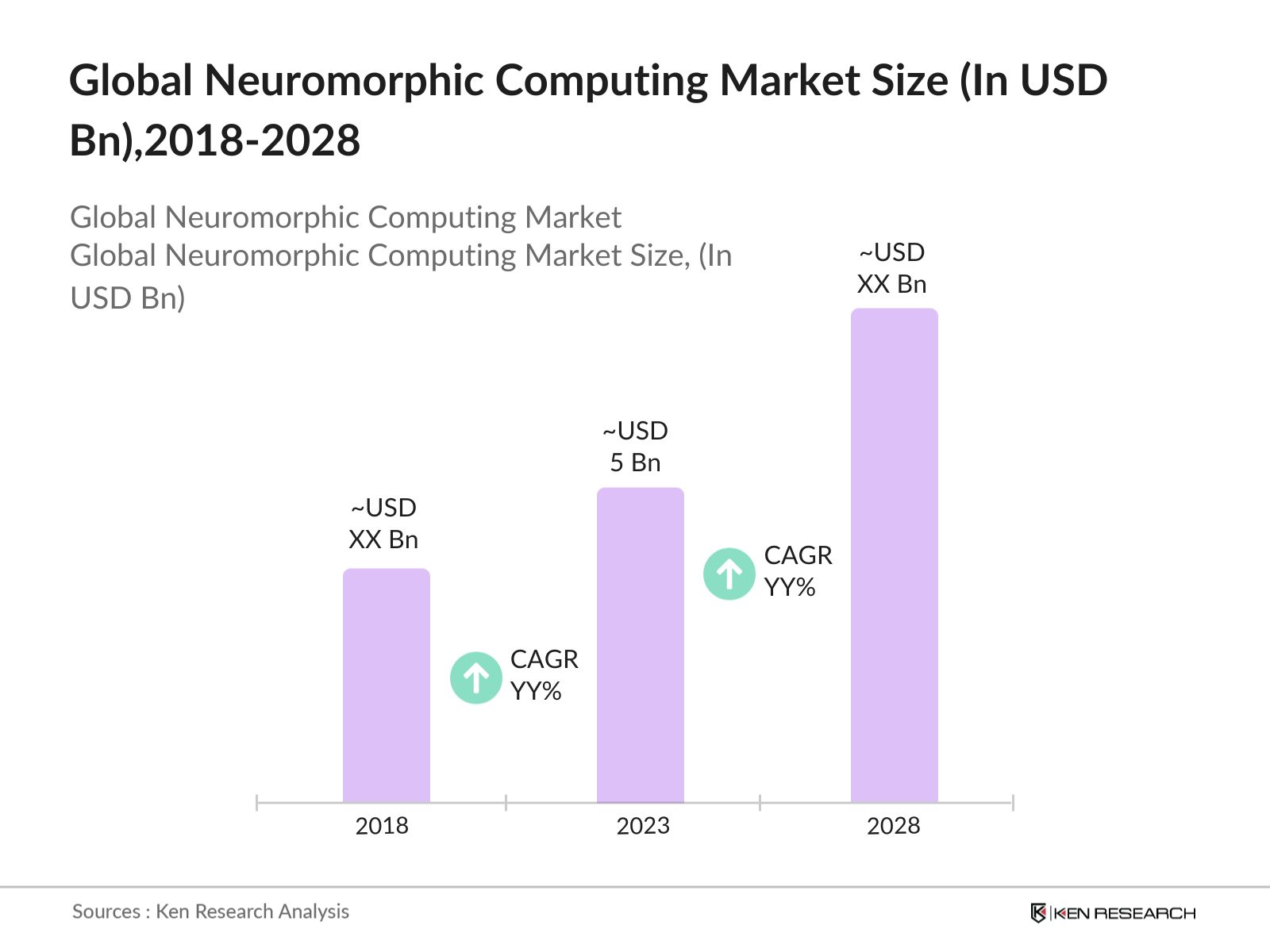
- The global neuromorphic computing market reached a valuation of USD 5 billion, driven by the growing demand for energy-efficient computing systems that mimic the human brain's neural networks. The market's growth is fueled by advancements in AI applications across sectors like healthcare, automotive, and defense. Additionally, increasing integration of neuromorphic processors in edge computing and autonomous systems further boosts market demand globally.
- Key players in the global neuromorphic computing market include Intel Corporation, IBM Corporation, Qualcomm Technologies, BrainChip Holdings, and Samsung Electronics. These companies are at the forefront of the market through their continuous investment in research and development and their strong focus on product innovation. Their ability to introduce sophisticated neuromorphic processors with higher neuron counts and energy-efficient designs helps them maintain a competitive edge.
- In early 2023, Intel Corporation announced the second-generation version of its Loihi neuromorphic chip, which features up to 1 million neurons. This advancement enhances Intel's position in the market by increasing processing speeds and expanding use cases in robotics and automation. Another significant development occurred when BrainChip partnered with NASA to incorporate neuromorphic chips into space exploration missions to improve real-time decision-making.
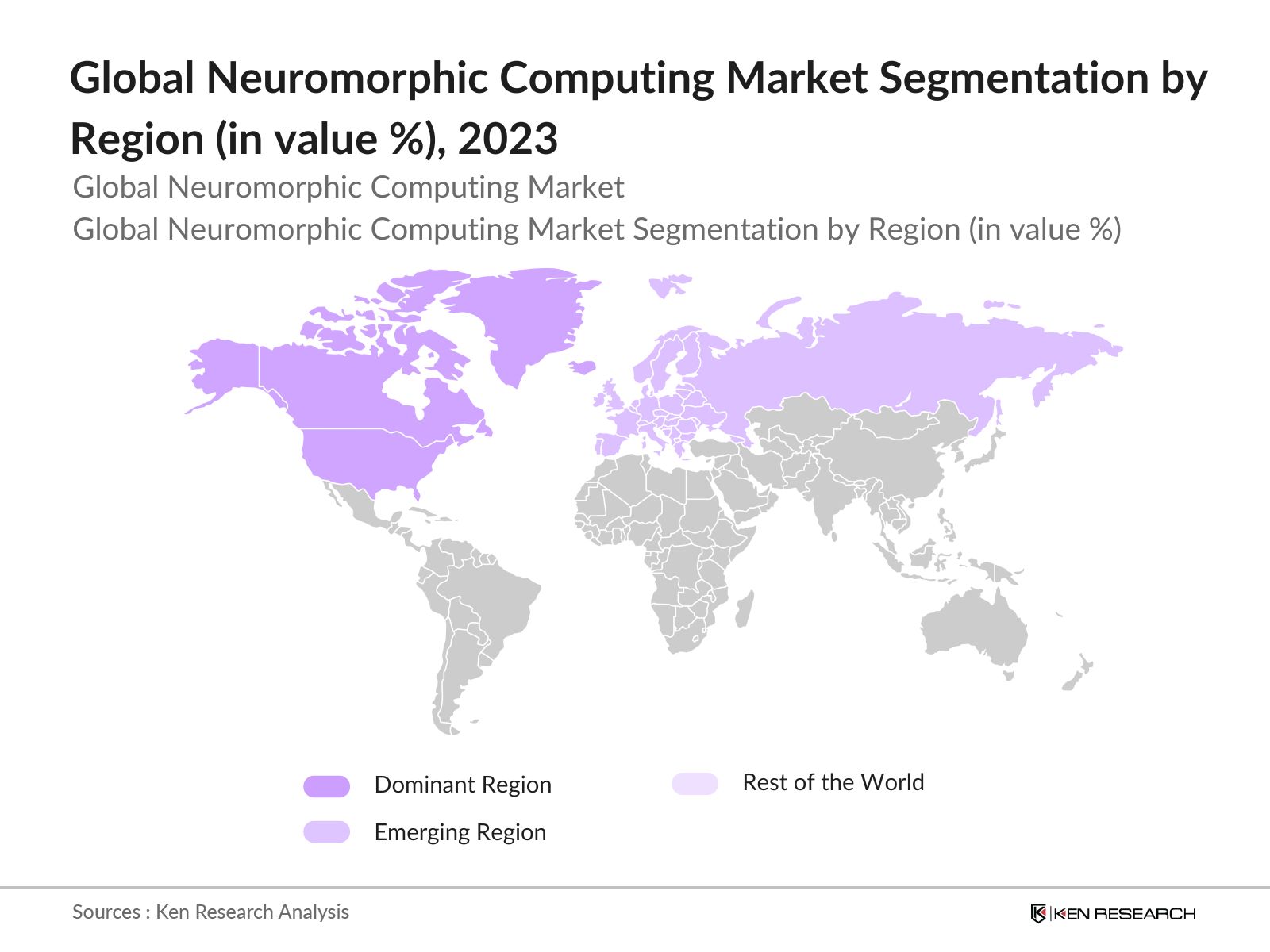
- North America leads the global neuromorphic computing market, primarily due to the high concentration of key players and strong R&D investments in AI technologies. The region's focus on advanced healthcare systems, autonomous vehicles, and defense applications further strengthens its market position. Government initiatives like the U.S. National AI Initiative, which supports neuromorphic computing research, are also driving the adoption of these systems across various industries.
Global Neuromorphic Computing Market Segmentation
The Global Neuromorphic Computing Market can be segmented based on Product Type, Application, and Region.
By Region: Geographically, the market is segmented into North America, Europe, Asia-Pacific, Latin America, and Middle East & Africa (MEA). North America dominated the market in 2023, driven by the presence of leading technology companies, substantial investments in AI research, and a robust regulatory framework promoting innovation. The U.S. governments emphasis on AI-driven solutions in defense and healthcare significantly contributes to the market's growth in the region.
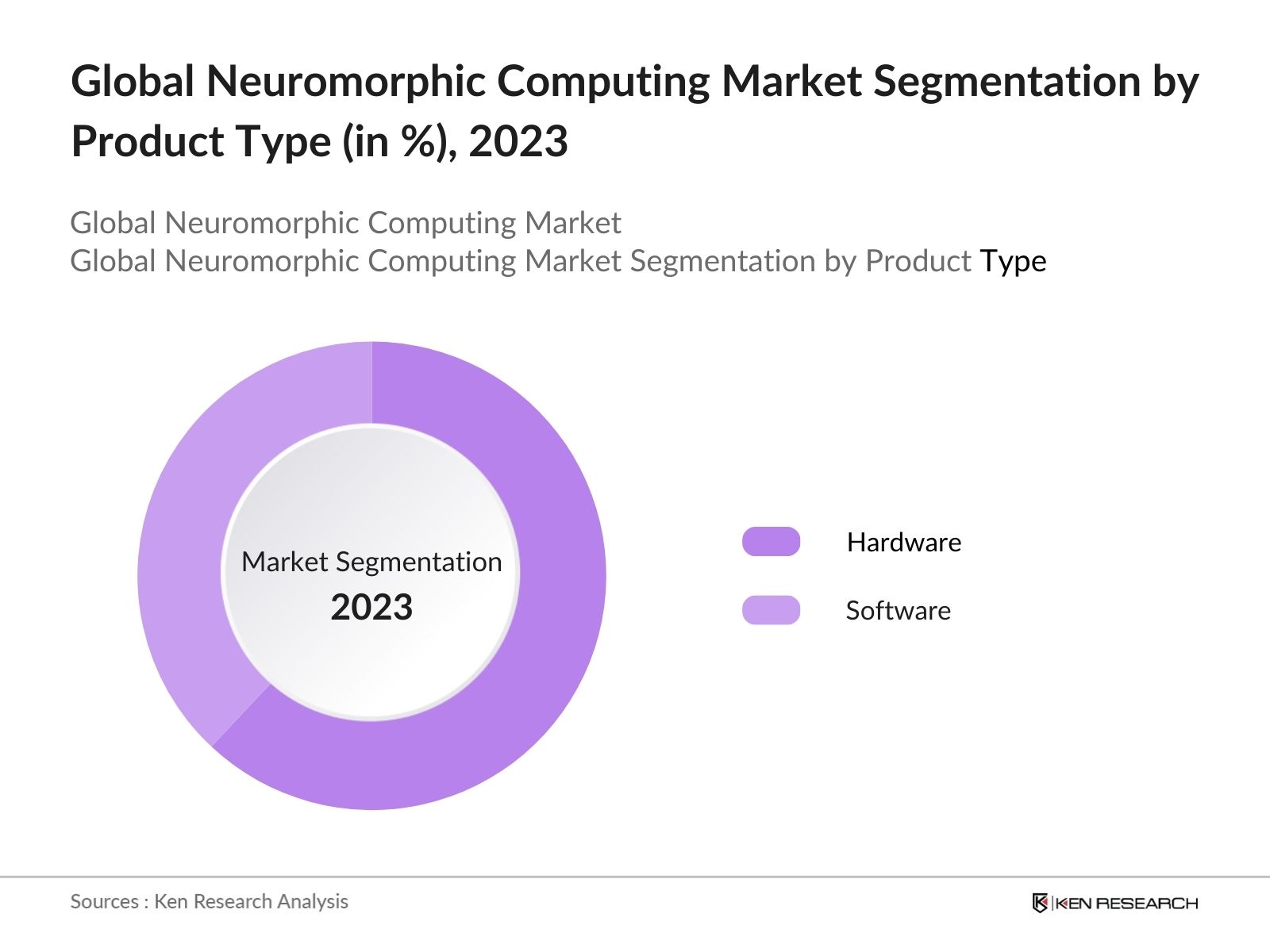
By Product Type: The market is segmented by product type into Hardware and Software. In 2023, Hardware held the dominant market share due to the high demand for neuromorphic processors in AI and edge computing applications. Neuromorphic hardware, which mimics neural networks, offers high-speed processing and low power consumption, making it ideal for real-time data processing in sectors like autonomous vehicles and healthcare.
By Application: The market is further segmented by application into AI and Machine Learning, Robotics, and Signal Processing. The AI and Machine Learning segment accounted for the largest market share in 2023, driven by the increasing use of AI in industries such as healthcare and automotive. Neuromorphic computing is vital for real-time data analysis, enabling applications like predictive diagnostics and self-driving vehicles to process information faster and more efficiently.
Global Neuromorphic Computing Market Competitive Landscape
- IBM Corporation: In 2023, IBM introduced the NorthPole chip, a proof-of-concept design that significantly enhances performance by combining computation with on-chip memory. NorthPole outperforms GPUs in image recognition tasks, running 22 times faster, using 25 times less energy, and requiring 5 times less space. This innovation marks a breakthrough in energy-efficient, high-speed computing.
- BrainChip Holdings: BrainChip recently published a white paper on TENNs-PLEIADES, a brain-inspired system designed to improve spatio-temporal task performance. This system leverages a distinctive kernel parameterization using orthogonal polynomials, enabling it to capture long-range temporal correlations while minimizing memory and computational demands. It offers a more efficient solution for handling complex temporal data.
Global Neuromorphic Computing Market Analysis
Market Growth Drivers
- Increasing Demand for AI-Powered Edge Devices (2024): In 2024, there is a surge in the demand for AI-powered edge devices across various sectors, such as automotive, healthcare, and defense, which require neuromorphic computing for low-latency, energy-efficient processing. The global demand for AI edge hardware is expected to surpass 4 billion units by the end of 2024, driving the need for neuromorphic processors. This hardware demand is largely due to the increasing adoption of real-time analytics in devices like autonomous vehicles and IoT systems.
- Advancement in Neuromorphic Hardware Development (2023-2024): In 2024, the advancement in neuromorphic hardware is becoming a significant growth driver, with major players such as Intel and IBM expanding their R&D capabilities. Intels neuromorphic chip, Loihi 2, launched in 2023, features up to 1 million neurons and over 5 billion transistors, making it more efficient for AI applications in robotics and computer vision. This technological leap is expected to increase the deployment of neuromorphic computing in industrial automation and healthcare.
- Rising Investments in AI Research (2024): Governments and private sectors are heavily investing in AI research to maintain competitiveness in technological innovation. In 2024, global funding for AI and neuromorphic computing R&D is expected to exceed $200 billion, supported by initiatives like the U.S. Department of Energys funding programs for neuromorphic hardware. This influx of investments is accelerating advancements in neuromorphic systems, allowing companies to develop AI solutions for applications such as robotics, cybersecurity, and defense.
Global Neuromorphic Computing Market Challenges
- High Cost of Neuromorphic Hardware (2024): The high cost of neuromorphic hardware remains a significant challenge in 2024, limiting widespread adoption, especially for smaller companies. Neuromorphic processors, which contain millions of artificial neurons, are expensive to produce, with manufacturing costs for a single chip reaching up to $2,000. This high production cost can hinder market expansion, especially in price-sensitive industries such as consumer electronics.
- Complexity of Software Integration (2024): In 2024, integrating neuromorphic chips with existing software systems poses a challenge for companies. Neuromorphic computing, based on brain-inspired architectures, requires specialized software to function optimally. However, the lack of standardized frameworks and compatibility issues with traditional software architectures continues to slow adoption. Companies in the healthcare and automotive sectors are investing millions of dollars in 2024 to develop compatible software solutions, yet the complexity and time required for such integration remain a barrier.
Global Neuromorphic Computing Market Government Initiatives
- Horizon Europe Program (2023): The European Commission's Horizon Europe program allocated over $95 billion for advanced computing research, including neuromorphic computing. This initiative is designed to boost Europes competitiveness in AI and neuromorphic systems, particularly in sectors like healthcare and defense.
- Chinas AI Development Plan (2024): Chinas national AI development plan, which allocates over $75 billion for AI R&D, emphasizes the importance of neuromorphic computing. By 2024, China is home to multiple AI research hubs, with a focus on neuromorphic systems for smart city infrastructure and defense applications.
Global Neuromorphic Computing Market Future Outlook
The Global Neuromorphic Computing Market is expected to experience substantial growth by 2028, driven by advancements in AI technologies, increasing demand for energy-efficient computing solutions, and significant investments in R&D across key regions.
Future Market Trends
- Neuromorphic Computing in AI-Powered Robotics: By 2028, neuromorphic computing will play a pivotal role in advancing AI-powered robotics. With global shipments of AI robots expected to surpass 20 million units by 2028, neuromorphic processors will be integral to enhancing real-time decision-making capabilities. These robots will be widely used in industrial automation, healthcare, and service industries, with neuromorphic chips providing a substantial boost to efficiency and processing speed.
- Expansion into Smart Cities and Infrastructure: The global push for smart city infrastructure will significantly increase the demand for neuromorphic computing by 2028. Neuromorphic systems will be central to managing urban infrastructure, including energy grids, traffic control, and surveillance systems. By 2028, cities across Europe, North America, and Asia are projected to install over 15,000 neuromorphic processors in smart traffic management systems, reducing energy consumption and improving urban planning efficiency.
Scope of the Report
|
By Product |
Hardware Software |
|
By End-User |
Healthcare Automotive Defense Others |
|
By Region |
North America Europe APAC Latin America MEA |
|
By Application |
AI and Machine Learning Robotics Signal Processing |
Products
Key Target Audience Organizations and Entities Who Can Benefit by Subscribing to This Report:
Neuromorphic Chip Manufacturers
AI and Robotics Companies
Automotive OEMs
Government and Regulatory Bodies (e.g., European Commission, U.S. Department of Defense)
Healthcare Technology Providers
Semiconductor Industry Associations
Venture Capital and Investment Firms
Autonomous Vehicle Developers
IoT Device Manufacturers
Space Exploration Agencies (e.g., NASA)
Defense Contractors
Telecommunication Companies
Companies
Key Players Mentioned in the Report:
Intel Corporation
IBM Corporation
Qualcomm Technologies, Inc.
BrainChip Holdings
Samsung Electronics
Hewlett Packard Enterprise
Numenta
SynSense
Prophesee
Knowm Inc.
Table of Contents
1. Global Neuromorphic Computing Market Overview
1.1. Definition and Scope
1.2. Market Taxonomy
1.3. Market Growth Rate
1.4. Market Segmentation Overview
2. Global Neuromorphic Computing Market Size (in USD Billion), 2018-2023
2.1. Historical Market Size
2.2. Year-on-Year Growth Analysis
2.3. Key Market Developments and Milestones
3. Global Neuromorphic Computing Market Analysis
3.1. Growth Drivers
3.1.1. Rising Demand for AI-powered Edge Devices
3.1.2. Advancements in Neuromorphic Hardware
3.1.3. Government Funding in AI Research
3.2. Restraints
3.2.1. High Production Costs of Neuromorphic Chips
3.2.2. Complexity in Software Integration
3.2.3. Limited Skilled Talent in Neuromorphic Computing
3.3. Opportunities
3.3.1. Expansion of Neuromorphic Computing in Healthcare
3.3.2. Increasing Applications in Autonomous Vehicles
3.3.3. Integration in Smart City Infrastructure
3.4. Trends
3.4.1. Increased Adoption of Neuromorphic Processors in Robotics
3.4.2. Integration of Neuromorphic Chips in Space Exploration
3.4.3. Demand for Energy-Efficient AI Solutions
3.5. Government Regulations
3.5.1. U.S. National AI Initiative
3.5.2. European Commission Horizon Europe Program
3.5.3. Chinas AI Development Plan
3.6. SWOT Analysis
3.7. Stakeholder Ecosystem
3.8. Competition Ecosystem
4. Global Neuromorphic Computing Market Segmentation, 2023
4.1. By Product Type (in Value %)
4.1.1. Hardware
4.1.2. Software
4.2. By Application (in Value %)
4.2.1. AI and Machine Learning
4.2.2. Robotics
4.2.3. Signal Processing
4.3. By End-User Industry (in Value %)
4.3.1. Healthcare
4.3.2. Automotive
4.3.3. Defense
4.3.4. Others
4.4. By Region (in Value %)
4.4.1. North America
4.4.2. Europe
4.4.3. Asia-Pacific
4.4.4. Latin America
4.4.5. MEA
5. Global Neuromorphic Computing Market Cross Comparison
5.1. Detailed Profiles of Major Companies
5.1.1. Intel Corporation
5.1.2. IBM Corporation
5.1.3. Qualcomm Technologies, Inc.
5.1.4. BrainChip Holdings
5.1.5. Samsung Electronics
5.2. Cross Comparison Parameters (No. of Employees, Headquarters, Inception Year, Revenue)
6. Global Neuromorphic Computing Market Competitive Landscape
6.1. Market Share Analysis
6.2. Strategic Initiatives
6.3. Mergers and Acquisitions
6.4. Investment Analysis
6.4.1. Venture Capital Funding
6.4.2. Government Grants
6.4.3. Private Equity Investments
7. Global Neuromorphic Computing Market Regulatory Framework
7.1. Data Privacy and AI Ethics Standards
7.2. Compliance Requirements for AI Development
7.3. Certification Processes for Neuromorphic Hardware
8. Global Neuromorphic Computing Future Market Size (in USD Billion), 2023-2028
8.1. Future Market Size Projections
8.2. Key Factors Driving Future Market Growth
9. Global Neuromorphic Computing Market Future Segmentation, 2028
9.1. By Product Type (in Value %)
9.2. By Application (in Value %)
9.3. By End-User Industry (in Value %)
9.4. By Region (in Value %)
10. Global Neuromorphic Computing Market Analysts Recommendations
10.1. TAM/SAM/SOM Analysis
10.2. Customer Cohort Analysis
10.3. Strategic Marketing Initiatives
10.4. White Space Opportunity Analysis
Disclaimer Contact UsResearch Methodology
Step 1: Identifying Key Variables
Creating an ecosystem for all major entities within the Global Neuromorphic Computing Market and utilizing a combination of secondary and proprietary databases for desk research. This step involves collecting industry-level information, identifying market trends, and understanding the competitive landscape to ensure a comprehensive market analysis.
Step 2: Market Building
Collating data on the Global Neuromorphic Computing Market over the years, analyzing market penetration across various segments, and assessing the performance of key players. This includes reviewing production capacities, market shares, and sales data to compute revenue generated in the neuromorphic computing market. Quality checks are conducted to ensure accuracy and reliability.
Step 3: Validating and Finalizing
Developing market hypotheses and conducting Computer-Assisted Telephone Interviews (CATIs) with industry experts and stakeholders from leading neuromorphic computing companies. These interviews validate the collected data, refine market forecasts, and gather financial insights directly from industry representatives.
Step 4: Research Output
Engaging with key market players in the neuromorphic computing sector to understand product segment dynamics, customer needs, sales trends, and market challenges. A bottom-up approach is used to validate data, ensuring final statistics and insights are accurate and useful for strategic decision-making.
Frequently Asked Questions
1. How big is the Global Neuromorphic Computing Market?
The global neuromorphic computing market reached a valuation of USD 5 billion in 2023, driven by the growing demand for energy-efficient computing systems that mimic the human brain's neural networks.
2. What are the challenges in the Global Neuromorphic Computing Market?
Challenges include high production costs for neuromorphic chips, complex software integration issues, and a shortage of skilled talent in the specialized field of neuromorphic computing.
3. Who are the major players in the Global Neuromorphic Computing Market?
Key players include Intel Corporation, IBM Corporation, Qualcomm Technologies, BrainChip Holdings, and Samsung Electronics, known for their innovative neuromorphic chip designs and strong R&D investments.
4. What are the growth drivers of the Global Neuromorphic Computing Market?
The market is driven by the growing adoption of AI-powered devices, government funding for AI research, and advancements in neuromorphic hardware, especially for edge computing applications.
Why Buy From Us?

What makes us stand out is that our consultants follows Robust, Refine and Result (RRR) methodology. i.e. Robust for clear definitions, approaches and sanity checking, Refine for differentiating respondents facts and opinions and Result for presenting data with story

We have set a benchmark in the industry by offering our clients with syndicated and customized market research reports featuring coverage of entire market as well as meticulous research and analyst insights.

While we don't replace traditional research, we flip the method upside down. Our dual approach of Top Bottom & Bottom Top ensures quality deliverable by not just verifying company fundamentals but also looking at the sector and macroeconomic factors.

With one step in the future, our research team constantly tries to show you the bigger picture. We help with some of the tough questions you may encounter along the way: How is the industry positioned? Best marketing channel? KPI's of competitors? By aligning every element, we help maximize success.

Our report gives you instant access to the answers and sources that other companies might choose to hide. We elaborate each steps of research methodology we have used and showcase you the sample size to earn your trust.

If you need any support, we are here! We pride ourselves on universe strength, data quality, and quick, friendly, and professional service.