















Global Nightwear and Underwear Market Outlook to 2030
Region:Global
Author(s):Shambhavi
Product Code:KROD10513
December 2024
87
About the Report
Global Nightwear and Underwear Market Overview
- The Nightwear and Underwear market has seen a substantial expansion valued at 1 Bn Driven by growing consumer interest in comfort-oriented clothing, advancements in textile technologies, and rising disposable incomes, the market has flourished globally. This sector caters to a diverse audience across different age groups, which has enhanced its resilience and growth potential.
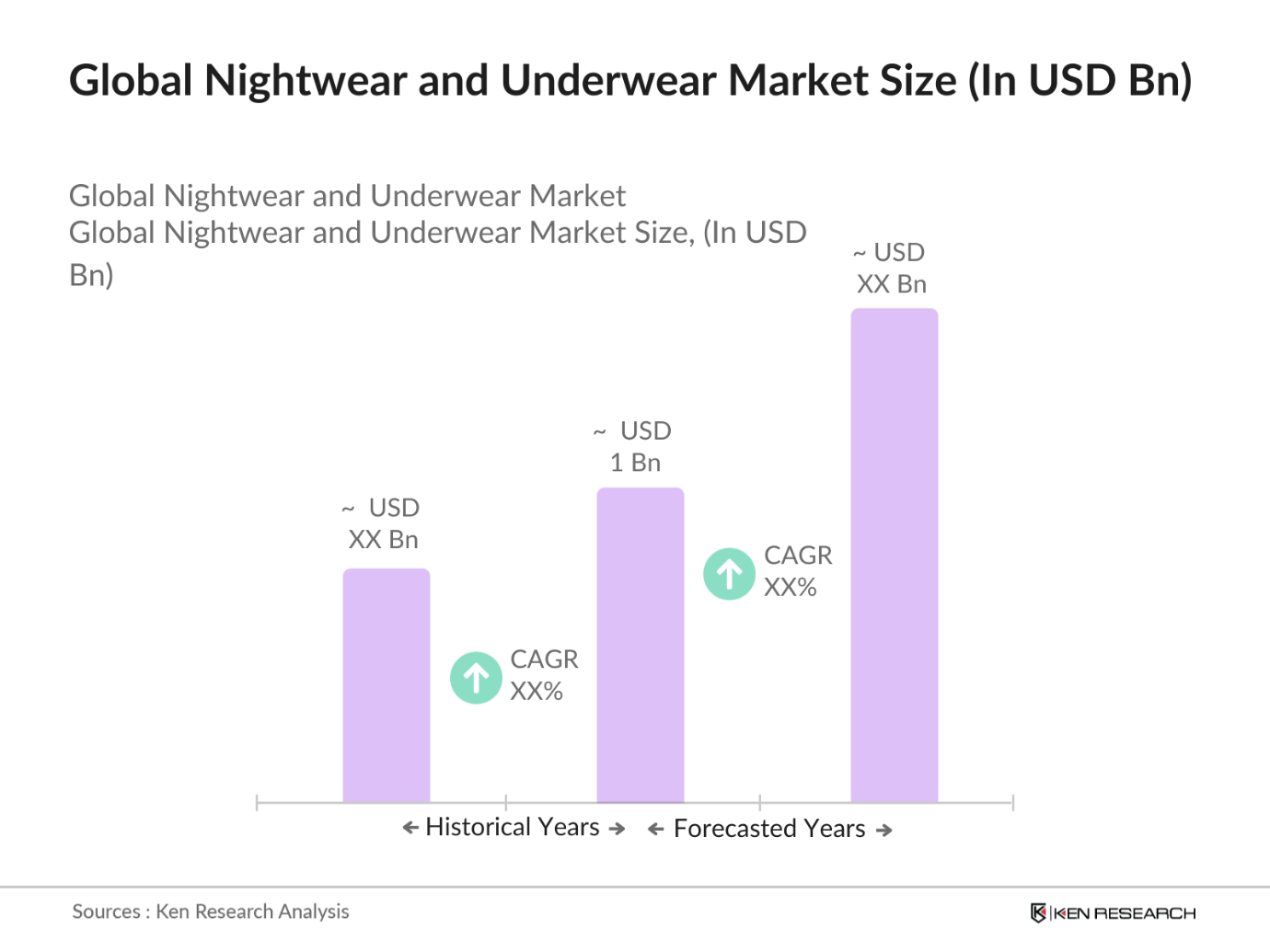
- Key countries leading the market include the United States, China, and Japan. The US market benefits from high consumer spending and extensive brand loyalty, particularly toward premium brands. China's growth is propelled by its vast population, rising middle class, and e-commerce penetration, while Japan is known for innovation and high standards in textile quality.
- The global nightwear and underwear market must adhere to specific textile standards, including ISO standards on fabric durability, colorfastness, and safety regulations. In countries such as India, BIS compliance is mandatory for textile imports, ensuring consumer safety and product quality. The U.S. requires nightwear for children to meet flammability standards, significantly impacting design and material choices. Non-compliance can result in costly recalls or bans, making strict adherence to these standards critical for brands to operate legally and maintain consumer trust.
Global Nightwear and Underwear Market Segmentation
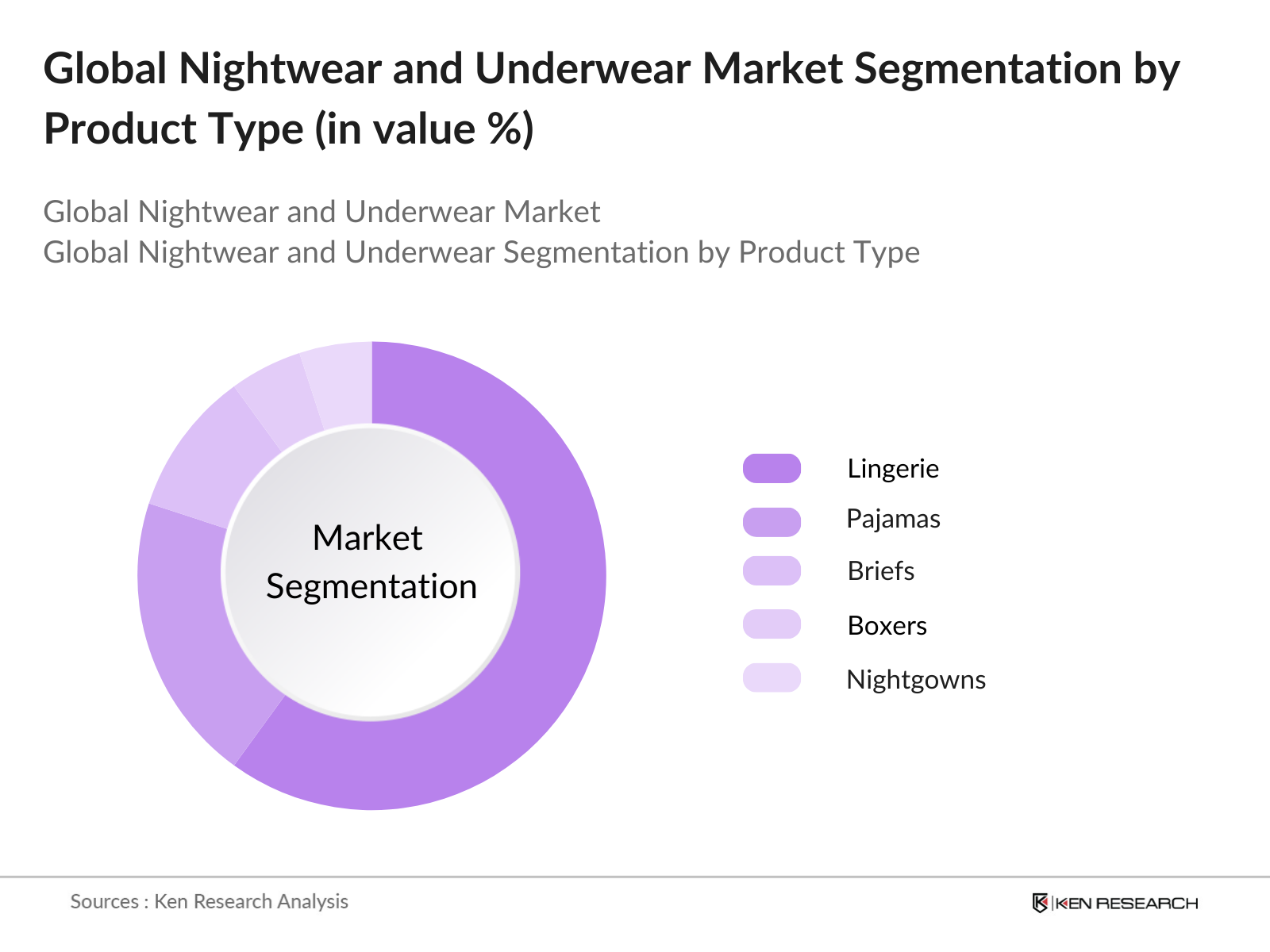
By Product Type: The Nightwear and Underwear market is segmented by product type into nightgowns, pajamas, briefs, boxers, and lingerie. Lingerie holds a dominant share due to increased consumer awareness regarding body confidence and comfort, with brands focusing on innovative designs and materials.
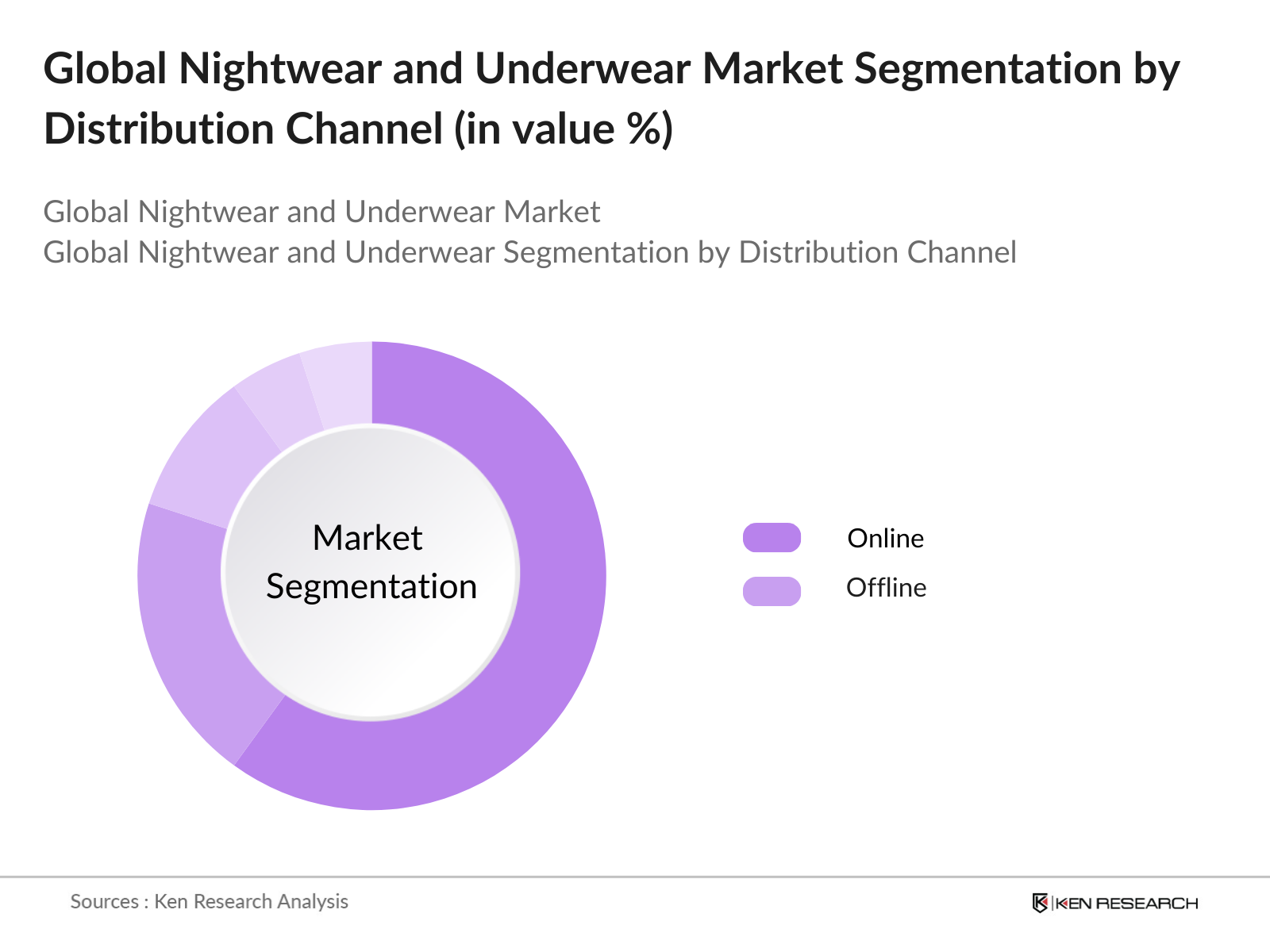
By Distribution Channel: The market segments by distribution channel into offline (department stores, specialty stores) and online (e-commerce, brand websites). Online channels dominate due to the convenience they offer, coupled with frequent promotional campaigns and an extensive range of options, which attract both urban and rural consumers.
Global Nightwear and Underwear Competitive Landscape
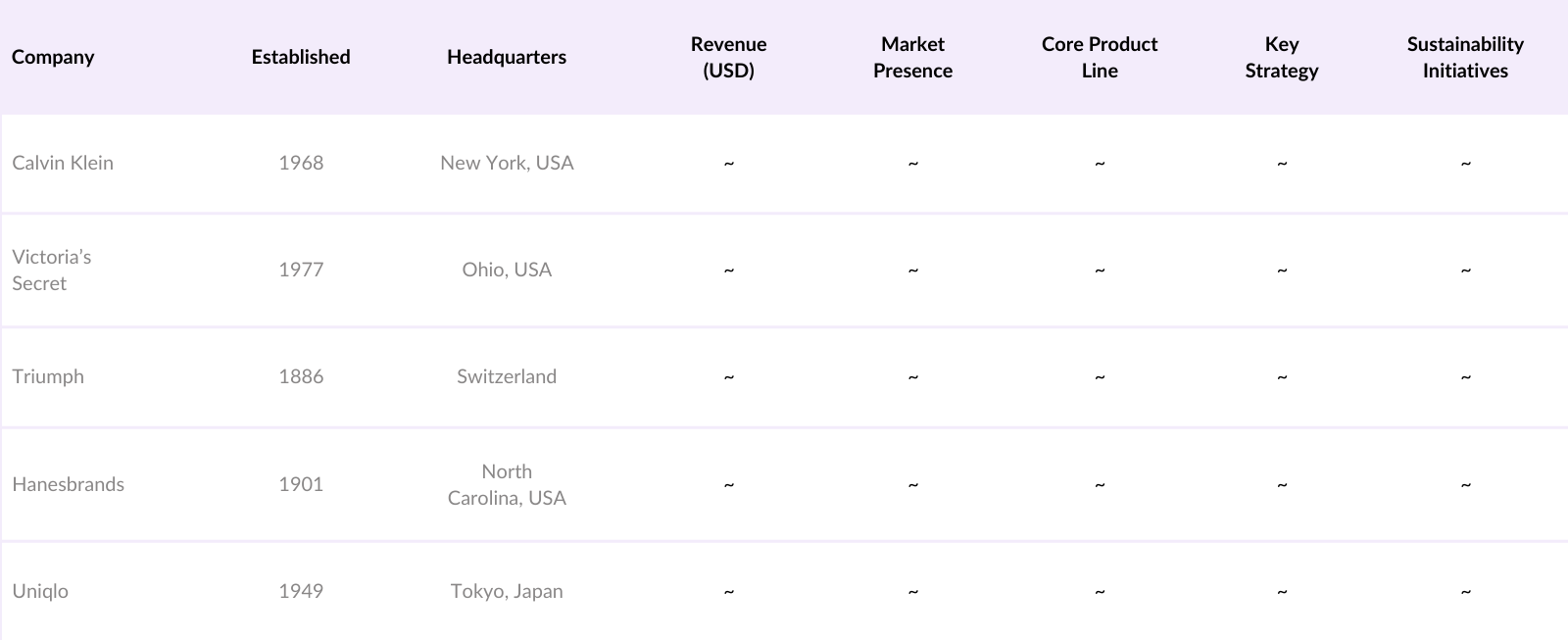
The global Nightwear and Underwear market has a strong presence of both established players and emerging brands, with the competition focusing on material innovation, design, and sustainability.
Global Nightwear and Underwear Market Analysis
Growth Drivers
- Increasing Urbanization: With an estimated 4.4 billion people living in urban areas as of 2023, according to the UN, urbanization has intensified demand for versatile and fashionable nightwear and underwear products. Urban consumers have a stronger preference for branded apparel and prioritize convenience in their shopping habits, often opting for multipurpose clothing that is comfortable for both at-home and casual outings. This shift toward urban lifestyles and their associated fashion preferences supports the growth of the nightwear and underwear market, especially in rapidly urbanizing regions across Asia and Africa.
- Changing Fashion Trends: Fashion trends in nightwear and underwear have evolved, emphasizing not just functionality but also aesthetics and comfort, driving more frequent wardrobe updates among consumers. A shift in consumer preferences toward premium, sustainable, and trendy apparel has seen the nightwear and underwear market respond with innovative designs. Brands are increasingly focusing on comfortable yet stylish nightwear and underwear to meet this rising demand. Changing fashion trends continue to encourage consumers to invest more in nightwear and underwear that aligns with current styles, boosting sales across various demographics.
- Growth of E-commerce (Online Retail Sales): Global e-commerce has reached significant levels, with online retail sales projected to surpass $5 trillion in 2023. This trend has significantly expanded the nightwear and underwear market, as online shopping provides consumers with easier access to a wider range of brands, styles, and sizes. Developed markets, such as the United States, see around 65% of apparel sales through online channels, indicating a shift toward digital purchasing. Increased smartphone penetration, at approximately 75% globally, enables consumers to browse and buy apparel more conveniently, propelling growth in both nightwear and underwear categories.
Market Challenges
- Competition from Low-Cost Alternatives: The nightwear and underwear market faces growing competition from low-cost brands and unbranded products, particularly in price-sensitive markets such as Southeast Asia and Africa. Around 40% of consumers in these regions opt for affordable alternatives due to limited disposable income. As a result, premium and mid-tier brands struggle to retain market share. This price-sensitive segment poses a challenge to established players, impacting their penetration and growth in these regions, with data showing that low-cost imports dominate over 50% of the market in specific areas.
- Fluctuating Raw Material Costs: Volatile prices of raw materials, notably cotton and synthetic fibers, pose significant challenges to the nightwear and underwear market. In 2023, cotton prices ranged from $1.2 to $1.8 per kilogram, affected by unpredictable weather patterns and supply chain issues. Synthetic fibers, essential for many underwear products, also saw price increases due to rising oil prices and supply disruptions, averaging around $2 per kilogram. This fluctuation impacts profit margins for manufacturers, leading to adjustments in pricing strategies or potential compromises on material quality.
Global Nightwear and Underwear Market Future Outlook
Over the next five years, the Nightwear and Underwear market is expected to experience steady growth fueled by lifestyle changes, increasing urbanization, and a shift toward comfort-first apparel. Key growth areas include sustainable fabrics, digital shopping experiences, and regional expansions by leading brands.
Market Opportunities
- Expansion into Emerging Markets: Emerging markets present immense opportunities for the nightwear and underwear market, particularly in countries such as India and Brazil. India, with a rapidly growing urban population of over 500 million people, shows a rising demand for branded apparel, creating a favorable market for nightwear and underwear brands. Additionally, retail infrastructure improvements and government initiatives promoting local manufacturing enhance market accessibility for global brands, allowing them to capitalize on new consumer bases in these high-growth regions.
- Technological Innovations in Fabric: Technological advancements in smart fabrics and sustainable materials present new growth avenues in the nightwear and underwear market. Smart fabrics, equipped with moisture-wicking or temperature-regulating properties, appeal to health-conscious consumers, especially in high-temperature regions. Sustainable materials, like organic cotton, align with increasing eco-conscious consumer behavior, with approximately 80 million tons of textile waste generated annually worldwide, pressing consumers toward eco-friendly options. These innovations cater to a broader market segment and align brands with global sustainability goals, strengthening their competitive edge.
Scope of the Report
|
Segment |
Sub-Segment |
|
By Product Type |
Pajamas |
|
Nightgowns |
|
|
Loungewear |
|
|
Underwear |
|
|
By Material Type |
Cotton |
|
Polyester |
|
|
Silk |
|
|
Bamboo |
|
|
By Distribution Channel |
Online |
|
Offline |
|
|
Direct Sales |
|
|
By Consumer Demographics |
Women |
|
Men |
|
|
Children |
|
|
By Region |
North America |
|
Europe |
|
|
Asia Pacific |
|
|
Latin America |
|
|
Middle East & Africa |
Products
Key Target Audience
Investors and Venture Capitalist Firms
Retail and Apparel Chains
Government and Regulatory Bodies (e.g., U.S. Consumer Product Safety Commission, EU Directorate-General for Internal Market, Industry, Entrepreneurship, and SMEs)
E-commerce Platforms
Textile Manufacturers
Fashion and Lifestyle Magazines
Product Development Firms in the Fashion Industry
Consumer Insights and Data Analytics Firms
Companies
Players mentioned in the report
Calvin Klein
Victorias Secret
Triumph
Hanesbrands
Uniqlo
Jockey
Fruit of the Loom
Marks & Spencer
Zivame
ThirdLove
Savage X Fenty
Hunkemller
Aerie by American Eagle
Chantelle Lingerie
La Perla
Table of Contents
1. Global Nightwear and Underwear Market Overview
1.1. Definition and Scope
1.2. Market Taxonomy
1.3. Market Growth Rate
1.4. Market Segmentation Overview
2. Global Nightwear and Underwear Market Size (In USD Bn)
2.1. Historical Market Size
2.2. Year-On-Year Growth Analysis
2.3. Key Market Developments and Milestones
3. Global Nightwear and Underwear Market Analysis
3.1. Growth Drivers
3.1.1. E-commerce Expansion
3.1.2. Increasing Disposable Income
3.1.3. Changing Consumer Preferences
3.1.4. Influence of Social Media
3.2. Market Challenges
3.2.1. Competition from Fast Fashion
3.2.2. Supply Chain Disruptions
3.2.3. Sustainability Concerns
3.3. Opportunities
3.3.1. Rise of Sustainable Materials
3.3.2. Personalization Trends
3.3.3. Emerging Markets Growth
3.4. Trends
3.4.1. Adoption of Smart Fabrics
3.4.2. Growth in Athleisure
3.4.3. Integration of Technology in Fashion
3.5. Regulatory Framework
3.5.1. Consumer Protection Laws
3.5.2. Product Safety Regulations
3.5.3. Environmental Standards
3.6. SWOT Analysis
3.7. Stakeholder Ecosystem
3.8. Porters Five Forces
3.9. Competition Ecosystem
4. Global Nightwear and Underwear Market Segmentation
4.1. By Product Type (In Value %)
4.1.1. Nightwear
4.1.2. Underwear
4.2. By Gender (In Value %)
4.2.1. Men
4.2.2. Women
4.2.3. Children
4.3. By Material Type (In Value %)
4.3.1. Cotton
4.3.2. Synthetic Fibers
4.3.3. Bamboo
4.4. By Distribution Channel (In Value %)
4.4.1. Online
4.4.2. Offline
4.5. By Region (In Value %)
4.5.1. North America
4.5.2. Europe
4.5.3. Asia-Pacific
4.5.4. Latin America
4.5.5. Middle East and Africa
5. Global Nightwear and Underwear Market Competitive Analysis
5.1. Detailed Profiles of Major Companies
5.1.1. Hanesbrands Inc.
5.1.2. PVH Corp.
5.1.3. Jockey International Inc.
5.1.4. L Brands, Inc.
5.1.5. Marks & Spencer Group plc
5.1.6. Triumph International
5.1.7. Gildan Activewear Inc.
5.1.8. ASOS Plc
5.1.9. H&M Group
5.1.10. Adore Me
5.1.11. ThirdLove
5.1.12. Aerie (American Eagle Outfitters)
5.1.13. Victoria's Secret
5.1.14. La Perla
5.1.15. Calvin Klein (PVH Corp.)
5.2. Cross Comparison Parameters (Revenue, Market Share, Geographic Reach, Product Range, Customer Demographics, Brand Loyalty, Sustainability Practices, Digital Presence)
5.3. Market Share Analysis
5.4. Strategic Initiatives
5.5. Mergers and Acquisitions
5.6. Investment Analysis
5.7. Venture Capital Funding
5.8. Government Grants
5.9. Private Equity Investments
6. Global Nightwear and Underwear Market Regulatory Framework
6.1. Consumer Protection Regulations
6.2. Import/Export Regulations
6.3. Environmental Compliance Standards
7. Global Nightwear and Underwear Market Future Size (In USD Bn)
7.1. Future Market Size Projections
7.2. Key Factors Driving Future Market Growth
8. Global Nightwear and Underwear Market Future Segmentation
8.1. By Product Type (In Value %)
8.2. By Gender (In Value %)
8.3. By Material Type (In Value %)
8.4. By Distribution Channel (In Value %)
8.5. By Region (In Value %)
9. Global Nightwear and Underwear Market Analysts Recommendations
9.1. TAM/SAM/SOM Analysis
9.2. Customer Cohort Analysis
9.3. Marketing Initiatives
9.4. White Space Opportunity Analysis
Disclaimer Contact UsResearch Methodology
Step 1: Identification of Key Variables
An extensive review of the Nightwear and Underwear market ecosystem, focusing on the stakeholders, product types, and distribution channels. This was achieved by collecting data from industry publications, trade databases, and other secondary sources to understand the critical market dynamics.
Step 2: Market Analysis and Construction
This step involved gathering historical market data to analyze growth patterns, competitive structures, and key growth factors. The market assessment also included a comprehensive review of product preferences and sales figures.
Step 3: Hypothesis Validation and Expert Consultation
Experts from top apparel brands, retailers, and e-commerce platforms were consulted to validate assumptions. Insights were obtained through interviews and surveys to refine market data and ensure accuracy.
Step 4: Research Synthesis and Final Output
Final data compilation involved synthesizing primary and secondary information to create a cohesive and comprehensive market report on Nightwear and Underwear, covering all aspects from market segmentation to competitive landscape and growth prospects.
Frequently Asked Questions
01. How big is the Nightwear and Underwear market?
The global Nightwear and Underwear market reached a valuation of $1 billion, propelled by lifestyle shifts, comfort preferences, and an increase in e-commerce adoption.
02. What are the growth drivers of the Nightwear and Underwear market?
Growth drivers include rising disposable incomes, the influence of fashion trends, and a focus on comfort and quality in clothing choices, which is fueling the demand for nightwear and underwear.
03. Who are the major players in the Nightwear and Underwear market?
Key players include Calvin Klein, Victoria's Secret, Triumph, Hanesbrands, and Uniqlo. These companies dominate due to brand reputation, extensive distribution networks, and continuous innovation.
04. What challenges does the Nightwear and Underwear market face?
Challenges include intense competition, high production costs, and changing consumer preferences, which require continuous adaptation and investment in product innovation.
05. How is sustainability impacting the Nightwear and Underwear market?
Sustainability is a major trend, with brands increasingly adopting eco-friendly materials and processes. Consumer awareness regarding ethical fashion is driving brands toward greener practices.
Why Buy From Us?

What makes us stand out is that our consultants follows Robust, Refine and Result (RRR) methodology. i.e. Robust for clear definitions, approaches and sanity checking, Refine for differentiating respondents facts and opinions and Result for presenting data with story

We have set a benchmark in the industry by offering our clients with syndicated and customized market research reports featuring coverage of entire market as well as meticulous research and analyst insights.

While we don't replace traditional research, we flip the method upside down. Our dual approach of Top Bottom & Bottom Top ensures quality deliverable by not just verifying company fundamentals but also looking at the sector and macroeconomic factors.

With one step in the future, our research team constantly tries to show you the bigger picture. We help with some of the tough questions you may encounter along the way: How is the industry positioned? Best marketing channel? KPI's of competitors? By aligning every element, we help maximize success.

Our report gives you instant access to the answers and sources that other companies might choose to hide. We elaborate each steps of research methodology we have used and showcase you the sample size to earn your trust.

If you need any support, we are here! We pride ourselves on universe strength, data quality, and quick, friendly, and professional service.