
Global Non-Lethal Weapons Market Outlook 2030
Region:Global
Author(s):Shivani Mehra
Product Code:KROD5733
Region:Global
Author(s):Shivani Mehra
Product Code:KROD5733
December 2024
86
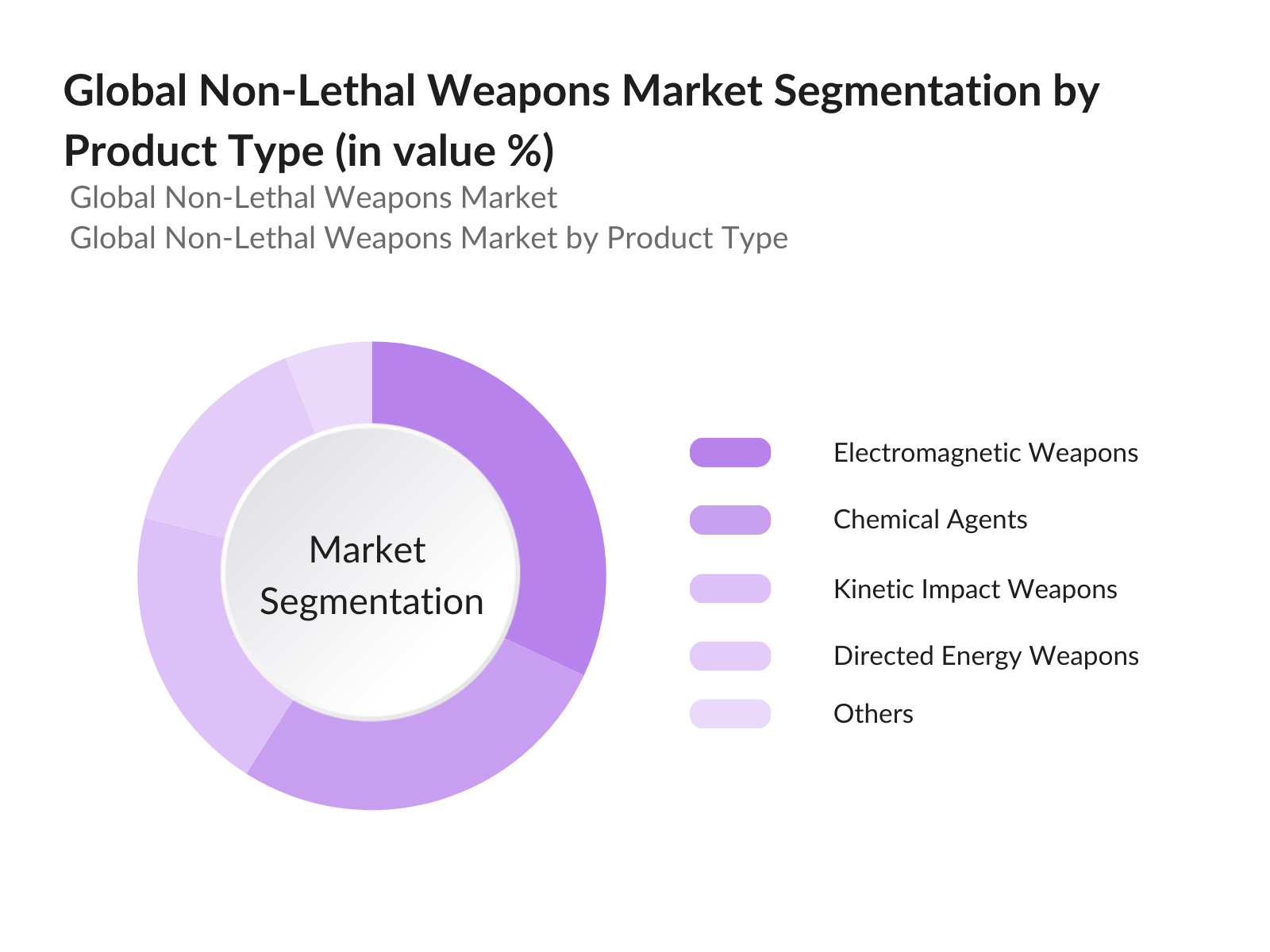
By Product Type: The non-lethal weapons market is segmented by product type into electromagnetic weapons, chemical agents, kinetic impact weapons, directed energy weapons, and others. Recently, electromagnetic weapons have gained dominance due to their versatility in neutralizing threats without causing fatalities. These weapons, such as EMP-based solutions, are preferred for crowd control and law enforcement operations because they disable targets effectively without lasting damage.
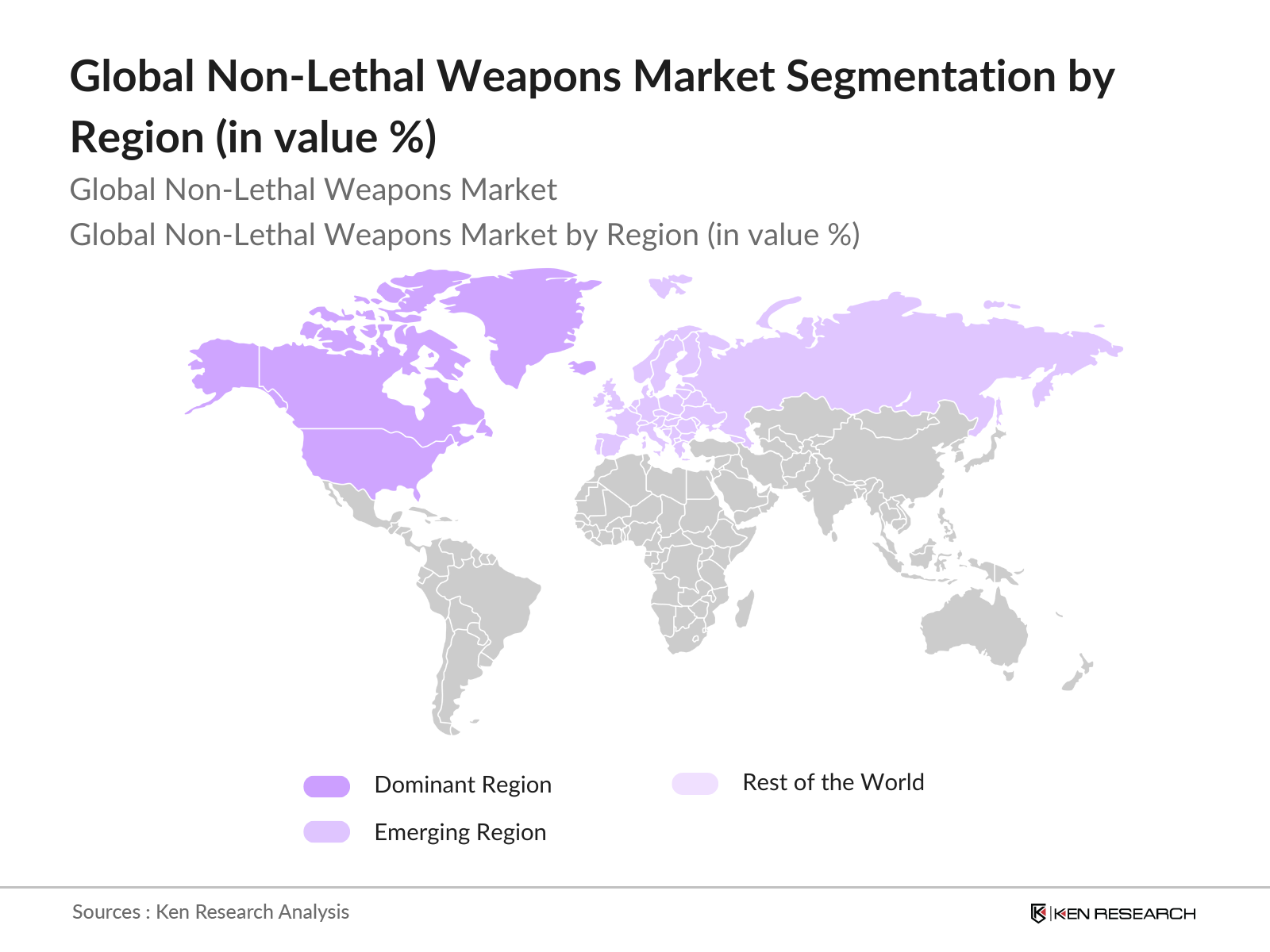
By Region: The non-lethal weapons market is segmented into North America, Europe, Asia-Pacific, Latin America, and the Middle East & Africa. North America dominates the market due to its robust defense industry and high defense budget allocation for non-lethal solutions. This region is a leader in non-lethal technology innovation and production, largely because of strong R&D activities and the strategic importance of minimizing casualties in conflict areas.
The global non-lethal weapons market is dominated by a few key players, with significant market influence due to their technological innovations and strategic partnerships. Companies such as Raytheon, BAE Systems, and Axon Enterprise hold prominent positions due to their robust product portfolios and their focus on developing non-lethal solutions that meet military and law enforcement needs globally.
|
Company |
Establishment Year |
Headquarters |
Employees |
Revenue |
Key Product Segment |
Market Reach |
R&D Investment |
Partnerships |
|
Raytheon Company |
1922 |
Waltham, USA |
- |
- |
- |
- |
- |
- |
|
BAE Systems |
1999 |
London, UK |
- |
- |
- |
- |
- |
- |
|
Axon Enterprise, Inc. |
1993 |
Scottsdale, USA |
- |
- |
- |
- |
- |
- |
|
Safariland, LLC |
1964 |
Jacksonville, USA |
- |
- |
- |
- |
- |
- |
|
Rheinmetall AG |
1889 |
Dsseldorf, Germany |
- |
- |
- |
- |
- |
- |
Market Growth Analysis
Market Challenges:
Over the next five years, the global non-lethal weapons market is expected to experience steady growth, driven by continuous technological advancements and increasing government support for non-lethal security solutions. The demand for less-lethal systems for both law enforcement and defense applications will propel the market forward. Emerging trends such as the integration of AI and smart technologies into non-lethal weaponry are expected to further enhance the market's capabilities.
Market Opportunities:
|
By Product Type |
Electromagnetic Weapons Chemical Agents Kinetic Impact Weapons Directed Energy Weapons Others |
|
By Application |
Military and Defense Law Enforcement Civilian Security Private Security Firms |
|
By Technology |
Electroshock Impact Technology Chemical-based Acoustic Technology |
|
By Range |
Short Range Medium Range Long Range |
|
By Region |
North America Europe Asia-Pacific Latin America Middle East & Africa |
1.1. Definition and Scope
1.2. Market Taxonomy
1.3. Market Growth Rate
1.4. Market Segmentation Overview
2.1. Historical Market Size
2.2. Year-On-Year Growth Analysis
2.3. Key Market Developments and Milestones
3.1. Growth Drivers
3.1.1. Increased Use in Law Enforcement
3.1.2. Rising Focus on Crowd Control
3.1.3. Demand from Military and Defense Sectors
3.1.4. Growing Public Pressure for Non-Lethal Solutions
3.2. Market Challenges
3.2.1. Ethical Concerns and Public Backlash
3.2.2. Technological Limitations in Non-Lethal Weapon Efficiency
3.2.3. High R&D Costs
3.3. Opportunities
3.3.1. Advancements in Smart Non-Lethal Technologies
3.3.2. Increasing Adoption by Civilian Agencies
3.3.3. Strategic Partnerships Between Private and Government Entities
3.4. Trends
3.4.1. Integration of AI and IoT in Non-Lethal Systems
3.4.2. Adoption of Laser-Based and Directed Energy Solutions
3.4.3. Rise of Portable and Wearable Non-Lethal Solutions
3.5. Government Regulations
3.5.1. International Human Rights Guidelines
3.5.2. Arms Control Laws and Treaties
3.5.3. National Security and Law Enforcement Directives
3.6. SWOT Analysis
3.7. Stakeholder Ecosystem (Manufacturers, Government Agencies, Distributors)
3.8. Porters Five Forces Analysis
3.9. Competition Ecosystem
4.1. By Product Type (In Value %) [Type of Non-Lethal Weapons]
4.1.1. Electromagnetic Weapons
4.1.2. Chemical Agents (Tear Gas, Pepper Spray)
4.1.3. Kinetic Impact Weapons (Rubber Bullets, Bean Bags)
4.1.4. Directed Energy Weapons
4.1.5. Others (Acoustic Weapons, Dazzlers)
4.2. By Application (In Value %) [End-Use Applications]
4.2.1. Military and Defense
4.2.2. Law Enforcement
4.2.3. Civilian Security
4.2.4. Private Security Firms
4.3. By Technology (In Value %) [Technology Type]
4.3.1. Electroshock
4.3.2. Impact Technology
4.3.3. Chemical-based
4.3.4. Acoustic Technology
4.4. By Range (In Value %) [Range of Weapons]
4.4.1. Short Range
4.4.2. Medium Range
4.4.3. Long Range
4.5. By Region (In Value %) [Geographical Segmentation]
4.5.1. North America
4.5.2. Europe
4.5.3. Asia-Pacific
4.5.4. Latin America
4.5.5. Middle East & Africa
5.1. Detailed Profiles of Major Companies
5.1.1. Raytheon Company
5.1.2. BAE Systems
5.1.3. Rheinmetall AG
5.1.4. Axon Enterprise, Inc.
5.1.5. Safariland, LLC
5.1.6. General Dynamics Corporation
5.1.7. The Boeing Company
5.1.8. Leonardo S.p.A
5.1.9. TASER International
5.1.10. Heckler & Koch GmbH
5.1.11. FN Herstal
5.1.12. Combined Systems, Inc.
5.1.13. Lamperd Less Lethal, Inc.
5.1.14. United Tactical Systems
5.1.15. NonLethal Technologies, Inc.
5.2. Cross Comparison Parameters (No. of Employees, Headquarters, Inception Year, Revenue, Product Innovation, Strategic Partnerships, Patents Filed, Geographical Presence)
5.3. Market Share Analysis
5.4. Strategic Initiatives
5.5. Mergers And Acquisitions
5.6. Investment Analysis
5.7. Venture Capital Funding
5.8. Government Grants
5.9. Private Equity Investments
6.1. International Human Rights Guidelines
6.2. Arms Control and Disarmament Treaties
6.3. National Security Regulations and Compliance
7.1. Future Market Size Projections
7.2. Key Factors Driving Future Market Growth
8.1. By Product Type (In Value %)
8.2. By Application (In Value %)
8.3. By Technology (In Value %)
8.4. By Range (In Value %)
8.5. By Region (In Value %)
9.1. TAM/SAM/SOM Analysis
9.2. Customer Cohort Analysis
9.3. Marketing Initiatives
9.4. White Space Opportunity Analysis
In the first phase, an ecosystem map is constructed that identifies all major stakeholders in the global non-lethal weapons market. Desk research and secondary data sources are used to gather information on market dynamics and the critical variables that impact this market.
In this step, historical market data is compiled and analyzed. This includes penetration levels of non-lethal technologies in defense and law enforcement sectors. Statistical evaluations and revenue data are assessed to construct a reliable market model.
Hypotheses developed from initial research are validated through interviews with key industry experts. These consultations provide deeper insights into market trends, emerging technologies, and operational challenges faced by stakeholders.
The final phase involves synthesizing the research findings into a coherent market report. Primary data from manufacturers and secondary data from trusted industry sources are combined to ensure accuracy and completeness of the analysis.
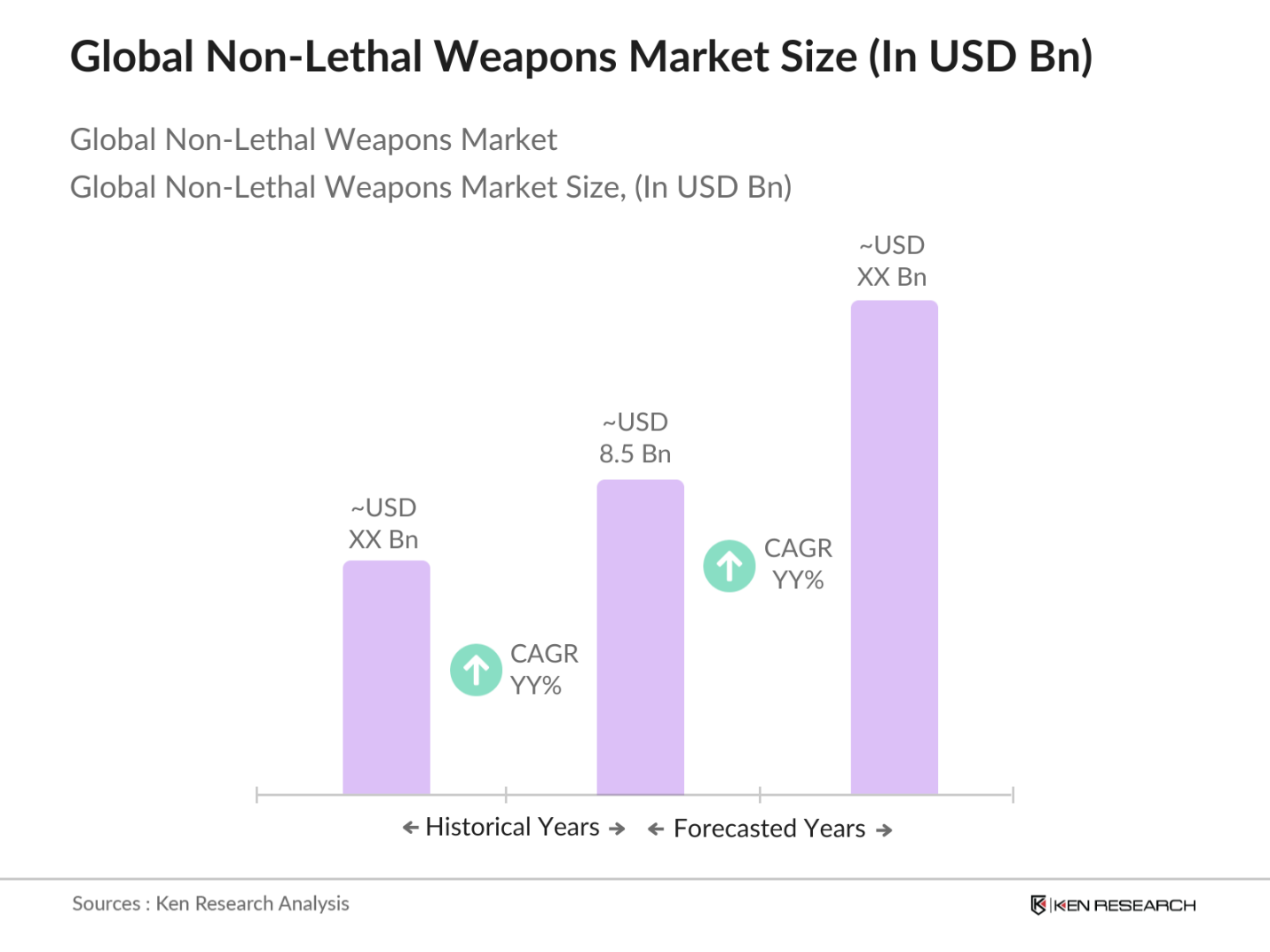
The global non-lethal weapons market is valued at USD 8.5 billion, driven by demand from military, law enforcement, and civilian sectors seeking effective solutions for crowd control and security operations.
Key challenges include ethical concerns over the use of non-lethal force, technological limitations, and high research and development costs, which hinder the widespread adoption of non-lethal weapons.
Major players include Raytheon Company, BAE Systems, Axon Enterprise, Safariland LLC, and Rheinmetall AG, all of which have a strong market presence due to their advanced non-lethal solutions.
Growth is driven by the increasing need for crowd control in urban settings, military peacekeeping missions, and the development of advanced technologies like electromagnetic and directed energy weapons.

What makes us stand out is that our consultants follows Robust, Refine and Result (RRR) methodology. i.e. Robust for clear definitions, approaches and sanity checking, Refine for differentiating respondents facts and opinions and Result for presenting data with story

We have set a benchmark in the industry by offering our clients with syndicated and customized market research reports featuring coverage of entire market as well as meticulous research and analyst insights.

While we don't replace traditional research, we flip the method upside down. Our dual approach of Top Bottom & Bottom Top ensures quality deliverable by not just verifying company fundamentals but also looking at the sector and macroeconomic factors.

With one step in the future, our research team constantly tries to show you the bigger picture. We help with some of the tough questions you may encounter along the way: How is the industry positioned? Best marketing channel? KPI's of competitors? By aligning every element, we help maximize success.

Our report gives you instant access to the answers and sources that other companies might choose to hide. We elaborate each steps of research methodology we have used and showcase you the sample size to earn your trust.

If you need any support, we are here! We pride ourselves on universe strength, data quality, and quick, friendly, and professional service.