
Global Nutritional Drinks Market Outlook to 2030
Region:Global
Author(s):Shreya Garg
Product Code:KROD5798
Region:Global
Author(s):Shreya Garg
Product Code:KROD5798
December 2024
88
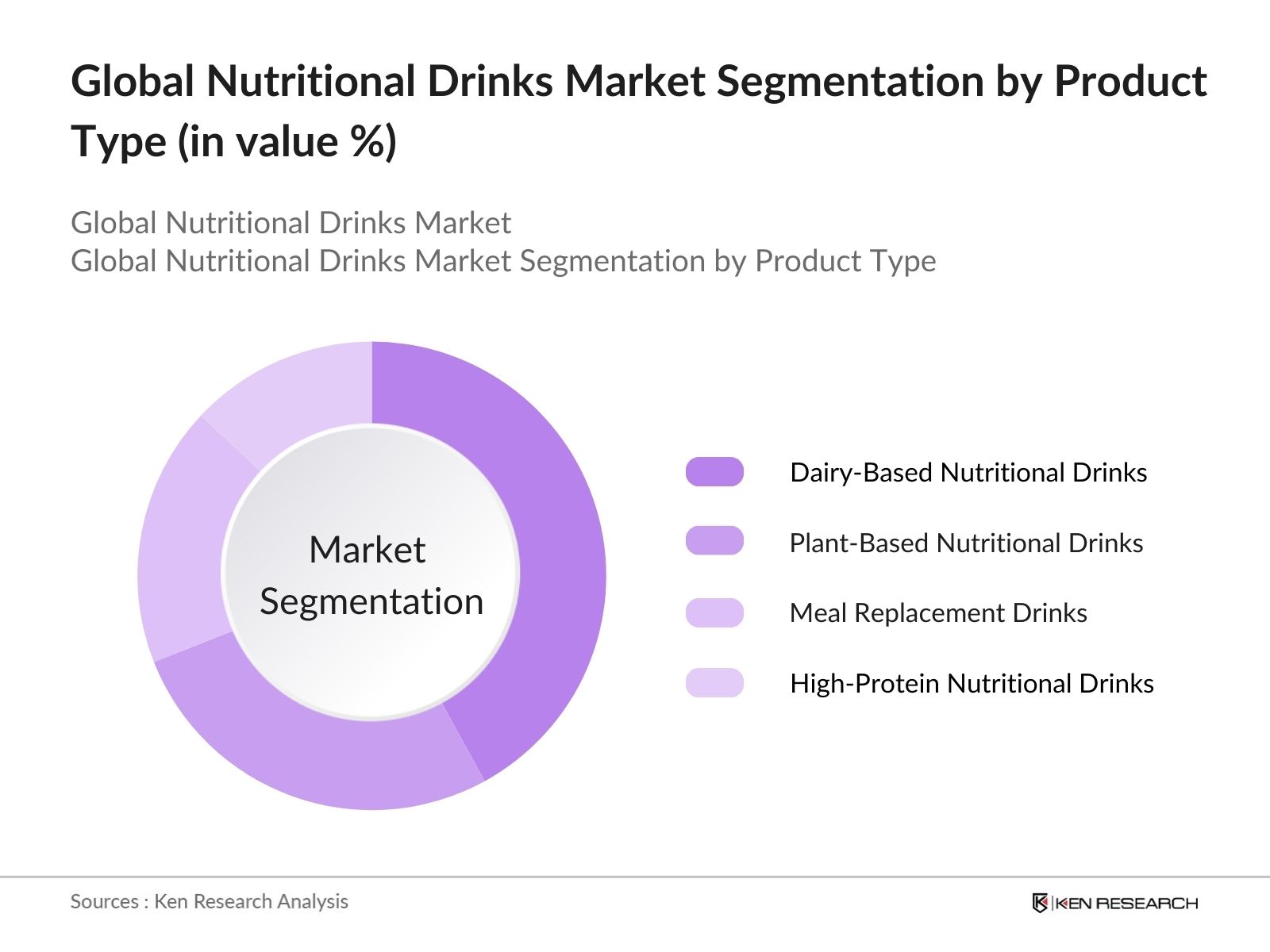
By Product Type: The global nutritional drinks market is segmented by product type into dairy-based nutritional drinks, plant-based nutritional drinks, meal replacement drinks, and high-protein nutritional drinks. Dairy-based nutritional drinks have a dominant market share under the product type segmentation. This dominance can be attributed to their longstanding presence in the market and the fact that they are widely perceived as a reliable source of essential nutrients like calcium and protein. Moreover, established brands such as Ensure and Boost have built strong consumer trust, making these products a preferred choice, particularly among older adults seeking nutritional support.
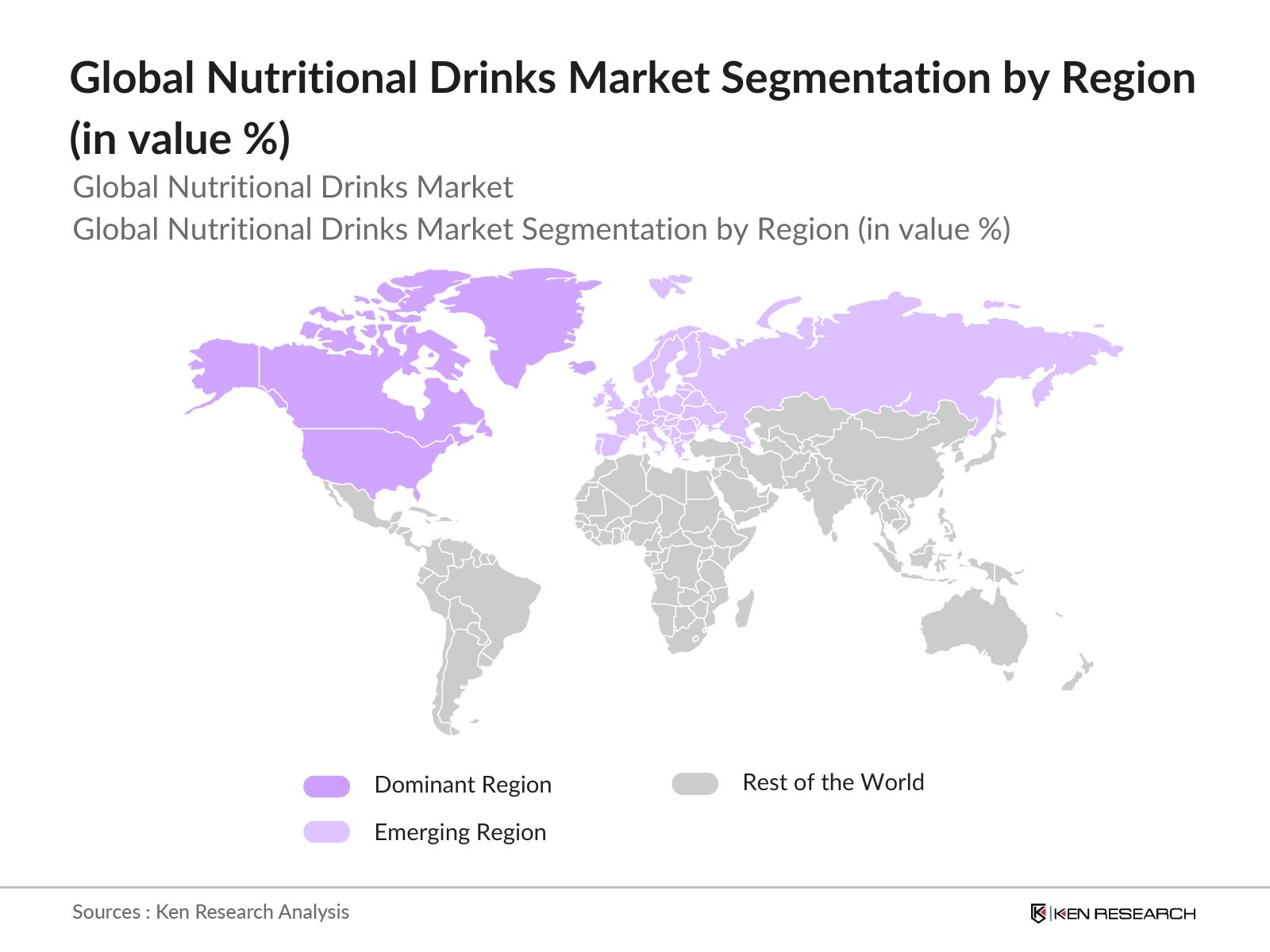
By Region: The market is segmented by region into North America, Asia-Pacific, Europe, Latin America and the Middle East and Africa. North America stands as the dominant region, largely driven by the high consumer awareness of health and wellness, coupled with significant disposable income levels. The region is home to key players such as Abbott Laboratories and PepsiCo, who have established strong distribution networks and are continuously innovating with new product formulations. Additionally, the aging population in North America contributes to the increasing demand for nutritional drinks aimed at improving health outcomes.
By Age Group: The market is also segmented by age group into adults, children, and seniors. Nutritional drinks for seniors lead the market in terms of share under this segmentation. This is due to the increasing global aging population and the specific dietary needs of this demographic, such as higher protein intake and calcium for bone health. Brands have been targeting this age group with specialized formulas that address common health concerns like muscle maintenance and immunity boosting, driving the popularity of these products among seniors.
The global nutritional drinks market is characterized by the presence of several key players. These companies have established a significant market presence through product innovation, strategic partnerships, and widespread distribution networks. The consolidation of market leaders has further strengthened their influence on the global stage.
|
Company Name |
Establishment Year |
Headquarters |
No. of Employees |
Revenue (USD Bn) |
Product Range |
R&D Investments |
Partnerships |
Global Reach |
|
Abbott Laboratories |
1888 |
U.S. |
||||||
|
Nestl S.A. |
1867 |
Switzerland |
||||||
|
The Kraft Heinz Company |
2015 |
U.S. |
||||||
|
Danone S.A. |
1919 |
France |
||||||
|
Glanbia Plc |
1997 |
Ireland |
Over the next five years, the global nutritional drinks market is expected to experience significant growth, driven by continuous innovations in product formulations, such as plant-based and organic options, as well as the growing focus on personalized nutrition. The market will also benefit from increasing consumer awareness around health and wellness, especially in emerging markets where nutritional deficiencies remain prevalent.
|
By Product Type |
Dairy-Based Nutritional Drinks Plant-Based Nutritional Drinks Meal Replacement Drinks High-Protein Nutritional Drinks Vitamin and Mineral-Enriched Drinks |
|
By Age Group |
Adults Children Seniors |
|
By Distribution Channel |
Supermarkets and Hypermarkets Pharmacies and Drugstores Online Retail Specialized Nutrition Stores |
|
By Packaging Type |
Bottles Tetra Packs Cans Sachets |
|
By Region |
North America Europe Asia-Pacific Latin America Middle East & Africa |
Global Nutritional Drinks Major Players
1.1. Definition and Scope
1.2. Market Taxonomy
1.3. Market Growth Rate
1.4. Market Segmentation Overview
2.1. Historical Market Size
2.2. Year-on-Year Growth Analysis
2.3. Key Market Developments and Milestones
3.1. Growth Drivers
Health and Wellness Trends
Rising Demand for Functional Beverages
Aging Population and Nutritional Needs
Technological Advancements in Nutrient Delivery Systems
3.2. Market Challenges
High Competition and Price Sensitivity
Regulatory Barriers in Nutritional Claims
Fluctuations in Raw Material Costs
Limited Awareness in Emerging Markets
3.3. Opportunities
Expansion in Plant-Based Nutritional Drinks
Growing Demand in Asia-Pacific
Innovations in Packaging for Enhanced Shelf Life
Partnerships Between Healthcare Providers and Beverage Companies
3.4. Trends
Increasing Use of Personalized Nutrition
Integration of Functional Ingredients (e.g., Probiotics, Collagen)
Rise of Online and Direct-to-Consumer Sales Channels
Growing Preference for Organic and Clean-Label Products
3.5. Government Regulation
Labeling and Nutritional Content Regulations
Compliance with Food Safety Standards
Impact of International Trade Policies on Nutritional Drinks
Government Initiatives to Promote Healthy Diets
3.6. SWOT Analysis
3.7. Stake Ecosystem
3.8. Porters Five Forces
3.9. Competition Ecosystem
4.1. By Product Type (In Value %)
4.1.1. Dairy-Based Nutritional Drinks
4.1.2. Plant-Based Nutritional Drinks
4.1.3. Meal Replacement Drinks
4.1.4. High-Protein Nutritional Drinks
4.1.5. Vitamin and Mineral-Enriched Drinks
4.2. By Age Group (In Value %)
4.2.1. Adults
4.2.2. Children
4.2.3. Seniors
4.3. By Distribution Channel (In Value %)
4.3.1. Supermarkets and Hypermarkets
4.3.2. Pharmacies and Drugstores
4.3.3. Online Retail
4.3.4. Specialized Nutrition Stores
4.4. By Packaging Type (In Value %)
4.4.1. Bottles
4.4.2. Tetra Packs
4.4.3. Cans
4.4.4. Sachets
4.5. By Region (In Value %)
4.5.1. North America
4.5.2. Europe
4.5.3. Asia-Pacific
4.5.4. Latin America
4.5.5. Middle East & Africa
5.1. Detailed Profiles of Major Companies
5.1.1. Abbott Laboratories
5.1.2. Nestl S.A.
5.1.3. The Kraft Heinz Company
5.1.4. Danone S.A.
5.1.5. Glanbia Plc
5.1.6. Herbalife Nutrition Ltd.
5.1.7. Amway Corp.
5.1.8. PepsiCo, Inc.
5.1.9. Kellogg Company
5.1.10. Unilever Group
5.1.11. General Mills, Inc.
5.1.12. Huel Inc.
5.1.13. GlaxoSmithKline Plc
5.1.14. Orgain, Inc.
5.1.15. The Simply Good Foods Company
5.2. Cross Comparison Parameters (No. of Employees, Headquarters, Revenue, Product Portfolio, R&D Investments, Partnerships)
5.3. Market Share Analysis
5.4. Strategic Initiatives
5.5. Mergers and Acquisitions
5.6. Investment Analysis
5.7. Venture Capital Funding
5.8. Government Grants
5.9. Private Equity Investments
6.1. Food Safety Standards (FSSAI, FDA, EFSA)
6.2. Labeling Guidelines
6.3. Certification Requirements (Organic, Non-GMO, Gluten-Free)
6.4. Compliance with International Export/Import Regulations
7.1. Future Market Size Projections
7.2. Key Factors Driving Future Market Growth
8.1. By Product Type (In Value %)
8.2. By Age Group (In Value %)
8.3. By Distribution Channel (In Value %)
8.4. By Packaging Type (In Value %)
8.5. By Region (In Value %)
9.1. TAM/SAM/SOM Analysis
9.2. Customer Cohort Analysis
9.3. Marketing Initiatives
9.4. White Space Opportunity Analysis
Disclaimer Contact UsIn the initial phase, an ecosystem map of the global nutritional drinks market is constructed, identifying all major stakeholders, including manufacturers, distributors, and consumers. This is achieved through extensive secondary research using proprietary databases to define critical market dynamics.
The next phase involves analyzing historical data on market penetration, consumer demand, and revenue generation across different segments. This data will be evaluated to ensure accuracy in estimating market shares and consumer preferences.
Market hypotheses are tested through in-depth interviews with key industry experts, including representatives from major nutritional drinks companies. These consultations offer insights into market challenges and growth drivers.
In the final stage, direct interaction with leading nutritional drink manufacturers ensures comprehensive validation of the findings, culminating in a detailed, reliable, and data-backed market report.
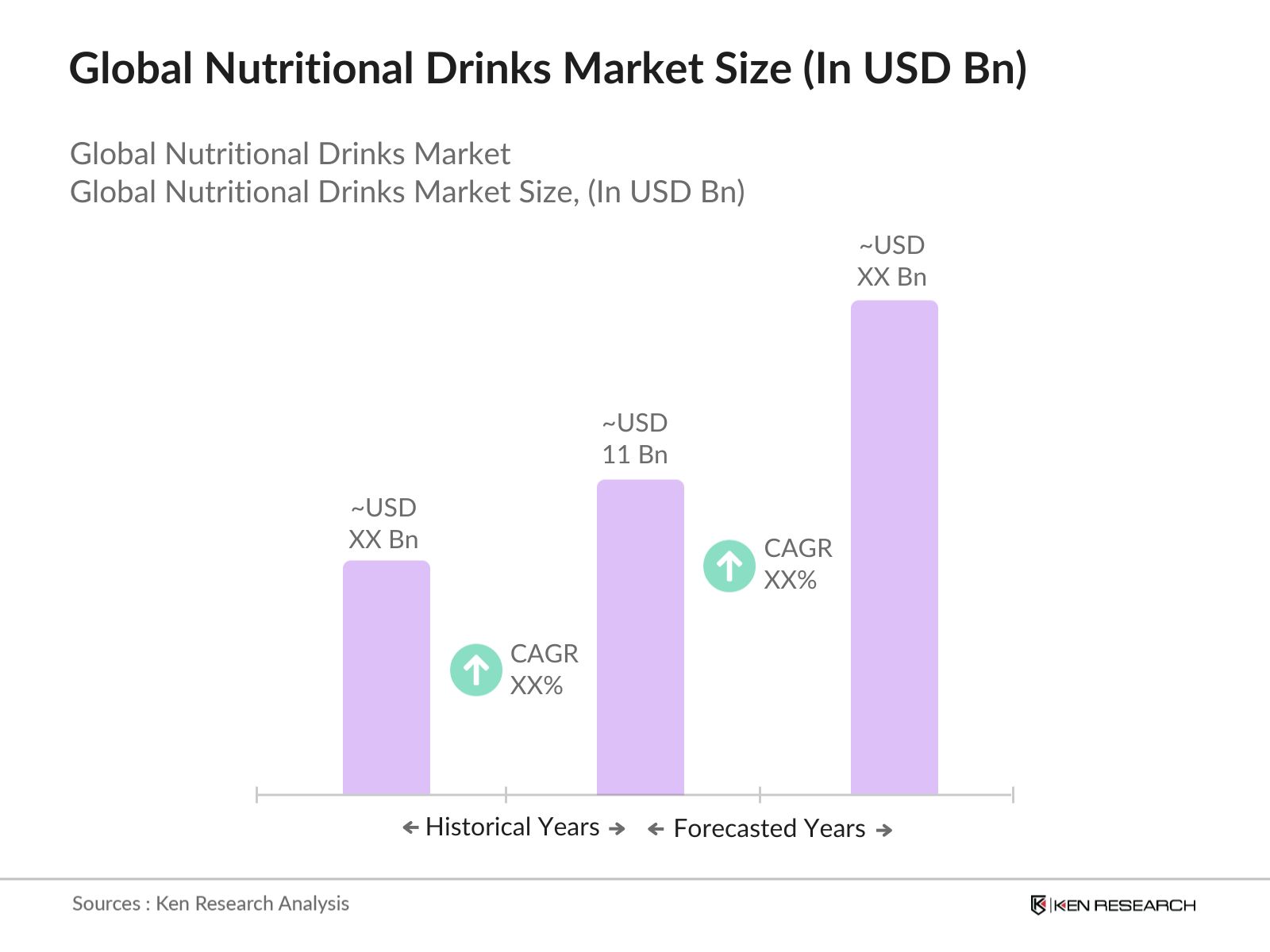
The global nutritional drinks market is valued at USD 11 billion, driven by the increasing demand for health and wellness products, alongside the rising trend of functional beverages that provide essential nutrients.
Challenges in the market include high competition among brands, regulatory restrictions regarding health claims, and price fluctuations of key ingredients like dairy and plant-based proteins.
Major players in the global nutritional drinks market include Abbott Laboratories, Nestl S.A., The Kraft Heinz Company, Danone S.A., and Glanbia Plc, all of whom hold strong positions due to their global presence and product innovations.
Key growth drivers include increasing health consciousness among consumers, rising demand for meal replacement drinks, and innovations in plant-based and protein-enriched beverages. These factors are further supported by the aging population's growing nutritional needs.

What makes us stand out is that our consultants follows Robust, Refine and Result (RRR) methodology. i.e. Robust for clear definitions, approaches and sanity checking, Refine for differentiating respondents facts and opinions and Result for presenting data with story

We have set a benchmark in the industry by offering our clients with syndicated and customized market research reports featuring coverage of entire market as well as meticulous research and analyst insights.

While we don't replace traditional research, we flip the method upside down. Our dual approach of Top Bottom & Bottom Top ensures quality deliverable by not just verifying company fundamentals but also looking at the sector and macroeconomic factors.

With one step in the future, our research team constantly tries to show you the bigger picture. We help with some of the tough questions you may encounter along the way: How is the industry positioned? Best marketing channel? KPI's of competitors? By aligning every element, we help maximize success.

Our report gives you instant access to the answers and sources that other companies might choose to hide. We elaborate each steps of research methodology we have used and showcase you the sample size to earn your trust.

If you need any support, we are here! We pride ourselves on universe strength, data quality, and quick, friendly, and professional service.