
Global Nutritional Food Market Outlook to 2030
Region:Global
Author(s):Mukul
Product Code:KROD10800
December 2024
123
About the Report
Global Nutritional Food Market Overview
- The Global Nutritional Food Market, valued at USD 7 billion, is driven by the growing consumer shift toward health-oriented diets and increasing awareness around balanced nutrition. This demand surge is underpinned by rising concerns over lifestyle-related diseases and preferences for fortified, functional foods that promote overall wellness. These trends, rooted in a historical analysis of market behavior, highlight how nutritional products are aligning with evolving dietary priorities among diverse consumer demographics.
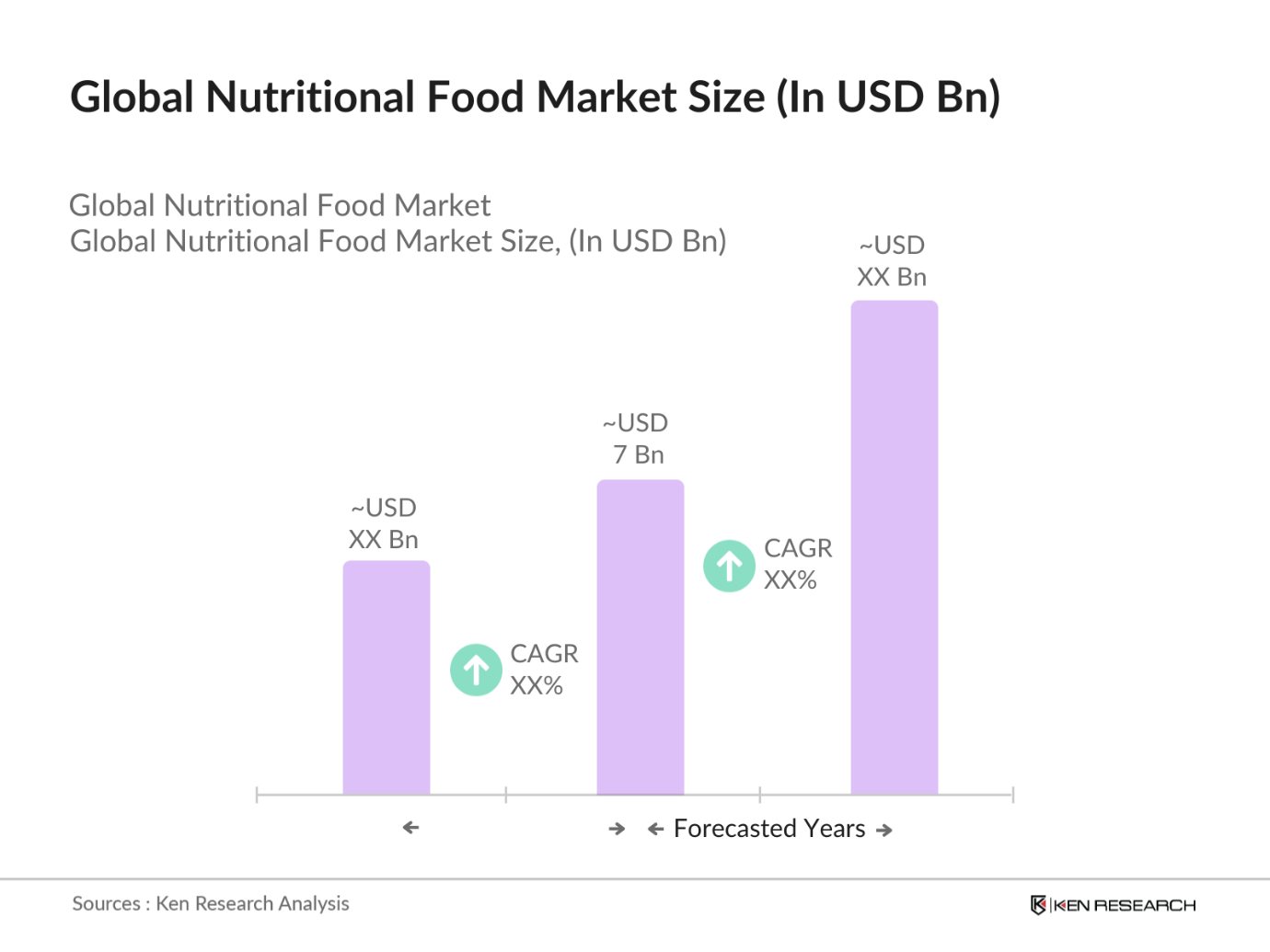
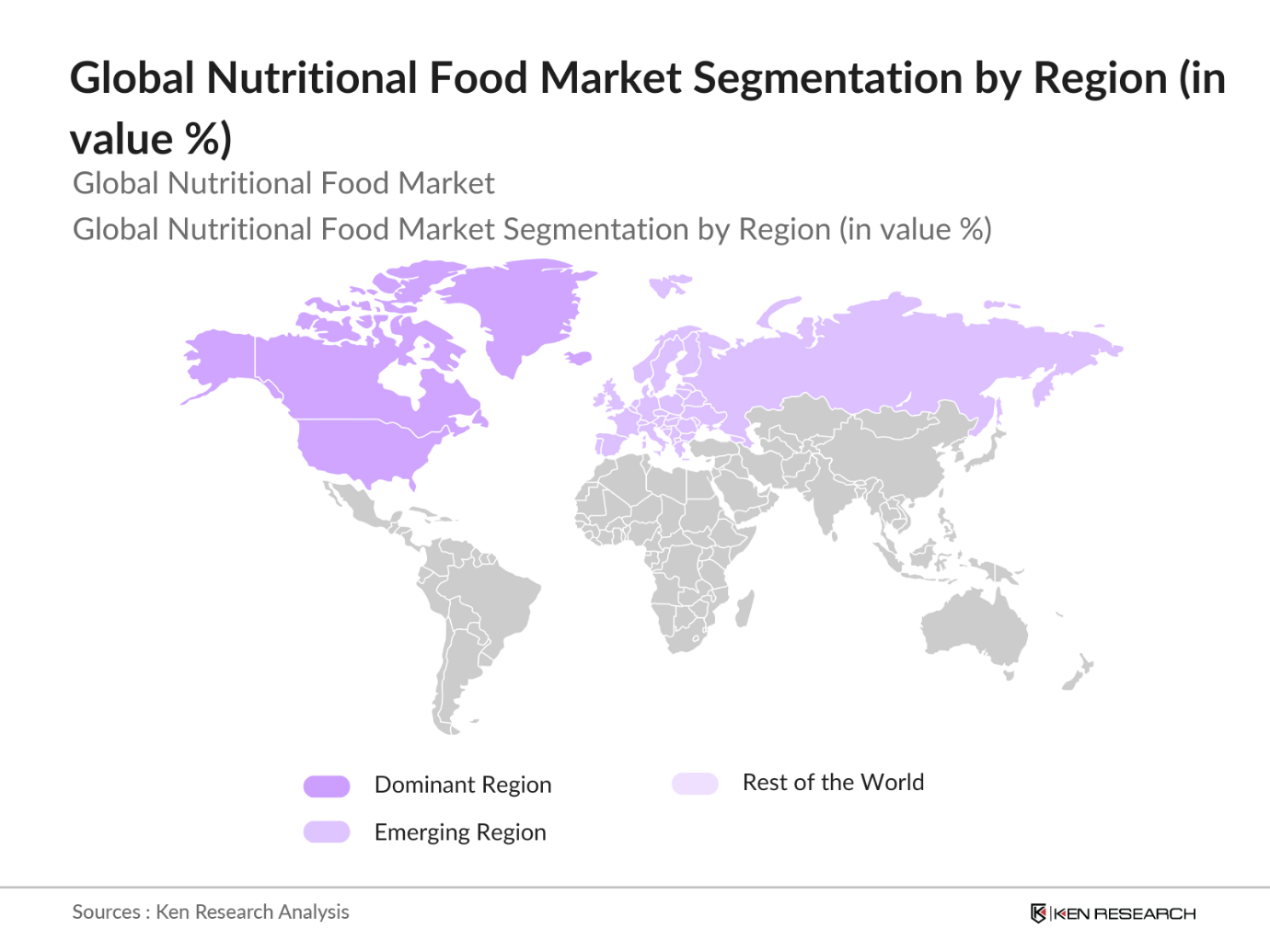
- North America and Europe lead the market due to robust consumer demand for fortified foods and high awareness regarding nutritional products. In North America, health-consciousness drives the adoption of nutritional products, while in Europe, stringent food standards and rising interest in functional foods contribute to the regions dominance. Both regions benefit from established brands and innovation in nutritional products, further solidifying their market positions.
- Compliance issues for the import and export of nutritional ingredients are highlighted by the U.S. Department of Agricultures (USDA) report in 2024, noting that compliance checks have increased by 50% to ensure quality control and safety in the global nutritional food supply chain.
Global Nutritional Food Market Segmentation
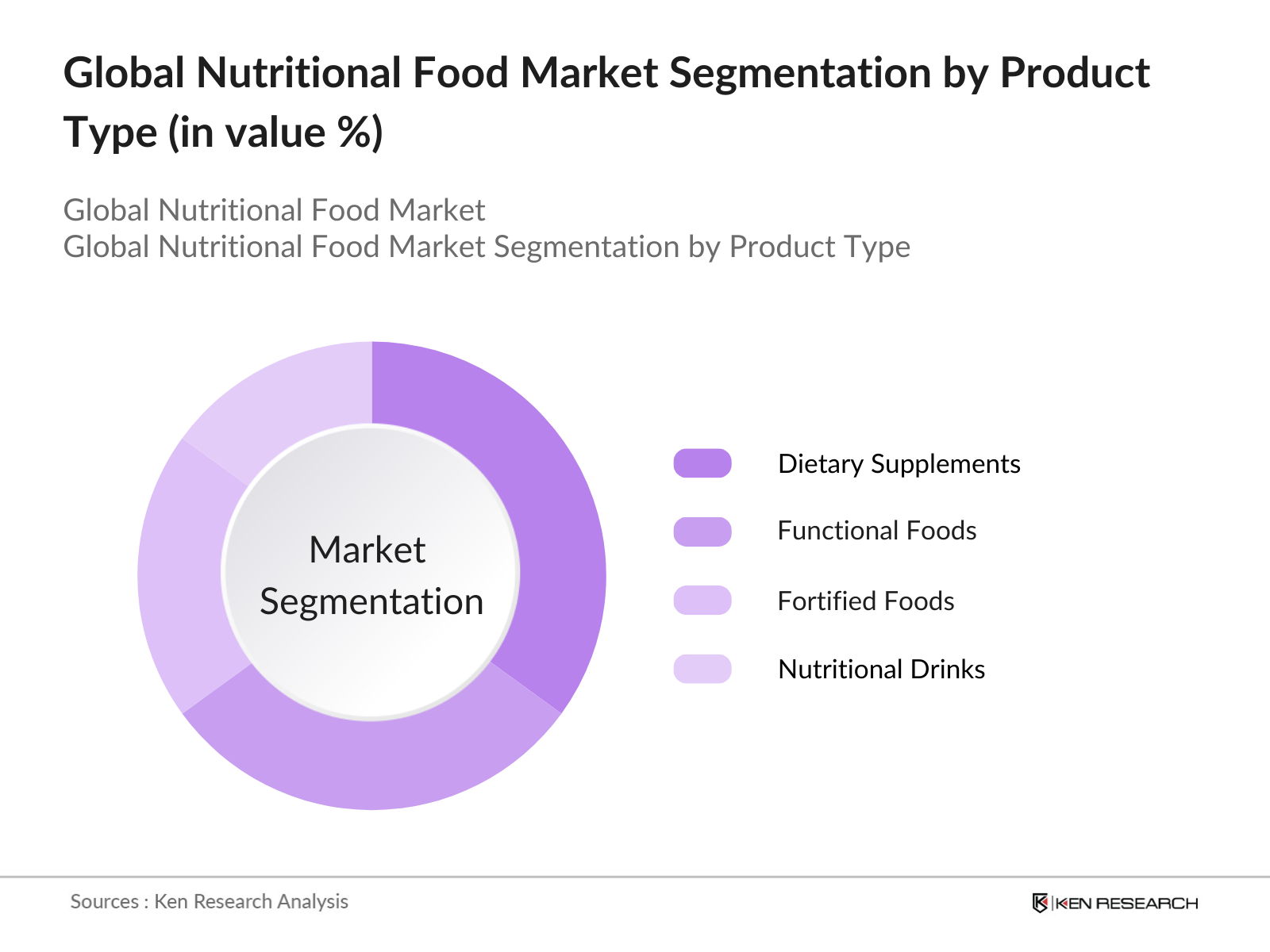
- By Product Type: The Global Nutritional Food Market is segmented by product type into dietary supplements, functional foods, fortified foods, nutritional drinks, and sports nutrition products. Recently, dietary supplements hold a dominant share under this segmentation, attributed to their broad acceptance across all age groups and convenience in meeting daily dietary requirements. Increasing awareness around specific nutrients, like vitamins and minerals, is pushing consumer preference for these supplements.
- By Region: The market is also segmented by region: North America, Europe, Asia Pacific, Latin America, and Middle East & Africa. North America holds the largest market share, driven by high consumer awareness and availability of a wide range of nutritional products. The regions advanced retail infrastructure and preference for health-focused foods further fuel its market dominance.
- By Ingredient: Market segmentation by ingredients includes proteins, vitamins & minerals, fiber & carbohydrates, amino acids, and enzymes. Proteins dominate due to their role in fitness and muscle health, making them essential for sports and lifestyle nutrition. High consumer demand for protein-rich diets, spurred by rising interest in fitness and active lifestyles, maintains this segment's stronghold in the market.
Global Nutritional Food Market Competitive Landscape
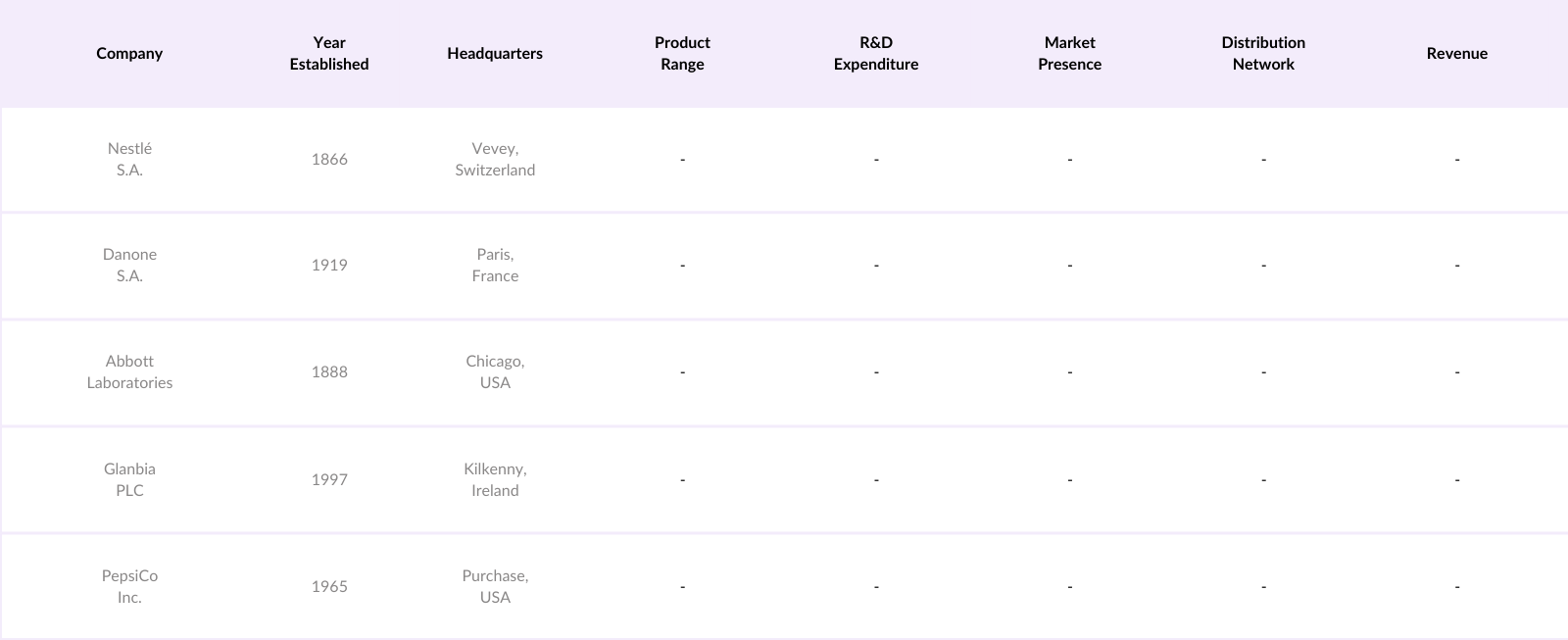
The Global Nutritional Food Market is consolidated, with a few major players holding a significant share due to brand recognition, extensive product portfolios, and large distribution networks. Companies such as Nestl and Danone leverage strong R&D investments to continuously innovate, meeting specific consumer needs for fortified and functional foods. This consolidation emphasizes the competitive barriers for new entrants, as established brands benefit from consumer loyalty and advanced supply chains.
Global Nutritional Food Industry Analysis
Growth Drivers
- Rising Health Awareness: The rise in health awareness globally is quantifiable through the increase in government healthcare spending, which provides indirect support for the nutritional food market. For instance, the World Bank reported that healthcare spending as a percentage of GDP in high-income countries rose from 8.8% in 2020 to approximately 9.1% in 2024, reflecting a growing focus on health which correlates with increased consumer attention to nutrition.
- Increased Demand for Functional Foods: The demand for functional foods is supported by data indicating a rise in chronic diseases such as diabetes, which the World Health Organization (WHO) notes increased by 16% in global prevalence from 2022 to 2024. This data underlines the growing consumer shift towards foods that offer health benefits beyond basic nutrition.
- Technological Advancements in Food Processing: Technological advancements in food processing are evident from the investment in food tech research and development, which, according to a World Bank analysis, saw a funding increase by 20% between 2022 and 2024. This has enabled more sophisticated production of nutritional foods, enhancing their accessibility and variety.
Market Restraints
- Regulatory Compliance and Standards Navigating regulatory compliance and standards remains a significant challenge, highlighted by the Food and Drug Administrations (FDA) introduction of stricter labeling requirements in 2024, which impacted 30% of food manufacturers in terms of compliance costs and operational adjustments.
- High Cost of Nutritional Food Ingredients The high cost of nutritional food ingredients is reflected in the inflation rates reported by the IMF, where food price inflation in developing countries spiked by an average of 15% from early 2023 to mid-2024, directly affecting the production costs of nutritional foods.
Global Nutritional Food Market Future Outlook
Over the next five years, the Global Nutritional Food Market is anticipated to experience significant growth, supported by expanding consumer awareness around health and nutrition. Key drivers include the shift towards functional foods, rising demand for plant-based nutrition, and the continuous introduction of health-focused product innovations. These factors position the nutritional food sector as a critical area of interest for investors and health-conscious consumers alike.
Market Opportunities
- Expansion of Online and Direct-to-Consumer Sales Channels The expansion of online and direct-to-consumer sales channels is supported by data from the International Telecommunication Union (ITU), which shows a 30% increase in internet penetration in developing markets from 2022 to 2024, facilitating greater reach for nutritional food products online.
- Innovative Product Development (e.g., Plant-Based and Allergen-Free Products) Innovative product development is encouraged by consumer demand trends, where, according to a report from the Food and Agriculture Organization (FAO), demand for plant-based products increased by 50% in major markets during the same period, driven by rising consumer preferences for dietary diversity and allergy-friendly products.
Scope of the Report
|
Product Type |
Dietary Supplements Functional Foods Fortified Foods Nutritional Drinks Sports Nutrition Products |
|
Ingredient |
Proteins Vitamins & Minerals Fiber & Carbohydrates Amino Acids Enzymes |
|
Distribution Channel |
Supermarkets/Hypermarkets Specialty Stores Online Retail Direct-to-Consumer Pharmacies |
|
Consumer Demographics |
Infants & Children Adults Elderly |
|
Region |
North America Europe Asia Pacific Latin America Middle East & Africa |
Products
Key Target Audience
Nutritional Product Manufacturers
Retailers and Distributors
Health and Wellness Companies
Investors and Venture Capitalist Firms
Government and Regulatory Bodies (e.g., FDA, EFSA)
Fitness and Lifestyle Centers
Pharmaceutical Companies
Online Retail Platforms
Companies
Players Mentioned in the Report:
Nestl S.A.
Danone S.A.
Abbott Laboratories
Glanbia PLC
PepsiCo Inc.
Herbalife Nutrition Ltd.
General Mills Inc.
The Coca-Cola Company
Amway Corporation
Unilever PLC
Kellogg Company
Bayer AG
Mead Johnson & Company LLC
GNC Holdings Inc.
Clif Bar & Company
Table of Contents
1. Global Nutritional Food Market Overview
1.1 Definition and Scope
1.2 Market Taxonomy
1.3 Market Growth Rate
1.4 Market Segmentation Overview
2. Global Nutritional Food Market Size (In USD Mn)
2.1 Historical Market Size
2.2 Year-On-Year Growth Analysis
2.3 Key Market Developments and Milestones
3. Global Nutritional Food Market Analysis
3.1 Growth Drivers
3.1.1 Rising Health Awareness
3.1.2 Increased Demand for Functional Foods
3.1.3 Technological Advancements in Food Processing
3.1.4 Influence of Lifestyle Diseases
3.2 Market Challenges
3.2.1 Regulatory Compliance and Standards
3.2.2 High Cost of Nutritional Food Ingredients
3.2.3 Limited Access in Emerging Markets
3.3 Opportunities
3.3.1 Expansion of Online and Direct-to-Consumer Sales Channels
3.3.2 Innovative Product Development (e.g., Plant-Based and Allergen-Free Products)
3.3.3 Growth in Emerging Economies
3.4 Trends
3.4.1 Rise in Plant-Based and Vegan Nutritional Products
3.4.2 Adoption of Personalized Nutrition
3.4.3 Popularity of Functional Beverages
3.5 Government Regulation
3.5.1 Nutritional Labeling Requirements
3.5.2 Dietary Guidelines and Health Claims Regulations
3.5.3 Import and Export Compliance for Nutritional Ingredients
3.6 SWOT Analysis
3.7 Stake Ecosystem
3.8 Porters Five Forces
3.9 Competition Ecosystem
4. Global Nutritional Food Market Segmentation
4.1 By Product Type (In Value %)
4.1.1 Dietary Supplements
4.1.2 Functional Foods
4.1.3 Fortified Foods
4.1.4 Nutritional Drinks
4.1.5 Sports Nutrition Products
4.2 By Ingredient (In Value %)
4.2.1 Proteins
4.2.2 Vitamins & Minerals
4.2.3 Fiber & Carbohydrates
4.2.4 Amino Acids
4.2.5 Enzymes
4.3 By Distribution Channel (In Value %)
4.3.1 Supermarkets/Hypermarkets
4.3.2 Specialty Stores
4.3.3 Online Retail
4.3.4 Direct-to-Consumer
4.3.5 Pharmacies
4.4 By Consumer Demographics (In Value %)
4.4.1 Infants & Children
4.4.2 Adults
4.4.3 Elderly
4.5 By Region (In Value %)
4.5.1 North America
4.5.2 Europe
4.5.3 Asia Pacific
4.5.4 Latin America
4.5.5 Middle East & Africa
5. Global Nutritional Food Market Competitive Analysis
5.1 Detailed Profiles of Major Companies
5.1.1 Nestl S.A.
5.1.2 Danone S.A.
5.1.3 Abbott Laboratories
5.1.4 Glanbia PLC
5.1.5 PepsiCo Inc.
5.1.6 Herbalife Nutrition Ltd.
5.1.7 General Mills Inc.
5.1.8 The Coca-Cola Company
5.1.9 Amway Corporation
5.1.10 Unilever PLC
5.1.11 Kellogg Company
5.1.12 Bayer AG
5.1.13 Mead Johnson & Company LLC
5.1.14 GNC Holdings Inc.
5.1.15 Clif Bar & Company
5.2 Cross Comparison Parameters (Product Range, Market Presence, Revenue, Distribution Network, R&D Investment, Sustainability Initiatives, Health Certifications, Target Consumer Segments)
5.3 Market Share Analysis
5.4 Strategic Initiatives
5.5 Mergers and Acquisitions
5.6 Investment Analysis
5.7 Venture Capital Funding
5.8 Government Grants
5.9 Private Equity Investments
6. Global Nutritional Food Market Regulatory Framework
6.1 Nutritional Standards and Compliance
6.2 Quality Assurance and Safety Regulations
6.3 Certification and Labeling Standards
7. Global Nutritional Food Future Market Size (In USD Mn)
7.1 Future Market Size Projections
7.2 Key Factors Driving Future Market Growth
8. Global Nutritional Food Future Market Segmentation
8.1 By Product Type (In Value %)
8.2 By Ingredient (In Value %)
8.3 By Distribution Channel (In Value %)
8.4 By Consumer Demographics (In Value %)
8.5 By Region (In Value %)
9. Global Nutritional Food Market Analysts Recommendations
9.1 TAM/SAM/SOM Analysis
9.2 Customer Cohort Analysis
9.3 Marketing Initiatives
9.4 White Space Opportunity Analysis
Disclaimer Contact UsResearch Methodology
Step 1: Identification of Key Variables
The research begins with mapping the Global Nutritional Food Market ecosystem, identifying major stakeholders and influencers. Comprehensive desk research involving industry databases and secondary sources aids in defining the variables impacting market dynamics.
Step 2: Market Analysis and Construction
In this step, historical market data is analyzed to determine revenue trends and market penetration. Market share distribution is reviewed for consistency, ensuring a reliable foundation for segment and revenue forecasts.
Step 3: Hypothesis Validation and Expert Consultation
Key market hypotheses are developed and validated through expert interviews with industry professionals, including insights on consumer behavior, product innovation, and regulatory challenges.
Step 4: Research Synthesis and Final Output
The synthesis stage involves consolidating data from primary and secondary sources, providing a complete overview of the market. Direct interactions with companies help validate trends, ensuring an accurate and comprehensive analysis.
Frequently Asked Questions
01 How big is the Global Nutritional Food Market?
The Global Nutritional Food Market is valued at USD 7 billion, driven by rising consumer interest in health and wellness.
02 What are the challenges in the Global Nutritional Food Market?
Challenges include stringent regulatory standards, high costs associated with premium ingredients, and market competition from established brands.
03 Who are the major players in the Global Nutritional Food Market?
Leading companies include Nestl, Danone, Abbott Laboratories, Glanbia, and PepsiCo, known for their extensive product ranges and strong consumer trust.
04 What are the growth drivers of the Global Nutritional Food Market?
The market is propelled by factors such as increasing awareness of health benefits, demand for fortified foods, and innovations in plant-based nutrition.
Why Buy From Us?

What makes us stand out is that our consultants follows Robust, Refine and Result (RRR) methodology. i.e. Robust for clear definitions, approaches and sanity checking, Refine for differentiating respondents facts and opinions and Result for presenting data with story

We have set a benchmark in the industry by offering our clients with syndicated and customized market research reports featuring coverage of entire market as well as meticulous research and analyst insights.

While we don't replace traditional research, we flip the method upside down. Our dual approach of Top Bottom & Bottom Top ensures quality deliverable by not just verifying company fundamentals but also looking at the sector and macroeconomic factors.

With one step in the future, our research team constantly tries to show you the bigger picture. We help with some of the tough questions you may encounter along the way: How is the industry positioned? Best marketing channel? KPI's of competitors? By aligning every element, we help maximize success.

Our report gives you instant access to the answers and sources that other companies might choose to hide. We elaborate each steps of research methodology we have used and showcase you the sample size to earn your trust.

If you need any support, we are here! We pride ourselves on universe strength, data quality, and quick, friendly, and professional service.