
Global Offshore Wind Turbine Market Outlook to 2030
Region:Global
Author(s):Sanjeev
Product Code:KROD1857
Region:Global
Author(s):Sanjeev
Product Code:KROD1857
November 2024
98
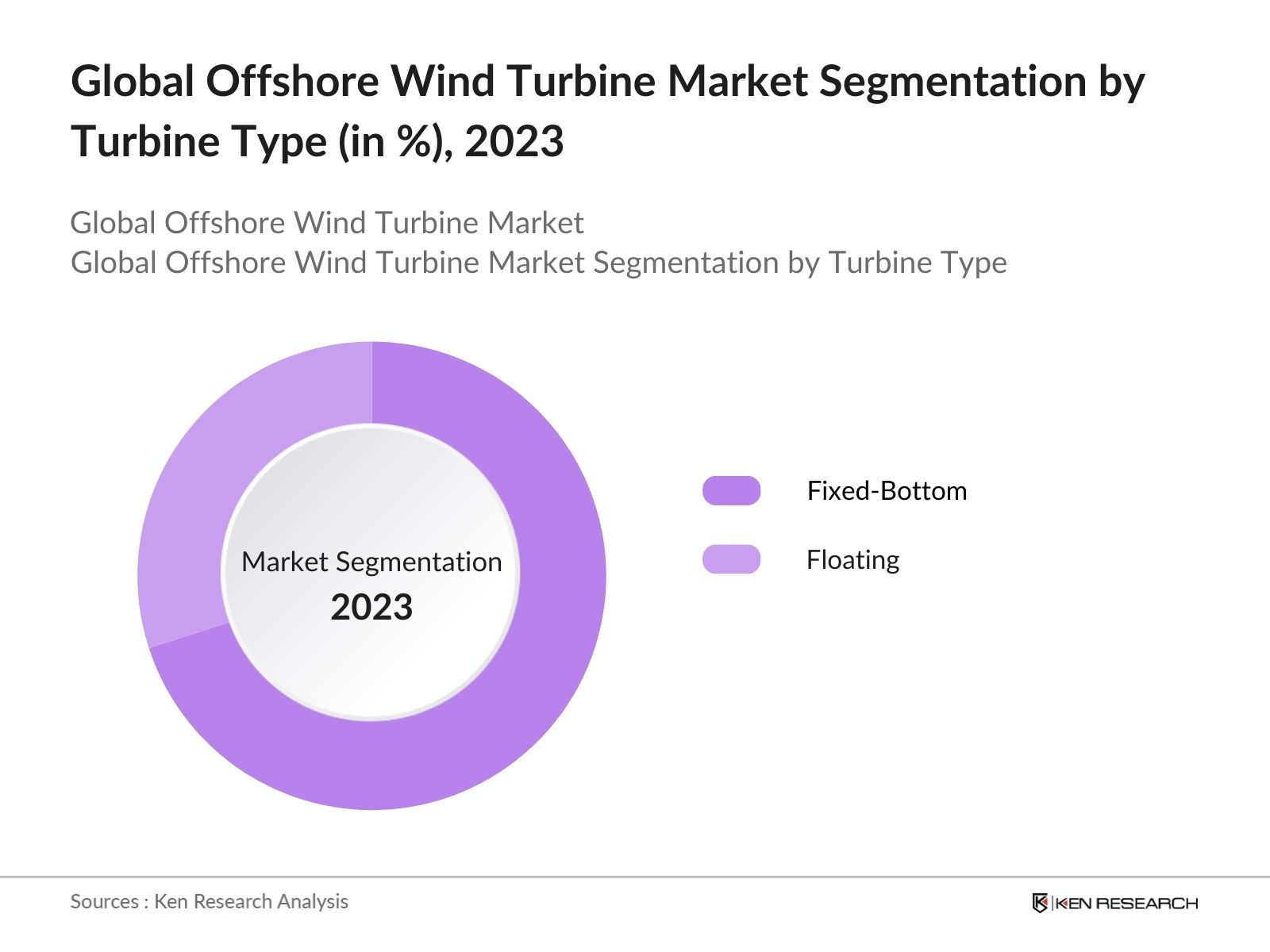
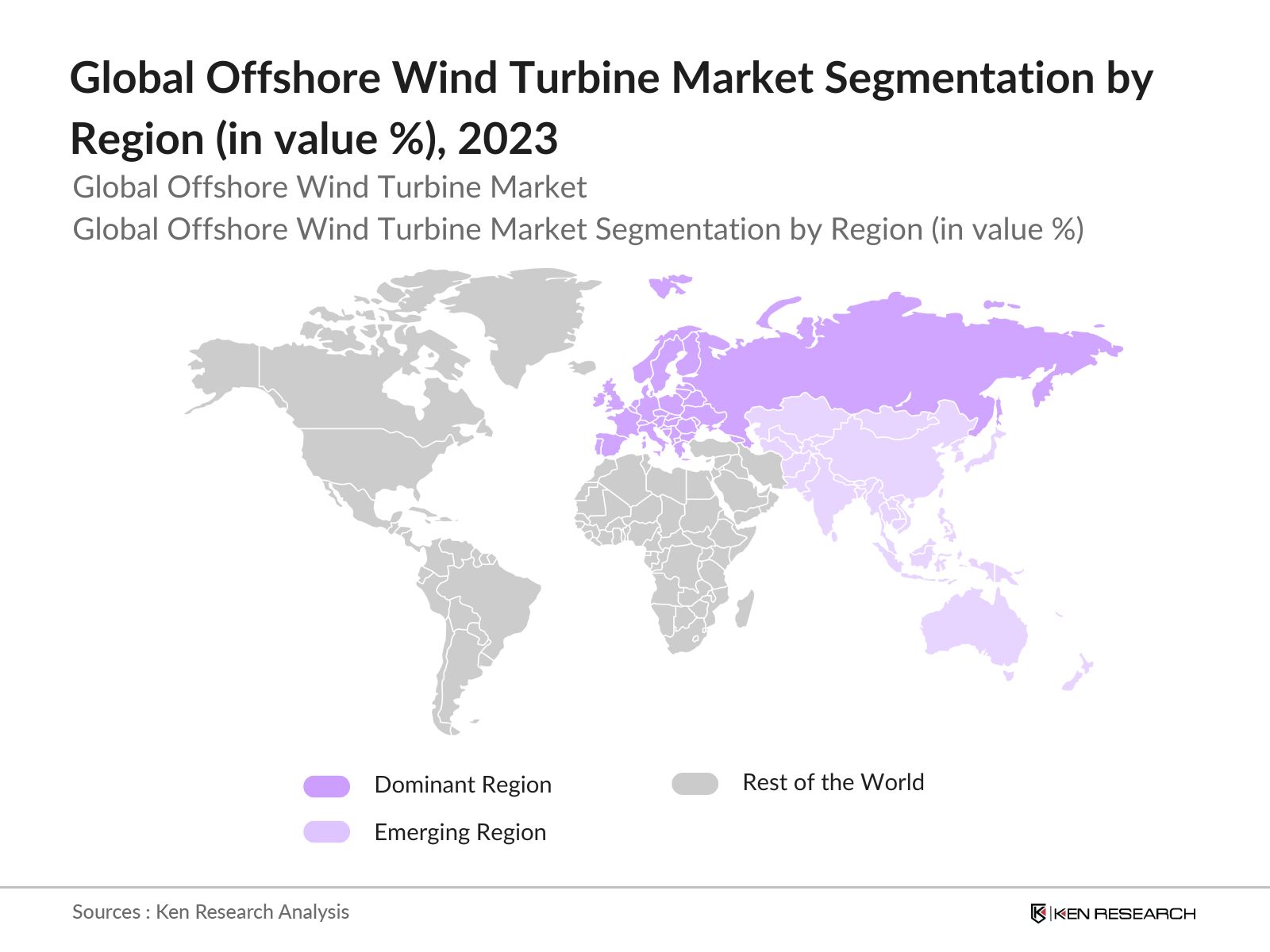
The Global Offshore Wind Turbine Market can be segmented by turbine type, water depth, and region:
|
Company |
Establishment Year |
Headquarters |
|
Siemens Gamesa |
1976 |
Zamudio, Spain |
|
Vestas |
1945 |
Aarhus, Denmark |
|
GE Renewable Energy |
2002 |
Paris, France |
|
rsted |
1972 |
Fredericia, Denmark |
|
MHI Vestas Offshore Wind |
2014 |
Aarhus, Denmark |
The Global Offshore Wind Turbine Market is expected to continue its robust growth, driven by increasing demand for renewable energy, advancements in turbine technology, and supportive government policies.
|
By Region |
Europe Asia Pacific North America South America Middle East & Africa |
|
By Water Depth |
Shallow Water Transitional Water Deep Water |
|
By Turbine Type |
Fixed-Bottom Turbines Floating Turbines |
|
By Capacity |
Up to 3 MW 3 MW to 5 MW Above 5 MW |
|
By Application |
Commercial Power Generation Utility Power Generation Industrial Power Generation |
Time Period Captured in the Report:
1.1. Definition and Scope
1.2. Market Taxonomy
1.3. Market Growth Rate
1.4. Market Segmentation Overview
2.1. Historical Market Size
2.2. Year-on-Year Growth Analysis
2.3. Key Market Developments and Milestones
3.1. Growth Drivers
3.1.1. Increasing Investment in Renewable Energy
3.1.2. Technological Advancements
3.1.3. Government Support and Policy Initiatives
3.2. Restraints
3.2.1. High Installation and Maintenance Costs
3.2.2. Grid Integration Issues
3.2.3. Environmental and Regulatory Constraints
3.3. Opportunities
3.3.1. Expansion into New Markets
3.3.2. Technological Innovations
3.3.3. Growing Demand for Clean Energy
3.4. Trends
3.4.1. Expansion of Floating Wind Farms
3.4.2. Integration of Hybrid Energy Systems
3.4.3. Development of Smart Turbines
3.5. Government Regulation
3.5.1. European Unions Offshore Renewable Energy Strategy
3.5.2. Chinas 14th Five-Year Plan for Renewable Energy
3.5.3. U.S. Offshore Wind Initiatives
3.6. SWOT Analysis
3.7. Stakeholder Ecosystem
3.8. Competitive Ecosystem
4.1. By Turbine Type (in Value %)
4.1.1. Fixed-Bottom Turbines
4.1.2. Floating Turbines
4.2. By Water Depth (in Value %)
4.2.1. Shallow Water
4.2.2. Transitional Water
4.2.3. Deep Water
4.3. By Region (in Value %)
4.3.1. Europe
4.3.2. Asia Pacific
4.3.3. North America
4.3.4. South America
4.3.5. Middle East & Africa
4.4. By Capacity (in Value %)
4.4.1. Up to 3 MW
4.4.2. 3 MW to 5 MW
4.4.3. Above 5 MW
4.5. By Application (in Value %)
4.5.1. Commercial Power Generation
4.5.2. Utility Power Generation
4.5.3. Industrial Power Generation
5.1. Detailed Profiles of Major Companies
5.1.1. Siemens Gamesa
5.1.2. Vestas
5.1.3. GE Renewable Energy
5.1.4. rsted
5.1.5. MHI Vestas Offshore Wind
5.1.6. Senvion
5.1.7. Goldwind
5.1.8. MingYang Smart Energy
5.1.9. Shanghai Electric Wind Power
5.1.10. Hitachi Offshore Wind
5.1.11. Envision Energy
5.1.12. Nordex Group
5.1.13. Suzlon Energy
5.1.14. Doosan Heavy Industries & Construction
5.1.15. Sinovel Wind Group Co., Ltd.
5.2. Cross Comparison Parameters (No. of Employees, Headquarters, Inception Year, Revenue)
6.1. Market Share Analysis
6.2. Strategic Initiatives
6.3. Mergers and Acquisitions
6.4. Investment Analysis
6.4.1. Venture Capital Funding
6.4.2. Government Grants
6.4.3. Private Equity Investments
7.1. Environmental Standards
7.2. Compliance Requirements
7.3. Certification Processes
8.1. Future Market Size Projections
8.2. Key Factors Driving Future Market Growth
9.1. By Turbine Type (in Value %)
9.2. By Water Depth (in Value %)
9.3. By Region (in Value %)
9.4. By Capacity (in Value %)
9.5. By Application (in Value %)
10.1. TAM/SAM/SOM Analysis
10.2. Customer Cohort Analysis
10.3. Marketing Initiatives
10.4. White Space Opportunity Analysis
Disclaimer Contact UsWe begin by referencing multiple secondary and proprietary databases to conduct desk research. This includes gathering industry-level information on market drivers, challenges, key players, technological advancements, and policy impacts. We also assess regional developments and market dynamics specific to the offshore wind turbine market.
We collect historical data on market size, growth rates, turbine type segmentation (fixed-bottom and floating turbines), and the distribution of water depths (shallow, transitional, and deep waters). We also analyze market share and revenue generated by leading companies, emerging trends in turbine technology, and regional developments to ensure accuracy and reliability in the data presented.
We perform Computer-Assisted Telephone Interviews (CATIs) with industry experts, including representatives from leading wind turbine manufacturers, project developers, and energy policy advisors. These interviews validate the statistics collected and provide insights into operational and financial aspects, such as project financing, installation challenges, and regulatory compliance.
Our team interacts with wind turbine manufacturers, renewable energy developers, environmental agencies, and market analysts to understand the dynamics of market segments, evolving technologies, and regulatory trends. This process helps validate the derived statistics using a bottom-to-top approach, ensuring that the final data accurately reflects the actual market conditions.
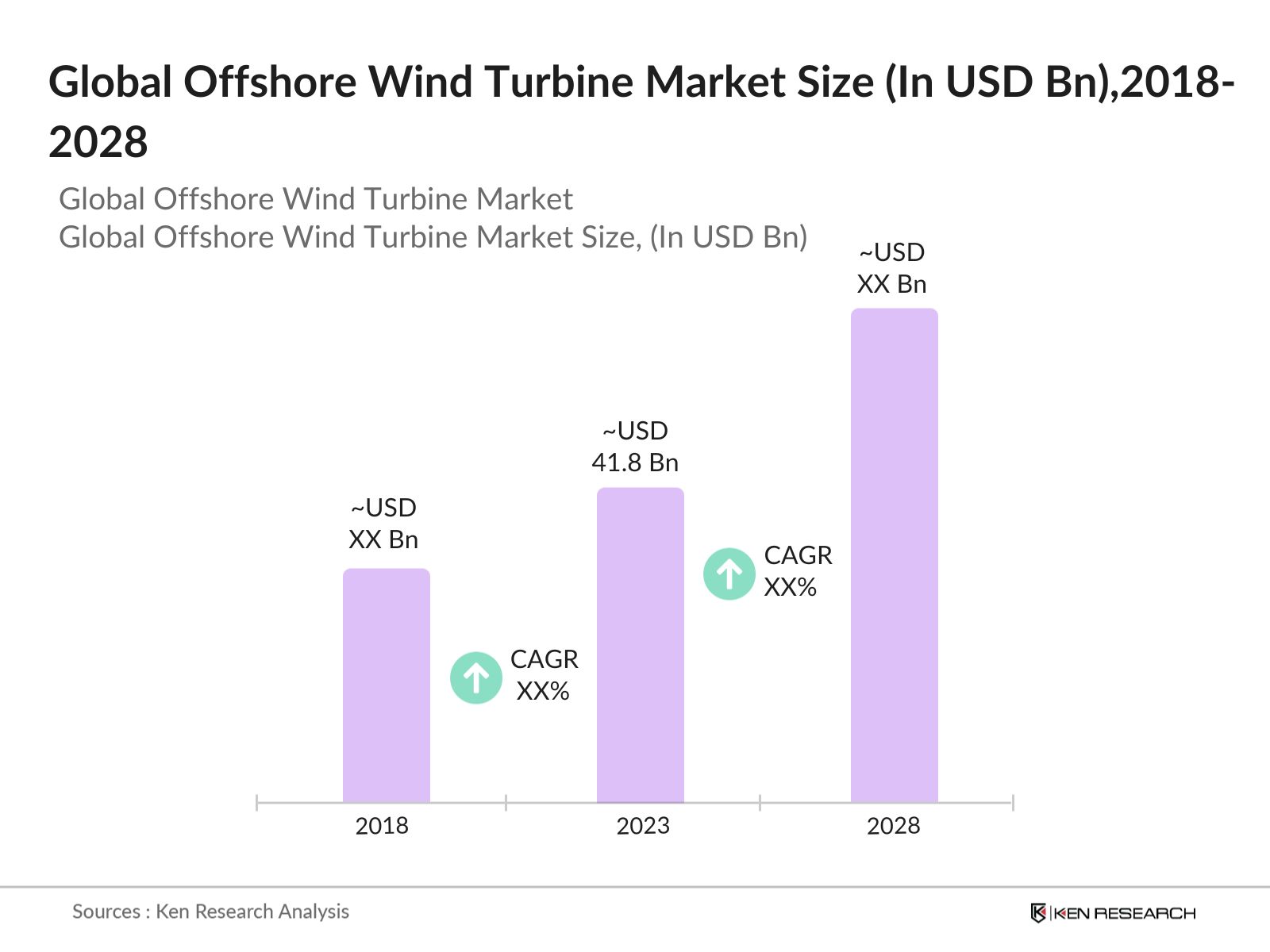
In 2023, the Global Offshore Wind Turbine Market was valued at USD 41.8 billion. The market's growth is driven by increasing investment in renewable energy, technological advancements in turbine design, and strong government support for sustainable energy initiatives.
Challenges in the Global Offshore Wind Turbine Market include high installation and maintenance costs, grid integration issues, and stringent environmental and regulatory constraints. Additionally, the need for technological advancements to improve turbine efficiency and durability in harsh offshore environments presents ongoing challenges.
Major players in the Global Offshore Wind Turbine Market include Siemens Gamesa, Vestas, GE Renewable Energy, rsted, and MHI Vestas Offshore Wind. These companies lead the market with advanced turbine technologies, strong project portfolios, and continuous innovation in offshore wind solutions.
Key growth drivers include increasing investment in renewable energy to combat climate change, technological advancements in turbine design, and supportive government policies promoting offshore wind development. The expansion of offshore wind capacity and the growing adoption of floating turbines also contribute to market growth.

What makes us stand out is that our consultants follows Robust, Refine and Result (RRR) methodology. i.e. Robust for clear definitions, approaches and sanity checking, Refine for differentiating respondents facts and opinions and Result for presenting data with story

We have set a benchmark in the industry by offering our clients with syndicated and customized market research reports featuring coverage of entire market as well as meticulous research and analyst insights.

While we don't replace traditional research, we flip the method upside down. Our dual approach of Top Bottom & Bottom Top ensures quality deliverable by not just verifying company fundamentals but also looking at the sector and macroeconomic factors.

With one step in the future, our research team constantly tries to show you the bigger picture. We help with some of the tough questions you may encounter along the way: How is the industry positioned? Best marketing channel? KPI's of competitors? By aligning every element, we help maximize success.

Our report gives you instant access to the answers and sources that other companies might choose to hide. We elaborate each steps of research methodology we have used and showcase you the sample size to earn your trust.

If you need any support, we are here! We pride ourselves on universe strength, data quality, and quick, friendly, and professional service.