Ken Research Logo

Global Optical Market Outlook to 2029

Region:Global

Author(s):Dev

Product Code:KROD-044

Published On

June 2025

Total pages

90

About the Report

Global Optical Market Overview

  • The Global Optical Market is valued at USD XX billion, based on a five-year historical analysis. This growth is primarily driven by advancements in optical technologies, increasing demand for high-quality imaging systems, and the rising adoption of optical components in various industries such as telecommunications, healthcare, and consumer electronics.
  • Key players in this market include the United States, Germany, and Japan. The dominance of these countries can be attributed to their strong technological infrastructure, significant investments in research and development, and a robust manufacturing base that supports the production of advanced optical devices and components.
  • The EU revised its Energy Efficiency Directive in 2023, which raises the overall energy efficiency target for member states to collectively reduce energy consumption by at least 11.7% by 2030. This regulation mandates that all optical products meet specific energy consumption standards, promoting the development of more sustainable technologies and encouraging manufacturers to innovate in energy-efficient optical solutions.
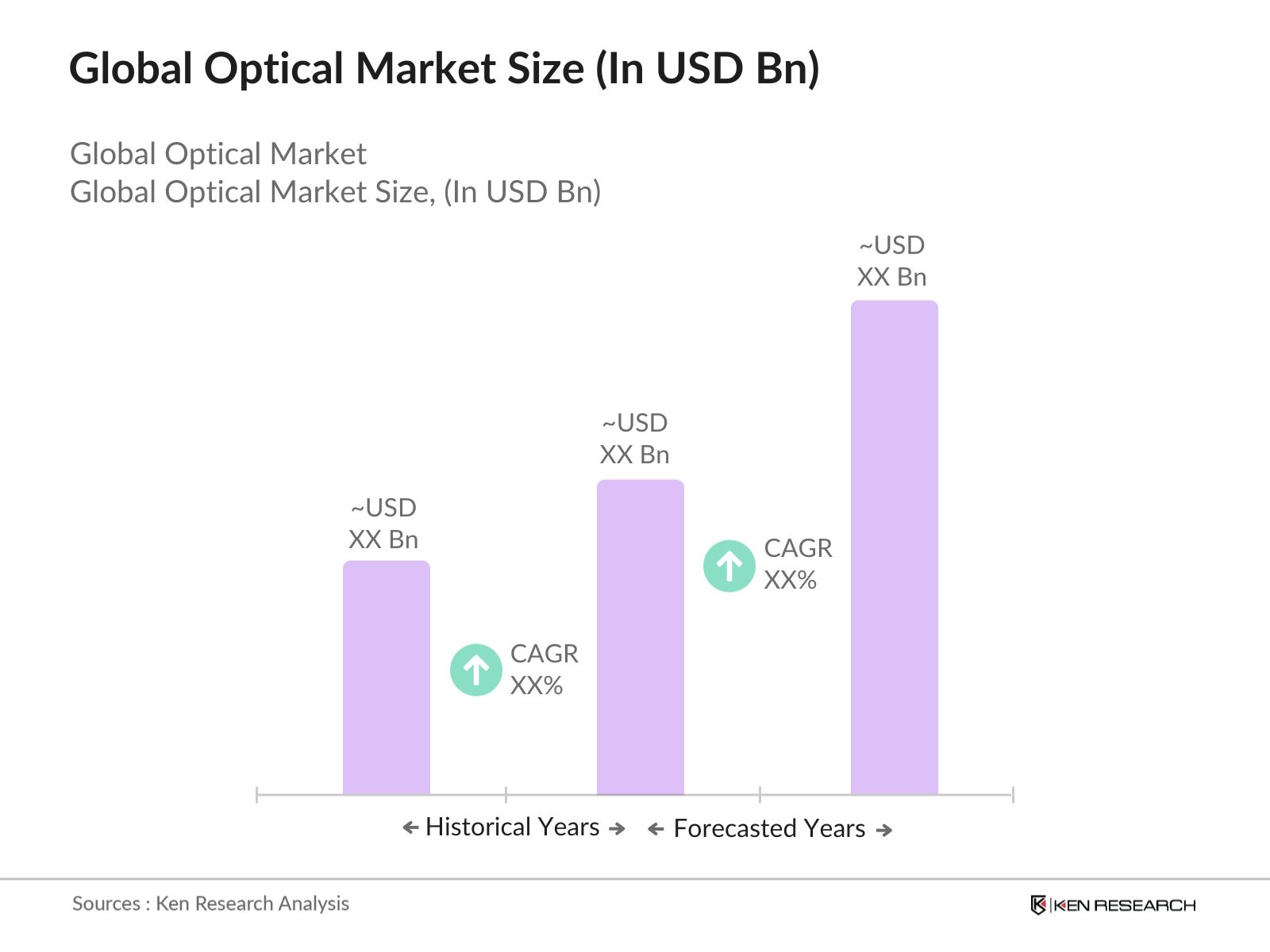
Global Optical Market Size

Global Optical Market Segmentation

By Source: The optical market is segmented into various sources, including glass, plastic, and fiber optics. Among these, the glass segment dominates the market due to its superior optical properties, durability, and versatility in applications ranging from lenses to fiber optic cables. The increasing demand for high-performance optical components in industries such as telecommunications and healthcare has further solidified glass's position as the leading source in the market. Additionally, advancements in glass manufacturing technologies have enhanced its appeal, making it a preferred choice for many applications.
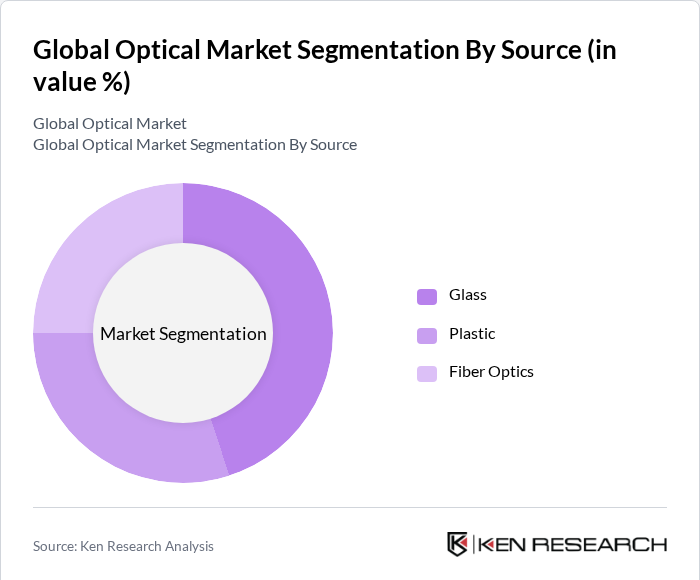
Global Optical Market Share

By Application: The optical market is also segmented by application, including telecommunications, healthcare, consumer electronics, and automotive. The telecommunications segment holds the largest share, driven by the increasing demand for high-speed internet and data transmission. The proliferation of 5G technology and the expansion of fiber optic networks have significantly boosted the need for advanced optical components. Furthermore, the growing trend of smart devices and IoT applications has led to a surge in demand for optical technologies in consumer electronics, making this segment a close competitor in market share.

Global Optical Market Segmentation

Global Optical Market Competitive Landscape

The Global Optical Market is characterized by intense competition among key players such as Corning Incorporated, Nikon Corporation, and Zeiss Group. These companies are known for their innovative optical solutions and significant investments in research and development. The market is moderately concentrated, with a mix of established firms and emerging players striving to capture market share through technological advancements and strategic partnerships.
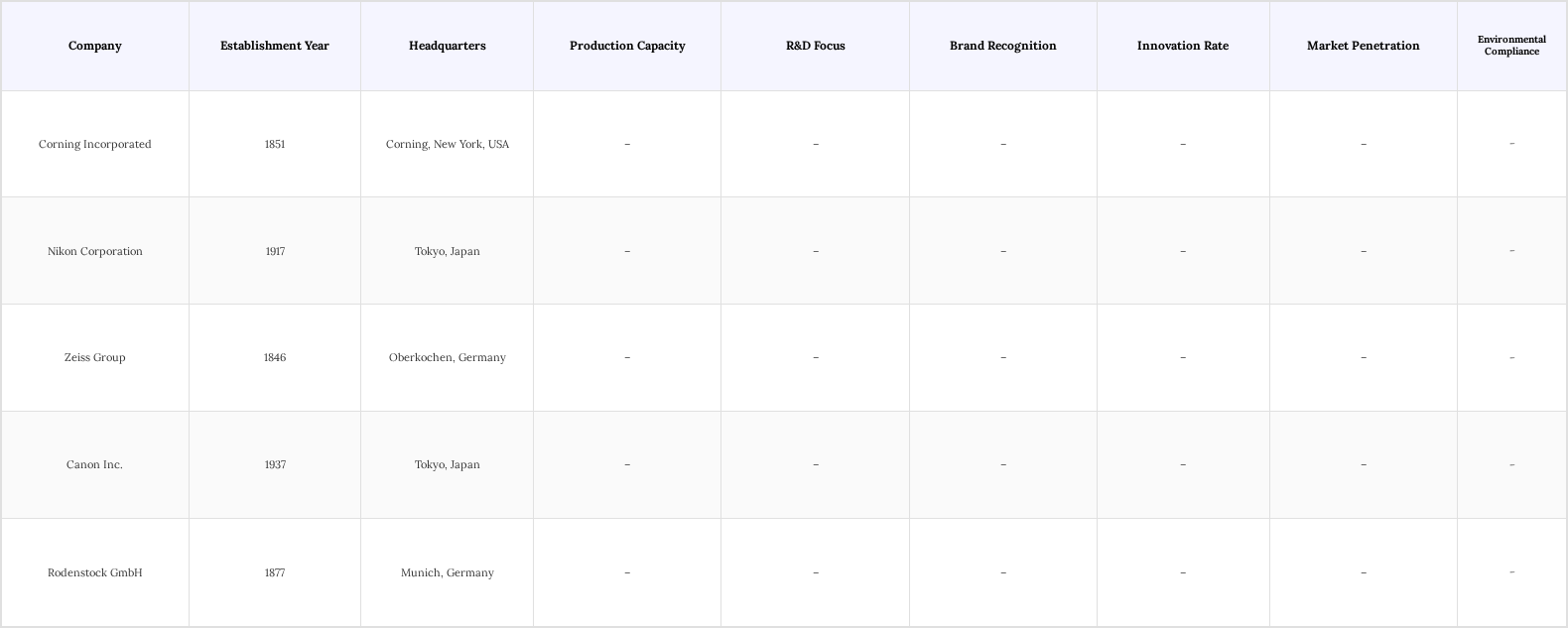
Global Optical Market Players

Global Optical Market Industry Analysis

Growth Drivers

  • Increasing Demand for High-Speed Data Transmission: The growth driver for high-speed data transmission is the rapid expansion of 5G networks, projected to cover about 53% of the global population (4.1 billion people) by 2025, with around 1.8 to 2 billion 5G connections expected worldwide. This expansion, combined with rising internet traffic from cloud computing, streaming, and IoT, fuels demand for advanced optical fiber technologies capable of supporting higher bandwidths and low latency.
  • Advancements in Optical Technologies and Materials: Advancements in optical technologies, including innovations like photonic crystals and metamaterials, are significantly improving device performance. Low-loss optical fibers have reduced signal attenuation by up to 25% versus traditional fibers. These breakthroughs drive market growth, supported by global R&D investments projected to surpass $15 billion by 2025, accelerating the development of next-generation, high-efficiency optical systems.
  • Rising Applications in Healthcare and Consumer Electronics: Rising applications in healthcare are driving optical technology growth through innovations like AI-powered diagnostics, telemedicine, and wearable medical devices that enable real-time monitoring and early disease detection. Advanced imaging and minimally invasive surgical techniques improve patient outcomes, while telehealth expands access. Simultaneously, consumer electronics such as AR and VR devices continue to grow rapidly, boosting demand for sophisticated optical components in both sectors.

Market Challenges

  • High Initial Investment Costs for Optical Infrastructure: Establishing optical networks involves significant capital expenditure, which can be a major deterrent for smaller players aiming to enter the market. These high upfront costs often limit competition and innovation, as many firms struggle to justify or secure the necessary investment. Furthermore, upgrading legacy infrastructure to support emerging technologies adds an additional layer of financial pressure for businesses operating in the optical sector.
  • Rapid Technological Changes Leading to Obsolescence: The optical market is marked by fast-paced technological evolution, leading to the frequent obsolescence of existing systems and products. Companies must continuously invest in research and development to remain competitive. This relentless pace of innovation can place a strain on financial and operational resources, particularly for smaller firms that may lack the capacity to adapt quickly and effectively.

Global Optical Market Future Outlook

The future of the optical market appears promising, driven by the ongoing digital transformation across various sectors. As industries increasingly rely on high-speed data transmission and advanced optical technologies, the market is expected to witness significant growth. Innovations in optical materials and components will likely enhance performance and reduce costs, making optical solutions more accessible. Furthermore, the integration of AI and machine learning into optical systems is anticipated to create new applications, further expanding market potential and driving investment in the sector.

Market Opportunities

  • Expansion of 5G Networks: The expansion of 5G networks is a major growth driver for the optical market. The rollout demands extensive deployment of fiber optic cables to support high-capacity, low-latency data transmission essential for 5G connectivity. By 2025, there will be approximately 1.4 billion 5G connections worldwide, fueling demand for advanced optical infrastructure to handle increased speed and connectivity needs.
  • Growing Demand for Optical Sensors: Growing demand for optical sensors is driven by their critical role in automotive safety systems like ADAS and autonomous driving, where lidar, infrared, and camera-based sensors enable real-time environment detection and navigation. In healthcare, optical sensors enhance wearable devices and diagnostic tools for continuous monitoring and minimally invasive procedures.

Scope of the Report

By Source

Glass

Plastic

Fiber

By Application

Telecommunications

Healthcare

Consumer Electronics

Automotive

By End-User

Residential

Commercial

Industrial

By Region

North America

Europe

Asia-Pacific

Latin America

Middle East & Africa

By Technology

Active Optical Cable

Passive Optical Network

Optical Amplifiers

By Distribution Channel

Online

Offline

Products

Key Target Audience

  • Investors and Venture Capitalist Firms

  • Government and Regulatory Bodies (e.g., Federal Trade Commission, Food and Drug Administration)

  • Manufacturers and Producers

  • Distributors and Retailers

  • Optical Equipment Suppliers

  • Healthcare Providers and Clinics

  • Industry Associations (e.g., Optical Society of America)

  • Financial Institutions

Companies

Players Mentioned in the Report:

  • Corning Incorporated

  • Nikon Corporation

  • Zeiss Group

  • Canon Inc.

  • Rodenstock GmbH

  • Luxottica Group S.p.A.

  • Hoya Corporation

  • EssilorLuxottica

  • Bausch + Lomb

  • Safilo Group S.p.A.

Table of Contents

1. Global Optical Market Overview

1.1. Definition and Scope
1.2. Market Taxonomy
1.3. Market Growth Rate
1.4. Market Segmentation Overview

2. Global Optical Market Size (In USD Bn)

2.1. Historical Market Size
2.2. Year-On-Year Growth Analysis
2.3. Key Market Developments and Milestones

3. Global Optical Market Market Analysis

3.1. Growth Drivers
3.1.1. Increasing demand for high-speed data transmission
3.1.2. Advancements in optical technologies and materials
3.1.3. Rising applications in healthcare and consumer electronics
3.2. Market Challenges
3.2.1. High initial investment costs for optical infrastructure
3.2.2. Rapid technological changes leading to obsolescence
3.2.3. Regulatory hurdles in different regions
3.3. Opportunities
3.3.1. Expansion of 5G networks and IoT applications
3.3.2. Growing demand for optical sensors in various industries
3.3.3. Increasing focus on renewable energy solutions
3.4. Trends
3.4.1. Shift towards miniaturization of optical components
3.4.2. Integration of AI and machine learning in optical systems
3.4.3. Rising popularity of augmented and virtual reality technologies
3.5. Government Regulation
3.5.1. Compliance with international safety standards
3.5.2. Environmental regulations impacting manufacturing processes
3.5.3. Trade policies affecting import/export of optical products
3.5.4. Incentives for research and development in optical technologies
3.6. SWOT Analysis
3.7. Stake Ecosystem
3.8. Porter’s Five Forces
3.9. Competition Ecosystem

4. Global Optical Market Segmentation

4.1. By Source
4.1.1. Glass
4.1.2. Plastic
4.1.3. Fiber

4.2. By Application
4.2.1. Telecommunications
4.2.2. Healthcare
4.2.3. Consumer Electronics
4.2.4. Automotive

4.3. By End-User
4.3.1. Residential
4.3.2. Commercial
4.3.3. Industrial

4.4. By Region
4.4.1. North America
4.4.2. Europe
4.4.3. Asia-Pacific
4.4.4. Latin America
4.4.5. Middle East & Africa

4.5. By Technology
4.5.1. Active Optical Cable
4.5.2. Passive Optical Network
4.5.3. Optical Amplifiers

4.6. By Distribution Channel
4.6.1. Online
4.6.2. Offline

5. Global Optical Market Competitive Analysis

5.1. Detailed Profiles of Major Companies
Corning Incorporated, Nikon Corporation, Zeiss Group, Canon Inc., Rodenstock GmbH, Luxottica Group S.p.A., Hoya Corporation, EssilorLuxottica, Bausch + Lomb, Safilo Group S.p.A.

5.2. Cross Comparison Parameters
5.2.1. Market Share Analysis
5.2.2. Revenue Growth Rate
5.2.3. Product Portfolio Diversity
5.2.4. Geographic Presence
5.2.5. R&D Investment
5.2.6. Customer Satisfaction Ratings
5.2.7. Supply Chain Efficiency
5.2.8. Brand Recognition and Reputation

6. Global Optical Market Regulatory Framework

6.1. Environmental Standards
6.2. Compliance Requirements
6.3. Certification Processes

7. Global Optical Market Future Market Size (In USD Bn)

7.1. Future Market Size Projections
7.2. Key Factors Driving Future Market Growth

8. Global Optical Market Future Market Segmentation

8.1. By Source
8.1.1. Glass
8.1.2. Plastic
8.1.3. Fiber

8.2. By Application
8.2.1. Telecommunications
8.2.2. Healthcare
8.2.3. Consumer Electronics
8.2.4. Automotive

8.3. By End-User
8.3.1. Residential
8.3.2. Commercial
8.3.3. Industrial

8.4. By Region
8.4.1. North America
8.4.2. Europe
8.4.3. Asia-Pacific
8.4.4. Latin America
8.4.5. Middle East & Africa

8.5. By Technology
8.5.1. Active Optical Cable
8.5.2. Passive Optical Network
8.5.3. Optical Amplifiers

8.6. By Distribution Channel
8.6.1. Online
8.6.2. Offline

9. Global Optical Market Analysts’ Recommendations

9.1. TAM/SAM/SOM Analysis
9.2. Customer Cohort Analysis
9.3. Marketing Initiatives
9.4. White Space Opportunity Analysis

Disclaimer Contact Us

Research Methodology

Step 1: Identification of Key Variables

The initial phase involves mapping out the key players and stakeholders in the Global Optical Market. This step relies on extensive desk research, utilizing secondary data sources and proprietary databases to gather relevant industry information. The primary goal is to pinpoint and define the essential variables that drive market trends and dynamics.

Step 2: Market Analysis and Construction

In this phase, we will gather and analyze historical data related to the Global Optical Market. This includes evaluating market penetration rates, the distribution of marketplaces versus service providers, and the resulting revenue streams. Additionally, we will assess service quality metrics to ensure the accuracy and reliability of the revenue projections.

Step 3: Hypothesis Validation and Expert Consultation

Market hypotheses will be formulated and validated through structured interviews with industry experts from various sectors. These consultations will yield critical operational and financial insights, which will be essential for refining and confirming the market data. Engaging with practitioners will enhance the credibility of our findings.

Step 4: Research Synthesis and Final Output

The final phase involves direct discussions with multiple manufacturers to gather in-depth insights into product categories, sales performance, and consumer preferences. This engagement will help validate and enrich the data obtained through the bottom-up approach, ensuring a thorough and accurate analysis of the Global Optical Market.

Frequently Asked Questions

01. How big is the Global Optical Market?

The Global Optical Market is valued at USD XX billion, driven by factors such as increasing demand, technological advancements, and supportive government initiatives.

02. What are the key challenges in the Global Optical Market?

Key challenges in the Global Optical Market include intense competition, regulatory complexities, and infrastructure limitations affecting market dynamics.

03. Who are the major players in the Global Optical Market?

Major players in the Global Optical Market include Corning Incorporated, Nikon Corporation, Zeiss Group, Canon Inc., Rodenstock GmbH, among others.

04. What are the growth drivers for the Global Optical Market?

The primary growth drivers for the Global Optical Market are increasing consumer demand, favorable policies, innovation, and substantial investment inflows.

Why Buy From Us?

RRR
Refine Robust Result (RRR) Framework

What makes us stand out is that our consultants follows Robust, Refine and Result (RRR) methodology. i.e. Robust for clear definitions, approaches and sanity checking, Refine for differentiating respondents facts and opinions and Result for presenting data with story

Our Reach Is Unmatched

We have set a benchmark in the industry by offering our clients with syndicated and customized market research reports featuring coverage of entire market as well as meticulous research and analyst insights.

Research
Shifting the Research Paradigm

While we don't replace traditional research, we flip the method upside down. Our dual approach of Top Bottom & Bottom Top ensures quality deliverable by not just verifying company fundamentals but also looking at the sector and macroeconomic factors.

Insite
More Insights-Better Decisions

With one step in the future, our research team constantly tries to show you the bigger picture. We help with some of the tough questions you may encounter along the way: How is the industry positioned? Best marketing channel? KPI's of competitors? By aligning every element, we help maximize success.

Trust
Transparency and Trust

Our report gives you instant access to the answers and sources that other companies might choose to hide. We elaborate each steps of research methodology we have used and showcase you the sample size to earn your trust.

support
Round the Clock Support

If you need any support, we are here! We pride ourselves on universe strength, data quality, and quick, friendly, and professional service.

Why Client Choose Us?

400000+ Reports in repository
150+ Consulting project a year
100+ Analysts
8000+ Client Queries in 2022