Global Organic Fruits and Vegetables Market Outlook to 2030

Region:Global

Author(s):Navya and Nishika

Product Code:KENGR056

Published On

December 2024

Total pages

89

About the Report

Global Organic Fruits and Vegetables Market Overview

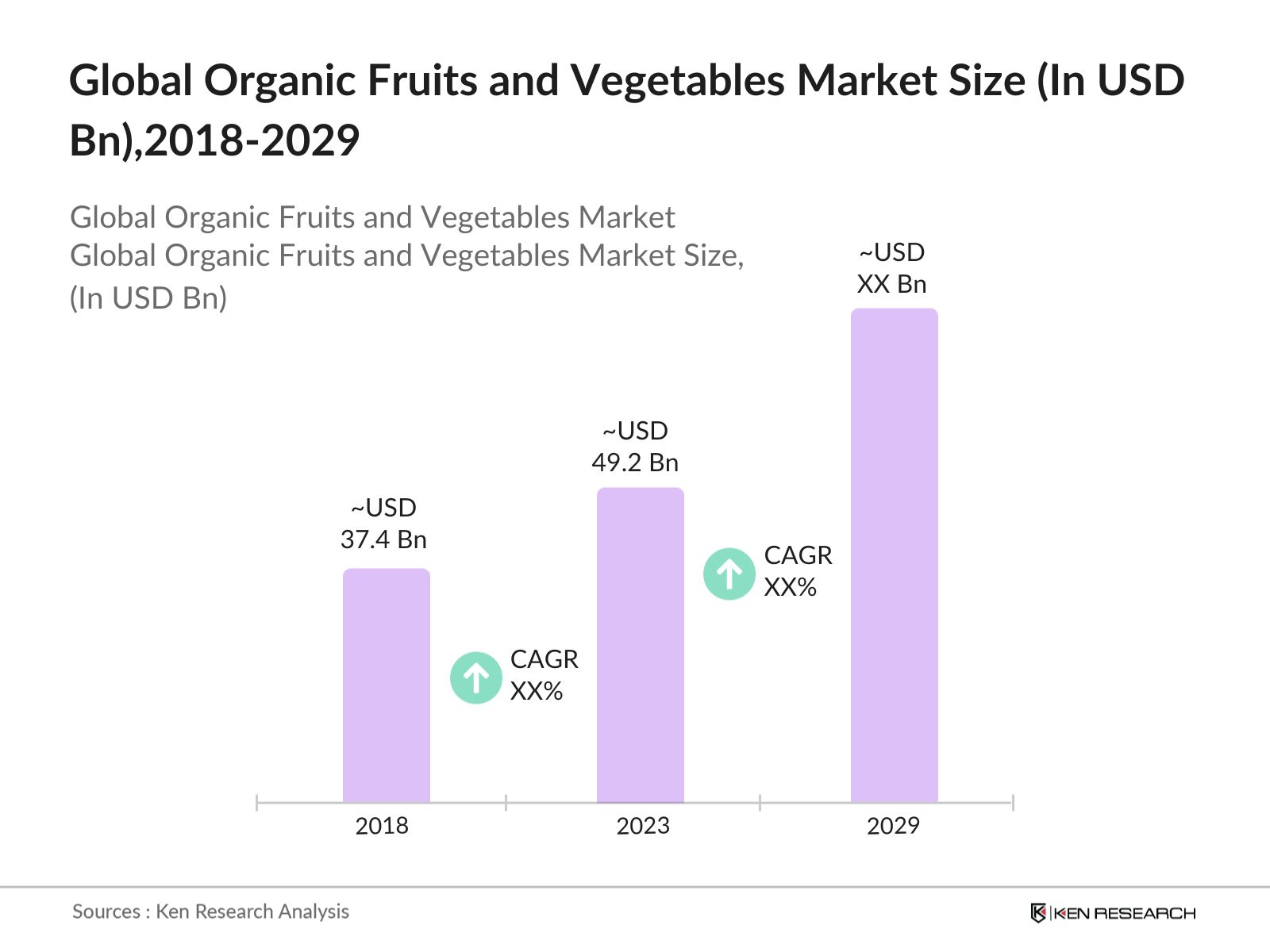
  • The Global Organic Fruits and Vegetables market was valued at USD 49.2 billion in 2023, driven by increasing consumer awareness of health benefits, environmental sustainability, and food safety concerns. The rising inclination towards healthy lifestyles has significantly propelled the demand for organic produce.

Global Organic Fruits and Vegetables Market

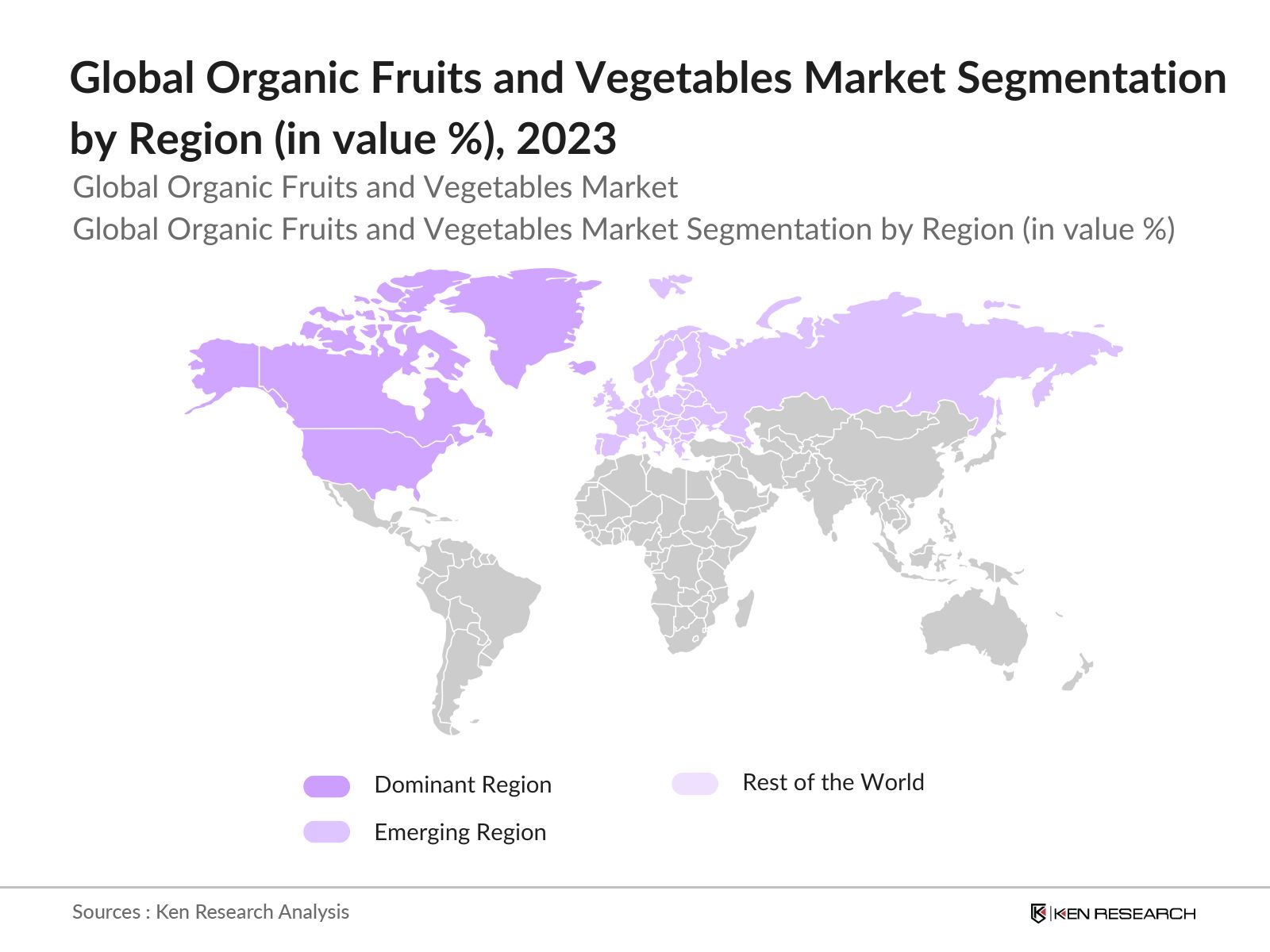
  • North America leads the market of global revenue in 2023. This dominance is attributed to heightened health consciousness, higher disposable incomes, and robust . Additionally, the region's stringent organic farming regulations and certification processes ensure product quality, further boosting consumer trust and demand.
  • The USDA's initiatives, including a $300 million organic transition program, aim to support farmers in adopting organic practices, enhancing sustainability, and strengthening supply chains within the organic sector112. This regulatory framework not only boosts market growth but also aligns with increasing consumer demand for organic products driven by health consciousness and environmental concerns.

Global Organic Fruits and Vegetables Market Segmentation

The Global Organic Fruits and Vegetables Market is segmented by type, form, region etc.
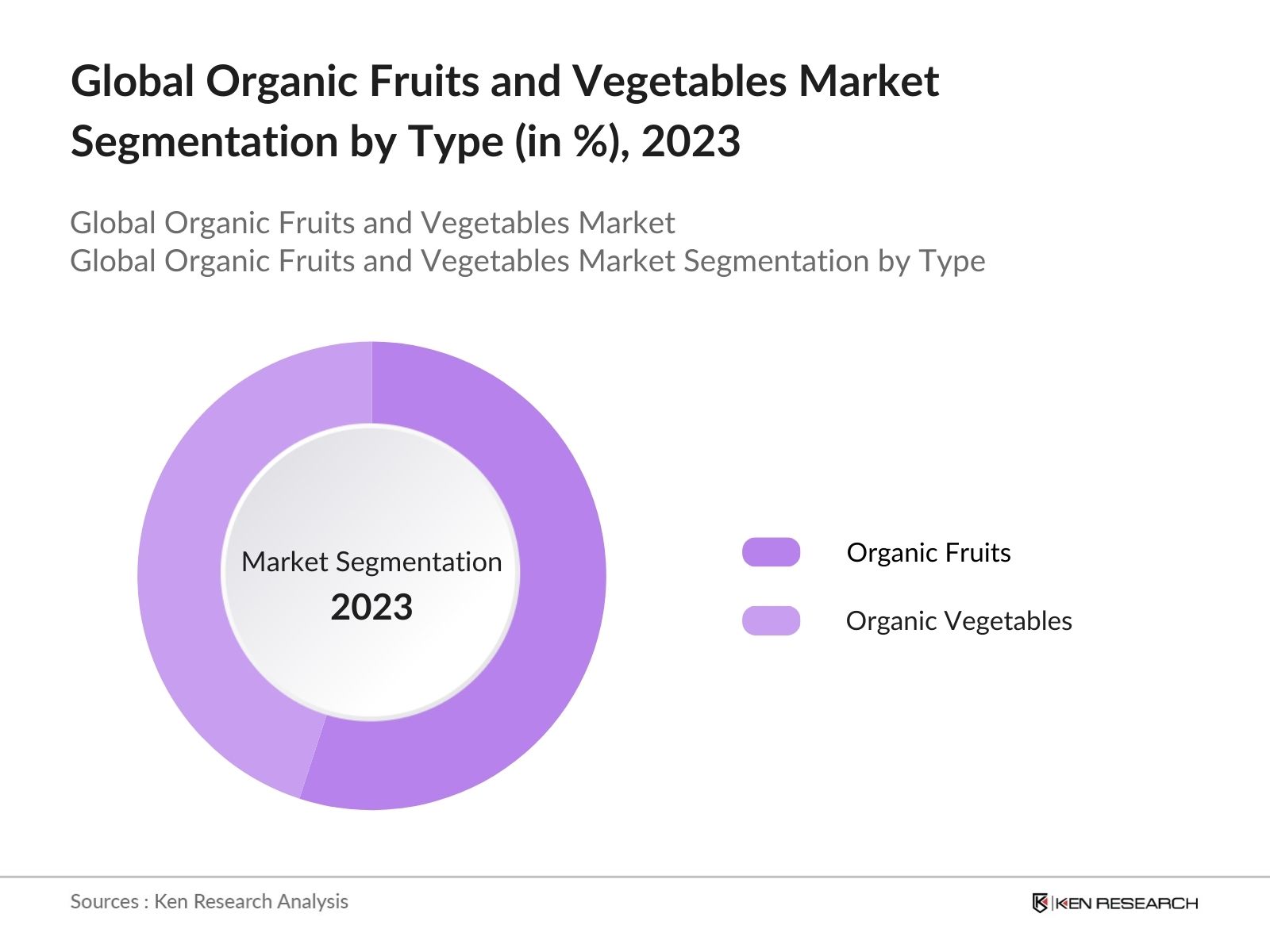
  • By Type: The Global Organic Fruits and Vegetables Market is segmented by type into Fruits and Vegetables. hold a dominant market share due to their widespread consumption and the perception of being healthier alternatives. Fruits like apples, bananas, and berries are staples in many diets, and their organic variants are increasingly preferred for their perceived health benefits and absence of pesticides.

Global Organic Fruits and Vegetables Market Segmentation

  • By region: The Global Organic Fruits and Vegetables Market is segmented by region into North America, Europe, Asia-Pacific, Latin America, and Middle East & Africa. North America's leading position is due to consumer health awareness, higher disposable incomes, and established organic farming practices. The region's well-developed supply chain and retail infrastructure also facilitate the widespread availability of organic produce.

Global Organic Fruits and Vegetables Market Segmentation

  • By Form: The Global Organic Fruits and Vegetables Market is segmented by type into frozen and fresh. Fresh organic produce dominates the market as consumers associate freshness with higher nutritional value and better taste. The farm-to-table movement and the availability of fresh produce in local markets contribute to this segment's prominence.

Global Organic Fruits and Vegetables Market Competitive Landscape

Global Organic Fruits and Vegetables Market Competitive Landscape

Global Organic Fruits and Vegetables Industry Analysis

Market Growth Drivers

  • Increasing Health and Wellness Trends: The rising consumer focus on health and nutrition is a major driver of the organic fruits and vegetables market. As more individuals become aware of the health benefits associated with organic produce such as higher nutrient content and lower pesticide residues demand has surged. This trend is further supported by the global increase in organic food sales, which reached $134 billion in 2022, indicating a growing preference for organic options among consumers
  • Growing Environmental Awareness: Consumers are increasingly prioritizing sustainability and the environmental impact of their food choices. Organic farming, which eliminates synthetic pesticides and fosters biodiversity, appeals to environmentally conscious shoppers, thereby fueling market growth. In 2022, 43% of consumers in Europe reported selecting organic products primarily due to environmental concerns, according to the European Commission.
  • Government Policies and Subsidies for Organic Farming: Governments around the world are providing various incentives, subsidies, and regulatory support to promote organic farming practices. This support has resulted in increased organic production and greater market availability. For instance, the European Unions Farm to Fork Strategy aims for 25% of EU farmland to be dedicated to organic farming by 2030, supported by policy initiatives and financial aid. Additionally, in India, the government offers a subsidy of INR 31,000 per hectare for organic farming through the .

Market Challenges

  • Inflation and Rising Food Prices: One of the primary challenges impacting the organic fruits and vegetables market is inflation, which has led to increased food prices globally. The cost of organic farming is inherently higher due to labor-intensive practices and the absence of synthetic fertilizers and pesticides. As a result, organic products often come with a premium price tag. For example, in 2021, organic food was reported to cost approximately 7.5% more than conventional options, with an average price difference of $0.24 per item 2. This price disparity can deter price-sensitive consumers, limiting market penetration.
  • Competition from Other "Health" Labels: The organic fruits and vegetables sector also faces intense competition from other health-focused labels that do not adhere to the stringent standards of organic certification. Products marketed as "natural," "non-GMO," or "gluten-free" often attract health-conscious consumers who may not differentiate between these labels and certified organic produce. This competition can dilute the market share of organic products.


Global Organic Fruits and Vegetables Future Market Outlook

Over the next five years, the global organic fruits and vegetables market will experience advancing growth reaching a market size of USD 75.5 Bn by 2029. Factors such as increasing consumer demand for chemical-free produce, government support for organic farming, and advancements in organic farming technologies are anticipated to drive this expansion. Additionally, the rise of e-commerce platforms will enhance market accessibility and consumer reach.
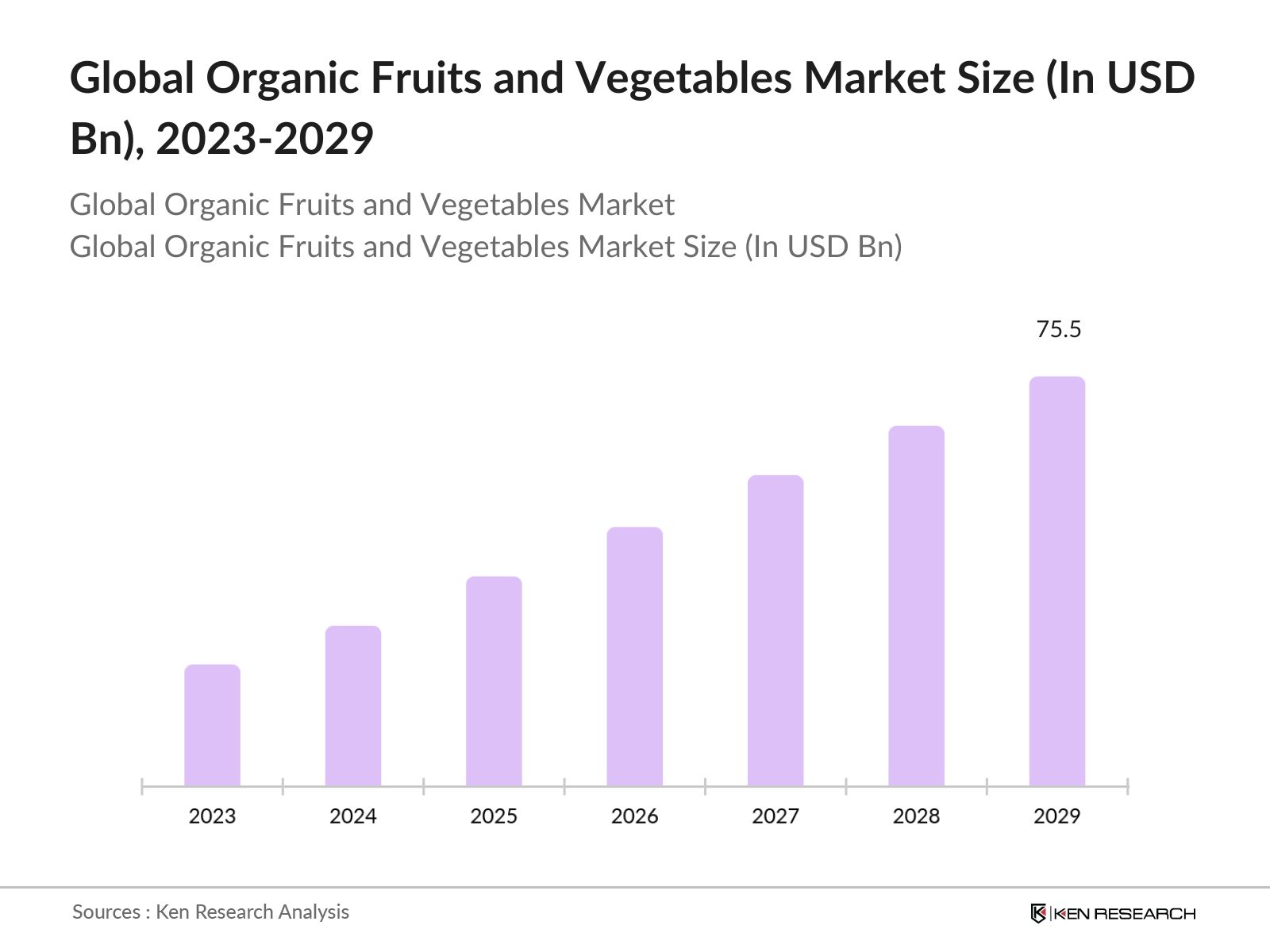
Global Organic Fruits and Vegetables Future Market Outlook

Market opportunities

  • Growing Demand for Local and Seasonal Organic Produce: Consumers are increasingly prioritizing locally sourced and seasonal organic produce as a way to support sustainability and minimize their carbon footprints. This trend presents a significant opportunity for the future of the organic market. In the United States, local organic farming initiatives, such asFarmers Markets, have gained considerable traction, with the number of farmers markets surpassing8,700in2023.
  • Expansion of Organic Offerings in Mainstream Retail: Major retail chains are actively expanding their organic product offerings to capitalize on the growing consumer demand for organic foods. For instance, Walmart has significantly enhanced its selection of organic produce, boasting over1,200organic items available in its stores as of2023. This trend is mirrored in Europe, where Carrefour has pledged to make30%of its fresh produce organic by2025.

Scope of the Report

By Type             

 Organic Fruits

 Organic Vegetables

By Form            

 Fresh

 Frozen

By Region        

 North America

 Europe

Asia Pacific (APAC)

 Latin America

 Middle East & Africa (MEA)

By Distribution Channel

 Supermarkets/Hypermarkets

 Grocery Stores

 Online Sales Channels

By End User

 Residential

 Commercial

Products

Key Target Audience

  • Organic Produce Retailers

  • Organic Farmers and Growers

  • Food and Beverage Manufacturers

  • Health and Wellness Companies

  • Importers and Exporters of Organic Produce

  • Investor and Venture Capitalist Firms

  • Government and Regulatory Bodies (e.g., USDA, European Commission)

  • Organic Certification Agencies

Companies

Players mentioned in the report

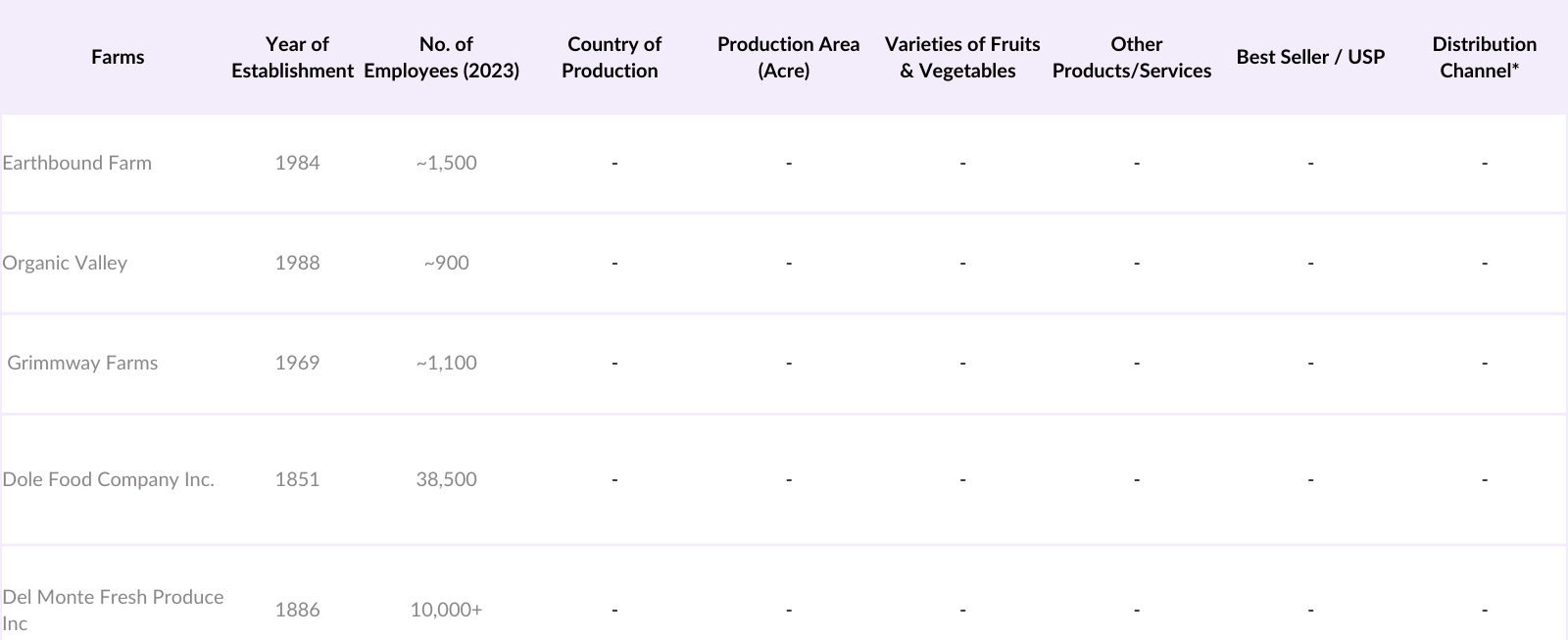
  • Earthbound Farm

  • Organic Valley

  • Grimmway Farms

  • Dole Food Company Inc.

  • Del Monte Fresh Produce Inc

  • General Mills Inc.

  • Eckert's family farms

  • Riverford Organic Farmers

  • PlantAge eG

  • Emirates Bio Farm

Table of Contents

1. Executive Summary

1.1 Global Fruits and Vegetables Market

1.2 Global Organic Fruits and Vegetables Market

2. Global Overview

2.1 Overview of Global Economics

2.2 Overview of the Global Fruits and Vegetables Industry

2.3 Global Fruits and Vegetables Market Revenue

2.4 Global Organic Fruits and Vegetables Infrastructure

3. Global Organic Fruits and Vegetables Market Overview

3.1 Ecosystem

3.2 Value Chain

3.3 Case Study

4. Global Organic Fruits and Vegetables Market Size (in USD Bn), 2018-2023

5. Global Organic Fruits and Vegetables Market Segmentation (in value %), 2018-2023

5.1 By Region (North America, Europe, APAC, Latin America, and MEA) in value %, 2018-2023

5.2 By Type (Fruits and Vegetables) in value %, 2018-2023

5.3 By Form (frozen and fresh), in value %, 2018-2023

5.4 By Distribution Channel (Supermarkets/Hypermarkets, Grocery Stores, Online Sales Channels) in Value %, 2018-2023

5.5 By End User (Residential, Commercial) in value %, 2018-2023

6. Global Organic Fruits and Vegetables Market Competition Landscape

6.1 Market Share Analysis

6.2 Market Heat Map Analysis (By Technology)

6.3 Market Heat Map Analysis (By Offerings)

6.4 Market Cross Comparison

6.5 Comparison Matrix

6.6 Investment Landscape

7. Global Organic Fruits and Vegetables Market Dynamics

7.1 Growth Drivers

7.2 Challenges

7.3 Trends

7.4 Case Studies

7.5 Strategic Initiatives

8. Global Organic Fruits and Vegetables Future Market Size (in USD Bn), 2023-2030

9. Global Organic Fruits and Vegetables Future Market Segmentation (in value %), 2023-2029

9.1 By Region (North America, Europe, APAC, Latin America, and MEA) in value %, 2023-2029

9.2 By Type (Fruits and Vegetables) in value %, 2023-2029

9.3 By Form (frozen and fresh), in value %, 2023-2029

9.4 By Distribution Channel (Supermarkets/Hypermarkets, Grocery Stores, Online Sales Channels) in Value %, 2023-2029

9.5 By End User (Residential, Commercial) in value %, 2023-2029

10. Analyst Recommendations

11. Research Methodology

11.1 Market Definitions and Assumptions

11.2 Abbreviations

11.3 Market Sizing Approach

11.4 Consolidated Research Approach

11.5 Understanding Market Potential Through In-Depth Industry Interviews

11.6 Primary Research Approach

11.7 Limitations and Future Conclusion

Disclaimer

Contact Us

Research Methodology

Step 1: Secondary Resources

Secondary Resources focuses on identifying key players, revenue, product offerings, and sales data using government reports from the Ministry of Health, Ministry of Agriculture, and Ministry of Commerce, as well as official company reports, investor presentations, and releases from organic farming associations. Public and proprietary databases such as F&S, Euromonitor, Statista, and McKinsey are utilized for market sizing, industry analysis, and forecasts.

Step 2: Validation via Trade Desk Interviews

This Validation aims to confirm market revenue, margins, segmentations, distribution, and future projections through interviews with producers/suppliers (30+ respondents, e.g., Owners, Production Managers, Farm Managers, 40-45 minutes), distributors (25+ respondents, e.g., Business Development and Supply Chain Managers, 30-35 minutes), industry experts (15+ respondents, e.g., Organic Farming Consultants, Investors, 30 minutes), and regulatory bodies (10+ respondents, 25-30 minutes).

Step 3: Proxy Modeling & Outcomes

Proxy Modeling & Outcomes employs a bottom-up approach to calculate revenue by analyzing sales data from historic and base years. Disguised interviews with managers provide insights into operational and financial performance, validating top management data to ensure accuracy and reliability. This multi-step methodology delivers a comprehensive and validated analysis of the organic fruits and vegetables market.

Frequently Asked Questions

01. How big is the global organic fruits and vegetables market?

The global organic fruits and vegetables market was valued at USD 49.2 billion in 2023, driven by increasing consumer preference for chemical-free produce and environmental sustainability.

02. What are the key growth drivers in the global organic fruits and vegetables market?

Key growth drivers in the global organic fruits and vegetables market include rising consumer health consciousness, government incentives for organic farming, increasing disposable incomes, and the growing adoption of organic food through online and offline retail channels.

03. What are the challenges in the global organic fruits and vegetables market?

Challenges in the global organic fruits and vegetables market include the higher cost of organic products compared to conventional alternatives, logistical complexities in maintaining product freshness, and limited availability in some regions.

04. Who are the major players in the global organic fruits and vegetables market?

Major players in the global organic fruits and vegetables market include DanoneWave Holding B.V., The Kraft Heinz Company, General Mills Inc., Kellogg Company, and Campbell Soup Company. These companies dominate due to their extensive distribution networks and strong brand positioning.

05. Which region dominates the global organic fruits and vegetables market?

North America leads the in the global organic fruits and vegetables market, driven by strong consumer demand, high disposable incomes, and stringent organic farming regulations. The well-established retail infrastructure in the region further supports its dominance.

Why Buy From Us?

RRR
Refine Robust Result (RRR) Framework

What makes us stand out is that our consultants follows Robust, Refine and Result (RRR) methodology. i.e. Robust for clear definitions, approaches and sanity checking, Refine for differentiating respondents facts and opinions and Result for presenting data with story

Our Reach Is Unmatched

We have set a benchmark in the industry by offering our clients with syndicated and customized market research reports featuring coverage of entire market as well as meticulous research and analyst insights.

Research
Shifting the Research Paradigm

While we don't replace traditional research, we flip the method upside down. Our dual approach of Top Bottom & Bottom Top ensures quality deliverable by not just verifying company fundamentals but also looking at the sector and macroeconomic factors.

Insite
More Insights-Better Decisions

With one step in the future, our research team constantly tries to show you the bigger picture. We help with some of the tough questions you may encounter along the way: How is the industry positioned? Best marketing channel? KPI's of competitors? By aligning every element, we help maximize success.

Trust
Transparency and Trust

Our report gives you instant access to the answers and sources that other companies might choose to hide. We elaborate each steps of research methodology we have used and showcase you the sample size to earn your trust.

support
Round the Clock Support

If you need any support, we are here! We pride ourselves on universe strength, data quality, and quick, friendly, and professional service.

Why Client Choose Us?

400000+ Reports in repository
150+ Consulting project a year
100+ Analysts
8000+ Client Queries in 2022