
Global Oriented Strand Board Market Outlook to 2030
Region:Global
Author(s):Vijay Kumar
Product Code:KROD9249
Region:Global
Author(s):Vijay Kumar
Product Code:KROD9249
November 2024
96
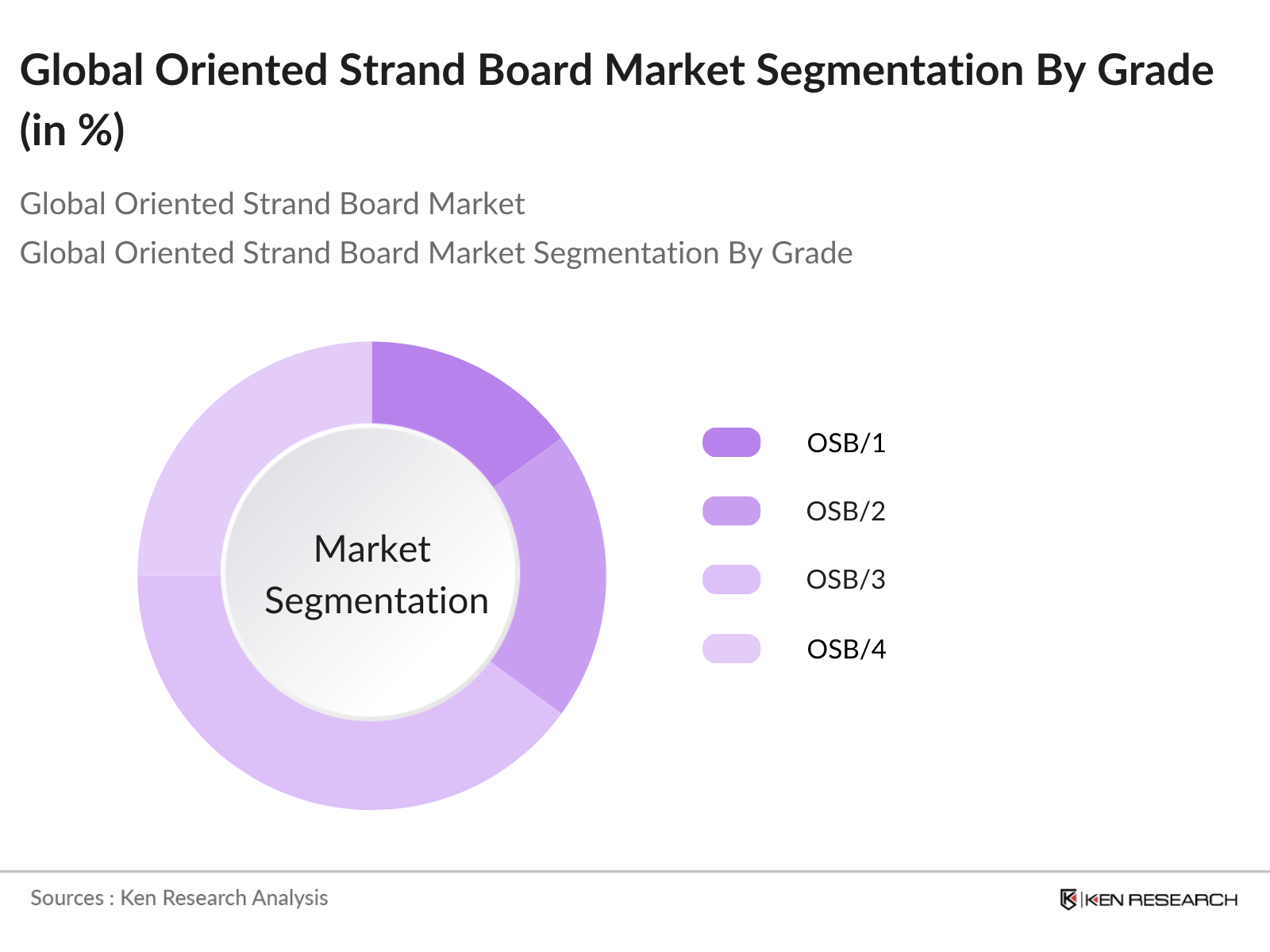
By Grade: The market is segmented by grade, including OSB/1, OSB/2, OSB/3, and OSB/4. OSB/3 holds a leading market share due to its versatility and suitability for load-bearing uses in humid environments. Its use in construction applications, particularly in floors and roofs, gives it a clear advantage, especially in regions with variable climate conditions. OSB/3s balance of cost-effectiveness and durability enhances its preference in commercial projects.
By Application: By application, the OSB market includes segments like construction, furniture manufacturing, and industrial packaging. Construction dominates due to the wide use of OSB in flooring, roofing, and wall sheathing. Its structural strength and lower cost make OSB a staple in residential and commercial construction. In industrial packaging, OSBs robust nature and availability contribute to steady growth.
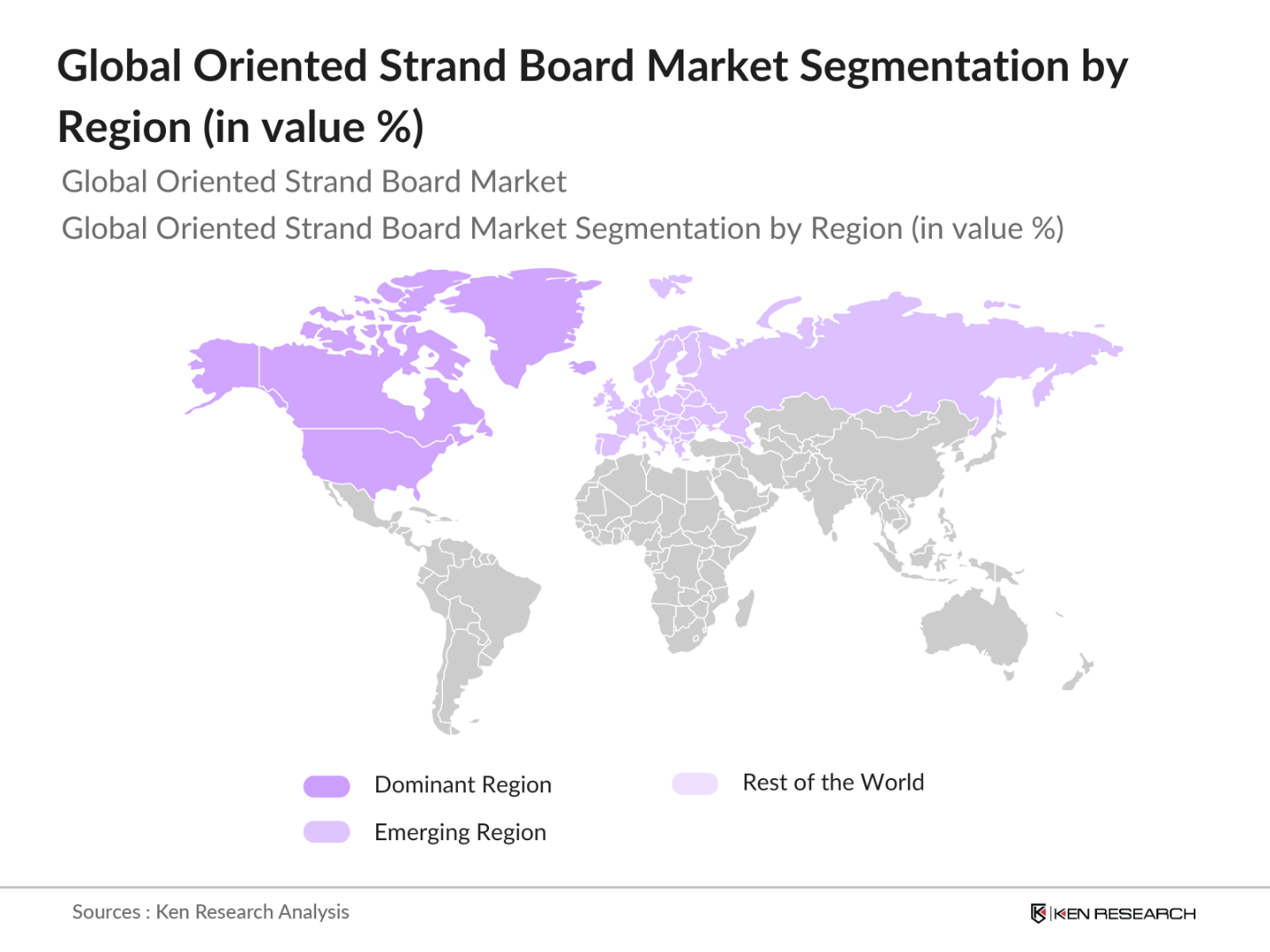
By Region: The OSB market is regionally segmented into North America, Europe, Asia-Pacific, Latin America, and the Middle East & Africa. North America leads due to high construction activity and growing environmental awareness. Asia-Pacific is emerging as a high-growth region, with demand spurred by increasing construction projects in China and India, where OSB is replacing conventional wood panels.
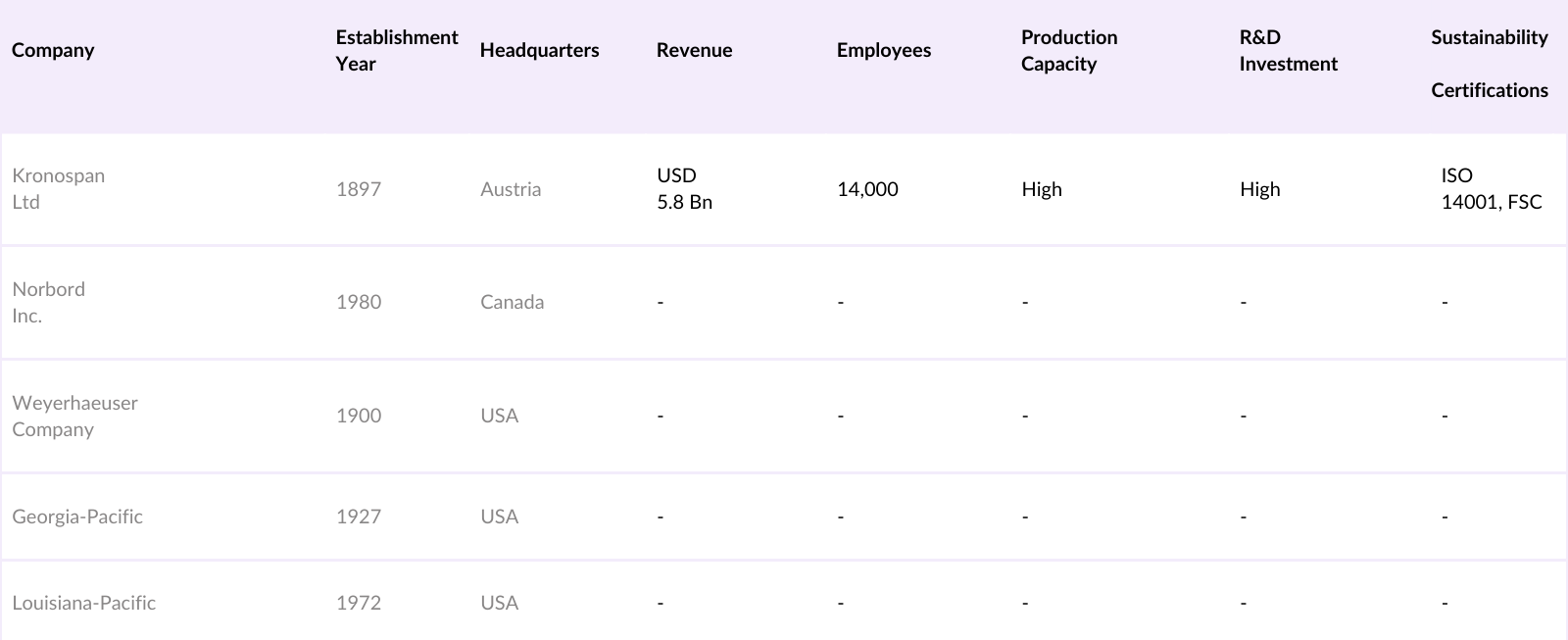
The OSB market is dominated by a few key players with robust production capabilities and significant geographical reach. These companies focus on sustainable practices, efficient production technologies, and innovative product development to maintain their market position.
Over the next few years, the OSB market is projected to grow due to the rising global demand for sustainable building materials. The increase in construction activities across developing countries, alongside a shift toward modular building techniques, will continue driving OSB consumption. Furthermore, innovations in OSB composition to improve durability and environmental certifications are expected to enhance its appeal among eco-conscious customers and stakeholders.
|
By Grade |
OSB/1 OSB/2 OSB/3 OSB/4 |
|
By Application |
Construction Furniture Manufacturing Industrial Packaging |
|
By End-Use |
Residential Commercial Industrial |
|
By Distribution Channel |
Direct Sales Retail Stores Online Sales |
|
By Region |
North America Europe Asia-Pacific Latin America Middle East & Africa |
1.1 Definition and Scope
1.2 Market Taxonomy
1.3 Key Market Dynamics
1.4 Market Segmentation Overview
2.1 Historical Market Size
2.2 Year-On-Year Growth Analysis
2.3 Market Milestones and Key Developments
3.1 Growth Drivers
3.1.1 Rising Demand from the Construction Sector (Construction Demand)
3.1.2 Shift to Sustainable Wood Products (Sustainability Trends)
3.1.3 Cost-Effectiveness of OSB vs. Plywood (Cost Efficiency)
3.2 Market Challenges
3.2.1 Fluctuating Raw Material Costs (Wood and Resin Supply)
3.2.2 Environmental Concerns and Regulations (Regulatory Challenges)
3.2.3 Limited Awareness in Developing Regions (Market Penetration)
3.3 Opportunities
3.3.1 Growing Residential Construction (Residential Sector)
3.3.2 Rising Use in Furniture Manufacturing (Furniture Applications)
3.3.3 Increasing Industrial Applications (Industrial Expansion)
3.4 Trends
3.4.1 Advancements in Resin Technologies (Technology Innovation)
3.4.2 OSB as a Substitute for Traditional Materials (Material Substitution)
3.4.3 Focus on Eco-Friendly Manufacturing Processes (Eco-Friendly Manufacturing)
3.5 Government Regulations
3.5.1 Emission Standards and Certifications (Environmental Compliance)
3.5.2 Building Code Compliance (Construction Codes)
3.5.3 Import-Export Regulations (Trade Policies)
3.6 Competitive Analysis
3.6.1 Competitive Ecosystem Overview
3.6.2 Key Market Players and Their Offerings
4.1 By Grade (in Value %)
4.1.1 OSB/1
4.1.2 OSB/2
4.1.3 OSB/3
4.1.4 OSB/4
4.2 By Application (in Value %)
4.2.1 Construction
4.2.2 Furniture Manufacturing
4.2.3 Industrial Packaging
4.3 By End-Use (in Value %)
4.3.1 Residential
4.3.2 Commercial
4.3.3 Industrial
4.4 By Distribution Channel (in Value %)
4.4.1 Direct Sales
4.4.2 Retail Stores
4.4.3 Online Sales
4.5 By Region (in Value %)
4.5.1 North America
4.5.2 Europe
4.5.3 Asia-Pacific
4.5.4 Latin America
4.5.5 Middle East & Africa
5.1 Detailed Profiles of Major Companies
5.1.1 Kronospan Ltd
5.1.2 Norbord Inc.
5.1.3 Weyerhaeuser Company
5.1.4 Georgia-Pacific
5.1.5 Louisiana-Pacific Corporation
5.1.6 Huber Engineered Woods LLC
5.1.7 Sonae Arauco
5.1.8 West Fraser Timber Co. Ltd
5.1.9 Egger Group
5.1.10 Tolko Industries Ltd
5.1.11 Martco L.L.C.
5.1.12 Pfleiderer Group
5.1.13 Swiss Krono Group
5.1.14 Swedspan Ltd.
5.1.15 Coillte Panel Products
5.2 Cross Comparison Parameters (Production Capacity, Sales Network, Revenue, Market Positioning, Environmental Certifications, Technological Innovations, Customer Base, Product Portfolio)
5.3 Market Share Analysis
5.4 Strategic Initiatives and Market Presence
5.5 Mergers & Acquisitions
5.6 Investment and Funding Overview
6.1 Environmental Standards and Certifications
6.2 Trade and Import/Export Policies
6.3 Industry Standards Compliance
7.1 Future Market Size Projections
7.2 Key Factors Driving Future Market Growth
9.1 By Grade (in Value %)
9.2 By Application (in Value %)
9.3 By End-Use (in Value %)
9.4 By Distribution Channel (in Value %)
9.5 By Region (in Value %)
9.1 Total Addressable Market Analysis
9.2 Customer Segment Analysis
9.3 Marketing Strategy Recommendations
9.4 White Space and New Product Opportunities
The initial phase involves identifying core variables in the OSB market, including key demand drivers, raw material supply chains, and major stakeholders, through secondary data collection from credible industry publications.
This phase includes historical data analysis of OSB production and applications across segments, supplemented by market size assessments and growth analysis to form a reliable revenue model.
Industry experts are consulted via telephonic and web-based interviews to validate market hypotheses, gather real-time insights, and cross-check data accuracy for OSB market trends and competitive landscape.
This final stage synthesizes findings from data collection and expert consultations, presenting a validated analysis of the OSB market, with special emphasis on product innovations and emerging geographical trends.
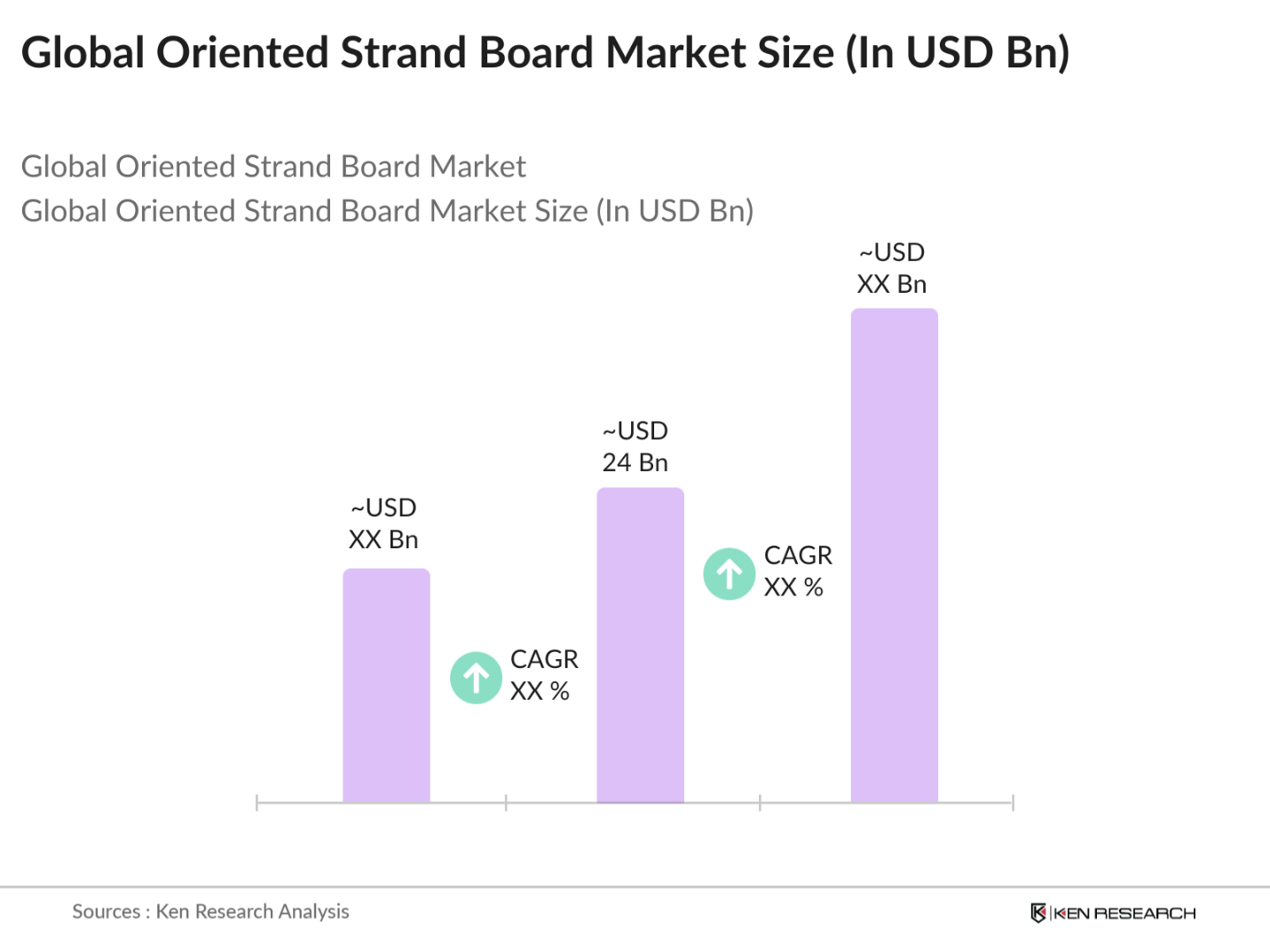
The Global Oriented Strand Board (OSB) market is valued at USD 24 billion, based on a five-year historical analysis. The markets growth is fueled by the rising demand in the construction industry, particularly for sustainable and cost-effective building materials.
Key challenges include fluctuating raw material prices, strict environmental regulations, and market competition from plywood.
Major players include Kronospan, Norbord, Weyerhaeuser, Georgia-Pacific, and Louisiana-Pacific, each with a strong distribution network and advanced production capabilities.
Growth is primarily driven by the increase in residential and commercial construction, preference for eco-friendly materials, and cost benefits over plywood.

What makes us stand out is that our consultants follows Robust, Refine and Result (RRR) methodology. i.e. Robust for clear definitions, approaches and sanity checking, Refine for differentiating respondents facts and opinions and Result for presenting data with story

We have set a benchmark in the industry by offering our clients with syndicated and customized market research reports featuring coverage of entire market as well as meticulous research and analyst insights.

While we don't replace traditional research, we flip the method upside down. Our dual approach of Top Bottom & Bottom Top ensures quality deliverable by not just verifying company fundamentals but also looking at the sector and macroeconomic factors.

With one step in the future, our research team constantly tries to show you the bigger picture. We help with some of the tough questions you may encounter along the way: How is the industry positioned? Best marketing channel? KPI's of competitors? By aligning every element, we help maximize success.

Our report gives you instant access to the answers and sources that other companies might choose to hide. We elaborate each steps of research methodology we have used and showcase you the sample size to earn your trust.

If you need any support, we are here! We pride ourselves on universe strength, data quality, and quick, friendly, and professional service.