















Global Oxygen-Free Copper Market Outlook to 2030
Region:Global
Author(s):Abhinav kumar
Product Code:KROD7409
December 2024
86
About the Report
Global Oxygen-Free Copper Market Overview
- The global oxygen-free copper market is valued at approximately USD 40 billion, based on a five-year historical analysis. This market is driven primarily by the demand from the electrical and electronics industries, where high-purity copper is essential for conductivity and corrosion resistance. Increasing applications in aerospace, automotive, and renewable energy industries are also contributing to the markets growth. Copper's superior properties, such as electrical conductivity and corrosion resistance, are critical factors in driving demand across these industries.
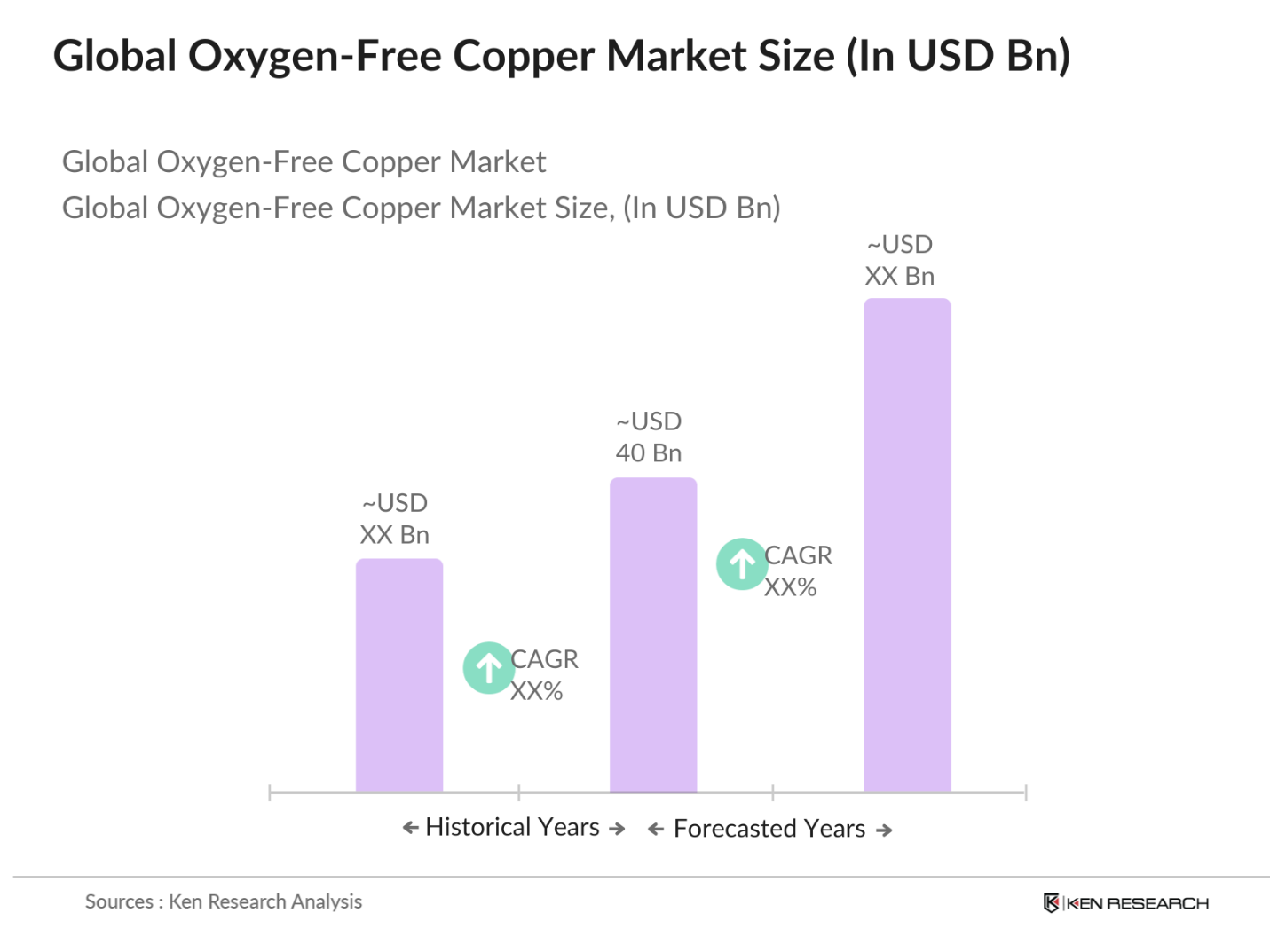
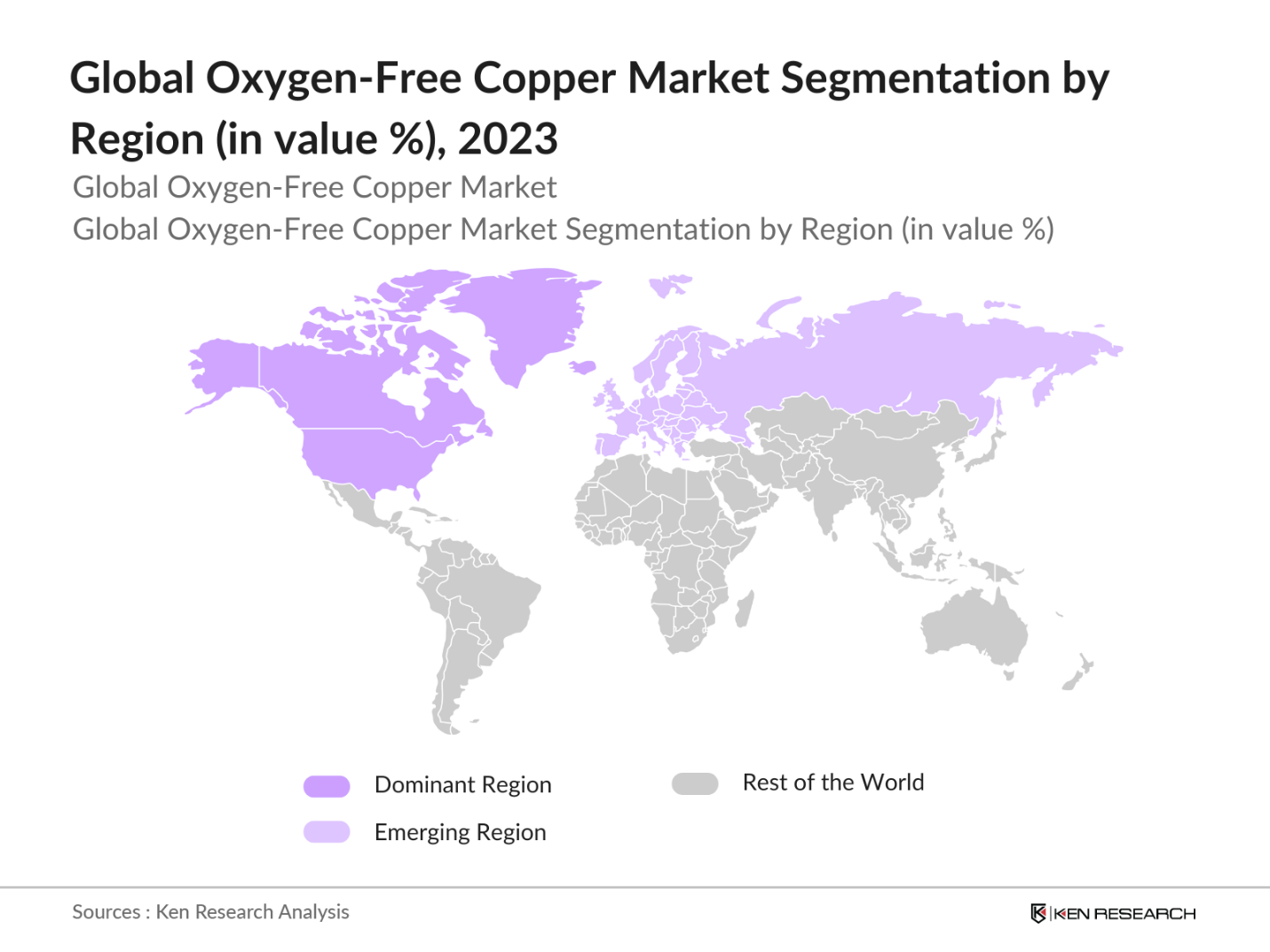
- Countries like China, Japan, and the United States dominate the global oxygen-free copper market due to their established electronics and semiconductor manufacturing sectors. China and Japan are leading producers of semiconductors, which require high-purity copper. The United States benefits from its robust aerospace and defense industries, where oxygen-free copper is used in high-precision applications. The dominance of these regions stems from their technological advancements and investments in high-end manufacturing processes.
- Stricter emission standards for copper smelting are being enforced by global environmental regulatory bodies, especially in regions like the European Union and the United States. The U.S. Environmental Protection Agency (EPA) introduced new rules in 2023 to limit sulfur dioxide and particulate emissions from copper smelting operations. These regulations are pushing companies to adopt cleaner technologies, such as hydrometallurgical refining processes, which reduce emissions by nearly 70%. Such regulations are reshaping the industry, compelling producers to innovate while meeting environmental compliance requirements.
Global Oxygen-Free Copper Market Segmentation
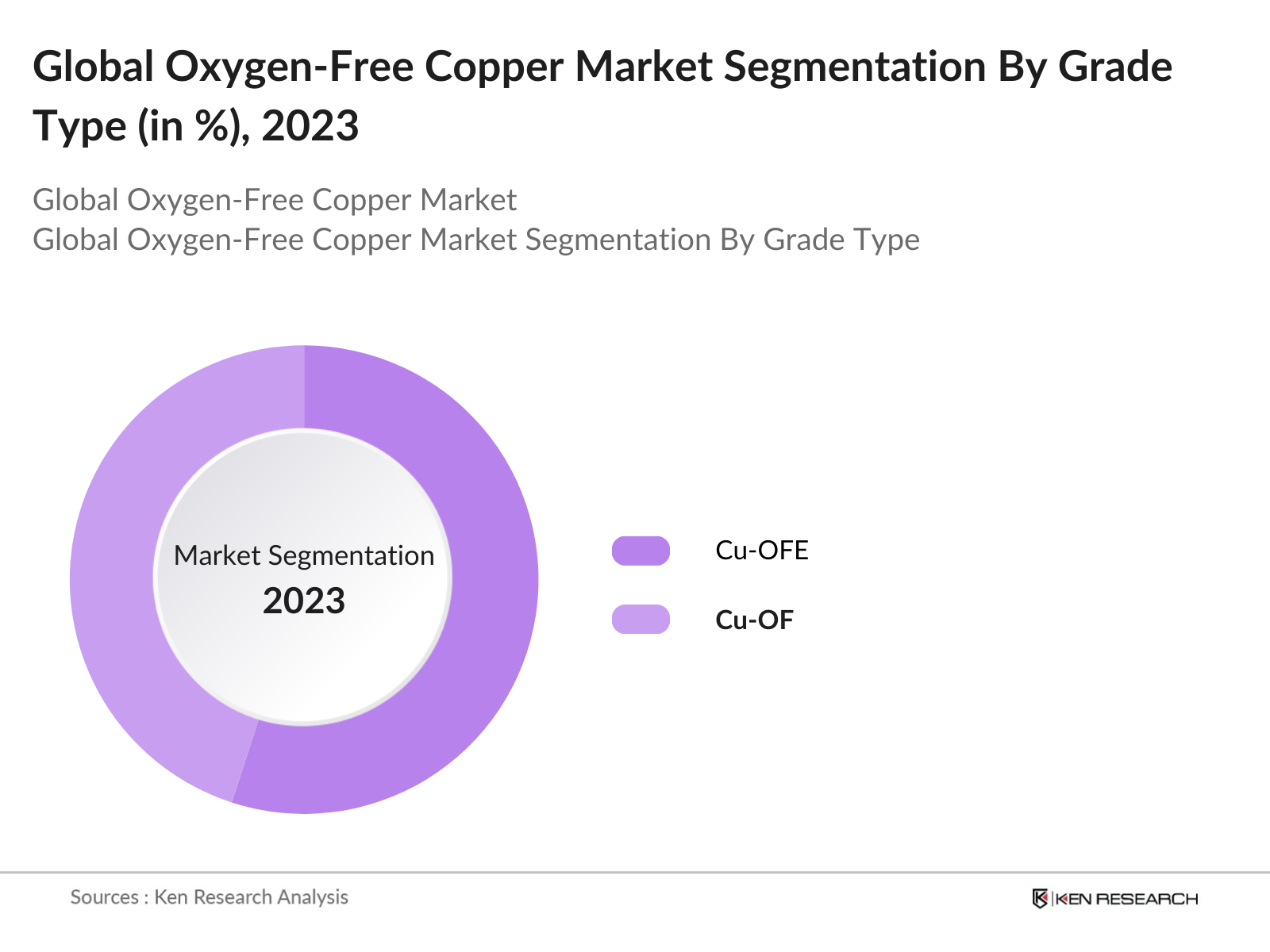
By Grade: The global oxygen-free copper market is segmented by grade into Cu-OF (Oxygen-Free Copper) and Cu-OFE (Oxygen-Free Electronic Copper). Cu-OFE holds a dominant share in the market due to its higher purity levels, which make it ideal for critical applications in electronics, aerospace, and high-frequency communications. This segment has a robust presence in sectors requiring ultra-pure materials for precise applications. The higher demand for Cu-OFE is due to its superior properties, including high conductivity and resistance to oxidation, which are essential in manufacturing semiconductors and other sensitive electronic components.
By Region: Geographically, the oxygen-free copper market is segmented into North America, Europe, Asia Pacific, Latin America, and the Middle East & Africa. Asia Pacific holds the largest market share due to the strong presence of electronics and semiconductor manufacturing industries in countries like China, Japan, and South Korea. Europe and North America also contribute significantly due to high demand in aerospace, defense, and automotive applications. The Middle East & Africa are emerging markets with a focus on industrial applications.
By Application: The global oxygen-free copper market is also segmented by application into electronics & electrical, automotive, aerospace, industrial machinery, and others. Electronics & electrical applications dominate the market, accounting for the largest market share. This is primarily because of the increasing demand for high-purity copper in the production of semiconductors, circuit boards, and electrical connectors. The automotive and aerospace industries are also contributing significantly to the growth due to the growing trend of electrification and advanced electronic systems in these sectors.
Global Oxygen-Free Copper Market Competitive Landscape
The global oxygen-free copper market is dominated by both global and regional players, with a few companies holding significant influence due to their technological advancements and production capacities. Key players in the market focus on expanding their production capacities, engaging in mergers and acquisitions, and investing in new technologies to enhance the quality and purity of copper products. Companies also benefit from strong distribution networks and established customer relationships, particularly in the electronics and aerospace sectors.
|
Company |
Establishment Year |
Headquarters |
Annual Production Volume |
Global Reach |
Technological Innovations |
Copper Purity |
R&D Investments |
Sustainability Initiatives |
|
Mitsubishi Materials Corp. |
1950 |
Tokyo, Japan |
_ |
_ |
_ |
_ |
_ |
_ |
|
KGHM Polska Miedz |
1961 |
Lubin, Poland |
_ |
_ |
_ |
_ |
_ |
_ |
|
Aurubis AG |
1866 |
Hamburg, Germany |
_ |
_ |
_ |
_ |
_ |
_ |
|
Hitachi Metals Ltd. |
1956 |
Tokyo, Japan |
_ |
_ |
_ |
_ |
_ |
_ |
|
Freeport-McMoRan Inc. |
1987 |
Phoenix, USA |
_ |
_ |
_ |
_ |
_ |
_ |
Global Oxygen-Free Copper Industry Analysis
Growth Drivers
- High Demand from Electrical and Electronics Industry: Oxygen-free copper (OFC) is extensively used in semiconductors and high-frequency connectors due to its superior conductivity and purity, critical for the precision required in modern electronics. The global semiconductor industry, driven by rising demand in computing, telecommunications, and automotive sectors, reached a production volume of over 1 trillion units in 2023. The electronics industry in 2024 continues to expand rapidly, particularly in East Asia, where manufacturing hubs like China, South Korea, and Japan are key consumers of OFC. Semiconductor shipments globally surged to support increasing demand for high-performance devices, solidifying OFCs importance in these applications.
- Increasing Demand for High-Purity Copper in Aerospace & Automotive Applications: High-purity copper, including oxygen-free copper, plays a critical role in the aerospace and automotive industries, particularly in wiring and electrification processes. In the aerospace industry, the production of over 20,000 aircraft is expected between 2023 and 2025, requiring high-purity copper for aircraft wiring. The automotive industry, especially in Europe and North America, is rapidly transitioning to electric vehicles, which are copper-intensive. Electric vehicles (EVs) typically require over 80 kilograms of copper, used in motors, battery connectors, and wiring, driving strong demand for high-purity OFC in 2024.
- Rise in Renewable Energy Installations: Renewable energy installations, such as wind turbines and solar panels, have spurred demand for oxygen-free copper, crucial in components like transformers and inverters. In 2023, global solar power capacity reached 1,200 GW, while wind energy hit 837 GW, with China, the United States, and Germany leading installations. OFCs exceptional conductivity and corrosion resistance make it indispensable in these sectors. The renewable energy sector continues to be a significant driver of demand for OFC in 2024 as governments globally accelerate clean energy transitions to meet climate targets.
Market Challenges
- High Cost of Production: The production of oxygen-free copper requires a complex electrolytic refining process, which is energy-intensive and contributes to high operational costs. In 2023, copper smelting and refining operations consumed an estimated 85 terawatt-hours of energy globally. This energy demand increases production costs, which are further exacerbated by the volatility in global energy prices. Additionally, the electrolytic refining process requires advanced technology and stringent quality control, adding further to the cost of producing OFC, impacting its price competitiveness compared to other copper types in 2024.
- Volatile Copper Prices: Global copper prices have been volatile due to fluctuations in supply and demand, particularly influenced by disruptions in major mining countries like Chile and Peru, which account for nearly 40% of global copper production. In 2023, copper prices averaged $9,000 per metric ton, driven by supply chain disruptions, labor strikes, and rising demand from industries such as renewable energy and electric vehicles. These price fluctuations have made it challenging for manufacturers to manage costs, posing a significant hurdle for the oxygen-free copper market, which relies on stable copper pricing to ensure profitability.
Global Oxygen-Free Copper Market Future Outlook
The global oxygen-free copper market is expected to show significant growth over the next five years, driven by the rising demand for high-purity copper in electronics, automotive, aerospace, and renewable energy industries. Technological advancements, particularly in semiconductors and electric vehicles, will propel the need for oxygen-free copper. Additionally, the trend toward energy efficiency and sustainable manufacturing is expected to increase the demand for copper with low impurities. Governments around the world are also investing in green energy projects, further increasing the demand for high-purity copper products in power generation and distribution.
Opportunities
- Technological Advancements in Manufacturing Processes: The integration of automation and green technologies in copper refining is providing opportunities for reducing production costs and improving purity levels of oxygen-free copper. In 2024, developments in continuous casting and automated electrolytic refining techniques have reduced human error and improved the energy efficiency of production processes. Countries like Japan and Germany are leading the way with innovations in green technology for copper processing, reducing carbon emissions and energy consumption. These advancements are expected to benefit OFC manufacturers by streamlining production and enhancing the overall quality of the copper produced.
- Expanding Applications in Electric Vehicles: Electric vehicles are a major growth area for oxygen-free copper, particularly in battery connectors, motor windings, and charging systems. In 2023, global EV sales reached 10 million units, with significant demand in China, Europe, and the U.S. Each EV contains approximately 30% more copper than traditional vehicles due to the need for high-purity copper in electric motors and battery packs. With governments in Europe and North America investing in EV infrastructure and subsidies, the demand for OFC in these applications is poised to grow significantly in 2024.
Scope of the Report
|
By Grade |
Cu-OF Cu-OFE |
|
By Application |
Electronics & Electrical Automotive Aerospace Industrial Machinery Others |
|
By Product Form |
Wires Strips Rods Bars Plates |
|
By End-User Industry |
Power Generation Consumer Electronics Telecommunications Electric Vehicles Healthcare |
|
By Region |
North America Europe Asia Pacific Latin America Middle East & Africa |
Products
Key Target Audience Organizations and Entities Who Can Benefit by Subscribing This Report:
Copper Manufacturing Industries
Semiconductor Manufacturing Industries
Automotive OEMs Companies
Aerospace Component Manufacturing Companies
Renewable Energy Companies
Government and Regulatory Bodies (Environmental Protection Agencies, Renewable Energy Departments)
Investment and Venture Capitalist Firms
Power Generation and Distribution Companies
Companies
Players Mentioned in the Report
Mitsubishi Materials Corporation
KGHM Polska Miedz
Wieland-Werke
Hitachi Metals
Aurubis AG
Luvata
Freeport-McMoRan Inc.
Sumitomo Electric
Jinchuan Group
MKM Mansfelder Kupfer
Table of Contents
1. Global Oxygen-Free Copper Market Overview
1.1. Definition and Scope
1.2. Market Taxonomy
1.3. Market Growth Rate
1.4. Market Segmentation Overview
2. Global Oxygen-Free Copper Market Size (In USD Bn)
2.1. Historical Market Size
2.2. Year-On-Year Growth Analysis
2.3. Key Market Developments and Milestones
3. Global Oxygen-Free Copper Market Analysis
3.1. Growth Drivers
3.1.1. High Demand from Electrical and Electronics Industry (Market Specific: Usage in semiconductors, high-frequency connectors)
3.1.2. Increasing Demand for High-Purity Copper in Aerospace & Automotive Applications (Market Specific: Aircraft wiring, automotive electrification)
3.1.3. Rise in Renewable Energy Installations (Market Specific: Wind turbines, solar panels)
3.2. Market Challenges
3.2.1. High Cost of Production (Market Specific: Electrolytic refining process)
3.2.2. Volatile Copper Prices (Market Specific: Commodity pricing fluctuations)
3.2.3. Environmental Concerns in Copper Mining (Market Specific: Sustainability regulations, emissions)
3.3. Opportunities
3.3.1. Technological Advancements in Manufacturing Processes (Market Specific: Automation in copper refining, green technologies)
3.3.2. Expanding Applications in Electric Vehicles (Market Specific: Battery connectors, motor windings)
3.3.3. Growth of Smart Grid Networks (Market Specific: Power distribution, transformers)
3.4. Trends
3.4.1. Increasing Use of Ultra-pure Copper in Superconducting Applications (Market Specific: Cryogenics, particle accelerators)
3.4.2. Integration of Recycling Initiatives (Market Specific: Circular economy, copper scrap utilization)
3.4.3. Advanced Metallurgical Techniques for Enhanced Purity (Market Specific: Continuous casting, annealing)
3.5. Government Regulations
3.5.1. Emission Standards in Copper Smelting (Market Specific: Global environmental compliance)
3.5.2. Trade Policies Affecting Copper Imports/Exports (Market Specific: Tariff impositions, copper exports from China)
3.5.3. Recycling Policies and Incentives (Market Specific: Metal recovery regulations, subsidies)
3.6. SWOT Analysis
3.7. Stake Ecosystem
3.8. Porters Five Forces
3.9. Competition Ecosystem
4. Global Oxygen-Free Copper Market Segmentation
4.1. By Grade (In Value %)
4.1.1. Cu-OF (Oxygen-Free Copper)
4.1.2. Cu-OFE (Oxygen-Free Electronic Copper)
4.2. By Application (In Value %)
4.2.1. Electronics & Electrical
4.2.2. Automotive
4.2.3. Aerospace
4.2.4. Industrial Machinery
4.2.5. Others
4.3. By Product Form (In Value %)
4.3.1. Wires
4.3.2. Strips
4.3.3. Rods
4.3.4. Bars
4.3.5. Plates
4.4. By End-User Industry (In Value %)
4.4.1. Power Generation
4.4.2. Consumer Electronics
4.4.3. Telecommunications
4.4.4. Electric Vehicles
4.4.5. Healthcare
4.5. By Region (In Value %)
4.5.1. North America
4.5.2. Europe
4.5.3. Asia Pacific
4.5.4. Latin America
4.5.5. Middle East & Africa
5. Global Oxygen-Free Copper Market Competitive Analysis
5.1. Detailed Profiles of Major Companies
5.1.1. Mitsubishi Materials Corporation
5.1.2. KGHM Polska Miedz
5.1.3. Wieland-Werke
5.1.4. Hitachi Metals
5.1.5. Luvata
5.1.6. Aurubis AG
5.1.7. Freeport-McMoRan Inc.
5.1.8. Jinchuan Group
5.1.9. Sumitomo Electric
5.1.10. Metrod
5.1.11. Sam Dong
5.1.12. Ningbo Jintian Copper
5.1.13. MKM Mansfelder Kupfer
5.1.14. Copper Braid Products
5.1.15. Zhaohui Copper
5.2. Cross Comparison Parameters (Market Specific: Annual Production Volume, Global Market Reach, Copper Purity, Technological Innovations)
5.3. Market Share Analysis
5.4. Strategic Initiatives
5.5. Mergers and Acquisitions
5.6. Investment Analysis
5.7. Venture Capital Funding
5.8. Government Grants
5.9. Private Equity Investments
6. Global Oxygen-Free Copper Market Regulatory Framework
6.1. Environmental Standards
6.2. Compliance Requirements
6.3. Certification Processes
7. Global Oxygen-Free Copper Future Market Size (In USD Bn)
7.1. Future Market Size Projections
7.2. Key Factors Driving Future Market Growth
8. Global Oxygen-Free Copper Future Market Segmentation
8.1. By Grade (In Value %)
8.2. By Application (In Value %)
8.3. By Product Form (In Value %)
8.4. By End-User Industry (In Value %)
8.5. By Region (In Value %)
9. Global Oxygen-Free Copper Market Analysts Recommendations
9.1. TAM/SAM/SOM Analysis
9.2. Customer Cohort Analysis
9.3. Marketing Initiatives
9.4. White Space Opportunity Analysis
Disclaimer Contact UsResearch Methodology
Step 1: Identification of Key Variables
The initial phase involves constructing an ecosystem map that includes all major stakeholders within the global oxygen-free copper market. We performed extensive desk research using a combination of secondary sources and proprietary databases to gather comprehensive data on industry-level dynamics. The goal was to identify critical variables like technological advancements, copper production methods, and key application sectors.
Step 2: Market Analysis and Construction
We compiled and analyzed historical data, focusing on market penetration, production volumes, and the technological landscape. This analysis included a close evaluation of the copper refining process, market applications, and supply chain dynamics. Our research ensures reliability and consistency in the revenue estimates.
Step 3: Hypothesis Validation and Expert Consultation
We developed hypotheses related to market drivers, challenges, and growth trends and validated them through expert consultations via computer-assisted telephone interviews (CATIs) with key industry players. These insights helped refine market segmentation and competitive dynamics.
Step 4: Research Synthesis and Final Output
The final phase involved direct engagement with multiple copper manufacturers to acquire detailed insights into production techniques, customer preferences, and pricing strategies. This process ensured that the analysis reflected the most up-to-date market trends, validated by industry practitioners.
Frequently Asked Questions
01. How big is the Global Oxygen-Free Copper Market?
The global oxygen-free copper market is valued at USD 40 billion, driven by the increasing demand for high-purity copper in electronics, aerospace, and renewable energy industries.
02. What are the challenges in the Global Oxygen-Free Copper Market?
Challenges in the market include high production costs due to the electrolytic refining process, fluctuations in copper prices, and environmental concerns related to copper mining.
03. Who are the major players in the Global Oxygen-Free Copper Market?
Key players in the market include Mitsubishi Materials Corporation, KGHM Polska Miedz, Wieland-Werke, Hitachi Metals, and Aurubis AG. These companies dominate due to their advanced refining techniques and global distribution networks.
04. What are the growth drivers of the Global Oxygen-Free Copper Market?
The market is driven by the demand for high-purity copper in semiconductors, aerospace, automotive, and renewable energy sectors. The rise of electric vehicles and smart grids is also fueling growth.
Why Buy From Us?

What makes us stand out is that our consultants follows Robust, Refine and Result (RRR) methodology. i.e. Robust for clear definitions, approaches and sanity checking, Refine for differentiating respondents facts and opinions and Result for presenting data with story

We have set a benchmark in the industry by offering our clients with syndicated and customized market research reports featuring coverage of entire market as well as meticulous research and analyst insights.

While we don't replace traditional research, we flip the method upside down. Our dual approach of Top Bottom & Bottom Top ensures quality deliverable by not just verifying company fundamentals but also looking at the sector and macroeconomic factors.

With one step in the future, our research team constantly tries to show you the bigger picture. We help with some of the tough questions you may encounter along the way: How is the industry positioned? Best marketing channel? KPI's of competitors? By aligning every element, we help maximize success.

Our report gives you instant access to the answers and sources that other companies might choose to hide. We elaborate each steps of research methodology we have used and showcase you the sample size to earn your trust.

If you need any support, we are here! We pride ourselves on universe strength, data quality, and quick, friendly, and professional service.