
Global Pain Patch Market Outlook to 2030
Region:Global
Author(s):Sanjna
Product Code:KROD4842
Region:Global
Author(s):Sanjna
Product Code:KROD4842
November 2024
83
Listen to the audio summary
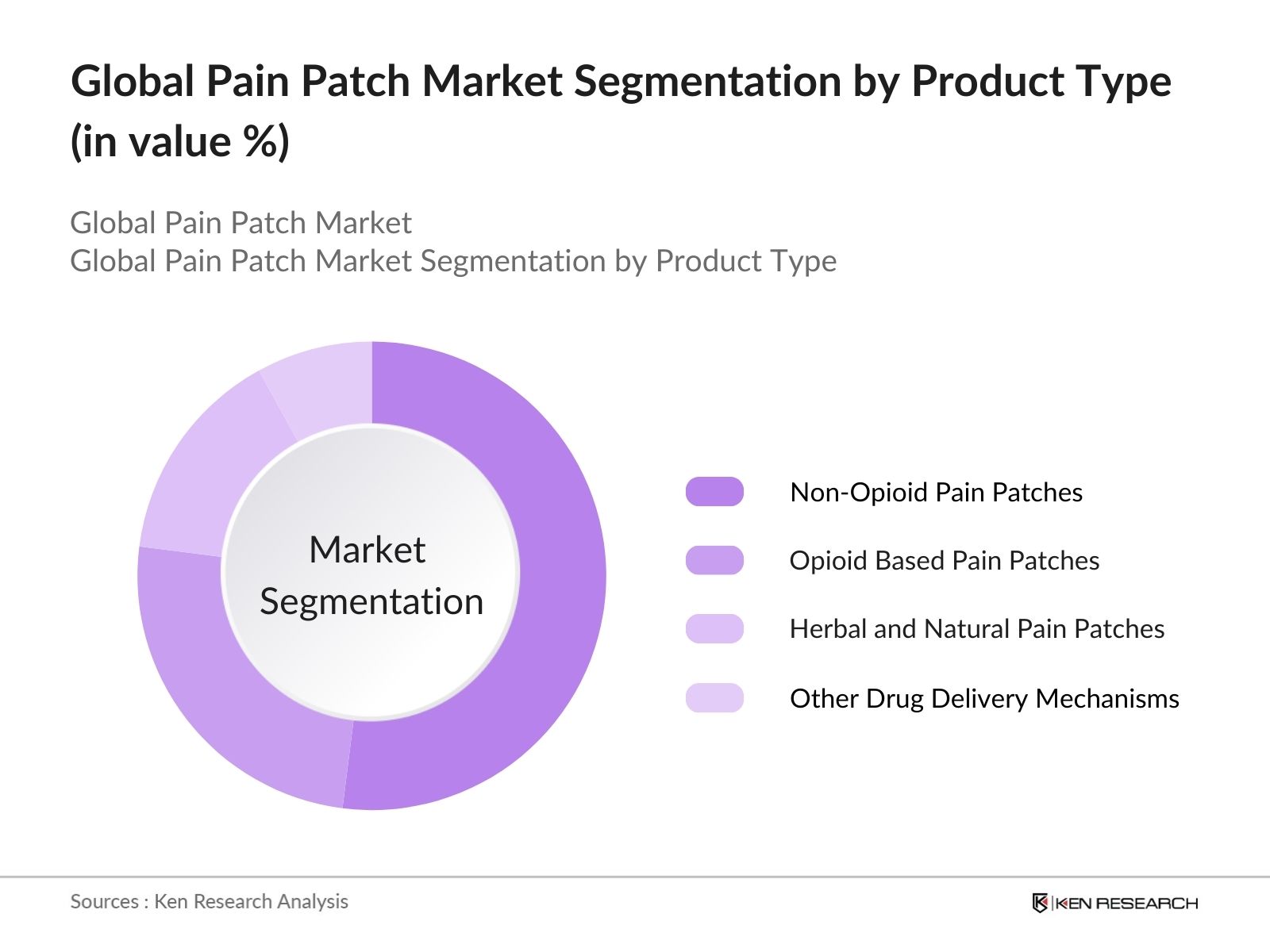
By Product Type: The Global Pain Patch market is segmented by product type into Non-Opioid Pain Patches, Opioid-Based Pain Patches, Herbal and Natural Pain Patches, and Other Drug Delivery Mechanisms. Recently, Non-Opioid Pain Patches have emerged as the dominant sub-segment within product types. This is primarily due to growing concerns about opioid addiction and the increasing shift towards safer, non-addictive pain management methods. Lidocaine and diclofenac patches are leading the way in this category as they offer effective localized pain relief without the systemic side effects seen with opioids.
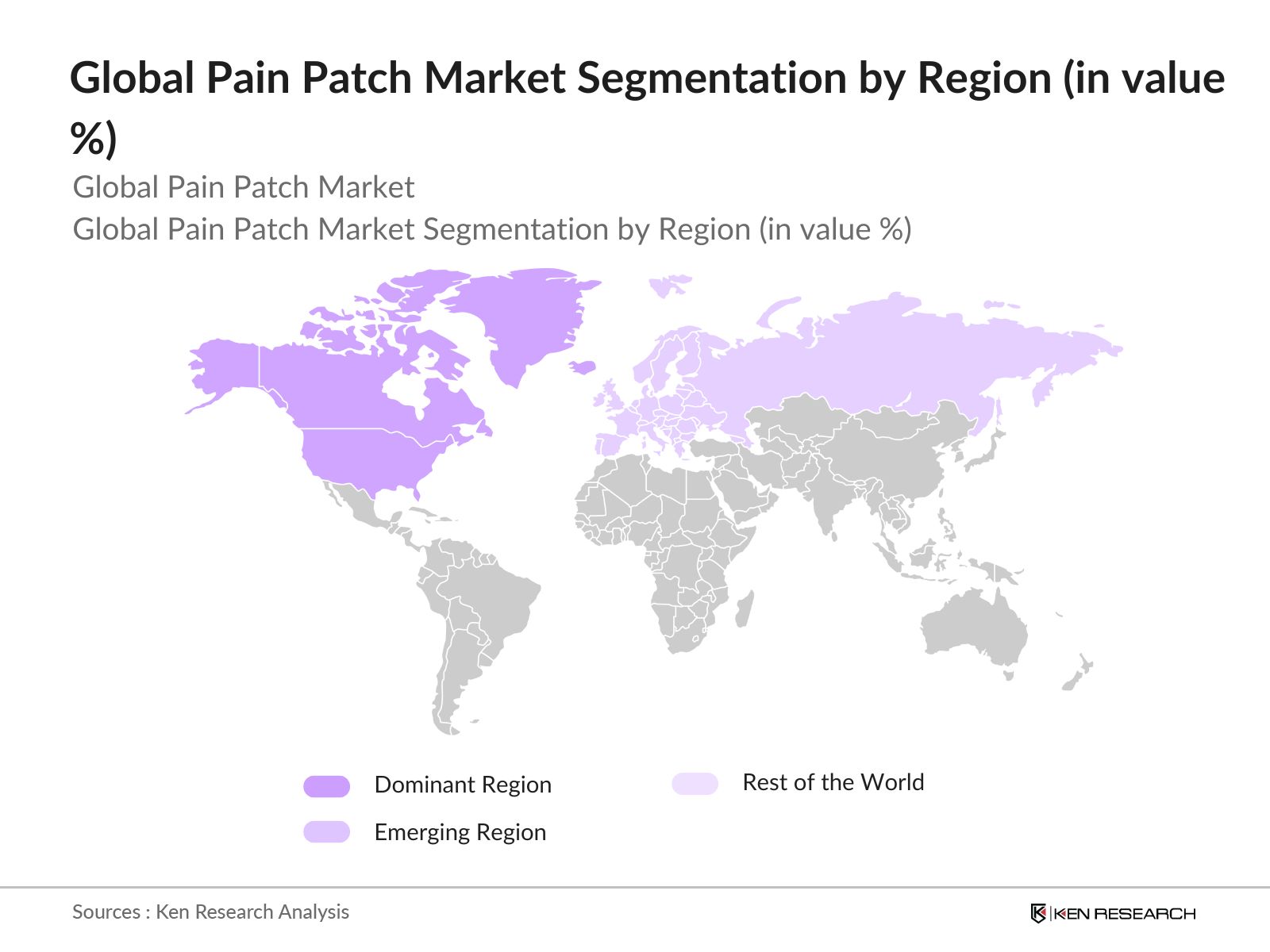
By Region: The Global Pain Patch Market is segmented by region into North America, Europe, Asia-Pacific, Latin America, and Middle East & Africa. North America leads the market, driven by a high prevalence of chronic pain conditions, a well-developed healthcare system, and favorable government policies. In North America, the increasing adoption of non-invasive pain management solutions, coupled with the rising geriatric population, further boosts the demand for pain patches.
By Distribution Channel: The market is segmented by distribution channel into Hospital Pharmacies, Retail Pharmacies, and Online Pharmacies. Hospital Pharmacies hold a dominant position in this segmentation due to the rising number of surgeries and post-operative pain treatments, which are often managed directly by healthcare providers. Hospital pharmacies provide immediate access to controlled medications and pain patches, making them the most trusted source for patients in need of pain management solutions.
The Global Pain Patch Market is characterized by significant consolidation, with major players like Teva Pharmaceuticals, Endo International, and Hisamitsu Pharmaceutical Co. driving innovation through investments in R&D and new product launches. The market also sees strategic mergers and acquisitions as companies aim to expand their global footprint and enhance their product portfolios.
|
Company Name |
Establishment Year |
Headquarters |
Product Portfolio |
Revenue (2023) |
R&D Investments |
Market Share (%) |
Patent Strength |
Regional Presence |
Strategic Initiatives |
|
Teva Pharmaceuticals |
1901 |
Israel |
- |
- |
- |
- |
- |
- |
- |
|
Endo International |
1920 |
Ireland |
- |
- |
- |
- |
- |
- |
- |
|
Hisamitsu Pharmaceutical Co. |
1847 |
Japan |
- |
- |
- |
- |
- |
- |
- |
|
Mylan N.V. |
1961 |
USA |
- |
- |
- |
- |
- |
- |
- |
|
Grnenthal Group |
1946 |
Germany |
- |
- |
- |
- |
- |
- |
- |
Growth Drivers
Challenges
The Global Pain Patch Market is set to experience robust growth in the coming years, fueled by the increasing prevalence of chronic pain conditions, growing demand for non-invasive therapies, and technological advancements in drug delivery systems. As healthcare providers seek alternatives to opioid-based pain management, the demand for non-opioid patches is expected to rise. Emerging markets like Asia-Pacific and Latin America are also forecast to contribute significantly to market growth due to expanding healthcare infrastructures and rising disposable incomes.
Market Opportunities
|
Segment |
Sub-Segments |
|
By Product Type |
Non-Opioid Pain Patches |
|
Opioid-Based Pain Patches |
|
|
Herbal and Natural Pain Patches |
|
|
Other Drug Delivery Mechanisms |
|
|
By Distribution Channel |
Hospital Pharmacies |
|
Retail Pharmacies |
|
|
Online Pharmacies |
|
|
By Application |
Neuropathic Pain |
|
Musculoskeletal Pain |
|
|
Cancer Pain |
|
|
Post-Surgical Pain |
|
|
Other Types of Chronic Pain |
|
|
By Technology |
Matrix-Based Patches |
|
Reservoir-Based Patches |
|
|
Micro-Needle Patches |
|
|
Hydrogel-Based Patches |
|
|
By Region |
North America |
|
Europe |
|
|
Asia-Pacific |
|
|
Latin America |
|
|
Middle East & Africa |
1.1. Definition and Scope
1.2. Market Taxonomy
1.3. Market Growth Rate
1.4. Market Segmentation Overview
2.1. Historical Market Size
2.2. Year-on-Year Growth Analysis
2.3. Key Market Developments and Milestones
3.1. Growth Drivers
3.1.1. Rising Prevalence of Chronic Pain Conditions (e.g., arthritis, lower back pain)
3.1.2. Growing Geriatric Population
3.1.3. Increasing Preference for Non-Invasive Pain Management Solutions
3.1.4. Advancements in Drug Delivery Systems
3.2. Market Challenges
3.2.1. High Cost of Specialty Pain Patches
3.2.2. Stringent Regulatory Requirements (FDA, EMA)
3.2.3. Risk of Skin Irritation and Side Effects
3.3. Opportunities
3.3.1. Development of Next-Gen Pain Patches (transdermal innovations, novel formulations)
3.3.2. Increasing Adoption in Emerging Markets (Asia-Pacific, LATAM)
3.3.3. Growing Demand for Opioid Alternatives
3.4. Trends
3.4.1. Adoption of Biodegradable Materials for Patches
3.4.2. Integration with Wearable Devices for Continuous Monitoring
3.4.3. Personalized Pain Management Approaches (tailored treatments)
3.5. Regulatory Landscape
3.5.1. FDA Approvals and Clinical Trials
3.5.2. EU Medical Device Regulations (MDR)
3.5.3. Patent Expirations and Generic Market Entry
3.6. SWOT Analysis
3.7. Stakeholder Ecosystem
3.7.1. Manufacturers (patch producers, contract manufacturers)
3.7.2. Suppliers (raw materials, adhesives, drug substances)
3.7.3. Distributors (pharmacy chains, hospitals, e-commerce)
3.7.4. End-Users (patients, healthcare professionals, caregivers)
3.8. Porters Five Forces
3.9. Competitive Ecosystem
4.1. By Product Type (In Value %)
4.1.1. Non-Opioid Pain Patches (lidocaine, diclofenac)
4.1.2. Opioid-Based Pain Patches (fentanyl, buprenorphine)
4.1.3. Herbal and Natural Pain Patches
4.1.4. Other Drug Delivery Mechanisms
4.2. By Distribution Channel (In Value %)
4.2.1. Hospital Pharmacies
4.2.2. Retail Pharmacies
4.2.3. Online Pharmacies
4.3. By Application (In Value %)
4.3.1. Neuropathic Pain
4.3.2. Musculoskeletal Pain
4.3.3. Cancer Pain
4.3.4. Post-Surgical Pain
4.3.5. Other Types of Chronic Pain
4.4. By Technology (In Value %)
4.4.1. Matrix-Based Patches
4.4.2. Reservoir-Based Patches
4.4.3. Micro-Needle Patches
4.4.4. Hydrogel-Based Patches
4.5. By Region (In Value %)
4.5.1. North America
4.5.2. Europe
4.5.3. Asia-Pacific
4.5.4. Latin America
4.5.5. Middle East & Africa
5.1. Detailed Profiles of Major Competitors
5.1.1. Teva Pharmaceuticals
5.1.2. Endo International
5.1.3. Hisamitsu Pharmaceutical Co.
5.1.4. Mylan N.V.
5.1.5. Grnenthal Group
5.1.6. 3M Healthcare
5.1.7. Purdue Pharma
5.1.8. Johnson & Johnson
5.1.9. Sanofi S.A.
5.1.10. Acorda Therapeutics
5.1.11. Novartis AG
5.1.12. Actavis (Allergan)
5.1.13. Nipro Corporation
5.1.14. Pfizer Inc.
5.1.15. Abbott Laboratories
5.2. Cross Comparison Parameters (Revenue, R&D Investments, Product Portfolio, Regulatory Approvals, Market Penetration, Patent Strength, Market Share, Innovation Index)
5.3. Market Share Analysis
5.4. Strategic Initiatives
5.5. Mergers and Acquisitions
5.6. Investment Analysis
5.7. Venture Capital Funding
5.8. Government Grants
5.9. Private Equity Investments
6.1. FDA Guidelines for Transdermal Patches
6.2. Clinical Trial Requirements
6.3. Labeling Standards
6.4. EU MDR Compliance
7.1. Future Market Size Projections
7.2. Key Factors Driving Future Market Growth
8.1. By Product Type (In Value %)
8.2. By Distribution Channel (In Value %)
8.3. By Application (In Value %)
8.4. By Technology (In Value %)
8.5. By Region (In Value %)
9.1. TAM/SAM/SOM Analysis
9.2. Customer Cohort Analysis
9.3. Marketing Initiatives
9.4. White Space Opportunity Analysis
The first step in our research methodology is the identification of key variables that influence the Global Pain Patch Market. This involves mapping out major stakeholders and collecting data through extensive desk research, including secondary databases and proprietary industry reports, to ensure a comprehensive understanding of market dynamics.
We then analyze historical market data to assess the penetration of pain patches across different regions, technologies, and applications. This includes evaluating healthcare spending, regulatory approvals, and trends in chronic pain management to create accurate revenue forecasts.
In this step, market hypotheses are validated through direct consultations with industry experts, including pain management specialists, pharmaceutical companies, and regulatory authorities. Their insights ensure the reliability and precision of our market estimates.
The final step consolidates all research findings and expert opinions to create a comprehensive market analysis. This includes validating data using both top-down and bottom-up approaches to ensure an accurate reflection of the market landscape and future growth potential.
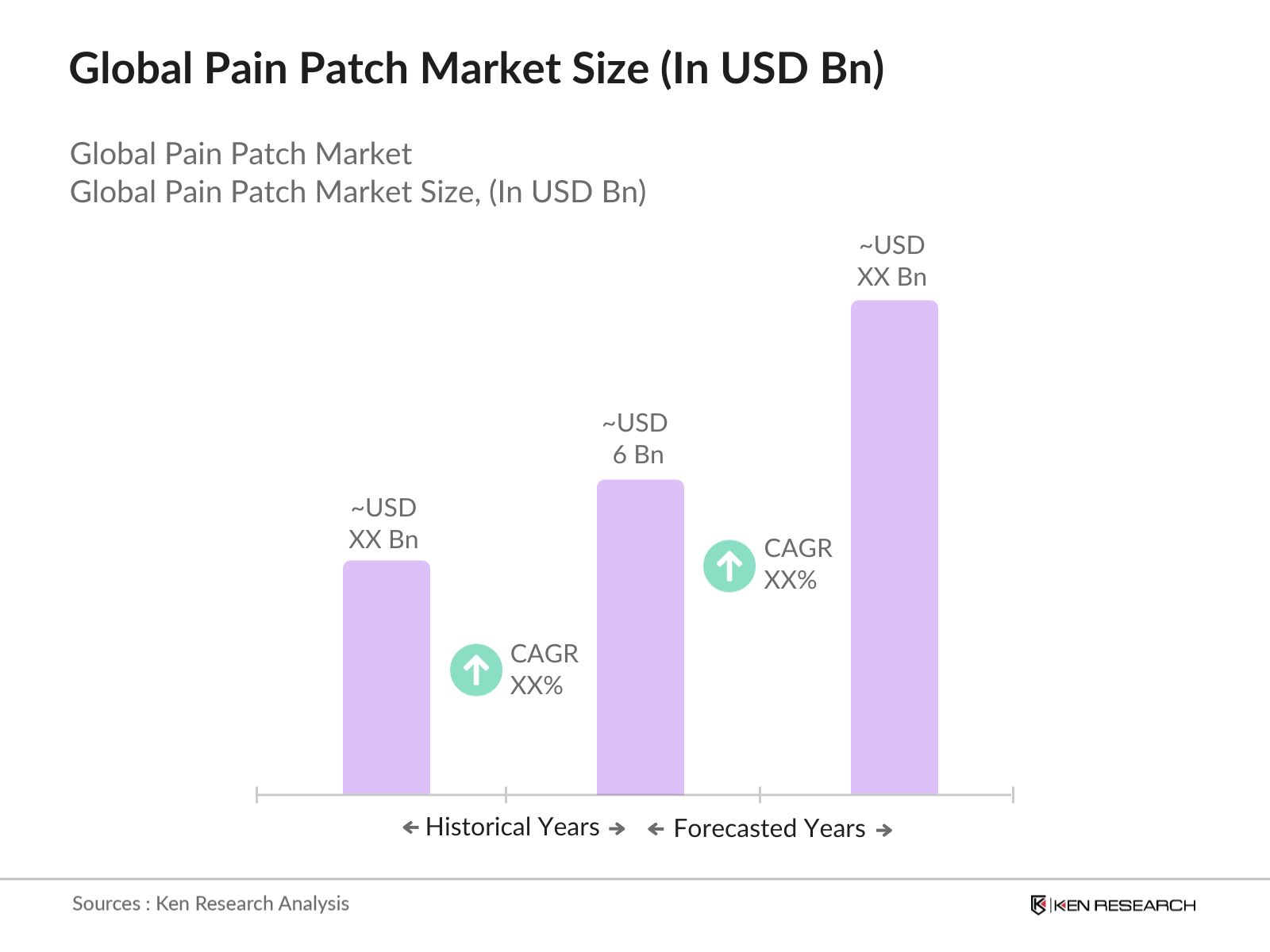
The Global Pain Patch Market is valued at USD 6 billion, driven by increasing demand for non-invasive pain management solutions and advancements in transdermal drug delivery systems.
Challenges include the high cost of specialty pain patches, stringent regulatory approvals (FDA, EMA), and concerns over skin irritation or allergic reactions associated with prolonged use.
Key players include Teva Pharmaceuticals, Endo International, Hisamitsu Pharmaceutical Co., and Mylan N.V., dominating the market due to their robust product portfolios and strong global distribution networks.
The market is propelled by the rising incidence of chronic pain conditions, increased healthcare expenditure in emerging markets, and growing preference for non-invasive pain management therapies.

What makes us stand out is that our consultants follows Robust, Refine and Result (RRR) methodology. i.e. Robust for clear definitions, approaches and sanity checking, Refine for differentiating respondents facts and opinions and Result for presenting data with story

We have set a benchmark in the industry by offering our clients with syndicated and customized market research reports featuring coverage of entire market as well as meticulous research and analyst insights.

While we don't replace traditional research, we flip the method upside down. Our dual approach of Top Bottom & Bottom Top ensures quality deliverable by not just verifying company fundamentals but also looking at the sector and macroeconomic factors.

With one step in the future, our research team constantly tries to show you the bigger picture. We help with some of the tough questions you may encounter along the way: How is the industry positioned? Best marketing channel? KPI's of competitors? By aligning every element, we help maximize success.

Our report gives you instant access to the answers and sources that other companies might choose to hide. We elaborate each steps of research methodology we have used and showcase you the sample size to earn your trust.

If you need any support, we are here! We pride ourselves on universe strength, data quality, and quick, friendly, and professional service.