
Global Payment Orchestration Platform Market Outlook to 2030
Region:Global
Author(s):Sanjana Verma
Product Code:KROD7397
December 2024
85
About the Report
Global Payment Orchestration Platform Market Overview
- The Global Payment Orchestration Platform market is valued at USD 2 billion, driven by the growing need for unified payment solutions, which streamline transaction management across multiple payment service providers. Payment orchestration platforms are essential as they enhance efficiency, reduce failure rates, and ensure a smooth transaction process for merchants and businesses operating across different regions.
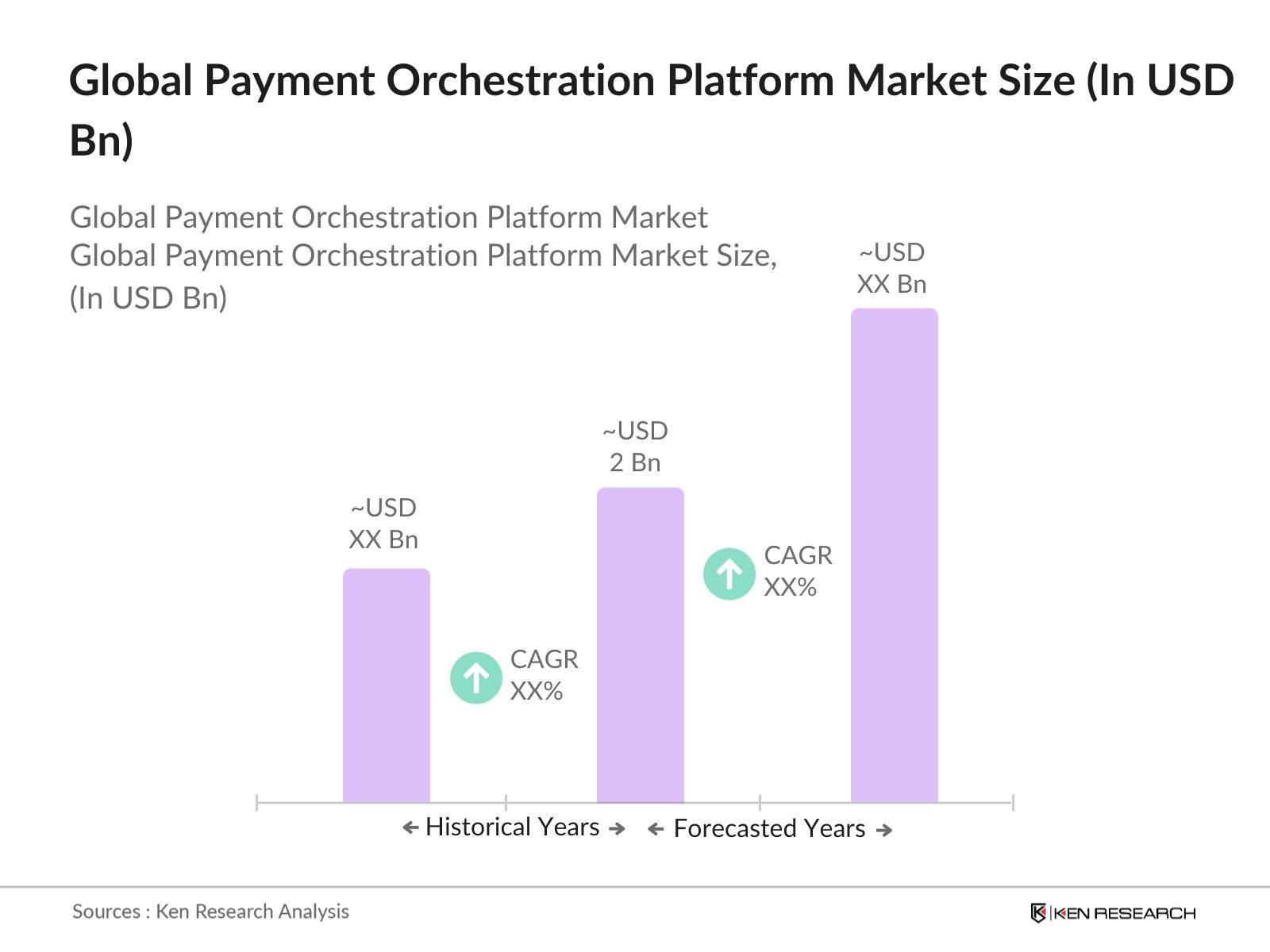
- Countries like the United States, the United Kingdom, and China dominate the payment orchestration platform market due to their advanced digital payment infrastructures and high e-commerce penetration. The rise in online transactions and the need for secure, reliable payment solutions have given these regions a strategic advantage. For instance, the United States leads in fintech innovations, while the UK benefits from its regulatory support for open banking, making these countries primary adopters of payment orchestration platforms.
- PSD2, implemented in the EU, mandates increased security and transparency in digital payments. In 2023, over 90% of online transactions in the EU were subject to strong customer authentication requirements under PSD2. Payment orchestration platforms must ensure compliance by integrating multi-factor authentication and secure open banking APIs.
Global Payment Orchestration Platform Market Segmentation
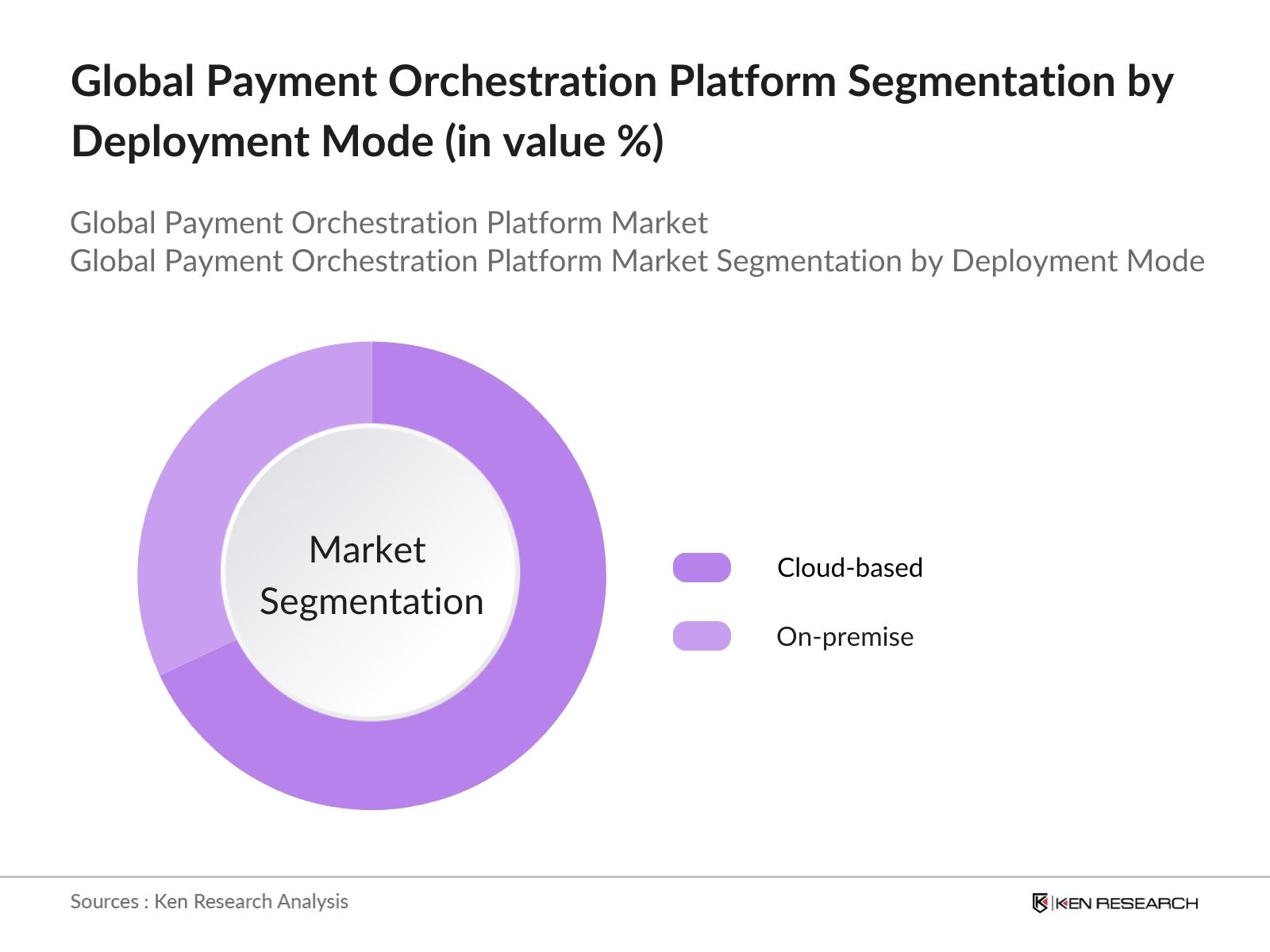
By Deployment Mode: The Global Payment Orchestration Platform market is segmented by deployment mode into Cloud-Based and On-Premise solutions. The cloud-based sub-segment dominates the market due to its scalability, flexibility, and cost-effectiveness, which appeal to small and medium-sized enterprises (SMEs) and large corporations alike. Cloud-based platforms allow businesses to integrate multiple payment service providers easily, streamline their operations, and benefit from real-time data analytics, thus gaining a competitive edge.
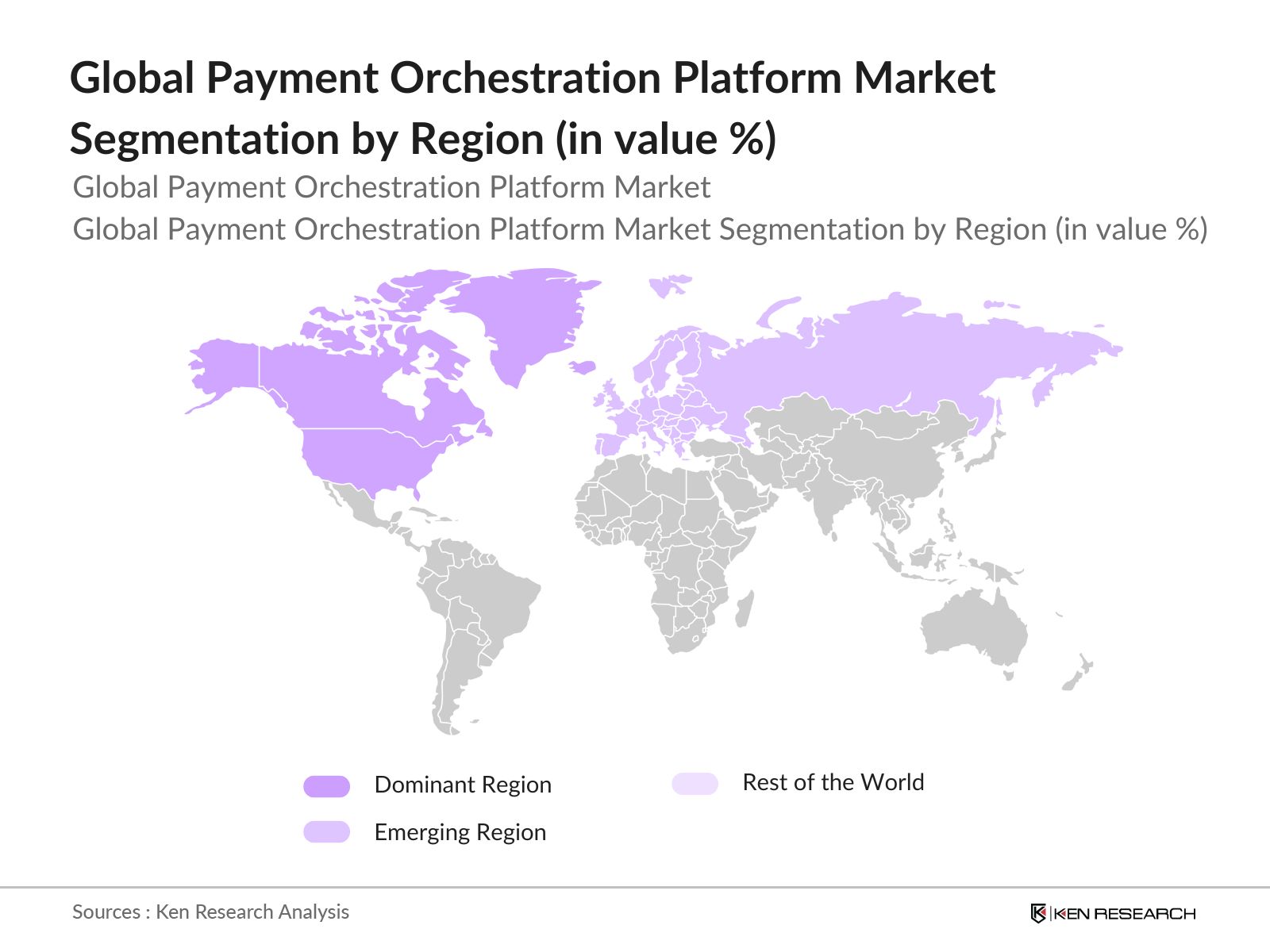
By Region: The Payment Orchestration Platform market is segmented into North America, Europe, Asia-Pacific, Latin America, and Middle East & Africa. North America holds the dominant share due to its advanced financial ecosystem, early adoption of payment technologies, and regulatory support. The region's strong presence of fintech companies and increasing consumer preference for digital payment solutions also contributes to its leadership in the market. Meanwhile, Asia-Pacific is witnessing rapid growth, driven by the rise of e-commerce and mobile payments in countries like China and India.
By Payment Method: The market is segmented by payment method into Credit/Debit Cards, E-Wallets, Bank Transfers, Cryptocurrencies, and BNPL (Buy Now, Pay Later). Credit/Debit Cards remain the most widely used payment method, accounting for the largest share of transactions globally. The widespread acceptance of cards, established trust, and incentives like cashback and rewards offered by financial institutions make this method a dominant player. However, e-wallets like PayPal and Alipay are rapidly gaining traction, particularly in Asia-Pacific regions, due to their convenience and security features.
Global Payment Orchestration Platform Market Competitive Landscape
The Global Payment Orchestration Platform market is characterized by the presence of several key players that dominate through their technological capabilities and global reach. These companies are involved in offering a comprehensive suite of payment solutions to ensure seamless integration for merchants and businesses. The market competition revolves around providing advanced fraud detection systems, reducing transaction failure rates, and offering global coverage.
The market is dominated by companies like Stripe and Adyen, known for their extensive payment network integrations and reliability. These companies maintain strong positions through continuous innovation, offering robust APIs, and expanding into emerging markets, ensuring a diverse range of payment options for their clients.
|
Company |
Establishment Year |
Headquarters |
Revenue (USD) |
Employees |
Key Solutions |
Payment Integrations |
Transaction Volume (USD) |
Regions of Operation |
Client Base |
|
Stripe |
2010 |
San Francisco, USA |
- |
- |
- |
- |
- |
- |
- |
|
Adyen |
2006 |
Amsterdam, NL |
- |
- |
- |
- |
- |
- |
- |
|
Braintree (PayPal) |
2007 |
Chicago, USA |
- |
- |
- |
- |
- |
- |
- |
|
Worldline |
1974 |
Paris, France |
- |
- |
- |
- |
- |
- |
- |
|
FIS (Worldpay) |
1968 |
Jacksonville, USA |
- |
- |
- |
- |
- |
- |
- |
Global Payment Orchestration Platform Market Analysis
Growth Drivers
- Rise in E-commerce: The rise of e-commerce is one of the primary drivers of the global payment orchestration platform market. In 2023, the global value of e-commerce transactions crossed 6.3 trillion USD, fueled by increased online shopping in markets like the U.S., EU, and China. Digital platforms that support international transactions, such as Alibaba and Amazon, are pushing the demand for streamlined payment systems across multiple regions. E-commerce transactions rely on multiple payment gateways and demand seamless payment orchestration for cross-border sales .
- Digital Payment Adoption: The global adoption of digital payments has surged significantly, with around 432 billion non-cash transactions made in 2022, according to the World Bank. Mobile wallets and digital payment platforms like PayPal and Alipay saw increased demand as cashless transactions became preferred by consumers and businesses alike. As a result, the payment orchestration platforms need to integrate with multiple gateways, enabling faster and more reliable digital transactions.
- Increasing Demand for Seamless Payment Experience: Consumers' demand for seamless, frictionless payment experiences is rising, with over 76% of digital shoppers abandoning carts due to complicated payment processes in 2023. Payment orchestration platforms are essential to simplifying the user experience by reducing the steps to complete payments. With over 6 billion people expected to have internet access in 2024, the push for easy, secure payment methods will continue growing.
Challenges
- High Implementation Costs: The cost of implementing payment orchestration platforms can be prohibitive, particularly for small and medium enterprises (SMEs). In 2022, the average setup cost for integrating a payment orchestration platform was between 50,000 and 100,000 USD, depending on the level of customization and the number of payment gateways involved. These costs can deter some businesses from adopting modern payment orchestration solutions.
- Data Privacy Regulations: Regulatory frameworks like the GDPR and CCPA impose strict data privacy guidelines. In 2023, the European Union issued fines totaling over 2 billion USD for violations of data privacy laws, highlighting the risk that businesses face when integrating payment systems without robust security measures. Payment orchestration platforms must comply with these regulations, adding complexity and cost .
Global Payment Orchestration Platform Market Future Outlook
Global Payment Orchestration Platform market is expected to show significant growth driven by increasing adoption of digital payment methods, advancements in fraud detection technologies, and the expansion of cross-border e-commerce. Payment orchestration platforms are likely to gain more traction as businesses aim to improve their transaction success rates and streamline operations across multiple geographies. As alternative payment methods like cryptocurrencies and BNPL gain more acceptance, orchestration platforms will evolve to integrate these options seamlessly into their systems.
Future Market Opportunities
- Adoption of AI-Driven Fraud Detection: AI-driven fraud detection systems present a significant opportunity for payment orchestration platforms. As of 2024, global losses from payment fraud are expected to reach 40 billion USD. Advanced AI models that identify suspicious transaction patterns in real time can be integrated into orchestration platforms, reducing fraud and improving security for businesses. The adoption of AI is further enhanced by government initiatives promoting secure payment solutions.
- Opportunities in Developing Economies: Developing economies, particularly in Africa and Southeast Asia, offer untapped potential for payment orchestration platforms. In 2023, digital payment penetration in Africa rose by over 1 billion transactions due to mobile-based payment solutions. Government-backed infrastructure projects in these regions are driving the digital economy, opening up new markets for orchestration platforms.
Scope of the Report
|
By Deployment Mode |
Cloud-Based On-Premise |
|
By Payment Method |
Credit/Debit Cards E-Wallets Bank Transfers Cryptocurrencies BNPL |
|
By Application |
E-commerce Travel and Hospitality Banking and Financial Services Retail Healthcare |
|
By Organization Size |
SMEs Large Enterprises |
|
By Region |
North America Europe Asia-Pacific Latin America Middle East and Africa |
Products
Key Target Audience
Payment Service Providers
E-commerce Companies
Merchants and Retailers
Investors and Venture Capitalist Firms
Government and Regulatory Bodies (e.g., Financial Conduct Authority, European Central Bank)
Fintech Companies
Large Enterprises with International Operations
Payment Gateway Providers
Companies
Players Mentioned in the Report
Stripe
Adyen
Braintree (PayPal)
Worldline
FIS (Worldpay)
Rapyd
Checkout.com
PayU
ACI Worldwide
Spreedly
Table of Contents
Global Payment Orchestration Platform Market Overview
1.1. Definition and Scope
1.2. Market Taxonomy
1.3. Market Growth Rate
1.4. Market Segmentation Overview
Global Payment Orchestration Platform Market Size (In USD Bn)
2.1. Historical Market Size
2.2. Year-On-Year Growth Analysis
2.3. Key Market Developments and Milestones
Global Payment Orchestration Platform Market Analysis
3.1. Growth Drivers (Transaction Volume, Payment Gateway Integrations, Cross-Border Transactions, Omni-Channel Payment Solutions)
3.1.1. Rise in E-commerce
3.1.2. Digital Payment Adoption
3.1.3. Increasing Demand for Seamless Payment Experience
3.1.4. Expansion of Alternative Payment Methods
3.2. Market Challenges (Operational Costs, Data Security, Regulatory Compliance, Fragmented Market)
3.2.1. High Implementation Costs
3.2.2. Data Privacy Regulations
3.2.3. Technological Integration Issues
3.2.4. Market Competition from Traditional Systems
3.3. Opportunities (AI and Machine Learning, Open Banking, Strategic Partnerships, Global Payment Expansion)
3.3.1. Adoption of AI-Driven Fraud Detection
3.3.2. Opportunities in Developing Economies
3.3.3. Open Banking Innovations
3.3.4. Collaboration with Financial Institutions
3.4. Trends (Embedded Finance, BNPL (Buy Now Pay Later), Cloud-Based Solutions, Blockchain Integration)
3.4.1. Growth of Embedded Payment Systems
3.4.2. Emergence of BNPL Services
3.4.3. Increasing Preference for Cloud-Based Payment Platforms
3.4.4. Blockchain-Enabled Payments for Security
3.5. Government Regulations (PSD2, GDPR, PCI DSS Compliance, Cross-Border Payment Regulations)
3.5.1. Payment Services Directive 2 (PSD2)
3.5.2. General Data Protection Regulation (GDPR)
3.5.3. Payment Card Industry Data Security Standard (PCI DSS)
3.5.4. Cross-Border Payment Regulations in the EU
3.6. SWOT Analysis
3.7. Stake Ecosystem
3.8. Porters Five Forces
3.9. Competition Ecosystem
Global Payment Orchestration Platform Market Segmentation
4.1. By Deployment Mode (In Value %)
4.1.1. Cloud-Based
4.1.2. On-Premise
4.2. By Payment Method (In Value %)
4.2.1. Credit/Debit Cards
4.2.2. E-Wallets
4.2.3. Bank Transfers
4.2.4. Cryptocurrencies
4.2.5. BNPL
4.3. By Application (In Value %)
4.3.1. E-commerce
4.3.2. Travel and Hospitality
4.3.3. Banking and Financial Services
4.3.4. Retail
4.3.5. Healthcare
4.4. By Organization Size (In Value %)
4.4.1. SMEs
4.4.2. Large Enterprises
4.5. By Region (In Value %)
4.5.1. North America
4.5.2. Europe
4.5.3. Asia-Pacific
4.5.4. Latin America
4.5.5. Middle East and Africa
Global Payment Orchestration Platform Market Competitive Analysis
5.1. Detailed Profiles of Major Companies
5.1.1. Stripe
5.1.2. Adyen
5.1.3. Braintree (PayPal)
5.1.4. ACI Worldwide
5.1.5. Worldline
5.1.6. Checkout.com
5.1.7. Rapyd
5.1.8. Spreedly
5.1.9. PayU
5.1.10. FIS (Worldpay)
5.2. Cross Comparison Parameters (No. of Employees, Headquarters, Inception Year, Revenue, Key Solutions, Payment Integrations, Transaction Volume, Market Penetration)
5.3. Market Share Analysis
5.4. Strategic Initiatives
5.5. Mergers and Acquisitions
5.6. Investment Analysis
5.7. Venture Capital Funding
5.8. Government Grants
5.9. Private Equity Investments
Global Payment Orchestration Platform Market Regulatory Framework
6.1. Payment Services Directive (PSD2)
6.2. Data Protection and Privacy Laws (GDPR, CCPA)
6.3. Compliance with PCI DSS
6.4. Cross-Border Transaction Regulations
Global Payment Orchestration Platform Future Market Size (In USD Bn)
7.1. Future Market Size Projections
7.2. Key Factors Driving Future Market Growth
Global Payment Orchestration Platform Future Market Segmentation
8.1. By Deployment Mode (In Value %)
8.2. By Payment Method (In Value %)
8.3. By Application (In Value %)
8.4. By Organization Size (In Value %)
8.5. By Region (In Value %)
Global Payment Orchestration Platform Market Analysts Recommendations
9.1. TAM/SAM/SOM Analysis
9.2. Customer Cohort Analysis
9.3. Marketing Initiatives
9.4. White Space Opportunity Analysis
Research Methodology
Step 1: Identification of Key Variables
The research process begins with identifying key variables in the Global Payment Orchestration Platform market, including payment methods, transaction volumes, and regulatory frameworks. This involves extensive desk research and leveraging proprietary industry databases to understand the market's critical dynamics.
Step 2: Market Analysis and Construction
This phase includes analyzing historical data on payment transaction volumes and payment method adoption. Key performance indicators such as the success rate of transactions and fraud rates are assessed to validate the market size and performance metrics.
Step 3: Hypothesis Validation and Expert Consultation
To validate the market hypotheses, interviews with industry experts and key stakeholders such as payment gateway providers and merchants are conducted. These insights provide operational and financial data that corroborate the findings from secondary research.
Step 4: Research Synthesis and Final Output
Finally, all data is synthesized to create a detailed market report that covers segment-wise performance, competitive analysis, and future market growth. This ensures a comprehensive and actionable report for decision-makers.
Frequently Asked Questions
01. How big is the Global Payment Orchestration Platform market?
The Global Payment Orchestration Platform market was valued at USD 2 billion, driven by increasing demand for seamless payment processing across multiple payment methods and geographies.
02. What are the challenges in the Payment Orchestration Platform market?
Key challenges in Global Payment Orchestration Platform market include high operational costs, the need for compliance with strict data security regulations, and technical integration complexities between different payment service providers.
03. Who are the major players in the Global Payment Orchestration Platform market?
Major players in Global Payment Orchestration Platform market include Stripe, Adyen, Braintree (PayPal), Worldline, and FIS (Worldpay). These companies dominate due to their robust payment integrations and extensive global reach.
04. What are the growth drivers of the Payment Orchestration Platform market?
Growth drivers in Global Payment Orchestration Platform market include the rise of e-commerce, increasing adoption of digital wallets and mobile payments, and the need for businesses to reduce transaction failure rates through unified payment platforms.
Why Buy From Us?

What makes us stand out is that our consultants follows Robust, Refine and Result (RRR) methodology. i.e. Robust for clear definitions, approaches and sanity checking, Refine for differentiating respondents facts and opinions and Result for presenting data with story

We have set a benchmark in the industry by offering our clients with syndicated and customized market research reports featuring coverage of entire market as well as meticulous research and analyst insights.

While we don't replace traditional research, we flip the method upside down. Our dual approach of Top Bottom & Bottom Top ensures quality deliverable by not just verifying company fundamentals but also looking at the sector and macroeconomic factors.

With one step in the future, our research team constantly tries to show you the bigger picture. We help with some of the tough questions you may encounter along the way: How is the industry positioned? Best marketing channel? KPI's of competitors? By aligning every element, we help maximize success.

Our report gives you instant access to the answers and sources that other companies might choose to hide. We elaborate each steps of research methodology we have used and showcase you the sample size to earn your trust.

If you need any support, we are here! We pride ourselves on universe strength, data quality, and quick, friendly, and professional service.