
Global Personal Watercraft Market Outlook to 2030
Region:Global
Author(s):Mukul
Product Code:KROD4182
Region:Global
Author(s):Mukul
Product Code:KROD4182
November 2024
90


The global personal watercraft market is characterized by a handful of dominant players who lead through product innovation, technological advancements, and strategic marketing. This competitive environment is reinforced by the high brand loyalty among consumers and the technological capabilities of market leaders.
Growth Drivers
Market Restraints
The Global Personal Watercraft Market is anticipated to experience substantial growth in the coming years. This expansion is expected to be fueled by technological advancements, such as electric propulsion and eco-friendly materials, which will support the industry's shift toward sustainability. Key players are likely to introduce innovations to enhance user experience and regulatory compliance, further promoting growth in emerging regions with untapped market potential.
Market Opportunities
|
By Product Type |
Stand-Up PWCs Sit-Down PWCs Multi-Passenger PWCs |
|
By Engine Type |
Two-Stroke Engines Four-Stroke Engines Electric Engines |
|
By Application |
Leisure Professional Racing Rescue Operations |
|
By Distribution Channel |
Offline Channels Online Channels |
|
By Region |
North America Europe Asia-Pacific Latin America Middle East & Africa |
1.1 Definition and Scope
1.2 Market Taxonomy
1.3 Market Dynamics Overview
1.4 Market Segmentation Overview
2.1 Historical Market Size
2.2 Year-On-Year Growth Analysis
2.3 Key Market Developments and Milestones
3.1 Growth Drivers
3.1.1 Rising Water Sports Participation (Growth Metric: % Increase in Sports Participation)
3.1.2 Technological Innovations (Growth Metric: % of R&D Spending in PWC Sector)
3.1.3 Expanding Tourism Sector (Tourism Spending Growth)
3.1.4 Increase in Luxury Marine Spending (Luxury Market Index)
3.2 Market Challenges
3.2.1 High Product Cost (Cost Barrier Analysis)
3.2.2 Stringent Environmental Regulations (Compliance Requirements)
3.2.3 Fluctuations in Raw Material Prices (Price Volatility Metrics)
3.3 Opportunities
3.3.1 Expansion in Emerging Markets (Penetration Rates)
3.3.2 Partnership with Marine Sports Centers (Strategic Collaboration Count)
3.4 Trends
3.4.1 Adoption of Electric Personal Watercraft (Electric Vehicle Adoption Rates)
3.4.2 Integration with Smart Connectivity (IoT Device Growth in Marine Equipment)
3.5 Regulatory Framework
3.5.1 Emission Regulations
3.5.2 Safety Standards Compliance
3.5.3 Environmental Impact Assessments
3.6 SWOT Analysis
3.7 Stakeholder Ecosystem (Stakeholders: Manufacturers, Dealers, End-users)
3.8 Porters Five Forces
3.9 Competitive Ecosystem Overview
4.1 By Product Type (In Value %)
4.1.1 Stand-Up PWCs
4.1.2 Sit-Down PWCs
4.1.3 Multi-Passenger PWCs
4.2 By Engine Type (In Value %)
4.2.1 Two-Stroke Engines
4.2.2 Four-Stroke Engines
4.2.3 Electric Engines
4.3 By Application (In Value %)
4.3.1 Leisure
4.3.2 Professional Racing
4.3.3 Rescue Operations
4.4 By Distribution Channel (In Value %)
4.4.1 Offline Channels
4.4.2 Online Channels
4.5 By Region (In Value %)
4.5.1 North America
4.5.2 Europe
4.5.3 Asia-Pacific
4.5.4 Latin America
4.5.5 Middle East & Africa
5.1 Detailed Profiles of Major Companies
5.1.1 Yamaha Motor Co., Ltd.
5.1.2 Kawasaki Heavy Industries, Ltd.
5.1.3 BRP Inc.
5.1.4 Honda Motor Co., Ltd.
5.1.5 Polaris Industries Inc.
5.1.6 Arctic Cat Inc.
5.1.7 Suzuki Motor Corporation
5.1.8 Jacobsen (Textron Inc.)
5.1.9 Torqeedo GmbH
5.1.10 Gibbs Sports Amphibians, Inc.
5.1.11 Krash Industries
5.1.12 Zapata Racing
5.1.13 Freeride JetSki
5.1.14 SuperJet Watercraft
5.1.15 MarineJet Power AB
5.2 Cross Comparison Parameters (Inception Year, Headquarters, Annual Revenue, Production Volume, Product Range, Market Presence, Innovation Score, Employee Count)
5.3 Market Share Analysis
5.4 Strategic Initiatives
5.5 Mergers and Acquisitions
5.6 Investment Analysis
5.7 Venture Capital Funding
5.8 Government Subsidies
5.9 Private Equity Investments
6.1 Environmental Compliance
6.2 Safety Standards
6.3 Certification Procedures
6.4 Trade Regulations
6.5 Export and Import Requirements
7.1 Projected Market Size
7.2 Factors Influencing Future Growth
8.1 By Product Type (In Value %)
8.2 By Engine Type (In Value %)
8.3 By Application (In Value %)
8.4 By Distribution Channel (In Value %)
8.5 By Region (In Value %)
9.1 TAM/SAM/SOM Analysis
9.2 Strategic Market Positioning
9.3 White Space Analysis
9.4 Potential Entry Barriers
Disclaimer Contact UsThe research began with a comprehensive ecosystem analysis, identifying key stakeholders such as manufacturers, end-users, and regulatory bodies. In-depth desk research was conducted, with a focus on compiling key variables impacting the personal watercraft market.
Historical and current data related to production, sales, and market penetration were collected and analyzed. Industry publications, government reports, and proprietary databases were utilized to compile quantitative insights, providing a robust market estimate.
To validate findings, interviews and consultations were conducted with industry experts and key stakeholders. Insights were gathered on market trends, innovations, and regulatory compliance challenges.
The final stage involved synthesizing data gathered from primary and secondary sources to ensure accurate and comprehensive market insights. This phase also included validation of data through bottom-up and top-down approaches, ensuring reliability and accuracy in the market analysis.
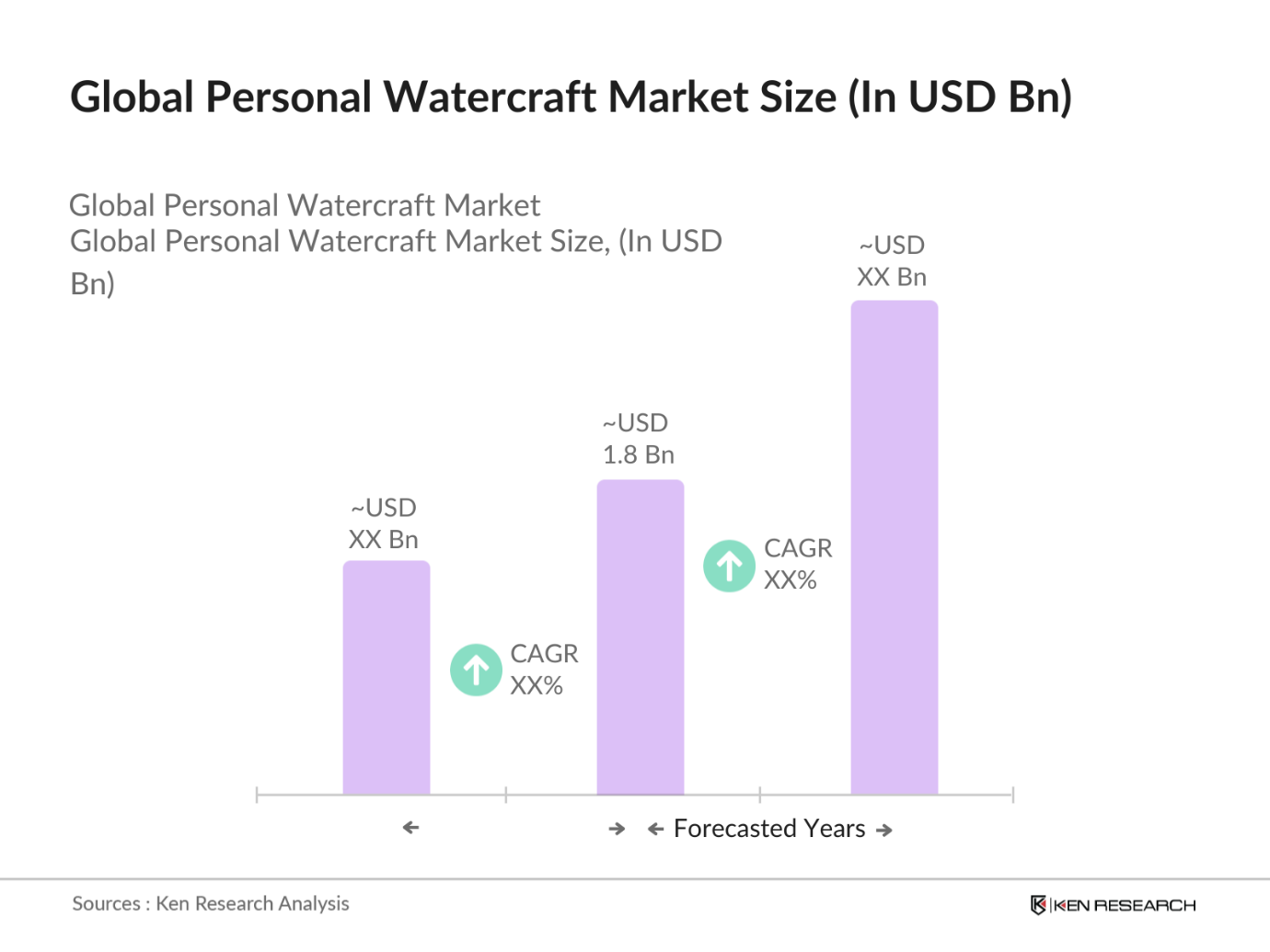
The global personal watercraft market was valued at USD 1.8 billion, driven by rising participation in water sports and the popularity of recreational marine activities.
Growth drivers include advancements in PWC technology, an increase in disposable incomes, and supportive government policies encouraging water tourism and sports.
North America and Europe dominate the market due to robust infrastructure, high participation rates in water sports, and favorable regulatory policies.
Key players include Yamaha Motor Co., Ltd., Kawasaki Heavy Industries, Ltd., BRP Inc., Honda Motor Co., Ltd., and Polaris Industries Inc., each known for their innovation and product reliability.

What makes us stand out is that our consultants follows Robust, Refine and Result (RRR) methodology. i.e. Robust for clear definitions, approaches and sanity checking, Refine for differentiating respondents facts and opinions and Result for presenting data with story

We have set a benchmark in the industry by offering our clients with syndicated and customized market research reports featuring coverage of entire market as well as meticulous research and analyst insights.

While we don't replace traditional research, we flip the method upside down. Our dual approach of Top Bottom & Bottom Top ensures quality deliverable by not just verifying company fundamentals but also looking at the sector and macroeconomic factors.

With one step in the future, our research team constantly tries to show you the bigger picture. We help with some of the tough questions you may encounter along the way: How is the industry positioned? Best marketing channel? KPI's of competitors? By aligning every element, we help maximize success.

Our report gives you instant access to the answers and sources that other companies might choose to hide. We elaborate each steps of research methodology we have used and showcase you the sample size to earn your trust.

If you need any support, we are here! We pride ourselves on universe strength, data quality, and quick, friendly, and professional service.